If Lisa Marie Determined The Oscar Nominees….


The Oscar nominations are due to be announced on Tuesday morning so I figured now would be a good time to play a little game that I like to call: “What if Lisa had all the power?”  Below, you will find my personal Oscar nominations.  These are the films and the performers that would be nominated if I was solely responsible for selecting the nominees and the winners. 

For those who are interested, you can check out my picks for last year by clicking on this sentence.

Please understand, as you look over this lengthy list of deserving films and performers, that these are not necessarily the films I expect to see nominated on Tuesday morning.  In fact, I would be hard pressed to think of a year in which I have disagreed more with the critical establishment than I have this year.  For whatever reason, the films that truly touched and moved me in 2011 appear to be the films that are totally and completely off the Academy’s radar.  These are not my predictions.  Instead, they are my personal choices and they should not be interpreted as representing the opinion on anyone else affiliated with this site.  So, if you’re angry that David Fincher’s Girl With The Dragon Tattoo didn’t receive a single imaginary nomination, direct your anger at me and me alone. 
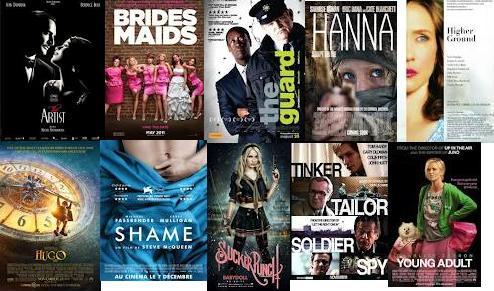
Best Picture

The Artist

Bridesmaids

The Guard

Hanna

Higher Ground

Hugo

Shame

Sucker Punch

Tinker, Tailor, Soldier, Spy

Young Adult
Best Actor

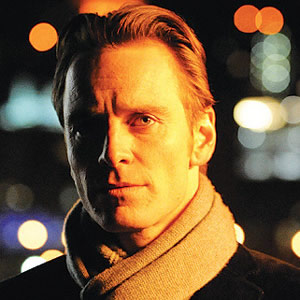
Michael Fassbender for Shame

Brendan Gleeson for The Guard

Gary Oldman for Tinker, Tailor, Soldier, Spy

Michael Shannon for Take Shelter

Rainn Wilson for Super

Best Actress

Kirsten Dunst for Melancholia

Vera Farmiga for Higher Ground

Elizabeth Olsen for Martha Marcy May Marlene

Saoirse Ronan for Hanna

Charlize Theron for Young Adult
Best Supporting Actor

Albert Brooks for Drive

Bobby Cannivale for Win Win

Jonah Hill for Moneyball

Patton Oswalt for Young Adult

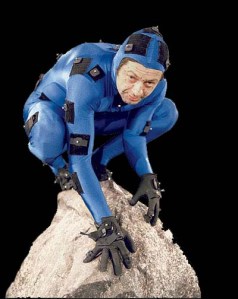
Andy Serkis for Rise of the Planet of the Apes
Best Supporting Actress

Anna Kendrick for 50/50

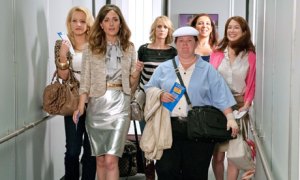
Melissa McCarthy for Bridesmaids

Carey Mulligan for Shame

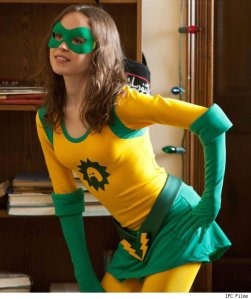
Ellen Page for Super

Amy Ryan for Win Win

Best Director

Vera Farminga for Higher Ground

Michel Hazanavicius for The Artist

Steve McQueen for Shame

Martin Scorsese for Hugo

Joe Wright for Hanna
Best Original Sreenplay

Bridesmaids

The Guard

Hanna

Shame

Young Adult

Best Adapted Screenplay

Higher Ground

Hugo

Incendies

One Day

Tinker, Tailor, Soldier, Spy
Best Animated Feature

Kung Fu Panda 2

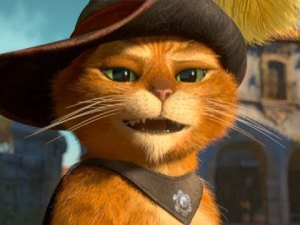
Puss in Boots

Rango

Rio

Winnie the Pooh
Best Foreign Language Film

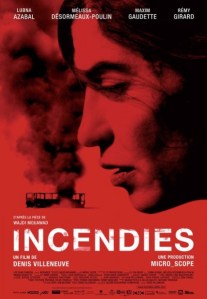
(Please note that I do this category a bit differently than the Academy.  Whereas the Academy asks nations across the world to submit a nominee, I’m simply nominating the best foreign language films that I saw in a theater last year.  Those who follow the Oscars will note that I’ve both nominated and awarded the brilliant Canadian films Incendies, which actually was nominated for a real Oscar in this same category last year.)

The Double Hour

Incendies

Of Gods and Men

The Skin I Live In

13 Assassins
Best Documentary Feature

Bill Cunningham New York

Buck

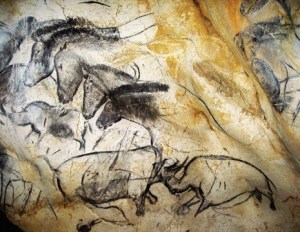
The Cave of Forgotten Dreams

Jig

Resurrect Dead: The Mystery of the Toynbee Tiles

Best Original Score

The Artist

A Better Life

The Guard

Hanna

The Tree Of Life
Best Original Song

“The Star-Spangled Man” from Captain America: The First Avenger

“Mujhe Chod Ke” from DAM999

“The Keeper” from Machine Gun Preacher

“Man or Muppet” from The Muppets

“Pop” from White Irish Drinkers
Best Sound Editing

Drive

Harry Potter and the Deathly Hallows, Part 2

Hugo

Sucker Punch

The Tree of Life
Best Sound Mixing

Drive

Harry Potter and the Deathly Hallows, Part 2

Hugo

Sucker Punch

The Tree of Life
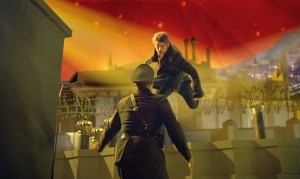
Best Art Direction

Bunraku

Harry Potter and the Deathly Hallows, Part 2

Hugo

Sucker Punch

Tinker, Tailor, Soldier, Spy
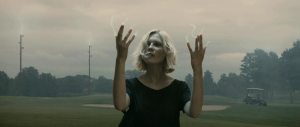
Best Cinematography

The Artist

Hugo

Melancholia

Shame

The Tree of Life
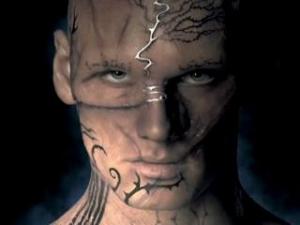
Best Makeup

Beastly

Harry Potter and the Deathly Hallows, Part 2

Insidious

Sucker Punch

X-Men: First Class
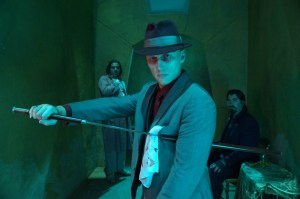
Best Costume Design

Bunraku

The Help

Hugo

Sucker Punch

Tinker, Tailor, Soldier, Spy
Best Editing

The Artist

The Guard

Hanna

Hugo

Shame
Best Visual Effects

Harry Potter and the Deathly Hallows, Part 2

Hugo

Rise of the Planet of the Apes

Sucker Punch

The Tree of Life

List of Films By Number of Nominations:

10 Nominations – Hugo

7 Nominations – Shame, Sucker Punch

6 Nominations – Hanna

5 Nominations – The Artist; The Guard; Harry Potter and the Deathly Hallows Part 2; Tinker, Tailor, Solider, Spy; The Tree of Life

4 Nominations – Higher Ground, Young Adult

3 Nominations – Bridesmaids, Drive

2 Nominations – Bunraku, Incendies, Melancholia, Rise of the Planet of the Apes, Super, Win Win

1 Nomination – Beastly, A Better Life, Bill Cunningham New York, Buck, Captain America: The First Avenger, The Cave of Forgotten Dreams, DAM999, The Double Hour, 50/50, The Help, Insidious, Jig, Kung Fu Panda 2, Machine Gun Preacher, Martha Marcy May Marlene, Moneyball, The Muppets, Of Gods and Men, One Day, Puss in Boots, Rango, Ressurect Dead, Rio, The Skin I Live In, Take Shelter, 13 Assassins, X-Men: First Class, White Irish Drinkers, Winnie the Pooh

List of Films By Number of Oscars Won:

3 Oscars – Hanna

2 Oscars – Bunraku, Shame, Sucker Punch

1 Oscar – Beastly, Bridesmaids, The Cave of Forgotten Deams, Dam999, Higher Ground, Hugo Incendies, Melancholia, Puss in Boots, Rise of the Planet of the Apes, Super, Young Adult

So, will the Academy agree with my picks?  Well, probably not.  Indeed, it’s probable that they won’t agree at all.  And to that, I say, “Oh well.” 

The Academy Award nominations will be announced Tuesday morning.

What If Lisa Marie Was In Charge of the Golden Raspberry Awards


If you’re following the Awards ceremony, you know that two major events are coming up next week.  On Tuesday, the Oscar nominations will be announced.  But before that, on Monday, the Golden Raspberry Award nominations will be announced.  For 32 years, the Golden Raspberries have been honoring the worst films of the year and they’ve always served as a nice counterpoint to the self-congratulatory nature of the Academy Awards.

Now, on Monday night, I’ll be posting what I would nominate if I was in charge of the Oscars but first, I’d like to show you what I’d nominate if I was solely responsible for making the Golden Raspberry nominations.

Now before anyone leaves me any pissy comments, these are not predictions.  I know that these are not the actual nominations.  I know that the actual Golden Raspberry nominations will probably look a lot different.  These are just my individual picks.

(My “winners” are listed in bold print.)

Worst Picture

Anonymous

The Conspirator

Dylan Dog: Dead of Night

The Rum Diary

Straw Dogs

Worst Actor

Daniel Craig in Dream House, Cowboys and Aliens, and The Girl With The Dragon Tattoo

Aaron Eckhardt in Battle: Los Angeles

James Marsden in Straw Dogs

James McAvoy in The Conspirator

Brandon Routh in Dylan Dog: Dead of Night

Worst Actress

Kate Bosworth in Straw Dogs

Anita Briem in Dylan Dog: Dead of Night

Claire Foy in Season of the Witch

Brit Marling in Another Earth

Sara Paxton in Shark Night: 3-D

Worst Supporting Actor

Paul Giamatti in The Ides of March

Mel Gibson (as the Beaver) in The Beaver

Sir Derek Jacobi in Anonymous

Giovanni Ribisi in The Rum Diary

James Woods in Straw Dogs

Worst Supporting Actress

Jennifer Ehle in Contagion

Amber Heard in The Rum Diary

Willa Holland in Straw Dogs

Vanessa Redgrave in Anonymous

Oliva Wilde in Cowboys and Aliens

Worst Director

Roland Emmerich for Anonymous

Rod Lurie for Straw Dogs

Kevin Munroe for Dylan Dog: Dead of Night

Robert Redford for The Conspirator

Bruce Robinson for The Rum Diary

Worst Screenplay

Anonymous, written by John Orloff.

Another Earth, written by Mike Cahill and Brit Marling

The Beaver, written by Kyle Killen

Dylan Dog: Dead of Night, written by Thomas Dean Donnelly and Joshua Oppenheimer.

Straw Dogs, written by Rod Lurie.

(That’s right, it’s a tie.)

Worst Screen Couple 

Rhys Ifans and Joeley Richardson in Anonymous

Rhys Ifans and Vanessa Redgrave in Anonymous

Brit Marling and any breathing creature in Another Earth

Mel Gibson and The Beaver in The Beaver

James Marsden and Kate Bosworth in Straw Dogs

Worst Prequel, Sequel, or Remake

Arthur

The Girl With The Dragon Tattoo

Scream 4

Straw Dogs

Transformers 3

6 Trailers To Welcome 2012


Hi there and welcome to the first 2012 edition of Lisa Marie’s Favorite Grindhouse and Exploitation Trailers.  Today, I come offering Danish subtitles, Japanese monsters, a grindhouse icon, and tomcats.  Lots and lots of tomcats…

1) Tomcats (1976)

Let’s start off 2012 with this trailer for a low budget, drive-in film called Tomcats.  It’s also known as Deadbeat, They Deserved It, and a few hundred other titles.  The trailer is memorable for its light-hearted narration but the film itself is pretty dark (and kinda stupid, to be honest).  By the way, this trailer features more than a little nudity and is definitely not safe for work.

2) Smokey Bites The Dust (1981)

This trailer was apparently used to advertise this Roger Corman production in Denmark.

3) Terminal Island (1973)

This is a landmark of feminist exploitation cinema.  (Scoff all you might but there is such a thing and if you don’t believe me, go and read the best thing I’ve ever written, Too Sordid To Ever Be Corrupted.)  Much like Smokey Bites the Dust, this trailer is in English but comes with Danish subtitles.  It’s also NSFW.

4) Terror of Machagodzilla (1975)

And now for something completely different…

5) Across 110th Street (1972)

Who doesn’t love this film’s title song?

And finally…

6) Enter The Dragon (1973)

Yes, Enter the Dragon is an exploitation film.  Just because it’s now considered to be a classic and it’s shown in film school (the first time I saw it was in film class) doesn’t change the fact that this film is pure grindhouse exploitation.

Welcome to 2012!  Let’s make it a good one, just in case the Mayans were correct.

Shame Review


“We’re not bad people. We just come from a bad place.”

“Shame”, Steve McQueen’s stark and uncompromising exploration of the devastating effects of sex addiction, is a powerful glimpse into the dark parts of the human soul and how it can consume us. It stars Michael Fassbender as Brandon, viewed by his colleagues as a polite, well-kept business professional, who is secretly struggling with a sex addiction that causes him to seek out sexual release through either girls he meets at bars, escorts or masturbation, often in public bathrooms. In essence he lives in his own erotic world, though the sex is not for pleasure but simply to help block out some deep-seeded pain, which he tries to control with daily routines to keep focus.  This world is disrupted when Sissy, his wayward sister with no other place to go, arrives and requests a place to stay. Brandon reluctantly agrees which appeared to be one of a few attempts to change his habits; the other being starting a real relationship with a beautiful young coworker. Things seem to be going well, but Sissy’s intrusive and erratic behavior, though often not intentional, quickly disrupts the rituals that held his psyche together and he begins to break. Her presence makes him feel  constricted  and bring back those feelings and memories he seemed dead set to repress with his sexual behavior, causing him to spiral downward with his sexual exploits becoming more extreme as the resurgence of his past and inability to cope with her needs boil to the surface.

It is important to understand, because the story relies so heavily on their interactions, that Sissy and Brandon share similar pains, though they go about suppressing them in different ways. Sissy is outgoing and wants everyone to love her; whereas Brandon is reserved and prefers to be on his own. When “living” becomes too hard they give in to harmful behavior. For Brandon it is sexual stimulation and for Sissy it is cutting herself, as pointed out by Brandon’s coworker after noticing her scarred wrist. It is this conflict in their personalities that creates the most drama. They are not suited for one another, Sissy’s intruding in Brandon’s sheltered existence and Brandon’s refusing to give her the attention and love she needs are the sparks that lead to destruction. It is not long before their clashing reaches an unbearable limit and they are both so terribly damaged, and heartbreakingly so, that when they both hit bottom it is a tragic moment. Especially for Brandon who finds himself under the pain of both the shame he places upon himself and his sister.

McQueen plays coy on what exactly about their past has had this effect on them but clearly there is a lot under the surface that has left them scarred. Many have complained about this lack of back story or an outright explanation to Brandon’s behavior but McQueen is less interested in a thoroughly develop story, and more concerned with peeking into the lives of these individuals. This is honestly all we need. It is sometimes too hard for people to accept that this is just the way we are. Humans have their demons. Films have already thoroughly gone through the scenarios that could lead to this behavior. All that matters is the now, how technology and New York help him to indulge in his addiction, and how he copes with the present.

As Brandon Michael Fassbender gives one of the most haunting and courageous performances in a very long time. His willingness to bear all, in scenes the audience can barely sit through let along imagine being a part of, along with his ability to open himself up physically and emotionally and relay so much pain, in a way that feels so human, was just outstanding.

Carey Mulligan also shines here in a roll that is unlike anything she has ever done. She plays Sissy as a woman who clearly has her own demons, and although she might seem more outgoing and capable or connecting with others, she also has a hard time coping with the past and the rejection of lovers and her brother. One of the film’s most stunning moments comes when Mulligan, in a close up, sings ‘New York New York’ in a powerful, raw and emotional rendition that really mirrored her whole performance.

The result of it all is a dark and unsettling portrait of self-destructive souls, driven by some unknown torment, so lost and damaged, struggling to mask one great shame with another in an attempt to feel something; not pleasure but rather the physical and moral pains of the acts they commit. Alone this is challenging stuff, but with the addition of exquisite long shots, beautiful photography adding a sort of poetic grace all set to a hypnotic score by Harry Escott, it becomes not only an emotional but also visually mesmerizing experience.

What Lisa Marie Watched Last Night: The Help (dir. by Tate Taylor)


I actually watched several things last night, including the season premieres of The Bachelor and Intervention.  However, neither one of those is an Oscar contender.  The Help is, so I decided I better take the time to watch the film via OnDemand.

Why Was I Watching It?

I wasn’t planning on seeing this movie when it first originally opened in theaters because, just based on the trailer, it looked like it would be your typical, terribly self-congratulatory mainstream films.  I’ve seen far too many films that promote the same old stereotypes in the name of progress and tolerance, as if good intentions can make up for bad filmmaking.  But, so many of my girlfriends came to me raving about how much they loved this film and then my Aunt Kate just about disinherited me when I told her I hadn’t seen the movie (or read the book that it’s based on) and eventually I realized that I had to see the film.  Add to that, chances are that this film is going to be an Oscar contender.

What Was It About

In segregated Mississippi, aspiring writer Skeeter (Emma Stone) decides to write book about the life of the African-American maids and nannies who work for her best friends.  After some initial difficulty, she wins the trust of two maids (Viola Davis and Octavia Spenser) and gets down to exposing the truth.

What Worked

First off, The Help is a perfect example of a well-made, entertaining mainstream film.  I laughed at the funny parts, I cried at the sad parts, and I thoroughly enjoyed the film, even though it kinda fell apart during the 2nd hour.  There’s a lot of very legitimate issues that you can raise about how the film portrays life in the segregated South but the film itself is entertaining and well-made.

It’s also one the best acted films of 2011 with Viola Davis, Octavia Spenser, and Emma Stone all giving great performances.  Jessica Chastain is funny playing a clueless newlywed and Bryce Dallas Howard does a typically good job playing the type of bitchy Queen Bee that we’ve all know and  have all secretly hoped would end up fat and divorced.  I also thought Allison Janney, who plays Stone’s mother, gave an excellent and underrated performance.

This film was directed with a perfect eye for the details needed to make even the most minor of characters memorable.  If nothing else, I enjoyed watching it just to see what everyone would be wearing from scene to scene.

The film’s first hour is probably as perfectly paced and tonally balanced as any film I’ve seen.  However, things fall apart during the second hour (more on that below).  Luckily, the film’s ending is powerful and partially redeems the film’s uneven tone.

What Didn’t Work

The film is moves along pretty well until the 2nd hour, at which point it smashed into a wall created by the inability of mainstream film to truly honestly deal with racism.  At the start of the second hour, civil rights leader Medgar Evers is assassinated by a member of the Ku Klux Klan and I found myself waiting for some sort of expression of anger (or really, any emotion other than stoic suffering) on the part of “the help.”  Instead, we get a scene where both Viola Davis and Emma Stone are watching Evers’s funeral together and both are impressed to see John F. Kennedy show up.  In the next scene, Davis has put a picture of President Kennedy up on her wall next to a picture of Jesus.  So, in other words, this film reacts to the murder of a black man but deifying a white man.  After showing us a clue of violent reality, it’s as if the film can’t figure out how to balance out the ugly realities of racism with the film’s need to appeal to the widest possible audience.  As a result, the next hour of the film feels rather disjointed and uneven.  Even though the film partially redeems itself with one of the best endings of the year, it’s still hard not to feel as if we’re watching a feel good film about something nobody should feel all that good about.

Like a lot of mainstream films about racism, a good deal of this film centers on the friendship between blacks and a few white people who, magically, don’t appear to have a shred of prejudice within them despite the fact that they were raised in the same racist culture as every other white person in the film.  As a result, the racism seen in the film doesn’t really seem like it’s an ingranied part of culture as much as it just seems like the result of a couple of bullies acting like jerks.  As a result, despite its very good intentions, a film like The Help will often unintentionally minimize just what a struggle the fight for civil rights was and is. 

“Oh my God!  Just like me!” Moments

Needless to say, I totally related to Emma Stone’s character in this film. 

Lessons Learned

It’s difficult to make a feel-good movie about racism.

Lisa Marie’s 16 Worst Films of 2011


Now that 2011 is finally over, we here at the Shattered Lens can finally get around to listing our individual picks for the best and worst of 2011.  Pantsukadasai, Necromoonyeti, Leon Th3 Duke, and Dazzling Erin have already posted some of their picks for the best of 2011 and over the next five days, I’ll be risking your scorn by listing some of my own choices.

I’d like to get things started today by listening my picks for the 16 worst films of 2011.  As always, these choices are mine and mine alone.  So, don’t go harassing Arleigh just because you think Another Earth wasn’t a pretentious and silly film.  Instead, harass me so I can harass you back. 🙂

16) Battle L.A. — It takes a special type of film to make Skyline look like a work of art.

15) Cowboys and Aliens — Meh.  This should have been so much more fun than it actually was.

14) Your Highness — I still love James Franco.

13)  Shark Night 3-D — Another film that should have been a lot more fun.

12) Season of the Witch — The first film I saw in 2011 was also one of the worst.

11) The Ides of March — Hey guys, did you know that politics is a dirty business!?  Oh my God, consider my fragile mind blown.  Thank you for clearing things up, George Clooney!

10) Another Earth — Honestly, Another Earth probably wouldn’t be here if it wasn’t for the way that so many of the toadsuckers out there get so superior and condescending whenever they’re telling me that I should love this movie.  If you read the comments under my linked review of the film, you’ll find a very good defence of the film from Leon and then you’ll find a more typical response from some idiot named Naresh Raj Shrestha.  Unfortunately, Naresh seems to be a fair representation of most of the people who take to the Internet to defend this film.  All I can say to those people is “Fuck off, kids.  I’ve got real movies to worry about.”

9) Dream House — Daniel Craig.  Again.

8) Contagion — So.  Boring.

7) The Beaver — So. Stupid.

6) Priest — Yeah, yeah, it’s in 3-D.  Yay.

5) Dylan Dog: Dead of Night — This film sucks just as much as you think it does.

4) The Rum Diary — Is it possible to make a boring movie with one of the exciting movie stars in the world?  Apparently, it is.

3) The Conspirator — Self-important drivel that was released at least four years too late.

2) Straw Dogs — Tell ’em about the Southland, Rod Lurie!

And finally, here’s the worst film of 2011…

1) Anonymous — One thing is for sure.  Whoever wrote Shakespeare’s plays, he was a lot more talented than Roland Emmerich.

Coming up tomorrow: my ten favorite songs of 2011.

What Lisa Marie Watched Last Night: Bridesmaids (dir. by Paul Feig)


Last night, I watched, via Uverse OnDemand,  one of my favorite movies of 2011 — Bridesmaids.

Why Was I Watching It?

Why!?  Because it’s just like one of my favorite movies of all time!  Seriously, I love Bridesmaids.

What’s It About?

To put it simply, this is a movie about a bunch of bridesmaids but really, it’s so much more.  Annie (Kristen Wiig) is struggling to get over the loss of her bakery and trying to find some sort of happiness in a purely sexual relationship with married Ted (Jon Hamm, at his sleaziest) when her best friend Lillian (Maya Rudolph) announces that she’s getting married.  She asks Annie to be her maid-of-honor but Annie quickly finds herself locked in competition with Lillian’s other friend, the rich and snobby Helen (Rose Byrne) as well as in a tentative romance with Nathan (Chris O’Dowd, who is so cute and adorable here), who is a traffic cop but he’s also Irish so he can be forgiven.

What Worked?

Okay, so when Bridesmaids came out this summer it was advertised as being a “gross out comedy” for girls but it’s so much more.  I mean, I’m not a huge fan of gross out comedy, like not at all.  But I love this movie.  The film is full of great (but honest) dialogue and features some of the best ensembles of the year.  Along with Byrne and Wiig, the bridesmaids include Wendy McClendon-Covey, Ellie Kemper, and Melissa McCarthy and they all get a chance to shine.  Especially McCarthy, who plays the sister of the groom and who gets to deliver all of the crude, laugh-out-loud lines along with getting a great, semi-dramatic scene towards the end.

This is a very funny movie but, ultimately, it’s funny because its true.  As Annie, Kristen Wiig is very funny and likable but ultimately, she’s a single woman struggling to maintain both her independence and her own sense of self-worth in a world that seems to exist just to judge, a struggle that leads her to live a little too vicariously through her best friend and try to justify being the lesser half in a degrading relationship.  And you know what?  We’ve all been there.  I know I have.  And, when you find yourself in that type of prison, sometimes you just have to laugh to keep from going crazy.

There are so many laugh-out-loud moments in this film that I don’t even know where to begin in picking out my favorites.  However, a few obvious highlights: the ill-fated trip to try on bridesmaid dresses and the equally ill-fated flight to Vegas.  I also have to give major kudos to the film’s opening, which is one of the few sex scenes ever to be found in a comedy that’s actually filmed from the woman’s point of view.

Finally, the film features Jill Clayburgh’s final film performance and she is hilarious.  Thank you, Bridemaids, for coming out after Love and Other Drugs.

What Doesn’t Work?

Any time you have a comedy like this, there will occasionally be a one-liner that falls flat or a joke that doesn’t quite work and Bridesmaids has one or two of these.  But the entire film is so likable that the jokes that don’t work are quickly forgotten.

“Oh my God!  Just like me!” Moments:

Oh my God, so many!  And it would probably be TMI for me to go into every single one of them but I will say that I’ve been a bridesmaid like five times and I was my sister Megan’s maid of honor though that was mostly because I cried until she agreed to give me the job.  And I actually really enjoyed it every time, mostly because it meant I got to be up at the front of the church instead of stuck sitting all anonymous-like in the back and I could stand up there and be all like, “See, I even make this dress look good.”

The second time I was a bridesmaid, I kinda got everyone mad at me because I made this gagging motion when they were lighting the unity candle but seriously, I just think unity candles are all silly and Vermont-like.  Plus, the marriage eventually ended in divorce like a year later so let’s hear it for me for being honest.

Lessons Learned:

Laughter is the best medicine.  Always.

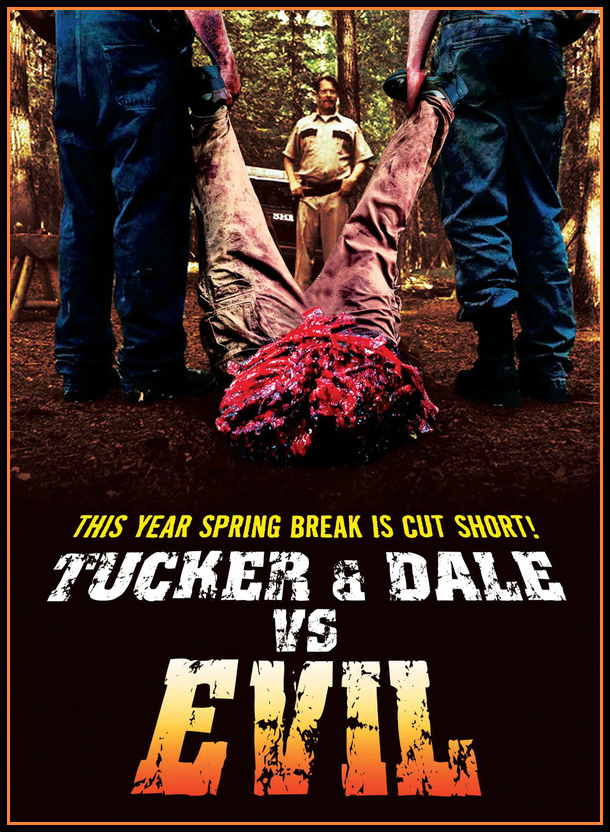
Quickie Review: Tucker & Dale vs. Evil (dir. by Eli Craig)


One thing I like about genre films is the fact that, whether they’re good or bad, they mostly accomplish the part about entertaining it’s audience. For the good to great ones they don’t just entertain but raise the genre to new heights. For the bad ones they seem to entertain in unexpected ways. How often have one watched a bad genre film, realize it’s bad and still just roll with it, laughing at it becoming part of it’s appeal. We wouldn’t have gotten years and years of Rifftrax and MST3K without enjoying the badness of awful genre films. Then there are genre films which takes the very well-worn tropes of the genre. The very things we as an audience groan and snicker at and manages to turn it into a love-letter to the very thing they’re making fun of.

The horror-comedy Tucker & Dale vs. Evil takes the backwoods horror which has been a major staple of the slasher subgenre for over a quarter-century and tips it on it’s head to create a horror comedy that never runs out of laughs and still manages to show cringe-inducing death scenes. It stars Alan Tudyk and Tyler Labine in the roles of Tucker and Dale. We have two well-meaning “hillbillies” from the backwoods of West Virginia on their way to Tucker’s recently bought “fixer-upper” of a vacation home who come across a group of obnoxious college kids looking to spend the weekend on the shore of the very lake our two intrepid heroes’ vacation also sits off of. Through some misunderstanding between the very sweet-natured Dale who tries to befriend one of the pretty college girls in the group we see the beginning of events that will see death and mayhem visited upon both groups throughout the film.

We get the mandatory story telling us about how twenty years ago during Memorial Day a group of similar college kids were massacred by a couple of hillbillies on the very shores of the lake with only one survivor to tell the tale. This tale becomes the reason why the college kids start trying to “defend” themselves from Tucker and Dale who they thought kidnapped one of the girls in their group when in fact they had just rescued her from drowning. One by one each college kid dies in horrible fashion in their attempt to take on the oblivious Tucker and Dale who begin to think the group were on a suicide pact and means to take them down as well.

The film really does a great job of playing on the well-worn conventions of slasher films and making each such scenario play out in a way that if someone caught the scene a few seconds after it had already started they would think Tucker and Dale were trying to kill these kids. Each kill have just enough gore to satisfy horror fans so used to slasher films, but also funny enough every cringe was followed up by laughs.

One thing the film also had going for it was the chemistry between Tudyk and Labine as Tucker and Dale. They play off each other quite naturally that it’s not a stretch to believe these two were truly life-long friends who would brave the rush of misguided college kids to save each other. Even the college girl with the heart of gold, Allie (played by Katrina Bowden), adds to the film’s good-natured fun as she tries to explain to her friends that everything which has been going on (all the death and destruction) was all just a misunderstanding. Another thing which helps make the two leads in the film quite sympathetic has to be how obnoxious the kids really were who look down on the so-called “mountain folk” of the region because of their appearance thus their lack of education.

Eli Craig took three years to make Tucker & Dale vs. Evil, but the end result was all worth the wait. The film follows in the great traditions of horror-comedies of the past by never winking cynically at the audience at how smart it is, but letting the basic premise of the story play out as simply as possible. It helps to have a great duo in Alan Tudyk and Tyler Labine in the roles of the Tucker and Dale. This film may not make many critics running to proclaim it as a milestone in the genre but it does succeed in entertaining it’s audience and just ending up being one hilarious 90 minutes of campy horror.

A Quickie With Lisa Marie: The Artist (dir. by Michel Hazanavicius)


I was concerned before I saw Michel Hazanavicius’s critically acclaimed, silent film The Artist.  This is the film that’s currently being touted as an Oscar front runner and has been acclaimed by critics the world over.  Whenever I see this type of acclaim, I usually end up disappointed in the actual film because hype that positive is very difficult to live up to.  (Case in point: The Descendants.)  However, having seen The Artist, I can now say that this is the rare film that actually is almost as good as the critics say it is.

Starting out in a highly stylized Hollywood in the 1920s, The Artist introduces us to silent film star George Valentin (played Jean Dujardin who shows the same charm and style that he used to ironic effect in the director’s previous OSS 117 films).  Valentin is the biggest star in the world and he is cheerfully dismissive of the idea of “talking” film.  However, once the age of the talkies begins, Valentin finds his star on the descent while his protegé, former extra Peppy Miller (Berenice Bejo), becomes a star in talking films.  Defiantly, Valentin continues to make silent films but is there anybody around still willing to watch them?  Obviously, the storyline of The Artist is a familiar one but the film is more about how Hazanavicius tells this story than the story itself.  The Artist is ultimately a triumph in pure and exuberant style.

At first, I have to admit that I was a little bit dubious about The Artist being a silent film.  It sounded rather ominously like a gimmick and I was worried that The Artist would turn out to be one of those films that I felt obligated to enjoy as opposed to actually enjoying.  Having seen the film, I can say that it is indeed a gimmick but it’s that rare gimmick that actually works extremely and genuinely well.  Director Hazanavicius both pays homage to the conventions of silent cinema while also contrasting them against the harsher reality of loneliness and depression. 

Much like the best of the old silent actors, both Dujardin and Bejo have amazingly expressive faces and they can say as much with their eyes as they could say with dialogue.  Familiar character actors like John Goodman, James Cromwell, and Malcolm McDowell are also perfectly cast and used throughout the film’s narrative.  Ultimately, however, the film is really stolen by Uggie, who plays Dujardin’s little dog and is just about the most talented canine I’ve ever seen on-screen.  Seriously, he was adorable (and I say this as someone who is terrified of dogs both big and small) and he gets a chance to shine in a compelling sequence where he desperately tries to save his master from a fire.  Seriously, Uggie gives such a great performance that I was surprised to discover that he wasn’t actually Andy Serkis under heavy CGI.

Technically, of course, The Artist isn’t really a silent film.  It has a very rich and expressive musical score and there are two scenes in which Hazanavicius allows a few sound effects to be heard.  Only towards the end of the film do we get to hear anybody speak and its truly jarring in the best way possible.  If nothing else, The Artist makes us realize how much we take for granted the blaring soundtracks of most films.  We’re so used to hearing things that we’ve forgotten how to listen.  Luckily, The Artist is here to remind us.

The Most Underappreciated Film Of The Year: Joe Wright’s Hanna


Sometimes, it seems like it’s easier for me to write about the films I dislike as opposed to the films that I truly love.  Case in point: I had little trouble writing up my thoughts on Anonymous and Straw Dogs but it’s taken me 8 months to write a formal review of my favorite film of 2011: Joe Wright’s pulp fairy tale, Hanna.

Taking place in a world much like our own but definitely not the same, Hanna opens in the frozen wilderness of Finland where 16 year-old Hanna (Saoirse Ronan) lives in an isolated cabin with her father, Erik (Eric Bana).  In the film’s electrifying opening montage, we see that Hanna’s life revolves around training for combat, memorizing the encyclopedia, and memorizing several “false” back stories that have been prepared for her by her father.  It also quickly becomes apparent that Erik has never allowed his daughter to be exposed to the real world.  Finally, Erik tells Hanna that she is “now ready” to choose whether or not to open up a box containing an old transmitter that well alert the rest of the world of their existence.  When Hanna finally opens the box, Erik promptly disappears and Hanna is left to fend for herself.

It quickly becomes apparent why Erik has spent years training his daughter because, by opening the box, Hanna has given away her presence to a coolly corrupt and ruthless CIA agent named Marissa (Played by Cate Blanchett and one of the most compelling villains in recent film history).  Marissa has her own reasons for wanting both Erik and Hanna and she quickly sends a team to Erik’s cabin.  Hanna is captured and transported to a memorably sterile CIA safehouse.  In a shocking sudden burst of violence, Hanna escapes from the safehouse and finds herself having to survive in the “real world” while being pursued by Marissa. 

Hanna, Marissa, and Erik eventually meet their fates in a desolate theme park that (in a neat bit of symbolism) is dedicated to the Brothers Grimm.  Along the way, Hanna meets and travels with a likable family of English tourists, allowing her to have her first chance to actually experience a “normal” life and Marissa recruits Issacs, one of the creepiest film henchmen ever.  Seriously. Isaacs is played by Tom Hollander and he was just so exquisitely sleazy that my skin crawled just watching him on-screen. 

In many ways, Hanna may sound like a simple action film but, in the best tradition of the French new wave and the better grindhouse filmmakers, Joe Wright both embraces the conventions of the action film while unexpectedly subverting them and using them to tell a more universal story about the struggle to both establish and maintain identity in an increasingly soulless world.  Much as Godard did before he gave up his artistic soul to political ideology, Joe Wright uses his cinematic talents to create a unique world that, while heavily stylized, also comments on our own existence.  The Chemical Brothers, meanwhile, provide the perfect soundtrack to Wright’s pulp vision.

Hanna may be my favorite film of 2011 but it’s also the most underappreciated of the year, at least as far as Oscar season is concerned.  There’s been so mention of the film’s score and a few critics’ groups have tossed a “young artist” mention or two at Saoirse Ronan but otherwise, the film has pretty much been ignored.  I think part of the problem is that Hanna was released in April and not December.  If the films had been released in December, I think Ronan would, at the very least, be a dark horse for best actress. 

The main complaint that most critics seem to come up with when discussing Hanna is that the film is too much of a genre piece.  Yes, it’s well-made and it’s well-acted and yes, it’s a compelling film with an intelligent script but, in the end, it’s just a genre piece.  A fairly typical response comes from the Guardian’s Peter Bradshaw who, after praising all of the film’s virtues, concluded with, “…(I)t ultimately squanders all of them, undone by a lack of subtlety and restraint.” 

To this, I can only respond, “Oh?  Really?”  Seriously.  Amazingly enough, some of the critics who criticized Hanna for a perceived lack of subtlety are the same critics who are now falling over themselves to praise the rehash of The Girl With The Dragon Tattoo.  I suppose the difference here is that The Girl With The Dragon Tattoo was directed by David Fincher and is the product of the American film establishment whereas Hanna was directed by Joe Wright and was produced by outsiders.

Those who claim that Hanna is too genre are missing the simple fact that Hanna is an insightful film that uses the conventions of the action genre as a metaphor for the sometime painful search for identity that every teenager (and especially every teenage girl) has ever had to go through.  Myself, I never had to flee from government agents or battle assassins when I was 16 but I did have to start discovering how to survive in the real world, away from the security and comfort of home.  As opposed to the pretend feminism of Fincher’s film, Hanna is a film that truly celebrates “girl power” and promotes independence and empowerment.  It’s also, as far as I’m concerned, the best film of 2011.