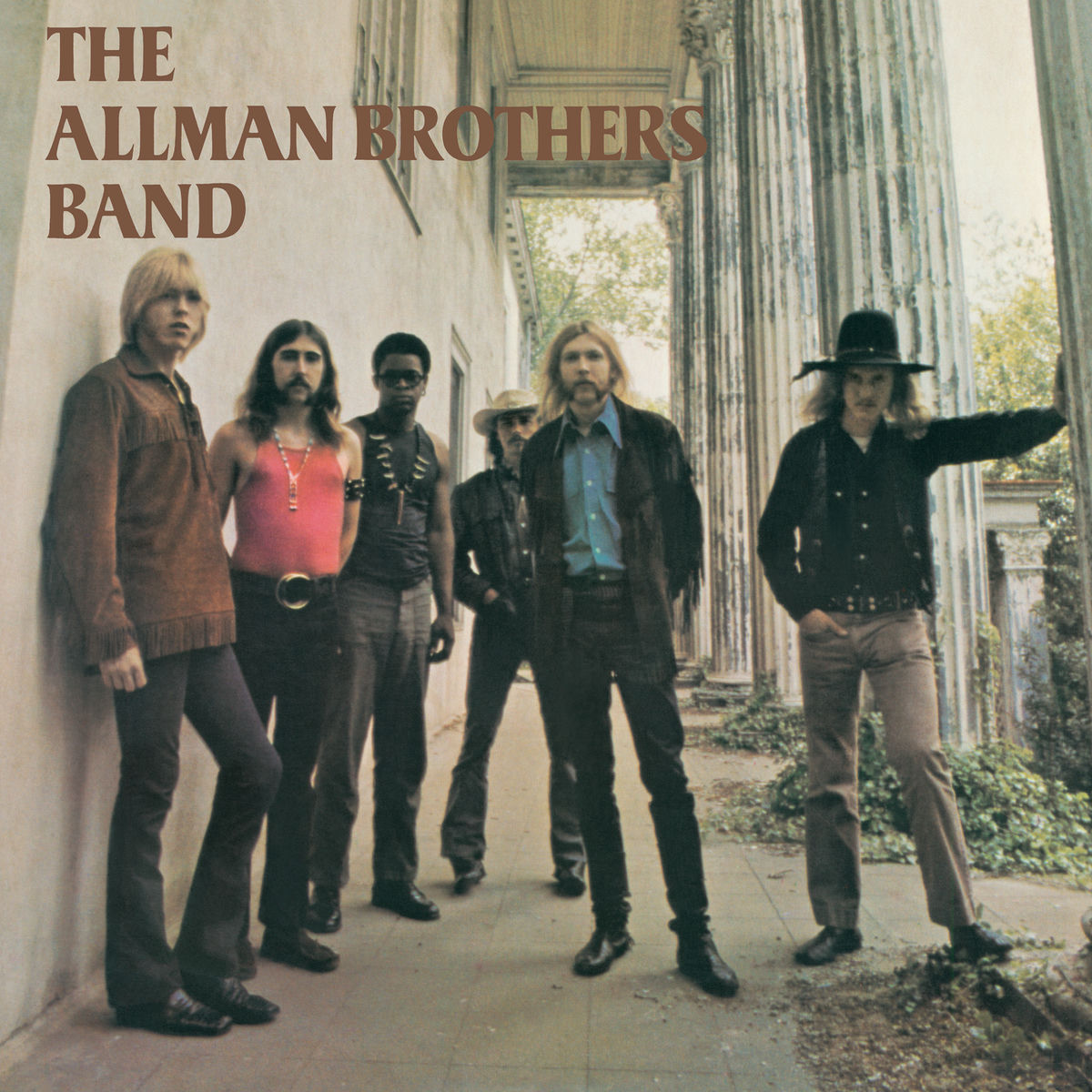
“Blue Sky” by The Allman Brothers Band is one of those songs that instantly lifts your mood — like cruising down a long stretch of highway under perfect weather. Dickey Betts wrote and sang it, and you can feel his sense of ease and optimism through the melody. But while the vocals are sunny and inviting, it’s the guitar work that really carries the song’s soul. Betts and Duane Allman trade licks like two friends finishing each other’s thoughts, creating one of the best musical conversations in rock.
Around 1:07, Duane Allman takes off with the first guitar solo. It’s bright, flowing, and packed with his signature slide-guitar emotion. Duane doesn’t just play notes — he makes the guitar sing, full of expressive bends and lyrical phrasing that sound spontaneous but purposeful. His solo feels alive, like he’s narrating the feeling of absolute freedom the song evokes. There’s a spiritual quality to his touch that sets the tone beautifully for the rest of the jam.
Then at about 2:37, Dickey Betts steps in with his solo, and the vibe subtly shifts. Betts’s lines are cleaner, more melodic, and dance across the rhythm with an almost country-like cheer. His phrasing is so smooth you can hear the future seeds of his later work, where melody takes center stage. While Duane’s solo soars in a soulful, searching way, Betts’s solo feels precise and joyful — he’s painting in sunlight. Together, their contrast creates a satisfying balance between fire and finesse.
The two guitars eventually weave together in harmony, returning to the main theme before easing back into the song’s final verse. It’s one of those moments that reminds you why the Allman Brothers were so special—the sheer communication happening between players. No flashy gimmicks, no ego, just musicians playing from a place of joy. If you’re new to the band, “Blue Sky” is the perfect entry point. It sums up their balance of skill and soul, and it’s the last recording Duane Allman played on before his passing, which gives that final harmony an even deeper resonance.
Blue Sky
Walk along the river, sweet lullaby, it just keeps on flowing, It don’t worry ’bout where it’s going, no, no. Don’t fly, mister blue bird, I’m just walking down the road, Early morning sunshine tell me all I need to know
[CHORUS:] You’re my blue sky, you’re my sunny day. Lord, you know it makes me high when you turn your love my way, Turn your love my way, yeah.
[Duane Allman guitar solo @1:07]
[Dickey Betts guitar solo @2:37]
Good old sunday morning, bells are ringing everywhere. Goin to Carolina, it won’t be long and I’ll be there
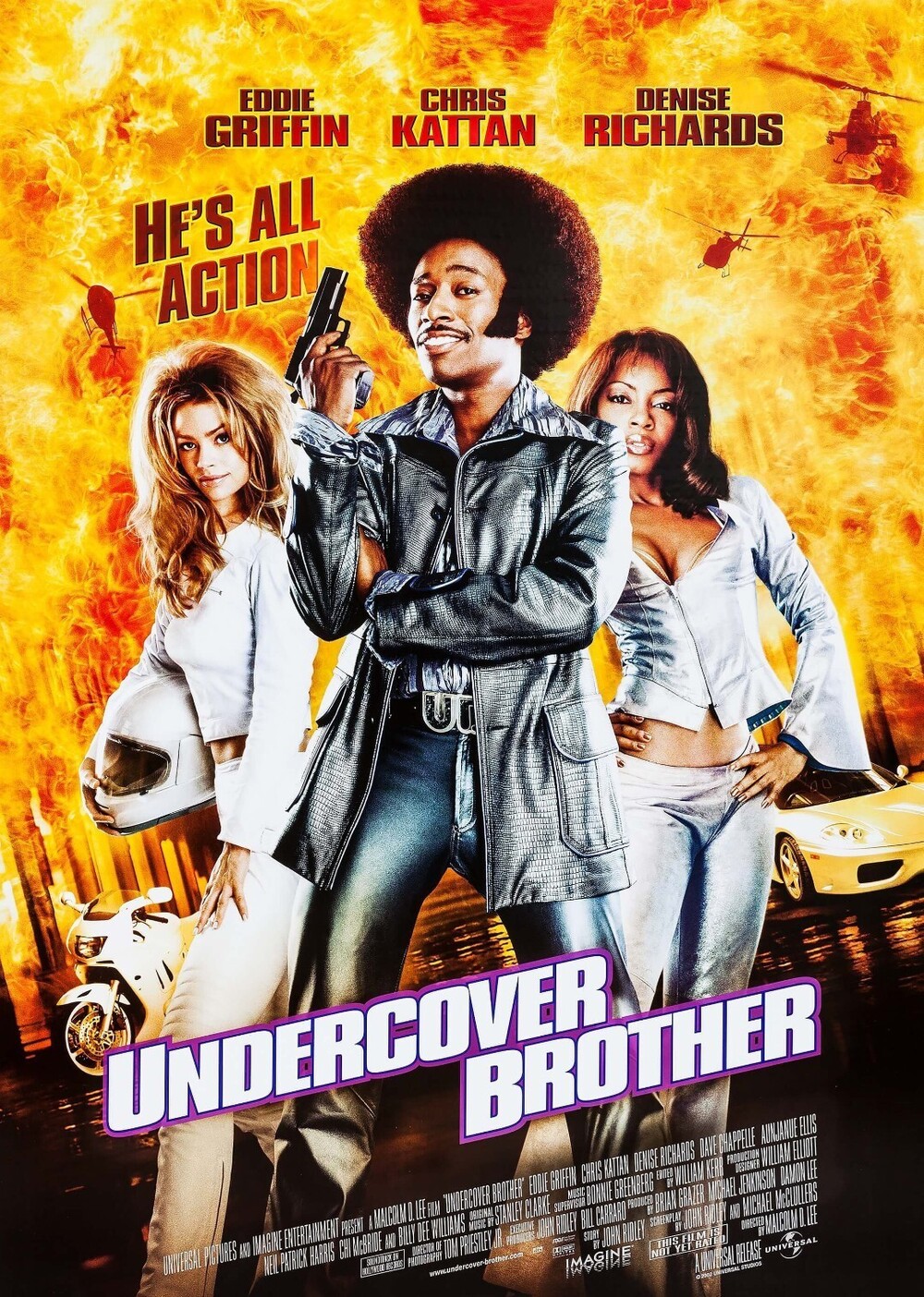
Undercover Brother is exactly the kind of movie that earns the phrase “guilty pleasure.” It is messy, broad, and often ridiculous, but it is also packed with enough energy, attitude, and sharp-enough satire to make its flaws feel like part of the joke rather than dealbreakers. The result is a comedy that may not always land cleanly, but it absolutely understands its own vibe and commits to it hard.
At the center of it all is Eddie Griffin, who gives the title character a big, swaggering, old-school cool that carries the movie through its shaggier patches. He plays Undercover Brother as a throwback spy hero with a giant Afro, loud fashion sense, and nonstop confidence, and that exaggerated persona is a big reason the film works as well as it does. Griffin’s performance is not subtle, but subtlety is not really the point here; he sells the movie’s cartoonish energy without making it feel lazy.
What makes Undercover Brother more than just a random parody is how committed it is to poking at both blaxploitation iconography and mainstream spy-movie clichés. The film was directed by Malcolm D. Lee and written from material based on John Ridley’s earlier animated series, and it leans into that satirical roots-and-gadgets formula with a lot of style. It clearly wants to be playful, but it also wants to say something about race, image, and the way Black identity gets packaged or watered down in pop culture.
That said, the movie is not exactly a model of precision. Some of the jokes are sharp and immediate, while others feel like they are still revving the engine long after the punchline should have arrived. The plot is basically an excuse to move from one set piece to another, and the film knows it, which helps, but it also means the whole thing can feel more like a high-speed sketch comedy than a fully shaped story. If you go in expecting airtight narrative logic, you will probably be annoyed; if you go in wanting a fast, funky send-up, you will have a much better time.
The supporting cast gives the movie a lot of its flavor. Dave Chappelle, Aunjanue Ellis, Billy Dee Williams, Chris Kattan, Denise Richards, and Neil Patrick Harris all add to the film’s chaotic mix, and the casting itself becomes part of the joke. Billy Dee Williams especially feels perfectly placed in a movie that is constantly riffing on cool, style, and old-school charisma, while Denise Richards gets a knowingly exaggerated role that plays into the film’s cartoonish battle between seduction and resistance.
What helps Undercover Brother age a little better than some early-2000s comedies is that it is not just throwing random nonsense at the screen for cheap laughs. There is a genuine satirical target here, and even when the movie gets clumsy, it still feels like it has a point of view. The movie clearly aims to be both goofy and observant, and even when the balance is uneven, it is hard not to appreciate the effort.
The best thing about Undercover Brother is its attitude. It moves like a movie that wants to be loud, stylish, and a little bit too much, and that confidence gives it a strange charm. The humor is often broad, sometimes cartoonish, and occasionally uneven, but the film’s willingness to fully commit to its bit makes it easy to forgive a lot. Even when the satire is more enthusiastic than elegant, the movie keeps its foot on the gas, and that momentum is a big part of its appeal.
Its biggest weakness is also the thing that makes it memorable: the movie can feel overstuffed with ideas, references, and gags, some of which work better than others. A few jokes feel a little dated now, and the film’s style of satire is not always as clean or as clever as it seems to think it is. Still, the movie has enough bite, personality, and goofy confidence that those rough edges become part of its charm instead of sinking it. That is the hallmark of a true guilty pleasure: you can see the flaws clearly, but you keep smiling anyway.
So Undercover Brother is not a perfect comedy, and it is not trying to be one. It is loud, silly, politically aware in a very pop-movie way, and shamelessly committed to its own funk. If you want polish, you will find plenty to criticize; if you want a movie with attitude, quotable energy, and the kind of swagger that makes its imperfections oddly lovable, this one delivers. It is a flawed satire, sure, but it is also a genuinely fun one, and that is why it still plays like a guilty pleasure worth revisiting.
“There comes a time when a man has to stand up and be counted.” — Zack Carey
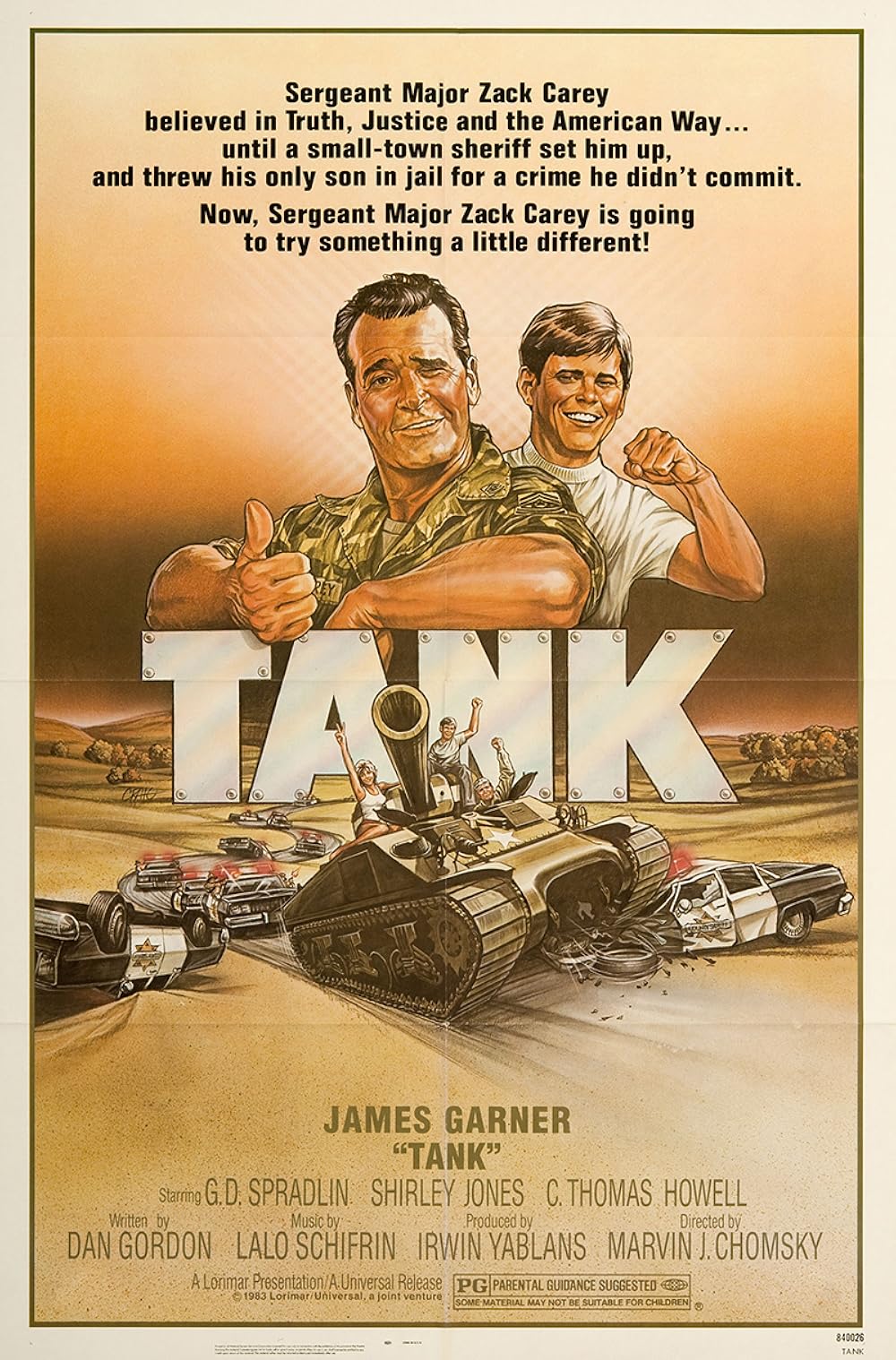
The 1984 action‑drama Tank is a small‑town parable dressed up as a military gimmick picture: an aging Army sergeant major, a battered old Sherman tank, and a corrupt sheriff. At its best, the film leans into James Garner’s quiet charisma and the absurdly specific “one man versus a whole county” premise; at its worst, it staggers under inconsistent tone and a plot that veers between heartfelt family‑drama and almost cartoonish vigilantism. Taken as a product of the early‑mid‑1980s, however, Tank holds up as a reasonably entertaining, if not especially deep, genre hybrid that works more through Gardner’s presence and a few solid set pieces than through psychological complexity or formal ambition.
James Garner plays Zack Carey, an Army sergeant major who moves his family to a small Georgia town near a training base, where he has acquired a battle‑worn M4A3 Sherman tank as a personal hobby and morale project. The setup is already a little out of the ordinary: an enlisted man whose side hustle is maintaining a World War II relic, while his wife LaDonna (played by Shirley Jones) quietly pushes back against the constraints of Army life and small‑town politics. The film’s opening stretches the believability of that scenario thin, but Garner’s easygoing authority and dry humor sell the idea that Zack is exactly the kind of practical, no‑nonsense soldier who would grow attached to a tank and treat it like a second family member. The script uses this setup to position the vehicle not just as hardware, but as a symbol of the character’s livelihood, dignity, and sense of duty.
The trigger for the conflict is an incident at a local bar, where Zack intervenes when a local deputy, who also moonlights as a pimp, roughs up a teenage prostitute named Sarah. The sheriff, Eugene Buelton (played with oily menace by C. Thomas Howell), is deeply corrupt and runs the town like a fiefdom, using his deputies to intimidate anyone who crosses him. When Zack’s teenage son, Billy, is later framed for a crime and thrown into a primitive prison camp, the fuse is lit. The film’s moral map is deliberately simple: Buelton is cartoonishly evil, Buelton’s deputies are unreliable tools of his will, and the Careys are painted as upright, essentially decent people caught in an unjust system. That simplicity works in Garner’s favor, because it lets the film focus on emotional stakes—father‑son loyalty, a wife’s fear for her family—rather than intricate political nuance.
What gives Tank much of its energy is the moment Zack decides to fight back with the only weapon he truly controls: his Sherman. The image of a lone, aging non‑commissioned officer rolling down country roads in a clanking World War II tank is inherently cinematic, and director Marvin J. Chomsky milks it for both action and symbolism. The scenes where Zack smashes through the sheriff’s office, disrupts the local jail, and later drives straight into the work farm to free Billy are played with a pulpy, almost comic‑strip bravado. The tank becomes a rolling moral absolutist: clumsy, loud, and impossible to ignore, cutting through the town’s layers of bureaucracy and intimidation in a way that mirrors Zack’s own frustration with a justice system that refuses to protect his son. The film’s action sequences are not particularly innovative by modern standards, but they benefit from the authenticity of the M4A3 and the straightforward choreography that lets the vehicle feel like a physical presence rather than a CGI abstraction.
Where Tank runs into trouble is in its fluctuating tone and some of its secondary choices. The subplot involving Sarah, the teenage prostitute, is handled with mixed success. On one hand, it adds a layer of social commentary about exploitation and small‑town complicity; on the other, it sometimes feels tacked on, introduced more as a narrative convenience than a fully developed character arc. The film wants to position her as a sympathetic victim who finds a kind of makeshift family inside the tank, but the material doesn’t dive deep into her background or inner life, leaving her more of a device than a rounded personality. This uneven handling reflects a broader issue: the movie vacillates between being a gritty crime drama, a family‑centric tearjerker, and a lighthearted action‑comedy. At times it feels like a made‑for‑television movie with a slightly bigger budget, hit by the same kind of tonal indecision that often plagued mid‑tier 1980s genre pictures.
Garner’s performance is the single element that keeps Tank consistently watchable. His Zack Carey is neither a cartoon hero nor a brooding anti‑hero; he’s a working‑class soldier approaching the end of his career, tired of compromise and willing to push back when pushed too far. Garner underplays the action‑hero theatrics, relying instead on quiet resolve, a dry sense of humor, and a lived‑in weariness that makes Zack feel like someone you might have actually met in an Army post or small town. Shirley Jones, as his wife, brings a grounded warmth to the domestic scenes, and the dynamic between Zack and his son Billy feels occasionally sentimental but never entirely false. The relationship between father and son anchors the film’s more outlandish elements, turning the tank chase into a visible metaphor for a father’s desperation to protect his child in a system that treats both as expendable.
Visually, Tank is workmanlike rather than stylish. The Georgia countryside is shot in broad daylight, with an emphasis on wide shots that showcase the tank moving through fields, back roads, and small towns. The tank itself is the film’s most vivid visual motif, a hulking, almost anachronistic machine that looks slightly out of place in a 1980s setting, yet somehow believable as the relic of a bygone era carried forward by a man who still believes in clear‑cut notions of right and wrong. The production favors practical effects and real locations over glossy stylization, which gives the material a modest, sometimes cheap‑looking quality but also lends it a concrete, lived‑in feel. The score, composed by Lalo Schifrin, adds a number of flavors—military marches, light jazz, and even a faintly disco‑tinged theme—further underscoring the film’s genre‑mixing instincts without always achieving cohesion.
Thematically, Tank leans heavily on the idea of individual resistance against corrupt authority. The sheriff’s abuse of power, the rigged legal process, and the near‑absence of any higher‑level oversight all feed into a classic American underdog narrative: one man, one tank, and a small band of allies taking on a system that has long since stopped pretending to be fair. The film stops short of overtly political commentary, but it clearly sympathizes with the notion that ordinary people sometimes have to go outside official channels when those channels are rigged against them. At the same time, the movie softens its edges with a crowd‑pleasing finale that reframes Zack and his allies as folk heroes, welcomed by a gathering of onlookers at the Tennessee border. This turn toward feel‑good spectacle undercuts some of the grittier implications of the earlier material, but it also fits the early‑1980s appetite for triumphant, crowd‑friendly resolutions.
As a time capsule of 1980s genre filmmaking, Tank is more interesting than it is groundbreaking. It is neither a forgotten masterpiece nor a laughably bad curio; it sits somewhere in the middle, powered by James Garner’s steady presence and the appealingly simple conceit of a World War II tank as a one‑man war machine. The film’s weaknesses—a schematic morality play, uneven tone, and underdeveloped secondary characters—are real, but they don’t completely erase its modest strengths. If viewed as a straightforward, mid‑tier action‑drama with a strong central performance and a memorable mechanical co‑star, Tank emerges as a fair, unpretentious, and occasionally rousing piece of 1980s entertainment.
“You call it tradition. I call it rich people practicing murder.” — Grace
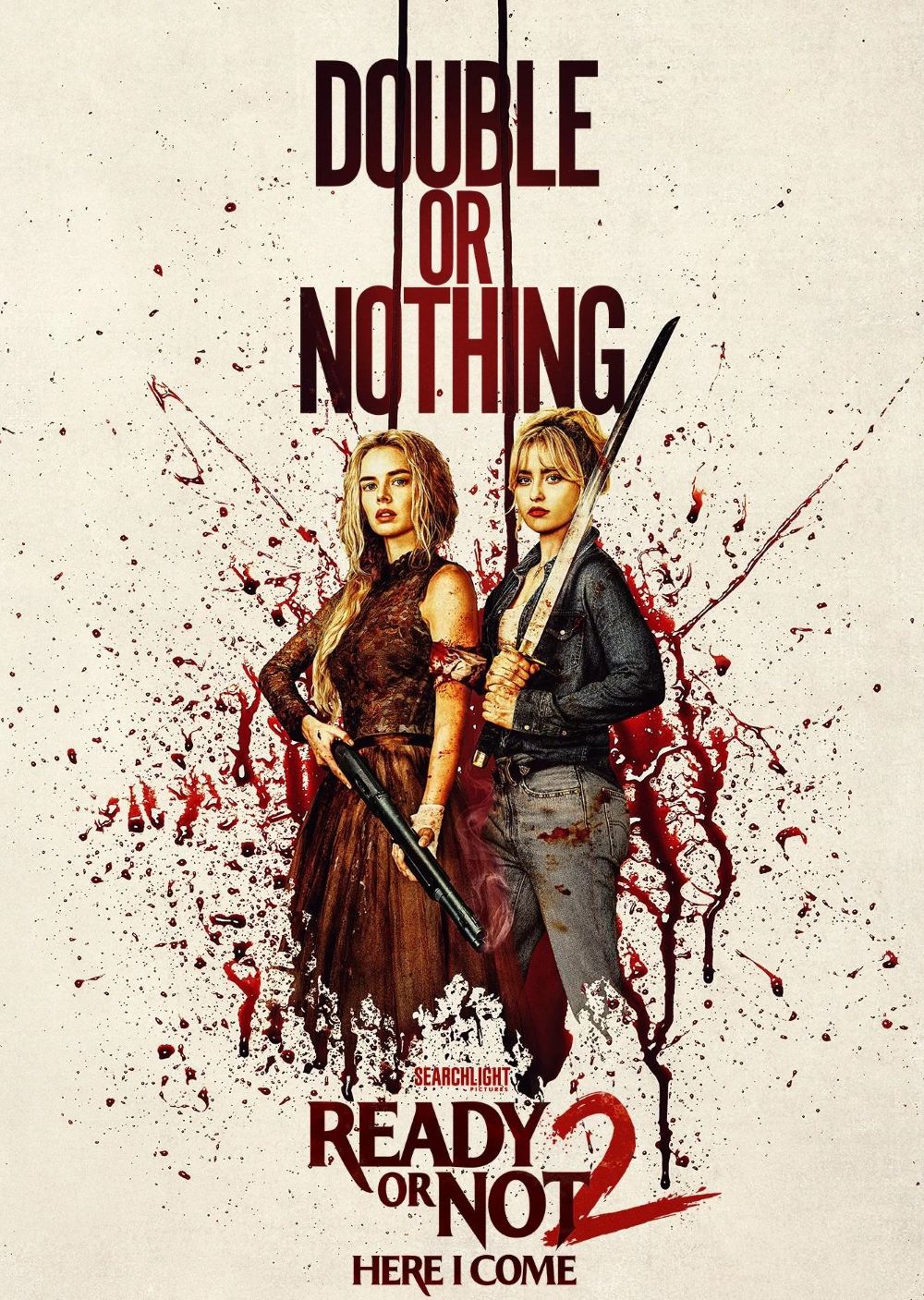
Ready or Not 2: Here I Come returns to the savage, high‑class dystopia of the Le Domas bloodline with a more manic, more crowded, and far bloodier version of the original’s “game‑night‑from‑hell” premise. Picking up years after the events of Ready or Not (2019), the film keeps Samara Weaving’s Grace at the center but expands the stakes beyond one family’s cursed estate into a loose oligarchy of ultra‑rich cultists, each with their own warped sense of tradition and entitlement. The result is a horror‑comedy that feels less like a slow‑burn ambush and more like a running, blood‑slicked marathon, where the line between satire and spectacle blurs but rarely collapses.
What distinguishes Ready or Not 2: Here I Come from many sequels is how deliberately it both leans into and pushes past the formula that made the first film such a cult hit. Rather than replay a single night of hide‑and‑seek in a shuttered mansion, this chapter sends Grace and her newly introduced estranged sister Faith (played by a suitably frazzled and sardonic Kathryn Newton) hurtling through multiple estates, country clubs, and private compounds, each governed by its own set of sadistic rules. The “game” is no longer a one‑family ritual but a broader network of wealthy families that have weaponized occult tradition as a way to justify their casual cruelty. This widening of the universe gives the film a more sprawling, almost procedural feel, as if the audience is being dragged through a gauntlet of different flavors of rich‑person depravity.
The script’s decision to pair Grace with another female lead is one of the film’s stronger creative choices. The strained sibling dynamic between Grace and Faith mirrors the original’s examination of family, but through a more grown‑up, emotionally messy lens. Their bickering and reluctant cooperation prevents Grace from simply repeating the same resilient‑final‑girl schtick; instead, she becomes a kind of worn‑out mentor forced to drag someone else into the nightmare she barely survived. The sisters’ chemistry—equal parts snark, vulnerability, and grudging solidarity—stops the film from devolving into pure nihilism and keeps the audience invested in their survival, even when the body count around them threatens to overwhelm the narrative.
Visually, Ready or Not 2 leans harder into its gore‑buff aesthetic than the first film did. The kills are more elaborate, more inventive, and frankly more grotesque, with set‑pieces involving everything from industrial kitchen equipment to ritualized animal sacrifice and spiked pits. Director Matt Bettinelli‑Olpin and Tyler Gillett, collectively known as Radio Silence, understand that the franchise’s appeal lies as much in its darkly comic carnage as in its social commentary, and they lean into that balance with gusto. The camera lingers on the absurdity of seeing millionaires in bespoke suits and designer gowns being dismantled in grotesque, almost slapstick fashion, which heightens the film’s “eat‑the‑rich” subtext without feeling like a lecture. The horror is still visceral, but it’s also frequently absurd, which fits the tone they’ve established since the original.
The escalation of violence, however, is also the film’s most obvious point of tension. Some of the more extreme set‑pieces verge on the gratuitous, and the pacing occasionally stumbles when the movie pauses between massacres to re‑establish lore or introduce new cult families. Not every supporting antagonist lands with the same impact as the original Le Domas clan; a few of the new patriarchs and matriarchs feel more like walking punchlines than genuinely threatening presences. The film compensates by front‑loading its energy with early, high‑impact kills and goofy one‑liners, but there are stretches where the plot feels like it is waiting for the next big set‑piece rather than organically building toward it.
One of the more interesting additions to the cast is Sarah Michelle Gellar, who pops up in a mid‑film role that taps into genre‑fan nostalgia while also deepening the film’s exploration of complicity and corruption. Gellar’s character is not the altruistic hero she personified in earlier horror‑adjacent roles; instead, she embodies a kind of jaded, self‑interested survivor who has learned to weaponize the same systems of privilege that the Le Domas exploited. Her presence calls attention to the cyclical nature of abuse and privilege in the film’s world: evil tendencies don’t disappear with one family’s downfall; they simply migrate to the next generation of the wealthy and powerful. This commentary on systemic rot is not subtle, but it also doesn’t feel out of place in a franchise that has always mixed political anger with slapstick brutality.
Where Ready or Not 2 arguably falters is in its structural confidence. The original film’s strength lay in its tight runtime and single‑location claustrophobia; the sequel’s sprawling geography and ensemble of killers make it feel looser and more episodic. The middle section in particular risks feeling like a series of vignettes tied together more by tone than by forward momentum. Some of the attempted twists and revelations toward the end rush past the audience before they can fully land, and there is at least one late‑stage development that feels less like a surprise and more like a contractual obligation to franchise‑building. The film clearly wants to set up a possible trilogy, but in doing so it occasionally sacrifices the emotional and narrative payoff that would make its closing sequences truly memorable.
Even with these flaws, the core appeal of Ready or Not 2: Here I Come remains intact. Samara Weaving continues to command the screen with a mix of physical toughness and wounded intelligence, and she’s paired here with a credible foil in Kathryn Newton who pushes her character into new emotional territory. The film also maintains the sharply satirical DNA of its predecessor, using its murderous rituals as a funhouse‑mirror reflection of real‑world conversations about wealth, inheritance, and generational trauma. The kills are over‑the‑top, the politics are broad, and the pacing is uneven, but the movie never loses sight of what it wants to be: a darkly comic splatterfest that lets audiences cheer for the underdog while watching the decadent one percent spectacularly implode.
“This is some Lord of the Rings bullshit!” — Grace
Ready or Not is a sharp, nasty, and often very funny horror-comedy that turns a nightmare wedding into a vicious class satire. It works best when it embraces its wild premise with full confidence, even if some of its deeper ideas are only lightly explored.
Directed by Tyler Gillett and Matt Bettinelli-Olpin, the film follows Grace, played by Samara Weaving, on what should be the happiest night of her life, only for her new in-laws to force her into a lethal game of hide-and-seek. That setup is simple, but it gives the movie a strong engine: one part survival thriller, one part dark comedy, and one part social commentary about money, power, and inherited privilege. The elegance of the concept is that it does not need much explanation to be effective, because the rules are clear, the stakes are immediate, and the movie wastes little time before letting the chaos begin.
The biggest strength of Ready or Not is Samara Weaving’s performance. Grace is written as someone who feels believable under pressure, which matters because the film asks her to go through absurd, increasingly brutal scenarios while still retaining her humanity. Weaving handles the tonal balancing act extremely well, moving between fear, frustration, disbelief, and darkly comic determination without losing the character’s core. She gives the film an emotional anchor, and without that, the movie would risk becoming just another splatter-heavy genre exercise.
The supporting cast also deserves credit because the Le Domas family is not just rich, but memorably awful in different ways. Adam Brody, Andie MacDowell, Henry Czerny, and the rest of the ensemble help create a household that feels polished on the surface and rotten underneath. Their performances are broadly heightened, but that fits the movie’s tone. The family’s panic, incompetence, and stubborn devotion to tradition become part of the joke, and the film gets a lot of mileage out of watching these people unravel while trying to appear dignified.
Tonally, the movie is strongest when it leans into the tension between horror and comedy. The violence is graphic, but the film rarely treats gore as the whole point; instead, it uses bloodshed as part of a larger joke about entitlement and ritual. That gives the movie a mischievous energy. It wants you to laugh at the absurdity of the situation while still feeling the danger, and for the most part it succeeds. The pacing is also a real asset, since the film avoids spending too long on setup and gets to the conflict quickly. Once the game begins, it keeps finding new ways to escalate the mayhem.
Thematically, Ready or Not is clearly aiming at class resentment and inherited wealth, and that angle gives the film bite. The Le Domas family represent old money, secrecy, and self-preserving tradition, and the movie uses their ridiculous customs to expose how fragile that world really is. There is a satirical edge to how the film portrays privilege as both absurd and dangerous, especially when the family’s traditions are treated with near-religious seriousness. At the same time, the movie is not especially subtle about this, and that can be either a strength or a limitation depending on what you want from it.
That lack of subtlety is one of the film’s few weaknesses. The “eat the rich” angle is easy to understand, but it is not always developed with much nuance, and some viewers may wish the script pushed its social ideas further. The mythology behind the family’s tradition is also deliberately loose, which helps the movie stay nimble but can make the lore feel less important than the film suggests it should be. In addition, the third act gets increasingly outrageous, and while that is part of the fun, not every twist lands with the same force. A few viewers may find the ending more satisfying than the logic that gets it there.
Even so, the film’s swagger largely carries it through those rough spots. Ready or Not understands that tone is everything in a movie like this, and it keeps its balance surprisingly well for something so gleefully chaotic. It is gory without becoming tedious, funny without undercutting the danger, and mean-spirited without losing sympathy for its lead. That is not an easy combination to pull off, and the filmmakers deserve credit for making the material feel brisk and controlled rather than sloppy or overextended.
What makes Ready or Not memorable is that it knows exactly what kind of movie it is. It is not trying to be profound in the heavy, prestige-drama sense, but it is smarter than a simple bloodbath and more disciplined than a pure shock machine. Its pleasures come from its energy, its attitude, and its willingness to let a ridiculous premise keep escalating without apology. The result is a horror-comedy with enough style, bite, and performance power to remain entertaining even when its thematic ambitions are a little broader than deep.
In the end, Ready or Not is a highly watchable genre piece with a terrific lead performance, a savage sense of humor, and a premise that stays potent from beginning to end. It is not perfect, and its satire can feel a little blunt, but it delivers exactly what it promises: a tense, bloody, darkly funny ride through a family dinner from hell.
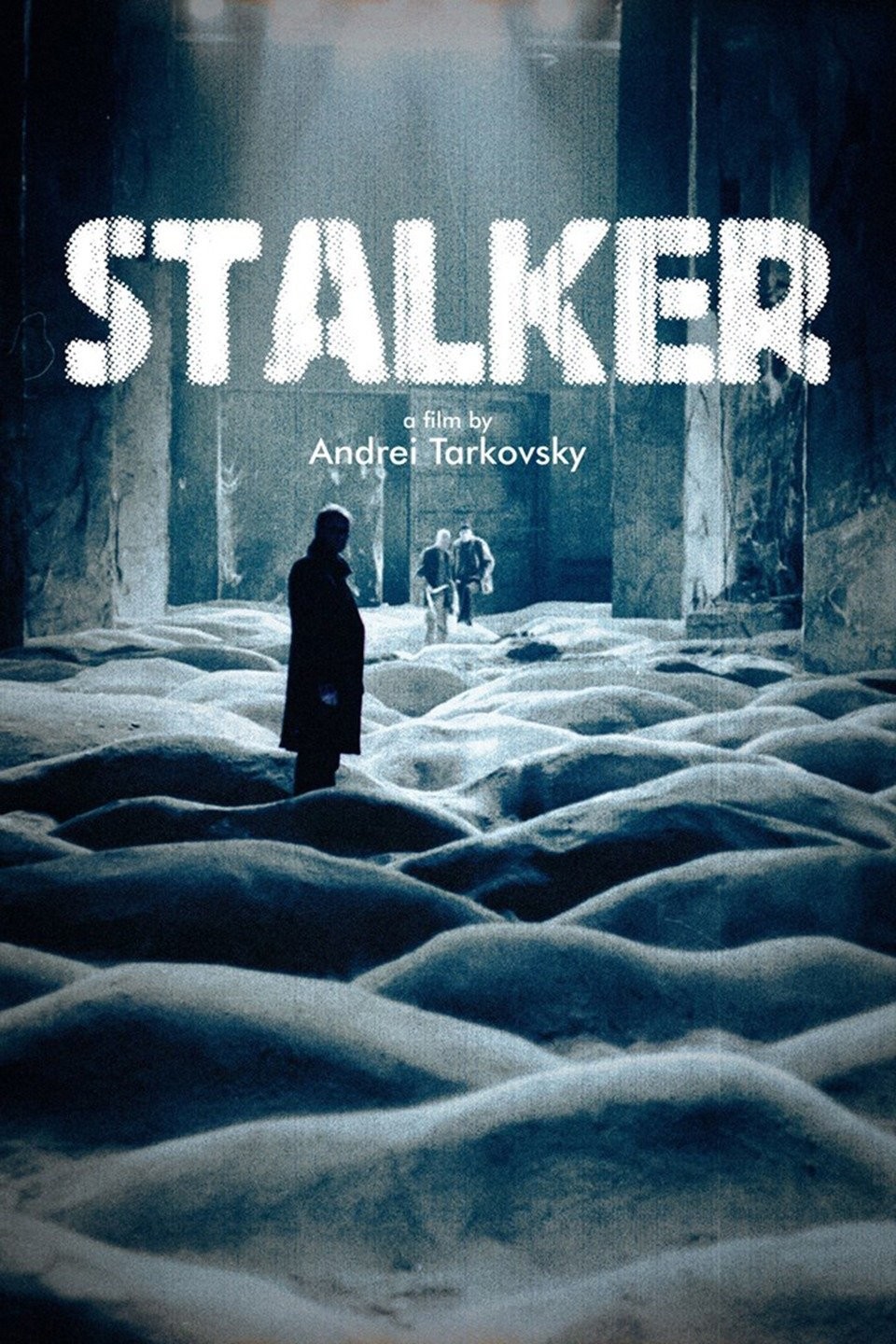
“May they believe. And may they laugh at their passions. For what they call passion is not really the energy of the soul, but merely friction between the soul and the outside world.” — the Stalker
Stalker is one of those films that feels less like a story you’re watching and more like a place you’re slowly drowning in. Directed by Andrei Tarkovsky in 1979, it’s a slow‑burn sci‑fi parable that spends most of its runtime trudging through damp, ruined spaces while three men argue about faith, desire, and whether any of it really matters. It’s not a movie you “get” on first watch; it’s the kind that lingers in your head for days, nudging you to rethink what you thought you wanted from life, and from cinema itself.
The basic setup sounds like genre bread‑and‑butter: a mysterious forbidden area called “The Zone” is guarded by the state, and only a few people—called “stalkers”—can safely guide visitors through it to a fabled Room that can grant a person’s deepest wish. Our guide is simply called the Stalker, played by Alexander Kaidanovsky with a mixture of haunted reverence and exhausted humility. He leads two men into the Zone: a jaded Writer who’s lost his inspiration and a cynical Scientist, each with their own idea of what they’re hoping to find. The tension in Stalker doesn’t really come from the physical danger of the Zone, though it’s full of traps and inexplicable phenomena; it comes from watching these three slowly peel open their own lies to themselves.
Tarkovsky’s visual strategy is almost perversely patient. He lingers on long, static shots of corroded metal, flooded tunnels, and overgrown railway tracks, while the camera glides in smooth, hypnotic movements that feel both weightless and heavy. The Zone is shot in a washed‑out sepia‑like palette, which makes it look like a half‑remembered dream or a charcoal sketch of a ruined world. The real world outside the Zone, in contrast, is the one that’s actually in sepia, while the Zone itself briefly shifts into color. This flip is a quiet but brutal joke: the thing everyone fears and wants to escape from—the decaying, post‑industrial wasteland—is actually more vivid and alive than the “safe” world, which feels duller, flatter, and spiritually dead. The longer you stay inside Stalker, the more you start to suspect that the Zone is less a physical location and more a mirror for the characters’ inner lives.
The central idea driving the film is the Room: the chamber that supposedly grants desires. The Writer and the Scientist have different theories about what the Room is doing. The Writer thinks it can expose the truth of what people really want, not what they claim to want. The Scientist rattles off more technical explanations, wondering if the Room is some kind of psychic field or natural anomaly. The Stalker, meanwhile, approaches it with a kind of religious awe; he believes the Room is a kind of judgment, a place where the universe reaches inside and shows you the core of your being. The film deliberately keeps the mechanics vague, so the focus stays on the question of human desire itself. It asks, in a very quiet way: what if the thing you want most is the thing that would actually destroy you—or worse, is the thing you’re too afraid to admit?
This is where the echoes of Dune start to creep in, even if Tarkovsky never admits it directly. Frank Herbert’s Dune is built around similar ideas: a mystical, hostile landscape (Arrakis) that tests and reshapes whoever tries to cross it, and a system of belief that promises transcendence if you’re willing to face the full, terrifying complexity of yourself. Both stories center on a guide figure—Stalker in the Zone, Paul Atreides in the Fremen’s desert—who leads outsiders into a place that follows its own rules and punishes arrogance. In Dune, the desert is a kind of crucible for destiny; in Stalker, the Zone is a crucible for the soul. The difference is that Herbert leans into prophecy and chosen‑one narrative, while Tarkovsky keeps the prophecy hazy and even mocks the men who fetishize it. The Zone doesn’t care about “chosen” people; it just quietly reflects what’s already there.
The payoff of Stalker is also the opposite of a heroic fantasy. In Dune, the protagonist’s journey to the heart of the desert culminates in a decisive, mythic confrontation that rewrites the future of an empire. In Stalker, the group actually reaches the Room, but the film refuses a conventional resolution. Instead, they argue about whether they’re even capable of deserving what they desire. The Scientist, who claims he wants to protect humanity from the Room’s power, is exposed as someone who fears losing control of his own fate. The Writer, who thinks he wants “truth” or “inspiration,” is quietly terrified that the Room might reveal how shallow his motives really are. The Stalker, in his idealism, is the closest to pure faith, but that faith is also fragile, constantly battered by the cynicism of the men he’s guiding. The Room doesn’t magically fix anyone; it just sits there, neutral, until the characters decide if they’re willing to confront the consequences of their own hearts.
Another way Stalker feels Dune‑adjacent is in its treatment of desire as a kind of test. Both works suggest that the deepest desires of human beings are not just personal wishes but political and moral statements. In Dune, the messianic fantasies of the Fremen and the machinations of the Empire reveal how easily spiritual yearning can be weaponized. In Stalker, the possibility of the Room is already politicized by the state that tries to seal it off, and by the figures who claim to want to “use” it for the greater good. The film’s closest hint at Herbert‑style mythology is in the legend of Porcupine, the Stalker’s mentor who supposedly used the Room to wish for riches and then hanged himself out of guilt. That story, told by the Writer, suggests that the Room doesn’t just grant desire—it interprets it, exposing the gap between what people say they want and what they secretly crave. It’s a more intimate, less epic version of the Bene Gesserit’s manipulation of destiny.
Philosophically, Stalker is far more pessimistic about human nature than Dune ever is. Herbert’s universe is full of grand schemes, hidden lineages, and cosmic prophecies; Tarkovsky’s world is modest, shabby, and claustrophobic. The film’s conversations are long, meandering, and sometimes self‑indulgent, but they also reveal the quiet desperation of people who feel spiritually stuck. The Writer confesses he’s tired of being celebrated for his work, the Scientist quietly fears being obsolete, and the Stalker agonizes over whether his faith is just a delusion that keeps him from a normal life. Their journey through the Zone is framed as a kind of pilgrimage, but the film undercuts the idea that pilgrimage guarantees enlightenment. The final scenes, returning to the Stalker’s home and his sickly daughter, complicate the idea of “fulfillment” even further. The Zone may have changed them, but it doesn’t heal them in the way a simpler hero’s‑journey narrative would pretend it does.
Tarkovsky’s approach to pacing and atmosphere also feels like a spiritual cousin to the way later sci‑fi filmmakers try to balance spectacle with contemplation. Directors like Denis Villeneuve, who has openly admired Stalker, use long, slow shots and carefully composed landscapes to give weight to inner psychological states. Dune (2021) and Dune: Part Twoborrow from Tarkovsky’s bag of tricks—long silences, oppressive sound design, and an almost religious reverence for the environment—but they still wrap that atmosphere around a more conventional plot and character arc. Stalker, by contrast, barely clings to plot at all. It’s closer to a walking meditation, where the real action is happening in the pauses between lines of dialogue, in the way the camera hovers over a puddle or a rusted pipe as if it’s discovering something sacred in the mundane.
In the end, Stalker feels less like a straightforward sci‑fi film and more like a religious parable wearing the costume of genre. It asks the same questions that Dune subtly raises—what do we truly want, what are we willing to sacrifice for it, and how much do we actually understand ourselves—but it answers them with hesitation, doubt, and a kind of exhausted tenderness. The Zone isn’t a promised land; it’s a confession booth. The Room isn’t a magic button; it’s a mirror. And the Stalker himself isn’t a fearless explorer, but a broken man who keeps leading others into the dark because he can’t stop believing that, somewhere in that darkness, there might be a flicker of grace that could make it all worth it. If Dune is about the myth of destiny, Stalker is about the fragile, uncertain labor of faith in a world that keeps looking more like a ruined factory than a cathedral.
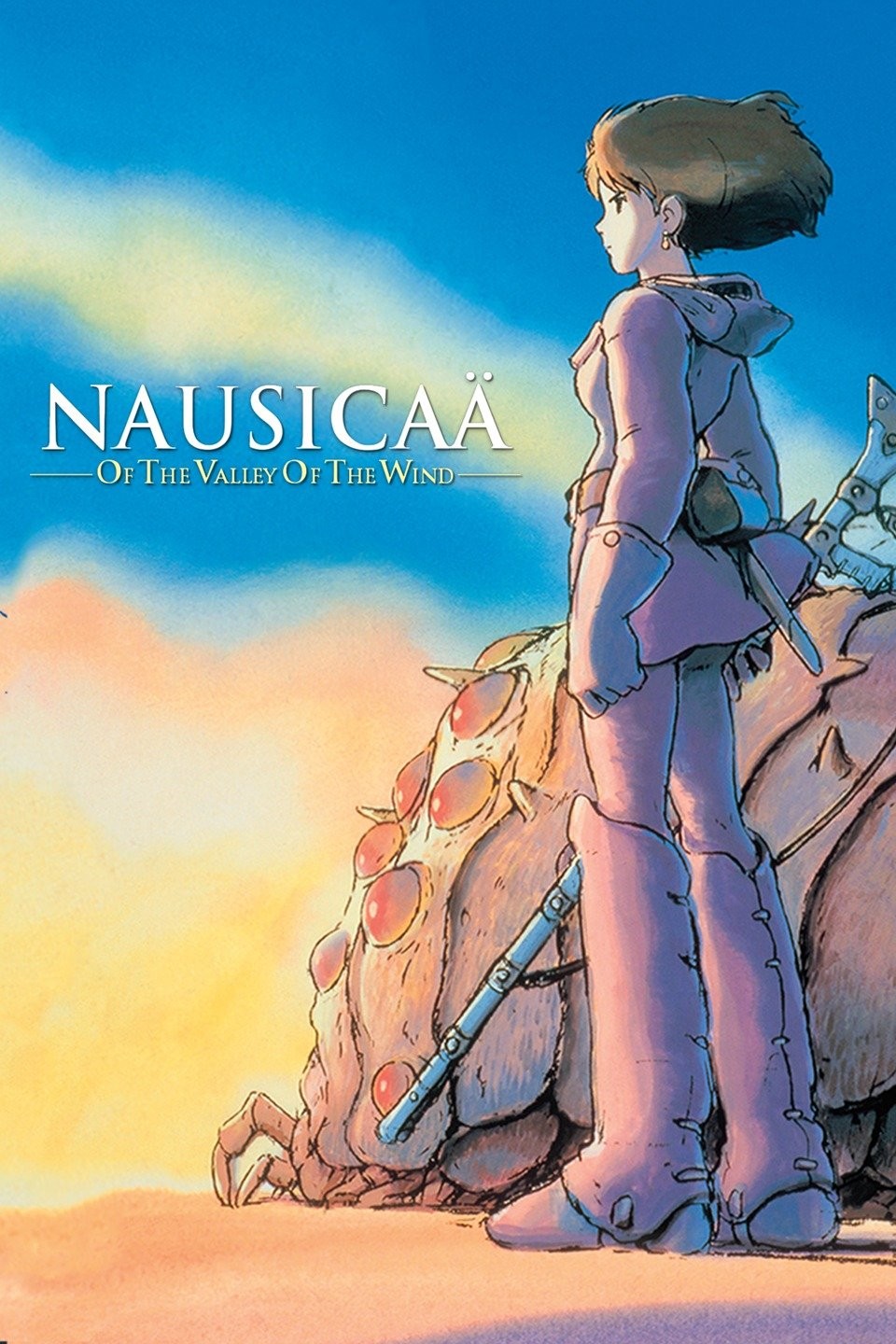
“Every one of us relies on water from the wells, because mankind has polluted all the lakes and rivers. But do you know why the well water is pure? It’s because the trees of the wastelands purify it! And you plan to burn the trees down? You must not burn down the toxic jungle!” — Nausicaä
Nausicaä of the Valley of the Wind stands out as Hayao Miyazaki’s groundbreaking 1984 anime film that blends epic adventure with profound environmental and anti-war messages. This post-apocalyptic tale, adapted from his own manga, follows a young princess fighting to bridge humanity and nature in a toxic world overrun by giant insects.
Imagine an Earth a thousand years after humanity’s self-inflicted apocalypse called the Seven Days of Fire, where massive God Warriors wiped out civilization and left behind the Sea of Corruption—a sprawling, poisonous jungle teeming with mutated bugs like the massive, trilobite Ohmu. In this harsh landscape, pockets of survivors cling to life, and the idyllic Valley of the Wind thrives thanks to constant sea breezes that keep the toxic spores at bay, powering windmills for their farms. Enter Nausicaä, the 16-year-old princess and ace glider pilot, who’s not your typical royal—she dives into the jungle without fear, collects spores, and chats with insects like they’re old pals. Right from the opening, when she calms a raging Ohmu with flash bombs after it chases her mentor Lord Yupa, you know she’s special: brave, empathetic, and way ahead of her people in understanding that the Fukai (the jungle’s name) isn’t just a killer but maybe Earth’s way of healing itself.
The plot kicks into high gear when a hulking Tolmekian airship crashes in the Valley, swarmed by insects and spilling fungi that threaten the crops. Nausicaä rushes in, saving a dying Pejite princess named Lastelle, who begs her to destroy the cargo—a calcified embryo of one of those ancient God Warriors. Too late; Tolmekian forces invade under the steely Princess Kushana, who assassinates Nausicaä’s dad, King Jhil, and claims the embryo to hatch it as a weapon against the Fukai. Kushana’s plan? Revive the beast, burn the jungle, and reclaim the planet for humans, no matter the cost. Nausicaä gets dragged along as a hostage, but chaos ensues: Pejite Prince Asbel (Lastelle’s brother) attacks the convoy in revenge, leading to crashes and a wild glider chase where Nausicaä saves him, only for them to plunge through the jungle floor into a hidden miracle—an underground world of pure water and soil where the Fukai’s roots are actually detoxifying the planet.
Back in the Valley, villagers revolt against the Tolmekians guarding the hatching Warrior, but things spiral when Pejite survivors reveal they lured the Ohmu stampede to the Valley using a tortured baby Ohmu as bait—payback for Tolmekia destroying their city. Nausicaä escapes Pejite captivity (with help from Asbel’s mom and sympathizers), hijacks the baby Ohmu carriers, and races to stop the horde. In one of the film’s most gut-wrenching scenes, she confronts the enraged Ohmu sea, gets trampled to death (or so it seems), her blue-stained dress making her look like a martyr. But the insects heal her with their golden tentacles, lifting her like a messiah in a field of gold, fulfilling a prophecy and halting the rampage just as the premature God Warrior melts down after a couple of blasts. Tolmekians bail, Pejites join the Valley rebuild, and a clean shoot sprouts under the Fukai—hope amid ruin.
What makes Nausicaä of the Valley of the Wind pop off visually is Miyazaki’s hand-drawn mastery, even on Topcraft’s tight nine-month schedule with a million-dollar budget. The gliders (especially her sleek Möwe) slice through skies with fluid grace, Ohmu herds churn like living tsunamis, and the Fukai’s spores shimmer in surreal blues and golds—equal parts beautiful and deadly. Action pops without feeling gratuitous: dogfights buzz with tension, sword clashes ring true (Nausicaä’s gladiator-style fights against armored goons are badass), and that underground reveal flips the script with bioluminescent wonder. Joe Hisaishi’s debut score nails it—haunting flutes for Nausicaä’s flights, pounding percussion for stampedes, and that ethereal title theme sung by Narumi Yasuda that sticks in your head. It’s proto-Ghibli polish before Ghibli existed, proving Miyazaki’s detail obsession (he redrew frames himself).
Nausicaä of the Valley of the Wind isn’t just pretty; it’s a thematic powerhouse that demands attention in our climate-anxious era. At its core, it’s an eco-fable flipping the “man vs. nature” trope: the Fukai isn’t evil—it’s purifying humanity’s mess from industrial hubris, echoing real-world pollution like Minamata Bay that inspired Miyazaki. Nausicaä embodies harmony, tending a secret clean garden proving spores thrive without toxins, and her big revelation underground shows patience over destruction wins. It shares striking parallels with Frank Herbert’s Dune, where both stories unfold in post-apocalyptic or barren landscapes where survival hinges on mastering harsh environments—the Sea of Corruption’s toxic sprawl mirrors Arrakis’s endless dunes, both teeming with misunderstood “monsters” central to their ecosystems. Nausicaä glides over spore-filled jungles much like Paul Atreides rides sandworms, learning to respect rather than conquer these forces; her calming of the Ohmu herd parallels the Fremen’s symbiotic bond with Shai-Hulud, where outsiders must earn nature’s trust through ritual and empathy. The Fukai purifies Earth’s poisoned soil over generations, just as the spice melange ties Arrakis’s fate to galactic power, forcing characters to confront interdependence over exploitation.
Leadership and prophecy drive the parallels deeper: Nausicaä, the blue-clad princess fulfilling a cryptic prophecy through self-sacrifice, embodies the Kwisatz Haderach archetype in Paul, both reluctant saviors burdened by destiny amid warring factions. Tolmekian invaders seeking God Warriors evoke Harkonnen aggressors hungry for spice dominance, while Pejite’s desperate tactics reflect Fremen guerrilla warfare—cycles of revenge where ecology becomes a weapon. Miyazaki drew direct inspiration from Dune, infusing anti-colonial vibes: Nausicaä’s diplomacy rejects imperial conquest, urging coexistence, akin to Herbert’s critique of messiahs sparking holy wars.
Anti-war vibes hit hard too—no pure villains, just cycles of fear and revenge: Tolmekia’s aggression mirrors Pejite’s desperation, both blind to coexistence. Kushana’s not a cartoon baddie; she’s pragmatic, scarred by loss, and her arc hints at redemption. Buddhism creeps in via greed, delusion, and ill will fueling conflict, with Nausicaä’s self-sacrifice as enlightened compassion. Influences like Tolkien and Le Guin shine through, but Miyazaki makes it uniquely hopeful: life’s interconnected, redemption’s possible if we listen.
Nausicaä herself is the heart, a rare female lead who’s warrior, scientist, diplomat—feminine empathy meets masculine grit without preachiness. She leads by diving into danger (ripping off her mask to prove clean air, tackling Pejite goons), inspiring loyalty because she’d never ask what she won’t do. Sidekicks shine: fox-squirrel Teto’s adorable comic relief, Yupa’s wise wanderer vibe, Mito’s gruff loyalty, Obaba’s prophecy-dropping mysticism. Asbel adds rival-turned-ally spark, Kushana steel-spined foil. Voices (Sumi Shimamoto’s Nausicaä especially) convey emotion perfectly; Disney’s 2005 dub (Alison Lohman, Patrick Stewart, Uma Thurman) holds up too, sans the botched 80s Warriors of the Wind edit Miyazaki hated.
Legacy-wise, this flick birthed Studio Ghibli—Miyazaki and Takahata founded it post-success, grossing ¥1.48 billion in Japan alone. Critically adored (91% Rotten Tomatoes, top animated film polls), it influenced games (Panzer Dragoon), Star Wars nods, and eco-anime forever. The manga dives deeper (darker, more conflicted Nausicaä over 12 years), but the film stands alone as pure, idealistic storytelling.
So why is Nausicaä of the Valley of the Wind a must-watch? In a world choking on plastic oceans and endless wars, it slaps you with urgency: destroy nature, destroy ourselves; choose empathy, find salvation. These Dune echoes make it a killer companion for sci-fi fans, blending Miyazaki’s hopeful twist on Herbert’s tragedy to prove timeless ideas thrive across media. It’s thrilling adventure—no slow bits, every frame earns its runtime—with heart that lingers, urging coexistence over conquest. Miyazaki’s optimism shines: even post-apocalypse, one person’s vision sparks change. Skip it, miss anime’s soul laid bare; watch it, level up your worldview. Perfect for sci-fi fans, eco-warriors, or anyone craving stories that stick. Dive in—you’ll emerge healed, like Nausicaä from the Ohmu sea.
“We came here for a rescue mission, and now we’re just something on the menu.”— said by someone, maybe.
Planet Dune is a scrappy, low‑budget sci‑fi creature feature that knows exactly what it is, and that self‑awareness helps it go down easier. It is not a polished prestige production, but it does deliver a simple survival story, some intentionally goofy monster‑movie energy, and enough visual invention to keep genre fans from completely checking out. It also practically announces itself as another in‑name‑only knock‑off in the vein of The Asylum’s mockbuster factory, clearly trying to ride the coattails of Denis Villeneuve’s Dune: Part One. The timing, the desert‑planet setting, the sand‑worm menace, and the threadbare plot all feel calculated to cash in on the renewed mainstream buzz around the Dune name, rather than to build something original.
From the start, Planet Dune leans hard into its B‑movie identity. The setup is straightforward: a rescue mission heads to a desert planet, only to find itself trapped in a fight for survival against giant sand worms. That premise is thin, but the movie understands the appeal of the concept and does not waste time pretending to be deeper than it is. The result is a film that moves quickly, stays focused on its basic threat, and mostly avoids getting bogged down in overcomplicated mythology. At the same time, every decision feels like a stripped‑down version of choices made in Villeneuve’s Dune—just without the budget, scope, or attention to subtext. It’s the kind of project that exists because someone saw a big‑budget, heavily marketed Dune release and realized they could slap a vaguely similar title on a sand‑worm actioner and sell it to undiscerning genre fans.
What works best is the movie’s commitment to its own absurdity. The sand worms are the obvious attraction, and the film uses them as a constant source of danger rather than saving them for a single big reveal. That gives the story a pulpy urgency, and in a movie like this, momentum matters more than subtlety. The effects are clearly on a modest budget, but they are used with a certain charm, and the film often benefits from embracing cheapness instead of trying to hide it. That kind of approach can make a low‑budget creature feature feel more fun than fake grandeur ever could, even if it never comes close to matching the visual or thematic richness of Villeneuve’s work.
There is also a strange meta‑layer in the casting of Sean Young, who played Chani in David Lynch’s Dune (1984). Her presence turns Planet Dune into a weird echo chamber of the Dune universe: it’s a cheap, micro‑budget knock‑off trading on the name and imagery of a franchise, while also bringing in a legacy face from one of the older big‑screen adaptations. That gives the film a faintly nostalgic, almost self‑aware vibe, as if it’s winking at fans who know the history of Dune on screen, even while it rushes through a script that’s functionally just a monster‑survival thriller with a desert‑planet paint job. It’s a choice that underscores how this movie is less about telling its own story and more about trading on the weight of other people’s Dune work.
The pacing is also one of the movie’s stronger points. A lot of smaller sci‑fi films spend too much time explaining the world or padding out the runtime with empty dialogue, but Planet Dune keeps things relatively lean. It gets in, sets up the threat, and lets the characters deal with one problem after another. That makes it easier to forgive some of the rough edges, because the film does at least understand that the audience is here for monster attacks, not a lecture on space politics. Compared with Villeneuve’s slow‑burn world‑building and political maneuvering, Planet Dune feels like a stripped‑down amusement‑park version of the same concept: same core idea, none of the fuss.
That said, the movie is not above criticism. The biggest issue is that the characters are more functional than memorable. They do what the plot requires, but they are not written with enough personality to make every relationship or loss land with real weight. When the film pauses for emotional beats, those moments can feel undercooked because the script has not given the cast enough room to become more than survival‑movie placeholders. In a genre piece like this, that does not automatically sink the experience, but it does limit the impact, especially when viewers are already thinking of how Villeneuve’s Dune strained and expanded its characters across multiple films.
The performances are mixed in the way you would expect from a project like this. Nobody seems to be phoning it in, and that effort matters, but the material does not always give them much to build on. Some scenes benefit from the actors treating the material seriously, while others feel a little stiff because the dialogue is plainly there to move people from one danger zone to the next. The movie works best when it leans into the adventure and stops pretending it is a character drama. Sean Young gives a more grounded presence, but even that can’t fully offset how thin the script is; her casting feels more like a symbolic nod to Dune’s cinematic history than a way to deepen this particular story.
Visually, Planet Dune has the same plus‑and‑minus quality common to many independent sci‑fi films. The desert setting gives the movie a strong sense of scale, and even when the effects are rough, the barren environment helps sell the idea of isolation. At the same time, there are moments where the limitations are obvious, and the production does not always disguise them elegantly. Still, the film’s look is consistent enough that it rarely becomes distracting in a way that breaks the whole experience. Compared with Villeneuve’s meticulously composed frames and sweeping desert vistas, Planet Dune feels like a backyard‑budget cousin: same basic palette, significantly smaller scale.
There is also a pleasant lack of pretension here. Some genre movies try to compensate for weak writing by becoming self‑important, but Planet Dune seems content to be a monster chase with a space wrapper. That honesty is refreshing. It does not make the movie great, but it does make it easier to enjoy on its own terms. If you approach it like a serious epic, it will probably disappoint you, especially with the memory of Villeneuve’s Dune still fresh in your mind. If you approach it like a scrappy midnight movie—one that exists mainly because someone saw Dune in theaters and figured they could sell a knock‑off soundtrack on the same name—it has a better shot at working.
The film’s weaknesses are still hard to ignore. The story is very familiar, and viewers who have seen enough desert‑planet sci‑fi will recognize the beats immediately. There is also some repetition in how the danger is staged, and not every sequence feels equally inspired. A tighter script and a stronger sense of character could have lifted the whole thing a few notches. As it stands, Planet Dune is more effective as a mood piece and monster showcase than as a fully satisfying drama. It never reaches for the political, religious, or ecological weight of Villeneuve’s Dune, and it never really tries; it’s closer to a DVD‑rack detour for genre fans who just want sand worms and a vaguely Dune‑adjacent name.
What saves it is that it rarely feels cynical. Even when it is clumsy, it is trying to entertain rather than impress. That gives the movie a bit of personality, and personality goes a long way in low‑budget genre cinema. The casting of Sean Young, the desert‑planet premise, and the obvious Dune name‑play all point to a project that knows exactly what it is: a small‑scale, opportunistic creature feature that wants to surf the wave of a bigger franchise without the heavy lifting. It may not be the kind of film that wins over skeptical viewers, but it is also not a total write‑off. For viewers in the mood for a cheap, goofy, sandworm‑infested sci‑fi ride—one that openly trades on the legacy of both Villeneuve’s and Lynch’s Dune—Planet Dune gets the job done on its own very modest terms.
“To know the future is to be trapped by it.” — Leto II Atreides
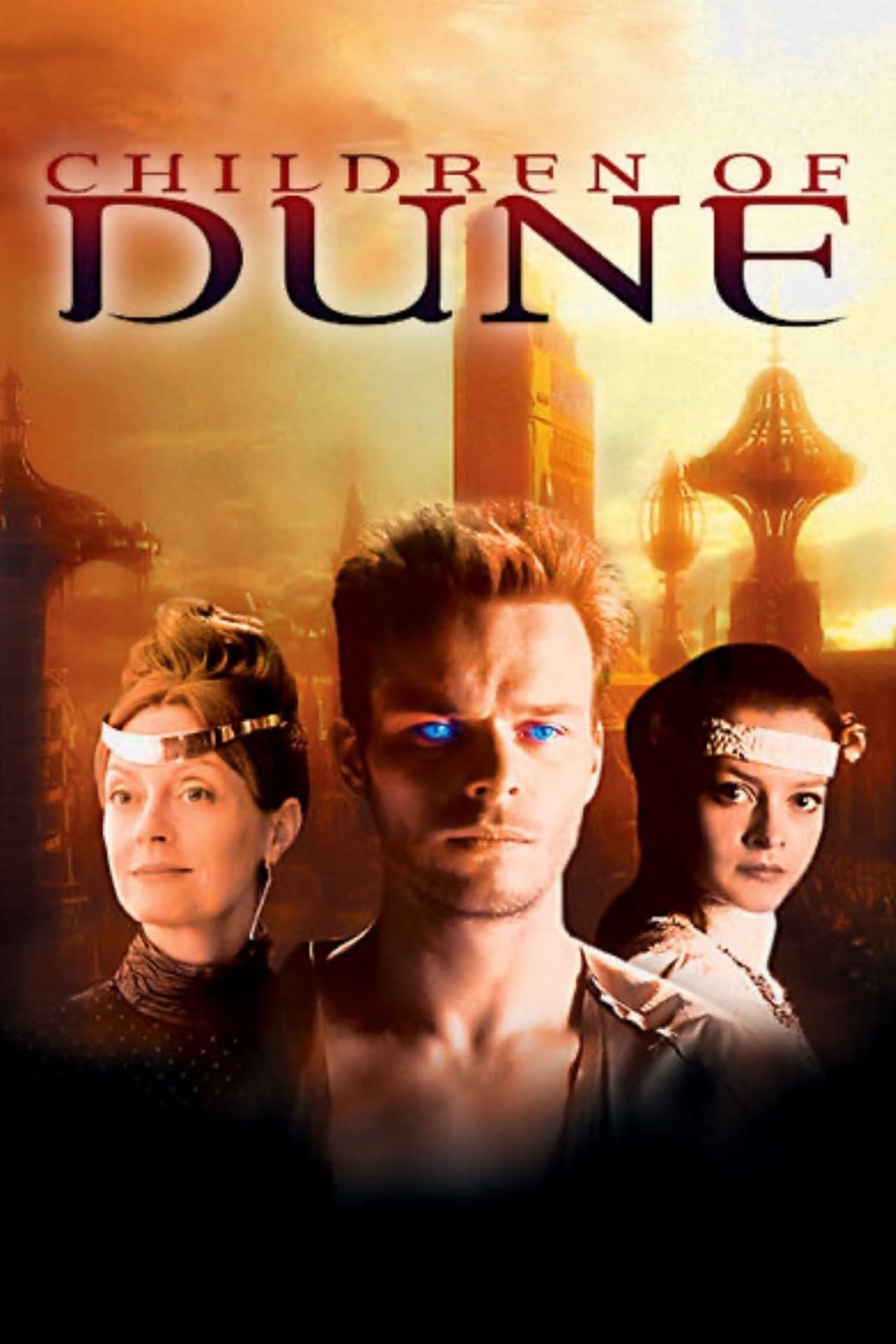
Children of Dune is one of those sci-fi miniseries that feels a little rough around the edges, but still manages to hit with real ambition, atmosphere, and a lot more emotional weight than its modest TV budget might suggest. It is based on Frank Herbert’s Dune Messiah and Children of Dune, aired on the Sci Fi Channel in 2003 as a three-part miniseries, and it serves as a continuation of the 2000 Frank Herbert’s Dune adaptation.
What makes this version stand out is that it doesn’t just try to retell a story about desert politics and giant worms. It digs into legacy, prophecy, religious fanaticism, and the terrifying cost of being treated like a messiah. That sounds heavy, and it is, but the miniseries keeps moving with enough drama, betrayals, and strange mythic energy that it rarely feels static.
The opening section works especially well because it immediately reminds you that Paul Atreides’ victory was never a clean one. By the time the story gets going, his empire is already rotting from the inside, and the series makes a strong case that power on Arrakis is always poisoned by something, whether it is politics, faith, or the sand itself. The shift from Paul’s once-legendary rise to the unraveling of the world around his children gives the story a tragic tone that fits Herbert’s universe perfectly.
A big reason the miniseries works is that it understands Dune is not really about flashy action, even though it has some. It is about ideas, and this adaptation is willing to spend time on them. The show’s best material comes from the way it frames religion as both weapon and trap, especially once the myth of Muad’Dib starts consuming the people who worshiped him. That theme gives the whole thing a haunted feeling, like everyone is living inside a prophecy they do not fully understand.
The cast does a lot of heavy lifting, too. Alec Newman brings a wounded, exhausted quality to Paul that fits the role well, and his scenes carry real sadness because he feels like a man who has seen too far and cannot unsee it. Jessica Brooks, James McAvoy, and Julie Cox all help ground the family drama, while Susan Sarandon brings a cold intensity that gives the political side of the story some bite. Even when the dialogue gets stiff, the actors usually sell the material better than the script itself does.
One of the most interesting choices in Children of Dune is how it treats the twins, Leto II and Ghanima, as more than just plot devices. Their importance is obvious from the beginning, but the series gradually builds them into the real center of gravity. That works because the story is partly about inheritance, and these kids are inheriting not just a throne, but a nightmare of destiny, expectation, and manipulation. The series knows that the most dangerous thing in this universe is not a blade or a bomb, but a future someone insists is already written.
The production design is another area where the miniseries earns a lot of goodwill. It has that early-2000s TV look, sure, and some effects are clearly limited by the era, but the sets, costumes, and overall visual imagination give it a strong sense of place. Arrakis feels harsh and ceremonial at the same time, which is exactly what it should feel like. The costumes also help sell the political divide between factions, making the whole thing look more like a living empire than a generic sci-fi stage.
There are moments where the miniseries feels very theatrical, almost to a fault. Characters occasionally deliver lines with so much seriousness that the show risks sounding like it is declaring its themes instead of dramatizing them. That said, this is also part of the charm. Children of Dune is not embarrassed by its own scale or its own weirdness, and that confidence helps it pull off material that could easily have collapsed under a more self-conscious approach.
The pacing is mostly solid across the three parts, though it does have the usual miniseries issue of compressing a very large story into a limited runtime. Because it covers most of Dune Messiah in the first installment and then adapts Children of Dune in the later parts, some transitions feel abrupt and some developments move faster than they probably should. Still, the adaptation largely keeps its focus, and it is impressive how much story it packs in without turning into total chaos.
If there is a weakness here, it is that the miniseries can sometimes feel like it is working harder to explain the mythology than to make you feel it. Herbert’s world is notoriously dense, and this version does not always smooth that out for viewers who are not already familiar with the books. A newcomer could easily feel like they have been dropped into the middle of a dynastic collapse with very little hand-holding. But for a follow-up to Frank Herbert’s Dune, that density is more of a feature than a bug.
The best compliment I can give Children of Dune is that it respects the seriousness of its material without becoming completely lifeless. It has the courage to be grand, strange, and a little mournful all at once. Even when the execution is uneven, the miniseries understands that the heart of this saga is not a simple battle for power. It is the burden of seeing the future and realizing it may be worse than the present.
As a sequel, it improves on the sense of scale and emotional consequence from the earlier adaptation. It feels less like an introduction to a universe and more like the tragic fallout of one. That makes it a more satisfying watch for viewers who want Dune to feel like an epic family tragedy instead of just a sand-covered political thriller. The fact that it does this on TV, with all the limitations that implies, makes the achievement even more impressive.
In the end, Children of Dune is a flawed but memorable miniseries that succeeds because it commits to its own strange seriousness. It may not be sleek, and it may not always be easy to follow, but it has ideas, mood, and a genuine sense of doom that suits Herbert’s universe. For fans of the books, it is one of the more interesting screen adaptations because it is willing to lean into the philosophical and tragic side of the saga rather than sanding it down into something safer. For everyone else, it is still a fascinating piece of early-2000s sci-fi television that swings bigger than most shows of its era.
“Mercy is a word I no longer understand.” — Paul Atreides
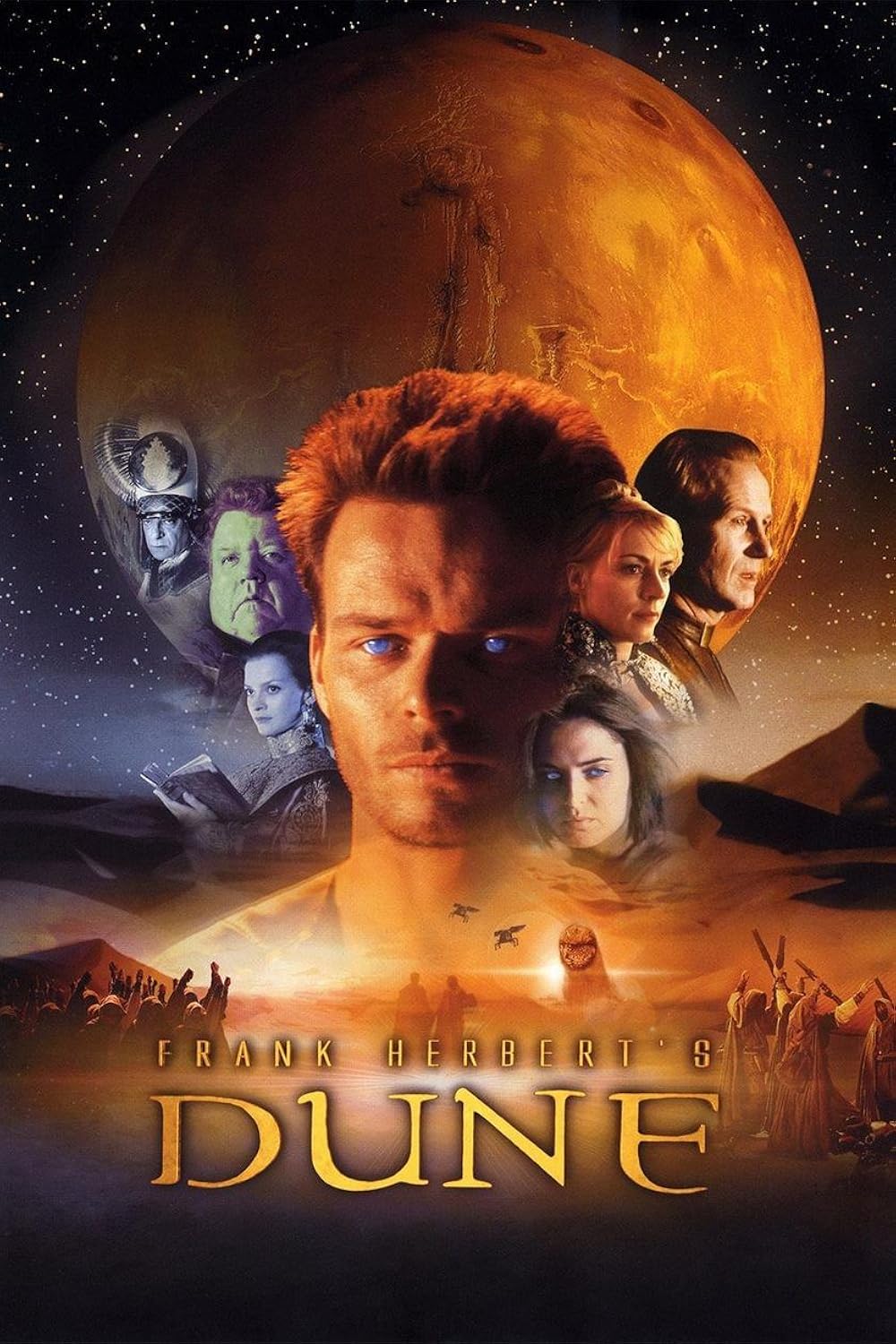
Frank Herbert’s Dune, the 2000 Syfy Channel miniseries, stands as a scrappy yet heartfelt attempt to tame the untamable beast that is Frank Herbert’s sprawling sci-fi epic Dune. Clocking in at nearly four hours across three parts, it doesn’t pretend to be the cinematic knockout punch of Denis Villeneuve’s Dune: Part One and Dune: Part Two, nor does it dive headfirst into the psychedelic rabbit hole of David Lynch’s notoriously bonkers 1984 film. Instead, it carves out its own lane as the faithful workhorse adaptation—the one that prioritizes stuffing in every major plot thread, faction rivalry, and philosophical nugget from the novel without apology. That dogged completeness earns it major points from book purists, even if the early-2000s TV production values leave it looking like a glorious mess next to today’s blockbuster standards. It’s the version you revisit when you want Dune’s full political chessboard laid bare, rough edges and all.
Right from the opening narration, you sense this miniseries is playing a different game. While Villeneuve hooks you with those thunderous sandworm roars and vast desert expanses that make Arrakis feel like a character unto itself, and Lynch blasts you with industrial-gothic sets and nose-plug close-ups that scream “weird,” the Syfy take eases in with expository voiceover and sweeping shots of Caladan’s misty nobility. The budget screams made-for-TV: thopters wobble like cheap models on strings, sandworms shimmer with dated CGI that wouldn’t pass muster even in 2000, and interstellar travel feels more like a quick fade than a hyperspace spectacle. Yet there’s charm in the earnestness—the ornate costumes drip with imperial excess, from House Atreides’ regal blues to the Harkonnens’ sickly pallor, capturing Herbert’s baroque universe better than Lynch’s fever-dream excess or Villeneuve’s minimalist severity. It’s alien and opulent without trying to reinvent the wheel visually, letting the story’s inherent strangeness do the heavy lifting.
What truly sets this adaptation apart is its unhurried commitment to Dune’s core as a tale of interstellar realpolitik, not just laser swords and monster chases. The miniseries luxuriates in the scheming: extended scenes of Bene Gesserit whispering manipulations across generations, Emperor Shaddam IV plotting from his golden throne, and the Spacing Guild’s monopoly stranglehold get room to breathe. Lynch crammed this into a frantic 137 minutes, resorting to on-screen crawls and “the spice must flow” explainers that border on parody, while Villeneuve elegantly implies much of it through mood and subtext, trimming for pace. Here, the trap closes deliberately—Duke Leto’s honorable doom unfolds with all its tragic inevitability, Paul’s Fremen transformation simmers with ecological and messianic tension, and the Baron’s depravity feels like a rotting empire’s symptom. It’s talkier, sure, but that density mirrors the novel’s heady mix of ecology, religion, and colonialism, making the good-vs-evil surface hide a much murkier power grab.
Faithfulness is the miniseries’ superpower, and stacking it against the films drives that home. Lynch’s Dune is a directorial fever dream—brilliant in bursts (those Guild Navigators floating in spice tanks are iconic), but it mangles the timeline, invents “weirding modules” and pain boxes that Herbert never dreamed of, and caps with a cheesy resurrection and empire-toppling finale that feels like fanfic. Villeneuve’s duology is a masterclass in restraint and awe: Part One builds unbearable dread through silence and scale, Part Two unleashes Paul’s holy war turn with chilling clarity, but both demand sequels and sacrifice chunks like Thufir Hawat’s full betrayal arc or the ecological long-view for runtime efficiency. The Syfy version? It hits about 90% of the book’s beats in one self-contained package—Paul drinks the Water of Life, rides the first worm, unites the tribes, all while fleshing out Yueh’s guilt, Gurney’s survival, and Irulan’s expanded role as a scheming narrator who spies on the action. Smart tweaks like inner-monologue voiceovers clarify the mental gymnastics without Lynch’s exposition overload.
The ensemble punches above the production’s weight, delivering performances that ground the sprawl. Alec Newman’s Paul Atreides evolves from callow youth to burdened Kwisatz Haderach with a steely intensity—more seasoned than Kyle MacLachlan’s wide-eyed innocent in Lynch’s film or Timothée Chalamet’s introspective minimalist in Villeneuve’s, but convincingly haunted by prescient visions. William Hurt’s Duke Leto radiates quiet nobility, a paternal rock that Oscar Isaac matches with fiercer charisma but less screen time. Saskia Reeves’ Lady Jessica is a coiled operative, mastering the Voice while Rebecca Ferguson brings feral maternal fire and Francesca Annis floats as an ethereal priestess. Ian McNeice’s Baron Harkonnen oozes grotesque glee, echoing Kenneth McMillan’s scenery-chewing blimp but with slyer malice; Stellan Skarsgård’s version chills as a tactical monster sans the floating fat-suit camp. Chani fares best as Barbora Kodetová’s fierce Fremen equal, outshining Lynch’s rushed Sean Young and edging Zendaya’s mythic close-ups with raw tribe loyalty. Even bit players like Robert Wisdom’s Idaho shine brighter than their film counterparts.
Directorial choices by John Harrison emphasize theatricality over cinema flair, turning court scenes into operatic standoffs that suit Dune’s ritualistic pomp. Princess Irulan’s upgrade—from bookend quotes to active imperial intriguer—adds a vital scheming perspective Lynch ignored and Villeneuve teases for later. The gom jabbar test throbs with intimate terror, Fremen sietches pulse with cultural depth, and the final duel crackles despite modest effects. Pacing lags in spots—the Atreides downfall stretches, subplots like Feyd-Rautha’s gladiatorial intro feel obligatory—but that thoroughness lets overlooked gems like the dinner-table tensions and spice-blow ecology lectures land fully. Brian Tyler’s score swells bombastically, aping Zimmer’s primal dread without the subtlety, yet it propels the saga forward.
Flaws glare under modern scrutiny: effects age like milk (those ornithopters!), editing chops unevenly between threads, and some line deliveries veer stagey next to Villeneuve’s hushed precision or Lynch’s unhinged energy. It lacks the 1984 film’s quotable weirdness (“The sleeper must awaken!”) or the recent epics’ IMAX transcendence, feeling more like a filmed audiobook than immersive event cinema. Still, that scrappiness fits Dune’s prickly soul—ornate yet precarious, cerebral yet visceral. Herbert crafted a warning about heroes and empires; this miniseries trusts you to unpack it, preserving the unsettling texture the smoother films sometimes polish away.
Revisiting after the others clarifies its niche perfectly. Lynch’s Dune is the cult oddity—fractured, visionary, endlessly memeable despite narrative chaos. Villeneuve’s saga is prestige sci-fi at its peak: disciplined, subversive, a slow-burn symphony begging Part Three. The Syfy miniseries? Your completist’s deep cut—comprehensive, unpretentious, ideal for dissecting the guilds, houses, and prophecies on a rainy weekend. Constraints hobble the spectacle, but the ambition to honor Herbert’s labyrinthine blueprint shines through.
Ultimately, Frank Herbert’s Dune miniseries claims no crowns as the ultimate adaptation—that debate rages between Lynch’s deranged heart, Villeneuve’s cool mastery, or the book itself. At around 1150 words, it’s a worthy underdog: earnest, exhaustive, and true to the novel’s tangled genius. Fire it up if you crave Dune’s unfiltered intrigue over heart-pounding visuals. It respects the spice’s full flow, worms and all.


 Through the Shattered Lens