Retro Television Review: St. Elsewhere 4.3 “Haunted”


Welcome to Retro Television Reviews, a feature where we review some of our favorite and least favorite shows of the past! On Fridays, I will be reviewing St. Elsewhere, a medical show which ran on NBC from 1982 to 1988.  The show can be found on Daily Motion.
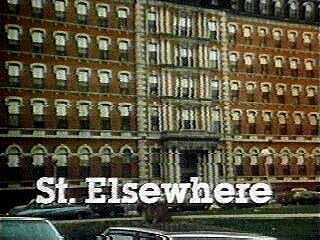
I apologize for the delay in posting this review.  I was feeling under the weather last week.  This week, I feel well enough to share this review of one of the most emotional hours of television that I’ve ever watched.

Episode 4.3 “Haunted”

(Dir by Mark Tinker, originally aired on October 23rd, 1985)

This episode begins where the previous one ended.  After crashing his car, Stephen Craig and his wife, Yvonne, are rushed to the Emergency Room.  Despite the best efforts of Drs. Chandler and Axelrod, Stephen dies in the ER.  Yvonne goes into labor, eventually giving birth to Dr. Craig’s granddaughter.  Dr. Mark Craig and Ellen show up shortly after Stephen has been pronounced dead.  While Ellen immediately slips into denial (“That’s not Stephen!”), Dr. Craig calmly tells Chandler that he knows Chandler did everything that he could.

Throughout the episode, Ellen struggles with her grief while Mark holds back his emotions.  He suspects that Stephen was once again using drugs and he even goes to the autopsy to see for himself.  While Stephen’s organs are being weighed, Dr. Craig starts to talk about how he was never close to his son but how, when Stephen was young, they used to read Dr. Seuss together.  “Thank you Sam I Am,” Dr. Craig recites under his breath, right before hearing that Stephen had used cocaine shortly before dying.

For Dr. Craig, Stephen’s renewed drug use is an excuse to refuse to mourn for him.  For Ellen, Stephen’s drug use is proof that his father was too critical and pushed him too hard.  Ellen tells Mark that he never cared about Stephen except for when Stephen said he wanted to be a doctor.  As the episode ends, Dr. Craig sits in his office and thinks about the words of Dr. Seuss and finally, he starts to cry.

I cried too.  I cried a lot while watching this episode.  This was the most emotional episode of St. Elsewhere that I’ve watched so far.  Both William Daniels and Bonnie Bartlett were heartbreaking as a couple who each dealt with their grief in their own way.  It was hard to watch Ellen fall apart in the Emergency Room but it was even harder to watch Dr. Craig fall apart as he realized that his wife was right.  When Stephen was young, the only time they were close was when they read that Dr. Seuss book.  And now, that memory is all Dr. Craig has left.

There were other things that happened in this episode, of course.  One thing about St. Elsewhere is that there are always several stories going on at once.  Elliot worried about his weight, even after discovering that his girlfriend liked the fact that he wasn’t thin.  Dr. Caldwell spent the weekend at a recently purchased house in Cape Cod and Fiscus showed up unannounced.  Dr. Morrison encouraged the other male residents to donate sperm.  Dr. Westphall continued to try to push through his efforts to make St. Eligius a community-centered hospital.  But none of the other stories could match the power of Mark and Ellen Craig losing their son.  In fact, I found myself resenting being taken away from the Craigs.  “Who cares about Cape Cod!?” I said, “The Craigs have lost their son!”

This was not an easy episode to watch but, in the end, it was powerful, it was touching, and it made me cry.
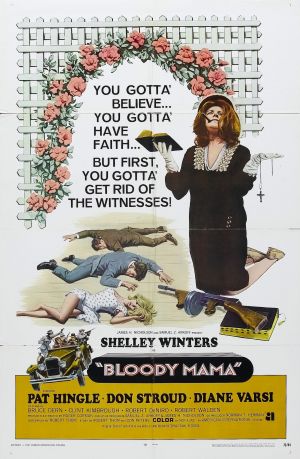
 

Cleaning Out The DVR, Again #24: Bloody Mama (dir by Roger Corman)


(Lisa is currently in the process of trying to clean out her DVR by watching and reviewing all 40 of the movies that she recorded from the start of March to the end of June.  She’s trying to get it all done by July 11th!  Will she make it!?  Keep visiting the site to find out!)

BloodyMama

The 24th film on my DVR was the 1970 Roger Corman-directed gangster film, Bloody Mama.  I recorded it off of TCM on May 27th.

Bloody Mama opens with a cheerful song that goes, “Maaaaaama…Bloody maaaaama….” and it’s such an unapolegetically over the top song that it perfectly sets the tone for what’s to follow.  Bloody Mama is violent, occasionally perverse, and totally unashamed.  It doesn’t pretend to be anything that it isn’t.  It’s bloody and it’s about a mother and, in the best Corman tradition, it makes no apologies!

The film tells the heavily fictionalized story of the Barkers, a group of brothers who robbed banks and killed people in the 1920s and 30s.  The majority of them were killed in a gunfight with the FBI.  Also killed in the gunfight was their mother, Kate Barker.  Always aware of the danger of bad publicity, the director of the FBI, J. Edgar Hoover, announced that Ma Barker was actually the mastermind of the Barker gang and that she was even more dangerous than her sons.  Ever since, historians have debated whether Ma Barker was the criminal mastermind described by Hoover or if she was just the innocent woman described by … well, by everyone who actually knew her.

Bloody Mama, of course, leaves no doubt.  From the minute that we discover that Shelley Winters will be playing Ma Barker, we know that she’s the most dangerous woman alive.  As played by Winters, Ma Barker is a ruthless bank robber, one who has no fear of gunning down innocent bystanders and who never lets her love for her sons get in the way of ordering them to kill a witness.  As opposed to a lot of gangster films made in the late 60s and early 70s, the film never attempts to portray its title character as being a heroic or particularly sympathetic character.  Instead, what makes the character compelling is just how thoroughly Winters commits to the role.  It doesn’t matter what Ma Barker is doing or saying, Shelley Winters totally sells it.  When the gang is cornered by the police and one associate makes the mistake of yelling that he’s not a Barker, Ma reacts by gunning him down herself and you can’t help but appreciate the lengths that Ma will go to defend her family’s name.

As for her sons, they are an interesting group of perverts and drug addicts and they’re played some of the best character actors of the 1970s.

Herman Barker (Don Stroud) is a sadist but he’s also one of Ma’s favorites.  He travels with a prostitute (played by Diane Varsi), who quickly tires of the Barkers’s violent way of life.

Arthur Barker (Clint Kimbrough) is the most practical of the Barkers and therefore, he’s also the least interesting.

Fred Barker (Robert Walden) is bisexual, which is a fact that the film handles with all the sensitivity that we’ve come to expect from a film made in 1970 (which is to say, not much at all).  Fortunately, Fred’s lover is Kevin and Kevin is played by Bruce Dern and Bruce Dern is always a lot of fun to watch, especially when he’s appearing in a Corman film.

And then there’s Lloyd who sniffs glue and shoots heroin and who is played by an obscure young actor named Robert De Niro and … wait, Robert De Niro!  That’s right!  One of the pleasures of Bloody Mama is getting to see De Niro at the start of his career.  Unfortunately, he doesn’t really get to do much, though he does occasionally flash the same unhinged smile that would later show up in Taxi Driver.

Roger Corman has repeatedly cited Bloody Mama as being one of his favorites of the many movies that he directed over the course of his long career.  I don’t blame him.  It’s a thoroughly shameless and totally entertaining film!

Keep an eye out for Bloody Mama!

Just remember, the real-life Ma Barker was probably innocent.