6 Good Films That Were Not Nominated For Best Picture: The 1990s


Continuing our look at good films that were not nominated for best picture, here are 6 films from the 1990s.
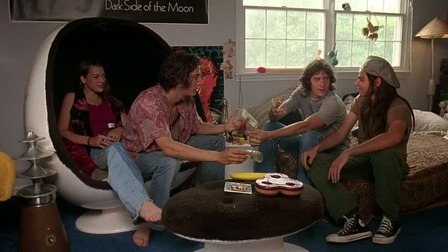
Dazed and Confused (1993, dir by Richard Linklater)

 An ensemble cast that was full of future stars, including future Oscar winners Matthew McConaughey and Ben Affleck.  A killer soundtrack.  A script full of quotable lines.  Dazed and Confused seemed like it had everything necessary to score a Best Picture nomination and perhaps it would have if the film had been set in Los Angeles instead of the suburbs of Atlanta.  Unfortunately, Richard Linklater’s classic was overlooked.
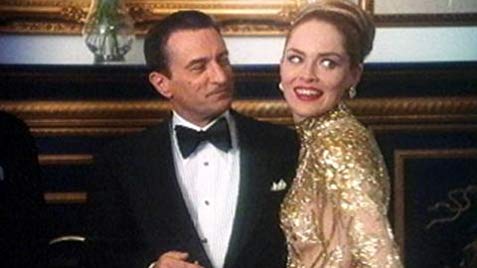
Casino (1995, dir by Martin Scorsese)

Martin Scorsese’s epic gangster film had all the glitz of Vegas and Joe Pesci to boot!  Despite being one Scorsese’s best, the Academy largely overlooked it, giving a nomination to Sharon Stone and otherwise ignoring the film.
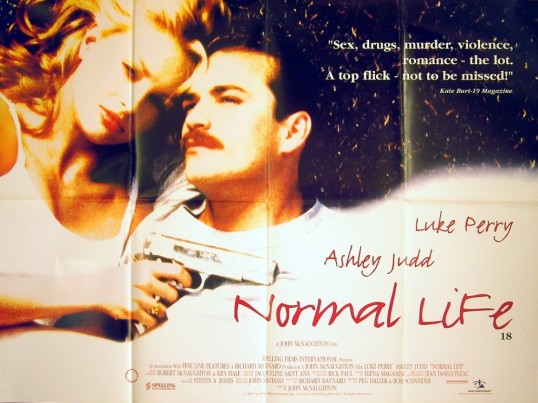
Normal Life (1996, dir by John McNaughton)

Life, love, crime, and death in the suburbs!  John McNaughton’s sadly overlooked film featured award-worthy performances from both Ashley Judd and Luke Perry and it definitely deserves to be better-known.  Unfortunately, the Academy overlooked this poignant true crime masterpiece.
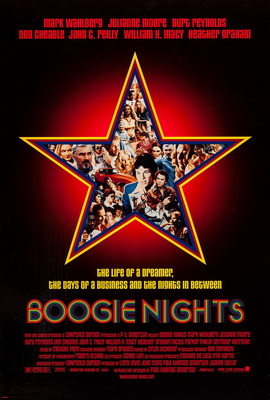
Boogie Nights (1997, dir by Paul Thomas Anderson)

Paul Thomas Anderson first made a splash with this look at the porn industry in the 70s and 80s.  Along the way, he made Mark Wahlberg a star and briefly rejuvenated the career of Burt Reynolds.  Though both Reynolds and Julianne Moore received nominations, the film itself went unnominated.  Oh well.  At least Dirk Diggler got to keep his award for best newcomer.
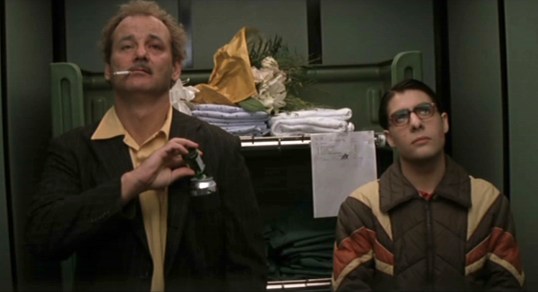
Rushmore (1998, dir by Wes Anderson)

Though the film was nominated for its screenplay, the Wes Anderson classic missed out on best picture  Even more surprisingly, Bill Murray was not nominated for his funny yet sad performance.  Murray would have to wait until 2003’s Lost In Translation to receive his first nomination.  Meanwhile, a Wes Anderson film would not be nominated for best picture until Grand Budapest Hotel achieved the honor in 2015.  (That same year, Boyhood became the first Richard Linklater film to be nominated.)
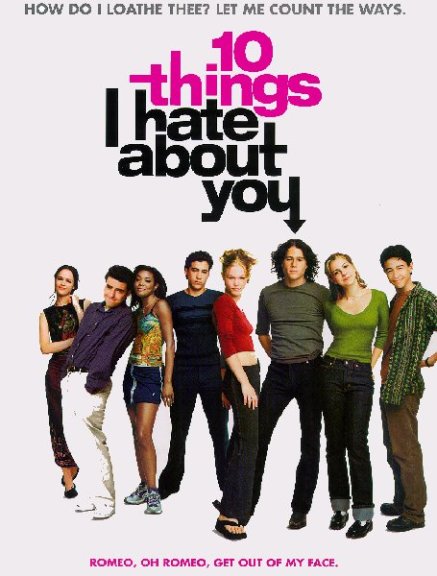
10 Things I Hate About You (1999, dir by Gil Junger)

This wonderful take on Shakespeare not only introduced the world to Heath Ledger but it also proved that a teen comedy need not be stupid or misogynistic.  Because it was viewed as being a genre film (and a comedy to boot!), it didn’t get any love from the Academy but it continues to be loved by film watchers like me!

Up next, in an hour or so, the 2000s!
6 Good Films That Were Not Nominated For Best Picture: The 1980s


Rob Lowe and Snow White perform at the 1989 Oscars

Continuing our look at good films that were not nominated for best picture, here are 6 films from the 1980s.

Out of the Blue (1980, dir by Dennis Hopper)

After spending several years in the cultural wilderness, Dennis Hopper directed his best film, this downbeat study of a young girl, her junkie mother, and her irresponsible father.  From the film’s first scene, in which Hopper crashes his truck into a school bus to the film’s explosive ending, Out of the Blue is a fascinating trip into the heart of American darkness.  It was definitely too dark for the Academy.

Fast Times At Ridgemont High (1982, dir by Amy Heckerling)

Fast Times would appear to take place in a totally different universe from Out of the Blue.  Still, it’s an unexpectedly intelligent look at growing up in the suburbs and it’s influenced practically every high school film that’s come after.  Plus, this may be the only movie in which Sean Penn was intentionally funny.  Despite good reviews and a cast full of future stars, Fast Times At Ridgemont High received not a single nomination.

Once Upon A Time In America (1984, dir by Sergio Leone)

Sergio Leone’s final film, this epic gangster film might be a look at how America grew and changed over the first half of the 20th Century.  It might be a trenchant critique of capitalism.  It might be an homage to the classic gangster films of the 30s.  Or it might just be a hallucination that Robert De Niro is having while visiting an opium den.  That critics are are still debating just watch exactly this film actually means says a lot about the power of Once Upon A Time In America.  However, because the film was originally released in a severely edited form, Once Upon A Time In America received not one nomination.

Brazil (1985, dir by Terry Gilliam)

Much like Once Upon A Time In America, Brazil is a brilliant film that was betrayed by the studio that distributed it.  Convinced that Terry Gilliam’s satire was too strange for American audiences, Universal Pictures initially released the film in a severely edited version.  Fortunately, Gilliam’s version was eventually released but the controversy undoubtedly hurt Brazil when it came time for the members of the Academy to select their nominees for Best Picture.

The Breakfast Club (1985, dir by John Hughes)

Perhaps the Academy understood just how unfair it was that Anthony Michael Hall had to write the essay while everyone else got either a makeover or a new romance.  For whatever reason, this classic high school film — perhaps the classic high school film — received not a single nomination.

Blue Velvet (1986, dir by David Lynch)

David Lynch was nominated for Best Director but the film itself proved to be just a bit too controversial for the Academy to give it a Best Picture nomination.  David Lynch described this film as being “the Hardy Boys In Hell” and it would have been an uncoventional, though very worthy, nominee for Best Picture.

Up next, in an hour or so, the 90s!


6 Good Films That Were Not Nominated For Best Picture: The 1970s


David Niven at the 1974 Oscars

Continuing our look at good films that were not nominated for best picture, here are 6 films from the 1970s.

Dirty Harry (1971, dir by Don Siegel)

“Well, I’m all torn up about his rights….” Detective Harry Callahan (Clint Eastwood) says after being informed that he’s not allow to torture suspects for information.  Unfortunately, in this case, the Academy agreed with all the critics who called Harry a menace and this classic and influential crime film was not nominated.  Not even Andy Robinson picked up a nomination for his memorably unhinged turn as Scorpio.

Carrie (1976, dir by Brian DePalma)

The Academy liked Carrie enough to nominate both Sissy Spacek and Piper Laurie for Best Actress and Best Supporting Actress, respectively.  The film itself, however, went unnominated.  It’s enough to make you want to burn down the prom.

Suspiria (1977, dir by Dario Argento)

In a perfect world, Goblin would have at least taken home an Oscar for the film’s score.  In the real world, unfortunately, Argento’s masterpiece was totally snubbed by the Academy.

Days of Heaven (1978, dir by Terence Malick)

If it were released today, Terence Malick’s dream-like mediation of life during the depression would definitely be nominated.  In 1978, perhaps, the Academy was still not quite sure what to make of Malick’s beautiful but often opaque cinematic poetry.

Halloween (1978, dir by John Carpenter)

“The night he came home!” should have been “The night he went to the Oscars!”  The film received no nominations and it’s a shame.  Just imagine Donald Pleasence winning for his performance as Loomis while John Carpenter racked up almost as many nominations as Alfonso Cuaron did this year for Roma.

Dawn of the Dead (1978, dir by George Romero)

If the Academy wasn’t willing to nominate Night of the Living Dead, there was no way that they would go for the film’s longer and bloodier sequel.  But perhaps they should have.  Few films are cited as an inspiration as regularly as Dawn of the Dead.

Up next, in about an hour, the 1980s!


6 Good Films That Were Not Nominated For Best Picture: The 1960s


Sonny and Cher walk down the 1968 Oscars Red Carpet

Continuing our look at good films that were not nominated for best picture, here are 6 films from the 1960s.

Psycho (1960, dir by Alfred Hitchcock)

The director was nominated.  Janet Leigh was nominated.  Amazingly enough, Anthony Perkins was not nominated for playing the role that would come to define him.  And, in the end, the film itself was not nominated for best picture.  Perhaps it was too sordid for the Academy.  Perhaps they resented no longer feeling safe in the shower.  Regardless, Psycho has gone on to influence every horror thriller made since 1960.  And let’s not even talk about how much we all cried while watching the finale of Bates Motel.

From Russia With Love (1963, dir by Terence Young)

The first great James Bond film should have also been the first Bond film to be nominated for best picture.  Actually, looking over the films that actually were nominated in 1963, From Russia With Love should have been the first Bond film to win best picture.

Blow-Up (1966, dir by Michelangelo Antonioni)

Mimes playing tennis and David Hemmings briefly breaking out of his shell of ennui to investigate a murder that has no solution!  How could the Academy resist?  Somehow, they did.  Michelangelo Antonioni received a nomination but the film was, at the time, considered to be too controversial to nominate.

The Good, The Bad, and the Ugly (1967, dir by Sergio Leone)

Though initial reviews were mixed, Sergio Leone’s Civil War epic has come to be recognized as one of the greatest and most important Westerns of all time.  Perhaps it’s understandable that the Academy of 1967 would be skeptical of an Italian western starring Clint Eastwood, Eli Wallach, and Lee Van Cleef.  Still, it would have been one of the coolest best picture nominees of all time.  (Shockingly, not even Ennio Morricone’s iconic score was nominated.)

Petulia (1968, dir by Richard Lester)

Though Richard Lester will probably always be best known as the man who directed the first two Beatles films, he also directed one of the definitive 60s films, Petulia.  Sadly, in a year when many lackluster films were nominated, the challenging and rather melancholy Petulia was not.

Night of the Living Dead (1968, dir by George Romero)

Again, we really can’t be shocked that the Academy held off an recognizing a low-budget, independent film about zombies  But come on!  A Night of the Living Dead vs. Petulia Oscar race would have bene one for the ages.

Up next, in an hour or so, the 1970s!

10 Horror Stars Who Never Won An Oscar


gary loggins's avatarcracked rear viewer

It’s Oscar night in Hollywood! We all may have our gripes with the Academy over things like the nominating process (see my posts on THE OTHER SIDE OF THE WIND STAN & OLLIE and THEY SHALL NOT GROW OLD ), but in the end, we’ll all still be watching – I know I will!

One of my gripes over the years has always been how the horror genre has gotten little to no attention from Oscar over the years. Sure, Fredric March won for DR. JEKYLL & MR. HYDE , but there were plenty of other horror performances who’ve been snubbed. The following ten actors should have (at least in my opinion) received consideration for their dignified work in that most neglected of genres, the horror film:

(and I’ll do this alphabetically in the interest of fairness)

LIONEL ATWILL

 Atwill’s Ivan Igor in MYSTERY OF THE WAX MUSEUM goes…

View original post 1,042 more words

6 Good Films That Were Not Nominated For Best Pictures: The 1950s


The Governor’s Ball, 1958

Continuing our look at good films that were not nominated for best picture, here are 6 films from the 1950s.

The Third Man (1950, dir by Carol Reed)

Now, it should be noted that The Third Man was not ignored by the Academy.  It won the Oscar for Best Cinematography and it was nominated for both editing and Carol Reed’s direction.  But, even with that in mind, it’s somewhat amazing to consider all of the nominations that it didn’t get.  The screenplay went unnominated.  So did the famous zither score.  No nominations for Joseph Cotten, Alida Valli, Trevor Howard, or even Orson Welles!  And finally, no Best Picture nomination.  1950 was a good year for the movies so competition was tight but still, it’s hard to believe that the Academy found room to nominate King Solomon’s Mines but not The Third Man.

Rear Window (1954, dir by Alfred Hitchcock)

Alfred Hitchcock directed some of his best films in the 50s, though few of them really got the recognition that they deserved upon their initial release.  Vertigo is often described as being Hitchcock’s masterpiece but, to be honest, I actually prefer Rear Window.  This film finds the master of suspense at his most playful and, at the same time, at his most subversive.  Casting Jimmy Stewart as a voyeur was a brilliant decision.  This film features one of my favorite Grace Kelly performances.  Meanwhile, Raymond Burr is the perfect schlubby murderer.  Like The Third Man, Rear Window was not ignored by the academy.  Hitchcock was nominated and the film also picked up nods for its screenplay, cinematography, and sound design.  However, it was not nominated for best picture.

Rebel Without A Cause (1955, dir by Nicholas Ray)

Nicholas Ray’s classic film changed the way that teenagers were portrayed on film and it still remains influential today.  James Dean is still pretty much the standard to which most young, male actors are held.  Dean was not nominated for his performance here.  (He was, however, nominated for East of Eden that same year.)  Instead, nominations went to Sal Mineo, Natalie Wood, and the film’s screenplay.  Amazingly, in the same year that the forgettable Love Is A Many-Splendored Thing was nominated for best picture, this popular and influential film was not.

Kiss Me Deadly (1955, dir by Robert Aldrich)

It’s unfortunate but not surprising that Kiss Me Deadly was totally ignored by the Academy.  In the mid-to-late 50s, the Academy tended to embrace big productions.  There was no way they were going to nominate a satirical film noir that featured a psychotic hero and ended with the end of the world.  That’s a shame, of course, because Kiss Me Deadly has proven itself to be more memorable and influential than many of the films that were nominated in its place.

Touch of Evil (1958, dir by Orson Welles)

Speaking of underappreciated film noirs, Orson Welles’s Touch of Evil is one of the craftiest and most brilliant films ever made.  So, of course, no one appreciated it when it was originally released.  This cheerfully sordid film features Welles at his best.  Starting with a memorable (and oft-imitated) tracking shot, the film proceeds to take the audience into the darkest and most eccentric corners of a small border town.  Everyone in the cast, from the stars to the bit players, is memorably odd.  Even the much mocked casting of Charlton Heston as a Mexican pays off wonderfully in the end.

The 400 Blows (1959, dir by Francois Truffaut)

Francois Truffaut’s autobiographical directorial debut was released in the United States in 1959 and it was Oscar-eligible.  Unfortunately, it only picked up a screenplay nomination.  Of course, in the late 50s, the last thing that the Academy was going to embrace was a French art film from a leftist director.  However, The 400 Blows didn’t need a best picture nomination to inspire a generation of new filmmakers.

Up next, in an hour or so, we continue on to the 60s!


6 Good Films That Were Not Nominated For Best Picture: The 1940s


Gary Cooper. Joan Fontaine, Mary Astor, and Donald Crisp at the 1942 Oscars.

Continuing our look at good films that were not nominated for best picture, here are 6 films from the 1940s.

Shadow of a Doubt (1943, dir by Alfred Hitchcock)

Amazing, Alfred Hitchcock never won the Best Directing Oscar.  In fact, it was rare that his films were even nominated.  (Though Rebecca did win Best Picture, it could be argued that film’s style was as much to due to David O. Selznick as it was to Hitchcock.)  One of the best of Hitchcock’s unnominated films was Shadow of a Doubt.  With its dark sense of humor and wonderful performances from Joseph Cotten and Teresa Wright, Shadow of a Doubt was Hitchcock at his best.  It was also, perhaps, a bit too darkly subversive for the Academy.

Detour (1945, dir by Edgar G. Ulmer)

The ultimate film noir nightmare, Detour was actually well-received when it was originally released, though it would take a while for the film to be recognized as a true classic.  Still, there was no way that the Academy was going to nominate a low-budget B-movie about a guy who hitchhikes across America and manages to accidentally kill two people.  Detour was far too nightmarish and surreal for the Academy but it’s remained one of the most influential films ever made.

Gilda (1946, dir by Charles Vidor)

Another classic film noir, Gilda is the film that, for many, will always define Rita Hayworth.  Through the film was a financial and critical success, it was ignored by the Academy.  The success of this film and the popularity of Hayworth’s performance led to the fourth atomic bomb to ever be detonated being named Gilda.  Rita Hayworth was reportedly not happy to hear it.

Black Narcissus (1947, dir by Michael Powell and Emeric Pressburger)

One of the most visually stunning films ever made, Black Narcissus won Oscars for Best Cinematography and for Art Design but it received no other nominations, not even for the outstanding performances of Deborah Kerr and Kathleen Byron, as two nuns who have very different reactions to the Himalayas.

Out of the Past (1947, dir by Jacques Tourneur)

A world-weary private investigator (Robert Michum) is hired by a slick and psychotic gangster (Kirk Douglas) and ordered to track down the gangster’s girlfriend (Jane Greer).  So beings this rather melancholy and introspective film noir, one that is distinguished by wonderfully shadowy photography and which features one of Mitchum’s best performances.  Sadly, the Academy recognized neither the film nor Mitchum’s performance.

Portrait of Jennie (1948, dir by William Dieterle)

This haunting and dream-like fantasy stars Joseph Cotten as a painter who meets, paints, and falls in love with a mysterious woman (Jennifer Jones) who may not be what she seems.  The film was apparently not a huge success when it was first released but, seen today, it’s hard not to get swept up in the film’s romantic sadness.  Though it received a nomination for Best Cinematography, it was otherwise ignored by the Academy.

Up next, in about an hour or so, the 1950s!

6 Good Films That Were Not Nominated For Best Picture: The 1930s


1937 Oscar Banquet

Continuing our look at good films that were not nominated for best picture, here are 6 films from the 1930s.

Frankenstein (1931, dir by James Whale)

Henry Frankenstein may have created life and revolutionized the horror genre but his creation got absolutely no love from the Academy.  Starting a very long history of snubbing successful horror films, the Academy failed to nominate Frankenstein for Best Picture.  Not even Boris Karloff got a nomination!  Fortunately, the public recognized what the Academy failed to see and Frankenstein remains a classic film.

Scarface (1932, dir by Howard Hawks)

Gangster films may have been all the rage with the public in the 1930s but the Academy felt different.  Little Caesar, The Public Enemy, and Scarface may have excited audiences but none of them received much love from the Academy.  It was hard to decide which gangster film to specifically use for this post.  In the end, I went with Scarface because of George Raft and his sexy way with a coin.

King Kong (1933, directed by Merian C. Cooper and Ernest B. Schoedsack)

King Kong thrilled audiences, impressed critics, made a ton of money, and has gone on to influence just about every monster film made since.  It received zero Oscar nominations.

My Man Godfrey (1936, dir by Gregory La Cava)

My Man Godfrey, one of the best of the screwball comedies of the 1930s, received a total of 6 Oscar nominations.  It was nominated in all four of the acting categories.  It was nominated for best screenplay.  It was nominated for best director.  However, it was not nominated for Best Picture.  (My Man Godfrey is the first and, as of this writing, only film to receive four acting nominations without also receiving a nomination for best picture.)  Best Picture that year would go to The Great Ziegfield, which, like My Man Godfrey, starred William Powell.

Bringing Up Baby (1938, dir by Howard Hawks)

My Man Godfrey was not the only screwball comedy to be ignored by the Academy.  Bringing Up Baby features Cary Grant and Katharine Hepburn at their best.  It also features an absolutely adorable leopard.  Somehow, it was not nominated for best picture.

The Women (1939, dir by George Cukor)

The competition was fierce in 1939.  If you want to know why 1939 is considered to be one of the best years in Academy History, just consider the ten films that actually were nominated for best picture: Dark Victory, Gone With The Wind, Goodbye Mr. Chips, Love Affair, Mr. Smith Goes To Washington, Ninotchka, Of Mice and Men, Stagecoach, The Wizard of Oz, and Wuthering Heights.  Amazingly, even with that list of nominees, some equally good film went unnominated.  One of those films was The Women.

Based on Clare Boothe Luce’s play, The Women features a witty script, assured direction from George Cukor, and an amazing talented, all-female ensemble cast.  Though the competition was undeniably fierce in 1939, it’s still a shock that this film received not a single nomination.

Up next, in about an hour or so, the 1940s!

Scarface (1932)

6 Good Films That Were Not Nominated For Best Picture: The 1920s


The Academy Awards, 1929

They’ve been giving out Oscars for 91 years and, since the beginning, good films have often been snubbed.

Sometimes, a film is snubbed because it was too groundbreaking to be embraced at the time of its initial release.  Sometimes, a film is snubbed because it was directed by the wrong person or it dealt with subject matter that was considered to be too controversial for the Academy to embrace.  Sometimes, a film is snubbed because of a lack of publicity or a studio that failed to launch an effective awards campaign.  And, sometimes, a good film is snubbed because it’s been a very good year and there’s only so many available slots.

There’s a lot of reasons but what it all come down to is that good films sometimes don’t get nominated for best picture.

So, in honor of those films, I’m going to take a decade-by-decade look at some of the best films that were not nominated for best picture.  We’ll start with the 1920s, with the founding of the Academy in 1927.  Here are 6 good films from the 20s that were not nominated for best picture!

It (1927, dir by Clarence G. Badger))

One of my favorite silent films of all time, It featured not only one of Clara Bow’s greatest performances but also a storyline that, at the time, was considered to be rather daring.  Clara plays a shopgirl who never allows her love for her boss to interfere with her efforts to protect both her roommate and her roommate’s baby from two meddling welfare workers.  Though It was not nominated for Best Picture, Clara Bow did star in very first film to win the top award, Wings.

Metropolis (1927, dir by Fritz Lang)

Having been released in the United States in January of 1927, this visionary German film was eligible to be nominated for best picture but it sadly went unnominated.  Science fiction was a genre that long-struggled to get any meaningful recognition from the Academy.  Fortunately, that appears to have changed a bit over the past few years.

The Jazz Singer (1927, dir by Alan Crosland)

The Jazz Singer has not aged particularly well and it’s impossible not to cringe when Al Jolson shows up in blackface.  However, it was the first commercially successful film to incorporate sound recording and, as such, it pretty much changed cinematic history.  In fact, it was such a game changer that legend has it that the Academy ruled it ineligible to compete for best picture because it was felt it would be unfair to all of the silent nominees.  Instead, The Jazz Singer was given a special honorary award.

The General (1927, dir by Clyde Bruckman and Buster Keaton)

Though Buster Keaton’s Civil War epic was made and screened in 1926, it didn’t receive a wide release until 1927, making it eligible for the first Academy Awards.  However, since the initial critical and commercial reaction to the film was rather middling, The General was snubbed.  Only later would the film be reevaluated and recognized as a classic screen comedy.

The Road to Ruin (1928, dir by Norton S. Parker)

This low-budget, independently made and distributed film became the second highest grossing movie of 1928, therefore showing that a film made outside the studio system could be a success.  With its storyline about a teenage girl who gets caught up in a world of drugs, sex, and general decadence, it established many of the exploitation film tropes that are still in use today.  The Road to Ruin was a Lifetime film before Lifetime.  For that alone, it should have been nominated.

Pandora’s Box (1929, dir by G.W. Pabst)

G.W. Pabst’s classic melodrama is another film that wasn’t appreciated when it was originally released and therefore, both it and Louise Brooks were snubbed by the Academy.  It wouldn’t be until the 1950s that Pandora’s Box finally started to receive the acclaim that it deserved.

Up next, in an hour or so, the 1930s!

Clara Bow in It (1927)

From All The Humans and the Cat at the Shattered Lens, Happy Oscar Sunday!


As you probably noticed from today’s previous posts, it’s Oscar Sunday!

For many humans and cats, today is an unofficial holiday!  Today is the day that we find out who and what the Academy has selected for the best of last year!  We may agree.  We may disagree.  But a lot of us will be watching!

Happy Oscar Sunday, everyone!  Please enjoy today’s Oscar-related posts.  Who knows?  We might even toss in some non-Oscar related posts as well!  You never know!

(Next year’s sure winner for Best Supporting Kitty, Goose!)