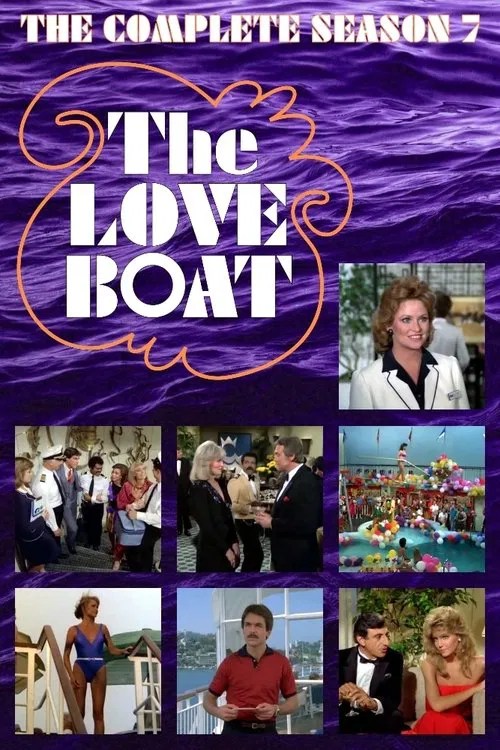
Retro Television Review: The Love Boat 7.22 “The Lady and the Maid/Love Is Blind/The Babymakers”


Welcome to Retro Television Reviews, a feature where we review some of our favorite and least favorite shows of the past!  On Wednesdays, I will be reviewing the original Love Boat, which aired on ABC from 1977 to 1986!  The series can be streamed on Paramount Plus!
This week, it’s all about maids and bartenders!

Episode 7.22 “The Lady and the Maid/Love Is Blind/The Babymakers”

(Dir by Richard Kinon, originally aired on March 3rd, 1984)

This week, it’s a busy cruise!

Dorothy Fielding (Luise Rainer) boards the boat and immediately runs into her twin sister, Maggie (also played by Rainer).  Maggie is working as a maid and she resents her sister.  But when Dorothy agrees to switch places with Maggie, Maggie gets to date the charming and rich Stewart Coolidge (Don Ameche).  This storyline features not one but two Oscar winners.  Ameche won an Oscar for his role in Cocoon, albeit after this show aired.  Rainer won two Oscars, back-to-back, in the 30s and then seemingly vanished from film screens.  Unfortunately, while Ameche is charming, Rainer comes across as if she would rather be anywhere than playing twins on an episode of The Love Boat.  There were several scenes in which Rainer spoke with Rainer.  They were obviously included to show off the show’s split-screen approach but, unfortunately, Rainer never seemed to be sure which direction either twin should be looking while interacting with the other.

Sheila (Jennilee Harrison) is desperately trying to get pregnant.  Doc mentions to her husband (Kim Shriner) that most babies are conceived during makeup sex.  Guess who starts a totally random argument with his wife?  This was a silly story but, to be honest, the main appeal of this show has always been its silliness.  Harrison and Shriner were beyond adorable.

Finally, Isaac’s blind friend, Darnell Hall (LeVar Burton), boards the ship and takes part in Isaac’s bartending school.  Darnell and Isaac also compete for the attention of Terry Cook (Shari Belafonte).  And before anyone says anything — yes, I know Burton played a blind guy on Star Trek: The Next Generation.  I don’t care.  As for who Terry picks …. well, Isaac is a regular character and Terry isn’t.  It’s not that hard to guess how things are going to turn out.

That said, I know what you really want to know.
Julie doesn’t do much in this episode but she does sound rather excited about wishing everyone a happy day in Mexico.  I’m going to say seven out of ten.
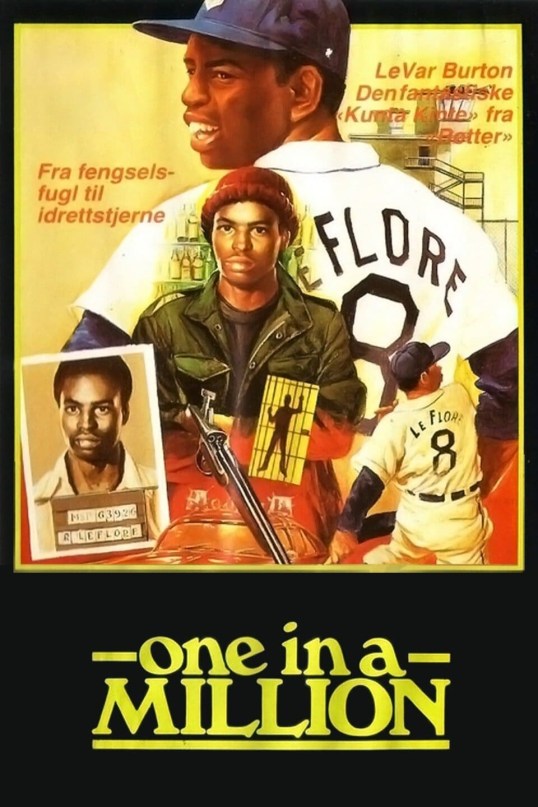
I Watched One In A Million: The Ron LeFlore Story (1978, Dir. by William A. Graham)


LeVar Burton stars as Ron LeFore.  After growing up on the hard streets of Detroit and getting addicted to heroin, Ron is arrested for armed robbery and sentenced to four years in prison.  It’s in prison that Ron starts playing baseball and proves himself to be so good at the game that he’s offered a contract with Tigers.  (Manager Billy Martin plays himself.)  Out of prison, Ron proves himself on the field but he worries about his younger brother (Larry B. Scott), who is still trying to survive in Detroit.

This movies was made for television and no one’s going to mistake it for anything other than a television movie.  When the movie was made, Ron LeFore was still playing in the Major Leagues.  Several players appear as themselves and the movie feels pretty sanitized.  None of the other players give Ron a hard time about being a baseball player on parole.  Instead, they’re all supportive and encouraging from the minute he arrives.  They’re the nicest jocks around!  I like baseball players.  I still light up whenever I think about the way Elvis Andrus would smile when he was playing for the Rangers.  But even I know that players like to give each other a hard time.

I still liked the movie because it was about second chances and one of the things that I love about baseball is that it’s a game that gives second chances.  There is always another chance to hit the ball.  There’s always another chance to make a game-saving catch.  There’s always another chance to throw a strike.  A player who struggles on one team can become a star on another.  While the rest of the world gave up Ron LeFore, his family believed in him.  The city of Detroit believed in him.  Baseball believed in him.

LeVar Burton isn’t the most convincing baseball player that I’ve ever seen but Ron LeFore’s story still moved me.  After this movie aired, LeFore went on to set franchise records for stealing bases.  After playing a few seasons with the White Sox, he retired from the game in 1983.

October True Crime: Looking for Mr. Goodbar (dir by Richard Brooks)


In 1977’s Looking for Mr. Goodbar, Diane Keaton plays Theresa Dunn.

A neurotic and single woman who has never emotionally recovered from her childhood struggle with scoliosis, Theresa is trying to find herself in the wild and promiscuous world of the 1970s.  After losing her virginity to a condescending college professor (Alan Feinstein), Diane goes on to have relationships with a needy social worker (William Atherton) and an hyperactive petty criminal (Richard Gere).  During the day, she teaches deaf children and she’s good at her job.  She even manages to win over the distrustful brother (Levar Burton) of one of her students.  At night, she hits the bars.  She buys drugs from the neighborhood dealer (Julius Harris).  She tries to read the book that she always carries with her.  (Some nights, it’s The Godfather and other nights, it’s something else.)  She picks up strange men and takes them to her roach-infested apartment.  One of those men, Gary (Tom Berenger), turns out to both be a bit insecure about his masculinity and also totally insane….

Looking for Mr. Goodbar is an adaptation of a novel that was inspired by the real-life murder of a New York school teacher named Roseann Quinn.  The book was best seller and, just as he had with a previous best-selling true crime novel, director Richard Brooks bought the rights and both wrote and directed the film.  Diane Keaton, who at that point was best-known for playing Kay Adams in The Godfather and for appearing in Woody Allen’s comedies, took on the demanding role of Theresa and, whatever one may think of the film itself, it can’t be denied that Keaton gives a brave performance as the self-destructive Theresa.  In fact, I would say it’s one of Keaton’s best performances, outside of her work with Woody Allen and The Godfather Part II.  If she had been played by a lesser actress, Roseann could have been unbearable.  As played by Diane Keaton, though, she’s everyone’s best friend who just need some time to find herself.  The viewer worries about her and wants to protect her as soon as they see her, making her ultimate fate all the more tragic.

As for film itself, I’ve watched Looking For Mr. Goodbar a few times and I’m always a little bit surprised by how bad the movie actually is.  The film actually gets off to a strong start.  The scenes between Theresa and the professor make for a sensitive portrait of a repressed young woman finally getting in touch with her sexuality and, in the process, discovering that she deserves better than the man she’s with.  But once Theresa moves into her apartment and starts hitting the bars at night, the film takes on a hectoring and moralistic tone that leaves the viewer feeling as if the film is blaming Theresa for the tragedy that’s waiting for her at the end of the story.  Diane Keaton and Tuesday Weld (who plays her sister) both give excellent performances but everyone else in the film either does too much or too little.  This is especially true of Richard Gere, who is very hyperactive but still strangely insubstantial in his role.  (Whenever Richard Gere appears on screen, one gets the feeling that they could just walk right through him.)  A scene where Gere jumps around the apartment is meant to be disturbing but it’s more likely to inspire laughter than chills.

It’s an overly long film and the moments in which Theresa has dark, sexually-charged fantasies are never quite as powerful as the film obviously meant for them to be.  (Brian Dennehy makes his film debut as a doctor who kisses Theresa’s breast during one of her fantasies.)  As opposed to the empathy that he brought to In Cold Blood, one gets the feeling that director Richard Brooks didn’t like anyone in this movie and that he was more interested in Theresa as a cautionary tale than as a human being.  With this film, Brooks seemed to be standing athwart the Sexual Revolution and shouting, “Stop!”  That said, the film’s final moments are genuinely disturbing and difficult to watch.  It’s the one moment where Brooks’s lack of subtlety pays off.  Those last minutes are about as horrific as anything you could expect to see.

As for Roseann Quinn, her killer was eventually arrested.  John Wayne Wilson hung himself in prison, 5 months after murdering her.

Retro Television Review: The American Short Story #4 “Almos’ A Man”


Welcome to Retro Television Reviews, a feature where we review some of our favorite and least favorite shows of the past!  On Saturdays, I will be reviewing The American Short Story, which ran semi-regularly on PBS in 1974 to 1981.  The entire show can be purchased on Prime and found on YouTube and Tubi.

This week, we have an adaptation of a Richard Wright short story.

Episode #4 “Almos’ A Man”

(Dir by Stan Lathan, originally aired in 1976)

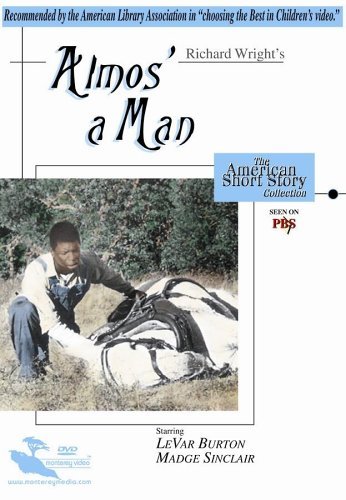
David (LeVar Burton) is a black fifteen year-old living in the Deep South in the 1930s.  He works on his family’s farm and takes care of a mule named Jenny.  He considers himself to be almost a man.  His mother (Madge Sinclair) and his father (Robert DoQui) disagree.

David knows the one thing that he need to make himself a man.  He needs a gun and, this being the 1930s, he finds one that he can order from a Sears & Roebuck catalogue.  His mother says that there’s no way she’s letting him get a gun.  His father is a bit more open to it.  David secretly sends away for the gun and, as you can probably guess, tragedy ensues.

This was a downbeat adaptation of a similarly downbeat Richard Wright short story.  David obsession with being a man makes sense when you consider that he lives in a world where everyone — from his parents to the menacing white people who show up towards end — calls him a “boy.”  The white people even call his father “boy” and it’s a reminder of how that term was used to dehumanize and degrade black men, even someone like David’s father who has raised a family, takes care of his farm, and who is, in every way imaginable, a man.

Nicely done, this one, with good performance from Burton, Sinclair, and Doqui.  As for Richard Wright, he had been dead for 16 years by the time this premiered.  He died in Paris, having left the United States in 1946.  He’s remembered for his novel Native Son and his memoir, Black Boy.  Personally, I would add that he should also be remembered for his essay that appeared in the anti-Communist collection, The God That Failed.  This adaptation of AlmosA Man does a good job paying tribute to Wright’s voice and legacy.

Retro Television Review: Fantasy Island 6.19 “Edward/Extraordinary Miss Jones”


Welcome to Retro Television Reviews, a feature where we review some of our favorite and least favorite shows of the past!  On Tuesdays, I will be reviewing the original Fantasy Island, which ran on ABC from 1977 to 1984.  Unfortunately, the show has been removed from most streaming sites.  Fortunately, I’ve got nearly every episode on my DVR …. nearly being the word to remember.

This week, Sammy Davis Jr. comes to Fantasy Island.

That’s be cool, right?

Episode 6.19 “Edward/Extraordinary Miss Jones”

(Dir by Don Ingalls, originally aired on April 9th, 1983)

Or, it would have been cool if my DVR had actually recorded this episode!

Sorry, it’s the curse of the DVR.  This is one of the episodes that my DVR did not record.  I’m not sure if it’s a case of the episode not being aired or perhaps the cable itself was out when it should have been recording but, for whatever reason, I do not have this episode and I also don’t remember having watched it in the past.

For now, I can’t review it.  But I’m going to leave this here as a placeholder, in case the show ever starts streaming again.

Again, I regret not being able to review this episode at this time.  But, as Mr. Roarke always says, “Smiles, everyone, smiles!”

Parallel Lives (1994, directed by Linda Yellen)


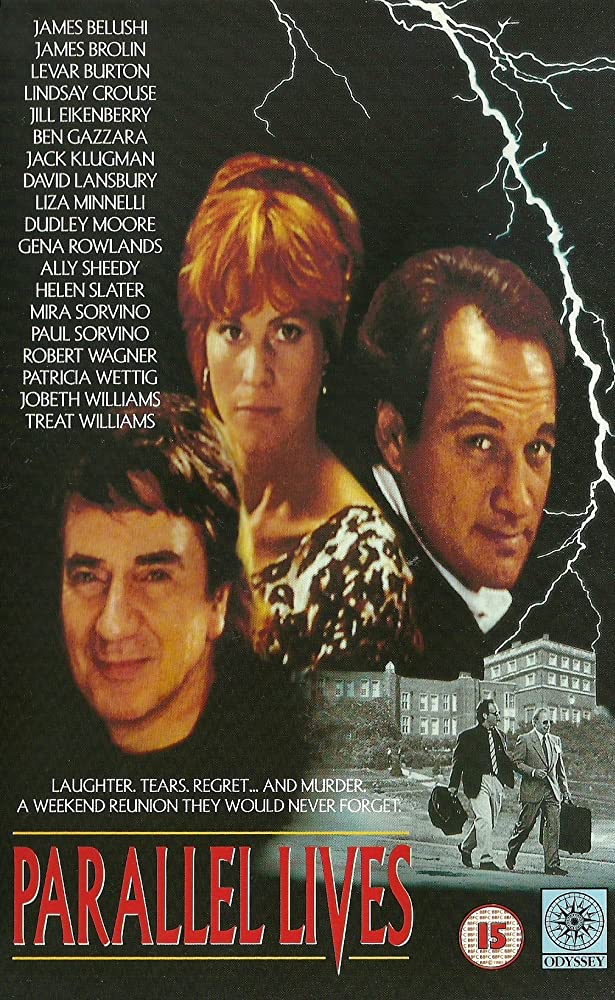
A large group of people gather together one weekend for a fraternity/sorority reunion.  Since college, some of them have become rich and powerful.  Some of them are now famous.  Some of them are now seedy and disreputable.  They all have college memories, though there’s such a wide variety of age groups represented that it’s hard to believe that any of them actually went to college together.  After the men spend the day playing practical jokes and touch football and the women spend the night talking about their hopes and dreams, they wake up the next morning to discover the someone has murdered Treat Williams.  A pony-tailed sheriff (Robert Wagner) shows up to question everyone.

Parallel Lives was made for Showtime with the help of the Sundance Institute.  Today, it’s a forgotten film but, for some reason, it was very popular with American Airlines during the summer of 1997.  That summer, when I flew to the UK, Parallel Lives was one of the movies that we were shown.  (It was the second feature.  The first feature was Down Periscope, a submarine comedy starring Kelsey Grammar.  Fourteen year-old me enjoyed Down Periscope but, in retrospect, it wasn’t much of a flight.)  A month and a half later, when I flew back to the U.S., Parallel Lives was again one of the films shown on the flight!  For that reason, I may be the only person on the planet who has not forgotten that a film called Parallel Lives exists.

Parallel Lives, I later learned, was an entirely improvised film.  The huge cast were all given their characters and a brief outline of the film’s story and they were then allowed to come up with their own dialogue.  Unfortunately, no one did a very good job of it and the men were reduced to bro-ing it up while the women spent most of the movie having extended group therapy.  The story doesn’t add up too much and, even when I rewatched it from an adult’s perspective, I wasn’t sure what I was supposed to get out of everyone talking about how different the real world was from college.  Technically, the film’s a murder mystery but you can’t improvise a successful murder mystery.  This film proves that point.

Of course, it doesn’t help that there are 26 characters, all trying to get a word in at the same time.  Some of the roles don’t make much sense.  Dudley Moore shows up, playing an imaginary friend.  (How do you improvise being a figment of someone’s imagination?)  James Brolin introduces himself to everyone as being, “Professor Doctor Spencer Jones” and that appears to be as far as he got with his improv.  Ben Gazzara is a gambler and Mira Sorvino is the prostitute that he brings to the reunion while Mira’s father, Paul Sorvino, moons the camera several times.  Jack Klugman is a senator with Alzheimer’s and Patricia Wettig is his daughter.  The majority of the movie centers around Jim Belushi, playing a reporter and falling in love with JoBeth Williams.  Liza Minnelli, Helen Slater, Levar Burton, Lindsay Crouse, Matthew Perry, Ally Sheedy, and Gena Rowlands all have small roles.  How did so many talented people come together to make such a forgettable movie and why did American Airlines decide it was the movie to show people on their way to another country?  That’s the true mystery of Parallel Lives.

The Hunter (1980, directed by Buzz Kulick)


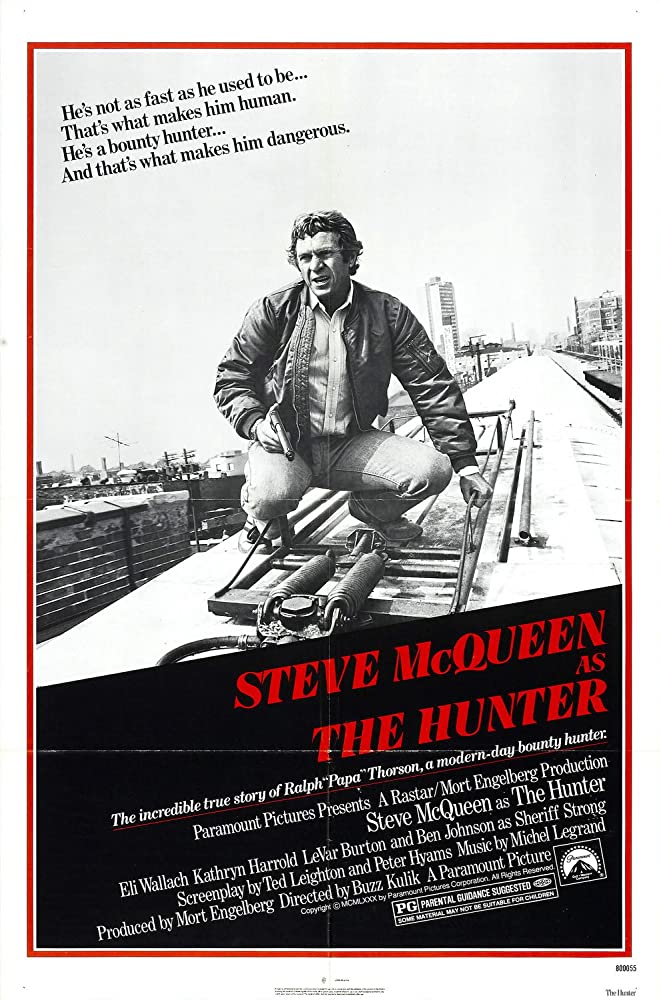
In The Hunter, legendary car nut, Steven McQueen, plays Papa Thorson, a bounty hunter who is a very bad driver.

That’s it.

That’s the joke.

Papa Thorson was a real-life bounty hunter, the Dog the Bounty Hunter of his day, and The Hunter was based on his own autobiography.  Maybe that explains why the film itself is so extremely episodic.  Thorson goes from one assignment to another, capturing criminals with relative ease and occasionally having to deal with an unappreciative sheriff (Ben Johnson).  Along the way, one of those criminals (Levar Burton) goes to work with Papa and becomes his protege.  Papa’s girlfriend (Kathryn Harrold) is pregnant and a crazed criminal (Tracey Walter) is targeting her because he wants revenge on Papa for putting him away.  It’s all Magnum P.I.-level stuff, without the backdrop of Hawaii to distract you from how predictable it all is.  It’s not terrible because there are a few good action scenes but it still feels more like a pilot for a weekly Papa Thorson television series than a feature film.

The Hunter was also Steve McQueen’s final film.  After The Towering Inferno, McQueen was inactive for most of the 70s.  He still received scripts and turned down good parts (including the roles of both Willard and Kurtz in Apocalypse Now) but the only film in which he appeared in a barely released version of An Enemy of the People.  It wasn’t until 1980 that McQueen finally started appearing in movies again, starring in both Tom Horn and The Hunter.  Tom Horn is an underrated western but The Hunter is largely forgettable.  Sadly, The Hunter would be McQueen’s last film as he died of lung cancer shortly after it was released.

McQueen was obviously ill during the filming of The Hunter, though he still had the laconic coolness that made him a star in the first place and he still looks credible, even at the age of 50, handling a gun and chasing criminals.  He doesn’t give a bad performance as Thorson and he even shows a talent for comedy.  Both Tom Horn and The Hunter show that McQueen wasn’t afraid to play his age.  Neither Tom Horn nor Thorson were young men and, in The Hunter, McQueen gets a lot of mileage out of being a cranky, middle-aged malcontent who has never figured out how to parallel park.  The film might be forgettable but Steve McQueen shows that, to the end, he was an actor who was often better than his material.

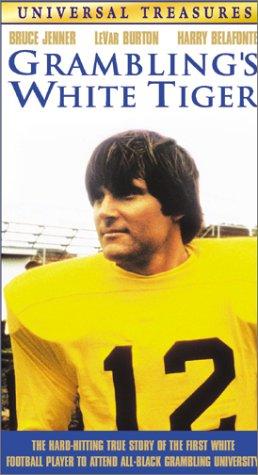
Grambling’s White Tiger (1981, directed by Georg Stanford Brown)


The year is 1968 and Jim Gregory (played by Caitlyn Jenner, back when she was still credited as Bruce) is a hotshot high school quarterback who has just been offered a scholarship to play at Grambling University.  With their star quarterback in his final year, Grambling needs a good backup.  Meanwhile, Jim dreams of playing in the NFL and is excited to play for a program that’s known for producing professional football players.  Grambling’s legendary head coach, Eddie Robinson (Harry Belafonte), is eager for Jim to join the team.

The only problem is that Grambling is a historically black college and Jim Gregory is very much white.  In fact, Jim will not only be the first white player to ever join the Grambling Tigers but he will also be the only white student enrolled at the school.  From the minute that Jim arrives on campus, he discovers that he’s not wanted.  The rest of the team sees him as an interloper and they resent that he took a scholarship that could have gone to a black player.  Meanwhile, the local whites distrust Jim because he’s a student at a black college.

Based on a true story, this is a football film that doesn’t feature much football.  Jim doesn’t get to play in a game until the very end of the season and, even then, he’s only on the field for a few minutes.  He doesn’t win the game or even lead a scoring drive.  Instead of focusing on the usual sports movie clichés, Grambling’s White Tiger instead explores Jim experiencing, for the first time, what it’s like to be a minority.  Jim eventually wins over his teammates through his hard work but he still remains an outsider for the entire film.  When he goes into town, a saleswoman and her boss initially offer him a discount on a pair of boots until they discover that he plays football not for Louisiana Tech but instead for Grambling.  When he first meets the parents of his new girlfriend, he’s told that an interracial relationship will never last and is advised to move on.  When the funeral of Martin Luther King is broadcast on television, all Jim’s teammates walk out of the room one-by-one until Jim is left sitting alone.

In typical made-for-network-TV fashion, Grambling’s White Tiger explores important issues without delving into them too deeply.  (For instance, the fact that Jim’s spot on the team is potentially coming at the expense of a black student is an intriguing issue that is mentioned at the start of the film but never really dwelled upon.)  Harry Belafonte is perfect as the stern but compassionate Coach Robinson while LeVar Burton is likable as the only member of the team to initially welcome Jim.  Jenner, however, is thoroughly miscast and several years too old to play a college freshman.  As an actor, Jenner is stiff and awkward but the true story of Jim Gregory is interesting enough that the film will hold the attention of any football fans in the audience.