Who wouldn’t love to see a movie where a youngish Jack Nicholson played a French soldier who, while searching for a mysterious woman, comes across a castle that’s inhabited by both Dick Miller and Boris Karloff?
In Roger Corman’s 1963 film The Terror, New Jersey-accented Jack Nicholson is the least believable 19th century French soldier ever. However, it’s still interesting to watch him before he became a cinematic icon. His performance here is rather earnest, with little of the sarcasm that would later become his trademark. Boris Karloff is, as usual, great and familiar Corman actor Dick Miller gets a much larger role than usual. Pay attention to the actress playing the mysterious woman. That’s Sandra Knight who, at the time of filming, was married to Jack Nicholson.
Reportedly, The Terror was one of those films that Corman made because he still had the sets from his much more acclaimed film version of The Raven. The script was never finished, the story was made up as filming moved alone, and no less than five directors shot different parts of this 81 minute movie. Boris Karloff’s scenes were filmed first, with the other actors performing in front of a body double during their scenes. Among the many directors who filmed bits and pieces of TheTerror: Roger Corman, Jack Hill, Monte Hellman, Francis Ford Coppola, Coppola’s roommate Dennis Jakob, and even Jack Nicholson himself! (Despite this number of directors involved, Corman received the sole directorial credit.) Perhaps not surprisingly, the final film is a total mess but it does have a definite historical value.
(In typical Corman fashion, scenes from The Terror were later used in the 1968 film, Targets. In that film, Karloff plays a version of himself, an aging horror actor who watches The Terror and dismisses it as being “terrible.”)
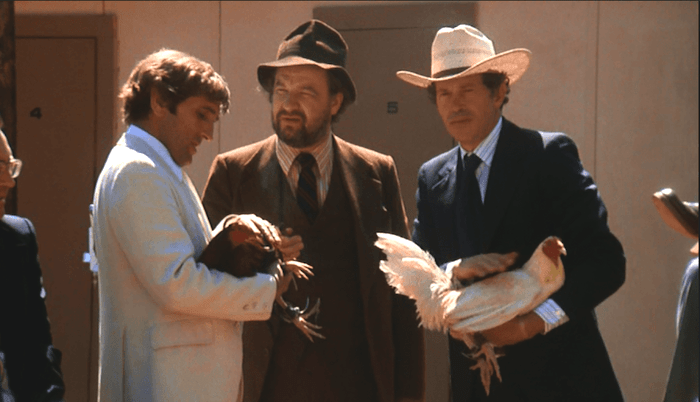
I read about the movie COCKFIGHTER many years ago, and I remember the review being very positive. I had never watched the film before, but with today being Warren Oates’ birthday and it being available on Amazon Prime, I decided I’d finally watch it.
Directed by Monte Hellman and based on Charles Willeford’s 1962 novel, COCKFIGHTER introduces us to Frank Mansfield (Warren Oates), a man completely obsessed with the southern “sport” of cockfighting. As we meet him, he’s in the process of losing a bet and a cockfight with Jack Burke (Harry Dean Stanton). The loss isn’t just a setback, it costs him all of his cash, his truck, his trailer, and his current girlfriend Dody White (Laurie Bird). We also notice in these early scenes that Frank only communicates through sign language and writing notes. It seems that he’s been living under a self-imposed vow of silence. Two years earlier, on the eve of the big, season-ending cockfighting grand finale, Frank’s big-mouthed braggadocio caused him to lose his prized cock, and the prestigious “Cockfighter of the Year” medal in a meaningless hotel bet, also against Jack Burke. Frank vows not to speak again until he wins that medal. Coming up with cash in the only way he can by selling his family’s home, Frank buys a new cock named White Lightning from Ed Middleton, played here by the film’s writer Charles Willeford. Armed with new fowl and a new, capital rich partner named Omar Baradansky (Richard B. Shull), Frank will not let anything stop him, including the love of his life Mary Elizabeth (Patricia Pearcy) or an axe wielding competitor (Ed Begley, Jr.), from being named “Cockfighter of the Year” and finally regaining his voice and the respect he desires!
COCKFIGHTER definitely has some things going for it. First and foremost, Warren Oates is so good in the lead role as the obsessed man who puts success in cockfighting above anything else in his life, including every other person. He literally sells the family home out from under his alcoholic brother Randall (Troy Donahue) in order to fund his next cock purchase after he’s gone bust. This sets up quite the sight gag for such a gritty and realistic film as a large truck and trailer drives away the family home taking up the entire state highway. When his long time fiancé asks him to give up cockfighting, he just gets up, leaves her shirtless and heads back out on the circuit. He writes her a letter from the road and tells her he loves her, but he also makes it clear that life without cockfighting is a life that he’s unwilling to live. Oates’ Frank Mansfield is not the kind of person you’d ever want to depend on in life, but he’s also an uncompromising individual who is determined to live life wholly on his own terms, accepting of the successes and failures that come with it. I watched the film because it features Warren Oates, and after having done so, I can say that his performance is truly special.
COCKFIGHTER is one of those movies that makes us feel like we’re watching real people, and that’s kind of fascinating even if they reside in a world that we don’t really want to live in. The primary credit for that has to go to director Monte Hellman and Oscar winning cinematographer Nestor Almendros (DAYS OF HEAVEN). The restraint that is shown in the storytelling, as well as the sweaty, ramshackle authenticity of the Georgia locations, brings the story to life. The supporting cast also does its part to create the world of COCKFIGHTER. Harry Dean Stanton as Jack Burke, Frank’s primary rival in the cockfighting game, is excellent as you might expect, and he seems a lot like a regular guy. I really like Richard B. Schull, who plays Frank’s outgoing and talkative partner Omar. His friendly and gregarious personality seems a little untrustworthy at first, but he turns out to be the most likable person in the film. And finally, I want to shoutout Charles Willeford. Not only did he write the source novel and screenplay for COCKFIGHTER, he also gives a solid performance as Ed Middleton, an old-timer in the game who treats Frank with honesty and decency when he’s hit rock bottom.
With all the positive things I’ve said above, I have to address the graphic depiction of cockfighting in COCKFIGHTER. This was the 70’s, and the scenes shown here are real and were very difficult for me to watch. It’s not fun to see animals fight and kill each other, and this is coming from a person who loves fried chicken and is not particularly an animal lover. The scenes are presented as matter of fact and in service of the story, but that still doesn’t make them easy to watch. Director Monte Hellman has gone on record to express his personal disgust at even filming these scenes. While a movie made in the 1970’s probably couldn’t have been made without these sequences, I just wanted to make it clear that this film is probably unwatchable for a lot of people.
Overall, COCKFIGHTER is a relic of the 1970’s. It’s a gritty and realistic film, featuring a great central performance from Warren Oates. It’s also an ethically troubling film that features real animal on animal violence. Based on that I don’t necessarily recommend the film. Rather, I just want to share my own thoughts, and you can determine if you want to watch it or not. That’s what I’ve tried to do above.
4 Shots From 4 Films is just what it says it is, 4 shots from 4 of our favorite films. As opposed to the reviews and recaps that we usually post, 4 Shots From 4 Films lets the visuals do the talking.
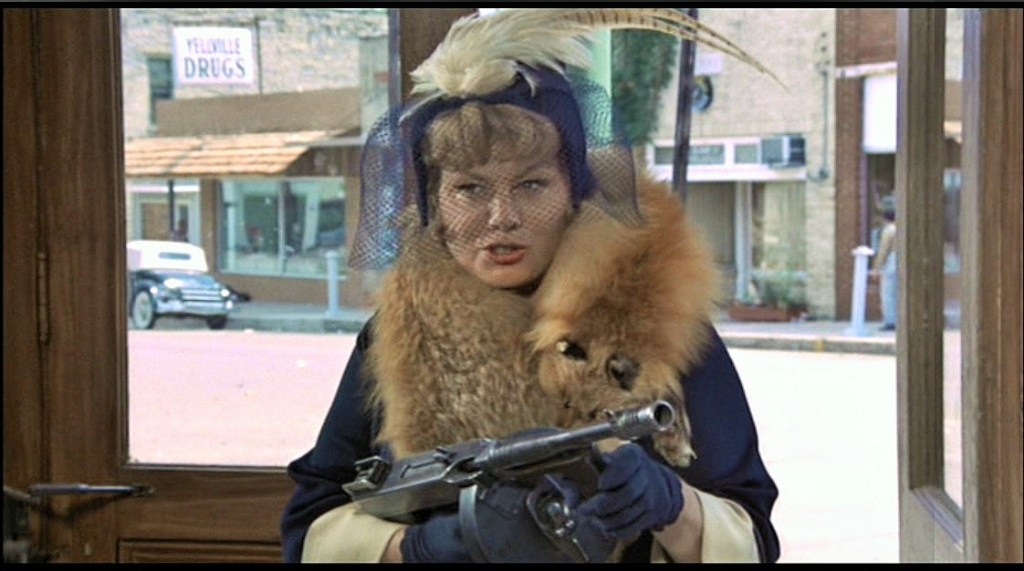
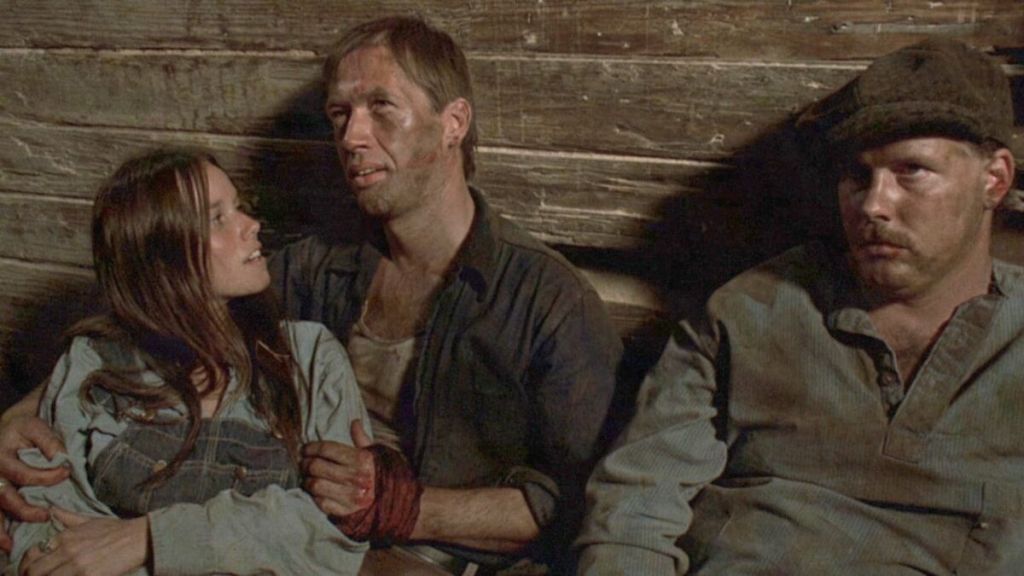
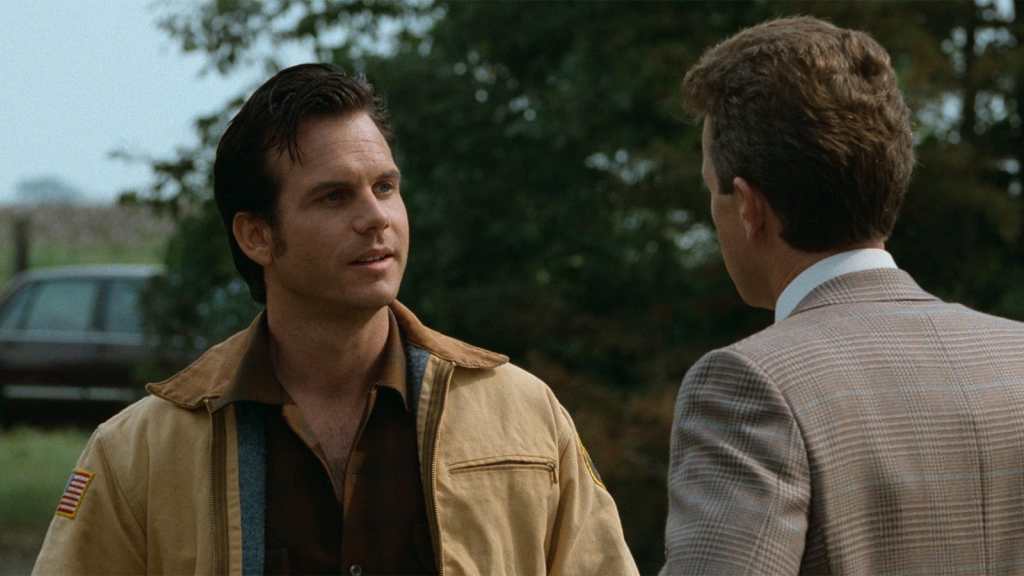
I love to share movies that are filmed in my beautiful home state of Arkansas. There aren’t a lot of movies filmed in Arkansas, but there are definitely some interesting movies filmed in Arkansas. Check these out!
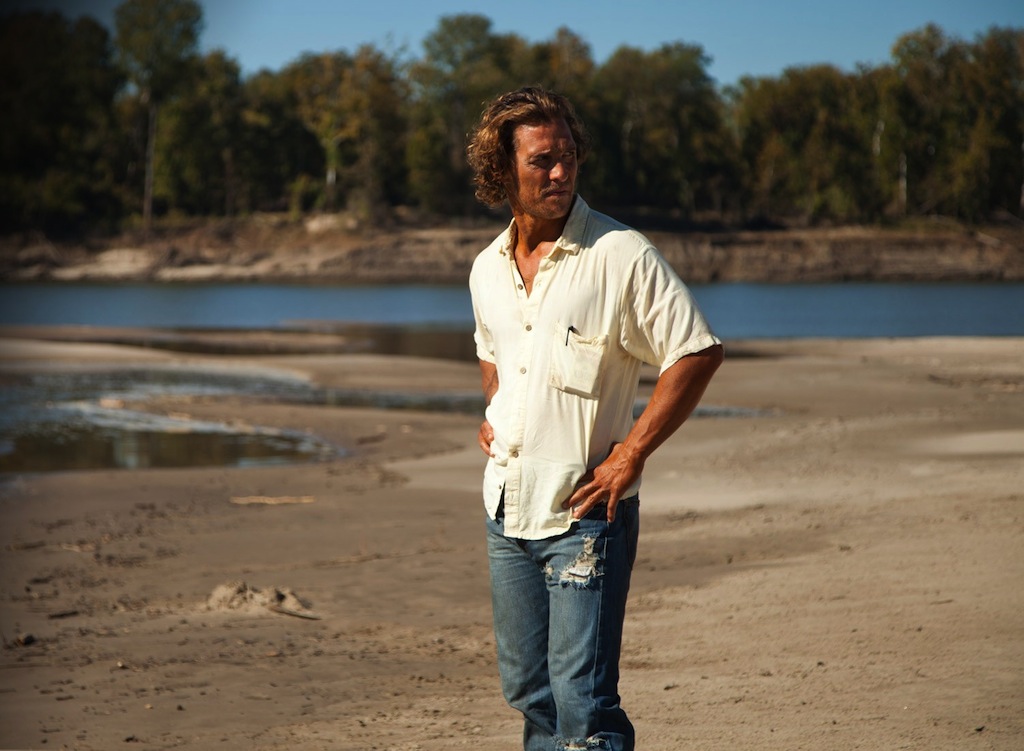
Bloody Mama (1970)Boxcar Bertha (1972)One False Move (1991)Mud (2012)
4 Shots From 4 Films is just what it says it is, 4 shots from 4 of our favorite films. As opposed to the reviews and recaps that we usually post, 4 Shots From 4 Films lets the visuals do the talking!
The aliens are here …. or are they?
4 Shots From 4 Alien Invasion Films
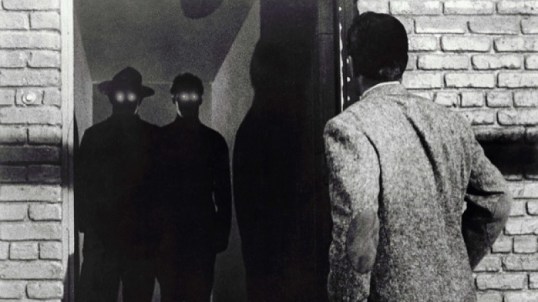
It Came From Outer Space (1953, dir by Jack Arnold, DP: Clifford Stine)
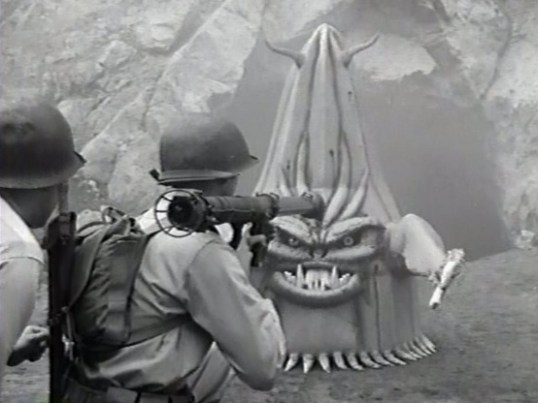
It Conquered The World (1956, dir by Roger Corman, DP: Fred E. West)
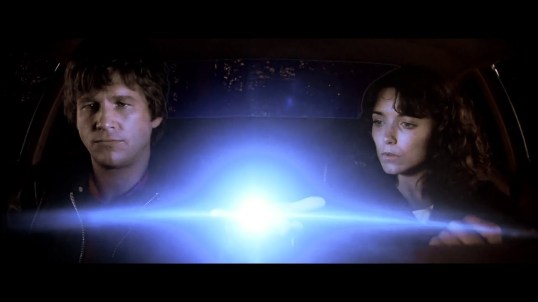
Starman (1984, dir by John Carpenter. DP: Donald M. Morgan)
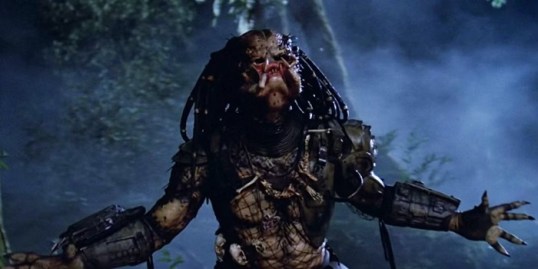
Predator (1987, directed by John McTiernan, DP: Donald McAlpine)
In 2001’s Raptor, Eric Roberts stars as Jim Tanner, the sheriff of a small desert town. When the locals start turning up all shredded to heck, Sheriff Tanner suspects that maybe it was an animal attack. When the sheriff’s daughter (Lorissa McComas) witnesses one of the attacks and goes into a coma as a result, Tanner is determined to get justice, even if it means working with his ex-girlfriend, Barbara (Melissa Brasselle).
It turns out that it’s neither coyotes nor bears that are attacking the folks in the desert. Instead, it’s a bunch of dinosaurs that have been brought back into existence by Dr. Hyde (Corbin Bernsen, wearing a beret), a mad scientist who has a laboratory in a secret government installation. When the army realizes that there’s a bunch of mini-dinosaurs roaming the desert, they send in a special taskforce to take care of the problem.
It’s a pretty simple movie and no one in the cast, Roberts included, really seems to be taking it all that seriously. There a few scenes where Corbin Bernsen looks like he’s about to break out laughing at some of his dialogue. Director Jim Wynorski keeps the action moving and tosses in plenty of blood and a little nudity. If you’ve ever seen any of the other films that Wynorski directed for producer Roger Corman, you’ll know what to expect from Raptor.
The dinosaurs are cute. They’re all obviously puppets and there’s a lot of scenes of them moving quickly through the desert with an intense look in their eyes. Apparently, almost all of the dinosaur footage was lifted from the first three Carnosaur films, which perhaps explains why the film suddenly goes from being about Sheriff Tanner trying to protect his town from the dinosaurs to being about a bunch of soldiers hunting for the dinosaurs in Dr. Hyde’s underground lab. It’s cheap but it’s kind of fun, a timewaster that no one should take seriously.
Previous Eric Roberts Films That We Have Reviewed:
I’ve always appreciated the legendary Roger Corman, who was born on this day in 1926, because he gave Charles Bronson his first starring role in MACHINE GUN KELLY. I’ve heard Quentin Tarantino himself say that It’s the best movie that Corman ever directed. It was such an important movie for Bronson because it directly led to a HUGE break 10 years later when Alain Delon wanted him for his co-star in FAREWELL, FRIEND (1968). Delon wanted Bronson because he admired his performance as George Kelly.
Happy Birthday in heaven, Mr. Corman! Thanks for giving Charles Bronson, and so many greats, the break of a lifetime!
“What is it exactly that you want?” a preacher (Frank Maxwell) asks a congregation of leather-clad bikers.
“We want to get loaded!” Heavenly Blues (Peter Fonda) replies, “And we want to have a good time!”
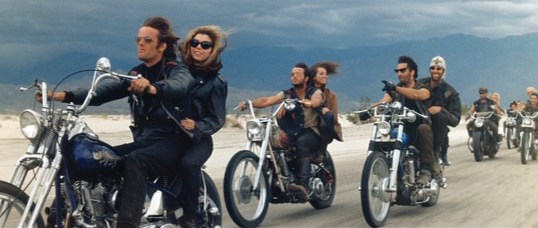
And have a good time, they proceed to have. Of course, it’s a good time for them. Everyone else who meets the bikers at the center of 1966’s The Wild Angels are horrified by this collection of rebellious and violent outsiders. Sure, Heavenly Blues might actually be a soulful guy who mistakenly believes that he can control the gang’s more excessive tendencies. His girlfriend, Mike (Nancy Sinatra), actually seems rather reserved and conservative when compared to the rest of the gang. But make no mistake about it, the majority of the members of the gang are into violence for its own sake. They are bullies who couldn’t make the football team so, instead, they hopped on a motorcycle and formed their own society. They’re self-styled rebels but what are they rebelling against? What have you got?
I know, I know. That famous line comes from Marlon Brando and it was uttered in The Wild One. Peter Fonda, to put it lightly, was no Marlon Brando and, as directed by Roger Corman, The Wild Angels doesn’t have the societal concerns that lay at the hear of The Wild One. As Corman was often the first to admit, his main concern when it came to making movies was to make money. Corman wasn’t necessarily against message films. He often stated that, as a director, 1962’s The Intruderwas the film in which he took the most pride. The Intruder took a firm stand against racism and it let everyone know where Corman stood on when it came to the Civil Rights Movement. It was also one of his few films to lose money. The Wild Angels celebrates rebellion but one gets the feeling that celebration is motivated by the fact that younger filmgoers would be happy to pay to see a movie about a bunch of “youngish” people telling the old folks to shut up and get out of the way. The Wild Angels themselves don’t seem to be motivated by any sort of grand ideology. Heavenly Blues preaches about getting loaded and having a good time and celebrating freedom but he also allows the members of the gang to drape a Nazi flag over a casket. What does Heavenly Blues actually believe in?
Heavenly Blues believes in loyalty to his friends. For all the fights and the orgies and the scenes of motorcycles roaring down country roads, this is ultimately just a film about a guy who wants to give his best friend a decent burial. The Loser (Bruce Dern) dies about halfway through the film and one gets the feeling that he probably would have lived if the gang hadn’t kidnapped him from the hospital. Heavenly Blues wants to give The Loser the type of wild funeral that Blues thinks he would have wanted though I think The Loser probably would have been happier not have been killed by the actions of his idiot friends. Diane Ladd, who was married to Bruce Dern at the time and who has said Laura Dern was conceived during the filming of The Wild Angels, is heart-breaking as The Loser’s girlfriend, Gaysh. Gaysh wants to mourn her boyfriend while the rest of the gang is more concerned with figuring out who her next boyfriend is going to be.
Does Heavenly Blues ever realize that he’s traveling with a bunch of animals? He does but one gets the feeling that he’s accepted his fate. There’s no going back. The past can’t change and the future cannot be controlled so Heavenly Blues is content to live in the present. All he can do is try to give his friend a decent burial while the sirens of cops shriek in the distance.
The Wild Angels was a controversial film when it was first released. It also made a lot of money and led to a whole cycle of outlaw biker films, culminating with Easy Rider. Seen today, it’s a portrait of a society coming apart, with the establishment and the bikers not even willing to stop fighting long enough to allow for a simple burial. It’s definitely a time capsule film, one of those productions that epitomizes an era. There’s not much going on underneath the surface and most of the film’s bikers really are awful people but there is something touching about Blues giving it all up just to try to give his friend a decent burial.
Though Corman worked in almost every type of film genre imaginable, he’s probably best remembered for his science fiction and horror films. This was one of the first of them.
2. Bucket of Blood (1959)
In Bucket of Blood, Roger Corman gave Dick Miller a starring role and also mixed comedy and horror in a way that influence many future horror directors.
3. Little Shop of Horrors (1960)
Roger Corman famously shot Little Shop of Horrors in just two days. The end result was a mix of comedy and horror that continues to be influential to this day. The musical is very good but I still prefer the cheerful low-budget aesthetic of the Corman original.
4. The Terror (1963)
Corman was famous for his ability to spot new talent. His 1963 film The Terror starred a then unknown actor named Jack Nicholson.
5. The Masque of the Red Death (1964)
In the 60s, Corman was also well-known for his Edgar Allan Poe adaptations, the majority of which starred Vincent Price. With these colorful and flamboyant films, Corman showed himself to be a pop artist at heart.
6. Frankenstein Unbound (1990)
In the 1970s, Corman retired from directing and instead focused on producing and distributing movies. In 1990, he briefly came out of retirement and gave us his final directorial effort, Frankenstein Unbound.
In this scene, from Roger Corman’s 1968 film The Wild Angels, Peter Fonda sets forth a manifesto for living. It’s not exactly a manifesto for living for a long time but it certainly seemed to work for him.
4 (or more) Shots From 4 (or more) Films is just what it says it is, 4 (or more) shots from 4 (or more) of our favorite films. As opposed to the reviews and recaps that we usually post, 4 (or more) Shots From 4 (or more) Films lets the visuals do the talking.
Today would have been the 99th birthday of the legendary filmmaker, Roger Corman! And that means that it’s time for….
4 Shots From 4 Roger Corman Films
Not of this Earth (1957, dir by Roger Corman DP: John J. Mescall)
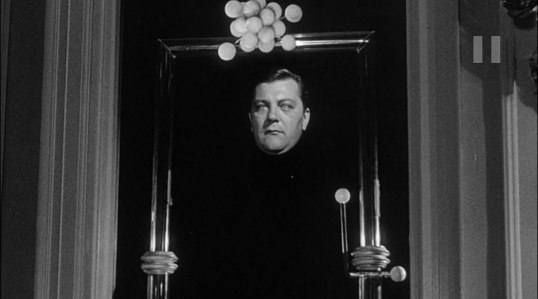
The Fall of the House of Usher (1960, dir by Roger Corman, DP: Floyd Crosby)
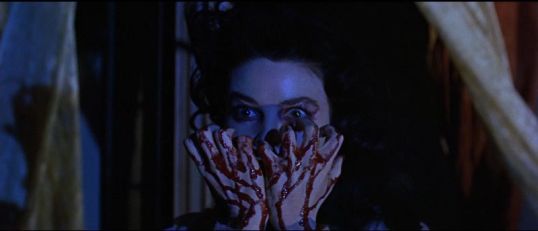
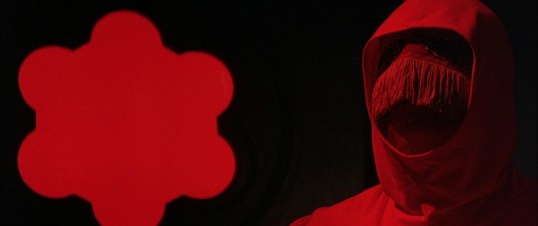
The Masque of the Red Death (1964, dir by Roger Corman, DP: Nicolas Roeg)
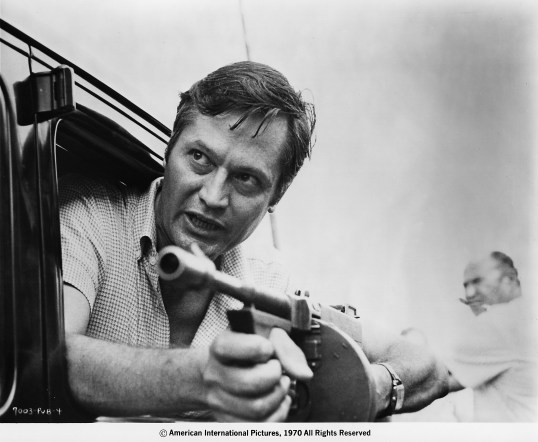
The Wild Angels (1966, dir by Roger Corman, DP: Richard Moore)