Lisa Reviews an Oscar Winner: The Sting (dir by George Roy Hill)


Earlier tonight, as a part of their 31 Days of Oscar, TCM aired The Sting, the film that the Academy selected as being the best of 1973.  I just finished watching it and what can I say?  Based on what I’ve seen of the competition (and there were a lot of great films released in 1973), I would not necessarily have picked The Sting for best picture.  However, the movie is still fantastic fun.

The Sting reunited the director (George Roy Hill) and the stars (Robert Redford and Paul Newman) of Butch Cassidy and the Sundance Kid and told yet another story of likable criminals living in the past.  However, whereas Butch Cassidy largely satirized the conventions of the traditional Hollywood western, The Sting is feels like a loving homage to the films of 1930s, a combination of a gritty, low-budget gangster film and a big budget musical extravaganza.  The musical comparison may sound strange at first, especially considering that nobody in The Sting randomly breaks out into song.  However, the musical score (which is famously dominated by Scott Joplin’s The Entertainer) is ultimately as much of a character as the roles played by Redford, Newman, and Robert Shaw.  And, for that matter, the film’s “let-pull-off-a-con” plot feels like an illegal version of “let’s-put-on-a-show.”

The film takes place in the 1936 of the cultural imagination, a world dominated by flashy criminals and snappy dialogue.  When con artists Johnny Hooker (Robert Redford) and Luther Coleman (Robert Earl Jones) inadvertently steal money from a gangster named Lonnegan (Robert Shaw), Lonnegan has Luther murdered.  Fleeing for his life, Hooker goes to Chicago where he teams up with Luther’s former partner, veteran con man Henry Gondorff (Paul Newman).  Gondorff used to be one of the great con artists but he is now living in self-imposed obscurity, spending most of his time drinking and trying to avoid the FBI.  Hooker wants to get revenge on Lonnegan by pulling an elaborate con on him.  When Gondorff asks Hooker why, Hooker explains that he can either con Lonnegan or he can kill him and he doesn’t know enough about killing.

The rest of the film deals with Hooker and Gondorff’s plan to con Lonnegan out of a half million dollars.  It’s all very elaborate and complicated and a bit confusing if you don’t pay close enough attention and if you’re ADHD like me.  But it’s also a lot of fun and terrifically entertaining and that’s the important thing.  The Sting is one of those films that shows just how much you can accomplish through the smart use of movie star charisma.  Redford and Newman have such great chemistry and are so much fun to watch that it really doesn’t matter whether or not you always understand what they’re actually doing.

It also helps that, in the great 70s tradition, they’re taking down stuffy establishment types.  Lonnegan may be a gangster but he’s also a highly respected and very wealthy gangster.  When Newman interrupts a poker game, Lonnegan glares at him and tells him that he’ll have to put on a tie before he’s allowed to play.  Lonnegan may operate outside the law but, in many ways, he is the establishment and who doesn’t enjoy seeing the establishment taken down a notch?

As entertaining as The Sting may be and as influential as it undoubtedly is (Steven Soderbergh’s Ocean films may be a lot more pretentious — which makes sense considering that Soderbergh is one of the most pretentious directors in film history — but they all owe a clear debt to The Sting), it still feels like an unlikely best picture winner.  Consider, for instance, that The Sting not only defeated American Graffiti and The Exorcist but Ingmar Bergman’s Cries and Whispers as well.  On top of that, when you consider some of the films that were released in 1973 and not nominated — Mean Streets, Badlands, The Candy Snatchers, Day of the Jackal, Don’t Look Now, Jesus Christ Superstar, and The Long Goodbye — it’s debatable whether The Sting should have been nominated at all.  That’s not a criticism of The Sting as much as it’s an acknowledgement that 1973 was a very good year in film.

So, maybe The Sting didn’t deserve its Oscar.  But it’s still a wonderfully entertaining film.  And just try to get that music out of your head!
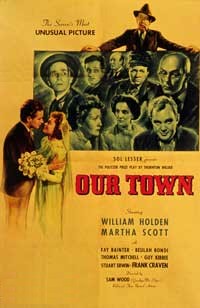
Lisa Reviews an Oscar Nominee: Our Town (dir by Sam Wood)


Original_movie_poster_for_the_film_Our_Town_(1940_film)

(SPOILERS BELOW!  THE END OF THIS FILM WILL BE REVEALED!  I will also be revealing who played George Gibbs but that’s probably not as big a spoiler.  It depends how you look at it.)

I was only 15 years old when I first read Our Town.  Because I was a theater nerd, I knew a little about the play.  For instance, I knew it took place in a small town.  I knew that it was narrated by a character known as the Stage Manager.  I knew that the play was meant to be performed on a bare stage, with no sets or props.  What I did not know, as I innocently opened up that booklet, is that Our Town is probably one of the most traumatically depressing plays ever written.

When the stage manager appears at the start of the play and talks about the town of Grover’s Corner, he lulls you into believing that you’re about to see a sentimental, comedic, and old-fashioned celebration of small town life.  We meet the characters and they all seem to be quirky in a properly non-threatening way.  Joe Crowell shows up delivers a newspaper to Doc Gibbs.  The stage manager mentions that Joe will eventually grow up to attend to M.I.T.

“Awwwww!  Good for Joe!” the audience says.

And, the Stage Manager goes on to inform us, as soon as Joe graduates, he will be killed in World War I, his expensive education wasted.

Okay, the audience thinks, that was a dark moment but this play was written at a time when World War I was still fresh on everyone’s mind.  Surely the rest of the play will not be quite as dark…

And fortunately, George Gibbs and Emily Webb show up.  They’re young, they’re likable, and they’re in love!  George and Emily get married and they’re prepared to live a long and happy life in our town!  Good for them!  YAY!

And then Act III begins…

Oh my God, Act III.  Act III begins with almost everyone dead.  Emily died in child birth so she hangs out at the local cemetery and talks to all the other dead people, the majority of whom only have vague memories of their former lives.  Emily relives the day of her 12th birthday and discovers that it’s too painful to remember what it was like to once be alive.  Emily asks the Stage Manager if anyone truly appreciates life.  The Stage Manager replies, “No.”  In the world of the living, George Gibbs sobs over his wife’s grave….

And the play ends!

OH MY GOD!

Seriously, reading Our Town was probably one of the most traumatic experiences of my life!

The 1940 film version of Our Town is a little less traumatic because it changes the ending.  In the film version, Emily doesn’t die.  She nearly dies while giving birth to her second child and the entire third act of the play is basically portrayed as being a near-death hallucination.  But, in the end, she survives and she comes through the experience with a new found appreciation for life.

And it’s certainly the type of happy ending that I was hoping for when I first read the play but, as much as I hate to admit it, the story works better with Emily dying than with Emily surviving.  The play presents death as being as inevitable as life and love and it makes the point that there’s nothing we can do to truly prepare for it.  By allowing Emily to live, the film gives us a ray of hope that wasn’t present anywhere else in Our Town.  The happy ending feels inauthentic.  If Emily could live then why couldn’t Joe Crowell?  For that matter, why did Emily’s younger brother have to die of a burst appendix on a camping trip?

But, other than the changed ending, Our Town is a pretty good adaptation of the stage play.  While the film features an actual set (as opposed to the bare stage on which theatrical versions of Our Town are meant to be performed), director Sam Wood does a good job of retaining the play’s surreal, metatheatrical style.  Making good use of shadow and darkness, Wood and cinematographer Bert Glennon made Grover’s Corner seem like a half-remembered memory or a fragment of a barely cohesive dream.

Frank Craven, who originated the role on Broadway, is properly dry as the Stage Manager and, in the role of Doc Gibbs, Thomas Mitchell is so sober and respectable that it’s hard to believe that, in just 6 years, the same actor would play the delightfully irresponsible Uncle Billy in It’s A Wonderful Life.  Emily and George are played by Martha Scott and an impossibly young William Holden, both of whom give wonderfully appealing performances.

With the exception of that changed ending, Our Town is a worthy adaptation of a classic play.  It was nominated for Best Picture but lost to another literary adaptation, Alfred Hitchcock’s Rebecca.

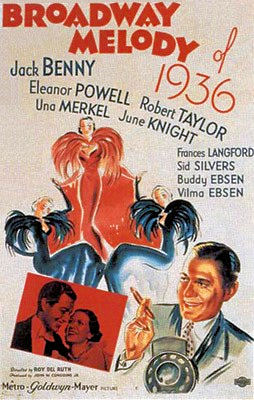
Lisa Reviews An Oscar Nominee: Broadway Melody of 1936 (dir by Roy Del Ruth)


PosterBroadwayMelody1936_01

It’s Oscar month and you know what that means!  It’s time for TCM to do their annual 31 Days of Oscars!  For the next 31 days, TCM is going to be showing movies that were nominated for and occasionally won Oscars.  This is a great month for me because it has long been my goal to see and review every single film that has ever been nominated for best picture.  Considering that close to 500 movies have been nominated, that’s no small task.  However, over the past four years, I have definitely made some progress, as you can see by clicking on this link and looking at a list of every single best picture nominee.  Thank you, TCM, for helping me get closer to my goal!

For instance, if not for TCM, how would I ever had the chance to watch Broadway Melody of 1936?  Broadway Melody of 1936 was one of the twelve films to be nominated for best picture of 1935 but it’s now largely forgotten.  When film loves discuss the best musicals of the 30s, it’s rare that you ever hear mention of Broadway Melody of 1936.

Technically, it can be argued that Broadway Melody of 1936 was the first sequel to ever be nominated for best picture, despite the fact that it has little in common with Broadway Melody, beyond taking place on Broadway and being nominated for best picture.  (Broadway Melody won the award.  Broadway Melody of 1936 lost to Mutiny on the Bounty.)  Silence of the Lambs, The Godfather, Part II, Mad Max: Fury Road, Toy Story 3, and The Bells of St. Mary’s are all sequels that were nominated for best picture but Broadway Melody of 1936 did it first.

As for what Broadway Melody of 1936 is about … well, it’s really not about anything.  Oh, don’t get me wrong.  The film has a plot.  Irene Foster (Eleanor Powell) wants her former high school boyfriend, Broadway director Robert Gordon (Robert Taylor), to cast her in his new show but Gordon refuses because he doesn’t want the innocent Irene to be exposed to the sordid world of show business.  Fortunately, Irene has some allies who are willing to help her get that role.  Ted Burke (Buddy Ebsen) is an appealingly goofy dancer who, at one point, wears a Mickey Mouse sweatshirt.  Bert Keeler (Jack Benny) is a columnist who rattles off his “New Yawk cynical” dialogue in the style of most 1930s news reporters.

Broadway Melody of 1936 has a plot but it’s not really that important.  The story is just an excuse for the songs and the dance numbers.  And while none of the numbers are spectacular (especially when compared to other 30s musicals, like 42nd Street), they are all definitely likable.

Seen today, Broadway Melody of 1936 seems like an odd best picture nominee.  It’s not bad but there’s nothing particularly great about it.  To truly appreciate the film, it’s probably necessary to try to imagine what it was like to watch the film in 1935.  At a time when the country was still in the throes of the Great Depression, Broadway Melody of 1936 provided audiences with an escape.  Audiences could watch the film and imagine that they, just like Eleanor Powell, could leave behind the dullness of reality and find stardom in the glamorous and glitzy world of Broadway.

Never doubt the power of escapism.


A Few Thoughts on The X-Files 10.3 “Mulder & Scully Meet The Were-Monster”


x_files-fox

After watching last night’s episode of The X-Files, I finally feel like I’m starting to get it.  You have to realize that I came into this revival with only a casual knowledge of what the whole show was about.  Since I didn’t watch the show when it originally aired and have only seen a few reruns (and the movies, neither of which did much for me), I’ve often felt rather detached from all the excitement that’s been generated by the revival.

And the previous two episode did not help.  My Struggle was a mess.  The second episode was a definite improvement but still, it did not exactly blow me away.  I watched these episodes and I assumed that The X-Files was one of those revivals that would largely succeed only on the strength of nostalgia for the show it once was.

But then I watched last night’s episode, the wonderfully titled Mulder & Scully Meet The Were-Monster.  After two episodes that occasionally felt as if they were straining a bit too hard to be taken seriously, Mulder & Scully Meet The Were-Monster was a comedic deconstruction of the whole “cult-show-about-paranormal-investigators” genre.  While never quite slipping into the realm of self-parody, the episode had a lot of fun with the conventions of the show.

It also had a lot of fun with David Duchovny’s performance as Fox Mulder.  Duchovny is one of those confident actors who is always more likable when he’s befuddled.  A good deal of the pleasure of last night’s episode came from watching Mulder literally stumble through the plot.

As for the plot itself, it was wonderfully nonsensical.  Someone is murdering random people.  Is it a frightening lizard-like creature that some of the locals have spotted?  Well, there is a lizard-like creature but he’s not the murderer.  The murderer is Pasha, a sociopathic animal control officer, played by the always welcome Kumail Nanjiani.  You pretty much know that Pasha is the murderer from the minute you see him, if just because there’s no other reason for him to be played by a familiar actor.  When Pasha is unmasked as the killer and arrested, he starts to give the usual lengthy explanation for his crimes, just to be ignored by Mulder.  Mulder mentions that he’s sick of serial killer profiling.  Take that, Criminal Minds!

The Were-Monster of the title was played by Rhys Darby, who we all remember and love as Murray on The Flight of the Conchords.  It turns out that the Were-Monster was a lizard creature who was bit by a man and who now cursed to turn into a man whenever the sun rises.  Whenever the Were-Monster transforms into Guy Mann (that’s the name it uses!), he has to worry about stuff like holding down a job and impressing other people by lying about his sex life.  Poor Guy!  But, at least he wasn’t a murderer and at least he wasn’t successful in his attempt to convince Mulder to kill him.

(You can’t kill Murray!  He was the last Bret!)

Hopefully, the quality and sheer fun of Mulder & Scully And The Were-Monster is a sign of things to come as far as the remaining episodes of The X-Files are concerned.


A Few Thoughts On … The X-Files 10.2 “Founder’s Mutation”


x_files-fox

Last night, I promised that I wait for the second episode of The X-Files revival before passing too much judgment on the series as a whole.  One reason why that was an easy promise to make was that the 2nd episode was scheduled to air less than 24 hours after the first one.  And since I’m coming down with a cold, I was home and able to watch that 2nd episode.

The 2nd episode was a definite improvement over the first.  For one thing, it told an actual story that felt like more than just a collection of hastily compiled scenes.  There were still some weaknesses, though I’ve been told that some people consider these weaknesses to be strengths.  For instance, I will never be a fan of the muttering.  I understand that this is a show about secrets and conspiracies and that people dealing with secrets often speak in low voices but seriously, I could not hear about half of the dialogue.  Beyond that, the episode still suffered from some of the bad editing that marred My Struggle.  With the exception of Mulder’s fantasy about his son, the final few minutes of the show especially felt a bit hasty and abrupt.

There were other moments when I was painfully aware that this was a revival of a show that went off the air 14 years ago.  The opening credits featured pictures of David Duchovny and Gillian Anderson from the original series and it was a bit jarring to realize just how much these two have aged over the past decade.  As I watched Mulder and Scully investigating a mysterious death and a mad scientist, it was hard not to notice that both of them seemed to be moving a bit slower than they did in the past.

And then there was the scene in which a potential witness mistook Mulder for being gay.  That scene felt very 1999.

But otherwise, the 2nd episode worked pretty well.  It was nothing great but it had a few creepy moments and the scene in the pool totally freaked me out.  (Not to mention the sheer length of the blade the Scully pulled out of that guy’s ear.)  If nothing else, it seems to indicate that, should The X-Files revival go on past these 6 episodes, it will be a solid enough show.  It may never be great but it will be entertaining enough.

As for my favorite part of tonight’s episode, it was when Scully and then Mulder imagined what would have happened if they hadn’t given their son William up for adoption.  (On twitter, I suggested that the baby should be called Sculder but apparently, everyone’s sticking with William.)  It was interesting to note that both Scully and Mulder fantasized about having an ideal relationship with their son but, in both cases, that fantasy ended with a moment of sudden terror.  If nothing else, it showed the psychological effects of not being able to trust anyone or anything.

William will probably show up before this season ends.  I imagine it will be in the final episode and things will probably wrap up with one of those open-ended finales that will make fans of the show scream, “Bring back The X-Files!  We promise we’ll buy anything advertised during the show!”

Anyway, based on the 2nd episode, I would say The X-Files has earned its revival.

A Few Thoughts on … Lucifer 1.1 (“The Pilot”)


Lucifer

So, earlier tonight, I watched the first episode Lucifer.  Lucifer is the new cop show on Fox.  It’s about an eccentric crime solver who uses unorthodox methods to solve crimes and his partner, with whom he shares sexual tension and the occasional sardonic aside.  It sounds a lot like Elementary, Castle, the X-Files revival, and a whole lot of other TV shows of the past, present, and future as well.

The main difference between Lucifer and those other shows is that the title character is the Devil.  That’s right.  The Devil has gone from starring in Milton’s Paradise Lost to working with the LAPD to solve crimes.

(In high school, one of my best friends read Paradise Lost and ended up getting a huge crush on Satan.  I wonder if she watched Lucifer tonight.)

From what I understand, Lucifer is loosely based on a comic book series in which Lucifer gets bored with ruling Hell and comes to Los Angeles, where he runs a piano bar and spends a lot of time considering whether or not there really is such a thing as free will.  And that actually sounds pretty interesting.  That sounds like it would make for an edgy, thought-provoking series.

What is not particularly interesting is the idea that Lucifer would come to Los Angeles, open a piano bar, and then decide to spend his time helping the LAPD solve crimes.  It really sounds like the punchline to an overtold joke, doesn’t it?  “She’s a non-nonsense detective.  He’s the Prince of Darkness.  Together, they fight crime.”

There were a few things that I did like about the pilot.  I liked the fact that it opened and closed with No Rest For The Wicked, even though that song’s going to be stuck in my head for the next few days.  I thought Lauren German did a pretty good job as Detective Chloe Dancer.  There were a few scenes — mostly the ones that featured Lucifer hanging out at his piano bar — that were shot and acted in a entertainingly over-the-top style.  I like the idea that Lucifer can terrify people whenever he feels like it.  I think Tom Ellis could be really good in the title role but not if the series insists on straight-jacketing him into a typical “eccentric detective” role.

My advice to this show?  Get Chloe Dancer out of the LAPD as quickly as possible.  The character has potential and I can easily imagine Lauren German and Tom Ellis developing a really amazing chemistry but having to deal with a case-a-week format is going to rob this show of everything that could potentially make it special.  So, get Chloe off of the LAPD.  Have her work as a head of security for Lucifer’s bar or something.  Keep them together but forget about solving crimes.  Instead, allow Lucifer to truly explore the philosophical and theological concepts that were merely hinted at in the pilot.  It might not win the show a huge audience but it will win it a loyal and intelligent audience.  At the very least, it should be enough to score 6 seasons and a movie.

Lucifer has potential but not as a cop show.

A Few Thoughts On … The X-Files 1.1 (“My Struggle”)


XF_sc7_0259rjw_hires1

Tonight, after a football game that apparently everyone but me was super excited about, the first episode of The X-Files revival premiered on Fox.  The episode was called My Struggle, I watched it, and now I’m going to offer up just a few thoughts on it.

Why just a few?

Well, first off, it’s just the first of six episodes.  As I watched tonight, I had to keep reminding myself that My Struggle was just the first episode and you really can’t say much about a show based on just the first episode.  My Struggle felt rushed but then again, it had a lot to do.  It had to reintroduce Mulder and Scully, it had to lay the foundation for the rest of the series, it had to introduce a few new characters, and it had to leave the audience intrigued enough to actually watch the 2nd episode.  It was a balancing act that My Struggle often struggled to maintain but I’ve also been told, by people who have claimed to have seen it, that tomorrow’s episode is going to be a lot better.

BN-MF556_xfiles_G_20160122094014

So, I am going to try to put off passing judgment on The X-Files until I at least see that second episode.  When you’re a critic, putting off judgment goes against your every natural instinct but that’s what I am going to try to do.

I should also admit that, unlike apparently everyone else in the world, I am hardly an expert on The X-Files.  I’ve seen reruns but I didn’t watch the show regularly when it originally aired.  When I think of The X-Files, my first thought will always be laughing at the opening of the first movie, which featured a kid falling into an underground cave in North Texas.  (As a resident of North Texas, I can assure you that we don’t have caves and the last thing you’re going to see in Dallas is a mountain on the horizon.)

My Struggle started out well.  I enjoyed the pre-credits scene, where David Duchovny explained everything that had happened in the past.  Along with telling us about the previous series, he also talked about the history of UFO sightings and Duchovny’s hypnotic delivery was perfect.

I was a bit less impressed with what immediately followed the credits.  The early scenes, of Mulder and Scully meeting talk show host Tad O’Malley (Joel McHale), felt extremely forced.  I found myself wondering how long I was going to have to listen to Mulder and O’Malley debate gun control.  The attempt at political satire was predictable and tedious.  But I stuck with it because … well, it’s Joel McHale.  Who doesn’t love Joel McHale?

For the first half of the episode, I was bored out of my mind.  It was too talky and all the mumbling was getting on my nerves.  Gillian Anderson — who was so brilliant in The Fall — seemed totally bored and I was not feeling any of that famous chemistry between her and Duchovny.

8d12d480eb128ca13bde395ebde5674a

But then, things started to get better.  O’Malley showed Mulder a flying saucer that had been made from alien technology and not only did Mulder get excited but the previously stone-faced David Duchovny finally started to show some emotion.  He got excited and his excitement was fun to watch.

And then we got a lengthy monologue from Tad O’Malley, one that basically explained how the military-industrial complex uses alien technology to secretly (and not-so-secretly) rule America and being the lover of history and conspiracy theories that I am, I was absolutely enthralled.  (Though, if the show really had guts, it would have featured a clip of Barack Obama during the conspiracy montage, to go along with the clip of George W. Bush.)  That monologue really saved the episode for me.

Obama-Meets-Alien

In fact, as I watched, I realized that I may by a skeptic about many things but I am definitely pro-paranoia.  Paranoia makes for a better and more thrilling story and, hopefully, that’s what this new version of The X-Files will continue to focus on.

So, overall, this was a very uneven hour of television.  But I’m still definitely going to set the DVR to record the next episode.

the-x-files-600x800

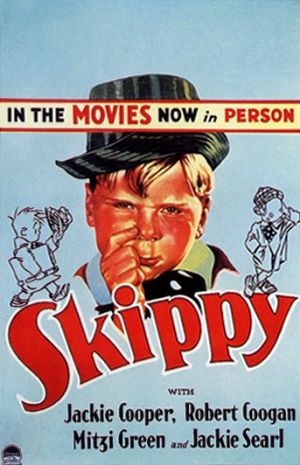
Lisa Reviews An Oscar Nominee: Skippy (dir by Norman Taurog)


Skippy1931

(SPOILERS BELOW!)

Oh my God, they actually killed the dog…

That was my main reaction, this morning, as I watched the 1931 film Skippy.  Skippy aired on TCM earlier this morning and I set the DVR to record it because, long ago, Skippy was nominated for best picture and, for quite some time, it has been my goal to see and review every single film ever nominated for the best picture.

And I have to admit that for the first hour or so, I wasn’t sure if I’d actually be able to get all the way through Skippy.  Skippy is very much a film of the early 30s and you never known how much you appreciate jump cuts, tracking shots, and even the occasional hand-held camera shot until you watch a movie that features none of them.  It’s definitely a different style of story telling and I sometimes found myself struggling to adjust to it.

Add to that, Skippy was a film about children and, while the film’s star, 9 year-old Jackie Cooper, was a natural before the camera, the other child actors often seemed forced.  There was a lot of overacting that, if nothing else, made me appreciate even more Jacob Tremblay’s subtle performance in Room.

There were a few things that I did appreciate about Skippy.  As I’ve stated on the site before, I love history and Skippy was definitely a time capsule.  The film follows 6 year-old Skippy (Jackie Cooper) as he leaves the safety of his upper class home and explores the poor side of the town and the film does a good job of contrasting Skippy’s sheltered home with the nearby neighborhood of Shantyown.  It’s while wandering around Shantytown that Skippy meets and befriend Sooky (Robert Coogan).  Skippy and Sooky accidentally break a windshield that belongs to the evil dogcatcher, Mr. Nubbins (Jack Rube Clifford).  Mr. Nubbins retaliates by taking away Sooky’s dog and demanding that the boys pay him 3 dollars for the dog’s freedom.  Though it’s a mighty struggle that involves many comedic schemes, the boys manage to raise the 3 dollars.  Mr. Nubbins takes the money, says that he’s going to use the money to buy a new windshield, and that he’s going to kill the dog anyway.  So, Skippy and Sooky have to raise three dollars more just to discover that Mr. Nubbins has already shot their dog.

As Sooky sobs, Skippy fights back tears and asks if they can at least have the dog’s body so they can give it a proper burial.

“It’s already been disposed of,” Mr. Nubbins snarls.

And, at this point, I was just sitting there and thinking, “What the HELL!?”  Seriously, I can only imagine what it must have been like to be a child in 1931, watching this film (which was based on a comic strip that all the kids probably read every day), laughing at jokes that were probably quite funny back then, and then suddenly being smacked in the face by Mr. Nubbins announcing that not only was the dog dead but his body had been cremated.  I can only imagine that amount of tears that were shed in those 1931 theaters!

(Making things even worse is the discovery that the town’s rules for dealing with stray dogs were written by none other than Skippy’s father.)

And as I thought more about it, it occurred to me that this is one thing that would never happen in a movie today.  You don’t kill the dog, unless you want Keanu Reeves to show up and kill you.

Sooky breaks into tears as soon as he hears that his dog has been killed.  Skippy manages to hold back until he gets home and then he breaks into sobs.  (According to Jackie Cooper, director Norman Taurog threatened to kill the dog in real life unless Cooper gave him authentic tears.)  Fortunately, all is eventually resolved by both Skippy and Sooky getting new dogs and Skippy’s dad beating up Mr. Nubbins.  Yay!

Anyway, for the most part, Skippy is one of those films that will mostly be interesting to Oscar completists for me.  However, I will always be stunned by the fact that, in the film, Mr. Nubbins actually killed that dog.

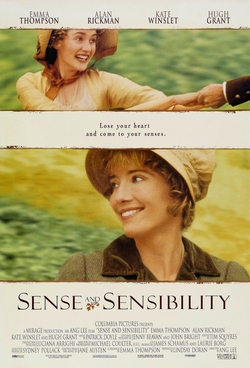
Lisa Reviews An Oscar Nominee: Sense and Sensibility (dir by Ang Lee)


Sense_and_sensibility

I just finished watching the 1995 best picture nominee Sense and Sensibility on TCM and, despite the fact that I’ve watched it several times in the past, I’m glad that I took time to rewatch it.  Sense and Sensibility is one of those very special films that you should rewatch every few months just to be reminded of how good it is.  There’s no CGI in Sense and Sensibility.  Instead, there’s just some very good writing, some excellent performances, and some lushly wonderful images of the English countryside, courtesy of director Ang Lee.  It’s a deliberately paced film, one that proves the virtue of a subtle touch.

The film tells the story of the Dashwoods.  As Mr. Dashwood (Tom Wilkinson) dies, he tells his son by his first wife, John (James Fleet), to take care of his second wife (Gemma Jones) and their three daughters, Elinor (Emma Thompson), Marianne (Kate Winslet), and Margaret (Emilie Francois).  Naturally enough, John does the exact opposite and soon the Dashwood sisters are forced to leave their large estate and fend for themselves.

The film centers on the practical Elinor and the passionate Marianne.  Elinor meets and falls in love with Edward (a surprisingly restrained Hugh Grant), an aspiring clergyman who is also John’s brother-in-law.  Edward comes from a wealthy family but will be disinherited if he marries someone who has neither money nor social prominence.  Marianne, meanwhile, has fallen in love with John Willoughby (Greg Wise), who is handsome, dashing, rich, and a bit of a cad.  (Cad is such a cool word.  People should start using it more.)  Marianne is so in love with the unworthy Willoughby that she misses the fact that the kindly Col. Brandon (Alan Rickman) has also fallen in love with her.

Sense and Sensibility is based on a Jane Austen novel and, in its very British way, it’s a wonderfully romantic film.  Tonight, when viewed in the shadow of the recent passing of Alan Rickman, the scenes featuring Col. Brandon were even more poignant than usual.  His love for Marianne is perhaps the most pure and selfless love to be found in the entire film.  There’s a scene where Col. Brandon is speaking to Elinor and Marianne, inviting them to his estate.  Marianne ignores him until Brandon mentions that Willoughby is also inspected.  Suddenly, Marianne looks up and smiles and Alan Rickman allows just a hint of pain to enter his voice.  It’s a masterful performance.

But really, the reason why I love this film is because it’s about sisters. I am the youngest of four sisters and, whenever I see this film, it’s hard for me not to see the Bowman sisters in the Dashwood sisters.  There is so much about Marianne that I relate to, from her passionate pursuit of “true love” to her artistic sensibility to her somewhat dangerous habit of wandering around in the middle of thunderstorm.  You never doubt for a second that Emma Thompson and Kate Winslet could be related and this film always makes me appreciate my own sisters.

Sense and Sensibility was nominated for Best Picture of 1995 but it lost to a film that is its total opposite, Mel Gibson’s Braveheart.

Cleaning Out The DVR: I Have Your Children


I Have Your Children

After watching 911 Nightmare, I continued to clean out the DVR by watching I Have Your Children.  I Have Your Children originally aired on Lifetime on January 1st.  That’s right — this is the first Lifetime film of the year!

Anyway, I Have Your Children is a film about hostage negotiation and, after reading that, are you still awake?  For whatever reasons, there have been hundreds of movies and TV shows about hostage negotiators and they’re usually pretty boring and predictable.  Some crazy person takes a group of people hostage.  The SWAT team surrounds him.  A hostage negotiator who is haunted by a past failure shows up and does the whole, “Just talk to me” routine.  The SWAT team just wants to shoot the guy and the negotiator does the whole, “You are putting the hostages in danger!” routine.  Usually, it turns out that the guy holding the hostages is doing so because he was screwed over by a bank or health insurance company or maybe he lost all of his money due to a smarmy stockbroker.  There’s usually a scene where the negotiator delivers food to the hostages.

Seriously, a hostage negotiator film just writes itself.  Maybe that’s why there’s so many of them.

Anyway, at first glance, I Have Your Children seems like pretty much your standard hostage negotiator film.  A guy named Calum stops taking his mediation and hijacks a school bus.  It turns out that Calum’s mother is dying but she can’t get the treatment she needs because of the big horrible health insurance company!  Calum is demanding a huge ransom, enough money to be able to pay for his mother’s treatment.  One of the kidnapped kids is the daughter of a claims adjuster at the insurance company!

The SWAT Team just wants to rush in with guns blazing and if that means that all the hostages die, so be it.  Fortunately, Amber Cross (Alaina Huffman) is there to negotiate with Calum.  Amber, of course, has issues of her own.  A hostage died during one of her previous negotiations.  Her ex-husband is planning on marrying a younger woman.  (It’s a Lifetime film, after all.)  Her son is being bullied at school.  Fortunately, Amber’s father-in-law happens to be the chief of police and he’s going to keep Amber employed, even if a snarky reporter and the fascistic SWAT Team leader continue to insist that she’s thoroughly incompetent…

However, towards the end of the film, there’s a big twist and it kind of makes up for how predictable the film has been up to that point.  Obviously, I can’t really reveal the twist without spoiling the film but I will say that it was clever and fairly unexpected and it pretty much saved the entire film from being totally forgettable.  So, if you happen to watch I Have Your Children, the best advice I can give is to stick with the movie and have some faith that it will eventually pay off!

Seriously, there’s nothing wrong with having a little faith.