“The horror… the horror…” — Col. Walter Kurtz
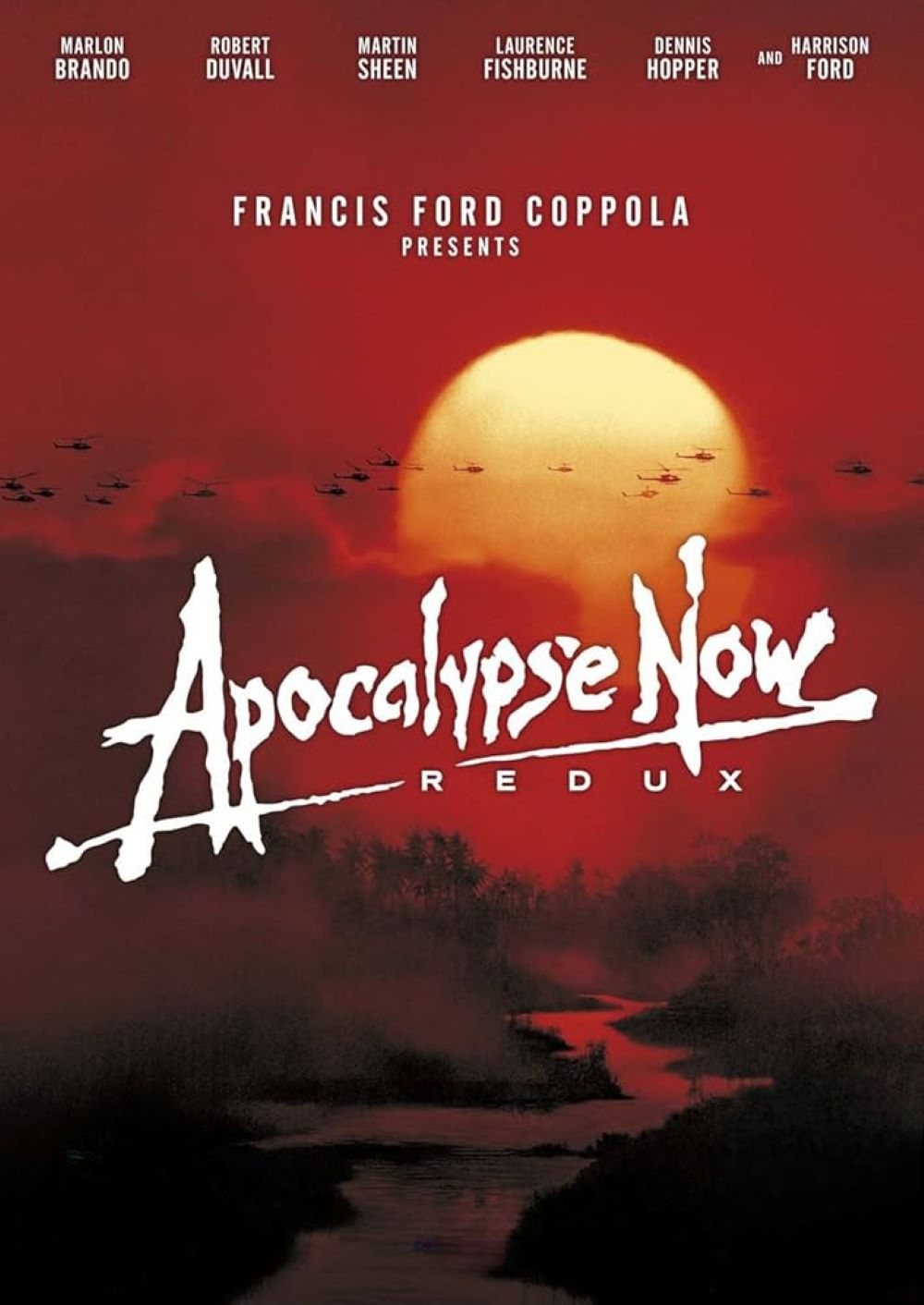
There is a specific kind of cinematic fever dream that only war, isolation, and a touch of madness can produce, and Francis Ford Coppola’s Apocalypse Now remains its gold standard. Co-written by Coppola and John Milius (the latter a colorful, larger-than-life figure in 1970s Hollywood), the film’s screenplay originally leaned harder into Milius’s romantic vision of martial will before Coppola reshaped it into something more hallucinatory and morally ambiguous. When we talk about the Redux version, released in 2001, twenty-two years after the original, we are not just revisiting that fever dream; we are plunging back into an even more hallucinatory, bloated, and revealing cut of the material.
At over three hours and twenty minutes, Apocalypse Now Redux is both a gift and a test of endurance. For those who only know the theatrical cut, this version feels less like a director’s tweak and more like unearthing a lost, more indulgent diary entry from Coppola’s own heart of darkness. The core remains the same: Captain Benjamin Willard (Martin Sheen), a morally hollowed-out assassin, is sent upriver during the Vietnam War to terminate Colonel Walter Kurtz (Marlon Brando), a once-brilliant Green Beret who has gone rogue and set himself up as a demi-god in the Cambodian jungle. The structure is a loose but unmistakable adaptation of Joseph Conrad’s classic 1899 novella Heart of Darkness, transposing Conrad’s grim critique of Belgian colonialism onto America’s own imperial overreach in Southeast Asia. Conrad’s journey up the Congo River becomes the Navy patrol boat’s crawl up the Nùng River, with each stop revealing a new layer of absurdity, violence, and spiritual decay.
The most immediate thing to address is what Redux adds, because those additions fundamentally alter the rhythm of the film. The theatrical cut is a lean, relentless descent. Redux is a meandering, hypnotic, and sometimes frustratingly pensive journey. Several major extended sequences distinguish this cut from the original. The first involves the Playboy Playmates. In the theatrical cut, we see them briefly at a chaotic USO show. In Redux, we get an extended sequence where Willard’s crew trades a canister of fuel for two hours with the stranded bunnies after their helicopter runs low on fuel. Later comes the brutal, psychedelic chaos of the Do Lung Bridge, which is extended in Redux to emphasize the utter breakdown of command and reality. And finally, deep in the journey, after surviving a tiger attack, Willard and the crew stumble upon the French rubber plantation, where a family of colonial planters refuses to leave their dying world. Each of these sequences grinds the forward momentum in different ways—the bunnies through desperate transaction, the bridge through absurd chaos, the plantation through nostalgic rot.
But to truly appreciate what Coppola is doing in Redux, you have to stop thinking of the Nùng River as a simple journey and start seeing it as a vertical descent—a layered, infernal funnel where each stop corresponds to a different circle of moral decay, much like the structure of Dante Alighieri’s Inferno, the first part of his epic narrative poem The Divine Comedy. The patrol boat is not just transport; it is a cramped, filthy ferry crossing the River Styx, and the further Willard and his crew go, the thinner the veil between civilization and savagery becomes. The Redux version, with its extended sequences, actually sharpens this Dantesque geometry rather than diluting it, because each added stop becomes another hellish layer, another specific flavor of corruption rotting under the jungle canopy. And importantly, the order of these stops tells a specific story of descent. Willard first encounters raw, commodified desire at the USO show, then plunges into the absurd mechanical chaos of the Do Lung Bridge, and finally drifts into the refined, decaying nostalgia of the French plantation—each circle deeper, stranger, and more spiritually corrosive than the last.
Consider the first major stop after leaving the relative order of the Delta: the extended Playboy Playmate sequence. In Dante’s Inferno, the early circles punish the lustful and the gluttonous—sins of appetite and passion that still acknowledge desire, however distorted. This stop is the hell of commodified desire, and it functions as the upper circle of Redux’s inferno. The bunnies are not seductresses; they are air-dropped promises of home, stranded and forced to barter their presence for fuel. The crew’s transaction—a canister of gas for two hours of the bunnies’ company—is transactional depravity laid bare. There is nothing refined here. The soldiers who swarm the boat are not conquering heroes; they are starving ghosts pawing at a mirage of femininity. The corruption is the commodification of intimacy, the way the war machine grinds up even fantasy into a trade good. In Dante’s Inferno, the lustful are eternally swept by winds, never at rest. Here, the winds are helicopter rotors, and no one finds peace. This stop still has energy, still has motion—it is desperate, ugly, and pathetic, but not yet defeated. It is the first circle: sin as transaction.
Further upriver, deeper into the jungle, you hit the second major stop in Redux’s order: the Do Lung Bridge. In Dante’s structure, the middle and lower circles punish the violent, the fraudulent, and the sowers of discord—those whose sins actively tear apart the fabric of order. The bridge is a sustained vision of the eighth circle—the Malebolge, the evil ditches of the fraudulent. This is the hell of absurd, endless combat, and it sits far below the bunnies’ desperate lust because it has abandoned desire altogether. The bridge is supposed to be a strategic point, but no one in command knows who is fighting whom or even which side holds which trench. Soldiers fire blindly into the dark; engineers build and rebuild sections of bridge that are destroyed every night by an invisible enemy. The wounded groan, a psychedelic light show of flares and tracers turns the sky into a flickering carnival of death, and a dazed soldier informs Willard that this place has been “crazy” for days. There is no front line, no objective, only endless, repetitive, pointless construction and destruction. The corruption here is systemic: the war has become an autopilot nightmare where violence generates nothing but more violence. Unlike the bunnies, who still want something, the soldiers at the bridge don’t even know what they are doing anymore. They simply perform the same broken task for eternity. Willard’s only reaction is a numb observation that he should inform his superiors, but he never will. The bridge is the point where any remaining belief in order or purpose dissolves into white noise. It is the second circle: sin as automation.
Then, after the bridge’s chaos, the crew drifts into the third major stop: the French rubber plantation. In Dante’s Inferno, the deepest circles before the frozen center punish heresy and treachery—sins of the intellect and will, where belief becomes a cage. The plantation functions exactly like this. It is the hell of nostalgia and colonial rot, a step deeper than the bridge’s chaos because it has calcified into ideology. After the raw transaction of the bunnies and the absurd violence of the bridge, the crew stumbles upon a walled pocket of denial. Here, the French family sips wine, argues geopolitics, and pretends the war is a tragic inconvenience rather than a total collapse. This is the hell of the static dead—people who refuse to acknowledge that their world has already ended. The rubber trees themselves, planted in neat, tyrannical rows, symbolize extractive cruelty made mundane. Willard sleeps with a widowed French woman, a moment of hollow lust that feels more like a funeral rite than passion. The corruption here is polite, intellectual, and almost seductive—but it is still decay wearing a starched shirt. Unlike the bunnies’ squalid desperation, the plantation has manners. Unlike the bridge’s chaotic noise, the plantation has quiet arguments. That makes it more insidious, and therefore deeper in the infernal funnel. This is the third circle: sin as denial.
By the time Willard finally reaches Kurtz’s compound, he has descended past all these preparatory circles into the ninth and final circle of Dante’s Inferno—Cocytus, the frozen lake of treachery, where Satan himself is trapped in ice. Kurtz is no longer a man but a fixed point of absolute darkness. His compound is a Cambodian nightmare of severed heads, pagan rituals, and whispered monologues. Unlike the bunnies’ desperate transaction, the bridge’s absurd chaos, or the plantation’s nostalgic denial, Kurtz’s hell is complete stillness. He has murdered and been worshipped for it. He has rejected every prior layer—commerce, command, colonialism—and arrived at a nihilistic truth: that horror is the only moral absolute. Willard’s task is not to understand Kurtz but to kill him, and in doing so, to become him. That is the final descent: not into fire, but into the ice of total moral withdrawal. The Redux version emphasizes this by making Kurtz more verbose but also more inert. He is trapped not by chains, but by his own unbearable clarity. The three stops before him—the bunnies, the bridge, the plantation—are all failed attempts to build meaning in the jungle. Kurtz is the place where meaning dies entirely.
What remains unchanged, across both cuts, is the technical majesty. Vittorio Storaro’s cinematography still haunts the soul. The opening shot—a napalm-blasted jungle dissolving into the slow rotation of a ceiling fan in a Saigon hotel room, with The Doors’ “The End” whispering over the soundtrack—is one of the great tone-setters in cinema history. The Redux cut luxuriates in these images even longer, letting the heat and humidity seep through the screen. The attack on a Vietnamese sampan, where an innocent family is slaughtered in a burst of trigger-happy panic, remains devastating. Laurence Fishburne’s young, wide-eyed Clean, Dennis Hopper’s jittery, sycophantic photojournalist (a role that feels like pure id), and Robert Duvall’s iconic Lieutenant Colonel Kilgore, who loves the smell of napalm in the morning, all deliver performances that feel less like acting and more like channeling. Duvall’s surf-obsessed madman is even more absurdly perfect in Redux because the added length makes his brief screentime feel like a welcome blast of cold air before the suffocating final act.
Which brings us back to Marlon Brando as Kurtz. Here is where Redux both helps and hurts. The theatrical cut gives Kurtz a mythic, almost abstract presence—shadowy, whispering, half-sculpted. Brando showed up overweight and unprepared, so Coppola shot him mostly in shadow. In Redux, those shadows remain, but the added material includes a longer, more discursive monologue where Kurtz reads from a Time magazine article about the war and rambles about the horror of administering lethal injections to polio-stricken villagers. It is more Brando, which is never nothing, but it also demystifies the monster. The terror of Kurtz in the original cut is that he is an idea, a reflection of Willard’s own potential. In Redux, he becomes a sweaty, slightly boring philosopher. The famous “the horror, the horror” death scene still lands, but getting there feels like you have already been swimming in his rhetoric for too long. The added footage makes Kurtz more human but less terrifying, which may or may not be an improvement depending on your tolerance for Brando’s mumbling.
The casual viewer might find Redux interminable. Let’s be honest: three and a half hours of madness, helicopters, and nihilism is a lot. There are stretches in the plantation sequence where you might check your phone. The pacing is deliberately, almost arrogantly slow. Coppola is not trying to entertain you; he is trying to drown you. And in those moments of slog—when the French family drones on about geopolitics, when the bunnies’ desperation overstays its welcome, when the bridge’s chaos becomes repetitive rather than shocking—you might be tempted to declare the whole Redux experiment a failure. But here is the uncomfortable truth that separates Apocalypse Now Redux from mere indulgent director’s cuts: the film’s occasional sluggishness, its bloated digressions, its refusal to maintain a clean narrative spine, are not flaws so much as they are the correct representation of the very thing the film’s themes and narrative ideas were trying to explore. This is a movie about a journey into moral rot, about the collapse of linear purpose into circular nightmare, about men who have stared too long into the abyss and lost the ability to tell a clean story. Why should the film itself be clean? The theatrical cut is a masterpiece of compression, yes—but compression is an act of control, and Apocalypse Now is ultimately about the loss of control. The Redux version, for all its unevenness, is the more honest artifact because it refuses to polish the madness into neat dramatic beats. The original film is a nightmare you cannot wake from; Redux is the insomnia that precedes it, the sweaty, bored, terrifying awareness that there is no ending, only more jungle.
This is why, despite its longer running time and the areas where the pacing sometimes slogs through, the film overall succeeds as not just a fever dream of the filmmaker, writers, and actors who survived its legendary production—the typhoons, the heart attacks, Brando’s chaos, Sheen’s breakdown—but as the correct representation of the very thing the film’s themes and narrative ideas were trying to explore. Apocalypse Now is about the impossibility of remaining sane in an insane environment. The Redux cut, by refusing to be efficiently sane, becomes a more immersive simulation of that condition. The theatrical cut tells you about the horror; the Redux cut makes you live inside its tedious, exhausting, occasionally boring reality. And boredom is part of horror, too—the long stretches between atrocities, the waiting, the pointless arguments, the nights that won’t end. Coppola, Milius, Sheen, Brando, and everyone else who survived the Philippines shoot did not emerge with a clean story. They emerged with scars, footage, and a kind of shell-shocked awe. The Redux version honors that survival by refusing to pretend the experience was anything other than a mess. It is the director’s cut as wound, not as polish.
For the obsessive, for those who want to see the entire messy, unfinished vision behind one of the great artistic catastrophes (the documentary Hearts of Darkness is essential companion viewing), Redux is invaluable. It reveals that the original 1979 cut was a miracle of editing—a salvage job that turned a troubled production into a masterpiece. Redux is the rough draft of that miracle. It has a bloated, novelistic quality, more concerned with atmosphere than narrative efficiency. As a loose adaptation of Heart of Darkness, it is oddly more faithful than the original cut—because Conrad’s novella is also meandering, digressive, and filled with colonial asides that do not advance the plot. But faithfulness is not the same as greatness.
The Redux version is a flawed, overstuffed, hypnotic masterpiece that sometimes trips over its own ambition. It earns its runtime not through tight storytelling, but through sheer, oppressive mood. And in the end, that is the point. You are not supposed to leave Apocalypse Now feeling satisfied. You are supposed to leave feeling like you have stared into something ancient and ugly. The Redux version just makes you stare longer, dragging you down through each Dantesque circle—from the desperate, transactional depravity of the Playboy bunnies, through the absurd, autopilot chaos of the Do Lung Bridge, past the polite, rotting nostalgia of the French plantation, and finally into the frozen stillness of Kurtz’s compound—until there is nothing left but the ice and the horror. And in those moments when the film slows to a crawl, when you check your watch and wonder why we are still at the plantation, that is not a failure of art. That is the art itself, reminding you that hell is not a nonstop carnival of screams. Hell is also a long, boring dinner with people who refuse to die. Whether that is luxury or punishment is for you to decide. But Apocalypse Now Redux succeeds precisely because it trusts you to sit with that discomfort and recognize it for what it is: the truth.
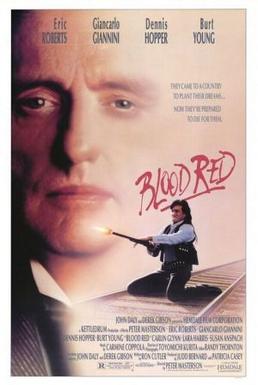 The time is the 1890s. The place is California. Sicilian immigrant Sebastian Collogero (Giancarlo Giannini) has just been sworn in as an American citizen and owns his own vineyard. When Irish immigrant William Bradford Berrigan (Dennis Hopper) demands that Sebastian give up his land so Berrigan run a railroad through it, Sebastian refuses. Berrigan hires a group of thugs led by Andrews (Burt Young) to make Sebastian see the error of his ways. When Sebastian ends up dead, his wayward son, Marco (Eric Roberts), takes up arms and seeks revenge.