Film Review: The Maze Runner (dir by Wes Ball)


MR

Hi there and greetings from beautiful Lake Texoma.  Having recently completed both 3 months of covering Big Brother for the Big Brother Blog and my series of Back to School reviews for this site, I am currently on a much-needed vacation with my wonderful boyfriend.  However, you all know that I would never let a little thing like being on vacation keep me from watching and then reviewing whatever is currently playing down at the closest available theater.

For instance, last night, we saw The Maze Runner at the Cinemark 14 in Denton, Texas.  The Cinemark is a really nice theater.  The seats are comfortable.  The people working there were nice and polite.  The movie sounded great.  Even the audience was surprisingly polite.  Only a few people came in late and, for the most part, everyone refrained from talking during the film.  Good for them and good for you, Cinemark 14!

As for the movie itself…

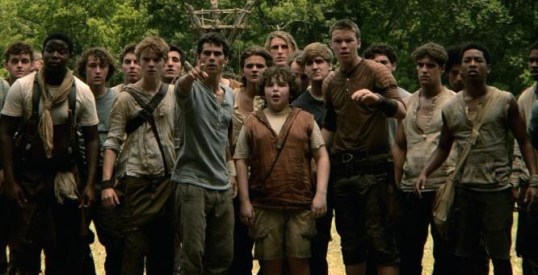
The Maze Runner tells the story of Thomas (Dylan O’Brien), a teenager who wakes up one day in a grassy clearing that is encircled by gigantic, gray walls.  Thomas finds himself surrounded by several other teenage boys.  Unable to remember anything about his past (but haunted by chaotic dreams that suggest that he is the part of some sort of lab experiment), Thomas initially reacts by trying to run.  However, he is quickly tackled and introduced to his new home.

The grassy area is known as the Glade and the boys who live there are known as Gladers.  Their leader is Alby (Aml Ameen) and, as he quickly explains to Thomas, he has created a tediously collectivist society where everyone has his assigned place and his assigned duty.  (And yes, that is the correct pronoun.  There are no girls among the Gladers.)  Alby explains that, behind the walls, there lies a maze that is patrolled by terrifying creatures known as Grievers.  The most athletic and intelligent of the Gladers are allowed to become Runners.  Everyday, the Runners run through the maze and memorize every twist and turn.

Thomas, needless to say, wants to be a runner.  And it’s good that he does because otherwise, the film would be kind of boring.

Anyway, along the way to becoming a runner, Thomas has more visions of an autocratic woman (Patricia Clarkson) and he also manages to make an enemy out of Gally (Will Poulter), a Glader who never wants to leave Glade.  Eventually, a girl named Teresa (Kaya Scodelario) shows up, along with a note saying that she’s the last one and no one else will be showing up in the Glade.

Now, at this point, you may be tempted to ask, “What’s going on?”

Well, you’ll have to wait a few years to find out because The Maze Runner is just part one of a trilogy.  Much like The Hobbit, Divergent, and The Hunger Games, it answers just enough questions to keep the audience satisfied while still ending with a cliffhanger.  So, if you do see The Maze Runner, be sure to pay attention because you don’t want to forget everything that happened before the sequel comes out sometime next year.

There’s a lot of good things that can be said about The Maze Runner.  For the most part, the actors did a good job.  The grievers were scary.  The maze looked impressive, though it’s hard not to feel that the film did not take full narrative advantage of it.

However, to be honest, I have seen so many recent adaptations of dystopian YA books that, with the exception of The Hunger Games and Catching Fire, they’re all starting to blend together.  The Maze Runner was well made but there really wasn’t anything about it that distinguished it from the pack.  Without the presence of a star like Jennifer Lawrence or the satirical subtext that distinguished The Hunger Games, The Maze Runner ultimately just felt like your typical franchise starter, not so much a story but instead just an extended prologue.

Again, it’s not necessarily a bad film.  It’s based on a book and, undoubtedly, a lot of details did not make it from the page to the screen but there’s still enough there that even people who haven’t read the book will probably be able to follow the story.  Me, I’m a Texas girl and, therefore, it’s a part of my heritage to appreciate any film that features an individual taking on an elitist dystopia.   But, in the end, the film is never quite as memorable as you want it to be.

Perhaps we’ve all just been spoiled by The Hunger Games…
The-Maze-Runner-Movie


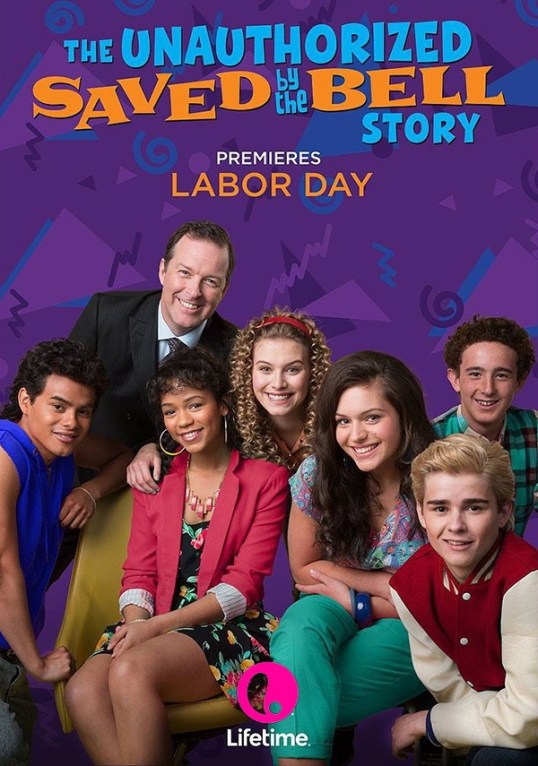
Back to School #80: The Unauthorized Saved By The Bell Story (dir by Jason Lapeyre)


saved-by-the-bell

Well, it’s here!  This is my 80th and final Back to School review!  As I’ve mentioned before, I originally thought I’d be able to do all of these reviews in just one week.  Instead, it’s taken me five weeks but you know what?  I’ve had fun doing these reviews and I hope that you’ve enjoyed reading them.  It’s been interesting to see how teen films have progressed and changed over the decades.  We started this series with 1946’s I Accuse My Parents and now, we end it with a film from 2014 that might as well be called I Accuse Screech.

Technically, it’s called The Unauthorized Saved By The Bell Story but that’s kind of an unwieldy name, isn’t it?  I can’t really see myself typing that title over and over again.  So, for the purposes of this review, this movie is called I Accuse Screech.

First off, some background.  When I was a kid, I used to watch Saved By The Bell: The New Class.  What’s weird is that, when I look back at it, I think even then I knew that the show wasn’t very good.  I knew that the jokes were frequently not funny.  I knew that the story lines were predictable.  I think I was even aware that it was strange how frequently actors were either dropped from or added to the cast.  Don’t get me wrong.  The show was (and still is) oddly watchable but it was never any good and I am pretty sure I knew that.  Then again, maybe that’s just way I want to remember it.  Being a fan of Saved By The Bell: The New Class isn’t exactly something that you brag about.  However, one thing that I can be sure of is that, even when I was young, I knew that Screech Powers sucked.

As played by Dustin Diamond, Screech was the principal’s assistant at Bayside High.  He was also probably the most annoying character ever to be unleashed onto the psyches of impressionable children and tweens.  Screech spoke in a high, squeaky voice and could usually be relied upon to do something incredibly stupid.  Whenever he fucked things up (and he managed to do this several times in each episode), he would say something like, “Zoinks!”  Everybody hated Screech.

Now, I have to admit that I never actually saw an episode of the classic original Saved By The Bell until after the New Class was already off the air.  And that’s when I discovered the adventures of Zack Morris, A.C. Slater, Kelly Kapowski, Jessie Spano, and … Screech.  That’s right, you can’t escape Screech!

And here’s the thing — the original Saved By The Bell is one of those shows that really is kind of terrible and yet you can’t stop watching.  It’s addictively bad, the type of show that you watch with a combination of shock, horror, and amusement.   The original Saved By The Bell is the television equivalent of The Room or Troll 2.  It’s terrible but it’s fun.

So, you would think that a made-for-tv movie about what went on behind-the-scenes of Saved By The Bell would also be terrible yet fun.  That’s certainly the way that it was advertised by Lifetime.  Lifetime appeared to be hoping that their version of the story behind Saved By The Bell would give them a Sharknado of their very own.

And hey, it should have been great.  There’s an interesting story there.  How would a bunch of teens handle suddenly becoming famous?  How would they handle the pressure of being famous while also appearing on a show so bad that it would essentially run the risk of ruining their lives, not to mention their careers?  How would they handle having to grow up both on TV and in real life?

Those are the questions that we expected to have answered by this movie but instead…

Well, let’s just say that I Accuse Screech!

In 2009, Dustin Diamond published a “memoir” called Behind The Bell and oh my God, it is literally the worst fucking book ever written.  Words escape me to describe just how terrible this book is.  Essentially, the book is full of Diamond either complaining that his co-stars didn’t like him or bragging about the fact that he used to have sex with 12 year-olds at Disneyland.  Diamond accuses his castmates of smoking weed.  (Wow, teenagers smoking weed.  MY GOD, THE SCANDAL!)  Diamoned accuses his castmates of having sex.  (OH MY GOD, TEENAGERS HAVING SEX!)  In other words, the book is pretty much Dustin Diamond complaining about the fact that everyone but him was having fun on the set of Saved By The Bell.

So, of course, if you’re going to make a movie about Saved By The Bell, where would you go for your source material?  Well, you can’t go to any of the stars because, with the exception of Dustin Diamond, they all have successful careers outside of Saved By The Bell.  And you can’t go to Dennis Haskins because, seriously, who cares what Mr. Belding thought?

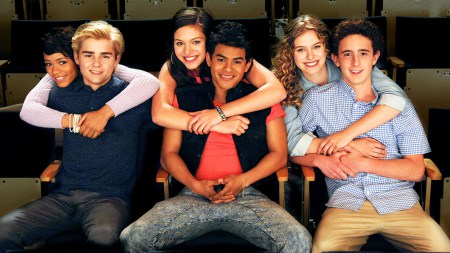
Lifetime decided to use Behind the Bell as their source material.  Unfortunately, Diamond himself has admitted that the book was a pack of lies.  As a result, most of the more salacious (and therefore entertaining) material could not actually be used in the movie.  The Lifetime film is full of hints of bad behavior but no direct evidence.  At one point, we see the actor playing Mario Lopez flirting with an extra in a deserted classroom.  In another scene, the girls get snarky with each other because they all like Mark-Paul Gosselaar.  But, beyond those hints, we don’t get to see any of the book’s more sordid accusations.  Instead, all we get are a lot of scenes of the actor playing Dustin Diamond looking annoyed with his castmates.

(Because, literally, the only verifiable, non-slanderous thing to be found in the book is that apparently Dustin Diamond was whiny, bitter, and jealous…)

As a result, the film seems to be suggesting that Saved By The Bell was put together and performed by the most boring people on Earth.  The end result is not only the worst film to have appeared on Lifetime but perhaps one of the worst films of all time.

Why is it so bad?

I accuse Screech!

(Incidentally, if you want to learn more about Saved By The Bell, I suggest checking out the best Saved By The Bell review site around, The Summer of Morris!)

And, on that note of failure, we conclude this series of 80 Back to School reviews!  Thank you, everyone, for your indulgence and your patience!  I hope everyone enjoyed reading them as much as I enjoyed writing them.

saved-by-the-bell-new-e1407441203904


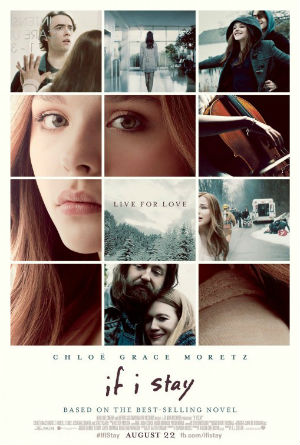
Back to School #79: If I Stay (dir by R.J. Cutler)


If_I_Stay_poster

17 year-old Mia Hall (Chloe Grace Moretz) appears to have everything that a girl could want.  She has a wonderful, if somewhat goofy, father in former musician-turned-teacher Denny (Joshua Leonard).  She has a loving mother, a travel agent named Kat (Mirelle Enos).  She has an adorable little brother (Jakob Davies), a loyal best friend (Liana Liberato), and — best of all — she has an older boyfriend named Adam (Jamie Blackley), who is on the verge of rock stardom.  Even better, Mia has a wonderful future ahead of her.  A musical prodigy, Mia is cello player who is waiting to hear whether or not she’s been accepted to Julliard.

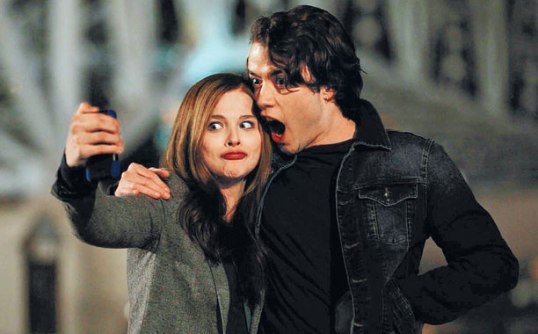
And then, one day on a snowy road, it all changes.  There’s a car accident.  Both Denny and Kat are killed.  Mia’s brother is several injured.  And Mia in a coma.  While her friends and what remains of her family watch over her at the hospital, Mia has an out-of-body experience.  She walks through the hallways of the hospital, she listens to her loved ones as they struggle to accept what has happened, and she remembers all of the days that came before the accident.  She remembers first meeting Adam.  She remembers falling in love with him.  She remembers their fights and then she remembers her family and she realizes that she’s facing a future without any of them.  Ultimately, Mia has to decide whether to wake up and stay or to die and perhaps be at peace.

Based on an excellent novel by Gayle Forman, If I Stay is a tear jerker in the best sense of the word.  Yes, the film has been clearly designed to make you cry but what’s wrong with that?  Sometimes, crying is the best thing that one can do and, much like The Fault In Our Stars, the film’s tears are earned.  As directed by R.J. Cutler, the film strikes a deliberate and telling contrast between Mia’s lively memories and the stark coldness of the hospital through which she now finds herself wandering.  Joshua Leonard and Mirelle Enos bring a lot of life to the roles of the doomed parents and Stacy Keach is great as Mia’s grandfather.  (Try not to cry when he tells the comatose Mia that it’s okay to move on.  I dare you!)

Finally, Chloe Grace Mortez gives a wonderful and soulful performance of Mia.  Moretz is one of those young actresses who always seems to be both wise beyond her years and painfully fragile as well.  If I Stay contains yet another strong performance from her, one that elevates the entire film.  That said, I hope she gets to do a nice romantic comedy at some point in the future because, after all the trauma she’s acted out in everything from Kick-Ass to Texas Killing Fields to Carrie to If I Stay, she’s earned it!

As for If I Stay, it’s still playing at theaters even as I write this review.  If you haven’t already, go see it.

IIS_03150.jpg

Back to School #78: Boyhood (dir by Richard Linklater)


boyhood0612

I hate to admit it but it actually took me a day or two to really warm up to Boyhood.  

When I first saw it, I knew that I was watching a great film and it was a movie that I had a good deal of respect for.  By now, we’ve all heard the story of how the film was made and how director Richard Linklater first started the film in 2002 when star Ellar Coltrane was only 6 years old.  Over the next 12 years, Linklater would spend a few weeks out of each year filming.  The script was written on a year-by-year basis, allowing the story to develop organically and often taking into account whatever was happening in Coltrane’s life at the time.  The end result is that Coltrane grows up on screen in much the same way that Mason, the character he’s playing, does.  As I watched Boyhood, I knew that Linklater had somehow managed to turn what could have been a mess into an undeniably effective movie.

But yet, in the hours immediately following the showing, I had a nagging feeling.  I realized that, as much I respected the film and as much as I wanted to love the film, there was a part of me that was slightly disappointed.  In some ways, it made sense.  Richard Linklater is a director whom I absolutely revere and, as a result, I am always going to watch his movies with extremely high (and occasionally unrealistic) expectations.  As for the film itself, Boyhood is the most acclaimed film of the year so far.  For the longest time, it had a perfect 100% rating over at Rotten Tomatoes.

And, when you’re continually told that a film is the greatest movie ever made, it’s going to be a challenge to then judge the film on its actual merits.

And so, I was content to think of Boyhood as being one of those undeniably important films that I respected more than I enjoyed.

But then something happened.

Boyhood stuck with me.  Boyhood is a film that has stuck with me more than almost any other film this year.  (Interestingly enough, perhaps the only 2014 film that I’ve seen so far that has stuck with me more was Guardians of Galaxy, which in many ways is the exact opposite of Boyhood.)  There are scenes in Boyhood that are still as fresh in my mind as they were when I first saw them.  Interestingly enough, they’re not big, dramatic scenes.  (Indeed, Boyhood is memorable for just how determined it is to avoid the big, dramatic scenes that usually appear in coming-of-age films.)  Instead, what stuck with me were the little details.

I remembered how, when Mason was 6 and his family was moving down to Houston, his best friend rode by on a bicycle and waved goodbye, never to be seen again in the film but definitely destined to be remembered by both Mason and the audience.

I remembered how, from the minute that Mason’s mom (Patricia Arquette), met and married the seemingly friendly Bill (Marco Perella), I knew that the marriage wasn’t going to work.  I remembered the scenes of Mason and his sister (Lorelei Linklater) trying not upset Bill and failing every time.  Years later, when Arquette marries yet again, I knew that it wasn’t going to work out any better.  By that point, Mason knew it too but what can you do when you’re only 16?

I remembered how Mason, after having been moved to San Marcos, had an awkward conversation with a girl from his school.  The girl obviously liked Mason and Mason obviously liked the girl but neither one had a clue how to say it.

I remembered feeling stunned when, over the course of just one scene break, Mason went from being an innocent-looking 14 year-old to a skinny and angrily sullen 15 year-old.  It’s hard for me not to feel that, in that regard, Boyhood serves as a warning of what’s probably in store for me once I actually have kids.

I also remember being surprised when Mason’s Dad (Ethan Hawke) went from being the guy who ranted about George W. Bush in 2004 to a 2011 newlywed who asks his children to come to church with him.  But then again, in retrospect, was it that much of a shock or, like Mason, did I unfairly expect his Dad to remain a rebel for the rest of his life?

(One of the most interesting things about the film is that, since it was literally filmed while the story was occurring, Boyhood serves as a time capsule of life and culture throughout the beginning on this century.  While the scenes set in 2004 and 2008 are dominated by Mason’s father enthusiastically talking about politics, he never mentions anything about the presidential election in 2012.  And it actually makes sense because was anyone enthusiastic about 2012?)

That’s the thing that sets Boyhood apart from other coming-of-age films.  Many of the events that would be major scenes in other teen films — like losing one’s virginity or learning to drive — happen off-screen in Boyhood.  Instead, Boyhood is just about watching life unfold.  Many questions are not answered.  Characters come and go, playing their part in Mason’s life and then disappearing as Mason moves on.

Some of them, like Mason’s stepbrother and step sister who are both left behind when his mother leaves Bill, we wonder about, just as surely as Mason wonders about them too.  But life is rarely neat enough to provide all the answers and Boyhood, if nothing else, is about life.

And that, ultimately, it why Boyhood sticks with you.  Looking back on the film, you can see how Mason the 6 year-old who had to be forced to leave behind his best friend eventually grew up to be Mason the 18 year-old who is almost insensitive in his eagerness to leave behind his mother and drive himself to college.  But, and this is the key, you have to be willing to look back on the film to truly understand at.  Trying to figure out how the pieces of puzzle fit together while watching the film will only leave you frustrated, as life often does while you’re living it.  It’s only after the film that you can truly understand what it all means.  It’s only when you look back that you realize just how much Richard Linklater has accomplished with Boyhood.

As such, Boyhood is not an easy film.

But it is a great one.

22boyhood_ss-slide-7UMX-jumbo

Back to School #77: The Fault In Our Stars (dir by Josh Boone)


fault-poster

Well, we’re wrapping things up as far as Back to School is concerned.  A little over a month ago, I set out with a mission.  I said that I would review 80 of the best, worst, most memorable, and most forgettable high school and teen films ever made.  I said it would be able to do it all in one week.  Needless to say I was wrong.  It’s actually taken me five weeks but the end is in sight and, as much as I’ve enjoyed doing this series, that’s probably for the best.  After all, the back to school sales are over.  The kids have already settled back into the school routine.  Everyone’s looking forward to the winter break.

Add to that, it’s nearly October and that means that it’s nearly time for this site to start devoting itself to horror!

So, we have four more Back to School reviews to go and, keeping with the chronological nature of this series, they are all for films that were released in 2014!

Speaking of which, 2014 has been the year of Shailene Woodley.  Much as how Jennifer Lawrence dominated 2012 by starring in The Hunger Games and winning an Oscar for Silver Linings Playbook, Woodley has proven herself to be both capable of carrying a franchise and starring in a serious film.  Also, much like Jennifer Lawrence in 2012, Shailene has been the subject of several condescending posts  over at AwardsDaily.com.  And, as we all know, you haven’t arrived in this business until Sasha Stone talks down to you.

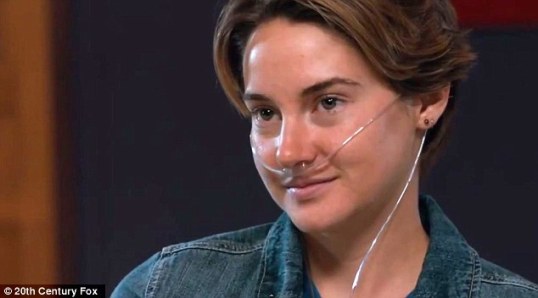
Shailene’s serious film of 2014 was The Fault In Our Stars, which is based on the excellent and heart-breaking novel by John Green.  The book made me cry and cry.  In fact, it made me cry so much that I wasn’t sure whether I would have any tears left over for the film.  Don’t get me wrong.  I knew the film would probably be good.  Just on the basis of her excellent performances in The Descendants and The Spectacular Now, I knew that Shailene Woodley was an ideal pick for the role of the Hazel, a sarcastic 16 year-old who has thyroid cancer and can’t go anywhere without her oxygen tank.  But I wondered, knowing already what was going to happen, would the film still have as strong an effect on me as it would if I was going in with no knowledge as to what was waiting for me.

I really shouldn’t have even wondered.  For that matter, I probably should not have worn mascara on the night that I saw the movie because, seriously, by the end of it, my face was a mess!  The Fault In Our Stars is one of those films that has been specifically made to make you cry.  And yes, it’s undeniably manipulative and I’ll even agree with those critics who have used the dreaded “schmaltz” label while describing the film but so what?  In the end, the tears are earned.  In the end, the film works.

And that’s largely due to Shailene Woodley’s performance as Hazel.  While Ansel Elgort gives an okay performance as Augustus, the boy who has lost a leg to cancer and who Hazel loves, the film really does belong to Shailene.  She gives a fierce performance, capturing both Hazel’s dark humor and, even more importantly, her independence and her inner strength.  It’s the type of performance that more than justifies 2014 being the year of Shailene Woodley.

Probably one of the more critically divisive scenes in the film comes when Hazel and Augustus are taking a tour of the Anne Frank House in Amsterdam.  (They’re in Amsterdam because they’re looking for Hazel’s favorite writer, a drunken recluse who is well-played by Willem DaFoe.)  Over the course of the tour, Hazel has to climb several staircases and ladders and it’s not easy for her.  However, Hazel never gives up and, at the end of the tour, she and Augustus share as kiss.  And, of course, everyone else who was on the tour breaks out into applause.  For many, I think this is the scene where the film says, “You can either take me as I am or you can leave the theater.”  Yes, it is incredibly manipulative and yes, I do think it would have been just as effective without everyone else breaking out into applause.  But, dammit, the scene works!  You have grown to so much care about Hazel that the scene works.  It also helps that, up until this point, the film has been so unsentimental about the horrible reality of cancer that the fact that you’re happy to finally see Hazel get that over-the-top moment of happiness.  Hazel has earned it, the film has earned it, and so has Shailene Woodley.

article-2615535-1D6F756B00000578-679_634x352

Back to School #76: The Bling Ring (dir by Sofia Coppola)


Bling-Ring-large

The Bling Ring was one of the more divisive films of 2013.  As often seems to happen with the work of Sofia Coppola, viewers either loved it as a stylish look at America’s self-destructive love affair with fame or else they felt that it was a shallow celebration of the very lifestyle that it claimed to be satirizing.  Personally, I felt it was both, which is one reason why I enjoyed The Bling Ring.

The Bling Ring is based on the true story of a bunch of California teenagers who made headlines by breaking into the mansions of their idols.  Over the course of several months, they burglarized everyone from Paris Hilton to Lindsay Lohan to Orlando Bloom.  While they may have been smart enough to use social media to discover when their targets would be out of town, they weren’t smart enough to not use social media to brag about their crimes.  Eventually, they were arrested and, for a brief period of time, they were as famous as the people they robbed.  One of them even got her own reality show out of the whole thing.  I watched an episode or two.  It wasn’t very good.

Though the names have been changed, Coppola pretty much tells the story as it happened.  New kid in school Marc (Israel Broussard) meets Rebecca (Kate Chang), who is obsessed with celebrities.  Rebecca is also something of an obsessive thief and soon, she and Marc are breaking into the houses of their rich neighbors and acquaintances, stealing money, and going on shopping sprees.  Their thievery allows them to leave a lifestyle where every day is just another makeover montage from a romantic comedy.  Eventually, they are joined by Nicki (Emma Watson), Sam (Taissa Farmiga), and Chloe (Claire Julien).

One thing that quickly becomes clear is that the members of the Bling Ring are not exactly the smartest group of thieves around.  Along with getting increasingly reckless while committing their crimes, they also make the mistake of showing off stolen jewelry at parties and posting pictures of Facebook.  When the police eventually do track them down, Marc is a convenient scapegoat, Rebecca is hiding out in Las Vegas with her father, and Nicki becomes a minor celebrity as she and her mother exploit her newfound notoriety for all the publicity that they can get.

I liked The Bling Ring.  It’s stylish, all of the actors look good and they’re all wearing beautiful outfits, and I loved seeing all of the houses that they broke into.  (Some of the film was shot in the actual residences that were burglarized.)  On the one hand, it doesn’t really dig too deeply into the nature of fame in America but, on the other hand, does it really need to?  We all know the culture that we live in and, at its best, The Bling Ring forces us to ask whether we would rather be one of the people on the outside looking in or if we would want to be one of the people who broke in by any means necessary.

Add to that, it has a great soundtrack!

(Now, as I said, not everyone agrees with me about The Bling Ring.  For an opposite reaction to The Bling Ring, check out Ryan The Trash Film Guru’s review.)

The-Bling-Ring-Wallpapers

Back to School #75: The Spectacular Now (dir by James Ponsoldt)


1371723939_the_spectacular_now

Though the film was embraced by critics and performed fairly well at the box office, it’s hard not to feel that The Spectacular Now was one of the more overlooked films of 2013.  For all of its acclaim, it’s a film that was not only ignored at Oscar time but which also rarely seemed to feature much in Oscar speculation.  That’s a shame but not particularly surprising.  With a few notable exceptions (American Graffiti, The Last Picture Show, Ordinary People, and Juno, for example), films about teenagers are usually ignored by the Academy, even if the film in question is as good as either Easy A or The Spectacular Now.

In fact, I would argue that, along with being one of the best films of 2013, The Spectacular Now is a Say Anything… for my generation.

The Spectacular Now follows two teenagers over the course of their senior year in high school.  Sutter Kane (Miles Teller) is one of the most popular kids at school.  He’s charming, he’s funny, and — perhaps not surprisingly — he’s also deeply troubled. He’s angry that his father is no longer in his life and he often takes his anger out on his mom (Jennifer Jason Leigh).   He works as a salesman at a men’s clothing store where his boss (Bob Odenkirk) is willing to overlook the fact that Sutter often comes into work drunk.  Sutter, you see, also happens to have a slight drinking problem that is slowly but surely transforming into full-blown alcoholism.

When Sutter is dumped by his long-time girlfriend Cassidy (Brie Larson), he goes on a drinking binge that only ends with him being woken up on a stranger’s lawn by Aimee (Shailene Woodley).  Aimee is one of Sutter’s classmates and is the complete opposite of most of Sutter’s friends.  Aimee is shy, doesn’t drink, and prefers to spend her time reading manga.

As you can probably guess, Sutter and Aimee do become a couple.  And yes, Sutter does help Aimee come out of her shell and Aimee does help Sutter to start to deal with all of the pain and anger that he attempts to hide.  You can probably predict all of that but what you can’t predict is just how likable and believable both Teller and Woodley are as a couple.  You believe in their relationship and the film handles it (including the scene where they have sex for the first time) with an unusual amount of sensitivity.

There’s an extended sequence towards the end of the film where Sutter and Aimee finally get to meet Sutter’s father.  At first, you want to be as exciting and as optimistic as Sutter is.  This is especially true once you discover that his father is being played by Kyle Chandler, who is one of those actors that you just instinctively want to like.  Of course, Sutter’s father turns out not to be the hero that Sutter was expecting to meet and it’s simply devastating, for both the viewers and the characters.  I’ve always felt that it takes a certain amount of courage for an actor to play a truly bad character.  (By bad, I don’t mean evil as much as I mean just the type of fuckup that we’ve all known and by which we’ve all been let down.)  Chandler has that courage.

I guess it would be a bit predictable for me to wrap this up by saying The Spectacular Now is a spectacular film.  So, instead, I’ll just recommend that you see it.

SpectacularNowBottom

Back to School #74: The Perks of Being A Wallflower (dir by Stephen Chbosky)


Perks

“We are infinite.” — Charlie (Logan Lerman) in The Perks of Being A Wallflower (2012)

So, here’s the thing.  In general, I try not to judge people.  I have friends (and family) of all races, religion, and political ideologies.  I may not always agree with you but I will always respect your right to disagree.  With that being said, if you don’t love the 2012 film The Perks of Being a Wallflower, then I’m worried about you.

The Perks Of Being A Wallflower is based on a novel that I read and loved right before I entered high school.  In fact, I loved the novel so much that I had my doubts about whether or not the film could do it justice.  Of course, if I had been paying attention, I would have noticed that the film was directed by the same man who wrote the book, Stephen Chbosky.  Everything that made Wallflower such a powerful book — the honesty, the understanding of teen angst, the underlying sadness — is perfectly captured in the film.

Wallflower tells the story of Charlie (Logan Lerman), a painfully shy and emotionally sensitive high school freshman.  Charlie starts the school year under the weight of two tragedies — the suicide of his best friend and the death of his aunt.  Because he’s so shy, Charlie struggles to fit in and make friends, though he does find a mentor of sorts in his English teacher, Mr. Anderson (Paul Rudd, playing the type of teacher that we all wish we could have had in high school).

Charlie, however, does not find a mentor in shop class, which is taught by Mr. Callahan (Tom Freaking Savini!).  However, he does meet Patrick (Ezra Miller), a witty and cynical senior who, because he’s openly gay, is as much of an outcast as Charlie.  Patrick introduces Charlie to Sam (Emma Watson).  Charlie assumes that Sam and Patrick are dating (especially after he sees them dancing together) but later he learns that they are actually stepsiblings and that Patrick is secretly seeing a closeted jock named Brad (Johnny Simmons).  That works out well for Charlie because he has a crush on the free-spirited Sam.

The rest of the film follows Charlie as he survives his first year in school and Patrick and Sam as they complete their final year.  It’s a long but exciting year in which Charlie discovers everything from drugs to the mysteries of sex to the pleasures of the Rocky Horror Picture Show.  Even more importantly, it’s a year that forces Charlie to confront his own unresolved emotional issues.

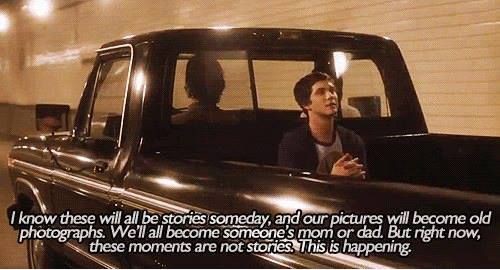
Sensitively acted by the three leads and featuring a great soundtrack, The Perks of Being A Wallflower is one of the best films about growing up that I’ve ever seen.  For me, there is no scene that best captures everything that’s great about being young than the scene where Sam, upon hearing David Bowie’s Heroes on the radio, demands to be driving through a tunnel.  It’s a great scene from a great movie that celebrates both just how scary and amazing it is to have your entire life ahead of you and the special friendships that help us survive.

The-Perks-of-Being-a-Wallflower-Poster-585x426


Back to School #73: 21 Jump Street (dir by Phil Lord and Christopher Miller)


21-jump-street-poster__span

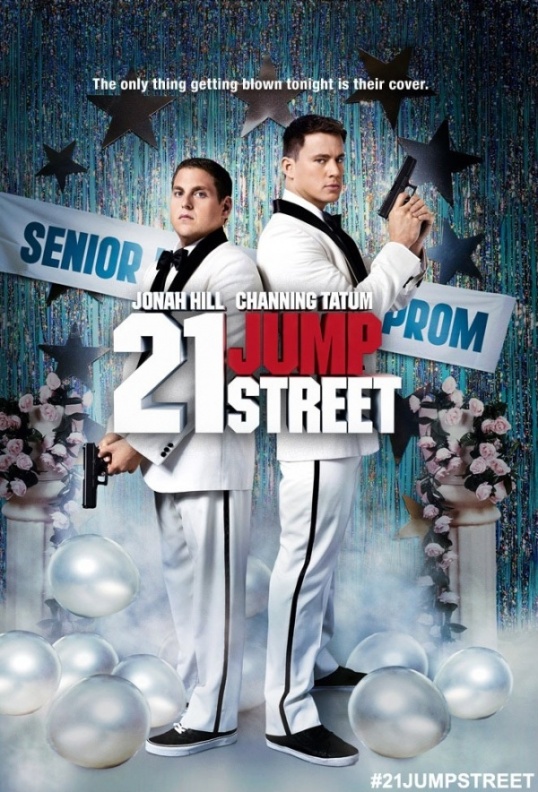
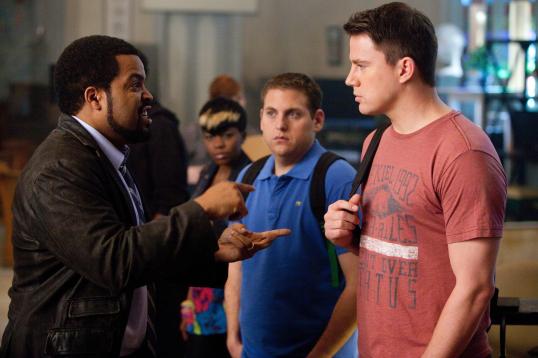
Though the TV series that its based is a bit before my time, the 2012 comedy 21 Jump Street is a personal favorite of mine.  The film tells the story of how nerdy Morton Schmidt (Jonah Hill) and popular but none-too-intelligent jock Greg Jenko (Channing Tatum) first met in high school, went to the police academy together, both turned out to really bad cops together, and then returned to high school together.

Why did they return to high school?  Because they’re both working undercover now!  As part of a recently revived program from the 80s (and that would apparently be the original television series), young cops are being sent undercover into high school.  As all the other cops involved with the program appear to be super cops, Capt. Dickson (Ice Cube) has every reason to believe that Schmidt and Jenko will be able to discover who is responsible for dealing a dangerous new synthetic drug known as HFS.

One of the things that makes 21 Jump Street work is that, at no point, does the film pretend that either Channing Tatum or Jonah Hill could still pass for a high school student.  One of the film’s best moments comes when a drug dealing environmentalist/student named Eric Molson (Dave Franco, brother of my beloved James) tells Jenko that he suspects that Jenko may be a cop.  “Why?” Jenko asks.  “You’re taste in music. The fact that you look like a fucking forty-year old man,” Eric replies.

Not surprisingly, Jenko and Schmidt prove themselves to be fairly clueless about how high school has changed.  One thing that I’ve always found interesting about high school films is that often times, regardless of when a particularly film might be set, it still feels like it’s taking place ten to twenty years in the past.  That’s largely because most high school films are made by directors who are trying to relive their youth and, as a result, they end up making a film about a high school in 2014 where all of the students look and act as if they’re living in the 90s.  The truth of the matter is that things change pretty quickly.

That’s one reason why I haven’t set foot back in my high school since I graduated.  As much fun as I did have in high school and even though I’ve been told that I can still pass for high school age (and I still constantly get asked for ID), the fact of the matter is that it’s no longer 2004.

When Jenko and Schmidt return to high school, they do so expecting to have to return to their previous teenager personas.  That’s good news for Jenko and not so good news for Schmidt.  However, once they arrive (and after their class schedules accidentally get switched), they discover that high school has changed.  Jocks like Jenko no longer rule the school and Schmidt is now one of the popular kids…

Before I saw 21 Jump Street, I knew that Jonah Hill was funny.  But the film’s big surprise was that Channing Tatum is just as funny.  Throughout the film, Tatum shows a willingness to poke fun at his own image and proves that he can deliver an absurd one-liner as masterfully as just about anyone else working today.  There’s a lot of reasons why 21 Jump Street is a funny film.  It’s full of funny lines and the movie features a lot of very sharp satire of both the action and the teen genres.  But the true pleasure of the film comes from the comedic chemistry between Tatum and Hill.

It’s just a lot of fun to watch.

21-jump-st-1-


Back to School #72: Fish Tank (dir by Andrea Arnold)


fish_tank_katie_jarvis_michael_fassbender_1

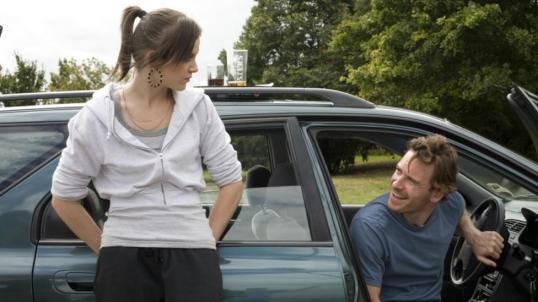
Released in 20o9 (and appearing in American theaters in 2010), the British film Fish Tank is another one of those films that I love but occasionally have trouble watching.  Much like Thirteen, it’s a film that, in some ways, hits pretty close to home for me.  Though the film might be about a 15 year-old English girl living in a London council estate and I’m a Texas girl who grew up all over the Southwest, there’s a lot about Fish Tank to which I related.

The film tells the story of 15 year-old Mia (Katie Jarvis).  Mia lives in a tiny flat with her mother (Kierston Wareing), who appears to be only a few years older than her daughter, and her younger sister (Rebecca Griffiths).  She has recently been kicked out of school and is facing an undeniably bleak future.  She spends her time wandering around the estates, an oppressive atmosphere of concrete, poverty, and hostility.  When we first meet Mia, she is arguing with another girl over a dance routine.  The argument quickly turns violent and, as the film makes clear, that violence isn’t particularly shocking.  Mia is an angry girl, one who cannot relate to her family or her surroundings without striking out.  That’s what you do when you don’t have a future to look forward to.  You strike out at the present.

In fact, the only time that Mia is happy is when she’s dancing.  She breaks into deserted apartments so she can practice her routine and have a few moments of freedom.  And it’s not so much that Mia is a great dancer or that she’s had any training.  (In fact, actress Katie Jarvis was reportedly not comfortable with having to dance on camera.)  Instead, there’s a raw power to the way that Mia dances.  It’s the only non-destructive way that she has to get out her anger and to express herself.  It’s the only way that she has to let the world know that she’s special and, when she’s dancing, she’s in control of the future.

Things briefly look better when Mia’s mother starts to date the handsome Connor O’Reilly (Michael Fassbender).  At first, Connor seems almost perfect.  Along with bringing some momentary peace to the household, Connor is one of the few characters in the film to show anything resembling kindness to Mia.  Connor encourages her to go to an audition.  Connor takes the entire family out to the countryside, giving Mia a break from the oppressive atmosphere of the estates.  When Mia wades out into a pond and cuts her foot, Connor is the one who bandages it.  Connor seems to be perfect.  Of course, it helps that he’s played by a pre-12 Years A Slave Michael Fassbender.

But, of course, Connor isn’t perfect.

About halfway through the film, Fish Tank takes a disturbing turn and things proceed to get even more disturbing from there.  And I’m not going to spoil it for anyone who hasn’t seen Fish Tank. 

(I will however say that, much as Juno made it difficult for me to ever truly trust Jason Bateman, Fish Tank had the same effect as far as Michael Fassbender is concerned.)

Directed by Andrea Arnold in a semi-documentary style, Fish Tank works mostly because of the performance of Katie Jarvis.  This was her film debut and she was apparently asked to audition after a production assistant saw her having a loud argument with her boyfriend at a train station.  To a certain extent, you could argue that she’s largely playing herself but I think that does a disservice to both Katie Jarvis as an actress and the film itself.  It’s a great performance, one of the best acting debuts in the history of film.

Earlier, I compared Fish Tank to Thirteen, both in its portrayal of an angry teenager and the fact that I could not help but relate to both film’s lead characters.  Also like Thirteen, Fish Tank ends on a deeply ambiguous note.  I’ll just say that I hope things work out well for Mia and, despite all of her troubles, I think they will.  If Mia can survive, then there is hope for us all.

fish-tank-katie-jarvis