Guilty Pleasure No. 134: Teen Witch (dir by Dorian Walker)


In 1989’s Teen Witch, Robyn Lively plays Louise Miller, a 15-year-old who is not particularly popular in high school. While all of the popular girls sing a song called “I Like Boys” and perform an impromptu dance number in the locker room, Louise can only watch and wish she had the courage to ask her crush, Brad Powell (Dan Gauthier), to prom. Later, after Brad nearly runs over Louise in his car, Louise stumbles into the home of palm reader Madame Serena (Zelda Rubinstein). Serena reveals that Louise is a witch who will be gaining her powers as soon as she turns sixteen. Hey, Louise’s birthday is only a few days away!

Suddenly, Louise has the power to make her wishes come true! She turns her brother (Joshua Miller) into a dog! She gets Brad to break up with his girlfriend! She gets the locker room girls to argue! She helps her friend Polly (Mandy Ingber) win a rap battle against Rhet (Noah Blake). “Look how funky he is!” Polly says about Rhet. Well, Rhet may be funky, but soon Louise is the most popular girl at school. She’s so popular that Polly starts to feel left out. Why didn’t Louise wish for Polly to be popular? I mean, the solution was right there.

It’s difficult to put into words just how weird and tonally mixed-up Teen Witch is. There’s the “Top That” rap battle between Polly and Rhet. There’s the “I Like Boys” production number. There’s Zelda Rubinstein sitting on Robyn Lively’s lap and both of them laughing at how awkward it all is. There’s Joshua Miller, playing Louise’s younger brother in much the same way that he played the vampire kid in Near Dark. There’s Dick Sargent and Caren Kaye as Louise’s parents, Marcia Wallace as her teacher, and there’s also the fact that Brad turns out to be a nice guy even though he nearly ran over Louise. There’s the scene where Louise tells the star of the school play to “break a leg” and you can guess what happens. Louise spends the movie worrying about accidentally hurting someone with her powers and then uses a voodoo doll to torment a teacher. Reportedly, the film’s producer added some scenes after production initially wrapped. That explains why Louise abruptly goes from being innocent and naive to being a music video vixen and back again.

It’s a silly mix of tones and style that makes no sense and that’s why it’s the perfect film about being a teenager. There’s a sweetness in the center of Teen Witch’s chaos and it makes for an enjoyably weird film to which almost everyone can relate. Who hasn’t wanted to have magical powers? Who hasn’t looked at three guys dancing in the middle of the street and said, “I will never be hip.” And, in the end, what’s important is that Louise ultimately learns that she doesn’t need the magic to get the cute boy and to star in the school play. She just has to be herself.

Seriously, I’ll take Teen Witch over this new version of Carrie any day.

Previous Guilty Pleasures

  1. Half-Baked
  2. Save The Last Dance
  3. Every Rose Has Its Thorns
  4. The Jeremy Kyle Show
  5. Invasion USA
  6. The Golden Child
  7. Final Destination 2
  8. Paparazzi
  9. The Principal
  10. The Substitute
  11. Terror In The Family
  12. Pandorum
  13. Lambada
  14. Fear
  15. Cocktail
  16. Keep Off The Grass
  17. Girls, Girls, Girls
  18. Class
  19. Tart
  20. King Kong vs. Godzilla
  21. Hawk the Slayer
  22. Battle Beyond the Stars
  23. Meridian
  24. Walk of Shame
  25. From Justin To Kelly
  26. Project Greenlight
  27. Sex Decoy: Love Stings
  28. Swimfan
  29. On the Line
  30. Wolfen
  31. Hail Caesar!
  32. It’s So Cold In The D
  33. In the Mix
  34. Healed By Grace
  35. Valley of the Dolls
  36. The Legend of Billie Jean
  37. Death Wish
  38. Shipping Wars
  39. Ghost Whisperer
  40. Parking Wars
  41. The Dead Are After Me
  42. Harper’s Island
  43. The Resurrection of Gavin Stone
  44. Paranormal State
  45. Utopia
  46. Bar Rescue
  47. The Powers of Matthew Star
  48. Spiker
  49. Heavenly Bodies
  50. Maid in Manhattan
  51. Rage and Honor
  52. Saved By The Bell 3. 21 “No Hope With Dope”
  53. Happy Gilmore
  54. Solarbabies
  55. The Dawn of Correction
  56. Once You Understand
  57. The Voyeurs 
  58. Robot Jox
  59. Teen Wolf
  60. The Running Man
  61. Double Dragon
  62. Backtrack
  63. Julie and Jack
  64. Karate Warrior
  65. Invaders From Mars
  66. Cloverfield
  67. Aerobicide 
  68. Blood Harvest
  69. Shocking Dark
  70. Face The Truth
  71. Submerged
  72. The Canyons
  73. Days of Thunder
  74. Van Helsing
  75. The Night Comes for Us
  76. Code of Silence
  77. Captain Ron
  78. Armageddon
  79. Kate’s Secret
  80. Point Break
  81. The Replacements
  82. The Shadow
  83. Meteor
  84. Last Action Hero
  85. Attack of the Killer Tomatoes
  86. The Horror at 37,000 Feet
  87. The ‘Burbs
  88. Lifeforce
  89. Highschool of the Dead
  90. Ice Station Zebra
  91. No One Lives
  92. Brewster’s Millions
  93. Porky’s
  94. Revenge of the Nerds
  95. The Delta Force
  96. The Hidden
  97. Roller Boogie
  98. Raw Deal
  99. Death Merchant Series
  100. Ski Patrol
  101. The Executioner Series
  102. The Destroyer Series
  103. Private Teacher
  104. The Parker Series
  105. Ramba
  106. The Troubles of Janice
  107. Ironwood
  108. Interspecies Reviewers
  109. SST — Death Flight
  110. Undercover Brother
  111. Out for Justice
  112. Food Wars!
  113. Cherry
  114. Death Race
  115. The Beast Within
  116. Girl Series
  117. Gone in 60 Seconds
  118. Swordfish
  119. Marked For Death
  120. The Internship
  121. The Angry Red Planet
  122. 2012
  123. Old School
  124. No Escape
  125. In Death Series
  126. Alligator
  127. Little Annie Fanny
  128. Wicked Wanda
  129. Congo
  130. The 13th Warrior
  131. Sudden Death
  132. The Convent of Hell
  133. Covent of Sinners

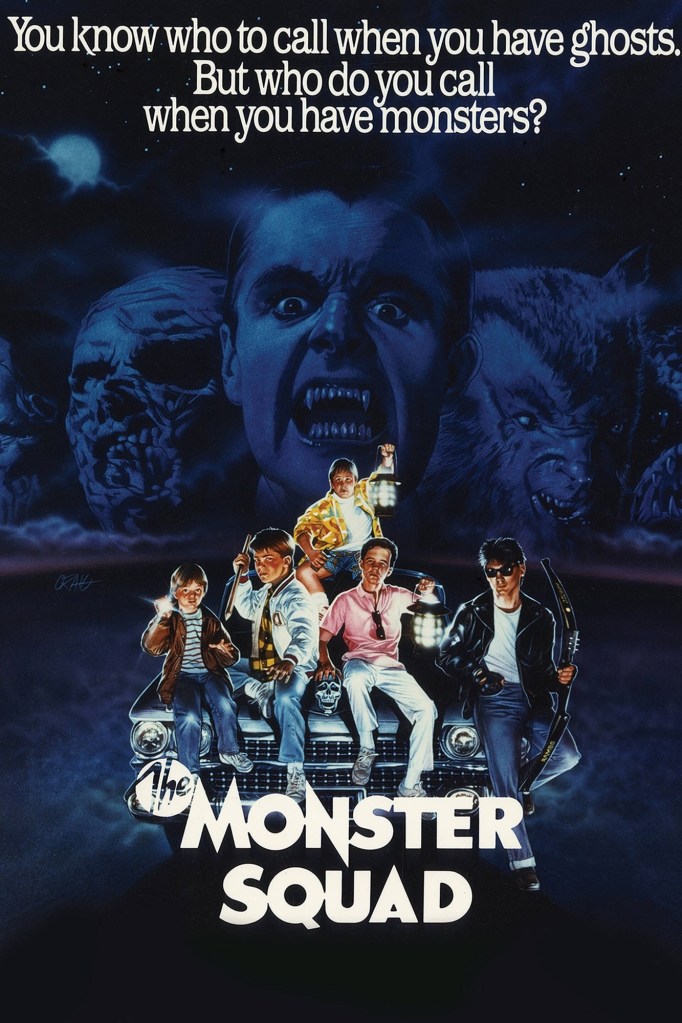
Review: The Monster Squad (dir. by Fred Dekker)


“Creature stole my Twinkie.” – Eugene

Released in 1987, The Monster Squad has lived one of those strange afterlives that cult films sometimes enjoy—ignored or even ridiculed upon release, only to become a beloved artifact for the generation that found it later on VHS. Directed by Fred Dekker and co-written with Shane Black, the movie occupies an awkward but endearing space between horror, comedy, and kids’ adventure. It never fully settles into one tone, and that’s part of both its charm and its problem. Watching it today, the film feels like The Goonies took a detour through a drive-in double feature of Dracula and The Wolf Man. It’s clunky, funny, occasionally mean-spirited, and loaded with enthusiasm—qualities that make it a thoroughly guilty pleasure for fans of ’80s genre mashups.

The story wastes no time getting into its madcap premise. A group of suburban preteens calling themselves “The Monster Squad” find that the classic Universal-style monsters are real, and worse, they’ve come to town. Count Dracula has a plan to plunge the world into darkness using an ancient amulet, and to succeed he enlists a roster of familiar faces: Frankenstein’s Monster, the Mummy, the Gill-Man, and the Wolf Man. This roster is fan-service before fan-service was a marketing term—a kid’s monster toybox brought to life. The squad, of course, must stop them, armed with comic-book knowledge, wooden stakes, and a blend of reckless courage and youthful sarcasm.

Dekker’s direction and tone play like a movie made for kids but smuggled in some heavy teenage energy. There’s violence, crude jokes, and occasional language that Hollywood would never let slip into a PG-friendly franchise today. Yet that rough edge is part of why The Monster Squad aged into cult status. It’s unapologetically of its time, operating on the belief that kids can handle scares as long as they’re fun and that suburban fantasy can, for a while at least, coexist with real danger. The movie’s depiction of childhood feels filtered through a stack of comic books and Creepshow issues—hyper absurd but still emotionally grounded in a way only ’80s adventure films seemed to pull off.

The kids themselves are a mixed bunch of believable archetypes. There’s Sean (André Gower), the de facto leader with a bedroom plastered in monster movie posters; Patrick (Robby Kiger), his wisecracking sidekick; Rudy (Ryan Lambert), the too-cool-for-school older kid who smokes, rides a bike, and somehow becomes the squad’s weapons specialist; and Eugene (Michael Faustino), the youngest, who still sleeps with his dog and writes letters to the Army for backup. They’re joined by Horace, nicknamed “Fat Kid,” played with surprising vulnerability by Brent Chalem. Each character is drawn broadly but memorably, and even when the dialogue veers into dated humor, there’s an underlying sincerity. You can tell Dekker and Black really liked these kids. They might use slingshots and one-liners, but what unites them is their intense sense of loyalty to one another—the kind of friendship that survives both bullies and broomstick-wielding vampires.

If there’s an emotional anchor, oddly enough, it’s the relationship between the squad and Frankenstein’s Monster, played by Tom Noonan in an unexpectedly gentle performance. When the creature befriends the kids, particularly little Phoebe (Ashley Bank), the film shifts momentarily from wisecracks to something close to tenderness. Noonan gives the character a shy uncertainty, a weary loneliness that offsets the visual absurdity of the rubbery monsters around him. There’s even a tinge of tragedy in his final act, which echoes Frankenstein’s literary roots—a moment of real feeling buried inside an otherwise loud and gleefully messy creature romp.

The monsters themselves, created by legendary effects artist Stan Winston, are among the film’s biggest draws. Each design feels like a loving upgrade to the old Universal look—recognizable but more feral, angular, and rooted in late-’80s aesthetics. The Wolf Man, for example, looks simultaneously comic and menacing, while the Gill-Man costume still impresses for its texture and movement decades later. The decision not to rely on stop motion or heavy opticals gives the monsters a tactile presence that CGI could never capture. There’s something about watching full-bodied suits and prosthetics move in real space that makes the threats feel tangible even when the stakes are goofy. These creatures are fun to look at, even when the script doesn’t give them much to do beyond roar and stalk across smoke-filled sets.

Shane Black’s fingerprints are all over the dialogue—the sardonic banter, the genre in-jokes, the affection for both pulp tropes and subverting them. But perhaps because the film was marketed partly as family adventure and partly as horror spoof, it often can’t decide whether to play sincere or ironic. Some scenes lean heavily on nostalgic affection for monster movies, while others feel almost mean in their mockery of small-town innocence. The tone whiplash means The Monster Squad doesn’t build much consistent momentum; one minute it’s heartfelt, the next it’s a barrage of sarcastic one-liners. Still, its rough tonal juggling has a ragtag energy that keeps it lively, and the sheer commitment to blending genres is endearing.

When it comes to pacing, the movie flies by in under 80 minutes, which turns out to be both blessing and curse. On one hand, there’s no filler—every scene moves briskly to the next piece of monster mayhem. On the other, the movie’s emotional beats and mythology barely have time to breathe. We get glimmers of backstory (like Dracula’s cryptic hunt for the amulet and Van Helsing’s prologue battle) that hint at a larger world that the film never really explores. You sense that Dekker and Black were operating under the fantasy logic of childlike storytelling: don’t explain too much, just move fast enough that no one questions it. It works, more or less, because of the film’s sheer enthusiasm, but it leaves you imagining a richer version of this story that never quite made it onscreen.

Looking back from today’s lens, some parts of The Monster Squad show their age more harshly. Certain lines and stereotypes that went unnoticed in the ’80s now feel jarring, even uncomfortable, and the film’s cavalier tone sometimes undercuts moments that should feel more innocent. Yet despite that, most viewers who revisit it with awareness of its era find themselves disarmed by its sense of fun. There’s no cynicism driving it—it’s pure genre love, messy and sincere, like a handmade Halloween costume that’s somehow cooler precisely because it’s imperfect. The film represents a time when kids’ movies were allowed to have teeth, blood, and a few scary moments, trusting that a young audience could handle being spooked without needing everything smoothed over.

For many fans, The Monster Squad works less as a polished film and more as an experience—a flashback to VHS sleepovers, bad pizza, and rewinding favorite scenes. The movie’s newfound appreciation, fueled by screenings and documentaries like Wolfman’s Got Nards, speaks to that nostalgic bond. It’s less about objective greatness and more about the feeling it preserves. Sure, some of the jokes fall flat, and the plot functions mostly as connective tissue between monster gags, but few movies embody the gleeful chaos of late-’80s pop horror as affectionately as this one does.

The Monster Squad earns its title. It’s not a flawless film, nor even a particularly coherent one, but it’s deeply fun, carried by the conviction that monsters—real or imaginary—are made to be fought with courage, humor, and friends who have your back. Watching it now is like flipping through an old comic book you used to love: you can see every crease and faded color, but that doesn’t make it any less special. And in a cinematic era saturated with irony and nostalgia pastiche, The Monster Squad still feels refreshingly earnest about its own weirdness. Maybe that’s its secret power.