The 1999 film, Payback, opens with Porter (Mel Gibson) lying on a kitchen table while a grubby-looking doctor digs two bullets out of his back. The scene takes place in almost nauseating close-up, with the emphasis being put on the amount of pain that Porter endures to get rid of those bullets. Immediately, we know that Porter is not someone who can safely go to a regular hospital. Porter is someone who exists in the shadows of mainstream society.
He’s also someone who spends a lot of time getting beaten up. Even back when he was still a big star, Mel Gibson always seemed to spend a good deal of his films getting beaten up and tortured in various ways and that’s certainly the case with Payback. Porter gets punched. Porter gets shot. Porter has a encounter with an over-the-top dominatrix (played by Lucy Liu). At one point, Porter allows two of his toes to be smashed by a hammer, just so he can trick the his enemies into doing something dumb. As played by Gibson, Porter stumbles through the film and often looks like he’s coming down from a week-long bender. It’s interesting to think that Payback is a remake of 1967’s Point Blank, which starred Lee Marvin as Walker, an unflappable career criminal who never showed a hint of emotion or weakness. Porter, on the other hand, is visibly unstable and spends the entire film on the verge of a complete mental collapse. A lot of people try to kill Porter and Porter kills almost all of them without a moment’s hesitation.
(Of course, both Porter and Point Blank‘s Walker are versions of Parker, a career criminal who was at the center of several crime novels written by Donald “Richard Stark” Westlake.)
After helping to pull off a $140,000 heist from a Chinese triad, Porter was betrayed and left for dead by his former friend Val Resnick (Gregg Henry) and his wife, Lynn (Deborah Kara Unger). Porter, who just wants the $70,000 cut that he was promised, starts his quest for the money by tracking down Val and Lynn, and then continues it by going after the three bosses (played by William Devane, James Coburn, and Kris Kristofferson) of “The Outfit,” a shadowy organization that Val had gotten involved with. Along the way, Porter deals with a motely crew of corrupt cops, violent criminals, and sleazy middlemen. (David Paymer has a memorable bit as a low-level functionary with atrocious taste in suits.) Porter also hooks up with a prostitute named Rosie (Maria Bello), who might be the only person that he can actually trust.
I have mixed feelings about Payback. (So did director Brian Hegeland, who was reportedly fired towards the end of shooting and later released a far different director’s cut.) Though the film does a good job of capturing the visual style of a good neo-noir, the story itself is so violent and grim that it actually gets a little bit boring. The film’s advertising encouraged audiences to “Get ready to root for the bad guy,” but there’s really no reason to root for Porter. He’s an inarticulate and ruthless killer with no sense of humor. If anything, the people that he kills seem to be far more reasonable and likable than he does. In Point Blank, Lee Marvin may have been a bastard but he was good at what he did and you at least got the feeling that he wouldn’t go after any innocent bystanders. In Payback, Porter is such a mess that his continued survival is largely due to dumb luck. It’s hard to root for an idiot.
That said, the film does do a good job of capturing the feeling of people living on the fringes of society. The Outfit is not a typical Mafia family but instead, a collection of businessmen who work out of nice offices and, in the case of William Devane’s Carter, come across as being more of a senior executive than a crime boss. (James Coburn and Kris Kristofferson, meanwhile, come across as being two former hippies who made it rich on Wall Street. They’re elderly versions of Abbie Hoffman and Jerry Rubin.) The film does a good job of creating a world where no one trusts anyone and everyone is being watched by someone. In one memorable scene, the three men sent to watch for Porter discover that he’s been watching them the entire time. Never forget to look over your shoulder to see who might be following.
Flaws and all, this 1999 film does a good job of capturing the atmosphere of paranoia that, for many, would come to define the early part of the 21st Century.
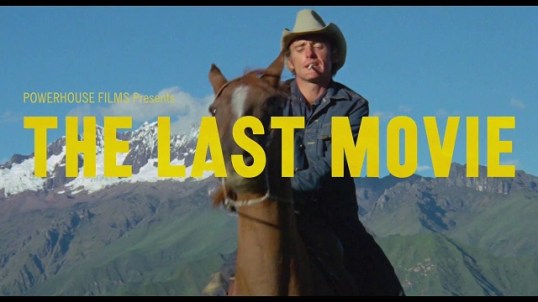
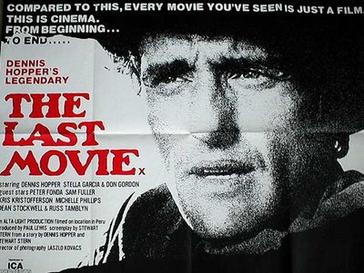
The story behind the making of 1971’s The Last Movie is legendary. It’s also a bit of a cautionary tale.
In 1969, Hollywood was stunned by the box office success of an independent, low-budget counter-culture film called Easy Rider. Easy Rider not only made a star out of Jack Nicholson but it was also the film that finally convinced the studios that the way to be relevant was not to continue to crank out big budget musical extravaganzas like Doctor Doolittle and Hello, Dolly! Instead, it was decided that the smart thing to do would be to hire young (or, at the very least, youngish) directors and basically just let them shoot whatever they wanted. The resulting films might not make much sense to the executives but, presumably, the kids would dig them and as long as the kids were paying money to see them, everyone would continue to get rich. Because Dennis Hopper had directed Easy Rider, he suddenly found himself very much in demand as a director.
Of course, almost everyone in Hollywood knew Dennis Hopper. Long before he became an icon of the counter-culture, Dennis Hopper had been a part of the studio system. John Wayne even referred to Hopper as being his “favorite communist.” Everyone knew that Dennis could be a bit arrogant. Everyone knew that Dennis was very much into drugs and that, as a result, he had a reputation for being a bit unstable. Everyone knew that Dennis Hopper deliberately cultivated an image of being a bit of a wild man and a revolutionary artist. But Dennis Hopper had just directed Easy Rider and Universal was willing to give Hopper some money to go down to Peru and direct his follow-up.
The Last Movie was a film that Hopper had been planning on making for a while. The film’s original script told the story of an aging and broken-down stuntman named Kansas who retires to Mexico and searches for a gold mine with a friend of his. Hopper first tried to get the film going in 1965, with Montgomery Clift in the lead role. After Clift died, Hopper tried to interest John Wayne in the starring role but, though Wayne enjoyed having Hopper in his films so that he could threaten to shoot him whenever Abbie Hoffman said something shocking, he had no interest in being directed by him. When Universal finally agreed to put up the money for the film, Hopper offered the lead role to Jack Nicholson. Nicholson turned it down and told Hopper that it was obvious that Dennis wanted to play the role himself. Dennis decided that he agreed with Nicholson and he cast himself as Kansas. Dennis also made the fateful decision to not only change the story’s setting to Peru but to also film on location.
Dennis and a group of friends flew down to Peru, which, at that time, was the cocaine capitol of the world. Drug use was rampant on the set, with Dennis reportedly being one of the main offenders. The cast and crew filmed during the day and partied at night and no one was particularly sure what the film was supposed to be about. Amazingly, Hopper finished filming on schedule and within budget but, much as he did with Easy Rider, he also overfilmed and ended up with 40 hours of footage. Not wanting to be bothered by the studios, Hopper edited the footage in his compound in Taos, New Mexico. Working slowly and continuing to consume a large amount of drugs and alcohol, Hopper still managed to put together a film that had a straightforward storyline. When Hopper showed his initial cut to filmmaker Alejandro Jodorowsky, the director of El Topo accused Hopper of being too conventional in his approach, which led to Hopper chopping up the film and reassembling it. Finally, after spending over a year working with the footage, Hopper turned in his final edit.
Universal had no idea what to make of the film that Hopper delivered to them. Still, they released it with the hope that the same crowd that loved Easy Rider would embrace The Last Movie. While the film did win an award at the Venice Film Festival, critics hated it and, even worse, audiences stayed away. The film’s reception was so overwhelmingly negative that Hopper found himself largely exiled from Hollywood, with only a few directors (like Francis Ford Coppola) willing to take the chance of working with him. It wasn’t until the 80s, when he finally got clean and sober, that Dennis Hopper was able to reestablish himself as a character actor and, ultimately, a beloved cultural institution.
But what about The Last Movie? Was is it really as bad as the critics claimed? Or was it, as some more recent reviewers have suggested, an unacknowledged masterpiece that was ahead of its time? I recently watched The Last Movie to find out for myself.
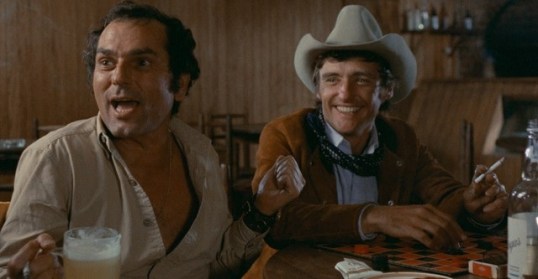
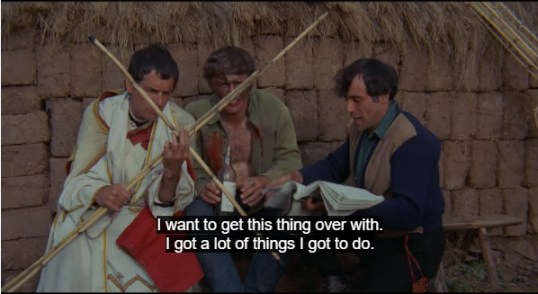
Despite its reputation, The Last Movie gets off to a pretty strong start. Samuel Fuller (playing himself) is directing a hilariously over-the-top and violent western in the mountains of Peru. Kansas (Dennis Hopper) is working as a stuntman. He’s fallen in love with a local sex worker named Maria (Stella Garcia). Kansas is meant to be an aging Hollywood veteran, someone who has broken a lot of bones and who carries a lot of aches as a result of his line of work. (One can see why Hopper initially imagined an actor like John Wayne in the role.) He knows that this is going to be his last job and, as we see over the first 25 minutes of the film, he feels alienated from the rest of the cast and crew. Admittedly, Hopper does appear to be a bit too young for the role. The ideal Kansas would have been someone like Ben Johnson, L.Q. Jones, or perhaps Warren Oates. But, still, Hopper does a good job of capturing Kansas’s mixed feelings about the western that’s being filmed around him.
A lot of familiar faces pop up in the film’s fictional western. Dean Stockwell plays an outlaw. Jim Mitchum, Russ Tamblyn and Kris Kristofferson plays his associates. Peter Fonda is the youthful sheriff. Michelle Phillips is the daughter of the town’s banker and apparently, she’s also the girlfriend of one of the outlaws. We watch as the actors pretend to shoot guns and kill each other while the cameras are rolling, just to get up off the ground once “Cut” is yelled. When a local Indian who has been cast as an extra grows upset at the violence, an assistant director explains to him that no one really dies while the cameras are rolling. When shooting wraps, the film company goes home but Kansas stays behind with Maria. One day, the local priest (Tomas Milian) warns Kansas that the local indigenous people have moved into the abandoned film set and are trying to shoot their own movie. Kansas discovers that they have built wooden cameras and wooden boom mics and that their chief is giving orders in the style of Sam Fuller. They’re also firing the guns that the Americans left behind.
The first part of the film works quite well. Hopper’s camera captures the beautiful and isolated Peruvian landscape. The violent western is a pitch perfect and affectionate parody of a generic studio film. Though Hopper is a bit too young for the role, he still does a good job of capturing Kansas’s alienation from his fellow Americans. Even more importantly, the first part of the film seems to have an identifiable theme. The American film crew invaded an isolated part of Peru and changed the culture of the natives without even realizing it. Now, they’ve left but the natives are still dealing with the after effects of the American “invasion.” It’s easy to see, within that part of the story, a critique of both American culture and American foreign policy.
The second part of the film is where things start to fall apart. Kansas meets an old friend named Neville (Don Gordon). Neville has discovered a gold mine in the Peruvian mountains. With Kansas as his partner, he tries to get a businessman named Harry Anderson (Roy Engel) to invest in it. Kansas and Neville try to impress Harry and his wife (Julie Adams, best-known for being stalked by The Creature From The Black Lagoon). Kansas and Neville take the Andersons to a brothel and, in the process, Kansas offends Maria. Kansas then paws Mrs. Anderson’s fur coat and mentions that human beings are covered in hair. For all of their efforts, Harry will not invest, no matter how desperately Neville begs him to reconsider.
The second part of the film drags, with many of the scenes being obviously improvised between Hopper, Gordon, Garcia, Engel, and Adams. Unfortunately, the improved conversations aren’t particularly interesting and they tend to go on forever. Usually a reliable character actor, Don Gordon ferociously chews the scenery as Neville and it doesn’t take long before one grows tired of listening to him yell. (Gordon was far more impressive in Hopper’s Out of the Blue.) With the use of improvisation and overlapping dialogue, the second half of the film tries to feel naturalistic but instead, it’s a migraine-inducing method exercise gone wrong. It’s also during the second part of the film that a “scene missing” title card flashes on the screen, an indication that the discipline that Hopper showed as a director during the beginning of the film is about to be abandoned.
Finally, the third part of the film — well, who knows? The final 25 minutes of the film is collection of random scenes, some of which may be connected and some of which may not. The natives have decided that the only way to properly end their “film” is to kill Kansas. Kansas is shot several times and rides away on his horse. Suddenly, Kansas is back at his home and Maria is taunting him for getting shot. Then, Kansas is riding his horse again. Then suddenly, Dennis Hopper and Tomas Milian are laughing at the camera. A script supervisor tries to get Dennis to look at the shooting schedule while Dennis drinks. This happens:
Milian points out that the blood on Hopper’s shirt is dry. Hopper looks at his shoulder, where Kansas was previously shot, and says that someone needs to add his scar before he can shoot the scene. Ah! So, now we’re acknowledging that it’s all just a movie. Thanks, Dennis! Suddenly, Dennis is Kansas again and he’s collapsing over and over again in the dust. He appears to be dead but no, now he’s Dennis again and he’s standing up and smiling at the camera. And now, he’s singing Hooray for Hollywood. And now, suddenly, Kansas and Neville are talking about The Treasure of the Sierra Madre and then….
Well, let’s just say that it goes on and on before finally ending with a scrawled title card.
It’s a disjointed mess and it’s all the more frustrating because the first 30 minutes of the film is actually pretty good. But then, Dennis apparently remembered that he was supposed to be the voice of the counter-culture and he gave into his most pretentious impulses. Of course, just because a film is a mess, that doesn’t mean that it can’t be entertaining. And again, the first part of the film is entertaining and third part of the film is weird enough that it’ll hold most people’s attention for at least a few minutes. But the middle section of the film is so slow and pointless that it pretty much brings down the entire film.
In the end, what is The Last Movie about? In The American Dreamer(a documentary that was filmed while Hopper was editing The Last Movie in New Mexico), Hopper spends a lot of time talking about revolution and taking over Hollywood but The Last Movie is hardly a revolutionary film. The film is at its most alive when it is focused on the shooting of its fictional western. For all the satirical pokes that The Last Movie takes at the studio system, it’s obvious that Hopper had a lot of affection for Old Hollywood and for directors like Sam Fuller. Kansas may say “Far out,” but he’s hardly a hippie. Even the film’s jumbled finale seems to be saying, “It’s all Hollywood magic!” In the end, the film’s call for a new style of cinema is defeated by its love for the old style of cinema.
Instead, I think The Last Movie works best when viewed as a portrait of paranoia. Hopper himself admitted that he was naturally paranoid and the heavy amount of drugs that he was doing in the 70s didn’t help. One reason why Hopper filmed in Peru and edited in New Mexico was so the studios couldn’t keep track of him and, while directing, he worried about being arrested by the Peruvian secret police. As an actor, Hopper plays Kansas as being someone who views the world with caution and untrusting eyes. He doesn’t trust the other members of the film crew. He loves Maria but he’s still convinced that she’s going to betray him. Even the natives ultimately try to destroy him and the script supervisor tries to get him to stick to the shooting schedule. The film works best as a disjoined portrait of one man’s paranoid and fatalistic world view.
The Last Movie pretty much ended the studio’s attempts to harness the counter-culture by giving money to self-described revolutionaries. The new wave of directors — like Spielberg and Lucas — may have shared Hopper’s then-politics but they weren’t looking to burn down the system. (Hopper himself later became a Republican.) The Last Movie may not have been the literal last movie but it was, for a while at least, the last of its kind.
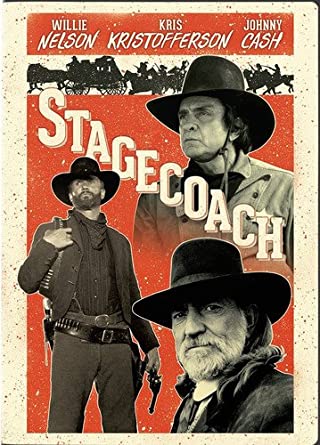
The year is 1880 and Geronimo and his Apaches are on a warpath against the people who have taken their land. Despite the warnings of the local Calvary officers, one stagecoach tries to make the long journey from Arizona to New Mexico. The seven passengers may start out as strangers but they’re going to have to work together to survive the journey. The most famous passenger is dentist-turned-gunslinger Doc Holliday (Willie Nelson). The most infamous is the Ringo Kid (Kris Kristofferson), an outlaw who has recently escaped from prison and who is looking for revenge against the men who framed him for a crime that he didn’t commit. Henry Gatewood (Anthony Fraciosa) is a banker who has embezzled money and is looking to make a quick escape. Foppish Trevor Peacock (Anthony Newley) sells liquor. Dallas (Elizabeth Ashley) is a former prostitute looking to start a new life. Mrs. Mallory (Mary Crosby) is nine months pregnant and traveling to reunite with her husband, an officer in the Calvary. Finally, Hatfield (Waylon Jennings) is a chivalrous gambler. Riding atop the stagecoach is Buck (John Schneider), who gets paid 8 dollars a month to risk his life taking people through Apache country, and Curly (Johnny Cash), the tough-but-fair town marshal who plans to arrest the Ringo Kid as soon as they reach civilization.
Made for television, Stagecoch is an adequate remake of the John Ford classic. The story remains basically the same, with the main difference being that the majority of the characters are now played by country-western singers who are a few years too old for their roles. Doc Holliday, who died of “consumption” when he was in his 30s, is played by Willie Nelson, who doesn’t look a day under 70. The Ringo Kid is played by Kris Kristofferson, who, despite having literally played Billy the Kid a decade earlier, still doesn’t look like he’s ever been called a “kid” at any point in his life. Compared to their original counterparts, the remake’s characters have been slightly tweaked so that they fit with the outlaw country images of the singers playing them. Doc Holliday sympathizes with Geronimo and says that his use of whiskey is “medicinal.” Kristofferson’s Ringo Kid is more openly contemptuous of authority than John Wayne’s. Waylon Jennings is less of a cynic in the role of Hatfield than John Carradine was and Johnny Cash sits atop the stagecoach like a man on a holy mission.
The cast is the main reason to watch this version of Stagecoach. The film can’t match the original but Nelson, Kristofferson, Jennings, and Cash obviously enjoyed playing opposite each other and, even if Nelson and Kristofferson are miscast, all of them bring some needed country-western authenticity to their roles. As for the non-singers, Mary Crosby, Elizabeth Ashley, and John Schneider all make the best impressions while both Franciosa and Newley seem too 20th Century for their western roles. Director Ted Post does a good job with the action scenes and keeps the story moving, even if the remake’s status as a TV production keeps him from capturing visual grandeur of Ford’s original. Stagecoach is a respectful remake of a classic, one that can be appreciated when western fans on its own merits.
The 1978 film Convoy opens with the image of a truck passing by some hills that have been covered with snow. At a certain point, it actually looks like the truck is descending into a sea of white powder. It’s an appropriate image because, to film lovers and cinematic historians, Convoy will always be associated with cocaine.
Convoy was meant to be a relatively small-scale B-movie, one that was meant to capitalize on the popularity of a novelty song, as well as the recent success of other car chase films. Instead, it became a notoriously troubled production that went famously overbudget and overschedule as director Sam Peckinpah turned Convoy into a personal statement about modern cowboys and independence. When the film was finally released, it was the biggest box office hit of Peckinpah’s storied career. However, because so much money had been spent making the film, it still failed to make a profit and the film is regularly described as being one of the many flops of the late 70s that eventually led to the power in the film industry shifting away from the directors and over to the studio executives. Many in Hollywood grumbled that it was Peckinpah’s well-known cocaine use that led to him having such trouble with what should have been a simple B-movie. That’s probably a bit unfair to Peckinpah as it’s been written that just about everyone in Hollywood was using cocaine in 1978.
Add to that …. Convoy‘s not that bad.
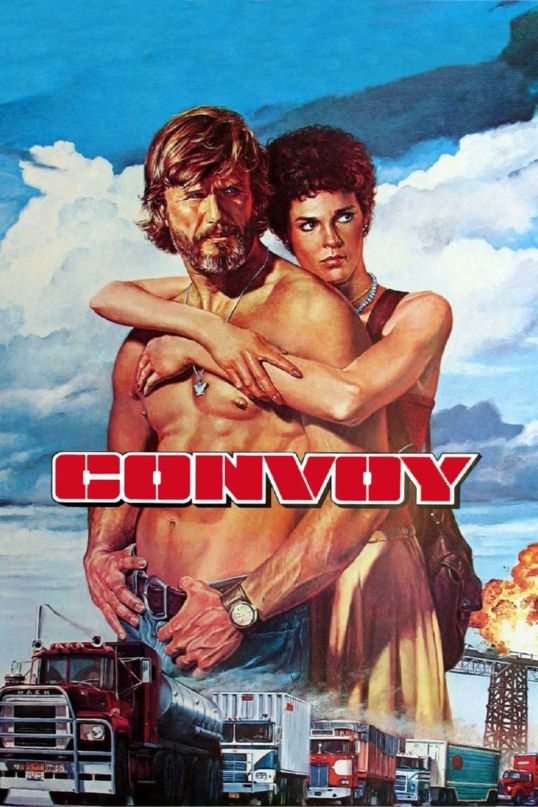
Convoy tells the story of Rubber Duck (Kris Kristofferson), a legendary trucker who has never joined the Teamsters. He’s an independent. Rubber Duck’s nemesis is Sheriff Dirty Lyle (Ernest Borgnine), who is also an independent. He’s never joined the policeman’s union. As Rubber Duck puts it, “There’s not many like us anymore.”
Anyway, for reasons that are only vaguely defined, Rubber Duck leads a convoy of trucks across the southwest while being pursued by the police. It has something to do with protesting the law enforcement tactics of Dirty Lyle, despite the fact that Rubber Duck appears to kind of like Lyle. Soon hundreds of other independent truckers are joining Rubber Duck’s convoy, all to protest law enforcement. Among those in the convoy are Pig Pen (Burt Young), Widow Woman (Madge Sinclair), and Spider Mike (Franklyn Ajaye), who just wants to get home to his pregnant wife. Traveling with Rubber Duck is Melissa (Ali MacGraw), who is supposed to be some sort of photojournalist. Rubber Duck and Melissa fall in love but there’s only so much you can do with a love story when it centers around two of the least expressive stars of the 70s. During the chase, Rubber Duck picks up some non-truckers supporters, including some religious fanatics in a microbus. He and the truckers also drive through and destroy a lot of buildings, which kind of makes it look like the cops might have had a point.
What sets Convoy apart from other chase films of the 70s is just how seriously it takes itself. There’s an undercurrent of melancholy that runs through the entire film. Rubber Duck seems to know that America is changing and as people become more comfortable with the idea of sacrificing their freedoms, his days as an independent trucker are numbered. Dirty Lyle also seems to be stuck in a permanent existential crisis, taking no joy in being a crook but still forced to do so by being a part of an inherently corrupt government system. There’s a scene where a truckstop waitress offers herself up as a gift to Rubber Duck on his birthday and Peckinpah films it as if he’s making an Italian neorealist drama about Rome after the war. When Spider Mike says that he has to get home to his wife, he says it with the pain of a man who knows that the system only cares about control and not happiness. These aren’t just truckers. These are men and women who are on the front lines battling a creeping culture of oppression.
Surprisingly enough, the film’s serious tone actually works to its advantage. You may not fully understand why Rubber Duck is leading that convoy but you hope that it succeeds because you get the feeling that the world might end if it doesn’t. When the film ends with Ernest Borgnine laughing like a maniac, it comes across less like a moment of amusement and more like an acknowledgment that the universe is a tragic farce. Life is a riddle wrapped inside an engima and only Rubber Duck and Dirty Lyle seem to understand that fact.
Add to that, this is a film about independents refusing to allow themselves to be limited by the regulatory state. In its way, it’s one of the most sincerely Libertarian films ever made and, with all of us currently living under “lockdowns” and hoping that our governors don’t join those who have already surrendered their better instincts to their inner tyrant (sorry, Michigan, Kentucky, and New Jersey), Convoy remains an important film. Go, Rubber Duck, go!
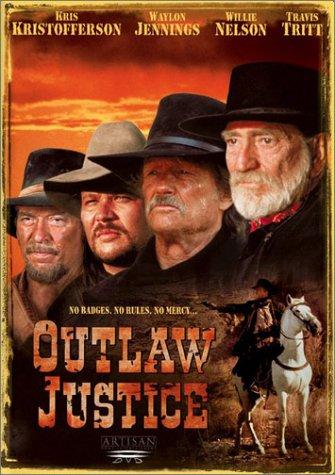
During the closing days of the old west, the evil Holden (Sancho Garcia) guns down retired outlaw, Tobey Naylor (Waylon Jennings). Tobey’s son, Bryce (Chad Willett), is determined to get revenge so he teams up with three members of Tobey’s old gang, Lee Walker (Willie Nelson), Jesse Ray Torrance (Kris Kristofferson), and Sheriff Dalton (Travis Tritt). They ride into Mexico, searching for one final shootout. Along the way, they befriend the locals, find time to rebuild a burned-out church, and bicker like aging gunslingers in a Larry McMurtry novel. Chad Willett and Willie Nelson also find time to fall in love with local women because, obviously, the entire film can’t just be gunfights and church-building.
Outlaw Justice is a standard western, which is distinguished only by the casting of the pioneers of outlaw country music as actual outlaws. Since this was made during the Lonesome Dove-Unforgiven era of westerns, there’s some talk about how Lee and Jesse Ray are past their prime but otherwise, it’s an angle that largely left unexplored. Of the singers, Kris Kristoffeson and Travis Tritt are probably the best actors but Willie Nelson seems to be having the most fun. (Nelson has enough natural charisma that he can get away with a lot.) If you’re a fan of westerns who doesn’t demand too much from the movie you’re watching, Outlaw Justice will probably be entertaining enough. Otherwise, it’s pretty forgettable.
Like a lot of people, I enjoy browsing the trivia sections of the IMDb. While it’s true that a lot of the items are stuff like, “This movie features two people who appeared on a television series set in the Star Trek Universe!,” you still occasionally came across an interesting fact or two.
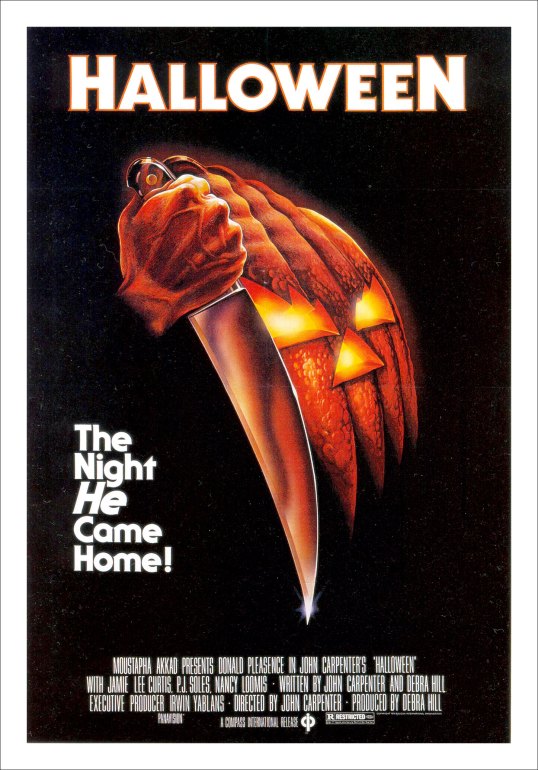
Of course, sometimes, you just come across something that makes so little sense that you can only assume that it was posted as a joke. For instance, I was reading the IMDb’s trivia for the original 1978 Halloween and I came across this:
Peter O’Toole, Mel Brooks, Steven Hill, Walter Matthau, Jerry Van Dyke, Lawrence Tierney, Kirk Douglas, John Belushi, Lloyd Bridges, Abe Vigoda, Kris Kristofferson, Sterling Hayden, David Carradine, Dennis Hopper, Charles Napier, Yul Brynner and Edward Bunker were considered for the role of Dr. Sam Loomis.
Now, some of these names make sense. Despite the fact that Sam Loomis became Donald Pleasence’s signature role, it is still possible to imagine other actors taking the role and perhaps bringing a less neurotic interpretation to the character.
Peter O’Toole as Dr. Loomis? Okay, I can see that.
Kirk Douglas, Sterling Hayden, Charles Napier, Steve Hill, or Lloyd Bridges as Dr. Loomis? Actually, I can imagine all of them grimacing through the role.
Walter Matthau? Well, I guess if you wanted Dr. Loomis to be kind of schlubby….
Abe Vigoda? Uhmmm, okay.
Dennis Hopper? That would be interesting.
Mel Brooks? What? Wait….
John Belushi? Okay, stop it!
Dr. Sam Loomis
My point is that I doubt any of these people were considered for the role of Dr. Loomis. Both director John Carpenter and producer Debra Hill have said that they wanted to cast an English horror actor in the role, as a bit of an homage to the Hammer films of the 60s. Christopher Lee was offered the role but turned it down, saying that he didn’t care for the script or the low salary. (Lee later said this was one of the biggest mistakes of his career.) Peter Cushing’s agent turned down the role, again because of the money. It’s not clear whether Cushing himself ever saw the script.
To be honest, I could easily Peter Cushing in the role and I could see him making a brilliant Dr. Loomis. But, ultimately, Donald Pleasence was the perfect (if not the first) choice for the role. Of course, Pleasence nearly turned down the role as well. Apparently, it was his daughter, Angela, who changed his mind. She was an admirer of John Carpenter’s previous film, Assault on Precint 13. Carpenter has said that he was originally intimidated by Donald Pleasence (the man had played Blofeld, after all) but that Pleasence turned out to be a professional and a gentleman.
Laurie Strode
Of course, Halloween is best known for being the first starring role of Jamie Lee Curtis. Curtis was actually not Carpenter’s first choice for the role of Laurie Strode. His first choice was an actress named Annie Lockhart, who was the daughter of June Lockhart. Carpenter changed his mind when he learned that Jamie was the daughter of Janet Leigh. Like any great showman, Carpenter understood the importance of publicity and he knew nothing would bring his horror movie more publicity then casting the daughter of the woman whose onscreen death in Psycho left moviegoers nervous about taking a shower.
There was also another future big name who came close to appearing in Halloween. At the time that she was cast as Lynda, P.J. Soles was dating an up-and-coming actor from Texas named Dennis Quaid. Quaid was offered the role of Lynda’s doomed boyfriend, Bob but he was already committed to another film.
Not considered for a role was Robert Englund, though the future Freddy Krueger still spent some time on set. He was hired by Carpenter to help spread around the leaves that would make it appear as if his film was taking place in the October, even though it was filmed in May.
Robert Englund, making May look like October
Interestingly enough, Englund nearly wasn’t need for that job because Halloween was not originally envisioned as taking place on Halloween or any other specific holiday. When producer Irwin Yablans and financier Moustapha Akkad originally approached Carpenter and Hill to make a movie for them about a psycho stalking three babysitters, they didn’t care when the film was set. It was only after Carpenter and Hill wrote a script called The Babysitter Muders that it occurred to Yablans that setting the film during Halloween would be good from a marketing standpoint. Plus Halloween made for a better title than The Babysitter Murders.
And, of course, the rest is history. Carpenter’s film came to define Halloween and it still remains the standard by which every subsequent slasher movie has been judged. Would that have happened if the film had been known as The Babysitter Murders and had starred John Belushi?
This is a case where I like the song more than the music video. This video was actually filmed three years after Johnny Cash’s death. As far as “official” music videos are concerned, I always feel like a musician should have some sort of say into how their music is visually interpreted. Obviously, Johnny Cash wasn’t around to have anything to say about the video for God’s Gonna Cut You Down.
Since Cash wasn’t available, director Tony Kaye filled the video with cameos from other actors and musicians, a few of whom (though not many) were previous Cash collaborators. Among the celebs who make an appearance in this video: David Allan Coe, Patricia Arquette, Travis Barker, Peter Blake, Bono, Sheryl Crow, Johnny Depp, the Dixie Chicks, Flea, Billy Gibbons, Whoopi Goldberg, Woody Harrelson, Dennis Hopper, Terrence Howard, Jay-Z, Mick Jones, Kid Rock, Anthony Kiedis, Kris Kristofferson, Amy Lee, Adam Levine, Shelby Lynne, Chris Martin, Kate Moss, Graham Nash, Busy Philipps, Iggy Pop, Lisa Marie Presley, Q-Tip, Corinne Bailey Rae, Keith Richards, Chris Rock, Rick Rubin, Patti Smith, Sharon Stone, Justin Timberlake, Kanye West, Brian Wilson, and Owen Wilson. Some of the celebs — like Dennis Hopper and Kris Kristofferson — seem like they naturally belong there. Others seem so out-of-place that you’ll want to throw something. You know how that works,
God’s Gonna Cut You Down is a traditional folk song. I’ve heard countless versions of it. I prefer Cash’s version to the more traditional gospel arrangement but, then again, I tend to find gospel music to be dull in general. Cash’s arrangement brought new life to an old song.
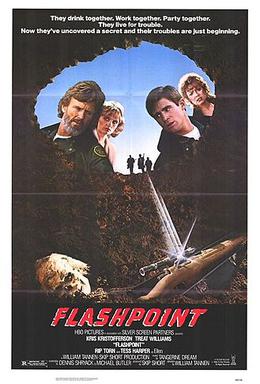
November 22, 1963. While the rest of the world deals with the aftermath of the assassination of John F. Kennedy in Dallas, a man named Michael Curtis drives a jeep across the South Texas desert, heading for the border. In the jeep, he has a $800,000 and a high-powered rifle. When the jeep crashes, the man, the rifle, and the money are left undiscovered in the desert for 21 years.
1984. Two border patrol agents, Logan (Kris Kristofferson) and Wyatt (Treat Williams), are complaining about their job and hoping for a better life. It looks like they might get that opportunity when they come across both the jeep and the money. A bitter Vietnam vet, Logan wants to take the money and run but Wyatt is more cautious. Shortly after Wyatt runs a check on the jeep’s license plate, a FBI agent (Kurtwood Smith) shows up at the station and both Logan and Wyatt discover their lives are in danger.
Though it was made seven years before Oliver Stone’s JFK, Flashpoint makes the same argument, that Kennedy was killed as the result of a massive government conspiracy and that the conspirators are still in power and doing whatever they have to do keep the truth from being discovered. The difference is that Flashpoint doesn’t try to convince anyone. If you’re watching because you’re hoping to see a serious examination of the Kennedy conspiracy theories, Flashpoint is not for you. Instead, Flashpoint is a simple but effective action film, a modern western that uses the assassination as a MacGuffin. Though Kris Kristofferson has never been the most expressive of actors, he was well-cast as the archetypical gunslinger with a past. Rip Torn also gives a good performance as a morally ambiguous sheriff and fans of great character acting will want to keep an eye out for both Kevin Conway and Miguel Ferrer in small roles.
Yesterday, the great character actor Harry Dean Stanton passed away at the age of 91. Cisco Pike is not one of Stanton’s best films but it is a film that highlight why Stanton was such a compelling actor and why his unique presence will be missed.
Cisco Pike (Kris Kristofferson) is a musician who has fallen on hard time. After having been busted several times for dealing drugs, Cisco now just wants to spend time with his “old lady” (Karen Black) and plot his comeback as a musician. However, a corrupt narcotics detective, Leo Holland (Gene Hackman), approaches Cisco with an offer that he cannot refuse. Holland has come into possession of 100 kilos of marijuana. He wants Cisco to sell it for him and then Leo plans to take the money and retire. Cisco has the weekend to sell all of the weed. If he doesn’t, Holland will arrest him for dealing and sent him back to prison,
About halfway through this loose and improvisational look at dealers, hippies, and squares in 1970s Los Angeles, Harry Dean Stanton shows up in the role of Jesse Dupree, an old friend and former bandmate of Cisco’s. Jesse is a free-living wanderer, too old to be a hippie but too unconventional to be a member of the establishment. Unfortunately, Jesse also has a nasty heroin habit. Jesse Dupree is a prototypical Harry Dean Stanton role. Like many of Stanton’s best roles, Jesse may be sad and full of regrets but he is not going to let that keep him from enjoying life. Stanton may not appear in much of the film but he still takes over every scene in which he appears.
Stanton is, by far, the best thing about Cisco Pike. As always, Gene Hackman is entertaining, playing the inverse of The French Connection‘s Popeye Doyle and Karen Black is her usual mix of sexy and weird. The weakest part of the movie is Kris Kristofferson, who was still a few years away from becoming a good actor when he starred in Cisco Pike. It is interesting to consider how different Cisco Pike would have been if Stanton and Kristofferson had switched roles. Stanton may not have had Kristofferon’s movie star looks but, unlike Kristofferson, he feels real in everything that he does. With his air of resignation and his non-Hollywood persona, Stanton brought authenticity to not only Cisco Pike but to every film in which he appeared.
Along with Stanton, several other familiar faces appear in Cisco Pike. Keep an eye out for Roscoe Lee Browne, Howard Hesseman, Viva, Allan Arbus, and everyone’s favorite spaced-out hippie chick, the one and only Joy Bang.
(PAT GARRETT AND BILLY THE KID airs tonight at 11:45 EST on TCM. Do yourselves a favor… watch it!)
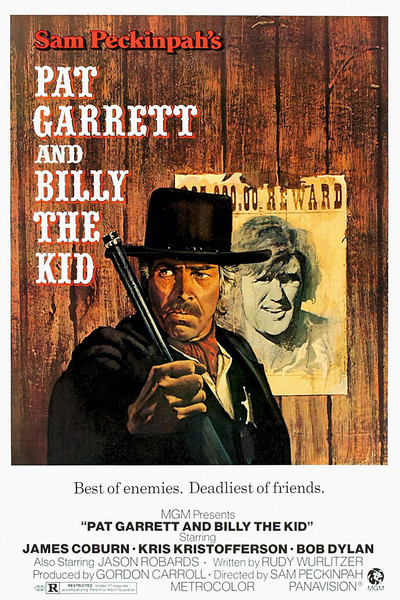
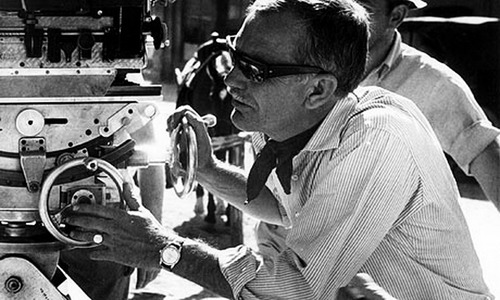
PAT GARRETT AND BILLY THE KID was director Sam Peckinpah’s final Western, and as usual it’s about more than just the Old West. It’s about the new breed vs the old establishment, about the maverick auteur vs the old studio guard, and about his never-ending battle to make his films his way. The fact that there are six, count ’em, SIX different editors credited tells you what MGM honcho James Aubrey thought of that idea! They butchered over 20 minutes out of the movie, which then proceeded to tank at the box office. Fortunately for us, PAT GARRETT AND BILLY THE KID has been restored to its full glory, and we can enjoy Peckinpah’s original artistic vision.
I’m not going to try to make excuses for Peckinpah; he was a legitimate pain in the ass, a…






 November 22, 1963. While the rest of the world deals with the aftermath of the assassination of John F. Kennedy in Dallas, a man named Michael Curtis drives a jeep across the South Texas desert, heading for the border. In the jeep, he has a $800,000 and a high-powered rifle. When the jeep crashes, the man, the rifle, and the money are left undiscovered in the desert for 21 years.
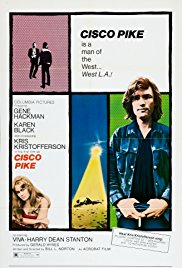 Yesterday, the great character actor Harry Dean Stanton passed away at the age of 91. Cisco Pike is not one of Stanton’s best films but it is a film that highlight why Stanton was such a compelling actor and why his unique presence will be missed.