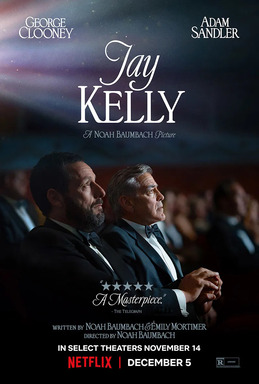
The Films of 2025: Jay Kelly (dir by Noah Baumbach)


Jay Kelly features George Clooney at both his best and his worst.

Clooney plays the film’s title character, an actor who has just hit 60 and who is having an existential crisis as he realizes everything that he’s lost as a result of being rich and famous.  Clooney’s best moments are when he plays Jay as being essentially a prick, a guy who might be well-meaning but who lacks the self-awareness necessary to understand just how condescending and fake he tends to come across to the people who know him.  This is the Jay who insists on having a drink with Tim (Billy Crudup), a former actor who lost a key role to Jay and who has never forgiven him for it.  (It starts out as a friendly drink but it eventually becomes a fight after Tim reveals that he hates Jay and Jay responds by being smug.)  This is the Jay who has alienated both of his daughters (Riley Keough and Grace Edwards) and who doesn’t seem to understand that the rest of the world doesn’t travel with an entourage.

Jay is gloriously unaware in those scenes and they give Clooney a chance to show that he’s still capable of giving a sharp comedic performance.  Watching him in those scenes, I was reminded of the gloriously dumb characters that he played for the Coen Brothers, in both Burn After Reading and Hail, Caesar.  For that matter, I was also reminded of his burned-out hatchet man from Up In the Air, who was not a dumb character but still was someone who, like Jay Kelly, always seemed to be performing.

Unfortunately, as the film progresses, Jay himself starts to wander into flashbacks of himself as a young actor and, even worse, he starts to talk to himself about everything that he’s lost due to his fame and suddenly, he transforms into the insufferably smug Clooney who spent the earlier part of this year in greasepaint, lecturing us all about Edward R. Murrow.  The flashbacks to Jay Kelly’s past often feel like stand-ins for flashbacks to George Clooney’s past (and it’s probably not a coincidence that both Kelly and Clooney are from Kentucky) but they don’t really add up to much.  Jay Kelly is a character who becomes less compelling the more that one learns about him.

The characters around Jay Kelly are far more interesting than Jay himself, though I have my doubts whether that was intentional on the part of director Noah Baumbach.  (An overly long and indulgent sequence on a train would seem to suggest that Jay Kelly was envisioned as being a more fascinating character than he turned out to be.)  Just as he did in Baumbach’s The Meyerowitz Stories, Adam Sandler gives the film its heart, playing the role of Jay’s loyal but unappreciated manager.  Sandler and Laura Dern have a few showy scenes together but Sandler’s best moments come opposite Patrick Wilson as a client who feels that he’s being neglected in favor of Jay Kelly.  (For that matter, Wilson is so good in those scenes that I almost wish he had switched roles with Clooney.)  One might not expect the star of Jack and Jill and That’s My Boy to emerge as one of Hollywood’s best sad-eyed character actors but that’s what has happened in the case of Adam Sandler.

With all that in mind, I have to admit that I enjoyed Jay Kelly more than I thought I would.  Some of that has to do with expectations.  Jay Kelly is currently getting so roasted on social media that I was expecting the film to be a self-indulgent disaster.  While the film is definitely self-indulgent and about 30 minutes too long, it’s not a disaster.  When Clooney’s performance works, it really works.  (Unfortunately, the inverse is also true.)  Adam Sandler, Billy Crudup, Riley Keough, and Stacy Keach all give performances that elevate the occasionally shallow script.  Cinematographer Linus Sandgren captures some beautiful shots, especially towards the end of the film.  Visually, Jay Kelly is a marked improvement on the bland imagery of Marriage Story.  Like its title character, Jay Kelly is imperfect and occasionally annoying but it does hold your attention.

As for the film’s Oscar chances, the reviews are mixed but it’s a film about how tough it is to be an actor and one should not forget that the Actor’s Branch is the biggest branch of the Academy and the majority of the voters are people who are probably going to watch Jay Kelly and say, at the very least, “Hey, I know that guy!”  (Few will admit, “I am that guy,” but that will still definitely be a factor in how they react to the film.)  Regardless of how social media feels about the film, I imagine Jay Kelly will be remembered when the nominations are announced.
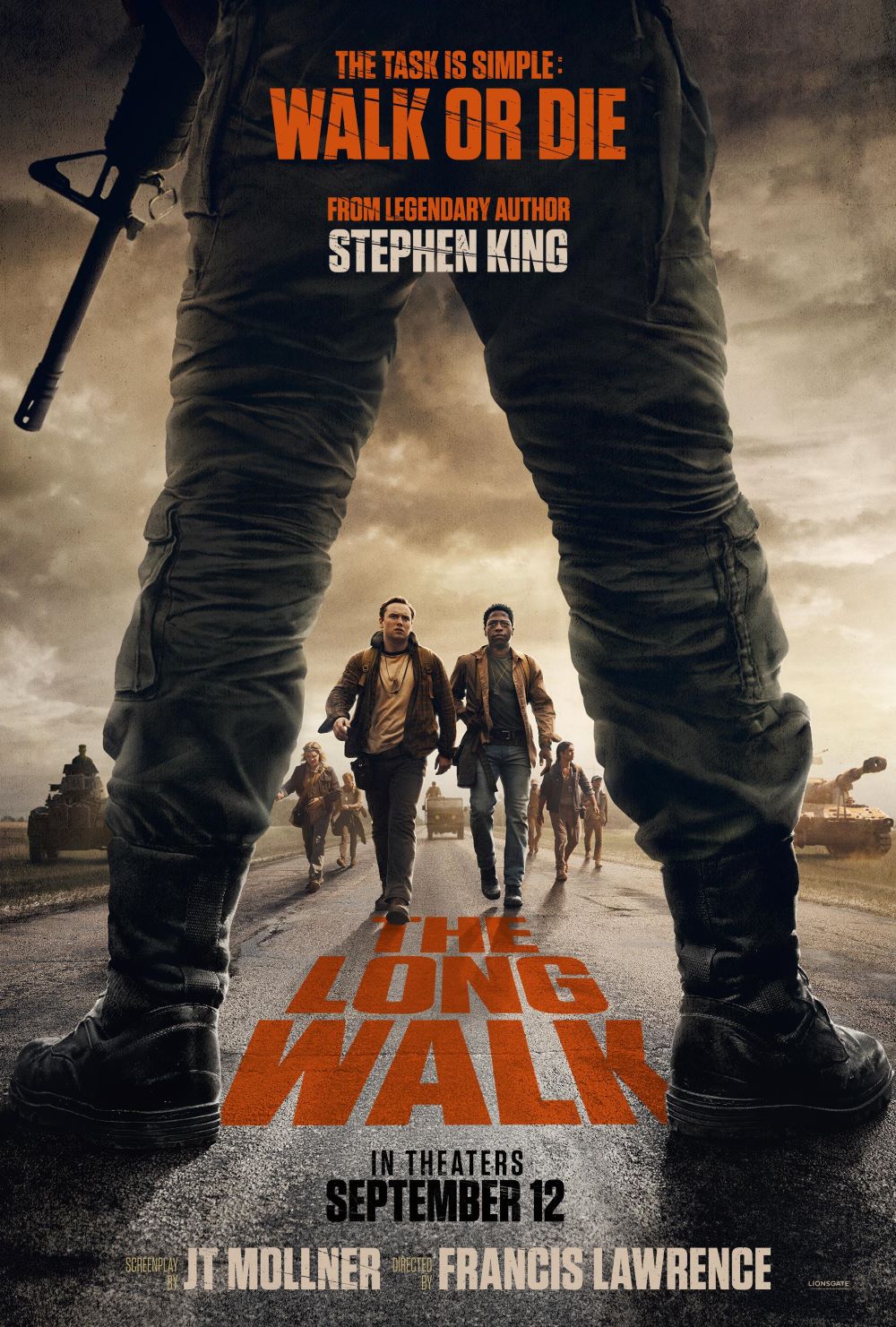
Horror Review: The Long Walk (dir. by Francis Lawrence)


“In this Walk, it’s not about winning. It’s about refusing to be forgotten while the world watches us fade away.” — Peter McVries

Francis Lawrence’s The Long Walk (2025) delivers a relentlessly brutal and unyielding vision of dystopian horror that explores survival, authoritarian control, and the devastating loss of innocence. The film immerses viewers in a grim spectacle: fifty teenage boys forced to participate in an annual, televised event known as the Long Walk. To survive, each participant must maintain a constant pace, never falling below a minimum speed, or else face immediate execution.

At the heart of this bleak narrative is Raymond Garraty, played with earnest vulnerability by Cooper Hoffman. Garraty’s backstory, marked by the tragic execution of his father for political dissent, sets a somber tone from the outset. As the Walk drags on, Garraty forges fragile bonds with fellow contestants, particularly Peter McVries (David Jonsson), whose camaraderie and quiet resilience inject moments of hope and humanity into the harrowing journey. These relationships become the emotional core, grounding the film’s relentless physical and psychological torment in deeply human experiences.

The setting enhances this oppressive atmosphere. The time and place remain deliberately ambiguous, with evident signs that the United States has recently suffered a second Civil War. The aftermath is a landscape ruled by a harsh, authoritarian military regime overseeing a nation economically and politically in decline. Though visual cues evoke a retro, 1970s aesthetic—reflected in military hardware and daily life—the film resists pinning itself to an exact year. This timelessness amplifies its allegorical power, emphasizing ongoing societal collapse and authoritarianism without tying the story to one era specifically. The dystopian backdrop is populated by broken communities and a pervasive sense of hopelessness that mirrors the characters’ internal struggles.

Visually, The Long Walk employs stark, gritty cinematography that traps viewers in the monotonous expanse of endless roads and bleak environments. Lawrence’s direction is unflinching and unrelenting, echoing the merciless march to death and the broader commentary on institutionalized brutality. The atmospheric score complements this oppressive tone, underscoring the emotional and physical exhaustion pacing the narrative.

Performances elevate the film’s emotional stakes significantly. Hoffman’s portrayal of Garraty captures the youth’s evolving vulnerability and determination, while Jonsson’s McVries adds a poignant emotional depth with his steady, hopeful presence. Supporting actors such as Garrett Wareing’s enigmatic Billy Stebbins and Charlie Plummer’s self-destructive Barkovitch bring vital complexity and urgency. Stebbins remains a figure whose allegiance is ambiguous, adding layered mystery to the group dynamics. Judy Greer’s limited screentime as Ginny Garraty, Ray’s mother, stands out powerfully despite its brevity. Each of her appearances is heartbreaking, bringing a wrenching emotional weight to the film. Her panicked, anguished attempts to hold onto her son before he embarks on the deadly Walk amplify the human cost of the dystopian spectacle, leaving a lasting impression of maternal agony amid the surrounding brutality.

Mark Hamill’s role as The Major is a significant supporting presence, embodying the authoritarian face of the regime. The Major oversees the brutal enforcement of the Walk’s rules, commanding lethal squads who execute those who falter. Hamill brings a grim and chilling force to the character, whose cold charisma and unwavering commitment to the ruthless system make him a menacing figure. Despite relatively limited screen time compared to the young participants, The Major’s presence looms large over the story, symbolizing the chilling machinery of power and control that governs the dystopian world.

Yet, the film is stark in its depiction of violence. The executions and suffering are raw and often grotesquely explicit, serving as a damning critique of authoritarian cruelty and the voyeuristic nature of state violence televised as entertainment. This unfiltered brutality can, however, become numbing and exhausting as it piles on relentlessly, occasionally undercutting emotional resonance. The narrative embraces nihilism fully, underscoring the dehumanization and futility within the dystopian world it portrays.

The film’s overall pacing and structure reflect this bleakness but at times suffer from monotony. The heavy focus on walking and survival mechanics leads to a lack of narrative variation, testing the audience’s endurance much like the characters’. There is likewise a noticeable stretch of physical realism—the contestants endure near-impossible physical feats without adequate signs of weariness or injury, which can strain believability.

Character development is another area where the film falters slightly. While Garraty and McVries are well-drawn and immunize emotional investment, other characters tend toward archetypical roles—bullies, outsiders, or generic competitors—diminishing the impact of many deaths or interactions. Similarly, the repetitiveness of the setting and cinematography, relying mostly on basic shots following the walkers, misses opportunities for more creative visual storytelling that might heighten tension or spotlight key emotional beats.

The film’s conclusion, stark and abrupt, offers no real catharsis or closure, reinforcing the overarching theme of unyielding despair. While this resonates with the film’s nihilistic motif, it may alienate those seeking narrative resolution or hope. The visceral shock and bleak tone permeate to the end, leaving the viewer with a lasting impression of relentless suffering and sacrifice.

This demanding yet visually striking and emotionally intense film challenges viewers with its unrelenting bleakness and brutal thematic content. It critiques societal violence, media spectacle, and authoritarianism through starkly powerful performances and an oppressive, immersive atmosphere. Though it excels in evoking emotional rawness in key moments and maintaining thematic consistency, it struggles with pacing, character depth beyond the leads, and occasional narrative monotony. Its ambiguous setting in a post-second Civil War America ruled by a declining authoritarian regime adds a timeless, allegorical layer to its exploration of human endurance and societal collapse.

Ultimately, this film is best suited for viewers prepared for an uncompromising, intense vision of dystopia. It stands as a compelling, if bleak, meditation on youth, survival, and the human spirit under extreme duress, showcasing Francis Lawrence’s aptitude for crafting thought-provoking, provocative horror.

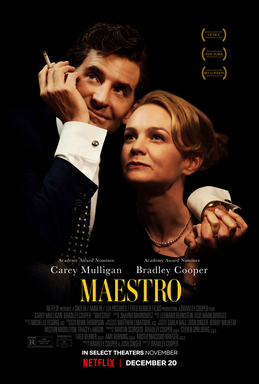
Lisa Marie Reviews An Oscar Nominee: Maestro (dir by Bradley Cooper)


I hope that Bradley Cooper  will win an Oscar soon.

It’s obvious that Cooper wants that Oscar and really, who can blame him?  After spending years being dismissed as a lightweight comedy actor, Cooper has really come into his own over the past thirteen years.  2012 was the year that he starred in Silver Linings Playbook and received his first Best Actor nomination.  In the years that followed, he was nominated for American Sniper, American Hustle, A Star Is Born and Maestro.  He deserved to be nominated for both Nightmare Alley and Licorice Pizza.  Cooper has shown himself to be both a talented actor and director.  He may not have been nominated for his direction of A Star Is Born but everyone knows that he should have been.  He’s come a long way from being the star of The Hangover films and it makes sense that he would want an Oscar to make it official.

(The Oscar itself may not carry the cultural cachet that it once did but seriously, an award is an award.)

That desire for an Oscar is probably the best way to explain 2023’s Maestro, a film that really might as well have just been called Oscar Bait.  Not only did Cooper direct and co-write Maestro but he also donned a prosthetic nose (and was briefly the center of some online controversy) to play the role of composer Leonard Bernstein.  Filmed in both black-and-white and color, the film follows Leonard Bernstein from his young debut as a conductor through his marriage to Felecia (Carey Mulligan).  Throughout the film, Felecia remains Leonard’s strongest supporter and his muse, even when she’s embarrassed by the rumors of his own impulsive behavior and his habit of cheating on her with men.  The film is a portrait of the struggle to be a genius, the struggle to support a genius, and the love that can hold two people together even during the most difficult of times.  And it’s all very Oscar bait-y, giving both Bradley Cooper and Carey Mulligan several scenes that, while well-executed, still feel as if they were designed specifically to appeal to the voters.

I had mixed feelings about Maestro when I watched it.  On the one hand, I definitely admired the craft and the skill that went into the production.  I admired the performances of both Bradley Cooper and Carey Mulligan.  The movie’s soundtrack is full of the best of Bernstein’s compositions, all performed by the London Symphony Orchestra.  The movie looked wonderful and it sounded wonderful but it also felt strangely hollow.  Watching it, I realized that the movie really didn’t know what it wanted to say about Bernstein and Felecia.  The movie was so consumed with technical perfection that the emotions of the story sometimes felt rather remote.  It was a film about Leonard Bernstein that, despite Cooper’s strong performance, failed to really give us a reason to care about Bernstein.  Maestro is a film that you admire while you watch it but it doesn’t really stick with you afterwards.  It’s the epitome of Oscar bait.

Maestro did not win Cooper any Oscars, though it did bring some nominations.  The film was also nominated for Best Picture but it lost to Oppenheimer.  That said, I’m looking forward to the year when Bradley Cooper does finally win his Oscar and hopefully, he’ll win it for a film that’s more like the emotion-filled A Star Is Born than the rather detached Maestro.  He’s one of my favorite actors and he’s due.

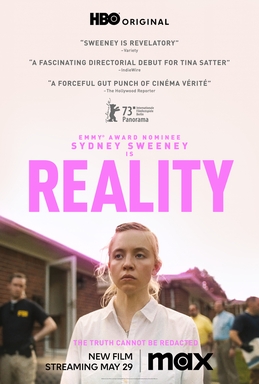
14 Days of Paranoia #8: Reality (dir by Tina Satter)


One day in 2017, Reality Winner (Sidney Sweeney), a yoga instructor who also works as a government translator, returns home from grocery shopping to discover that the FBI is outside of her house.  Agents Garrick (Josh Hamilton) and Taylor (Marchant Davis) have a search warrant and they explain that they also have some questions to ask her.

At first, both Garrick and Taylor are very friendly.  In fact, they’re almost too friendly.  Whenever Reality asks for more details about what is going on, they ask her about her pets or about whether or not she enjoys her job.  They ask her about her background and about the last trip she went on.  The conversation is cheerful but it’s hard not to notice that, while Garrick is smiling, burly FBI agents are ransacking Reality’s house.  As Reality comes to realize, she actually is in a lot of trouble.  Because she sent classified material to the Intercept, she is about to be arrested and prosecuted under the espionage act.  It’s going to be a while before she sees her house again.

Reality was released last year and aired on HBO.  It’s a film about which I had mixed feelings.  On the one hand, it showed how the government goes about prosecuting its citizens.  From the minute that Reality started talking to the FBI agents, I started yelling at her to shut up and get a lawyer.  No matter how many times they ask about your dog or how interested they seem to be in your recent trip to South America, agents of the FBI are not your friends!  Since the film’s script was largely a transcript of the actual interrogation, Reality presented a lesson in just how exactly law enforcement agencies like the FBI lure people into a false sense of security before dropping the trap on them.

On the other hand, this film also left me wondering just how much of a dumbass one has to be to throw away their career and their freedom for a trash organization like The Intercept.  Reality says that she was 1) upset over the election of Donald Trump (understandable) and 2) she resented being forced to watch Fox News at work when she would have rather watched Al Jazeera.  One needn’t be a fan of Fox to realize how ludicrous it is to suggest that Al Jazeera would somehow be less propagandistic.

There’s a moment, at the start of the film, where Reality — while standing outside of her house — stares at a toy truck on the other side of the street.  The toy has a big Confederate flag decal on it and the symbolism is so heavy-handed that it almost made me laugh out loud.  It leaves the viewer with no doubt that the film is very much on Reality Winner’s side and the film does her a great favor by casting the instantly likable Sydney Sweeney in the title role.  (Oddly, we occasionally see pictures of the actual Reality Winner over the course of the film, all of which invertedly serve to remind us that the real person is not as appealing as the actress playing her.)  Josh Hamilton and Marchant Davis are both appropriately menacing as the passive aggressive FBI agent and the scene where Hamilton goes from being friendly to being serious is truly jolting.

Since the film’s script is based on the actual transcripts of the interrogation, director Tina Satter inserts a film glitch whenever the characters mention anything that has been redacted.  The film’s best moment comes when a particularly big redaction causes the FBI agents to vanish all together and, for a few moments, Reality can actually catch her breath and is free from their questions.  The film did not make me any more sympathetic to Reality Winner (and, for all of its claims to historic veracity, it leaves out the moment she told her father that she wouldn’t be prosecuted because she was pretty and blonde) but it did make me feel empathy for anyone who has ever been targeted by the government.  When the film’s epilogue suggests that Reality Winner was prosecuted and imprisoned for a relatively minor offense solely to scare off other whistleblowers, it’s hard not to disagree.

14 Days of Paranoia:

  1. Fast Money (1996)
  2. Deep Throat II (1974)
  3. The Passover Plot (1976)
  4. The Believers (1987)
  5. Payback (1999)
  6. Lockdown 2025 (2021)
  7. No Way Out (1987)

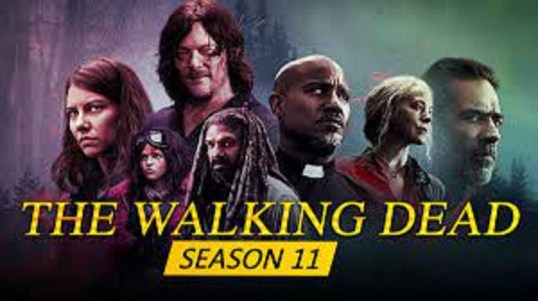
TV Review: The Walking Dead 11.12 “The Lucky Ones” (dir by Tawnia McKiernan)


It’s confession time!

As I’ve mentioned in the past, I was never a regular Walking Dead viewer in the past.  And, after Carl Grimes died, I actually stopped watching the show all together.  It was not until this current season started that I once started to regularly watch The Walking Dead.  So, I have to admit that I had actually forgotten that Hillside and Alexandria were separate locations, with separate leaders and separate governing philosophies.  I guess I just assumed that Hillside was a particularly trashy party of Alexandria.  But, no …. I was wrong!  It turns out that Alexandria, Hillside, and Oceanside are three separate communities.

Go ahead.  Take a moment to laugh at me and then we’ll move on.

Done?

Well, we’re moving on anyways!

This week’s episode found Governor Milton and Lance Hornsby visiting each of the three communities and trying to bring them into the Commonwealth.  Milton offered security and access to better goods.  Alexandria saw that this was a good idea and signed up.  Oceanside, on the other hand, said, “We’ll do whatever Hillside does.”  Well, why don’t you just become a part of Hillside then!?

Not surprisingly, Maggie didn’t want to join up with the Commonwealth.  Maggie was indeed tempted but, when she saw the difference between how the leaders of the Commonwealth lived as opposed to how the community’s workers and soldiers lived, Maggie said no deal.  Or, at least, that’s what Maggie claims happened.  Personally, I think it has more to do with Maggie not wanting to surrender any of her power.  For all of her concerns about the way the Commonwealth treats its citizens, it’s not exactly as if Maggie is running a democracy herself.  After Maggie refused to enter into an alliance with the Commonwealth, a few members of Hillside left the community and, quite frankly, I don’t blame them.  Hillside’s a dump!  Not even Negan is willing to live there.

Anyway, at the end of the episode, we learned that Gov. Milton isn’t as bad as everyone tends to assume.  She was okay with not being able to bring Hillside and Oceanside into the Commonwealth, even saying that she expected that Maggie would ultimately refuse.  Not okay with Maggie’s decision was Lance Hornsby, who not only takes a disturbingly sadistic glee in shooting walkers but who also is apparently obsessed with controlling everyone.  Honestly, I don’t think anyone was really shocked to discover that Lance was not to be trusted. Josh Hamilton hasn’t exactly been giving a subtle performance in the role.  Actually, just the fact that Lance was being played by Josh Hamilton should have been our first clue about not trusting him.

Meanwhile, Ezekiel was operated on and Eugene and Max got to know each other.  Needless to say, Eugene was not happy to discover that Stephanie didn’t actually exist and he was also a bit freaked out to to discover that Max is Mercer’s sister.  By the end of the episode, though, Eugene and Max seemed to be growing close.  Max offered Eugene some advice on his novel.  Eugene admitted that he had destroyed his only copy.  WHY DID YOU DO THAT, EUGENE!?  Eugene is never going to succeed as an author with that attitude.

This episode felt like the calm before the storm.  While I don’t know if we needed to spend as much time on Gov. Milton’s travel as we did, at least the show managed to get to all three communities in one episode as opposed to stretching it out over six episodes, like they used to do back in the Rick Grimes era.  It seems obvious that there’s an invasion coming, it’s just a question of who is going to strike the first blow.

What If Lisa Picked The Oscar Nominees: 2018 Edition


With the Oscar nominations due to be announced tomorrow, now is the time that the Shattered Lens indulges in a little something called, “What if Lisa had all the power.” Listed below are my personal Oscar nominations. Please note that these are not the films that I necessarily think will be nominated. The fact of the matter is that the many of them will not. Instead, these are the films that would be nominated if I was solely responsible for deciding the nominees this year. Winners are starred and listed in bold.

(You’ll also note that I’ve added four categories, all of which I believe the Academy should adopt — Best Voice-Over Performance, Best Casting, Best Stunt Work, and Best Overall Use Of Music In A Film.)

(Click on the links to see my nominations for 2017201620152014201320122011, and 2010!)

Best Picture

Avengers: Infinity War

The Ballad of Buster Scruggs

Blindspotting

*Eighth Grade

The Favourite

Leave No Trace

The Other Side of the Wind

Roma

A Simple Favor

Support the Girls


Best Director

*Bo Burnham for Eighth Grade

The Coen Brothers for The Ballad of Buster Scruggs

Alfonso Cuaron for Roma

Debra Granik for Leave No Trace

Yorgos Lanthimos for The Favourite

Orson Welles for The Other Side of the Wind


Best Actor

John Cho in Searching

Jason Clarke in Chappaquiddick

Bradley Cooper in A Star is Born

Daveed Diggs in Blindspotting

*Ethan Hawke in First Reformed

Joaquin Phoenix in You Were Never Really Here


Best Actress

Yalitza Aparicio in Roma

Elsie Fisher in Eighth Grade

Lady Gaga in A Star is Born

*Regina Hall in Support the Girls

Anna Kendrick in A Simple Favor

Thomason McKenzie in Leave No Trace


Best Supporting Actor

Peter Bogdonavich in The Other Side of the Wind

*Ben Foster in Leave No Trace

Michael B. Jordan in Black Panther

Josh Hamilton in Eighth Grade

Tim Blake Nelson in The Ballad of Buster Scruggs

Michael Palin in The Death of Stalin


Best Supporting Actress

Emily Blunt in A Quiet Place

*Olivia Colman in The Favourite

Zoe Kazan in The Ballad of Buster Scruggs

Blake Lively in A Simple Favor

Emma Stone in The Favourite

Rachel Weisz in The Favourite


Best Voice Over or Motion-Capture Performance

*Josh Brolin in Avengers: Infinity War

Jake Johnson in Spider-Man: Into the Spider-Verse

Holly Hunter in The Incredibles 2

Shamiek Moore in Spider-Man: Into the Spider-Verse

John C. Reilly in Ralph Breaks The Internet

Ben Whishaw in Paddington 2


Best Original Screenplay

Blindspotting

The Death of Stalin

*Eighth Grade

The Favourite

Game Night

Support the Girls


Best Adapted Screenplay

Avengers: Infinity War

The Ballad of Buster Scruggs

If Beale Street Could Talk

Leave No Trace

*A Simple Favor

A Star is Born


Best Animated Feature

Early Man

Have A Nice Day

The Incredibles 2

Isle of Dogs

Ralph Breaks the Internet

*Spider-Man: Into the Spider-Verse


Best Documentary Feature

Avicii: True Stories

Recovery Boys

Shirkers

They’ll Love Me When I’m Dead

*Three Identical Strangers

Won’t You Be My Neighbor?


Best Foreign Language Film

Battle

Gun City

Happy as Lazzaro

Have A Nice Day

The Most Assassinated Woman In The World

*Roma


Best Casting

Blindspotting

Eighth Grade

Mandy

Mid90s

Roma

*Support the Girls


Best Cinematography

Aquaman

Avengers: Infinity Wars

The Ballad of Buster Scruggs

Black Panther

*Mandy

Roma

Best Costume Design

The Ballad of Buster Scruggs

*Black Panther

The Favourite

Lizzie

Mary, Queen of Scots

A Simple Favor


Best Film Editing

Avengers: Infinity Wars

Eighth Grade

Mission Impossible: Fallout

*The Other Side of the Wind

Roma

Searching

Best Makeup and Hair Styling

*The Favourite

Lizzie

Mandy

Mary, Queen of Scots

A Simple Favor

Support the Girls

Best Original Score

Avengers: Infinity War

The Ballad of Buster Scruggs

The Death of Stalin

If Beale Street Could Talk

*Mandy

The Other Side of the Wind

Best Original Song

*“When a Cowboy Trades His Spurs For Wings” from The Ballad of Buster Scruggs

“All the Stars” from Black Panther

“Limitless” from Second Act

“I’ll Never Love Again” from A Star is Born

“Is that Alright” from A Star is Born

“Shallow” from A Star is Born


Best Overall Use of Music

Bohemian Rhapsody

Eighth Grade

Mamma Mia: Here We Go Again

Mid90s

*A Star is Born

Three Identical Strangers


Best Production Design

Avengers: Infinity War

Black Panther

The Commuter

*The Favourite

Mary, Queen of Scots

A Quiet Place

Best Sound Editing

Annihilation

*Avengers: Infinity War

Mission Impossible: Fallout

The Other Side of the Wind

Roma

12 Strong

Best Sound Mixing

Annihilation

Avengers: Infinity War

Mission Impossible: Fallout

The Other Side of the Wind

Roma

*A Star is Born

Best Stuntwork

Avengers: Infinity War

Beirut

Black Panther

*Mission Impossible: Fallout

12 Strong

Upgrade

Best Visual Effects

Annihilation

Ant-Man and the Wasp

Aquaman

*Avengers: Infinity War

Black Panther

First Man

Films Listed By Number of Nominations:

11 Nominations – Avengers: Infinity War

9 Nominations – The Ballad of Buster Scruggs, The Favourite, Roma

8 Nominations – Eighth Grade, A Star is Born

7 Nominations – Black Panther, The Other Side of the Wind

6 Nominations – A Simple Favor

5 Nominations – Leave No Trace, Support the Girls

4 Nominations – Blindspotting, Mandy, Mission Impossible: Fallout

3 Nominations – Annihilation, The Death of Stalin, Mary Queen of Scots, Spider-Man: Into the Spider-Verse

2 Nominations – Aquaman, Have A Nice Day, If Beale Street Could Talk, The Incredibles 2, Lizzie, Mid90s, A Quiet Place, Ralph Breaks the Internet, Searching, Three Identical Strangers, 12 Strong

1 Nomination – Ant-Man and the Wasp, Avicii: True Stories, Battle, Beirut, Bohemian Rhapsody, Chappaquiddick, The Commuter, Early Man, First Man, First Reformed, Game Night, Gun City, Happy as Lazzaro, Isle of Dogs, Mamma Mia 2: Here We Go Again, The Most Assassinated Woman In The World, Paddington 2, Recovery Boys, Second Act, Shirkers, They’ll Love Me When I’m Dead, Upgrade, Won’t You Be My Neighbor?, You Were Never Really Here

Films Listed By Number of Oscars Won:

3 Oscars – Eighth Grade, The Favourite

2 Oscars – Mandy, A Star is Born, Support the Girls

1 Oscar – The Ballad of Buster Scruggs, Black Panther, First Reformed, Leave No Trace, Mission Impossible: Fallout, The Other Side of the Wind, Roma, Spider-Man: Into the Spider-Verse, Three Identical Strangers

As for the real nominations, they’ll be announced on Tuesday morning!

The Detroit Film Critics Return To Eighth Grade!


The Detroit Film Critics announced their picks for the best in 2018 on Monday.  You can check out their nominees here and the winners below!

Best Film Eighth Grade

Best Director Adam McKay, Vice

Best Actress Toni Collette, Hereditary

Best Best Actor Ethan Hawke, First Reformed

Best Supporting Actress Regina King, If Beale Street Could Talk

Best Supporting Actor Josh Hamilton, Eighth Grade

EnsembleVice 

Best Screenplay [TIE] Green Book and Vice

Best Documentary Film Three Identical Strangers

Best Animated Film Spider-Man: Into the Spider-Verse

Best Breakthrough Writer/Director Bo Burnham, Eighth Grade

Best Use of Music A Star is Born

Lisa Marie’s Oscar Predictions for November


Here are this month’s Oscar predictions!

The Oscar picture is finally clearing somewhat.  Star is Born, Roma, and Green Book all seem to be guaranteed nominations but what will join them?

To see how my thinking has evolved over the year, check out my nominations for January, February, March, April, May, June, July, August, September, and October!

Best Picture

Black Panther

Boy Erased

Eighth Grade

The Favourite

First Reformed

Green Book

If Beale Street Could Talk

A Quiet Place

Roma

A Star is Born

Best Director

Bo Burnham for Eighth Grade

Bradley Cooper for A Star is Born

Alfonso Cuaron for Roma

Peter Farrelly for Green Book

Barry Jenkins for If Beale Street Could Talk

Best Actor

Christian Bale in Vice

Bradley Cooper in A Star is Born

Ethan Hawke in First Reformed

Rami Malek in Bohemian Rhapsody

Viggo Mortensen in Green Book

Best Actress

Toni Collette in Hereditary

Olivia Colman in The Favourite

Elsie Fisher in Eighth Grade

Lady Gaga in A Star is Born

Melissa McCarthy in Can You Ever Forgive Me?

Best Supporting Actor

Mahershala Ali in Green Book

Sam Elliott in A Star Is Born

Richard E. Grant in Can You Ever Forgive Me?

Josh Hamilton in Eighth Grade

Michael B. Jordan in Black Panther

Best Supporting Actress

Nicole Kidman in Boy Erased

Regina King in If Beale Street Could Talk

Thomasin McKenzie in Leave No Trace

Emma Stone in The Favourite

Rachel Weisz in The Favourite

The Detroit Film Critics Society Nominates Eighth Grade and Jesse Plemons!


The Detroit Film Critics Society announced their nominees for the best of 2018 today and what can I say other than I absolutely love them?
Seriously, Josh Hamilton and Jesse Plemons for Best Supporting Actor?  How can you not love that?  That said, the DFCS is not one of the more influential critical groups so I wouldn’t put down any money on either Plemons or Hamilton picking up an Oscar nomination just yet.  Still, both of them deserve the consideration and I love the fact that the DFCS is willing to go against the conventional wisdom when it comes to who they nominate.  I mean, really, this is what the critics need to be doing during awards season.  I mean, we all know that A Star is Born and Green Book are going to pick up nominations regardless.  We need the critics to remind the Academy that “hey, some of these guys were pretty good too!”

In fact, if there is a theme that can be found this early in the precursor season, it appears to be that the critics would like to make sure that the Academy doesn’t forget about First Reformed and Eighth Grade.

Here are the DFCS nominees.  Winners will be announced on Monday!

BEST PICTURE

  • A Quiet Place”
  • “Eighth Grade”
  • “First Reformed”
  • “Green Book”
  • “Roma”

BEST DIRECTOR

  • Bo Burnham, “Eighth Grade”
  • Bradley Cooper, “A Star Is Born”
  • Alfonso Cuarón, “Roma”
  • Adam McKay, “Vice”
  • Paul Schrader, “First Reformed”

BEST ACTOR

  • Christian Bale, “Vice”
  • Bradley Cooper, “A Star Is Born”
  • Ethan Hawke, “First Reformed”
  • Rami Malek, “Bohemian Rhapsody”
  • John David Washington, “BlacKkKlansman”

BEST ACTRESS

  • Toni Collette, “Hereditary”
  • Olivia Colman, “The Favourite”
  • Elsie Fisher, “Eighth Grade”
  • Lady Gaga, “A Star Is Born”
  • Melissa McCarthy, “Can You Ever Forgive Me?”

BEST SUPPORTING ACTOR

  • Mahershala Ali, “Green Book”
  • Sam Elliott, “A Star Is Born”
  • Richard E. Grant, “Can You Ever Forgive Me?”
  • Josh Hamilton, “Eighth Grade”
  • Jesse Plemons, “Game Night

BEST SUPPORTING ACTRESS

  • Amy Adams, “Vice”
  • Regina King, “If Beale Street Could Talk”
  • Thomasin McKenzie, “Leave No Trace”
  • Emma Stone, “The Favourite”
  • Rachel Weiss, “The Favourite”

BEST ENSEMBLE

  • “Crazy Rich Asians”
  • “Eighth Grade”
  • “The Favourite”
  • “Roma”
  • “Vice”

BREAKTHROUGH

  • Bo Burnham, Writer/Director (“Eighth Grade”)
  • Rafael Casal and Daveed Diggs, Writers/Actors (“Blindspotting”)
  • Elsie Fisher, Actress (“Eighth Grade”)
  • Lady Gaga, Actress (“A Star Is Born”)
  • Boots Riley, Writer/Director (“Sorry to Bother You”)

BEST SCREENPLAY

  • Bo Burnham, “Eighth Grade”
  • Deborah Davis, Tony McNamara, “The Favourite”
  • Adam McKay, “Vice”
  • Paul Schrader, “First Reformed”
  • Nick Vallelonga, Brian Hayes Currie, Peter Farrelly, “Green Book”

BEST DOCUMENTARY

  • “Free Solo”
  • “RBG”
  • “Three Identical Strangers”
  • “Whitney”
  • “Won’t You Be My Neighbor?”

BEST ANIMATED FEATURE

  • “The Incredibles 2”
  • “Isle of Dogs”
  • “Ralph Breaks the Internet”
  • “Smallfoot”
  • “Spider-Man: Into the Spider-Verse”

BEST USE OF MUSIC

  • “A Star Is Born”
  • “Bohemian Rhapsody”
  • “Green Book”
  • “Mandy”
  • “Mary Poppins Returns”


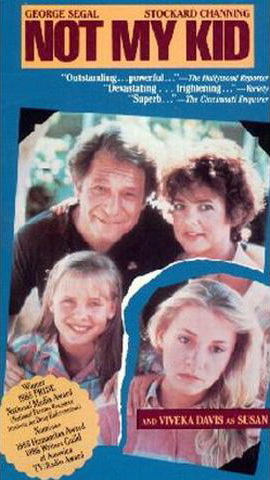
Back to School Part II #18: Not My Kid (dir by Michael Tuchner)


Not_my_kid

Not My Kid, a made-for-television from 1985, opens with 15 year-old Susan Bower (Viveka Davis) in a car with her friends.  They’re drunk.  They’re stoned.  They’re laughing.  And soon, they’re screaming as the driver loses control and the car ends up getting overturned!  (I’ve had that happen before.  It wasn’t fun but I survived with only a few cuts and bruises.)  Susan isn’t seriously hurt but, at the hospital, it’s discovered that she has alcohol and drugs in her bloodstream.

“NOT MY KID!” her father, surgeon Frank Bower (George Segal), declares.

“NOT MY KID!” her mother, Helen Bower (Stockard Channing, totally wasted in a thinly written role), agrees.

“Totally your kid!” her younger sister, Kelly (Christa Denton), says before then revealing where Susan hides her drugs.  This leads to Kelly getting beaten up by Susan and her drug addict boyfriend, Ricky (Tate Fuckin’ Donavon, decades before playing a hostage in Argo.).

Anyway, neither Frank nor Helen want to admit that Susan has a drug problem so instead, they go to see a smug family counselor who tells them that they are both being too hard on their daughter and that they need to just let Susan be Susan.  That sounds like a good (and easy) plan but then Susan runs away and disappears for two days.  After she’s finally found, stoned and hiding out in the family’s boat, her parents finally decide to send her to rehab.

The rehab is run by Dr. Royce.  Dr. Royce is played by Andrew Robinson and it took me a while to recognize him as being the same actor who played the Scorpio Killer in Dirty Harry.  Perhaps that explains why Dr. Royce came across as being such a creepy character.  As I watched this movie, I kept waiting for the big reveal where Dr. Royce would turn out to be a murderer or something.  That never happened, of course.  In the world of Not My Kid, the harsh and confrontational Dr. Royce is the only thing keeping the entire teenage population for shooting up heroin.

The majority of the film takes place at the rehab and it gets annoying pretty quickly.  This is one of those places where everything is done as a group activity.  Whenever someone says something, everyone in the group replies with, “We love you, so-and-so.”  When Susan doesn’t act properly ashamed of herself, the group gangs up on her.  “You’re a phony!” someone says.  “You’re full of crap!” another person adds.  “We love you, Susan,” the group chants.

AGCK!  Seriously, the rehab scenes totally freaked me out because it came across less like therapy and more like brainwashing.  I spent the entire movie waiting for Susan to escape and when she did, I was happy for her.  She may have been a self-destructive drug addict but at least wasn’t a mindless zombie like everyone else in the movie!  But then she ended up getting caught by her father and taken back to the rehab.

Meanwhile, her parents are going through therapy as well.  Again, it’s all group therapy.  When Frank tries to talk about how Susan’s behavior makes him feel, someone says, “You’re a phony!’  Another person adds, “You’re full of crap!”  And the group chants, “We love you, Frank.”  Okay, to be honest, I’m taking some dramatic license with the dialogue here but hopefully, you get the general idea.

I mean, seriously — I understand that I was supposed to be like, “Yay rehab!” while watching the movie but the rehab came across more like some sort of creepy cult.  It reminded me of both a Canadian film called, Ticket To Heaven and a Texas film called Split Image.  As I watched Not My Kid, I kept waiting for James Woods to show up as a cult deprogrammer.

Anyway, don’t worry.  Everything turns out well in the end.  This was a made-for-TV movie, after all.  Not My Kid is way too heavy-handed for its own good and it lacks a certain self-awareness.  On a more positive note, George Segal does a good job in the role of Frank.

You can watch Not My Kid below!