Review: Ninja Assassin (dir. by James McTeigue)


“This is not my family. You are not my father. And the breath I take after I kill you will be the first breath of my life.” — Raizo

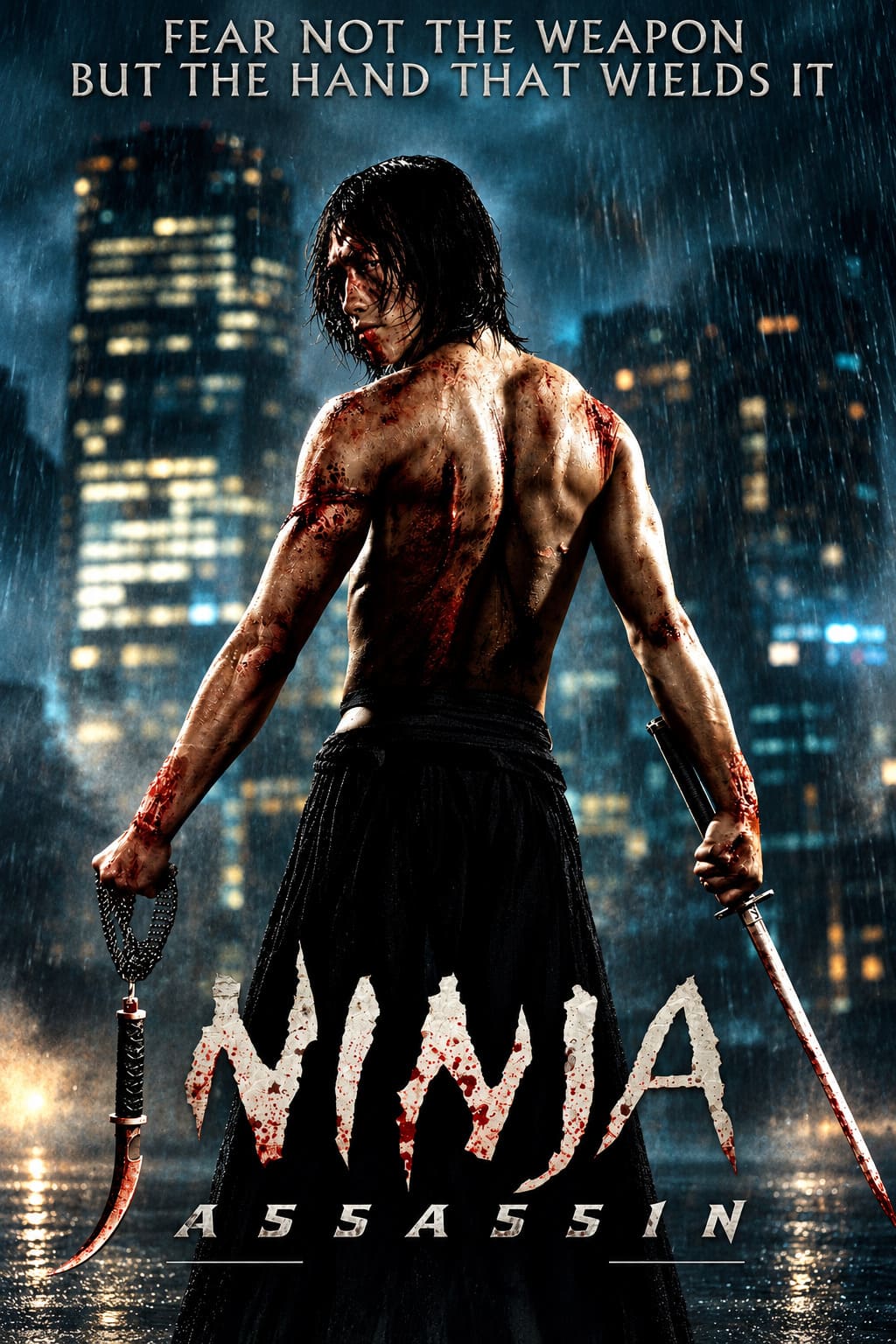
Watching Ninja Assassin feels a little like stumbling onto a late-night cable movie that has been given a much bigger budget, a larger blood supply, and zero interest in restraint. It is a blood-soaked, over-the-top revenge movie about a superhuman killer carving his way through an army of shadowy cult ninjas, and it wants blades, bodies, darkness, shredded limbs, dramatic training flashbacks, and a hero so physically intimidating that the camera occasionally seems to pause just to admire how absurdly ripped he is. It is loud, grimy, excessively violent, and frequently ridiculous. It is also, depending on your tolerance for late-2000s CGI carnage and ultra-serious ninja mythology, a pretty entertaining slice of trashy action cinema.

The film stars Korean pop superstar Rain as Raizo, a prodigiously gifted killer raised by the Ozunu Clan, a secret organization that turns stolen children into elite assassins. Raizo is trained from childhood to erase fear, reject compassion, and become basically invisible in the darkness. The clan’s motto might as well be “trauma builds character,” because every flashback involves some new level of horrifying abuse: children fighting one another, training through severe pain, learning to tolerate wounds, and being punished for even the smallest sign of vulnerability. It is all delivered with the straight-faced intensity of a dark comic book, which is probably the best way to approach the movie as a whole.

The present-day story follows Raizo after he breaks from the Ozunu Clan and goes rogue. His target is Lord Ozunu, played by genuine ninja-film legend Sho Kosugi, who runs the entire organization like a supernatural military cult. Raizo’s path crosses with Mika Coretti, played by Naomie Harris, a Europol researcher in Berlin who discovers evidence that a string of political assassinations may be connected to an apparently mythical network of ninja killers. Naturally, nobody believes her, because this is a movie where the phrase “ninja assassins are real” is treated with the same bureaucratic skepticism as an expense-report discrepancy. Once Mika gets too close to the truth, the Ozunu Clan sends people to remove her from the equation, and Raizo enters the picture as both protector and revenge machine.

The plot is not really the point, but it does enough to move the movie from one stabbing to the next. Ninja Assassin has the basic shape of a revenge story, with Raizo torn between the brutal identity he was given and the humanity he is trying to reclaim. The flashbacks fill in his childhood bond with Kiriko, another member of the clan who pays the price for refusing to fully submit to Lord Ozunu’s cruelty. That loss becomes the emotional engine for Raizo’s rebellion, and while the movie does not exactly dig deep into the character’s psychology, it gives Rain a clear enough motivation to work with. He is not just killing bad guys because the script needs more bodies on the floor. He is trying to destroy the institution that made him into a weapon.

Rain is honestly one of the movie’s biggest strengths. He does not have to carry the film through nuanced dialogue or complicated dramatic scenes, and that is probably for the best, because the screenplay does not give him much room for that kind of performance. But he has undeniable screen presence. He looks the part, moves like someone who trained brutally for it, and sells the physical exhaustion of a man who has spent his whole life getting cut, beaten, stabbed, and forced to keep moving anyway. The movie’s action depends on Raizo feeling almost superhuman without becoming completely weightless, and Rain finds that balance most of the time. He is less a conventional action hero than a human weapon who has finally decided to aim himself at the people who built him.

Sho Kosugi is also a welcome presence as Lord Ozunu. He does not get a huge amount of screen time, but he has the kind of weathered, stern authority that makes the role work. Lord Ozunu is not a layered villain; he is an evil master who talks in cold pronouncements about weakness and loyalty, tortures his students, and commands legions of black-clad killers. Still, Kosugi makes him feel more substantial than the usual disposable martial-arts-movie villain. His involvement also gives Ninja Assassin a connection to the ninja-cinema boom of the 1980s, when Kosugi was one of the genre’s biggest names. The film feels like it is trying to combine that old-school ninja-movie sensibility with the slick, digital, hyperviolent style that came out of the Matrix era.

That connection makes sense given the people behind the movie. McTeigue had previously directed V for Vendetta and worked closely with the Wachowskis, who produced Ninja Assassin alongside Joel Silver. You can feel that late-1990s and 2000s action aesthetic all over it: cold blue lighting, rain-slick streets, rapid editing, wire-assisted movement, slow-motion impacts, and CGI blood that erupts in fountains whenever a blade touches skin. The action is often designed less around realism than around visual impact. A ninja does not just stab somebody; he slices through them with enough force to send gallons of digital blood spraying across the frame. Arms come off. Heads come off. Bodies are carved up so thoroughly that the movie sometimes feels like a slasher picture with martial-arts choreography.

When Ninja Assassin is working, that excess is part of the fun. The early sequence in a Bangkok nightclub is a strong example. Gangsters laugh at the idea that ninjas exist, and then the lights go out. Bodies start falling apart in the darkness while unseen attackers move through the room. It is silly, but it is exactly the kind of silly the movie needs to be. The clan’s assassins are framed less like ordinary people than horror-movie monsters: they emerge from shadows, disappear into smoke, and leave mutilated corpses behind. The best moments make ninja combat feel supernatural and frightening rather than simply athletic.

The problem is that the movie sometimes sabotages its own action with its visual style. It is extremely dark, often to the point that it becomes hard to tell who is hitting whom. The rapid editing can also make fights feel more like a blur of limbs, blades, and blood splatter than a clearly staged exchange. There are sequences where the choreography seems like it could be impressive if the camera would just pull back and let the audience see it. Instead, McTeigue often keeps everything moving so fast that the action loses some of its physical clarity. This is particularly frustrating because the film clearly put real effort into Rain’s training and the stunt work.

The CGI is another mixed bag. At times, the exaggerated gore has a knowingly cartoonish quality that fits the movie’s pulpy tone. At other times, it looks like a video-game cutscene from the late 2000s, especially when blood splashes directly toward the camera. The film wants to be nasty and visceral, but the artificial effects can create distance rather than impact. You are rarely shocked by the violence because it is so obviously constructed as spectacle. Then again, nobody should go into a film called Ninja Assassin expecting the sober realism of The Bourne Identity. This is a movie where shadow ninjas attack police officers with chains, blades, and explosive acrobatics. Subtlety was never invited.

Naomie Harris does what she can with Mika, though the character is written mostly as the audience’s entry point into the ninja conspiracy. She gets some decent moments of determination and disbelief, but the film does not give her nearly as much agency as it should. Once Raizo arrives, Mika increasingly becomes someone who needs to be rescued, protected, and dragged through the story’s bloodier sections. Ben Miles is fine as her superior, Ryan Maslow, but the Europol material is the least exciting part of the film. Whenever it cuts away from Raizo’s training, his revenge, or another batch of black-clad assassins, the energy drops.

Still, there is something oddly admirable about how committed Ninja Assassin is to its own trashy premise. It does not pretend to be a prestige thriller, a grounded espionage drama, or a sophisticated martial-arts epic. It is a hard-R revenge movie built around a simple promise: Rain versus an army of ninjas. On that level, it delivers enough mayhem to satisfy viewers who enjoy excessively violent action movies and do not need the script to be smarter than the title.

Ninja Assassin is not a hidden masterpiece, and it has plenty of flaws: thin characters, clunky dialogue, uneven CGI, murky camerawork, and a plot that exists mainly to connect the fight scenes. But it has a strong lead, a memorable villain, a few genuinely cool action-horror moments, and an unapologetically ridiculous energy. It is best enjoyed as a guilty-pleasure throwback to the era when Hollywood action movies believed every problem could be solved with a black mask, a sword, and several gallons of CGI blood.
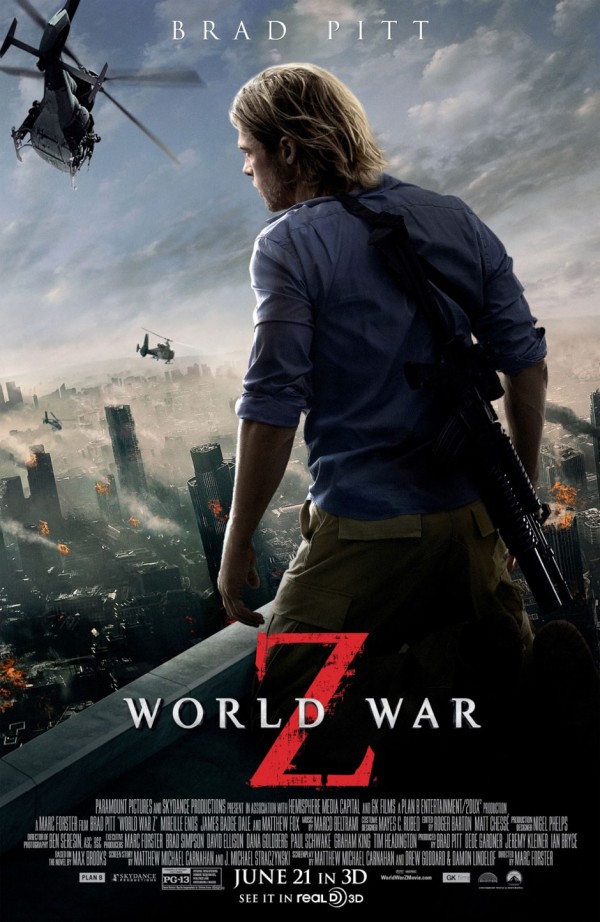
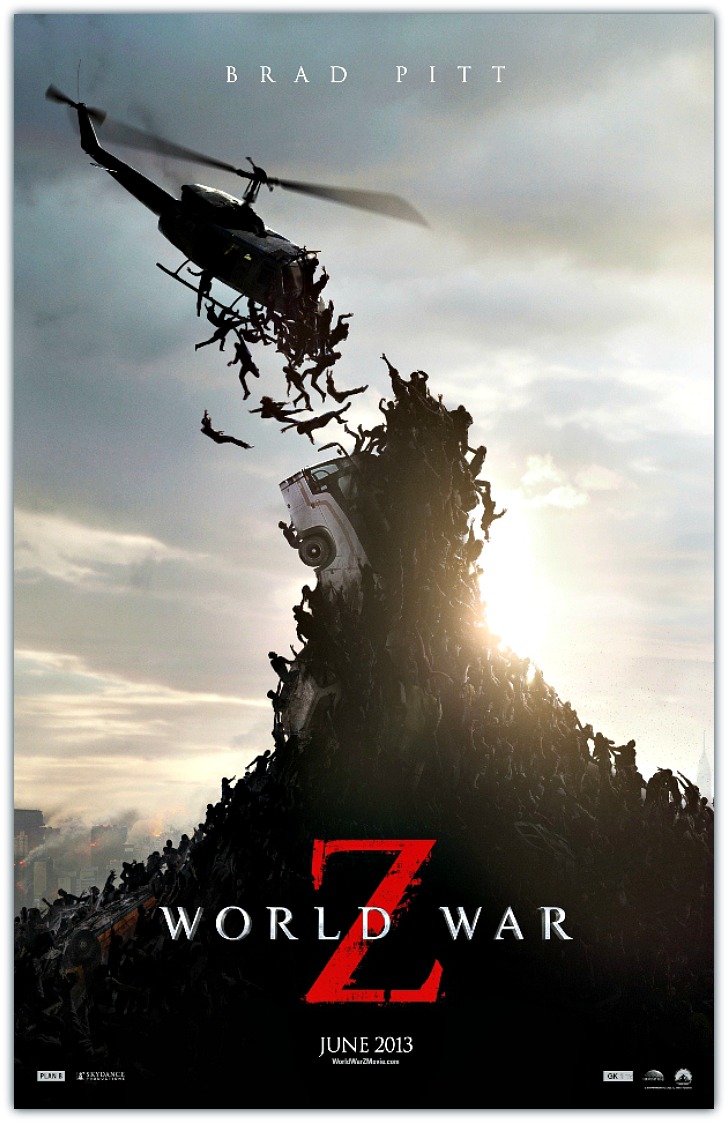
Trash Film Guru Vs. The Summer Blockbusters : “World War Z”


World-War-Z-2013-Movie-Poster3-600x922


Okay, I get it — fans of Max Brooks’ best-selling “zombie apocalypse” novel World War Z are pissed off about director Marc (Monster’s Ball, Quantum Of Solace) Forster’s big-budget, big-screen “adaptation” of it because the finished product bears essentially no recognizable similarity to its printed-page predecessor. Heck, some are even going so far as to say that they actually like the film, they just feel that it should be called something else.

On the other hand, it seems that more or less everyone who hasn’t read the book loves the movie.

Much as I’d enjoy picking a side in this, the latest great “genre geek debate,”  I honestly can’t, simply because I don’t really fit into either of the “warring” camps, seeing as how I neither read the novel nor loved the film with the kind of awestruck wonder its most fervent partisans seem to be brimming over with.

Oh, sure, it was pleasantly entertaining enough — United Nations bad-ass-for-hire Gerry Lane (Brad Pitt — who, let’s face it, is probably contractually obligated to always play somebody at least a little bit cooler than the Average Joe) races against the clock, and around the globe, to keep his wife, Karin (Mireille Enos of TV’s The Killing) and their kids safe from a massive viral plague that essentially mashes together elements of the scenarios George Romero laid out in both The Crazies and his seminal “Living Dead” flicks, only with a much larger budget that enables the filmmakers to give us a more international perspective on the goings-on. Governments are strained to breaking point and/or collapse entirely, WHO and the world’s various military forces struggle to get a handle on things, no area is left unaffected, no one is safe —you get the picture.

The script went through four sets of hands — Babylon 5 creator and frequent comics scribe J. Michael Straczynski gave way to former Lost head honcho and occasional comics scribe Damon Lindelof who in turn gave way to Drew Goddard who in turn gave way to Matthew Michael Carnahan — and, as you can imagine, is something of a mess as a result. Fortunately, it never slows down long enough for you to fully realize that fact, and instead keeps you on the edge of your seat with its PG-13-level action and semi-violence (notice I don’t say anything about gore — sorry, die-hard zombie-holics) from the time it clocks in to the time it knocks off and heads for the bar around the corner.

The end result is something of a hustle — it’ll slowly dawn on you as you make your way home from the theater that what you just saw really wasn’t anything too special, but what the hell — you were too busy having fun to notice.

And that was probably the whole point, really. I don’t think Forster and his literal army of screenwriters set out to reinvent the wheel here or overturn the sacred “Romero Rules” permanently. They were just the guys brought in to make something of a damn popular book that Paramount bid a fortune to obtain the rights to and if, at the end of the day, all that survived of World War Z as most folks knew it was the title, well — that’s pretty much all they were paying for, anyway. Beyond that the only edicts from the studio “suits” were probably to land a huge star, load up on the CGI, and deliver a product that the average summertime movie-goer would find to be a reasonable enough investment of ten bucks and (roughly) two hours.

Judging it on that scorecard, you’d have to say they can all pat themselves on the back, say “mission accomplished,” and go home. Those hoping for a movie that would revolutionize the genre on celluloid the same way the book did in print are bound to be left feeling a bit disappointed, as is anyone who bothers to actually think about what they’re seeing while they’re seeing it, but for anyone and everyone else, hey — it’s a decent enough little thrill ride. Grab some popcorn, sit back, and please don’t struggle against your inner 12-year-old.

Now, as to the other raging debate splitting the internet about whether or not this is actually a horror movie or just a “thriller” with some genre trappings —

Forget it. I’m sooooo not going there. One nerd-controversy per review is my limit.

Review: World War Z (dir. by Marc Forster)


WorldWarZ

I’ll get this out of the way and just say it: World War Z the film pretty much has nothing in common with the acclaimed novel of the same name by author Max Brooks (reviewed almost at the very beginning of the site). Ok, now that we have that out of the way it’s time to get to the important part and that’s how did the film version turn out on it’s own merits.

World War Z was a film that took the long, winding and rough road to finally get to the big-screen. Whether it was the five different writers brought in to work on the script (J. Michael Straczynski of Babylon 5 fame came onboard first with Christopher McQuarrie coming unofficially to help tighten a few scenes in the end) to the massive changes made to the original source material that was bound to anger the fans of the novel, the film by Marc Forster had an uphill climb to accomplish even before the final product even came to market.

I was as surprised as man others were that the finished product was better than I had anticipated. Some had very low expectations about World War Z coming in due to the rumors and news reports coming in about the problems during production, but it doesn’t change the fact that the unmitigated disaster predicted by every film blogger and critic beforehand never came to fruition.

World War Z might not have been what fans of the novel had wanted it to be, but when seen on it’s own merit the film was both exciting and tension-filled despite some flaws in the final script and use of well-worn horror tropes.

The film begins with a visual montage interspersing scenes of nature (particularly the swarming, hive-like behavior of certain animals like birds, fish, and insects), alarmist news media reporting and the mindless celebrity-driven entertainment media that’s so big around the world. From there we’re introduced to the main protagonist of the film in one Gerry Lane (played by Brad Pitt) and his family. We see that the Lane family definitely love and care for each other with his wife Karin (Mireille Enos in the supportive wife role) and their two young daughters, Rachel and Constance. The film could easily have spent a lot of time establishing this family and their relationship towards each other, but we move towards the film’s first major sequence pretty much right after the opening. It’s this choice to not linger on the characters too long that becomes both a strength and a weakness to the film’s narrative throughout.

WorldWarZPhilly

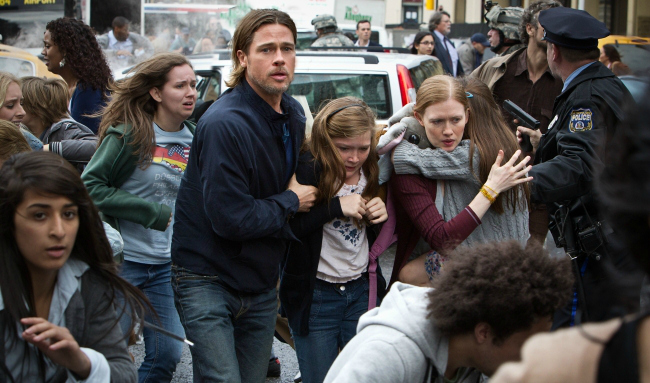
World War Z finally shows why it’s not your typical zombie film with it’s first major sequence in the center of downtown Philadelphia as Gerry and his family sees themselves in bumper-to-bumper traffic. As they wait there are some subtle hints that something might just be somewhat awry ahead of them as we see more and more police racing towards some sort of emergency ahead of the family and more and more helicopters flying overhead. There’s a brief lull in the scene before all hell breaks loose and the film’s zombie apocalypse aspect goes from 0 straight to 11 in a split second.

It’s this sequence of all-encompassing chaos overtaking a major metropolitan city seen both on the ground through the eyes of Gerry Lane and then on flying overhead wide shots of the city that gives World War Z it’s epic scope that other zombie films (both great and awful) could never truly capture. It’s also in this opening action sequence that we find the film’s unique take on the tried-and-true zombie. While not the slow, shambling kind that was described in the novel, these fast-movers (owes a lot more on the Rage-infected from 28 Days Later) bring something new to the zomgie genre table by acting like a cross between a swarm of birds or insects with the rapidly infectious nature of a virus.

These zombies do not stop to have a meal of it’s victims once they’ve bitten one but instead rapidly moves onto the next healthy human in order to spread the contagion it carries. We even get an idea of how quickly a bitten victim dies and then turns into one of “Zekes” as a soldier has ended up nicknaming them. It’s this new wrinkle in the zombie canon that adds to the film’s apocalyptic nature as we can see just how the speed of the infection and the swarm-like behavior of the zombies could easily take down the emergency services of not just a city and state but of entire nations.

WorldWarZJerusalem

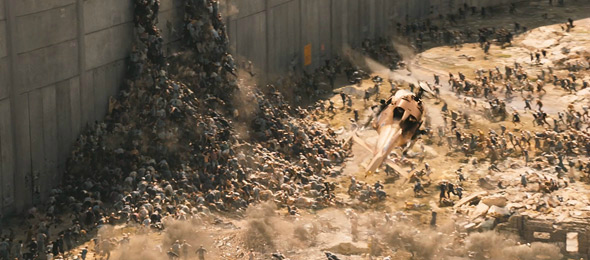
World War Z works best when it doesn’t linger too long between action sequences. Trying to inject some of the themes and ideas that made the novel such a joy to read only comes off as an uncomfortable attempt to try and placate fans of the novel. When we get scenes like Philadelphia in settings like Jerusalem and, in smaller scales but no less tense, like in South Korea and on a plane, the film works as a nice piece of summer action fare. This works in the first two thirds of the film but a sudden shift in the final third in Cardiff, Wales could be too jarring of a tonal shift in storytelling for some.

While the change from epic and apocalyptic to intimate and contained in the final third was such a sudden change this sequence works, but also shows just how bad the original final third of the film was to make this sudden change. It proves to be somewhat anticlimactic when compared to the epic nature of the first two-thirds of the film. We get a final third that’s more your traditional horror film. In fact, one could easily see World War Z as two different films vying for control and, in the end, the two halves having to try to co-exist and make sense.

World War Z doesn’t bring much of the sort of societal commentaries and themes that we get from the very best of zombie stories, but it does bring the sort of action that we rarely get from zombie films. The film actually doesn’t come off as your traditional zombie film, but more like a disaster story that just happened to have zombies as the root cause instead of solar flares, sudden ice age or alien invasion.

So, while World War Z only shares the title with the source novel it was adapting and pretty much not much else, the film wasn’t the unmitigated disaster that had been predicted for months leading up to it’s release. It’s a fun, rollercoaster ride of film that actually manages to leave an audience wanting to know more instead of being bombarded with so much action that one becomes desensitized and bored by it. There’s no question that a better film, probably even a great one, lurks behind the fun mess that’s the World War Z we’ve received, but on it’s own the film more than delivers on the promise that most films during the summer fails to achieve and that’s to entertain.

Review: Thor (dir. by Kenneth Branagh)


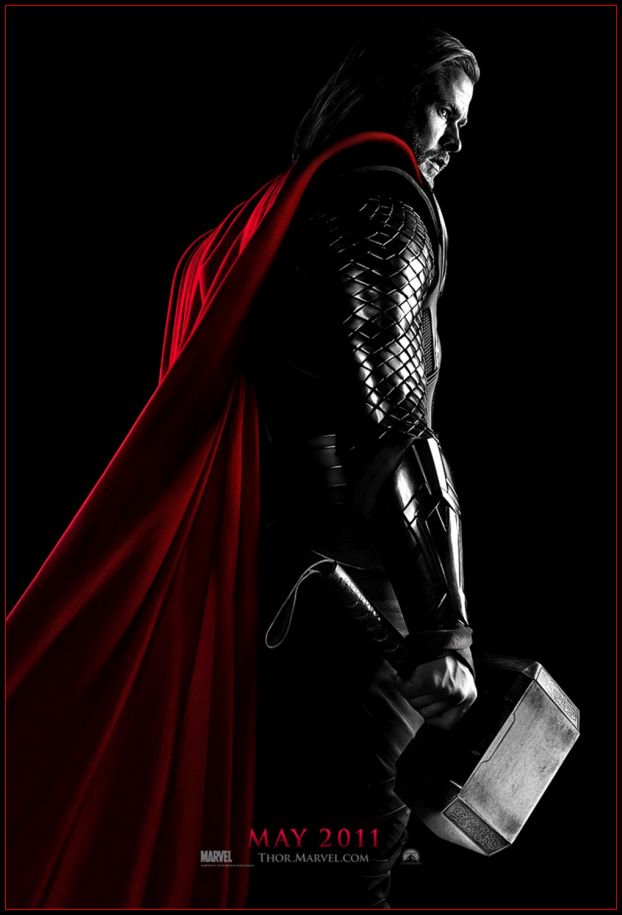
Marvel Comics has had a much better success in bringing their 2nd-tier characters over onto the big-screen than DC Comics and they’ve made the risky decision to tie-in every film they make into one shared universe. Comic book fans have begun to call this the Marvel Film Universe since it contains the same characters and backgrounds as those of their comic book counterparts but also with enough changes to make them stand-out on their own. They’ve already begun this with the first two Iron Man films and a recent reboot of the Incredible Hulk. With the X-Men, Spider-Man, Daredevil and Fantastic Four film rights still under the control of other film studios it left Marvel (now Disney) to use other characters in their control to fill out the rest of this shared universe. The next one to get their turn on the bigscreen is the live-action adaptation of Marvel’s Asgardian God of Thunder. The studios picked British filmmaker Kenneth Branagh to handle this adaptation and his background in bringing Shakespeare to the big-screen has made Thor a flwed but very entertaining superhero film.

To start off, it has to be said that Thor was always going to be the most difficult of all the characters that will make up The Avengers film to bring to the bigscreen. While all these Marvel films do have their fantastic elements due to each character’s superhero nature it was even more fantastic with the character of Thor. This character is in effect a being who has been worshipped by humans in the past as one of their deities. God-like characters have always been tough to make human and relatable in stories and film. It’s a testament to Branagh’s handle of the Asgard characters such as Thor, Odin and Loki that we don’t end up with just all-powerful beings, but individuals whose impulses and motivations definitely are human. It’s this dynamic between Thor, his father Odin and his brother Loki which drives the Shakespearean angle of the film’s storyline. It’s where Branagh’s history of making Shakespeare accessible to the general film audience that makes their story easy to follow and understand.

The film actually begins with the human characters of Dr. Jane Foster (played by Natalie Portman) and her colleagues (Stellan Skarsgard and Kat Dennings)  driving around in the New Mexico desert at night looking for atmospheric disturbances which should validate Foster’s theories on the Einstein-Rosen Bridge aka wormholes. What they end up running to instead is Thor himself arriving on Earth (Midgard in Asgardian terms) to begin his banishment from his homeworld. Yes, I say homeworld as the film has turned one of the more difficult aspects of Thor’s background into something that makes sense for the audience not steeped and learned from decades of Thor comic books. Thor’s home of Asgard is just one of nine worlds around the galaxy of which Earth is one.

It’s right after this scene that we go back to what started Thor’s banishment. The film does a great job explaining the role the Asgard’s played in Earth’s past history and the consequences of their war against the Frost Giants of the world of Jotunheim (one of the nine worlds). It’s through the narration by Odin himself (Anthony Hopkins) that we learn of the origins of the Gods and myths of Norse culture. This intro scene also shows Odin showing his two young sons in Thor and Loki the relic he had taken to end the wars between Asgard and the Jotunheim. For an origin sequence it was able to set up the rules of this fantastical world of Asgard and it’s Nine Realms. It’s the sequence right after which would lead to Thor’s banishment from Asgard and the stripping of his all-powerful hammer, Mjolnir, and his powers.

For some, and I would have to agree, this sequence which takes Thor, his brother Loki, childhood friends Sif and Warriors Three to the icy world of Jotunheim made up the best action setpiece for the film. The battle which begins between Thor’s forces and those of King Lauhey (Colm Feore under some very elaborate make-up effects) of the Frost Giants. This scene shares some similar qualities with an earlier action setpiece in the first Iron Man film in that it surpasses all other setpieces which would occur later in their respective films. This is not to say that the other action scenes were boring or just simple fare. They were exhilirating and full of energy, but that very first one in the beginning just had even more energy and action that it might’ve been better saved for the climax of the film.

Once the banishment occurs we finally catch up to the film’s first scene and the film begins to go back and forth between Asgard and Earth. With the former we see the machiavellian side of Loki finally assert itself. While Loki’s character is never truly shown to be evil his mischievious streak does show to have a cruel side to it. The bombshell of a news from Odin about his true origins was a nice touch, but it doesn’t lead to the sort of evil character turn we’re used to. In fact, I would say that Loki’s character (played with Iago-like relish by Tom Hiddleston) ends up becoming like the son who does the wrong things for the right reasons. He’s a nice contrast to the more open-faced Thor who does what he says instead of dancing around the subject even to the detriment of his standing with his father.

The scenes on Earth itself is where the comedic aspect of the film comes in. Most of the comedy comes at the expense of Thor’s “fish out of water” reaction to the new world around him. It’s helped much by some great comedic timing by Jane’s assistant Darcy (Kat Dennings who steals the film from Portman whenever they’re on together). It is also the time on Earth where some of the flaws in the film really become apparent. First and foremost would be Portman’s Jane Foster character who seem to be so uneven. She goes from brilliant astrophysicist one moment then giggling schoolgirl the next whenever she’s in close proximity to Thor. While Portman and Hemsworth do make quite the radioactively beautiful couple there’s a sense of untapped chemistry between the two that might have been left on the editing floor. It’s a shame really since so much could’ve been done with the Foster character to really give reasons to why Thor ends up valuing the lives of said mortals to earn his God of Thunder status once again.

Thor really does entertain despite some character and storytelling (really most of it on the Earth side of things) flaws which could’ve sunk the film right from the start. I believe that it’s director Branagh’s handling of the Shakespearean tragedy on the Asgard side of the film that holds the film together. This is one reason and the other being a star-turning turn by Chris Hemsworth as Thor himself. His performance goes from cocky, brash young man on the cusp of leadership to lost, confused and rudderless once banished then back again to a maturing prodigal son who finally learns the lessons his father has been trying to teach him. It would interesting to see Hemsworth’s Thor truly interact with Downey’s Tony Stark and Chris Evans’ Steve Rogers when The Avengers comes out in 2012.

The riskiest part of Marvel’s attempt to create their Marvel Cinematic Universe succeeds where most seem to think it will fail. It’s not as strong an origin film as Favreau’s first Iron Man, but it does add a sense of wonder that film could never grasp through two films. Even the controversial casting choices to put non-white actors to play Asgard roles (Tadanobu Asano as Hogun and Idris Elba as Heimdall) comes off well that the audience shouldn’t even wonder why a black and Asian person were playing characters written originally as white.

From the look of things there’s no official word whether there will be a second Thor film, but I wouldn’t be surprised if there was no matter how the film does boxoffice-wise. There’s just too much great stories to tell about Thor, Asgard and the rest of the Asgard Nine Realms now that the foundation has been laid down with this first film. I do hope that Branagh returns for those sequels if they do happen. One thing which Branagh has proven was his handling of action sequences. They weren’t amazing, but they were handled with enough skill that I believe a second time around we’d get even better action from a director known more for serious dramatic films.

A final thing to mention would be the Easter Egg final scene which occurs once the end credits finish their run at the end of the film. For those who stayed to see this scene it should be a nice treat for Marvel and comic book fans. It shows a certain artifact that should tie Thor to the upcoming Captain America film later this summer. All I can say for those who didn’t stay to see it and knows their Marvel trivia are two words: Cosmic and cube.

PS: An Avenger member makes a cameo appearance halfway in the film that doesn’t look tacked on despite what some of the more “glass half-empty” film bloggers on the net would make you think…Also, it’s safe to forgo seeing Thor in 3D. It’s not a bad post-conversion but it doesn’t really add to the film. See it in 2D to save yourself a few bucks on the ticket price.