To Boldly Go Where No Man Has Gone Before: Re-Watching The Star Trek Films


59 years ago today, the first episode of Star Trek aired in America.

There’s been a lot of different Star Trek shows and crews over the decades.  I have to admit that I’ve always preferred the Original Series, with Kirk sleeping with every alien he met, McCoy and Spock bickering about logic, and Scotty warning that the engines can’t take much more.  The Next Generation was strong as well, especially in the later seasons.  The subsequent series have been hit-and-miss for me.

I was born long after the Original Series went off the air so, like a lot of people, my real introduction to Star Trek came through watching the films.  This weekend, I sat down and watched all fourteen of the Star Trek films in order, from The Motion Picture to Section 31.  Here are my thoughts.

Star Trek: The Motion Picture (1979, directed by Robert Wise)

In the first Star Trek film, Voyager returns to Earth, now known as V’ger.  James T. Kirk (William Shatner) returns to the Enterprise with his old crew and takes command from Decker (Stephen Collins).  Spock (Leonard Nimoy) returns from Vulcan is not happy about it.

Directed by Robert Wise, the first Star Trek film feels out-of-place amongst the films that followed it.  It’s long and slowly paced and it doesn’t have the sense of humor that runs through the best of the films featuring the original cast.  The film favors Kirk and Spock, with the rest of the original cast being largely used as bit players.  Even the costumes are different from the uniforms worn in the later films, making Star Trek: The Motion Picture feel like an entry from an alternate universe.

Despite mixed review, Star Trek: The Motion Picture made the most money of any of the pre-reboot films at the box office.  Because the film itself was so expensive, it was still judged to be a box office disappointment.  The Star Trek films would continue but in a new direction.

Star Trek II: The Wrath of Khan (1982, directed by Nicholas Meyer)

Featuring a character-driven script, exciting action, the best villain in the history of the franchise, and an ending that will bring tears to the eyes of the most cynical viewer, The Wrath of Khan is the film that set the standard for the Star Trek films that would follow.

Ricardo Montalban, recreating a character that he originally played in the television series, is a compelling villain as the vengeance-driven Khan.  Montalban and William Shatner make for perfect rivals, two sides of the same coin.  At the same time, the other members of the original cast all get their moments to shine, especially Walter Koenig as Chekhov.  Kirstie Alley is the sexist Vulcan to ever appear in the franchise and even the revelation that Kirk has a son is handled effectively.  Kirstie Alley, Bibi Besch, and Merritt Butrick all fit in with the original crew.

But the thing everyone remembers about The Wrath of Khan is the death of Spock.  Even though the movie features plenty of hints that Spock will return (including his command of “Remember” to McCoy), it’s impossible not to get emotional when Spock sacrifices himself for the crew.  “I have always been your friend.”  To quote George Costanza, that was hell of a thing when Spock died.  In that scene, Leonard Nimoy shows that he was the (logical) heart of the franchise.  Just as Spock brought out the best in the rest of the crew, Nimoy brought out the best in his co-stars.  Shatner was never better than when he was mourning Spock.

Star Trek III: The Search For Spock (1984, directed by Leonard Nimoy)

Spock’s back!  It’s not a surprise.  I think everyone knew, at the end of Wrath of Khan, that the Genesis Project would bring back Spock.  Star Trek III isn’t bad.  Christopher Lloyd reminds us of how brutal the Klingons were before their Next Generation makeover.  The self-destruction of the Enterprise is a powerful moment.  I just wish that a film about Spock being given a new life hadn’t featured so much death.  Both the revelation that David Marcus tampered with the Genesis Project and his subsequent death feel like missteps.  Robin Curtis takes over the role of Saavik and Kirstie Alley is very much missed.  DeForest Kelley playing McCoy possessed by Spock was, for me, the highlight of the film.

Star Trek IV: The Voyage Home (1986, directed by Leonard Nimoy)

Returning home after rescuing Spock from the Genesis Planet, the Enterprise crew is instead sent back into the past so that they can bring two whales into the future.  The Voyage Home might not be the best Star Trek film (that honor belongs to Wrath of Khan) but it is the most likable and the most entertaining.  Every member of the cast gets something to do in 20th Century San Francisco.  The film is full of classic moments, from Chekhov looking for the “nuclear wessels” to Scotty trying to speak to the computer.  The moment with the punk on the bus is a crowd-pleaser.  I always laugh at Spock’s “One damn minute, Admiral.”  After the violence in The Search for Spock, The Voyage Home‘s humor, gentle sincerity, and emphasis on the efforts of the entire ensemble is a welcome development.

Star Trek V: The Final Frontier (1989, directed by William Shatner)

Leonard Nimoy got his chance to shine as the director of the previous two Star Trek films so William Shatner was allowed to direct The Final Frontier.  The Enterprise crew is brainwashed by a religious fanatic (Laurence Luckinbill) who is also, improbably, Spock’s brother.  Only Kirk is able to resist and confront the entity claiming to be God.  “What does God need with a starship!?”  Kirk demands.  It’s such an obvious question that I can’t believe the entity didn’t already have an answer worked out.

The Final Frontier gets no respect and it was probably doomed as soon as Shatner was announced as director.  Shatner also developed the story and it’s probably not surprising that the main theme is that Kirk was the only person on the Enterprise strong enough to not be brainwashed by the film’s fake God.  Laurence Luckinbill gave a good performance as Sybok but this film really does feel like an unfortunate episode of the original television series.

Star Trek VI: The Undiscovered Country (1991, directed by Nicholas Meyer)

Star Trek VI featured the final appearance of the Original Series cast as a group and they get a send-off worthy of their legacy.  Having been previously established as the Federation’s greatest enemies, the Klingons finally pursue peace.  Just as only Nixon could go to China, only Kirk and the original Enterprise crew can go to the Klingons.  This movie is what Star Trek was all about, with enough world-building and continuity for the hardcore fans and a story that was interesting enough to hold the attention of the casual viewers.  By featuring the start of the era of peace between the Federation and the Klingons, this film also filled in some of the Next Generation‘s backstory.  The Final Frontier was meant to be the final Star Trek film featuring any of the original cast and it would have been the perfect entry for Captain Kirk to go out on.  Unfortunately, that didn’t happen.

Star Trek Generations (1994, directed by David Cason)

William Shatner meets Patrick Stewart as one Star Trek crew passes the torch to the new Star Trek crew.  Malcolm McDowell is the latest villain with an ill-defined plan.  Picard and Kirk team up to stop McDowell’s villain.  They succeed but at the cost of Kirk’s life.  As opposed to Spock’s death in Wrath of Khan, Kirk’s death feels pointless and tacked on for no reason other than to signify the arrival of The Next Generation to the films.  Seeing Shatner and Stewart together is interesting.  Stewart may have been the better actor but Shatner still dominates their scenes together.  Not giving Kirk a better send-off was one of the franchise’s biggest sins.

Star Trek: First Contact (1996, directed by Jonathan Frakes)

After the disappointing Generations, Picard and his crew finally got a film worthy of them with First Contact.  Not only do the Borg return but the crew goes back into their past and experience a key date in the history of the Federation.  After being outshone by Shatner in Generations, Patrick Stewart takes control in this film, giving a multi-layered and commanding performance that still gives the rest of the cast room to shine.  Director Jonathan Frakes not only handles the action well but he also shows that he understands what makes the characters click.  This was, without a doubt, the best of the Next Generation films and one the best of the Star Trek films overall.

Star Trek: Insurrection (1998, directed by Jonathan Frakes)

Entertaining but forgettable, Insurrection features Picard pulling a Kirk and defying orders from from a superior officer (played by Anthony Zerbe) and going out of his way to save Data from being decommissioned.  Insurrection feels like an extended episodes of the Next Generation television series and lacks the epic scale of First Contact.  Under the direction of Jonathan Frakes, the ensemble is strong and watching them interact feels like spending time with a group of old friends.  F. Murray Abraham and Anthony Zerbe make for effective villains.

Star Trek: Nemesis (2002, directed by Stuart Baird)

Just as the Original Series crew sought peace with the Klingons in The Undiscovered Country, the final Next Generation film finds Picard, Riker, and the rest seeking peace with the Romulan Empire.  Tom Hardy plays a clone of Picard who is now the leader of the Romulans.  Data sacrifices himself in a move that tries too hard to duplicate the death of Spock.  Picard retires.  Director Stuart Baird emphasizes action over the chemistry of the Next Generation cast and the end result is a disappointing finale that left critics and audiences underwhelmed.

Star Trek (2009, directed by J.J. Abrams)

I think people forget about what a big deal this Star Trek reboot was when it first came out.  Today, people focus on things like Kirk being a Beastie Boys fan and they forget how exciting it was to see Chris Pine, Zachary Quinto, Karl Urban, Simon Pegg, Anton Yelchin, John Cho, and Zoe Saldana all effortlessly stepping into the roles of the younger versions of the original cast.  The storyline is predictable and Eric Bana’s a bland villain but the scenes between Leonard Nimoy and Zachary Quinto were a reminder of how important Spock was and is to Star Trek.

Star Trek wasn’t perfect, of course.  In retrospect, I think creating an alternate timeline was a mistake because it created a situation where, even if someone died, it was just an alternate version dying and not the version that audiences knew and cared about.  The alternate timeline would also lead to one of the biggest missteps in the history of the franchise.

Star Trek Into The Darkness (2013, directed by J.J. Abrams)

After the surprising success, both critically and commercially, of his Star Trek reboot, J.J. Abrams. Robert Orci, Alex Kurtzman, and Damon Lindelof wasted most of that good will by messing around with one of the franchise’s most memorable characters.

There are some good things to be said about Star Trek Into The Darkness.  I like the action sequences and the climatic battle in the film’s futuristic version of San Francisco.  But casting Benedict Cumberbatch, of all people, as Khan is a misstep that can’t be overcome.  That the movie brought back Khan instead of exploring “strange new worlds” exposed the weakness of Abrams entire reboot.  For all the hype, did the Star Trek reboot actually have anything new or original to offer?  The answer here seemed to be no.

Star Trek Beyond (2016, directed by Justin Linn)

The final (for now) Star Trek theatrical film featured a memorable villain in the form of Idris Elba and a plot that felt like it could have just as easily been an episode of the original series.  In retrospect, the film is mostly memorable for featuring the announcement of the death of Ambassador Spock.  (The film was released a year after the death of Leonard Nimoy.)  The death of Spock, this time with no Genesis Project around to bring him back, makes this installment feel like right place to end the films.  For many of us, Nimoy was Star Trek.

Stark Trek: Section 31 (2025, directed by Olatunde Osunsanmi)

Though there have been many subsequent televisions shows, there hasn’t been a Star Trek theatrical release since 2016.  The next installment has been in pre-production limbo for nearly ten years.  (Quentin Tarantino was supposedly attached at one time.)  Instead of coming to theaters, the latest Star Trek movie came to Paramount Plus.

I debated whether or not to include Section 31 in this list, both because it was a “made-for-TV” movie and also because it was so bad that I think most Star Trek fans would rather forget about it.  A mediocre heist film that wastes star Michelle Yeoh and which doesn’t feel like it belongs in the Star Trek universe, Section 31 may still represent the way forward for the franchise.  With theaters having never recovered from the COVID shut-downs and more and more people preferring to stream their entertainment at home, the future of the Star Trek films could very well be a collection of assembly line Paramount Plus movies.

Finally, Case turned me onto this short film:

765874: Unification (2024, directed by Carlos Baena)

A collaboration between Otoy, a VFX company, and The Roddenberry Archive, with support from Paramount, 765874: Unification is a 10-minute short film that imagines Kirk meeting Spock in the afterlife.  Shatner returns as Kirk, de-aged with CGI.  Just as Kirk and Spock were friends in the film, the same was true of Shatner and Nimoy in real life.  (You only have to compare Nimoy’s comments about Shatner with George Takei’s endlessly bitter takes to see what true class actually is.)  This short film gives both characters the finale that they deserved.

It’s possible that we may never see another true Star Trek film.  Most of the original cast is gone now.  Patrick Stewart will always be Picard but even he is now approaching 90.  But whatever the future may hold, I’m happy for the films that Star Trek gave us.

Brad reviews REGARDING HENRY (1991), starring Harrison Ford!


I noticed that today is Harrison Ford’s 83rd birthday. Like most people born in the early 1970’s, I’m a big fan of Harrison Ford. My formative years included the Star Wars movies, the Indiana Jones movies, and many other great films like BLADE RUNNER (1982) and WITNESS (1984). He would go on to make more classics like THE FUGITIVE (1993) and AIR FORCE ONE (1997) as I got older and moved into adulthood, but one of my personal favorite films starring Harrison Ford is REGARDING HENRY (1991).

In REGARDING HENRY, Harrison Ford stars as Henry Turner, a ruthless bastard, who also happens to be a hugely successful and cutthroat attorney in New York City. This horrific approach to being a human being does seem to provide plenty of money for his wife Sarah (Annette Bening) and his daughter Rachel (Mikki Allen), but you don’t get the feeling there’s that much actual love being shared between the three. Then one night, after another successful day of sticking it to the masses, Henry’s world is turned upside down when he’s shot in the head at the corner convenience store by a guy sticking up the place (John Leguizamo). The bullet to the brain doesn’t kill Henry, but it does leave him with severe brain damage and extremely impaired motor skills. This turns out to be a nice turn of events for Henry, and his family, for several reasons. First, he meets Bradley (Bill Nunn), his physical therapist and all around nice guy, who really helps him get headed back in the right direction in health, and in life, again. Second, he begins to reconnect with his wife who likes this more thoughtful, caring and affectionate version of Henry that seems to be emerging. Finally, he starts to show his daughter some much needed love and attention, rather than just wanting to ship her off to boarding school as quickly as possible. Wouldn’t you know it though, just when things are going so perfect, the sweet, innocent Henry stumbles up some very uncomfortable truths about his former life. Will these revelations upend his new life, or will he be able to move forward with a fresh start and a household filled with love?!!

There are two main reasons that I love REGARDING HENRY. The first reason is undoubtedly the feel-good story at the heart of the film. This is J.J. Abrams second writing credit and his screenplay takes Henry from being an arrogant, selfish jerk who is only interested in his own glorification, to a sweet-natured man of integrity who elevates his wife and his daughter to the prominent positions they rightfully deserve. Is this transformation grounded in reality… no, but I love movies because I want to escape reality and live vicariously through the heroes on the screen. Henry may not be a hero in the same way as Superman, Charles Bronson, or Chow Yun-Fat, but he is someone that I can relate to. I want to be a better dad. I want to be a better husband. I want to be a man of principle and integrity in the workplace. I may not always be perfect, but watching Henry navigate his life and correct past wrongs is very satisfying and uplifting to see. I love the look in the eyes of his wife and daughter as they are so proud of him. I want my family to look at me in that same way. This movie just makes me feel good. When I want realism, I’ll go visit a shrink and watch documentaries about men and women dealing with traumatic brain injuries. 

The second reason I love REGARDING HENRY stems from the performances of several of the cast members. Harrison Ford is so good in the title role. His transformation from a cold hearted lawyer to a simple-minded family man is one of those things that could be really bad with the wrong actor, but I’ll gladly follow Ford through the process. He’s believable on both sides, and he has to be for the movie to work. Annette Bening is also great as his wife, Sarah. Her transformation isn’t a physical transformation, but an emotional transformation, and she’s just as convincing. The love she conveys toward Henry as he embraces his new life, followed by the way she plays the scenes when Henry uncovers some of the painful truths of their former life, are actually some of the strongest moments in the film. Finally, I want to give an extra shoutout to Bill Nunn as Bradley, possibly the greatest physical therapist on earth. If dictionaries had pictures, the word “likable” should have a picture of Bill Nunn from REGARDING HENRY. Nunn was a fine character actor, with many credits to his name, but I will never see him in a role that doesn’t take me back to his performance in this film. 

Overall, I highly recommend REGARDING HENRY to any person who enjoys a well-made and well-acted feel good story. It’s not the most realistic film in the world, but it’s one that I truly love. 

May The Fourth Be With You: Looking Back At Star Wars


Today is Star Wars Day.  (It’s May 4th.  May the Fourth Be With You!  I’ll stop now.)  Five years ago, I ranked all of the Star Wars feature films that had been released up until that point from best to worst.  Here’s how I ranked them:

  1. The Empire Strikes Back
  2. Rogue One
  3. New Hope
  4. The Force Awakens
  5. Revenge of the Sith
  6. Return of the Jedi
  7. Solo
  8. The Rise of Skywalker
  9. The Last Jedi
  10. Attack of the Clones
  11. The Phantom Menace

Since that was a while ago, I decided to take a look back and see if I still felt the same way.  Here are my brief thoughts on each film, in order of release.

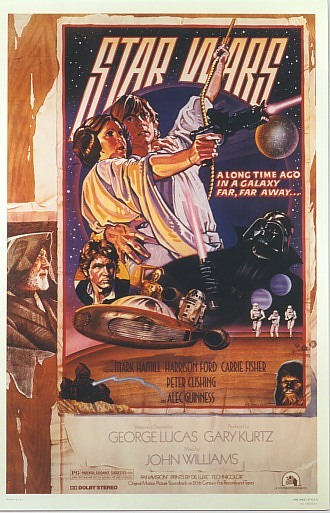
Star Wars: Episode IV — A New Hope (1977, directed by George Lucas) — A New Hope may not be the best Star Wars film but it’s still the most entertaining, even if George Lucas doesn’t seem to realize that.  A tribute to the serials and space operas that Lucas grew up with, A New Hope features great action scenes, special effects that hold up well despite not being as slick as modern CGI, and great performances from Alec Guinness and Harrison Ford.  Mark Hamill would eventually become a much better actor, though you might not guess just from his performance here.  Watching New Hope today, I really appreciate that the movie doesn’t get bogged down in overexplaining things.  We don’t need to know what the Clone Wars were specifically about or what the Kessel Run actually was.  They sound cool and that’s all that was really required.  Despite what some claim, there is absolutely no evidence that Darth Vader was meant to be Luke’s father in this move.

Star Wars Holiday Special (1978, directed by Steve Binder) — Only aired once, I debated whether to include it here or not.  I eventually did just because it features the debut of Boba Fett.  It’s as bad as you’ve heard but the special’s real since is that it’s incredibly boring.  Harrison Ford still looks happier here than he did in Return of the Jedi.

Star Wars: Episode V — The Empire Strikes Back (1980, directed by Irvin Kershner) — The best of the original trilogy, this installment was surprisingly dark, downbeat, and violent.  Mark Hamill finally started to show some signs of growth as an actor while Harrison Ford’s Han Solo continued to be the coolest rebel in the universe.  Combining the more thoughtful scenes with Yoda with the action-orientated scenes on Cloud City made this the most intelligent of the Star Wars films.  The battle on Hoth remains one of the best action scenes ever.  I think every kid who saw this movie wanted an AT-AT Walker.  I know I did.

Star Wars: Episode VI — Return of the Jedi (1983, directed by Richard Marquand) — It’s not quite as bad as its reputation, largely due to the opening with Jabba the Hutt’s court.  Jabba is so grotesque and evil in this movie that it’s hard not to regret that the subsequent films made him into more of buffoon than a crime lord.  Brining back the Death Star made this film feel like a retread.  The Ewoks were created to sell toys but so was everything else in this movie.  Harrison Ford looks particularly grouchy at the end.

The Ewok Adventure (1984, directed by John Korty) and Ewoks: The Battle For Endor (1985, directed by Jim and Ken Wheat) — I guess if these had been successful, there would have been an Ewok television show.  The Ewok Adventure feels childish and features a narrator.  Battle for Endor is surprisingly violent for a movie about teddy bears.  Both films are more bland than truly bad.

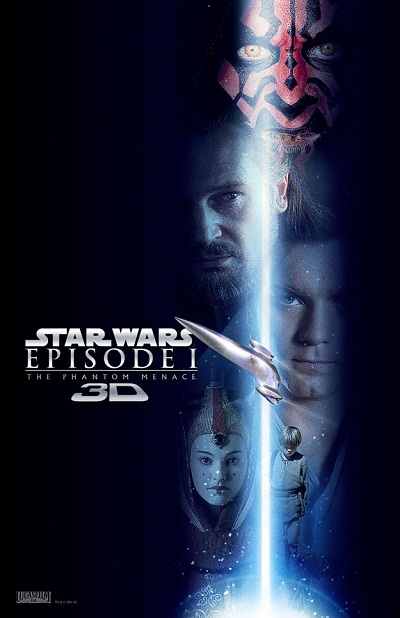
Star Wars: Episode I — The Phantom Menace (1999, directed by George Lucas) — There’s been some revisionism about this film.  Some people actually defend it now.  Not me.  It’s still pointless.  This movie started the trend of every popular film having to have an in-depth “mythology” behind it.  It turns out that the Evil Empire was all about trade routes and tariffs.  Jake Lloyd gets more blame than he deserves.  Overexplaining the Force was a sign of things to come.  This movie would feature Natalie Portman’s worst performance if not for…

Star Wars: Episode II — Attack of the Clones (2o02, directed by George Lucas) — As painfully generic as its title, this movie was responsible for Hayden Christensen having an undeserved reputation for being a bad actor.  I doubt any actor, no matter how talented, could make Lucas’s dialogue feel natural.

Star Wars: Episode III — Revenge of the Sith (2005, directed by George Lucas) — The only one of the prequels that actually added anything to what we already knew, Revenge of the Sith is dark, violent, and it doesn’t have as many slow spots as the other prequels.  Ewan McGregor finally gets a chance to act and Hayden Christensen and Natalie Portman are finally given actual characters to play.  Today, some people say it’s the best of the Star Wars films.  They’re wrong but it’s still pretty good.

The Clone Wars (2008, directed by Dave Filoni) — The only animated Star Wars film doesn’t get much attention and it does get bogged down in the mythology of the of the prequels.  No one really cares about the specifics of the Clone Wars.  The fact that it’s animated and clearly marketed at kids makes the dialogue easier to tolerate.

Star Wars: Episode VII — The Force Awakens (2015, directed by J.J. Abrams) — When this first came out, a lot of people (including myself) were so happy to have a new Star Wars film that we overrated it.  It’s hard to watch today without thinking about how bad things got after it was released but it does still hold up well as a space adventure, though Daisy Ridley’s blandness is more apparent on subsequent viewings.  The performances of Adam Driver and John Boyega still hold up.  The main attraction, though, is Harrison Ford returning as Han Solo.

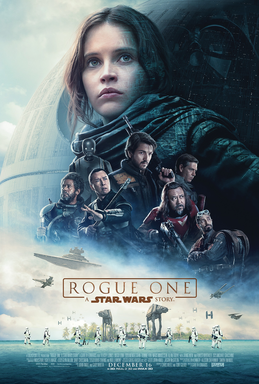
Rogue One: A Star Wars Story (2016, directed by Gareth Edwards) — The first stand-alone live action Star Wars feature film is a thrilling space adventures that holds up on subsequent viewings and works because the stakes actually feel real.  For the first time since New Hope, the Death Star is actually frightening.  This remains one of the best films in the franchise and it’s not surprising that it led to the best of the Star Wars television shows.

Star Wars: Episode VIII — The Last Jedi (2017, directed by Rian Johnson) — The haters are right about much of this film.  For all the complaints about Disney not allowing their Marvel directors much freedom, the Star Wars sequels shows what happens when a franchise isn’t sure where it wants to go.  Rian Johnson tries to bring Star Wars down to Earth but that’s not where we want Star Wars.  Rose Tico was an annoying character and her line about saving what we love deserves all of the mockery it received but Kelly Marie Tran still didn’t deserve to be run off of social media.  Turning Luke into a bitter old man was this film’s greatest sin.

Solo: A Star Wars Story (2018, directed by Ron Howard) — That this wasn’t a box office hit was the a clear warning sign that audiences were getting bored with Star Wars.  This Han Solo origin story isn’t bad.  Ron Howard could direct a film like this in his sleep.  It just feels unnecessary.  Alden Ehrenreich does his best but no one can replace Harrison Ford as Han Solo.

Star Wars: Episode IX — The Rise of Skywalker (2019, directed by J.J. Abrams) — J.J. Abrams tries to undo everything that Rian Johnson did in his film.  I don’t blame Abrams because Johnson’s film wasn’t great but just shrugging it all off doesn’t really work either.  The sequel trilogy, which started with such high hopes, ends with a whimper.  Daisy Ridley’s boring performance doesn’t help.

My rankings, as of 2025, are below:

  1. The Empire Strikes Back
  2. Rogue One
  3. New Hope
  4. Revenge of the Sith
  5. Return of the Jedi
  6. Force Awakens
  7. Solo
  8. Rise of Skywalker
  9. The Last Jedi
  10. Ewoks: Battle for Endor
  11. The Clone Wars
  12. The Ewok Adventure
  13. Holiday Special
  14. Phantom Menace
  15. Attack of the Clones

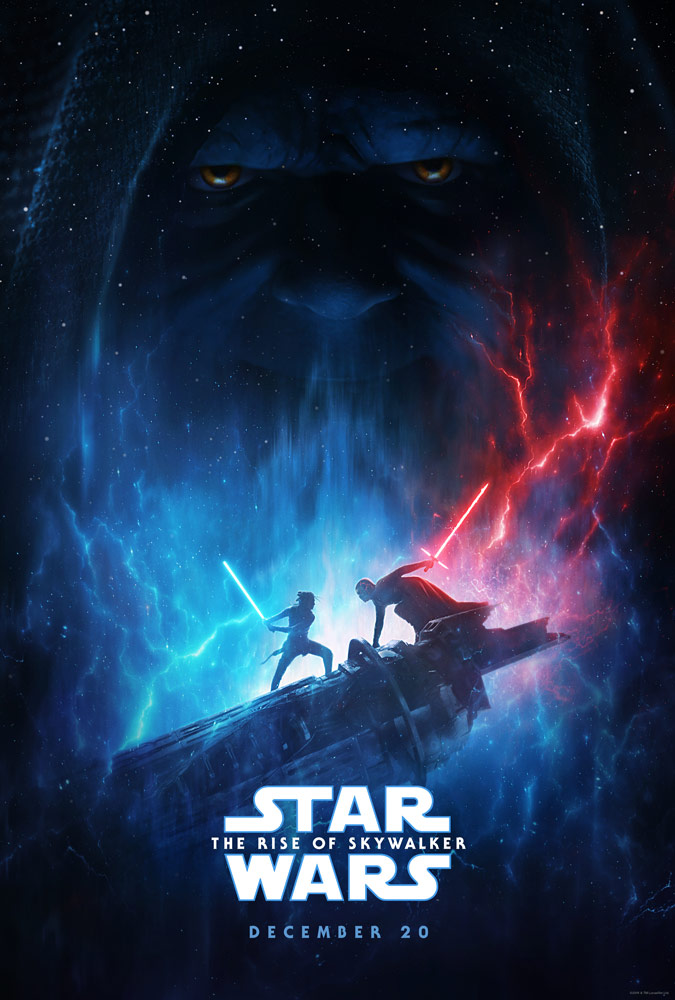
Star Wars: Rise of Skywalker D23 First Look


Star Wars Rise of Skywalker

This past weekend saw Disney’s own convention called D23 come and go over at Anaheim, CA. Everything Disney-branded were announced and talked about. We got more news on Disney’s upcoming streaming service, more Marvel Studios news from Disney+ shows to information on the MCU’s Phase 4 plans. There were even some news about the fallout of the Marvel/Sony issue which has taken Spider-Man out of the MCU proper. Yesterday saw the release of the latest theatrical poster and a special First Look at this upcoming holiday release of Star War: Rise of Skywalker.

The final installment in what’s being called as the Skywalker Saga, the first look trailer shown at D23 yesterday has now been released for general audience consumption and from what I can see it bears some resemblance (at least from some of the images shown) from the old Dark Horse Comics Star Wars: Dark Empire (now just part of Star Wars Legends).

From the very ordered battle formation of Imperial Star Destroyers, to C3PO with red, menacing eyes to Rey in black Sith Robes that echoed Dark Empire’s Luke Skywalker also donning the black Sith Robes and becoming an apprentice of Sith Lord Palpatine.

While much of the stories and ideas from the comics and books of the 1990’s up until the sale of Lucasfilm to Disney has been made moot with the release of the latest films, the Star Wars creators have been mining the so-called Star Wars Legends for ideas and characters to create a new canonical universe.

This latest trailer for Star Wars: Rise of Skywalker does seem to have some influence from that comic book series from Dark Horse and I think that should make for an interesting conclusion to this latest film trilogy.

Here’s The Trailer For — Deep Breath — Star Wars Episode IX: The Rise of Skywalker


Here’s the new trailer for an obscure little art film called …. Stars Wars Episode IX: The Rise of Skywalker!

My first reaction, to be honest, is that the title is extremely unwieldy.  I imagine that most people in the real world will just call it “the new Star Wars film” while people on twitter will demand that it only be called “Episode IX.”  I’m not going to speculate on which Skywalker is rising.  The majority of them seem to be dead.  Perhaps the film will end with Adam Driver taking over the universe and destroying it, Thanos-style.  That would be kind of fun.

I’m not really big into Star Wars.  You may have already guessed that.  While everyone else is going crazy over this trailer, I have to admit that my first reaction was, “Again with the desert?”  But, snarkiness aside, it’s a nicely done trailer.  There’s no way not to be excited by that scene of Rey doing a back flip over that cruiser.  And any trailer that ends with mocking laughter is okay with me.  Apparently, the Emperor is back.  And so is Billy Dee Williams.

(For that matter, Carrie Fisher will be in the film, as well.  Director J.J. Abrams has said that there was enough unused Fisher footage from the previous two sequels that Leia will be able to play a role in The Rise of Skywalker.)

It’s always somewhat weird to me to see how controversial the Star Wars films have become.  I really don’t have enough shrug emojis available to me to express how I react whenever I see people on twitter debating whether or not the last movie was any good or not.  I liked The Force Awakens and I respected the fact that Rogue One killed off the entire cast.  I was kind of indifferent to both Solo and The Last Jedi.

But, let’s hope the best for The Rise of Skywalker!  Apparently, the Star Wars franchise will be going on a bit of a hiatus after the release of this one.  (That said, if The Rise of Skywalker does better at the box office than Solo or The Last Jedi, that hiatus could be a short one.)  So, let’s hope that they (temporarily) end on a good note!

Weekly Trailer Round-Up: Mary Queen of Scots, Colette, The Miseducation of Cameron Post, The Favourite, Goosebumps 2, A Simple Favor, The Extinction, The Package, Life Itself, Along Came The Devil, Little Italy, Unfriended: Dark Web, Wonder Park, Castle Rock


It’s time for the weekly trailer round-up!  We’ve got fourteen today so let’s get down to business:

First off, we have the trailer for one of the most anticipated films of the year: Mary, Queen of Scots.  This movie brings together two of last year’s nominees for best actress, with Saoirse Ronan playing the title character and Margot Robbie playing Queen Elizabeth I.  It is set to be released in December for Oscar consideration.

Also getting early Oscar buzz is Keira Knightley for her performance in Colette.  Colette premiered at the Sundance Film Festival this year and will be released on September 21st.

Another film that generated buzz at Sundance was The Miseducation of Cameron Post, which stars Chloe Grace Moretz as a teenage girl forced into gay conversation therapy.  The Miseducation of Cameron Post will be released into theaters on August 3rd.

Following the arthouse success of The Lobster, Yorgos Lanthimos returns with The Favourite.  Rachel Weisz and Emma Stone play cousins who compete to be the favorite of Queen Anne.  The Favourite will be released on November 23rd.

The books and the monsters are back but Jack Black is nowhere to be seen in the trailer for Goosebumps 2: Haunted Halloween.  This film will be released on October 12th.

When Blake Lively disappears, her new best friend, Anna Kendrick, teams up with Lively’s husband to find her.  Directed by Paul Feig of Ghostbusters and Bridesmaids fame, A Simple Favor will be released on September 14th.

Everyone’s favorite sidekick, Michael Pena, finally gets the leading role in The Extinction, a sci-fi thriller that will be premiering on Netflix on July 27th.

Also coming to Netflix is The Package, a teen comedy from the creators of Workaholics.  The Package will be delivered on August 10th.

The second film to be directed by This Is Us creator Dan Fogelman, Life Itself will be released on September 21st.

According to this trailer, Along Came The Devil is “an exorcism film for a new generation.”  This film will be released on August 10th.

Have you ever wondered what happened to Danny Aiello?  He’s in Little Italy, with Emma Roberts and Hayden Christensen.  Little Italy will be released in August.

The internet is still the most dangerous place on Earth in the second trailer for Unfriended: Dark Web.  See for yourself on July 20th.

After a long and troubled production that saw original director Dylan Brown fired for “inappropriate conduct,” the animated film Wonder Park will finally be released on March 15th, 2019.

Finally, here is the long-awaited official trailer for Castle Rock, the new Hulu series from J.J. Abrams and Stephen King.  Castle Rock premieres on July 25th.


Insomnia File No. 17: The Suburbans (dir by Donal Lardner Ward)


What’s an Insomnia File? You know how some times you just can’t get any sleep and, at about three in the morning, you’ll find yourself watching whatever you can find on cable? This feature is all about those insomnia-inspired discoveries!

sub

Last night, if you were still awake at 3:45 in the morning, you could have turned over to Starz and watched the 1999 comedy, The Suburbans!

And, in all probability, you would have fallen asleep before it was over.

This film tells the story of four guys who used to be in a band.  The name of the band was The Suburbans and, in 1980, they had a hit with a song called … wait … what the Hell was that song called?  See, this is an example of how slapdash The Suburbans was.  The whole point of the film is that they had a hit song but the movie goes off in some many different and random tangents that I can’t even remember what the name of this very important song was.  All I remember is that the song didn’t really sound like it would ever be a hit (no, not even in the 80s) and that the four guys really didn’t seem like they would ever be rock stars.

Anyway, The Suburbans only had that one hit and now, nearly twenty years later, all the band members are leading conventional lives in the suburbs.  Oddly, they all appear to live in the same suburb and they’re all still best friends.  Craig Bierko is the former lead guitarist, who is now a doctor of some sort.  Will Ferrell (yes, that Will Ferrell) is the former bass player who now works with computers.  Tony Guma is the overweight drummer who is at the center of a lot of scenes, presumably because Guma co-wrote the script.  Donal Lardner Ward is the former lead singer.  Along with starring in the film, Ward also directed it.  That might explain why, despite not being a very interesting character, everyone in the film is portrayed as being in love with him.

The Suburbans briefly reunite to play at Ferrell’s wedding.  A music executive (Jennifer Love Hewitt) happens to be at the wedding.  It turns out that she used to love The Suburbans and their one hit!  (The problem is that Jennifer Love Hewitt was only 20 when this film was made, which means that, when the Suburbans were famous, she would have only been a year old.)  She arranges for The Suburbans to reunite for a pay-per-view special and…

…and then a lot of stuff happens.  And I do mean a lot of stuff.  But what’s odd is none of that stuff adds up to anything.  Ward’s girlfriend (played by Amy Brenneman) is briefly threatened by Hewitt but, fear not — Donal Lardner Ward is the world’s greatest guy!  Occasionally, one member of the Suburbans might argue with another member of the Suburbans but fear not — they’re all great guys!

What’s funny is that, after spending 81 minutes with these characters and listening to their oppressively relentless quippy dialogue, you still don’t feel like you know a damn thing about any of them.  You never even find out how The Suburbans first got together or what inspired them to write their one hit in the first place.  Nor do you find out why they broke up.  They’re just sort of there and we’re supposed to care.

I guess I should mention that Ben and Jerry Stiller are both in the film.  They play Hewitt’s bosses and it’s painful to watch both of them.  Apparently, the director just said, “Ben, say something funny!” and the result was an endless scene of Ben Stiller saying whatever popped into his head.

(I should also probably mention that J.J. Abrams produced this movie.  Yes, that J.J. Abrams…)

If you track down the Suburbans on DVD, you’ll notice that the cover art is pretty much centered around Jennifer Love Hewitt and Will Ferrell.  What’s funny is that neither Hewitt nor Ferrel really get to do much in the movie.  (That said, Ferrell’s performance is enjoyably odd, even if it does feel totally out of the place.)  The entire movie is centered around Tony Guma and Donal Lardner Ward.  After all, they wrote and directed the damn thing.  So, I guess if you’re a Tony Guma fan, The Suburbans is the movie for you!

Previous Insomnia Files:

  1. Story of Mankind
  2. Stag
  3. Love Is A Gun
  4. Nina Takes A Lover
  5. Black Ice
  6. Frogs For Snakes
  7. Fair Game
  8. From The Hip
  9. Born Killers
  10. Eye For An Eye
  11. Summer Catch
  12. Beyond the Law
  13. Spring Broke
  14. Promise
  15. George Wallace
  16. Kill The Messenger

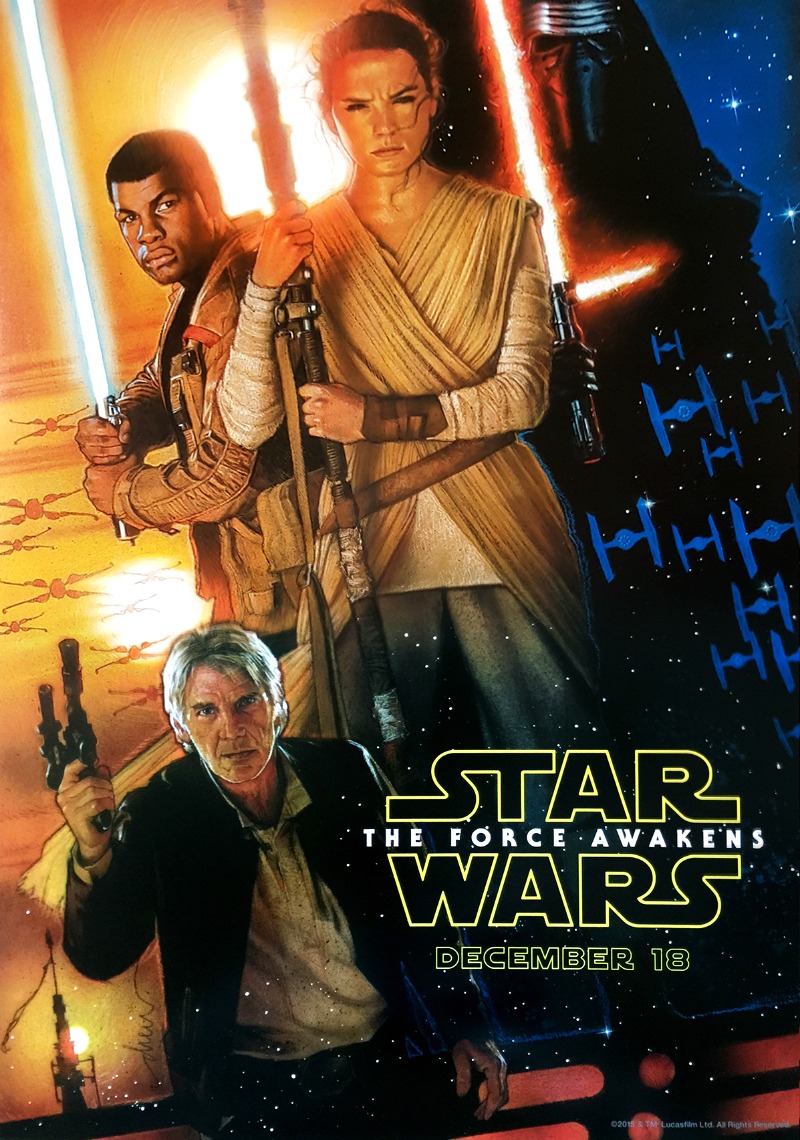
Star Wars: The Force Awakens (dir. by J.J. Abrams) Is the Sequel the Fandom Has Been Waiting For


Star Wars - The Force Awakens

[some minor, very minor spoilers]

When I first began this site on Christmas Eve of 2009 I had to thank the excitement I had for event films after seeing and experiencing James Cameron’s Avatar. It was an experience I hadn’t felt since the days of the Lord of the Rings trilogy and, even earlier than that, the original Star Wars trilogy. These were films that fired up one’s imagination, appreciation and love for film as entertainment and art. Some of these films would linger on longer in one’s mind than others, but that first viewing in their initial release would always imprint their effect on each viewer.

When George Lucas announced that he would be returning to that galaxy, far, far away with a trilogy of prequels almost 15 years since the world last saw Return of the Jedi premiere first the first time, the Star Wars fandom were giddy, excited and hyped beyond belief. The Star Wars films and the many spin-offs (novels, comic books, video games, etc.) which came about because of it only whetted the appetites of long-time Star Wars fans for more films detailing the adventures in the scifi universe created by George Lucas.

Yet, the prequels’ effect on these long-time fans would be the direct opposite of the effect the original trilogy had on the fandom. These three prequels (all directed and written by George Lucas himself) would do more than disappoint the fandom. It would create a schism between those who saw the original trilogy as the gateway to their fandom and those younger generation who never saw the original trilogy and had the prequels become their gateway to the fandom. Even to this day there would be some of the younger generation who truly believe that the prequels trump the original three films which began the franchise.

When news came down that Disney had bought Lucasfilm and everything which George Lucas had built and cultivated there was no chance in hell that there wouldn’t be another series of Star Wars despite the disaster which were the prequels. Lo and behold, it didn’t take long for Disney to greenlight the sequel to Return of the Jedi and have it set decades after the events of that film.

So, it is with Star Wars: The Force Awakens that the Star Wars fandom get to see whether their continued faith in the franchise was worth it or if they have been Charlie Brown’d once again and had the ball taken away at the very last second. It’s easy to say that Star Wars: The Force Awakens was great or it was awful. The true answer to whether this film succeeded in what it intended do was a bit more complicated.

Yet, if one was to look for an easy and simple answer then I’m happy to say that Star Wars: The Force Awakens was great. It had it’s moments of logic gap and plot holes, but as an overall finished product the film succeeded in course-correcting the franchise from the nadir it was at with the culmination of the prequels. It wouldn’t have taken much to surpass the very low bar set by those prequels, but The Force Awakens leapfrogged that bar and went even higher.

The film does begin thirty years after the events of Return of the Jedi and we find out with the now familiar episode intro crawl that Luke Skywalker has disappeared since those events and the galaxy has remained in turmoil with his absence. The Galactic Empire has been defeated, but in its place a new danger in the form of the genocidal First Order has arisen from the Empire’s remains. Opposing the First Order is a sort of galactic force supported in secret by the New Republic and led by General (not Princess) Leia Organa calling themselves the Resistance. It’s the conflict between these two factions and the search for Luke that forms the narrative base for The Force Awakens.

The film doesn’t linger too long in explaining the events which occurred in that 30-year gap between Return of the Jedi and The Force Awakens. It doesn’t need it as we’re quickly introduced to the series’ new characters in the form of Poe Dameron, the best pilot in the galaxy, who has been sent on a secret mission by Leia to find the clues as to her brother’s whereabouts. Next in line was Kylo Ren who becomes this film’s analogue to the Darth Vader figure of the original trilogy. Yet, the bulk of the film was told through the eyes of Finn and Rey.  The former is First Order stormtrooper who has seen first-hand what the First Order truly stands for and not for the betterment of the galaxy. The latter is a young woman living life on the desert planet Jakku scavenging the graveyard of starship wreckage from a battle thirty year’s prior.

It’s through Rey and Finn that the audience learns through their adventures upon meeting up with each other on Jakku what has transpired since the Rebellion destroyed the second Death Star and killed Emperor Palpatine. To these two characters, the events from the original trilogy seem to have passed beyond the realm of history and become more like legends and myths to the younger generation. Through a combination of fear and awe, Ren and Finn get introduced to some of the original trilogies main characters (Leia, Han Solo, Chewbacca and even Admiral Ackbar). These are the stories they’ve been told of growing up come to life right in front of their eyes and their reaction mirrors those of the audience who haven’t seen these characters in anything new and relevant since the end of Return of the Jedi. The reaction alone to seeing Han Solo and Chewbacca alone seemed like the fandom’s collective cheer for the good that has been missing with the franchise for over 30 years now.

The Force Awakens is not a perfect by any stretch of the imagination. Like mentioned earlier, the film does suffer from some gaps in story logic and plot holes. As with most J.J. Abrams directed films he had a hand in writing the script and one could see where he sacrificed coherent storytelling beats for something that just pushed the story along the path he wanted the film to take. For those who have been steeped in Star Wars lore and backstory, this would be easily explained as the Force nudging, guiding and, if all else fails, pushing the characters onto the right path, but for the casual viewers it would come off as story beats of convenience.

As a story to bring back the faithful and lure in those still uninitiated to the franchise The Force Awakens straddles the line between nostalgia and trying to bring in something new to the proceedings.

Let’s begin with the former and just say it now that The Force Awakens does follow some major story beats directly from A New Hope (to a smaller effect from Empire Strikes Back and Return of the Jedi). One could almost say that this film was a sort of soft reboot of the original trilogy with how it lifted ideas from them and through some writing and directing recombination come up with something new, but still very familiar for hardcore and non-fans alike.

Does this decision to lean heavily on the original trilogy for ideas hurt the film? For some it might be a bit too distracting to recognize too many callbacks to those earlier films, but for most it’s a reminder of what the prequels lacked and that’s the sense of adventure and fun. There was never anything fun about the prequels. The Force Awakens brings it all back and for most viewers this is the course-correction the series has needed since the last images from Revenge of the Sith faded away from the silver-screen.

Even the new characters introduced in this latest film were an amalgamation of the main characters from the original trilogy. Where Abrams and Kasdan changed this up a bit was to go beyond just creating new analogues for the classic characters of Leia, Han, Luke, Chewie and R2D2. They opted to take all the qualities fans loved about those characters and mixed them all up to be used in the roles of Rey, Finn, Poe, Kylo Ren and BB8.

As the standout character in the film, Rey (played by find of the year Daisy Ridley) would bring back memories of not just the young and hopeful Luke from the original trilogy, but also some personal traits of Leia and Han. The same goes for Finn who at times reminded us of Han’s roguish charm to Luke’s naivete of his role in the larger world he has finally witnessed for the very first time. For the half-empty crowd this might look as lazy character development, but those who see the film with the half-full mindset would easily latch onto these new characters. Characters who now take on the responsibility of moving the franchise beyond the nostalgia of the original trilogy and erasure of the disappointment of the prequels to new adventures with the next two films.

So, is Star Wars: The Force Awakens worth returning back to the franchise after the prequels or is it too much of a rehash of the original three films? The answer to that is a definite yes despite some of it’s flaws. For some the very flaws some have pointed out (too many callbacks, sort of a reboot, etc.) was what made the film a fun time to be had. It’s a return to the comfort zone the fandom missed with the prequels.

Will the next two films in this new trilogy follow suit and just rely too much on nostalgia to continue trying to satisfy it’s massive audience? Or will Rian Johnson and Colin Trevorrow (director of Episode VIII and Episode IX, respectively) move into new territory with minimal callbacks to those earlier films? We as an audience will have to wait til 2017 and 2019 to find out. Until then enjoy what Abrams and Lucasfilm has accomplished with The Force Awakens. A film which has reinvigorated a film franchise that has seem some major lows, but one which also happens to be one hell of a fun ride from start to finish on it’s own merits.

P.S.: Some controversy has arisen since the film’s release concerning the character played by Daisy Ridley. Some have been very vocal about calling her Rey character as a sort of knee-jerk reaction to the accusation that the Star Wars films have lacked for a strong female lead. An argument that’s as misguided and misinformed as that of the films being whitewashed. The films in the franchise have always had strong female characters. The accusation that Rey as a character in The Force Awakens is such a “Mary Sue” (a female character written and created to be the best at everything, no flaws) ignore the details in the character’s development.

What’s sadder is that some of the very people (film critics and writers) who in the past have complained that major films (especially blockbusters) have been lacking in very strong female characters have been the very same who see Rey as a negative and a character too good. This despite the character following in the very same footsteps in how her predecessors have been written (Luke, Han, Anakin). It’s an argument that is sure to bring heated debate among fans and detractors, but one that takes away from the performance of Daisy Ridley who should be one of the many breakout stars to come out of Star Wars: The Force Awakens.

Star Trek Beyond Looks Much Faster and More Furious


Star Trek Beyond

J.J. Abrams reinvigorated the Star Trek film franchise when he did a sort of sort-reboot in 2009. It brought the franchise into the consciousness of a younger demographic who didn’t grow up as fans of the franchise both in film and the many tv series. The film was a success and Paramount made sure to strike while it was still hot and greenlit a sequel that looked to build on the strong foundation set-up by J.J. Abrams.

2013 saw that sequel come out and to say that it underwhelmed and burned much of the goodwill created with the 2009 film would be an understatement. Star Trek Into Darkness (a title derided the moment it was announced) literally took the “darkness” part of the title and ramped it up to 11. There wasn’t any of the fun and adventurous nature of the first film. It didn’t help that screenwriter’s Robert Orci’s 9/11 Truther ideology seeped into the film’s plot.

When it was announced that Robert Orci would end up directing the third film after J.J. Abrams went to go direct the latest Star Wars film, the outcry was loud and clear. Orci was a bad choice and just keeping him on would just sink a film franchise already teetering on the brink of becoming irrelevant in a blockbuster environment where superhero universes and the original blockbuster universe reigned supreme.

So, it was with some relief and cautious optimism when Paramount dumped Orci and went with Justin Lin (hot off the massive success of Fast & Furious 6) and rewrites by Simon Pegg. The franchise was going to get the fun back into the series and everyone was invited. Even the chosen title, Star Trek Beyond, spoke to a creative team who saw a chance to bring back the franchise from just being part of a fandom but for those who wouldn’t know a dilithium crystal from a Sith Lord.

The first teaser shows the fun part of what Justin Lin and Simon Pegg have been talking about. Now, will the next trailer show a much more dramatic side to the events fans are hoping will balance all the fun.

Star Trek Beyond looks to land on July 22, 2016.

Japanese Trailer of Star Wars: The Force Awakens Even Better


StarWarsVII

Just a couple weeks ago saw the release of the first and last official trailer for Star Wars: The Force Awakens. It was teasers before that one. The official trailer was suppose to keep the Star Wars fandom sated until December 18 (or earlier for those willing to brave the early advance screenings before midnight). It pushed all the right buttons to keep the fandom happy and wanting more.

Out of the blue, this morning saw Disney release without any fanfare a new trailer but one cut and edited for the Japanese market. It’s a trailer that includes scenes and images already seen in the previous official trailer and two earlier teasers, but also happened to include newer scenes (that still doesn’t spoil what the film will be all about) involving BB-8, Kylo Ren and more Princess Leia and Chewie.

So, it would seem that when Disney said that the trailer released a couple weeks ago would be the one and only trailer for the film it would seem they meant it would be the only domestic trailer. Sneaky, sneaky there Disney.

Plus, I rather prefer the Japanese trailer. Once again proves the Japanese gets the cool things.