Guilty Pleasure No. 56: Once You Understand By Think


Things get a little easier

Once you understand

That is the message of TSL’s latest guilty pleasure, a little song from 1971 called Once You Understand.  In case you missed that message the first time, don’t worry.  It will be repeated.  In fact, it’s the only lyric in the entire song.  The song starts with one voice singing, “Things get a little easier/once you understand” but soon, several other voice join in until there’s a heavenly choir of sorts.  It’s really enthusiastic choir, too.  In fact, it’s so enthusiastic that it’s a little bit creepy.  No one’s that happy about understanding.

While the voices are singing to us that things get a little easier once you understand, we also get to listen to a few scenes from the late 60s/early 70s generation gap.  The scenes are acted out by a bunch of uncredited actors who give it the old community theater try.  We listen to teenagers argue with their parents and parents talk down to their children and what we immediately notice is that no one is trying to understand and therefore, things will never get a little easier.

One mother accuses her daughter of doing more than babysitting and demands that she stay out of a certain neighborhood.  A father demands that his son get a haircut and reminds him that he had to work hard when he was young.  Another kid is super excited to have gotten a guitar and he’s planning on starting a band.  His father replies that there’s more to life than music.

Things get a little easier

Once you understand

Things get a little easier

Once you understand

Things get a little

Suddenly, the music stops.  We listen as one of the fathers gets a tragic phone call about his son, the one that he didn’t understand.  The father sobs uncontrollably as the song ends and I guess it could, in theory, have been a powerful moment if not for the fact that father is so obviously reading a script.  The other problem is that 99% of the song consists of parents acting like jerks but then, in the final few moments, it turns out that at least one of the parents was right about his son throwing his life away.  So maybe, it was the son who needed to understand.  Who knows?

Anyway, Once You Understand is one of those songs that’s often included in lists of the worst songs of all time.  However, much like The Dawn of Correction, I like Once You Understand because it is so totally a product of its time.  It’s a cultural artifact and listening to it is a bit like stepping into a time machine.  That said, I kind of doubt this song inspired anyone to understand.  If anything, everyone comes across as being kind of whiny.

Previous Guilty Pleasures

  1. Half-Baked
  2. Save The Last Dance
  3. Every Rose Has Its Thorns
  4. The Jeremy Kyle Show
  5. Invasion USA
  6. The Golden Child
  7. Final Destination 2
  8. Paparazzi
  9. The Principal
  10. The Substitute
  11. Terror In The Family
  12. Pandorum
  13. Lambada
  14. Fear
  15. Cocktail
  16. Keep Off The Grass
  17. Girls, Girls, Girls
  18. Class
  19. Tart
  20. King Kong vs. Godzilla
  21. Hawk the Slayer
  22. Battle Beyond the Stars
  23. Meridian
  24. Walk of Shame
  25. From Justin To Kelly
  26. Project Greenlight
  27. Sex Decoy: Love Stings
  28. Swimfan
  29. On the Line
  30. Wolfen
  31. Hail Caesar!
  32. It’s So Cold In The D
  33. In the Mix
  34. Healed By Grace
  35. Valley of the Dolls
  36. The Legend of Billie Jean
  37. Death Wish
  38. Shipping Wars
  39. Ghost Whisperer
  40. Parking Wars
  41. The Dead Are After Me
  42. Harper’s Island
  43. The Resurrection of Gavin Stone
  44. Paranormal State
  45. Utopia
  46. Bar Rescue
  47. The Powers of Matthew Star
  48. Spiker
  49. Heavenly Bodies
  50. Maid in Manhattan
  51. Rage and Honor
  52. Saved By The Bell 3. 21 “No Hope With Dope”
  53. Happy Gilmore
  54. Solarbabies
  55. The Dawn of Correction

Guilty Pleasure No. 55: The Dawn of Correction


The year was 1964 and folk singer Barry McGuire had just released a new song called Eve of  Destruction.  In Eve of Destruction, McGuire painted an apocalyptic view of the world and put a lot of the blame on the Cold War.  McGuire wrote about 18 year-olds being sent to war when they weren’t even allowed to vote.  (At that time, the voting age was 21.)  McGuire wrote about the nuclear arsenals of the U.S. and Russia, saying that nuclear annihilation was just one push of a button away.  McGuire sang about the Civil Rights struggle and the feeling that all of the well-meaning protests hadn’t led to any real change.

Not surprisingly, this early protest song was as controversial as it was popular.  While many claimed that McGuire was one of the few singers willing to sing the truth, others said that he wasn’t being unpatriotic and excessively negative.

That’s where The Spokesmen came in.  The Spokesmen were a trio, made up of John Madera, David White, and Ray Gilmore.  Feeling that McGuire wasn’t being fair in his critique of the good old U.S., the Spokesmen released an “answer song,” one that addressed all of McGuire’s charges and which dismissed them all.  McGuire sang about the “Eve of Destruction.”  The Spokesmen decided that they would sing about the …. DAWN OF CORRECTION!

As the song’s chorus says: 

So over and over again, you keep sayin’ it’s the end
But I say you’re wrong, we’re just on the dawn of correction

What exactly is “the dawn of correction?”  I honestly have no idea.  But it probably sounded profound while the song was being written.  Plus …. destruction …. correction …. it rhymes!

Anyway, the Dawn of Correction was a minor hit when it was released, though it was soon forgotten about as the protest movement grew and teenagers in the 60s saw far more evidence to support McGuire’s vision of the world than the vision of the Spokesman.  Among music aficionados, Dawn of Correction has developed a reputation for being one of the worst songs ever written.

I have to admit though that, when I recently listened to the song, I kind of liked it, in much the same way that I like zero-budget polemical films and kitschy dance scenes.  It’s one of those songs that is so definitely rooted to one cultural moment that, from a historical point of view, it becomes rather fascinating.  It’s lyrics are just so strangely literal.  (It takes a certain …. something …. to try to put a positive spin on the policy of mutually assured destruction in a folk song.)  Even more than that, lead singer John Madera attempts to duplicate the raspy growl the McGuire used while singing Eve of Destruction and, even though he doesn’t succeed, there’s something oddly touching about how hard he tries.  With a Dylanesque harmonica playing in the background, the song is so determined to be “with it,” that you just know some government teacher in 1967 probably tried to reach her apathetic students by forcing them to listen to this song in class.  

Finally, to be honest, that chorus is kind of catchy.  Watch the band perform below and be sure to pay attention to the dancers.

Lyrics
The western world has a common dedication
To keep free people from Red domination
And maybe you can’t vote, boy, but man your battle stations
Or there’ll be no need for votin’ in future generations
 
So over and over again, you keep sayin’ it’s the end
But I say you’re wrong, we’re just on the dawn of correction
 
There are buttons to push in two mighty nations
But who’s crazy enough to risk annihilation?
The buttons are there to ensure negotiation
So don’t be afraid, boy, it’s our only salvation
 
So over and over again, you keep sayin’ it’s the end
But I say you’re wrong, we’re just on the dawn of correction
 
You tell me that marches won’t bring integration
But look what it’s done for the voter registration
Be thankful our country allows demonstrations
Instead of condemnin’, make some recommendations
I don’t understand the cause of your aggravation
You mean to tell me, boy, it’s not a better situation?
 
So over and over again, you keep sayin’ it’s the end
But I say you’re wrong, we’re just on the dawn of correction
 
You missed all the good in your evaluation
What about the things that deserve commendation?
Where there once was no cure, there’s vaccination
Where there once was a desert, there’s vegetation
Self-government’s replacing colonization
What about the Peace Corp. organization?
Don’t forget the work of the United Nations
 
So over and over again, you keep sayin’ it’s the end
But I say you’re wrong, we’re just on the dawn of correction

But I say you’re wrong, we’re just on the dawn of correction
 
So over and over again, you keep sayin’ it’s the end
But I say you’re wrong, we’re just on the dawn of correction

Previous Guilty Pleasures

  1. Half-Baked
  2. Save The Last Dance
  3. Every Rose Has Its Thorns
  4. The Jeremy Kyle Show
  5. Invasion USA
  6. The Golden Child
  7. Final Destination 2
  8. Paparazzi
  9. The Principal
  10. The Substitute
  11. Terror In The Family
  12. Pandorum
  13. Lambada
  14. Fear
  15. Cocktail
  16. Keep Off The Grass
  17. Girls, Girls, Girls
  18. Class
  19. Tart
  20. King Kong vs. Godzilla
  21. Hawk the Slayer
  22. Battle Beyond the Stars
  23. Meridian
  24. Walk of Shame
  25. From Justin To Kelly
  26. Project Greenlight
  27. Sex Decoy: Love Stings
  28. Swimfan
  29. On the Line
  30. Wolfen
  31. Hail Caesar!
  32. It’s So Cold In The D
  33. In the Mix
  34. Healed By Grace
  35. Valley of the Dolls
  36. The Legend of Billie Jean
  37. Death Wish
  38. Shipping Wars
  39. Ghost Whisperer
  40. Parking Wars
  41. The Dead Are After Me
  42. Harper’s Island
  43. The Resurrection of Gavin Stone
  44. Paranormal State
  45. Utopia
  46. Bar Rescue
  47. The Powers of Matthew Star
  48. Spiker
  49. Heavenly Bodies
  50. Maid in Manhattan
  51. Rage and Honor
  52. Saved By The Bell 3. 21 “No Hope With Dope”
  53. Happy Gilmore
  54. Solarbabies

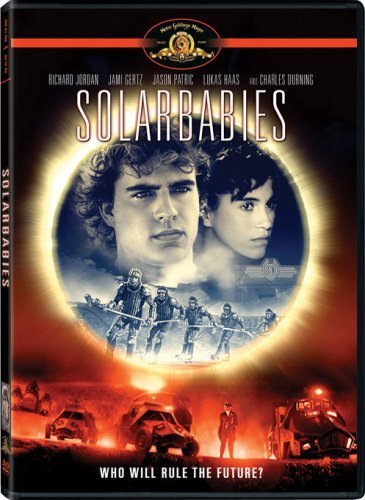
Guilty Pleasure No. 54: Solarbabies (dir by Alan Johnson)


Solarbabies is a film that has a reputation.  And it’s not a good one.

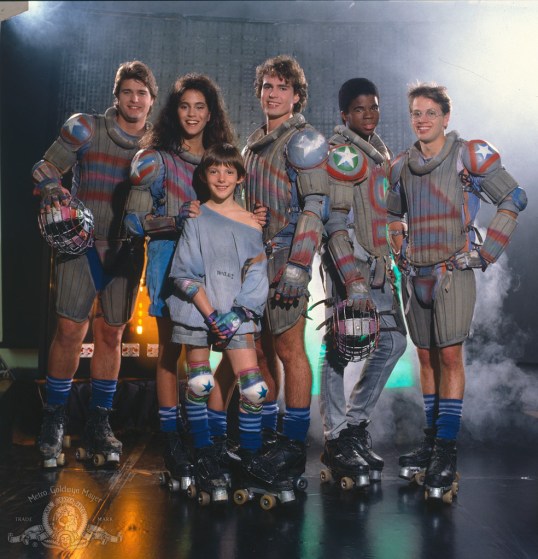
First released in 1986, Solarbabies is one of those post-Mad Max films that takes place in a post-apocalyptic desert society.  There are no more trees.  There is no more rain.  Order is kept by force.  The people are oppressed.  Outsiders live in desert towns that have names like “Tiretown.”  Children are forced to grow up in a combination of a prison and an orphanage.  The orphanage’s Warden (played by Charles Durning) mourns for the way the world used to be, before it became a sun-drenched nightmare without plants or water.  The fearsome Grock (Richard Jordan) makes sure that all of society’s rules are followed and the viewer knows he’s a bad guy because he wears a leather trench coat even when it’s over a 100 degrees outside.  (Grock never sweats.  If only the same could be said of the Warden.)  The evil Professor Shandray (Sarah Douglas) experiments on living subjects.  It’s a grim, grim world.

However, hope arrives in the form of a glowing orb!  A ten year-old deaf boy named Daniel (Lukas Haas) finds the orb and, after regaining his ability to hear, he names it Bodhi.  When Darstar (Adrian Pasdar) realizes that he can use Bodhi to protect the people of Tiretown, he steals the orb and runs off with it.  Determined to retrieve Bodhi, Daniel chases after him

How will Daniel survive in the desert?  Well, luckily, he’s not alone!  Daniel was a member of the orphanage’s roller hockey team, the Solarbabies.  Terra (Jami Gertz), Jason (Jason Patric), Metron (James LeGros), Rabbit (Claude Brooks), and Tug (Peter DeLuise) strap on their skates and roll out into the desert.  Pursuing them is Grock and his stormtroopers.

Meanwhile, somewhere in the desert, an old man named Greentree (Frank Converse) hopes to help the world recover.  Greentree looks like a thin version of Santa Claus and he hopes to bring rain and trees back to the Earth.  Yes, his name is Greentree.  There’s not really much room for subtlety in the world of Solarbabies.

Now, as I said at the beginning of this review, Solarbabies has a reputation.  Today, it’s probably best known for being the film that nearly bankrupted Mel Brooks.  Yes, that Mel Brooks.  When Brooks originally signed on to produce Solarbabies, it was envisioned as being a low-budget sci-fi film that would not have any spectacular special effects.  However, Brooks became convinced that Solarbabies had the potential to be a Star Wars-level hit so he increased the budget.  He also brought in Alan Johnson to direct the film, despite the fact that Johnson was a choreographer who had only directed one other film and had no experience with science fiction.  (Johnson’s previous film had been a remake of To Be Or Not To Be, which starred Brooks and featured Solarbabies’s Charles Durning in a supporting role).  At Brooks’s insistence, the film was shot in Spain to save money.  Unfortunately, no sooner had Johnson and the film’s cast arrived than Spain was hit by a series of unexpected storms that caused production to shut down.  Even when the rain stopped, disagreements between Johnson and the cast delayed the film even further.  The footage that was shot satisfied no one, leading to expensive reshoots.  In the end, Mel Brooks invested close to $20 million dollars in the film, even taking a second mortgage out on his house.  When the film was finally released, it was a critical and box office disaster, though Brooks later said that he did eventually break even after Solarbabies was released on DVD.

So, yes, Solarbabies has a bad reputation and it could be argued that it deserves it.  Tonally, the film’s a mess.  For a film that appears to have been made for a “family” audience, parts of the film are surprisingly violent  Scenes of the Solarbabies playing LaCrosse and cheerfully crossing the desert are mixed with some surprisingly graphic scenes of Grock and Shandray torturing prisoners.  Bodhi is a cute and glowing orb who gives Daniel back his hearing and then later brutally kills a lot of bad guys.  Jason Patric, Jami Gertz, and Charles Durning all seem to be trying to take the film seriously while Richard Jordan and Sarah Douglas give performances that feel more appropriate for a Hammer horror film.  Solarbabies is a bizarre mix of sincerity, sadism, and camp.  Nothing about it makes much sense.

And yet….

Listen, I can’t help it.  When I watched it last week, I enjoyed Solarbabies.  For all of its many and obvious flaws, it’s a hard film not to like.  It’s just so thoroughly ludicrous and messy that watching it becomes a rather fascinating viewing experience.  It’s hard not to, at the very least, be entertained by the sight of the cast roller skating through the desert.  A LaCrosse team battling futuristic Nazis for possession of a glowing orb that can cause rain to fall from a cloudless sky?  As far as I’m concerned, it’s impossible not to enjoy that on some level.

Of course, I seem to be in the minority as far as that’s concerned.  Alan Johnson never directed another movie after Solarbabies, though he did direct some of those really cool GAP commercials that aired in the early aughts.  You know the ones that featured people enthusiastically dancing in khakis?  That was him!  Those commercials are kind of a guilty pleasure themselves.  (Of course, because Mel Brooks nearly didn’t lose his house producing them, they’re not quite as infamous as Solarbabies.)  But still, Johnson stared his directorial career by directing Charles Durning to an Oscar nomination in To Be Or Not To Be and he ended it by directing Durning in a box office flop.  Well, no matter!  I enjoyed Solarbabies and I don’t care who knows it.

Previous Guilty Pleasures

  1. Half-Baked
  2. Save The Last Dance
  3. Every Rose Has Its Thorns
  4. The Jeremy Kyle Show
  5. Invasion USA
  6. The Golden Child
  7. Final Destination 2
  8. Paparazzi
  9. The Principal
  10. The Substitute
  11. Terror In The Family
  12. Pandorum
  13. Lambada
  14. Fear
  15. Cocktail
  16. Keep Off The Grass
  17. Girls, Girls, Girls
  18. Class
  19. Tart
  20. King Kong vs. Godzilla
  21. Hawk the Slayer
  22. Battle Beyond the Stars
  23. Meridian
  24. Walk of Shame
  25. From Justin To Kelly
  26. Project Greenlight
  27. Sex Decoy: Love Stings
  28. Swimfan
  29. On the Line
  30. Wolfen
  31. Hail Caesar!
  32. It’s So Cold In The D
  33. In the Mix
  34. Healed By Grace
  35. Valley of the Dolls
  36. The Legend of Billie Jean
  37. Death Wish
  38. Shipping Wars
  39. Ghost Whisperer
  40. Parking Wars
  41. The Dead Are After Me
  42. Harper’s Island
  43. The Resurrection of Gavin Stone
  44. Paranormal State
  45. Utopia
  46. Bar Rescue
  47. The Powers of Matthew Star
  48. Spiker
  49. Heavenly Bodies
  50. Maid in Manhattan
  51. Rage and Honor
  52. Saved By The Bell 3. 21 “No Hope With Dope”
  53. Happy Gilmore

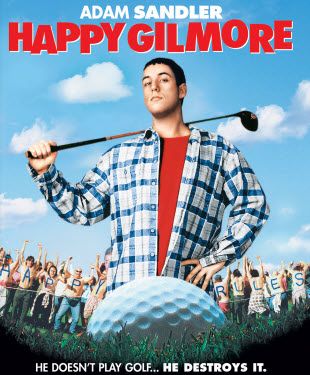
Guilty Pleasure No. 53: Happy Gilmore (dir by Dennis Dugan)


Poor Shooter McGavin!  As played by the great Christopher McDonald, Shooter McGavin is the often unacknowledged hero of the 1996 comedy classic, Happy Gilmore.

I know, I know.  Most people will tell you that Shooter is actually the bad guy.  He’s the snooty pro golfer who tries to keep aspiring hockey player-turned-golfer Happy Gilmore (Adam Sandler) from competing on the PGA tour.  And it is true that he does allow himself to get consumed with jealousy over Happy’s popularity.  And he does definitely cross the line when he buys and holds hostage the house where Happy’s grandmother has spent almost her entire life.  (“She’s so old!  Look at her!  She’d old!” Happy exclaims at one point.)  But try to look at it from Shooter’s point of view.

Shooter has spent years playing golf.  He’s practiced.  He’s paid his dues.  He’s done what he had to do to earn his spot as America’s best golfer.  And now, he finally has a chance to win his first championship.  And what happens?  A very loud hockey player shows up from out-of-nowhere and totally changes the sport.  What really has to be galling is that Happy’s not even a good player.  He can’t putt.  He has no strategy.  His only skill is the distance that he can hit the ball.  And yet, despite all that, Happy becomes a media superstar.  The only people willing to stand up to Happy and defend the honor of the game are Bob Barker and …. Shooter McGavin.

Really, Shooter doesn’t really start to go after Happy until Happy’s fans starts to purposefully antagonize him.  Remember Happy’s ex-boss showing up to heckle Shooter even though he still had that nail in his head?  Seriously that’s not right.  I mean, who shows up to support the dude who put a nail in your head?  Shooter McGavin had every reason to be concerned about that.

Despite the fact that Shooter was treated rather unfairly, Happy Gilmore is definitely a favorite of mine.  I pretty much love the entire film, from Carl Weathers’s enjoyably demented performance as Happy’s mentor to the famous scene of Bob Barker beating Happy to a pulp.  For those who only know Adam Sandler from his later, lazier comedies, Happy Gilmore will be a bit of a revelation because Sandler and the entire cast actually seem to be making an effort to make a good and funny comedy.  The staid world of golf turns out to be the perfect foil for Sandler’s manchild antics.  And for those who prefer Sandler when he’s playing serious roles, he actually does a pretty good job in Happy Gilmore’s few sincere moments.  His scenes with his grandmother are actually rather sweet.

Happy Gilmore remains Sandler’s best comedy and it’s a personal favorite of mine.  Every time I watch it, I laugh and that’s a good thing.  I also like to think that Shooter and Happy eventually set aside their differences and got their own talk show on ESPN.  They deserved it.

Previous Guilty Pleasures

  1. Half-Baked
  2. Save The Last Dance
  3. Every Rose Has Its Thorns
  4. The Jeremy Kyle Show
  5. Invasion USA
  6. The Golden Child
  7. Final Destination 2
  8. Paparazzi
  9. The Principal
  10. The Substitute
  11. Terror In The Family
  12. Pandorum
  13. Lambada
  14. Fear
  15. Cocktail
  16. Keep Off The Grass
  17. Girls, Girls, Girls
  18. Class
  19. Tart
  20. King Kong vs. Godzilla
  21. Hawk the Slayer
  22. Battle Beyond the Stars
  23. Meridian
  24. Walk of Shame
  25. From Justin To Kelly
  26. Project Greenlight
  27. Sex Decoy: Love Stings
  28. Swimfan
  29. On the Line
  30. Wolfen
  31. Hail Caesar!
  32. It’s So Cold In The D
  33. In the Mix
  34. Healed By Grace
  35. Valley of the Dolls
  36. The Legend of Billie Jean
  37. Death Wish
  38. Shipping Wars
  39. Ghost Whisperer
  40. Parking Wars
  41. The Dead Are After Me
  42. Harper’s Island
  43. The Resurrection of Gavin Stone
  44. Paranormal State
  45. Utopia
  46. Bar Rescue
  47. The Powers of Matthew Star
  48. Spiker
  49. Heavenly Bodies
  50. Maid in Manhattan
  51. Rage and Honor
  52. Saved By The Bell 3. 21 “No Hope With Dope”

Guilty Pleasure No. 52: Saved By The Bell 3.21 “No Hope With Dope” (dir by Don Barnhart)


Saved By The Bell is the show that will not die.

Saved By The Bell started out in 1989, airing on NBC on Sunday mornings.  The show followed the adventures of Zack Morris, AC Slater, Screech, Jessie Spano, Kelly Kapowski, and Lisa (hey!) Turtle as they navigated their way through Bayside High.  It’s bit of an odd show, in that there was no real continuity and Zack was a designated hero who often came across as being a young sociopath.  Zack and his friends were rich and, with the notable exception of Jessie, apolitical.  The only time they all, as a group, cared about anything was when there was an oil spill near the duck pond that was just because Zack had befriended one of the ducks.  The humor was goofy but the acting was occasionally better than it had any right to be.  (Mario Lopez was the cast MVP.)

Saved By The Bell had a loyal audience when it originally aired but it owes it popularity to syndication.  When I was in high school and college, Saved By The Bell always seemed to be playing somewhere.  I have friends who scheduled their day around, though none of them will admit it now.  As I sit here writing this, Saved By The Bell can currently be viewed on about a dozen different streaming services and there’s currently a very self-aware reboot streaming on Peacock.  Reruns of this show will probably be outlive us all.  There’s no escaping the Bell.

Interestingly enough, for all of the show’s cultural cachet, there are really one three episodes of Saved By The Bell that are really “must-see.”  The first one, of course, was the infamous episode where Jessie got hooked on sugar pills and ended up shouting, “I’m so excited!” when Zack tried to get her to wake up.  The second one was the episode where Zack passed out in his garage and dreamt about the future of his band, Zack Attack.  (“Friends forever.  It’s an nice idea.”)  And finally, there’s the “No Hope With Dope” episode.

First airing in 1991 (on November 30th, to be exact), “No Hope With Dope” feels like a time capsule.  Big-time movie star Johnny Dakota (played by Eddie Garcia) comes to Bayside and, after Zack leads the students in an anti-drug rap song, Johnny decides to shoot his latest anti-drug PSA at the high school.  This not only gives Jessie a chance to once again tell everyone about her sugar pill addiction (which I’m sure everyone at the school was sick of hearing about) but it also gives Zack, Slater, and Screech the excuse to become amateur narcs.  When they discover a joint in a Bayside bathroom, they immediately accuse Scud, who is wearing a Slayer t-shirt and is therefore the number one suspect.  Scud reveals that he only smokes cigarettes because, when it comes to marijuana, “Not even I’m that dumb!”  Slater still destroys Scud’s cigarette because cigarettes can kill too.

However, at a big movie star party, Zack and Kelly are offered a joint by — OH MY GOD! — Johnny Dakota!  Though Johnny doesn’t actually try to force the death weed on the two of them after they initially refuse it, Zack and Kelly are so disgusted by Johnny’s actions that they leave the party.  The Bayside Gang announces that they cannot sanction Johnny’s buffoonery.  (“The reputation of Bayside was at stake!” Jessie says.)  Johnny gets mad and leaves.

Watching this episode today, most viewers will probably say, “BUT IT WAS JUST A JOINT!”  Seriously, it’s not like Johnny was snorting coke in Mr. Belding’s office or shooting heroin in the school’s locker room or anything similar to that.  Johnny was only doing something that, today, is legal in many states and probably will be legal in every state by the time 2030 rolls around.  And yet, everyone at Bayside acts so shocked to discover that someone who is apparently the biggest film star in the world occasionally smokes weed.  The way that Zack and the gang react to marijuana in 1991 in comparison to how most people react to it in 2022 is one of the things that makes this episode such a guilty pleasure.  It’s a time capsule with a laugh track.

(Of course, one reason why “No Hope With Dope” became such a popular episode is that much of the show’s later audience was probably high when they first saw it.)

Anyway, Johnny’s gone and Bayside is still eager to make an anti-drug PSA.  Fortunately, Mr. Belding has a friend at NBC!  It turns out that the then-president of the network went to school with Mr. Belding!  He agrees to come to Bayside and share with everyone his hit new idea for the fall season: Don’t.  Do. Drugs.  He also does the old, “Maybe I could produce a TV show about a bunch of rich high school kids …. nah, it would never work!” joke.  “Come back and visit any time,” Jessie tells him.  Yeah, Jessie, I’m sure that’ll happen….

The show ends with the Bayside “No Hope With Dope” PSA and these few minutes are what transforms this episode into a true cultural landmark.  Watch it below and be sure to note that, when Screech pops out of the locker, there’s a picture of John Lennon smoking a joint on the door.

Previous Guilty Pleasures

  1. Half-Baked
  2. Save The Last Dance
  3. Every Rose Has Its Thorns
  4. The Jeremy Kyle Show
  5. Invasion USA
  6. The Golden Child
  7. Final Destination 2
  8. Paparazzi
  9. The Principal
  10. The Substitute
  11. Terror In The Family
  12. Pandorum
  13. Lambada
  14. Fear
  15. Cocktail
  16. Keep Off The Grass
  17. Girls, Girls, Girls
  18. Class
  19. Tart
  20. King Kong vs. Godzilla
  21. Hawk the Slayer
  22. Battle Beyond the Stars
  23. Meridian
  24. Walk of Shame
  25. From Justin To Kelly
  26. Project Greenlight
  27. Sex Decoy: Love Stings
  28. Swimfan
  29. On the Line
  30. Wolfen
  31. Hail Caesar!
  32. It’s So Cold In The D
  33. In the Mix
  34. Healed By Grace
  35. Valley of the Dolls
  36. The Legend of Billie Jean
  37. Death Wish
  38. Shipping Wars
  39. Ghost Whisperer
  40. Parking Wars
  41. The Dead Are After Me
  42. Harper’s Island
  43. The Resurrection of Gavin Stone
  44. Paranormal State
  45. Utopia
  46. Bar Rescue
  47. The Powers of Matthew Star
  48. Spiker
  49. Heavenly Bodies
  50. Maid in Manhattan
  51. Rage and Honor

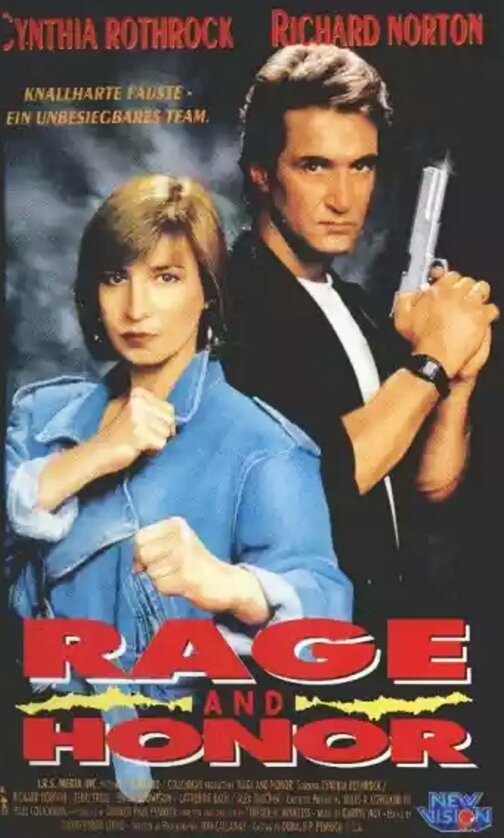
Guilty Pleasure No. 51: Rage and Honor (dir by Terence Winkless)


The 1992 film, Rage and Honor, tells the story of two people from different worlds, who come together to kick ass and save a declining American city.

Preston Michaels (Richard Norton) is a cop from Australia who has come to America as a part of an exchange program.  When he’s not working undercover, he’s supplementing his income by working as a bodyguard for what appears to be an 80s cover band.

Kris Fairfield (Cynthia Rothrock) is a teacher at the local high school who also moonlights as a karate instructor.  She’s haunted by the death of her parents and the subsequent disappearance of her brother.  She cares about her students, even though hardly any of them actually appear in the film.  In fact, the whole high school teacher thing never really matters much in the grand scheme of things.

Preston and Kris are teaming up to take down spacey drug lord Conrad Drago (Brian Thompson).  Conrad has a fierce mullet, a cocaine addiction, and a knowledge of all of the body’s pressure points.  His girlfriend is Rita (Terri Treas) and the only thing that could possibly prevent Drago and Rita from taking over the city is a tape that reveals Rita and a bunch of crooked cops killing someone.  Kris and Preston are trying to find the tape before Drago and Rita find it.  Somehow, it all eventually leads to a homeless stock broker named Baby (Stephen Davies) and a weird fight club that’s run by Hannah the Hun (Alex Datcher).

It’s an incredibly silly film, to be honest.  It’s the type of film where Preston gets shot once in the side and once in the leg and neither time does it slow him down.  (He does mention that his leg hurts at one point but he never starts to limp or anything like that.)  Kris, meanwhile, is given a tragic backstory that is explained to us in-between scenes of awkward comedic relief.  Hannah goes from being a calculating villainous to a heroic ally, without the film attempting any explanation as to why.  Meanwhile, despite Brian Thompson’s best efforts to be menacing, Conrad is written as being some sort of flakey, New Age drug dealer.  He’s about as intimidating as the biggest guy in a drum circle.  There’s really not much rage or honor to be found in Rage and Honor.

And yet, it was impossible for me to dislike the film.  Every time Cynthia Rothrock did a flying kick and sent some jerk flying, the film won me back.  Unfortunately, she didn’t really get to do as much fighting as she should have.  She had to share the screen with Brian Thompson and Richard Norton, who both received fight scenes of their own.  All three of them looked good fighting but Cynthia was the clear star.  What she lacked in actual acting ability, she made up for with pure enthusiasm.  Watching her, you realized that she was not only good at fighting but she enjoyed it as well.  For all the film’s flaws, Cynthia kicked everyone’s ass and that’s really all that mattered.  It was empowering and, even more importantly, it was a lot of fun to watch.

Go, Cynthia, go!

Previous Guilty Pleasures

  1. Half-Baked
  2. Save The Last Dance
  3. Every Rose Has Its Thorns
  4. The Jeremy Kyle Show
  5. Invasion USA
  6. The Golden Child
  7. Final Destination 2
  8. Paparazzi
  9. The Principal
  10. The Substitute
  11. Terror In The Family
  12. Pandorum
  13. Lambada
  14. Fear
  15. Cocktail
  16. Keep Off The Grass
  17. Girls, Girls, Girls
  18. Class
  19. Tart
  20. King Kong vs. Godzilla
  21. Hawk the Slayer
  22. Battle Beyond the Stars
  23. Meridian
  24. Walk of Shame
  25. From Justin To Kelly
  26. Project Greenlight
  27. Sex Decoy: Love Stings
  28. Swimfan
  29. On the Line
  30. Wolfen
  31. Hail Caesar!
  32. It’s So Cold In The D
  33. In the Mix
  34. Healed By Grace
  35. Valley of the Dolls
  36. The Legend of Billie Jean
  37. Death Wish
  38. Shipping Wars
  39. Ghost Whisperer
  40. Parking Wars
  41. The Dead Are After Me
  42. Harper’s Island
  43. The Resurrection of Gavin Stone
  44. Paranormal State
  45. Utopia
  46. Bar Rescue
  47. The Powers of Matthew Star
  48. Spiker
  49. Heavenly Bodies
  50. Maid in Manhattan

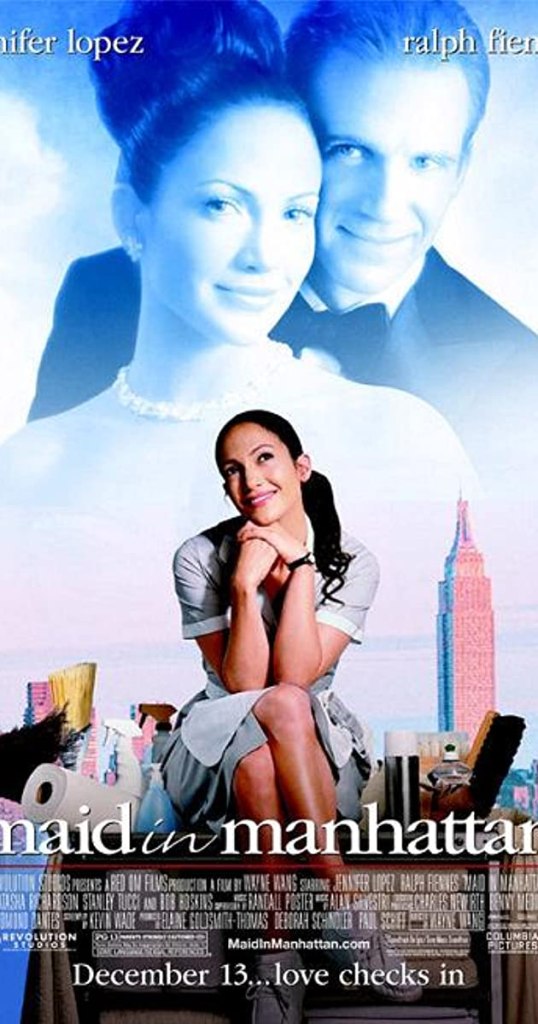
Guilty Pleasure No. 50: Maid in Manhattan (dir by Wayne Wang)


Whenever I see that the 2002 film, Maid in Manhattan, is going to be playing on HBO or Cinemax, I always think to myself, “I can’t understand why everyone hates on this film.  I mean, it’s not that bad.  It may be predictable and silly but it’s kind of sweet and Jennifer Lopez and Matthew McConaughey have a tame but sexy chemistry.”

Of course, then I watch the film and I discover that Maid in Manhattan is not the film where Jennifer Lopez and Matthew McConaughey fall in love.  That’s The Wedding Planner.  Instead, Maid in Manhattan is the one where Jennifer Lopez is a maid who works in a big fancy hotel and who is a single mother to a precocious child who is obsessed with Richard Nixon.  Maid in Manhattan is also the one where Jennifer Lopez falls in love with Ralph Fiennes.  Fiennes plays a candidate for the U.S. Senate.  Everyone is worried that he’ll never make it to Washington if people discover that his girlfriend is a maid.  I think his bigger problem is that he’s a Republican running for the U.S. Senate in New York.  (At least, I assume he’s a Republican because — as we learn from his conversations with Lopez’s son — he certainly seems to know a lot about and be rather sympathetic to Richard Nixon.)

I still like Maid in Manhattan, though perhaps not as sincerely as I like The Wedding Planner.  Some of that is because Maid in Manhattan takes place during the Christmas season and I love a good wintry romance.  Some of it is because this is probably the only mainstream film to feature people discussing the good points of Richard Nixon.  There’s the fact that Jennifer Lopez is always perfectly cast as someone determined to make something out of her life, regardless of whether or not the world supports her or not.  She’s always had the ability to make steely ambition sympathetic and that’s a good ability to have when you’re playing a maid who is determined to get promoted into management.

Finally, there’s the odd romantic pairing of Ralph Fiennes and Jennifer Lopez.  It’s one of those things that shouldn’t work and yet, strangely, it does.  Fiennes always brings a certain off-center, neurotic energy to his performances, which not only explains why he’s played so many villains but also why it’s strange to see him starring in a romantic comedy.  And yet, that odd energy is exactly what Maid in Manhattan needs.  It keeps the viewer on their toes and it makes the surprising discovery that Fiennes and Lopez have romantic chemistry all the more rewarding.

Don’t get me wrong, of course.  This is a deeply silly movie and there’s a lot of less than sparkling dialogue and the plot falls apart if you even start to think about it.  The entire story revolves around mistaken identity, with Fiennes not realizing that Jennifer Lopez is a maid and …. well, it’s all a bit unnecessarily complicated.  The film also takes Fiennes’s political aspirations a bit too seriously.  It’s not quite as bad the whole thing with Matt Damon running for the Senate in The Adjustment Bureau (“Due to his charming concession speech, he will someday be elected President,” — whatever, Beto) but it gets close.

But, still — I love romance and I love New York and the pairing of Jennifer Lopez and Ralph Fiennes in Maid in Manhattan is just too strange (and oddly effective) for me to resist.

Previous Guilty Pleasures

  1. Half-Baked
  2. Save The Last Dance
  3. Every Rose Has Its Thorns
  4. The Jeremy Kyle Show
  5. Invasion USA
  6. The Golden Child
  7. Final Destination 2
  8. Paparazzi
  9. The Principal
  10. The Substitute
  11. Terror In The Family
  12. Pandorum
  13. Lambada
  14. Fear
  15. Cocktail
  16. Keep Off The Grass
  17. Girls, Girls, Girls
  18. Class
  19. Tart
  20. King Kong vs. Godzilla
  21. Hawk the Slayer
  22. Battle Beyond the Stars
  23. Meridian
  24. Walk of Shame
  25. From Justin To Kelly
  26. Project Greenlight
  27. Sex Decoy: Love Stings
  28. Swimfan
  29. On the Line
  30. Wolfen
  31. Hail Caesar!
  32. It’s So Cold In The D
  33. In the Mix
  34. Healed By Grace
  35. Valley of the Dolls
  36. The Legend of Billie Jean
  37. Death Wish
  38. Shipping Wars
  39. Ghost Whisperer
  40. Parking Wars
  41. The Dead Are After Me
  42. Harper’s Island
  43. The Resurrection of Gavin Stone
  44. Paranormal State
  45. Utopia
  46. Bar Rescue
  47. The Powers of Matthew Star
  48. Spiker
  49. Heavenly Bodies

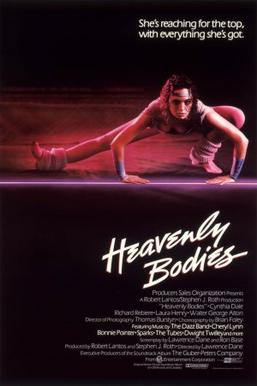
(Canadian) Guilty Pleasure No. 49: Heavenly Bodies (dir by Lawrence Dane)


“She’s reaching the top …. with everything she’s got!”

That’s the tag line of the 1984 Canadian film, Heavenly Bodies.  It’s a perfectly vapid tagline for an entertainingly vapid movie.  It was on TCM last night and I just finished watching it.  It takes a lot to get me out of my horror film habit in October but how could I resist a movie about Canadian gym rivalries?

Now, even though this isn’t a horror film, it is a Canadian film from the 80s which means that it features a lot of performers who will be familiar to fans of old school slasher films.  For instance, the film stars Cynthia Dale, who was also in the original My Bloody Valentine.  Cynthia plays Samantha, an administrative assistant who quits her job and opens up her own independent gym, Heavenly Bodies.  Samantha is an aerobic dance instructor, perhaps the best in all of Ontario.  Samantha is also a single mother but there’s no better way to find a lover than to teach him aerobics.

Heavenly Bodies was also directed by a veteran of Canadian exploitation, Lawrence Dane.  Remember Happy Birthday To Me?  He plays the father in that movie.  I’d love to know the story of what led to Lawrence Dane not only directing but apparently also helping to write the script for a movie about an independent health club.  I mean, to go from working with David Cronenberg and winning Genie Awards to directing Heavenly Bodies seems like quite a career trajectory.  As a sidenote, how much more interesting would Heavenly Bodies be if it had been directed David Cronenberg?  I imagine that all the leg cramps would be a bit more graphic.

Samantha is selected to host her own exercise show on Canadian TV and a bigger Canadian gym decides that the only way to deal with this upstart is to destroy Heavenly Bodies by buying out their lease …. or something.  To be honest, I really couldn’t follow half the plot of Heavenly Bodies.  I just know that there was a lot of dancing and lot of exercising and a lot of shots of Samantha walking around Toronto.  The film came out a year after Flashdance and all of the scenes of Samantha walking around the city are basically filmed in exactly the same way as the shots of Jennifer Beals walking around Pittsburgh.  (There’s even a scene where Samantha stands in front of a poster for Flashdance, trying to convince people to join her gym.)  Whereas you kind of admired the way that Jennifer Beals handled herself on the dangerous streets of Pittsburgh, you never really worry about Samantha because …. well, it’s Toronto.  As I watched the film, I started to think about the fact that Canada consistently sends its best actors to the U.S. while those of us in the States consistently send our bad movies up north.  I’m not sure if that’s really a fair trade.

Anyway, the two gyms decide to settle their differences with an exercise marathon that is televised on Canadian TV.  (I’m going to assume that the film takes place in-between hockey seasons.)  Basically, the exercise marathon is one of those things where you have two teams and everyone just keeps exercising until they drop.  The last person standing is the winner and their gym gets …. I don’t know, bragging rights?  I mean, I’m not even how they were able to convince anyone to put an exercise marathon on TV.  I guess it was an 80s thing.

Can you guess who wins the exercise marathon?

Listen, Heavenly Bodies is technically a bad movie but I still like it because there’s a lot of dancing and everyone in the cast is so enthusiastic about whatever it is that they think they’re doing.  There’s something to be said for enthusiasm.  Add to that, the exercise marathon just has to be seen to believed.  This is a film of the 80s and its Canadian to boot so how can it not be a guilty pleasure of sorts?

Previous Guilty Pleasures

  1. Half-Baked
  2. Save The Last Dance
  3. Every Rose Has Its Thorns
  4. The Jeremy Kyle Show
  5. Invasion USA
  6. The Golden Child
  7. Final Destination 2
  8. Paparazzi
  9. The Principal
  10. The Substitute
  11. Terror In The Family
  12. Pandorum
  13. Lambada
  14. Fear
  15. Cocktail
  16. Keep Off The Grass
  17. Girls, Girls, Girls
  18. Class
  19. Tart
  20. King Kong vs. Godzilla
  21. Hawk the Slayer
  22. Battle Beyond the Stars
  23. Meridian
  24. Walk of Shame
  25. From Justin To Kelly
  26. Project Greenlight
  27. Sex Decoy: Love Stings
  28. Swimfan
  29. On the Line
  30. Wolfen
  31. Hail Caesar!
  32. It’s So Cold In The D
  33. In the Mix
  34. Healed By Grace
  35. Valley of the Dolls
  36. The Legend of Billie Jean
  37. Death Wish
  38. Shipping Wars
  39. Ghost Whisperer
  40. Parking Wars
  41. The Dead Are After Me
  42. Harper’s Island
  43. The Resurrection of Gavin Stone
  44. Paranormal State
  45. Utopia
  46. Bar Rescue
  47. The Powers of Matthew Star
  48. Spiker


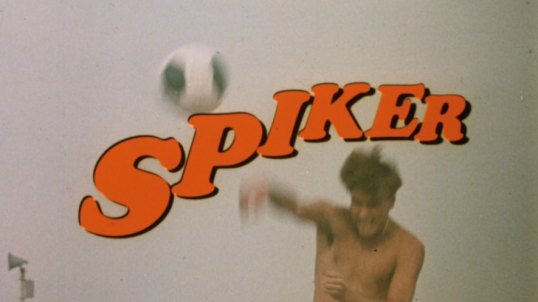
Guilty Pleasure No. 46: Spiker (dir by Roger Tilton)


The 1985 film, Spiker, is an attempt to make an exciting movie out of the one of the most boring sports in the world, men’s volleyball.  Not only does the film attempt to make volleyball look exciting but it attempts to do it on absolutely no budget.  Anyone who doesn’t appreciate the combination of guts and foolishness necessary to even attempt this is not a real film fan.

Spiker follows a group of college volleyball players as they train to qualify for the Olympics.  Or, at least, that’s what I think is supposed to be going on.  The plot is really difficult to follow, not because it’s complex but just because it’s volleyball and who cares?  We learn that the coach of the team (played by Michael Parks) is a tough taskmaster.  We learn that one of the players needs to get his act together and be more mature.  We learn that another member of the team has a wife who is jealous of all of his volleyball groupies.  Eventually, the team competes in Japan and Poland.  In Japan, the teammate who needs to get his act together gets drunk and wanders around with two prostitutes.  Poland, meanwhile, is represented by a high school gym and four women doing the polka.  One Polish woman asks a member of the team to smuggle out some letters.  Which he does.  Yay.  Exciting.

As I said, there’s a lot of volleyball in Spiker but you’re never really sure if the American team is winning or not.  Unless it’s being played on a beach and everyone’s wearing a skimpy bathing suit, volleyball is a thoroughly uncinematic sport.  I mean, what do you think of when you think about volleyball in the movies?  You think about Carrie White not hitting the ball and then burning down the school.  What you don’t wonder is, “I wonder who was winning when Carrie missed that hit?”

What makes Spiker a pleasure is it’s determination.  The film is truly convinced that it can somehow make volleyball exciting and you have to admire it for being so sure of itself.  It’s kind of like those people who spend night after night in Marfa, waiting for the UFOs to arrive.  They may be crazy but you can’t help but admire their dedication, even while you’re laughing at some of the absolutely atrocious dialogue.

The other thing that makes Spiker a guilty pleasure is the extremely intense and almost unhinged performance of Michael Parks at the volleyball coach.  Parks plays the coach as being tough-as-nails and always in a bad mood.  The film’s best scene features him throwing volleyball after volleyball at a player who has displeased him.  Parks does so with a look of grim determination on his face, the sign of a dedicated method actor giving it his best even in a B-movie that he probably agreed to do because he needed to pay the rent.  What makes Parks’s performance so memorable is that he never really seems angry.  Instead, he just seems to be perpetually annoyed and that makes him all the scarier.  Anger, after all, passes.  Annoyance is forever.

Spiker is a bad film but it’s endlessly watchable precisely because it so misjudged.  You can’t help but find both it and Michael Parks’s performance to be oddly fascinating.

Previous Guilty Pleasures

  1. Half-Baked
  2. Save The Last Dance
  3. Every Rose Has Its Thorns
  4. The Jeremy Kyle Show
  5. Invasion USA
  6. The Golden Child
  7. Final Destination 2
  8. Paparazzi
  9. The Principal
  10. The Substitute
  11. Terror In The Family
  12. Pandorum
  13. Lambada
  14. Fear
  15. Cocktail
  16. Keep Off The Grass
  17. Girls, Girls, Girls
  18. Class
  19. Tart
  20. King Kong vs. Godzilla
  21. Hawk the Slayer
  22. Battle Beyond the Stars
  23. Meridian
  24. Walk of Shame
  25. From Justin To Kelly
  26. Project Greenlight
  27. Sex Decoy: Love Stings
  28. Swimfan
  29. On the Line
  30. Wolfen
  31. Hail Caesar!
  32. It’s So Cold In The D
  33. In the Mix
  34. Healed By Grace
  35. Valley of the Dolls
  36. The Legend of Billie Jean
  37. Death Wish
  38. Shipping Wars
  39. Ghost Whisperer
  40. Parking Wars
  41. The Dead Are After Me
  42. Harper’s Island
  43. The Resurrection of Gavin Stone
  44. Paranormal State
  45. Utopia
  46. Bar Rescue
  47. The Powers of Matthew Star