Scenes I Love: The Cross-Examination From Anatomy of a Murder


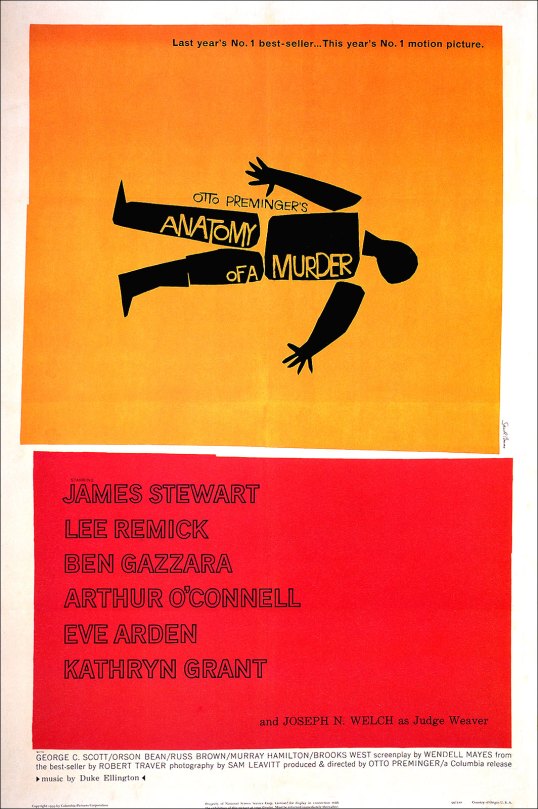
Since today is Otto Preminger’s birthday, I figured that this would be a good time to share a scene that I love from one of my favorite movies, Preminger’s 1959 film, Anatomy of a Murder.

In this scene, prosecutor Claude Dancer (played, in one of his first screen roles, by George C. Scott) cross-examined Laura Manion (Lee Remick), the wife of a man who has been accused of murder.  Playing the role of the defense attorney is James Stewart.  This scene is a master-class in great acting.  Preminger could be a bit of an inconsistent director but his willingness to take on controversial subjects set him apart from many of his contemporaries.  When he had the right material, as he did here, he could create the perfect mix of melodrama and art.  Preminger’s best films, like Anatomy of a Murder, stand the test of time.

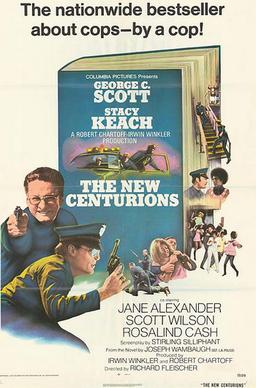
The New Centurions (1972, directed by Richard Fleischer)


Fresh from the police academy, three rookie cops are assigned to a precinct in East L.A.  Gus (Scott Wilson) is a father of three who just wants to do a good job and support his family.  Sergio (Erik Estrada) is a former gang member who saw the police academy as a way to get out of his old neighborhood, and Roy (Stacy Keach) is a new father who is going to law school at night.  Most of the movie centers on Roy, who goes from being an idealistic rookie to being a hardened veteran and who comes to love the job so much that he abandons law school and eventually loses his family.  Roy’s wife (Jane Alexander) comes to realize that Roy will never be able to relate to anyone other than his fellow cops.  Roy’s mentor is Andy Kilvinski (George C. Scott), a tough but warm-hearted survivor who has never been shot once and whose mandatory retirement is approaching.

Based on an autobiographical novel by real-life policeman Joseph Wambaugh, The New Centurion’s episodic structure allows the film to touch on all the issues, good and bad, that come with police work.  Gus is shaken after he accidentally shoots a civilian.  Sergio feels the burden of patrolling the streets on which he grew up.  Roy becomes a good cop but at the cost of everything else in his life and he deals with the stress by drinking.  There are moments of humor and moments of seriousness and then a tragic ending.  Just as Wambaugh’s book was acclaimed for its insight and its realistic portrayal of the pressures of being a policeman, the movie could have been one of the definitive portraits of being a street cop, except that it was directed in a workmanlike fashion by Richard Fleischer.  Instead of being the ultimate cop movie, The New Centurions feels more like an especially good episode of Police Story or Hill Street Blues.  (The New Centurions and Hill Street Blues both feature James B. Sikking as a pipe-smoking, martinet commander.)

George C. Scott, though.  What a great actor!  Scott only has a supporting role but he’s so good as Kilvinski that you miss him when he’s not around and, when he leaves, the movie gets a lot less interesting.  Scott makes Kilvinski the ultimate beat cop and he delivers the closest thing that The New Centurions has to a cohesive message.  A cop can leave the beat but the beat is never going to leave him.

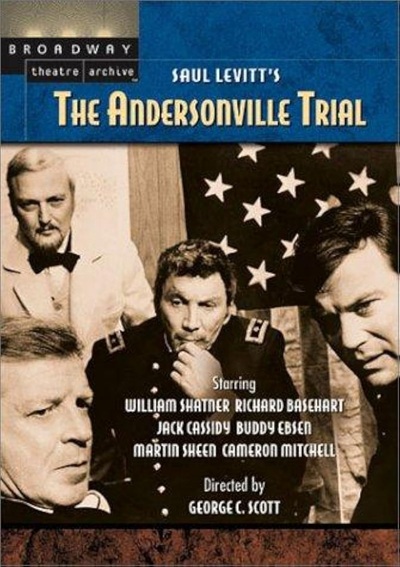
On Stage On The Lens: The Andersonville Trial (dir by George C. Soctt)


1970’s The Andersonville Trial takes place in one muggy military court room.  The year is 1865.  The Civil War is over but the wounds of the conflict are still fresh.  Many of the leaders of the Confederacy are still fugitives.  Abraham Lincoln has been dead for only a month.  The people want someone to pay and it appears that person might be Captain Henry Wirz (Richard Basehart).

Originally born in Switzerland and forced to flee Europe after being convicted of embezzlement, Henry Wirz eventually ended up in Kentucky.  He served in the Confederate Army and was eventually named the commandant of Camp Sumter, a prison camp located near Andersonville, Georgia.  After the war, Captain Wirz is indicted for war crimes connected to his treatment of the Union prisoners at the camp.  Wirz and his defense counsel, Otis Baker (Jack Cassidy), argue that the prison soon became overcrowded due to the war and that Wirz treated the prisoners as well as he could considering that he had limited resoruces.  Wirz points out that his requests for much-needed supplies were denied by his superiors.   Prosecutor Norton Chipman (William Shatner) argues that Wirz purposefully neglected the prisoners and their needs and that Wirz is personally responsible for every death that occurred under his watch.  The trial is overseen by Maj. General Lew Wallace (Cameron Mitchell), the same Lew Wallace who would later write Ben-Hur and who reportedly offered a pardon to Billy the Kid shortly before the latter’s death.  Wallace attempts to give Wirz a fair trial, even allowing Wirz to spend the trial reclining on a couch due to a case of gangrene.  (Agck!  The 19th century was a scary time!)

The Andersonville Trial started life as a 1959 Broadway production.  On stage, George C. Scott played Chipman, an experience he described as difficult because, even though Chipman was nominally the play’s hero, Wirz was actually a much more sympathetic character.  When the play was adapted for television in 1970, Scott returned to direct.  Admittedly, the television version is very stagey.  Scott doesn’t make much effort to open up the play.  Almost all of the action is confined to that courtroom.  We learn about the conditions at Fort Sumter in the same way that the judges learned about the conditions.  We listen as the witnesses testify.  We listen as a doctor played by Buddy Ebsen talks about the deplorable conditions at Fort Sumter.  We also listen as a soldier played by Martin Sheen reports that Wirz has previously attempted to suicide and we’re left to wonder if it was due to guilt or fear of the public execution that would follow a guilty verdict.  We watch as Chipman and Baker throw themselves into the trial, two attorneys who both believe that they are correct.  And we watch as Wirz finally testifies and the play hits its unexpected emotional high point.

As most filmed plays do, The Andersonville Trial demands a bit of patience on the part of the viewer.  It’s important to actually focus on not only what people are saying but also how they’re saying it.  Fortunately, Scott gets wonderful performances from his ensemble cast.  Even William Shatner’s overdramatic tendencies are put to good use.  Chipman is outraged but the play asks if Chipman is angry with the right person.  With many of the Confederacy’s leaders in Canada and Europe, Wirz finds himself standing in for all of them and facing a nation that wants vengeance for the death of their president.  Wirz claims and his defense attorney argues that Wirz was ultimately just a soldier who followed orders, which is what soldiers are continually told to do.  The Andersonville Trial considers when military discipline must be set aside to do what is morally right.

Admittedly, when it comes to The Andersonville Trial, it helps to not only like courtroom dramas but to also be a bit of a history nerd as well.  Fortunately, both of those are true of me.  I found The Andersonville Trial to be a fascinating story and a worthy production.

10 Oscar Snubs From The 1960s


Ah, the 60s. Both the studio system and the production code collapsed as Hollywood struggled to remain relevant during a time of great social upheaval. The Academy alternated between nominating films that took chances and nominating films that cost a lot of money. It led to some odd best picture lineups and some notable snubs!

1960: Psycho Is Not Nominated For Best Picture and Anthony Perkins Is Not Nominated For Best Actor

To be honest, considering that the Academy has never really embraced horror as a genre and spent most of the 60s nominating big budget prestige pictures, it’s a bit surprising that Psycho was actually nominated for four Oscars.  Along with being nominated for its production design and its cinematography, Psycho also won nominations for Alfred Hitchcock and Janet Leigh.  However, Anthony Perkins was not nominated for Best Actor, despite giving one of the most memorable performances of all time.  The film literally would not work without Perkins’s performance and, considering that Perkins pretty much spent the rest of his career in the shadow of Norman Bates, it’s a shame that he didn’t at least get a nomination for his trouble.  Psycho was also not nominated for Best Picture, despite being better remembered and certainly more influential than most of the films that were.

1962: The Man Who Shot Liberty Valance Is Almost Totally Snubbed

The Man Who Shot Liberty Valance was not totally snubbed by the Academy.  It received a nomination for Best Costume Design.  But still, it deserved so much more!  John Ford, James Stewart, John Wayne, Lee Marvin, Vera Miles, and the picture itself were all worthy of nominations.  Admittedly, 1962 was a year full of great American films and there was a lot of competition when it came to the Oscars.  Still, The Man Who Shot Liberty Valance definitely deserved a best picture nomination over the bloated remake of Mutiny on the Bounty.  Today, if the first Mutiny on the Bounty remake is known for anything, it’s for Marlon Brando being difficult on the set.  But The Man Who Shot Liberty Valance is still remembered for telling us to always print the legend.
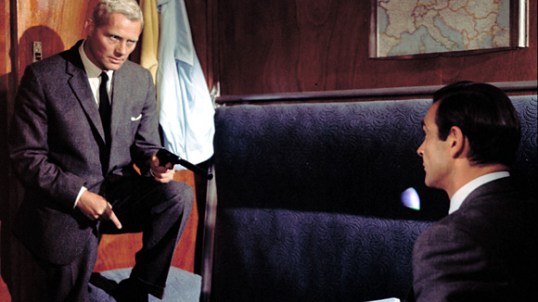
1964: From Russia With Love Is Totally Snubbed

The same year that the Academy honored George Cukor’s creaky adaptation of My Fair Lady, it totally ignored my favorite James Bond film.  From Russia With Love is a Bond film that works wonderfully as both a love story and a thriller.  Sean Connery, Lotte Lenya, Robert Shaw, and Terence Young all deserved some award consideration.  From Russia With Love was released in the UK in 1963.  In a perfect world, it would have also been released concurrently in the U.S., allowing From Russia With Love to be the film that gave the the Academy the chance to recognize the British invasion.  Instead, Tom Jones was named the Best Picture of 1963 and From Russia With Love had to wait until 1964 to premiere in the U.S.  It was snubbed in favor of one of old Hollywood’s last grasps at relevance.

1964: Slim Pickens Is Not Nominated For Best Supporting Actor

Playing three separate roles, Peter Sellers dominates Dr. Strangelove: Or How I Learned To Stop Worrying And Love The Bomb.  But, as good as Sellers is, the film’s most memorable image is definitely Slim Pickens whooping it up as he rides the bomb down to Earth.  George C. Scott and Sterling Hyaden also undoubtedly deserved some award consideration but, in the end, Pickens is the one who brings the film to life even as he helps to bring society to an end.

1967: In Cold Blood Is Not Nominated For Best Picture

In Cold Blood, though not a perfect film, certainly deserved a nomination over Dr. Doolittle.  In Cold Blood is a film that still has the power to disturb and haunt viewers today.  Dr. Doolittle was a box office debacle that was nominated in an attempt to help 20th Century Fox make back some of their money.
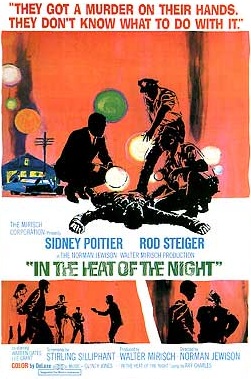
1967: Sidney Poitier Is Not Nominated For Best Actor For In The Heat Of The Night

In 1967, Sidney Poitier starred in two of the films that were nominated for Best Picture but somehow, he did not pick up a nomination himself.  His restrained but fiercely intelligent performance in In The Heat Of The Night provided a powerful contrast to Rod Steiger’s more blustery turn.  That Poitier was not nominated for his performance as Virgil Tibbs truly is one of the stranger snubs in Academy history.  (If I had to guess, I’d say that the Actors Branch was split on whether to honor him for In The Heat of the Night or Guess Who’s Coming To Dinner or even for To Sir With Love and, as a result, he ended up getting nominated for none of them.)

1968: 2001: A Space Odyssey and Planet of the Apes Are Not Nominated For Best Picture

Neither one of these classic science fiction films were nominated for Best Picture, despite the fact that both of them are far superior and far more influential than Oliver!, the film that won that year.

1968: The Good, The Bad, and the Ugly Is Totally Ignored

Not even Ennio Morricone’s score received a nomination!

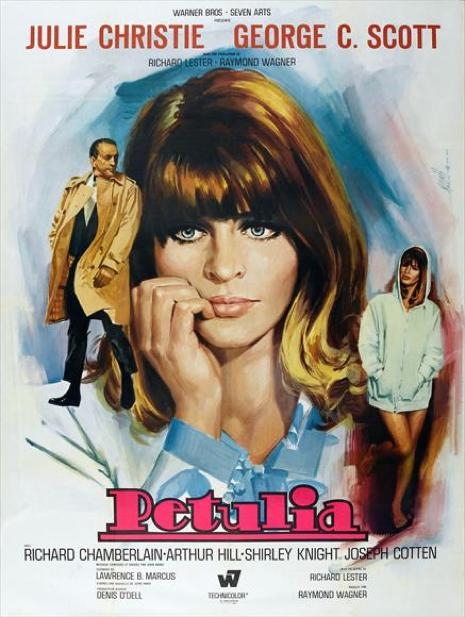
1968: Petulia Is Totally Snubbed

Seriously, I don’t know what was going on with the Academy in 1968 but it seems they went out of their way to ignore the best films of the year.  Richard Lester’s Petulia is usually cited as one of the definitive films of the 60s but it received not a single Oscar nomination.  Not only did the film fail to receive a nomination for Best Picture but Richard Lester, George C. Scott, Julie Christie, Shirley Knight, Richard Chamberlain, and the film’s screenwriters were snubbed as well.

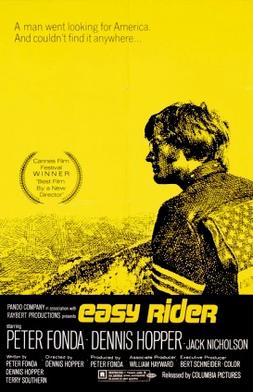
1969: Easy Rider Is Not Nominated For Best Picture

Yes, I know.  Easy Rider is a flawed film and there are certain moments that are just incredibly pretentious.  That said, Easy Rider defined an era and it also presented a portrait of everything that was and is good, bad, and timeless about America.  The film may have been produced, directed, and acted in a drug-razed haze but it’s also an important historical document and it was also a film whose success permanently changed Hollywood.  Certainly, Easy Rider’s legacy is superior to that of Hello, Dolly!

Agree? Disagree? Do you have an Oscar snub that you think is even worse than the 10 listed here? Let us know in the comments!

Up next: It’s the 70s!
Scenes That I Love: The Viola Lee Blues Montage from Richard Lester’s Petulia


Who, you may be asking yourself, could have brought George C. Scott, Julie Christie, and the Grateful Dead all together in one movie?

The answer to that question is Richard Lester, who today celebrates his 91st birthday!  Though Lester is best-known for his work with the Beatles and with the Superman films, I think his best film was undoubtedly 1968’s Petulia.  A sharp social satire, Petulia took a look at what happened when the counter culture and the establishment collided in San Francisco.  And there’s perhaps no better symbol of that collision than George C. Scott, wearing a turtleneck and smoking cigarette while attending a Grateful Dead show.

While the band plays Viola Lee Blues, Scott wanders through 1960s San Francisco.

https://www.youtube.com/watch?v=h88K3TiPPos

Scenes I Love: The Cross-Examination From Anatomy of a Murder


Since today is Otto Preminger’s birthday, I figured that this would be a good time to share a scene that I love from one of my favorite movies, Preminger’s 1959 film, Anatomy of a Murder.

In this scene, prosecutor Claude Dancer (played, in one of his first screen roles, by George C. Scott) cross-examined Laura Manion (Lee Remick), the wife of a man who has been accused of murder.  Playing the role of the defense attorney is James Stewart.  This scene is a master-class in great acting.  Preminger could be a bit of an inconsistent director but his willingness to take on controversial subjects set him apart from many of his contemporaries.  When he had the right material, as he did here, he could create the perfect mix of melodrama and art.  Preminger’s best films, like Anatomy of a Murder, stand the test of time.

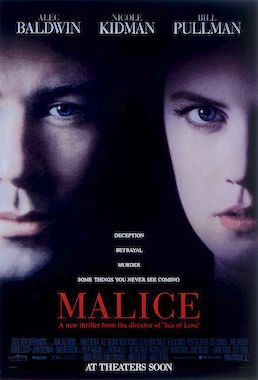
Insomnia File #48: Malice (dir by Harold Becker)


What’s an Insomnia File? You know how some times you just can’t get any sleep and, at about three in the morning, you’ll find yourself watching whatever you can find on cable or Netflix? This feature is all about those insomnia-inspired discoveries!

If you were having trouble getting to sleep last night around 12 midnight, you could have turned over to the Cinemax and watched the 1993 thriller, Malice.  And then you could have spent the next few hours trying to figure out what you just watched.

Seriously, there’s a lot going on in Malice.  The screenplay is credited to Aaron Sorkin and Scott Frank and while it has enough overly arch dialogue and untrustworthy women to plainly identify it as being a product of Sorkin’s imagination, it’s also filled with a mini-series worth of incidents and subplots and random characters.  This is also one of those films where no one can simply answer a question with a “yes” or a “no.”  Instead, it’s one of those movies where everyone gets a monologue, giving the proceedings a rather theatrical feel.  It’s the type of thing that David Mamet could have pulled off.  (Check out The Spanish Prisoner for proof.)  Harold Becker, however, was a far more conventionally-minded director and he often seems to be at a loss with what to do with all of the film’s Sorkinisms (and, to be fair, Frankisms as well).

The film starts out as a thriller, with a serial rapist stalking a college campus and Prof. Andy Safian (Bill Pullman) becoming an unlikely suspect.  Then it turns into a domestic drama as Andy and his wife, Tracy (Nicole Kidman), talk about starting a family.  Then Andy meets a brilliant surgeon named Jed Hill (Alec Baldwin) and the film turns into a roommate from Hell story after Jed moves in with them.  Then it becomes a medical drama after a mistake by Dr. Hill leaves Tracy unable to have children.  Then it returns briefly to the campus rapist story before then turning into a modern-day noir as Andy discovers that Tracy has secrets of her own.  (Whenever one watches a film written by Aaron Sorkin, you can practically hear him whispering, “Women are not to be trusted….” in the background.)  Even as you try to keep up with the plot, you find yourself distracted by all of the cameos.   George C. Scott glowers as Jed’s mentor.  Anne Bancroft acts the Hell out of her role as a drunken con artist.  Peter Gallagher is the lawyer you distrust because he’s Peter Gallagher.  Tobin Bell shows up as a handyman.  Gwynneth Paltrow, in one of her first roles, plays dead convincingly

It’s a big and busy and messy film and it too often mistakes being complicated for being clever.  Bill Pullman is a likable hero but you have to be willing to overlook that the script requires him to do some truly stupid things.  Nicole Kidman is always well-cast as a femme fatale but again, the script often lets her down.

Surprisingly enough, it’s Alec Baldwin who comes out of the film unscathed.  Watching Baldwin in this film, it’s hard to believe that he’s the same actor who has since become something of a bloated self-parody.  Yes, he’s playing an arrogant character (which is pretty much his trademark) but, in Malice, he actually brings a hint of subtlety and wit to his performance.  Baldwin does very little bellowing in the film, despite playing a role that one would think would naturally appeal to all of his bellowing instincts.  Malice is a mess but it’s nice to see the type of actor that Alec Baldwin once was.

Previous Insomnia Files:

  1. Story of Mankind
  2. Stag
  3. Love Is A Gun
  4. Nina Takes A Lover
  5. Black Ice
  6. Frogs For Snakes
  7. Fair Game
  8. From The Hip
  9. Born Killers
  10. Eye For An Eye
  11. Summer Catch
  12. Beyond the Law
  13. Spring Broke
  14. Promise
  15. George Wallace
  16. Kill The Messenger
  17. The Suburbans
  18. Only The Strong
  19. Great Expectations
  20. Casual Sex?
  21. Truth
  22. Insomina
  23. Death Do Us Part
  24. A Star is Born
  25. The Winning Season
  26. Rabbit Run
  27. Remember My Name
  28. The Arrangement
  29. Day of the Animals
  30. Still of The Night
  31. Arsenal
  32. Smooth Talk
  33. The Comedian
  34. The Minus Man
  35. Donnie Brasco
  36. Punchline
  37. Evita
  38. Six: The Mark Unleashed
  39. Disclosure
  40. The Spanish Prisoner
  41. Elektra
  42. Revenge
  43. Legend
  44. Cat Run
  45. The Pyramid
  46. Enter the Ninja
  47. Downhill

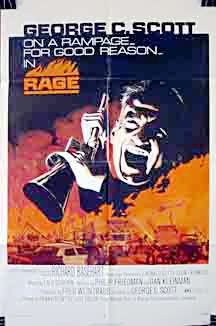
Rage (1972, directed by George C. Scott)


Wyoming sheep rancher Dan Logan (George C. Scott) and his teenage son, Chris (Nicolas Beauvy), spend a night camping out on their land.  While Dan stays in the tent, Chris decides to sleep outside, underneath the stars.  The next morning, Dan leaves the tent to discover that all of his sheep are dead and that Chris is having violent convulsions.  Dan rushes his son to the local hospital, where he hopes that the family’s longtime physician, Dr. Caldwell (Richard Basehart), can save his son’s life.

However, at the hospital, Dan is separated from his son.  Two doctors that he’s never met before — Dr. Spencer (Barnard Hughes) and Major Holliford (Martin Sheen) — take over his case.  They tell him that Chris was probably just exposed to an insecticide and that both Dan and his son are going to have to stay at the hospital for a few days.  Dan is confined to his room and not allowed to see his son.

What Dan doesn’t know is that both he and his son have been unwittingly exposed to a secret army nerve gas.  Though the experiment was only meant to be performed on the animals that were grazing on Dan’s land, Dan and Chris were accidentally sprayed.  When Dan discovers the truth about what’s been done to him and his son, he sets out to try to get revenge with what little time he has left.

Fresh from refusing an Oscar for Patton, George C. Scott made his feature film directorial debut with Rage.  (He had previously directed The Andersonville Trial for television.)  As a director, Scott sometimes struggles.  Rage is so relentlessly grim and serious that even the most experienced director would have had a difficult time making it compelling.  The scenes in the hospital are effective claustrophobic but they’re also often dramatically inert.  The only humor in the film comes from Scott’s overuse of slow motion.  When even simple scenes, like throwing coffee on a campfire, are shown in slow motion, it goes from being ominous to unintentionally humorous.

As a director, Scott did make a very wise decision by casting himself in the lead role.  No one was better at portraying pure, incandescent anger than George C. Scott and the film picks up once Dan discovers what’s been done to himself and his son.  Once Dan sets off to get revenge, Rage becomes an entirely different film, one that is about both a father’s anger and the cold calculation of a government that views him as just as a subject to be tested upon.  The final scene is especially effective and suggests that Scott could have become an interesting director if he had stuck with it.

Scott would direct one more film, The Savage Is Loose, before devoting the rest of his distinguished career to performing.

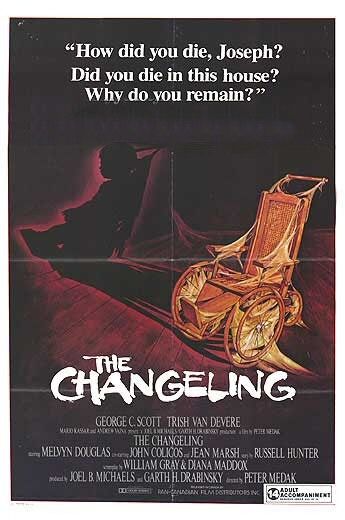
Horror Scenes That I Love: After The Changeling’s seance….


So, last night, at the TSL offices, Jeff, Leonard, Case, and I watched Insidious!  It was an enjoyable experience.  I think we were all surprised to discover just how well Insidious holds up.  When the film reached the seance scene, in which the ghosts were asked questions and a possessed Lin Shaye would write out their answers, I said, “This scene reminds me of the seance scene from The Changeling!

And then I thought to myself, “That should be our next horror scene that I love!”

So, I went to YouTube and I searched for the classic (and really scary) seance scene from Peter Medak’s great 1980 ghost story, The Changeling.  And guess what?  I couldn’t find it!  I found a lot of scenes from The Changeling and I found a lot of people talking about how much they love the seance scene but I couldn’t find the scene itself!

So, here’s the best I could do.  This scene that I love takes place immediately after the seance and features George C. Scott listening and re-listening to a tape of the seance until he can finally hear the voice of the child who, years before, was murdered in his house.

Even if it’s not the seance scene, it’s still pretty good.  I personally consider this to be one of George C. Scott’s best performances.  And the sound of the little boy’s voice on the tape is chilling.

The Changeling is really good, by the way.  You should watch it, if you haven’t already!

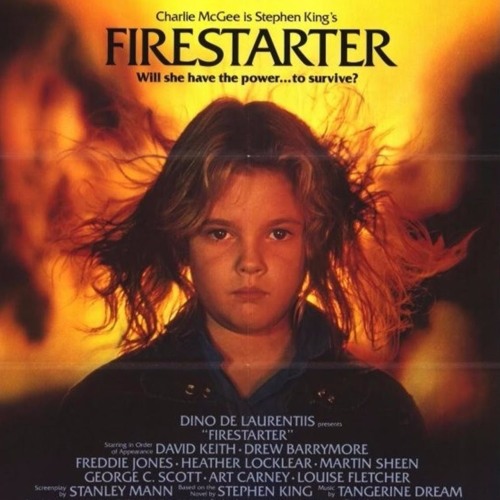
Horror Film Review: Firestarter (dir by Mark L. Lester)


Adapted from Stephen King novel, 1984’s Firestarter is a film about a girl with a very special power.

Back in the day, a bunch of college students needed weed money so they took part in a government experiment.  Half of them were told that they were being given a placebo.  The other half were told that we would be given a low-grade hallucinogen.

Surprise!  The government lied!  It turns out that everyone was given the experimental drug!  Some of the students ended up going crazy.  One unfortunate hippie clawed his eyes out.  Meanwhile, Vicky (Heather Locklear) gained the ability to read minds.  She also fell in love with Andy McGee (David Keith), a goofy fellow who gained the ability to mentally control people’s actions.  They married and had a daughter named Charlie (played by a very young Drew Barrymore).  Charlie, it turns out, can set things on fire!  She’s a firestarter!

Well, of course, the government can’t just leave the McGees out there, controlling minds and setting things on fire.  Soon, the McGees are being pursued by the standard collection of men in dark suits.  Vicky is killed off-screen, leaving Charlie and Andy to try to find some place where they’ll be safe.

Good luck with that!  This is the government that we’re talking about.  The thing with films like this is that the government can do practically anything but it never occurs to them to not all dress in dark suits.  I mean, it just seems like it would be easier for all of these secret agents to operate if they weren’t automatically identifiable as being secret agents.  Anyway, Andy and Charlie are eventually captured and taken to The Farm, a really nice country estate where Andy and Charlie are kept separate from each other and everyone keeps talking about national security.

Running the Farm is Capt. Hollister and we know that he’s a bad guy because he wears a suit and he’s played by Martin Sheen.  Working with Hollister is John Rainbird (George C. Scott), a CIA assassin who kills people with a karate chop across the nose.  When Charlie refuses to show off her firemaking abilities unless she’s allowed to talk to her father, Rainbird disguises himself as a custodial engineer and proceeds to befriend Charlie.  Of course, Rainbird’s plan is to kill Charlie once she’s displayed the extent of her powers….

Stephen King has written that he considers this film to be one of the worst adaptations of one of his novels but, to be honest, I think the movie is actually a bit of an improvement on the source material.  Firestarter is probably the least interesting of Stephen King’s early novels.  Supposedly, Charlie was based on King’s youngest daughter and, reading the book, it’s obvious that everyone’s fear of Charlie is mostly a metaphor for a father trying to figure out how to raise a daughter.  Unfortunately, instead of concentrating on those primal fears, the book gets bogged down in boomer paranoia about MK-ULTRA experiments.

The movie, however, is just silly enough to be kind of charming.  For example, consider the way that Andy grabs his forehead and bugs out his eyes whenever he uses his powers.  Andy’s powers may be slowly killing him but he just looks so goofy whenever he uses them that you just can’t help but be entertained.  And then you’ve got Drew Barrymore sobbing while setting people on fire and George C. Scott growling through all of his dialogue and even Martin Sheen gets a scene where he gets excited and starts jumping up and down.  (And don’t even get me started on Art Carney and Louise Fletcher as the salt-of-the-Earth farmers who try to protect Andy and Charlie….)  Some of the special effects are a bit hokey, as you might expect from a film made in 1984 but occasionally, there’s a good shot of something (or someone) burning up.  It’s all so over-the-top and relentlessly dumb that you can’t help but be entertained.  You can even forgive the fact that basically nothing happens between the first 10 and the last 15 minutes of the movie.

Firestarter‘s silly but I liked it.