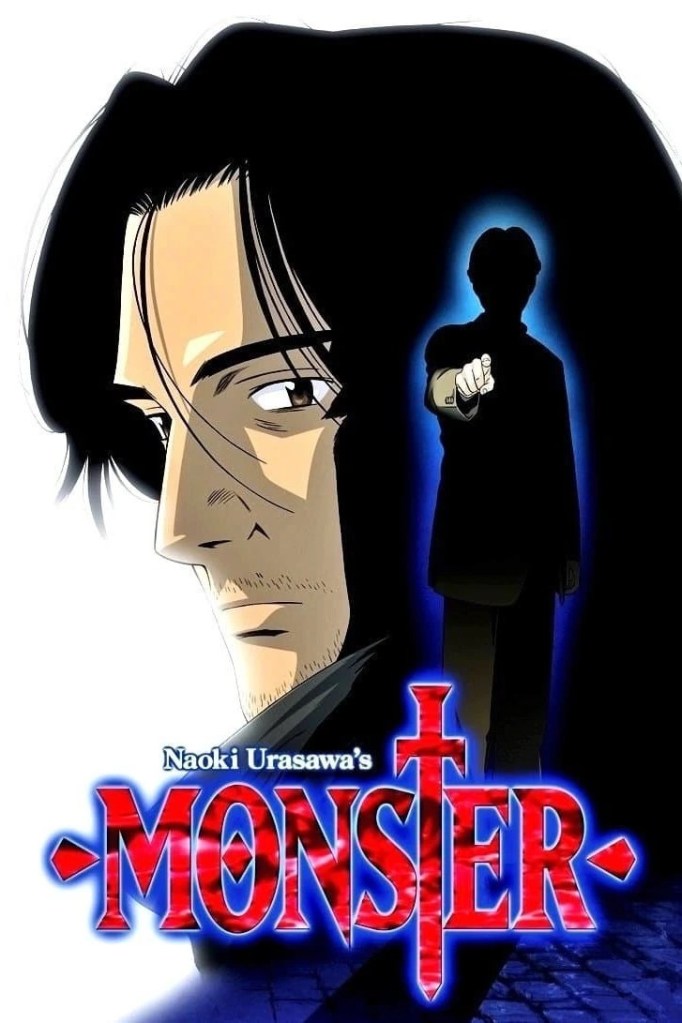
Anime You Should Be Watching: MONSTER


“For you, all lives are created equal. That’s why I came back to life. But you’ve finally come to realize it now, haven’t you? Only one thing is equal for all, and that is death.” — Johan Liebert

Naoki Urasawa’s MONSTER stands as one of the most accomplished psychological thrillers not just in manga, but in modern storytelling as a whole. Widely regarded as one of the greatest mangaka, Urasawa has built a reputation for crafting deeply human narratives that transcend genre boundaries. While his works span science fiction (20th Century Boys), sports (Happy!), and beyond, MONSTER represents perhaps his most fully realized exploration of morality, identity, and the fragile line between good and evil. Both the original manga (1998–2001) and its anime adaptation (2004–2005) serve as masterclasses in long-form storytelling, though each medium offers a slightly different experience in how these themes are conveyed.

At its core, MONSTER is a story about moral responsibility and the consequences of choice. Dr. Kenzo Tenma’s fateful decision to save the life of a young boy—who would grow up to become the enigmatic and terrifying Johan Liebert—forms the backbone of the narrative. What begins as an ethical stand against institutional corruption evolves into a haunting question: can a single act of good inadvertently unleash unimaginable evil? Urasawa refuses to offer easy answers. Instead, he constructs a world where morality is rarely absolute, and where even the most well-intentioned actions can ripple outward in unforeseen ways.

Johan himself is less a conventional antagonist and more an embodiment of philosophical dread. He represents the void—the idea that human identity can be hollowed out, shaped, or even erased entirely. Throughout the series, Urasawa interrogates whether evil is innate or constructed. Is Johan born a “monster,” or is he the product of trauma, manipulation, and systemic failure? This ambiguity is central to the story’s power. Unlike many thrillers that seek to explain or rationalize their villains, MONSTER leans into discomfort, suggesting that some truths may be fundamentally unknowable.

Another key theme is the search for identity, particularly in the aftermath of trauma. Characters across the narrative grapple with fractured pasts, false names, and reconstructed selves. Nina Fortner (Anna Liebert) serves as a compelling counterpoint to Johan—someone who has endured similar horrors but struggles toward healing rather than destruction. Through her and others, Urasawa presents identity not as something fixed, but as something constantly negotiated. Memory, in this context, becomes both a burden and a battleground. To remember is to risk pain; to forget is to risk losing oneself entirely.

The manga’s strength lies in how patiently and meticulously it develops these ideas. Urasawa’s paneling, pacing, and use of silence create a reading experience that feels almost surgical in its precision. He allows tension to build gradually, often dedicating entire chapters to side characters whose lives intersect with the central narrative in unexpected ways. These detours are not distractions but essential threads that reinforce the story’s thematic tapestry. They emphasize that MONSTER is not just about Tenma and Johan, but about a broader human landscape shaped by fear, ideology, and history—particularly the lingering shadows of post-Cold War Europe.

When Madhouse adapted MONSTER into an anime, the primary challenge was translating this deliberate pacing and narrative density into a different medium without losing its essence. Many adaptations of complex manga falter by condensing material or prioritizing spectacle over substance. MONSTER, however, takes the opposite approach. Spanning 74 episodes, the anime commits itself to a remarkably faithful retelling, often recreating scenes from the manga with near shot-for-shot accuracy.

This fidelity is both the anime’s greatest strength and, depending on the viewer, a potential limitation. On one hand, it preserves the integrity of Urasawa’s storytelling. The slow-burn pacing remains intact, allowing tension and atmosphere to develop organically. The anime resists the temptation to sensationalize its material, maintaining the grounded, almost clinical tone that defines the manga. On the other hand, this adherence means that the anime inherits the same demands it places on its audience. It requires patience, attention, and a willingness to sit with ambiguity—qualities that are increasingly rare in more fast-paced, contemporary anime.

Where the anime distinguishes itself is in its use of audiovisual elements to enhance the story’s emotional and psychological impact. The soundtrack, composed by Kuniaki Haishima, is particularly effective in reinforcing the series’ eerie, unsettling tone. Subtle musical cues and ambient sound design heighten tension in ways that static panels cannot. Silence, too, is used masterfully—moments of quiet often feel heavier and more oppressive when experienced in real time.

Voice acting further deepens character portrayal, especially in Johan’s case. His calm, almost hypnotic delivery adds an additional layer of menace that complements the manga’s more interpretive presentation. Similarly, Tenma’s internal conflict becomes more immediate and visceral when expressed through performance rather than internal monologue. These elements collectively make the anime a more immersive sensory experience, even as it mirrors the manga’s narrative structure.

Visually, the adaptation remains grounded and realistic, avoiding the exaggerated stylistic flourishes common in other anime. This restraint works in its favor, reinforcing the story’s mature tone. The European settings are depicted with care and authenticity, contributing to a sense of place that is crucial to the narrative. While the animation itself may not be as dynamic or visually striking as other series, it is consistently purposeful, prioritizing mood and clarity over spectacle.

In comparing the two, it becomes clear that the manga and anime function less as competing versions and more as complementary experiences. The manga offers a slightly more intimate engagement, allowing readers to control pacing and linger on specific panels or moments. Its visual storytelling invites interpretation, particularly in how it frames Johan’s presence—or absence—within a scene. The anime, by contrast, provides a more guided experience, using sound, timing, and performance to shape the viewer’s emotional response.

Ultimately, the success of the MONSTER anime lies in its restraint. Rather than attempting to reinterpret or modernize the source material, it recognizes the strength of Urasawa’s original vision and commits to preserving it. This makes it one of the rare adaptations that can stand alongside its source as an equal, rather than merely a derivative work.

MONSTER endures because it refuses to offer comfort. It challenges its audience to confront unsettling questions about human nature, morality, and the structures that shape our lives. Whether experienced through the manga or the anime, it remains a deeply affecting work—one that lingers long after its final moments. The anime may not surpass the manga in every respect, but it honors it with a level of care and seriousness that is all too rare, solidifying MONSTER as a benchmark for what adaptations can and should strive to be.

Anime You Should Be Watching

Scenes I Love: Mr Inbetween


There’s something to say about an individual who follows a code of behavior and has a moral compass that may seem archaic for today’s sensibilities, but when one really thinks about it…well, they’re not wrong.

We may hate that such people may be correct in their way of thinking and that it may offend certain sensibilities but that doesn’t necessarily means its wrong.

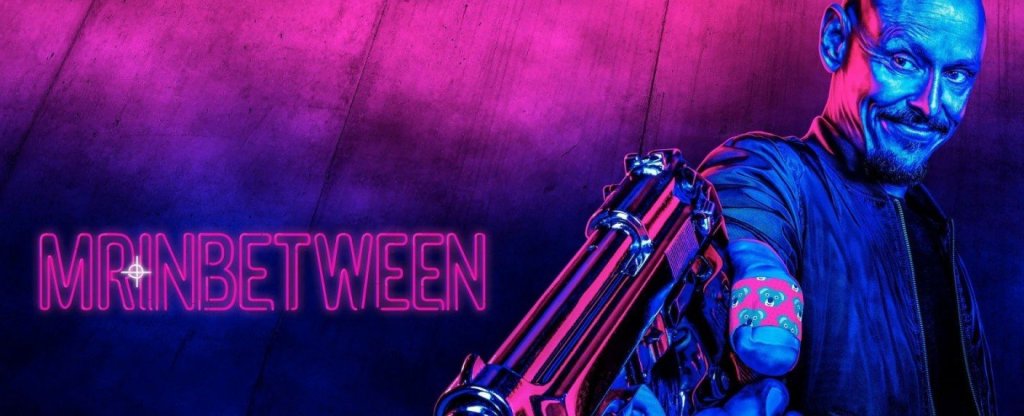
And on that note let me introduce you to Ray Shoesmith aka Mr Inbetween. This scene of him attending an anger management class best describes not just who Ray is but sets the tone for what this series is all about.

The Too Old to Die Young Teaser


Here’s one for the cinemaphile’s glossary.totdy.jpg

In cinema circles, an Auteur is described as “a filmmaker whose personal influence and artistic control over a movie are so great that the filmmaker is regarded as the author of the movie” (Wikipedia). I’ve looked at films as a three-way set of responsibilities. You have the writer, because without the story, there’s nothing. You’ve the Director, who takes that Writer’s vision and presents it on film, and then there’s the cinematographer, who makes sure that the Director’s work is well-lit and shot. I feel all three roles can tip the ownership of a film in anyone’s favor. A great story can be damaged by a bad director, and a good director can try to the make the best out of a bad story. On top of that, you could also have bad movies that look really good.

There are a number of directors out there who fit this designation. Brian DePalma, Guillermo del Toro, David Fincher, Terrence Malick (who shows up every half a decade with a film) David Cronenberg, Richard Linklater,  Jean-Luc Godard (who I’m learning a lot about lately), the list is a large and heavily argued one. Each person has their own picks and favorites.

For me, Nicolas Winding Refn fits that role. With films like Valhalla Rising, Drive , Only God Forgives and The Neon Demon, it’s hard not to recognize the color contrasts and flow of his stories. In writing this, I also found out that Refn is colorblind, which makes what he’s done so far more amazing for me.

Refn’s latest project for Amazon Studios is a series called Too Old to Die Young. The most anyone really knows is that is supposedly “explores the criminal underbelly of Los Angeles by following characters’ existential journeys from being killers to becoming samurai in the City of Angels.”

Here’s a teaser starring Miles Teller, Callie Hernandez, Jena Malone, John Hawkes and William Baldwin. It appears to still carry that wild color scheme and may possibly be just as dark and brutal as his previous work. I’m curious as to whether they’ll stick with a standard approach or follow True Detective’s style of a single writer/director pair for all of the episodes. Either way, we’ll find out when it releases next year.

Trailer: Inherent Vice (Official)


Inherent-Vice-poster

The arrival of a new Paul Thomas Anderson film seems to always be a time for excitement. P.T. Anderson’ films can never be called boring. They’re all entertaining on some level for even those who don’t quite get Anderson’s quirky-style of storytelling.

I’ve admired all of Anderson’s films. Have I liked all of them? Not really, but I can understand why many anticipate each and every new film he releases like it was the second coming.

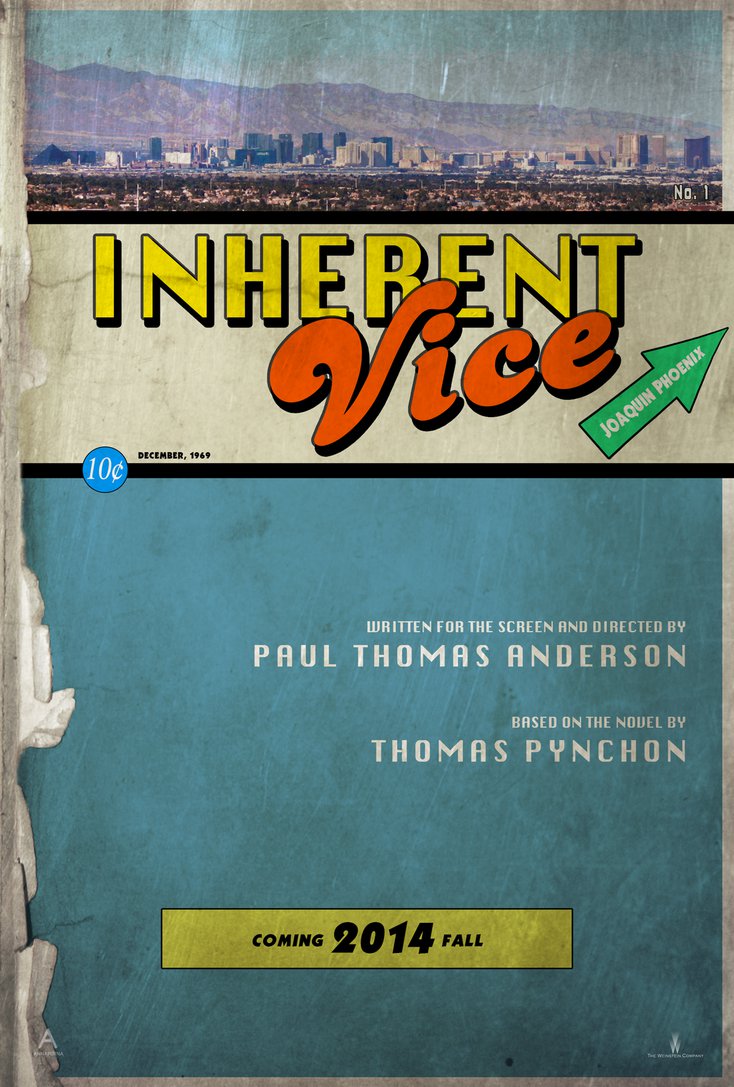
I have no idea what’s going in just going by the trailer, but it does have a noir vibe going for it. Plus, it has Joaquin Phoenix and Josh Brolin.

Inherent Vice is set to premiere on October 4, 2014 during the New York Film Festival before going wide release on December 12, 2014.

Quick Review: The Raid 2 (dir. by Gareth Huw Evans)


the-raid-2-posterI didn’t know much about The Raid 2 (or The Raid: Berandal) prior to it’s release. Yes, I loved The Raid Redemption so much that after my initial viewing, I bought another ticket for the next available showing. I also saw the initial trailer, but other than that, I walked in blind. Truth be told, if the season finale of The Walking Dead wasn’t on the same night I saw this and the trains weren’t so damn slow, I would’ve gone right back in for The Raid 2. I know I’ll go back to it later this week, that’s for sure.

Here’s the short of it: The Raid 2 gives you all of the great martial arts from its predecessor (thanks to Choreographers and stars Iko Uwais, Yayan Ruhian, along with writer/director Gareth Evans). The fight scenes are incredibly fluid and well choreographed, some ramped up way past what the first movie delivered. The film also manages to build a story so big that it almost reaches levels akin to Michael Mann’s Heat.  That story length also threatens to hurt the film. Where Redemption was a tight package, the sequel has a 2 1/2 hour-long running time. It moves like an Opera, and as such, there maybe at least one chapter where you kind of wonder where it’s all going and why it’s moving in the chosen direction. The film does a great job of righting itself afterward and everything syncs up.

It’s an absolute fight to keep myself from going into every fight and saying “Did you catch that part when..?! Omigod, wasn’t that awesome!” No spoilers here, but this is one time where I wish I could. This review’s vague on purpose.

Taking place just hours after the events of Redemption, The Raid 2 finds supercop Rama (Iko Uwais) working undercover between 2 rival mob families and trying to weed out rogue cops. The premise sounds simple, but the movie is pretty layered.  Just how deep can Rama go without exposing himself or losing his humanity? In this sense, a lot of the writing pays homage to movies like Donnie Brasco, The Godfather and The Departed (or Internal Affairs, which The Departed was based on). This is all you really need to know about the plot itself, it’s a crime drama. How it conveys the story on-screen is something else entirely.

The balance between the action and drama is pretty even. Each dramatic moment seems to fit well to the ones before and after it. While there maybe one or two areas that require a huge suspension of belief (a person can bleed profusely and still manage to cause a wave of destruction), but depending on one’s mindset, these can be forgiven…or not. Evans chooses his shots carefully, and in some places it’s downright beautiful – especially in an area that focuses on three assassins with a particular skillset.

The fight scenes are rapid fire moments of hard-hitting shots and bloodshed that may have you wincing or even cheering (like my audience). People are sliced, shot, beaten to a pulp and your jaw may drop at the inventive ways a bat or hammer can be used. In some cases, it takes Close Quarters Combat in as tight as you can possibly get, using camera work that moves above, around and even inside the action when working with multiple fights. The camera isn’t so fast that it suffers from the Bourne Identity/Batman Begins fight blur, but it’s not static either. Remember that free roaming camera technique used in the car ride from Spielberg’s War of the Worlds? There’s a similar usage here that’s beautiful, but in the midst of all that stunt work, one has to wonder if anyone was seriously hurt. The audience lost their minds when Yayan Ruhian appeared, playing a character separate from Mad Dog in Redemption, and our showing ended with a half standing ovation. Not bad for a film focused on fighting.

If you understand that The Raid 2 is hyper-violent, it’s perfectly okay. It’s almost expected, and it works out so very well.

Basically, if you either went to see the The Raid: Redemption and/or enjoyed that film, there’s no reason to avoid The Raid 2. I honestly didn’t think it could get better than the first film and am happily surprised that it has. The film is in a limited release in New York and Los Angeles for now, moving to a wider release on April 11th.

Trailer: Sabotage (Red Band)


Sabotage

Since Arnold Schwarzenneger left the California governor’s office and politics he’s gone back to doing what he was good at (or at least good at during the 80’s and 90’s). His first couple of films since getting back in front of the camera has been average at best (though I must say that Last Stand was pretty fun).

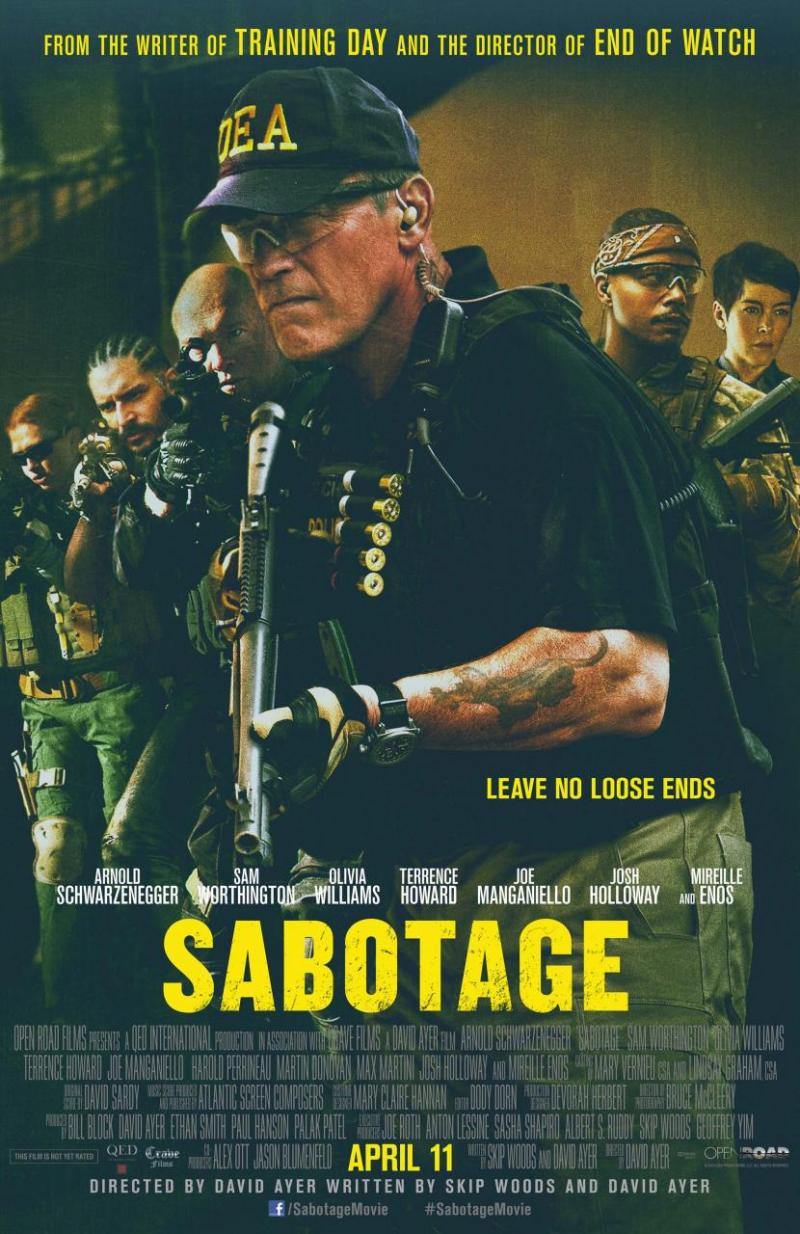
Now, we have him back in another film, but this time around one that’s a very hard, gritty R-rating that he hasn’t done since ever. He’s always had rated-R films, but they had a certain fun tone to them. With David Ayer’s Sabotage it looks like Schwarzenneger is trying to flex his hardcore bones. It’s definitely a surprise to hear him curse like a sailor during the red band trailer.

Sabotage is set for a March 28, 2014, release date.