Review: Identity (dir. by James Mangold)


“As I was going up the stairs, I met a man who wasn’t there. He wasn’t there again today. I wish, I wish he’d go away.” — Malcolm Rivers

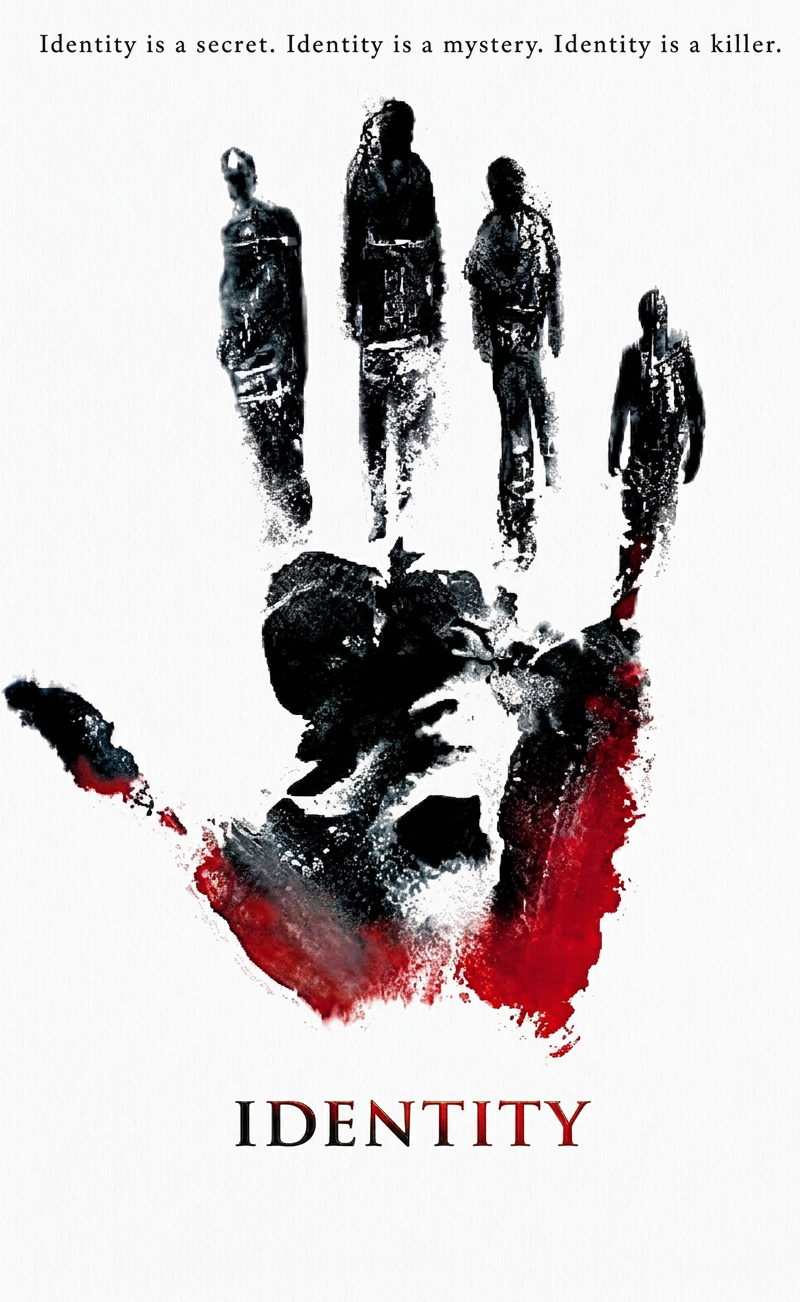
There’s a certain kind of movie that thrives on a rainy Sunday afternoon or a late-night cable scroll—something pulpy, clever, and self-contained, with a cast that makes you sit up a little straighter. James Mangold’s Identity from 2003 is exactly that breed of thriller. It’s not trying to reinvent the wheel, but it’s having a damn good time spinning it through mud, rain, and a whole lot of psychological fog. On the surface, Identity is a slasher-adjacent whodunit set in a deserted Nevada motel during a biblical storm, and it wears its debt to Agatha Christie’s And Then There Were None like a bloodstained badge of honor. That classic novel—where strangers are lured to an isolated island and picked off one by one according to a nursery rhyme—provides the blueprint. Mangold swaps the island for a rundown motel, the nursery rhyme for room keys, and adds a thick layer of rainy noir atmosphere. But underneath the jump scares and dripping dread, Identity is also a sly, shaggy-dog meditation on identity, trauma, and the stories we tell ourselves to survive. Mangold, who’d go on to direct Walk the Line and Logan, shows his genre dexterity here—he treats the material with just enough seriousness to keep you invested, but not so much that you can’t laugh at the absurdity when the twist finally snaps into place.

The setup is classic Christie with a tar pit of dread. A motley crew of strangers gets stranded at a rundown motel when a flash flood washes out the roads, just as the guests in And Then There Were None find themselves cut off from civilization. There’s a former cop turned limo driver (John Cusack), a has-been actress (Rebecca De Mornay), a newlywed couple, a cop escorting a prisoner, a nervous motel manager, a prostitute with a heart of gold (Amanda Peet), and a few others who might as well have target silhouettes painted on their backs. The storm rages, the power flickers, and one by one, they start turning up dead. The killer leaves behind clues—room keys, specifically—and the survivors realize the bodies are being dropped in the order of the motel’s room numbers. It’s a wonderfully cheap gimmick that works because the film leans into its own artificiality. The rain never stops. The Nevada landscape is featureless and black. The motel feels less like a real place and more like a diorama in a psychiatrist’s office. Which, as it turns out, is almost exactly what it is.

Now, here’s where the review has to carefully step around spoilers, because Identity lives and dies on its midpoint rug-pull. But seeing as the movie is over twenty years old, a gentle acknowledgment is fair: the motel carnage is intercut with scenes of a criminal psychologist (Alfred Molina) arguing with a judge during a late-night hearing about a convicted serial killer’s sanity. That killer, Malcolm Rivers, is awaiting execution, and the defense is presenting new diary evidence. You don’t have to be a detective to start connecting dots. Mangold and screenwriter Michael Cooney aren’t interested in subtlety; they want you to squirm as the two storylines begin to converge. The motel guests, we gradually realize, are not random travelers. They are fractured pieces of a single damaged psyche—personalities inside Rivers’ mind, duking it out for survival as his body faces a real-world lethal injection. The killer in the motel isn’t a man in a mask; it’s the most malevolent alter among them, systematically erasing the others. Where Christie’s novel uses a hidden murderer working through a fixed list, Identity twists that formula by making the setting itself a psychological construct.

On a technical level, Identity is a masterclass in low-budget atmosphere. Phedon Papamichael’s cinematography drenches every frame in gray-blue gloom, and the sound design makes every creak and drip sound like a gunshot. Mangold directs the ensemble with a steady hand, and the cast clearly knows what movie they’re in. Cusack brings his usual blue-collar soulfulness to Ed, the ex-cop with a guilty conscience. Ray Liotta, as the suspicious cop, chews scenery in the best way—he’s all twitchy aggression and bad intentions. But the real standout is Amanda Peet as Paris, a call girl who just wants to start over on a Florida orange farm. She’s smarter and tougher than the archetype usually allows, and her final scene in the motel’s office carries an unexpected tenderness. That’s the trick of Identity: it makes you care about figments. For a good hour, you’re genuinely invested in whether the newlyweds survive or if the motel manager will finally clean that damn room 6.

Where the movie loses some people is in the execution of its twist. When the narrative finally snaps from the motel to the real-world courtroom, there’s a jarring shift that feels almost like a different film. The last fifteen minutes become a race to explain the rules of this shared-mind universe, and here the logic gets wobbly. How exactly does a personality “die” inside a system? Why does the motel order matter? And without giving too much away, the film’s famous final reveal—which involves a third-act twist on the twist—pushes credibility to the breaking point. Some viewers will throw their hands up and groan. Others will grin and applaud the audacity. I land somewhere in the middle. On one hand, the final image is genuinely chilling, a perfect little joke about evil’s persistence. On the other hand, the film spends so much time setting up the motel’s internal rules that it forgets to make the real-world stakes feel as urgent.

Still, Identity works best if you don’t overthink it. Think of it as a B-movie with an A-movie haircut, or as And Then There Were None filtered through a late-night cable dream about multiple personality disorder. Mangold directs the violence with a knowing wink—there are no gratuitous gore shots, just quick, sharp cuts and clever misdirection. One death involving a baseball bat and a laundry machine is as goofy as it is brutal, and that tonal tightrope is hard to walk. The film also has a sneaky thematic resonance beneath the pulp. At its heart, Identity asks whether people can truly change. Every character is trapped not just by the storm, but by their own backstory: the cop who failed a case, the actress past her prime, the prostitute who dreams of orange groves. In the motel of the mind, these backstories are just narratives the personality uses to justify itself. When Paris pleads, “I get to start over,” she’s speaking for anyone who’s ever wished they could delete a bad version of themselves. The film’s bleak final twist suggests that some stories are stronger than we think—the ones we tell ourselves about who we are, and who we’ve always been.

For a thriller that runs just over ninety minutes, Identity has surprising legs. It’s not a masterpiece, but it’s a tight, well-oiled machine of suspense with a gimmick that still feels fresh if you haven’t been spoiled. The dialogue crackles with noir-lite attitude, and the pacing never sags—once the bodies start dropping around the twenty-minute mark, you’re locked in. The biggest flaw is that the movie is so proud of its puzzle-box structure that it forgets to breathe between twists. You never get a quiet moment to sit with the characters as real people because, well, they’re not real people. But that’s also the point. Identity is a movie about a metaphor, and like most metaphors, it works until you poke it too hard. If you’re looking for a rainy-night thrill ride with a cast that commits to the bit and a final shot that’ll stick in your brain like a bad dream, check in. Just maybe avoid room 6.

Anime You Should Be Watching (Horror Edition): Shiki (dir. by Tetsurō Amino)


The anime adaptation of Shiki, based on Fuyumi Ono’s acclaimed horror novel and directed by Tetsurō Amino, stands as a rare specimen in the horror genre. Rather than relying on quick shocks, excessive gore, or typical jump scares, Shiki unsettles its audience through atmosphere, moral erosion, and the slow, relentless unraveling of human conscience. Premiering in 2010, the series unfolds at a measured, almost meditative pace, transforming what could have been a simple vampire tale into a profound meditation on survival, faith, fear, and the delicate boundary between life and death when everything is pushed to the brink.

The story is set in Sotoba, a small, isolated village nestled precariously near a larger modern metropolis. The residents of Sotoba live tightly woven lives, their routines and social bonds preserved with careful attention over generations. This fragile peace shatters when a mysterious wave of deaths begins sweeping through the population. At first, these fatalities are dismissed as consequences of the harsh local climate—heatstroke, seasonal illnesses, and the inevitable toll of old age. Yet, as the body count rises, the truth reveals itself to be much darker: the deceased are rising as vampires, known locally as “shiki” or “corpse demons,” creatures that survive by feeding on the living.

What distinguishes Shiki from many other vampire narratives is its refusal to paint the conflict in stark black-and-white terms of good versus evil. The shiki are portrayed not as mindless monsters but as tormented souls, burdened by memories, emotions, and guilt over what they have become and the horrors they must commit to survive. Conversely, the human villagers—once caring and close-knit neighbors—succumb to suspicion, fear, and eventually cold-hearted survival instincts. The real horror emerges as morality frays and the line between human and monster becomes irrevocably blurred.

Unlike classic horror tales set in small towns—such as Stephen King’s ’Salem’s Lot, where a seemingly idyllic village hides sinister supernatural forces—Shiki offers a nuanced inward gaze. For instance, the novel They Thirst situates vampirism within a sprawling urban landscape, where anonymity accelerates chaos and alienation. In contrast, Shiki uses the microcosm of Sotoba to emphasize intimate, communal decay. The focus is not just on the physical threat, but on the erosion of social bonds and moral fabric, revealing how fragile human civility truly is under stress.

While ’Salem’s Lot depicts vampires as a pure evil contaminating a tight-knit community—highlighting themes of moral corruption and contamination—Shiki explores moral ambiguity with far greater depth. The vampires, including the enigmatic Sunako Kirishiki, retain their memories, emotions, and even remorse. Both vampires and humans carry guilt and anguish, complicating simplistic notions of villainy. The villagers—their friends, family, and neighbors—begin to see the suffering of the vampires while realizing their own brutal deeds. The narrative challenges viewers to question whether survival excuses the loss of morality or if it is possible to retain one’s spirit even amid brutal chaos.

At the heart of the series are characters who embody competing moral philosophies. Natsuno Yuki, a cynical teenager newly transplanted to Sotoba from the city, provides both an insider and outsider’s perspective. His disillusioned view highlights how fear, suspicion, and grief can unravel even the most intimate relationships. Natsuno serves as a rational voice within a community unraveling into paranoia and despair, offering a reflection of the audience’s own struggle to comprehend the incomprehensible.

Dr. Toshio Ozaki exemplifies the desperate human desire for order amid chaos. Initially, he seeks to explain away the deaths with rational, scientific explanations grounded in medicine. However, when superstition and supernatural realities intrude, Ozaki is compelled to confront truths beyond his understanding. His leadership in trying to save Sotoba begins with scientific resolve but soon descends into moral compromise. As hysteria spreads, the villagers’ collective violence explodes into ruthless slaughter, justified as necessary to preserve survival. Ozaki’s internal conflict—balancing ethical convictions against brutal necessity—reflects the series’ central question: at what point does the will to survive erode the soul?

Set against this turmoil is Sunako Kirishiki, the quiet yet profoundly troubled leader among the shiki. Though she has lived for centuries and suffers deeply from a sense of divine rejection—believing God has forsaken her—Sunako retains a core spirituality that anchors her sense of morality. Even as she is forced to kill in order to survive, she wrestles with guilt and her faltering faith. Her belief that divine rejection is not synonymous with divine abandonment acts as a form of moral defiance, preserving her fragile humanity amid brutal circumstances.

This spiritual resilience is deepened through her relationship with Seishin Muroi, a local junior monk and published author. Muroi, gentle and introspective, offers a unique perspective on the tragedy unfolding in Sotoba. His dual roles as a religious figure and a thoughtful writer allow him to interpret the crisis with spiritual depth and philosophical insight. His literary works—admired by the Kirishiki family, especially Sunako—explore mortality, suffering, and the search for meaning beyond pain. As a monk, Muroi embodies faith and compassion; as an author, he grapples with existential ambiguities, granting him a rare wisdom in navigating the village’s descent.

Muroi’s role makes him both observer and actor in Sotoba’s unraveling. His spiritual duties compel him to provide comfort and guidance, while his writings deepen his understanding of human and supernatural suffering. This duality shapes his interactions with Sunako and others, serving as a pathway for faith and empathy to endure amid horror and despair.

Sunako’s friendship with Muroi becomes central to her moral endurance. In contrast to Tatsumi, the Kirishiki family’s pragmatic and ruthless jinrō guardian who views survival through a cold, utilitarian lens, Muroi offers a moral counterpoint grounded in mercy and hope. Through his compassionate presence and reflective insights, Sunako finds a way to renew her faith. Although she feels forsaken, Muroi’s influence rekindles the fragile spark of belief in her that prevents her humanity from being swallowed by despair.

The thematic contrast between Muroi and Tatsumi becomes a fulcrum for Shiki: survival devoid of soul versus survival with spirit. Muroi’s continuing faith—soft, tentative, but persistent—demonstrates that even in the bleakest conditions, moral conviction need not fade entirely. His dual lens as monk and author enriches the narrative, bridging theology and philosophy while threading through the story’s core existential dilemmas.

Amino’s direction amplifies these themes through patient pacing and subtle storytelling. The mounting tension grows slowly through quiet, contemplative moments and lingering visuals—the hum of cicadas, shifting light through leaves, the barely audible footsteps in the dark. Ryu Fujisaki’s stylized character designs convey unease with elongated features and a surreal sheen, while Yasuharu Takanashi’s sparse, mournful score melds choral lamentations with haunting silences. Together, these elements create an immersive atmosphere steeped in dread and melancholy.

By the series’ climax, the distinction between human and shiki dissolves into near indistinguishability. Both sides bear the scars of survival—physical, psychological, and spiritual. The violence ceases, but the damage lingers, leaving survivors hollow, burdened by guilt and loss. Yet amidst the ruins of a shattered community, Sunako’s renewed faith, forged under Muroi’s guidance, flickers faintly—an emblem of hope that refuses to be extinguished.

The final scene distills this weighty truth without grandiosity or closure. There are no victors, no absolutes—only profound loneliness in survival. The living bear wounds deeper than any inflicted by fang or bullet. But in this quiet aftermath, Sunako’s fragile faith, buoyed by Muroi’s steadfast compassion, pulses as the last vestige of what it means to remain human: choosing faith and empathy even when everything else seems lost.

Shiki closes not with resolution but with a haunting reminder: survival is incomplete without humanity, and faith—however delicate—is the courage to hold onto that humanity when all else has fallen away.

Anime You Should Be Watching

‘B’-ware, My Love: HOUSE OF SECRETS (Chesterfield 1936)


gary loggins's avatarcracked rear viewer


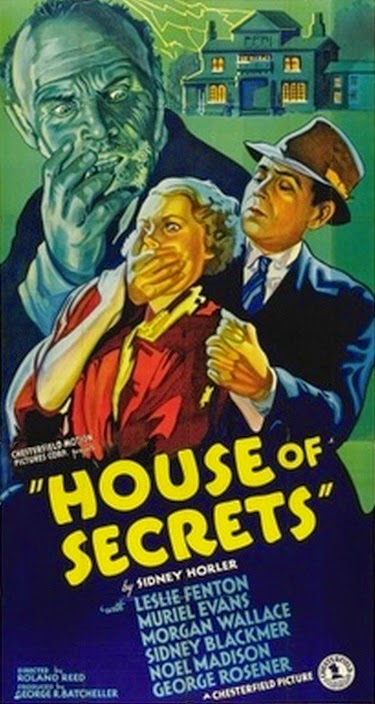
Do you like movies with gloomy old mansions, secret passageways, clutching hands behind curtains, bloodcurdling screams, and the like? How about we throw in some Chicago gangsters and a hidden pirate treasure? Then you may like HOUSE OF SECRETS, a ‘B’ mystery originally sold to audiences as a horror thriller. It’s no classic, to be sure, but it is an enjoyable little low-budget film produced by tiny independent Chesterfield Pictures, who specialized in this sort of thing, and featuring a better than average cast of Familiar Faces.

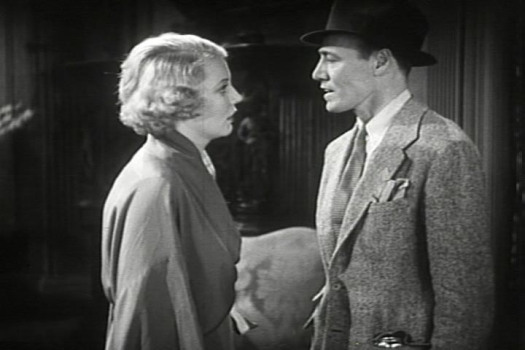
Aboard a ship bound for London, a young American woman is accosted by a cad who swears he saw her leaving a drug palace in Paris. Globetrotting but near penniless Barry Wilding defends her honor, but the mysterious blonde won’t reveal her name. Barry runs into his old friend Tom while in Jolly Olde England, a detective on the trail of a murderer…

View original post 388 more words