Film Review: Sully (dir by Clint Eastwood)


sully_xxlg

The new film Sully is about several different things.

Most obviously, it’s about what has come to be known as the Miracle on the Hudson.  On January 15th, 2009, US Airways Flight 1549 had just departed from New York’s LaGuardia Airport when it was struck by a flock of geese.  (They say that it was specifically hit by Canadian Geese but I refuse to believe that Canada had anything to do with it.)  With both of the engines taken out and believing that he wouldn’t be able to get the plane back to either LaGuardia or an airport in New Jersey, the flight’s plot, Chelsey “Sully” Sullenberger (played by Tom Hanks) landed his plane on the Hudson River.  Not only did Sullenberger manage to execute a perfect water landing but he also did so without losing a single passenger.

I’m sure that we can all remember that image of that plane sitting on the river with passengers lined up on the wings.  We can also remember what a celebrity Sully became in the days following the landing.  At a time of national insecurity and cynicism, Sully reminded us that people are still capable of doing great things.  It also helped that Sully turned out to be a rather humble and self-effacing man.  He didn’t use his new-found fame to host a reality TV show or run for Congress, as many suggested he should.  Instead, he wrote a book, raised money for the National Suicide Prevention Lifeline, and appeared in two commercials for St. Jude Children’s Research Hospital.

Wisely, Sully opens after the Miracle on the Hudson, with Sully still struggling to come to terms with suddenly being a celebrity.  (That said, we do get to see the landing in flashbacks.  In fact, we get to see it twice and it’s harrowing.  The “Brace! Brace!” chant is pure nightmare fuel.)  Tom Hanks plays up Sully’s modesty and his discomfort with suddenly being a hero.  Even while the rest of the world celebrates his accomplishment, Sully struggles with self-doubt.  Did he make the right decision landing the plane on the Hudson or did he mistakenly endanger the lives of all the passengers and crew members?

A lot of people would probably say, “What does it matter?  As long as he succeeded, who cares if he actually had to do it?”  Well, it matters to Sully.  Some of it is a matter of professional pride.  And a lot of it is because the soulless bureaucrats at the National Transportation Safety Board are investigating Sully’s landing.  If it’s determined that he could have made it back to airport and that he unnecessarily endangered the lives of everyone on the plane, he could lose his job and his pension.  As we see in a few scenes with Sully’s wife (Laura Linney, who is somewhat underused), the Sullenbergers really need that pension.

That brings us to another thing that Sully is about.  It’s a celebration of not only individual heroism but individuality itself.  The NTSB claims that they have computer-generated recreations that prove Sully had enough time and fuel to return to an airport but, as Sully himself points out, the NTSB has ignored the human element in their recreations.  As a result of their obsession with regulation and procedure, the bureaucrats have forgotten that planes are not flown by computers but individuals who have to make split-second decisions.

That’s one of the things that I loved about Sully.  In this time when we’re constantly being told that our very future is dependent upon always trusting the bureaucrats and following their rules and regulations, Sully reminds us that the government is only as good as the people who work for it.  And, far too often, the people are smug and complacent morons.

(For the record, Sullenberger has said that the real-life hearings were not as confrontational as the ones depicted in the film.  However, even taking into account the dramatic license, the overall message still rings true.)

And finally, Sully is a film about what America has become in the wake of 9-11.  Just as in real-life, the film’s Sully suffers from PTSD in the days immediately following the Miracle on the Hudson.  Even while the rest of the world celebrates him, Sully has nightmares about what could have happened if he hadn’t made the landing.  When we watch as Sully’s plane collides with a New York skyscraper, it’s impossible not to be reminded of the horrible images of September 11th.  Not only does it drive home what was at stake when Sully made that landing but it also reminds us that, regardless of what some would want us to beg, there are still heroes in the world.  Not every story has to end in tragedy.  People are still capable of doing great things.  Heroism is not dead.  With tomorrow being the 15-year anniversary of the day when 3,000 people were murdered in New York, Pennsylvania, and D.C., it’s important to be reminded of that.

Sully is a powerful and crowd-pleasing film.  (The normally cynical audience at the Alamo Drafthouse broke into applause at the end of the movie.)  Director Clint Eastwood tells this story in a quick, no-nonsense style.  During this time of bloated running times, Sully clocks in at 97 minutes and it’s still a million times better than that 150-minute blockbuster you wasted your money on last week.  Toss in Tom Hanks at his best and you’ve got one of the best films of the year so far.

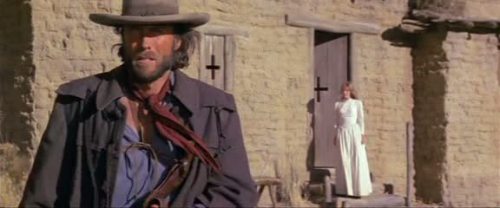
4 Shots From 4 Films: A Fistful of Dollars, The Outlaw Josey Wales, Tighrope, A Perfect World


4 Shots From 4 Films is just what it says it is, 4 shots from 4 of our favorite films. As opposed to the reviews and recaps that we usually post, 4 Shots From 4 Films is all about letting the visuals do the talking.

Happy birthday, Clint Eastwood!

4 Shots From 4 Films

A Fistful of Dollars (1964, directed by Sergio Leone)

A Fistful of Dollars (1964, dir by Sergio Leone)

The Outlaw Josey Wales (1976, dir by Clint Eastwood)

The Outlaw Josey Wales (1976, dir by Clint Eastwood)

Tightrope (1984, dir by Richard Tuggle and Clint Eastwood)

Tightrope (1984, dir by Richard Tuggle and Clint Eastwood)

A Perfect World (1993, dir by Clint Eastwood)

A Perfect World (1993, dir by Clint Eastwood)

Victim of Love: Clint Eastwood in THE BEGUILED (Universal 1971)


gary loggins's avatarcracked rear viewer

beguiled1

THE BEGUILED was the third of five collaborations between star Clint Eastwood and director Don Siegel. It’s definitely the most offbeat, a Gothic Western set during the Civil War. Clint plays John McBurney, a wounded, half-dead Yankee found in the woods by one of the girls from Miss Martha’s Seminary for Young Ladies. What unfolds from there is unlike anything the duo ever did before or after, a tale of sexual desire and vengeance that’s one of the most unusual entries in the Western canon.

beguiled2

Clint Eastwood has one of his most unsympathetic roles as McBurney. Although we feel bad about the condition he’s in, we soon realize what an amoral, manipulative scoundrel he is. Flashbacks reveal his lies about his role in the Union Army. Even as he suffers some major “misery” (hint, hint) at the hands of Miss Martha, Clint’s McBurney isn’t a likeable figure. This offbeat casting probably contributed to the…

View original post 394 more words

Things Could Be Worse: 8 Fictional Presidents Who Were Terrible At Their Job


Jack Nicholson

2016 is an election year and things are looking pretty grim right now.  It’s enough to make you throw your hands up in frustrating and demand that someone push the reset button.  However, things could always be worse.  From the world of film, here are 8 President so incompetent, corrupt, and sometimes murderous that they will make you long for the dull mediocrity of a Jeb Bush or a Martin O’Malley.

1) The President (William Devane) in The Dark Knight Rises (2012)

devaneYou’re the leader of the free world and a masked terrorist has just launched a deadly attack on a major U.S. city.  He has blown up a major sporting event on national television.  He has killed the mayor.  He is allowing a crazy sociopath to preside over show trials.  The terrorist demands that you neither send troops into the city nor do you aid anyone who is trying to leave.  What do you?  If you are the President played by William Devane in The Dark Knight Rises, you say, “Okay,” and then breathe a sigh of relief when Batman turns out not to be dead after all.  William Devane also played JFK in The Missiles of October and President James Heller on 24.  Neither of them would have backed down to Bane as quickly as the President in The Dark Knight Rises.
2) The President (Billy Bob Thornton) in Love Actually (2003)

This President thinks that he can bully the world until he makes the mistake of getting on the bad side of the new British Prime Minister (Hugh Grant).  How are you going to call yourself the leader of the free world when even Hugh Grant can make you look like a fool?

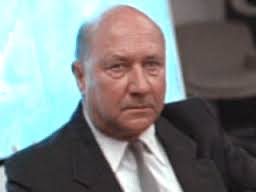
3) The President (Donald Pleasence) in Escape From New York (1981)

DonaldHey, Mr. President, when Snake Plisskin nearly gets killed trying to save your life, you might want to try showing a little gratitude.  Escape From New York ends with Snake asking The President who he feels about all the people who died rescuing him from New York.  When the President can only mutter a few words of regret, Snake responds by destroying the tape that would have presumably prevented World War IV.  Way to go, Mr. President!  Would it have killed you to shed a few crocodile tears, at least over the fate of Cabbie?
4) The President (Cliff Robertson) in Escape From L.A. (1996)

The President from Escape From New York was practically Lincolnesque compared to the jerk who succeeded him.  A theocrat who claimed to have an open line to God, this President banned smoking, drinking, cursing, red meat, guns, atheism, pre-marital sex, and everything else that made life fun.  Anyone who disagreed got exiled to the island of California.  Good thing that Snake Plisskin was still around to set things straight, even if it did mean that Florida ended up getting conquered by Cuba.  Why doesn’t Snake ever run for President?

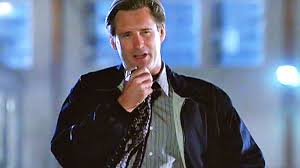
5) President Thomas J. Whitmore (Bill Pullman) in Independence Day (1996)

billIn a word, overrated.  Yes, President Whitmore did lead the army that repealed the alien invaders but he would not have had to do that in the first place if he had prevented the Earth from being invaded in the first place.  How many warning signs did the Whitmore administration ignore until it was too late?  And how much funding did his administration cut from the military that the Air Force was left in such poor shape that they could get shown up by Randy Quaid in a crop duster?  As for Whitmore’s famous speech and the battle that followed, a sequel to Independence Day is coming in June so he must not have done that good of a job of scaring the aliens off.
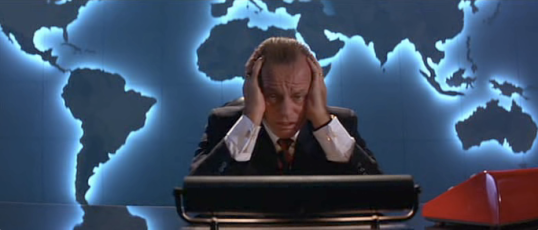
6) President James Dale (Jack Nicholson) in Mars Attacks! (1996)

At least President Whitmore got a chance to redeem himself by leading the battle against the invaders.  James Dale did not even get that far.  After foolishly believing everyone who told him that the aliens came in peace, he made the mistake of offering his hand in friendship and ended up with a flag sticking out of his chest.

7) President Alan Richmond (Gene Hackman) in Absolute Power (1997)

Not only did President Richmond think that he could get away with murder, he also thought he could outsmart Clint Eastwood.  Big mistake.  Clint Eastwood is no Hugh Grant.

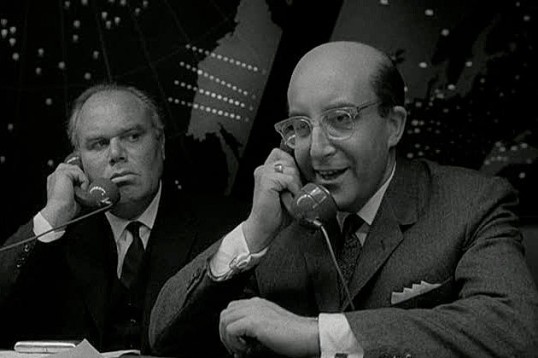
8) President Merkin Muffley (Peter Sellers) in Dr. Strangelove: Or How I Learned To Stop Worrying And Love The Bomb (1964)

Mixing the raw charisma of Adlai Stevenson and the phone skills of Bob Newhart, President Merkin Muffley attempts to stop the end of the world and fails miserably.  He even allows the Soviet ambassador to get a picture of the Big Board!  But don’t worry.  President Muffley may have failed to prevent nuclear war but he will not allow there to be a mineshaft gap!

When this election year get you down, just remember: things could always be worse!

strangelove


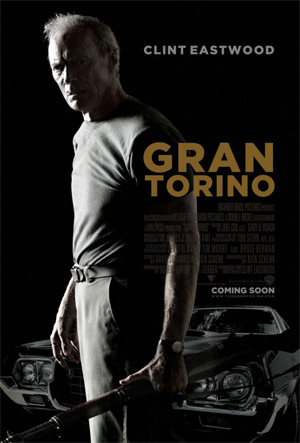
Embracing the Melodrama Part II #113: Gran Torino (dir by Clint Eastwood)


Gran_Torino_posterWalt Kowalski (Clint Eastwood) is a grumpy man.  And by that, I mean that he’s extremely grumpy.  Remember how grumpy Bill Murray was in St. Vincent?  He’s got nothing on Walt Kowalski.

Walt served in the Korean War and, five decades later, his experiences still haunt him.  After the war, he lived in Detroit and he worked on an assembly line.  He’s since retired but he still loves his old Ford Gran Torino, a car that he could very well have helped to build.  His wife has recently passed away and his children are eager to move him into a nursing home.  Walt is slowly smoking himself to death and the only person who visits him regularly is an earnest young priest (Christopher Carley, playing the ideal priest).

Just as Walt’s life has changed as he’s gotten older, so has his neighborhood.  The neighborhood is now dominated by Hmong immigrants.  When Walt catches Thao Vang Lor, a 16 year-old Hmong, attempting to steal his car, it leads to an unlikely friendship between Walt, Thao, and Thao’s sister, Sue.  When the same local gang that put Thao up to stealing Walt’s car subsequently attacks Sue, Thao wants revenge but Walt says that if Thao kills a man, it’s something that he’ll never recover from.  After locking Thao in his house, Walt goes off to confront the gang on his own…

And, since Walt is played by Clint Eastwood, you’d be justified in thinking that Walt’s confrontation would amount to a lot of quips and violence.  But actually, it’s the exact opposite.  Gran Torino does not find Eastwood in the mood to celebrate violence.  Instead, the film is a meditation on both the cost of violence and the impossibility of escaping one’s own mortality.

Whenever people talk about the 2008 Oscar race, the focus always seems to be on the snubbing of  The Dark Knight.  However, I would say that Gran Torino (among other films) was snubbed even more than The Dark Knight.  After all, The Dark Knight may have missed out on best picture but it still received 8 nominations and won an Oscar for Heath Ledger.  Gran Torino, on the other hand, received not a single nomination.

Don’t get me wrong.  I’m not arguing that Gran Torino deserved a best picture nomination.  It’s a fairly predictable film and some of the symbolism, particularly during Walt’s final confrontation with the gang, gets a bit too heavy-handed.  (Any time a character spontaneously strikes a crucifixion pose in a movie, you know that things are starting to get out of hand.)  But I would argue that Clint Eastwood definitely deserved a nomination for best actor.  In many ways, Walt is a typical Eastwood character but, right at the moment when we’re expecting him to behave like every other Eastwood character that we’ve ever seen, Walt surprises us by doing something completely different.  As a director, Eastwood subverts our expectations of Clint Eastwood as both an actor and a character.  As a result, the audience is taken by surprise by Walt, if not by the film’s plot.

I remember, at the time the film was released, there was some speculation that Gran Torino would be the last time we ever saw Clint Eastwood onscreen.  That proved to be false, as he subsequently starred in Trouble With The Curve.  However, even if it wasn’t his final acting role, Gran Torino still serves as the perfect monument to Eastwood’s unique screen presence.

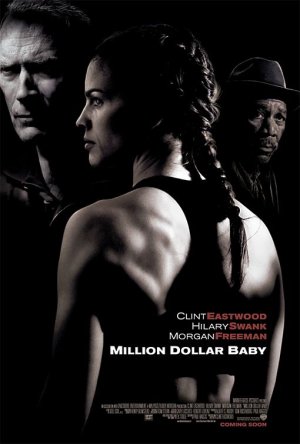
Embracing the Melodrama Part II #105: Million Dollar Baby (dir by Clint Eastwood)


Million_Dollar_Baby_poster

(This review and the Spanish trailer below are dedicated to mi madre, who saw Million Dollar Baby when it was first released and told me that, even though the film had been nominated for lots of Oscars, I shouldn’t watch it until I was in a better and more stable place emotionally.  She was right.)

Two months ago, I started Embracing the Melodrama Part II.  At the time, I announced that I would be reviewing 126 cinematic melodramas and I would get it all done in 3 weeks time!  Well, here we are 8 weeks into it and we are just now approaching the finish line.  That’s okay, though.  Even if it’s taken me longer than I thought it would, I’ve still been having fun writing and sharing these reviews.

I’ve been posting these reviews in chronological order.  Though it may be hard to remember, we started with a 1927 silent classic called Sunrise.  From Sunrise, we’ve worked our way through history and we’ve taken a look at films that are both famous and obscure.  And now, 104 reviews later, we finally reach the 2004 best picture winner, Million Dollar Baby.

When I first saw Million Dollar Baby, I had two reactions.  On the one hand, I thought it was a great film.  I thought it was a film that featured great performances and which gave me a chance to experience a world that I did not know much about.  I thought to myself, “This is a film that future directors will cite as an influence.  This is a film that proves that, even if he does sometimes make movies like Hereafter or Jersey Boys, Clint Eastwood still deserves to be known as a great American filmmaker.”  On the other hand, I thought to myself, “This film is so damn depressing that there’s no way I’m ever going to watch it again.”

And really, it is an amazingly sad film.  When the film starts, of course, you don’t think it’s going to be sad.  You think it’s going to be your standard sports film, the one where the underdog beats the odds and becomes a champion.  For one thing, the film is narrated by Morgan Freeman and Morgan’s got that voice that makes you believe that there is some justice to the universe.  Secondly, Hillary Swank is so appealing in the role of Maggie, a waitress who wants to become a boxer, that you just know she deserves a happy ending.  At first, veteran trainer Frankie (Clint Eastwood) refuses to work with her but her determination wins him over.  And soon, Frankie — who, in typical Clint movie fashion, has a strained relationship with his daughter — becomes a father figure for Maggie.

And as you watch Maggie find success as a boxer, you’re so happy for her.  I certainly was, despite the fact that I know next to nothing about boxing beyond the fact that it’s something that I would never want to do.  And when Clint starts to soften up to her, you’re not surprised.  After all, he’s craggly old Clint Eastwood.  He’s scary but we all know he has a heart of gold.  Add to that, Morgan Freeman’s still telling the story and surely the voice of God would not allow anything bad to happen…

And then … tragedy.  By the time that I finally saw Million Dollar Baby, I already knew the story’s big twist.  I knew that, as a result of a brutal fight, Maggie would be left paralyzed.  I knew that she would beg Frankie to euthanize her.  But seriously, imagine what a shock it must have been for audiences when this film first came out.

I mean, everything’s going perfectly and then suddenly, it’s not.

To a certain extent, I was jealous of those who got to see Million Dollar Baby without any advanced knowledge of the tragedy that defines the final third of the film.  When I watched the film, I found myself dreading the thought of enjoying any of Maggie’s triumphs because I knew what was going to happen.  Those who watched the film with know knowledge may have been shocked but at least they got to believe, for a few scenes, that Maggie could find that perfect sports film ending.

Then again, Million Dollar Baby is a great film because it refuses the temptation to give us the ending that we all want and expect.  Instead, it’s a movie that celebrates the people who will be there for you even when thing’s suddenly aren’t perfect.

That’s why Million Dollar Baby works as well as it does.  Unfortunately, it’s also why it’s a film that I could only watch once.

Happy Birthday, Clint Eastwood!


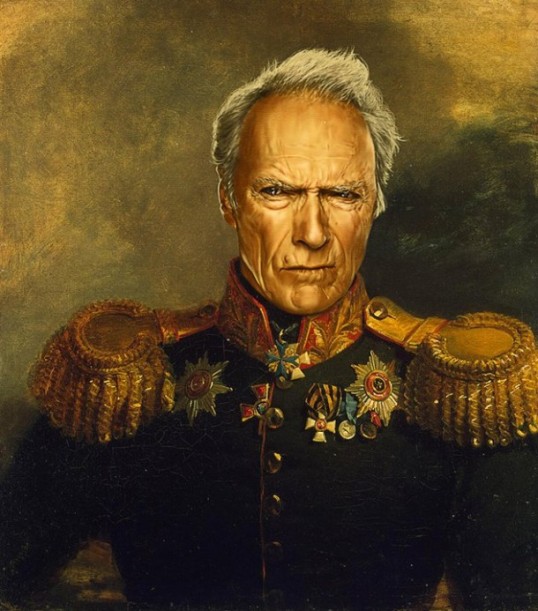
Painting by Ryan Gajda

Painting by Ryan Gajda

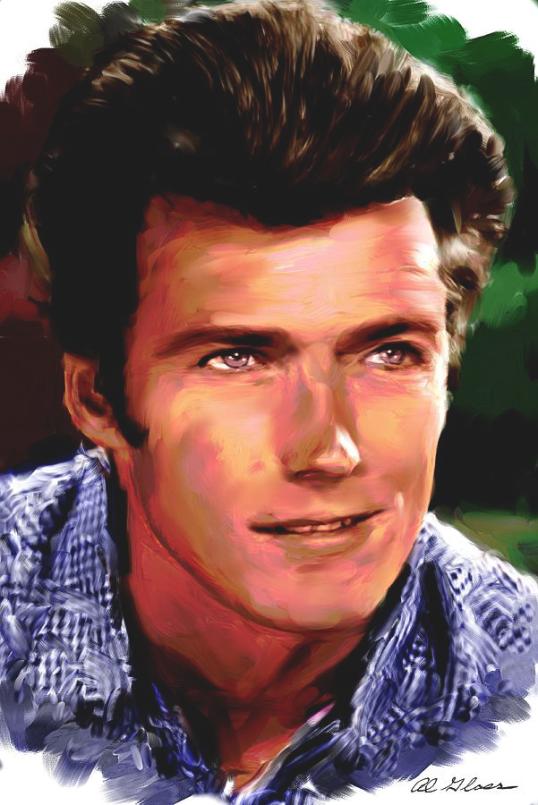
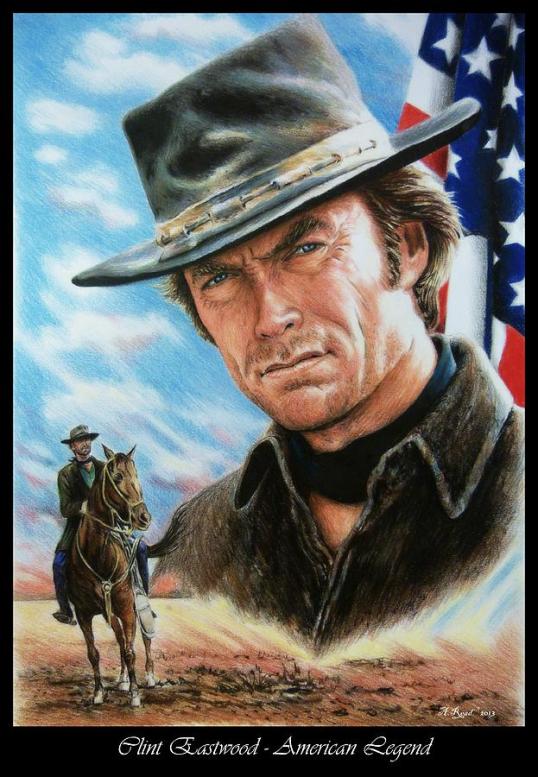
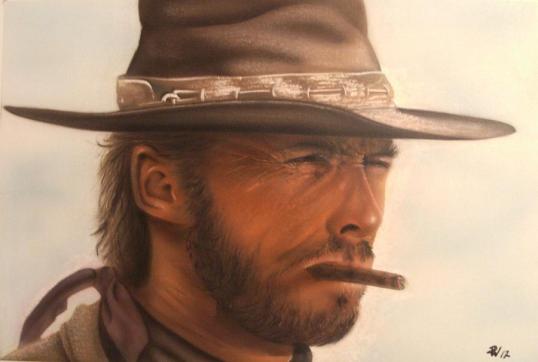
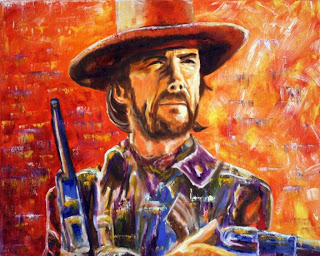
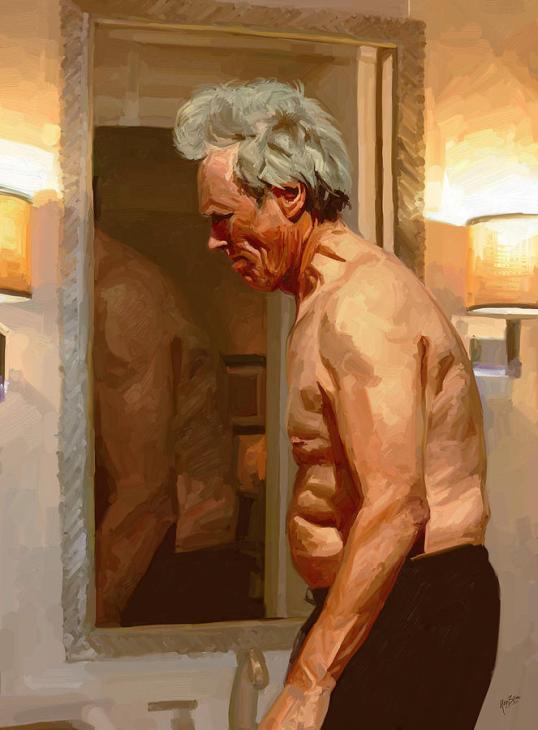
Happy 85th birthday to director, actor, and jazz musician Clint Eastwood!  Here are a few Clint Eastwood inspired paintings to help you get into the birthday spirit!

Painting by Allen Glass

Painting by Allen Glass

Painting by Andrew Read

Painting by Andrew Read

Painting by Nino Vecia

Painting by Nino Vecia

Painting by Dave Walker

Painting by Dave Walker

Painting by Jim Blanchard

Painting by Jim Blanchard

Painting by Jennifer Morrison

Painting by Jennifer Morrison

Painting by Alexey Kurbatov

Painting by Alexey Kurbatov

Painting by David Dunne

Painting by David Dunne

good-morning-clint-eastwood-nop-briex

Painting by Nop Briex

Painting by Steve Payne

Painting by Steve Payne


Shattered Politics #60: Absolute Power (dir by Clint Eastwood)


Absolute_power

The main reason that I enjoyed the 1997 Clint Eastwood film Absolute Power was because it features a murderer who also happens to be the President.  As someone who dislike the idea of any one person having absolute power, I always get annoyed by the attitude that authority is something that has to be automatically respected.  Instead, I’ve always felt that all authority should be distrusted and continually questioned.

Just take President Alan Richmond (Gene Hackman) for example.  At the start of Absolute Power, he’s a popular President.  He’s quick with a smile.  He’s quick with a memorable line.  I imagine that excerpts from his State of the Union speech would probably be very popular on YouTube.  However, at the start of the film, elderly burglar Luther Whitney (Clint Eastwood) witnesses President Richmond getting violent with Jan Levinson-Gould.  When Jan resists him, two Secret Service agents (Scott Glenn and Dennis Haysbert) run into the room and shoot her.

Okay, technically, the victim was not really The Office‘s Jan Levinson-Gould.  (They both just happen to be played by Melora Hardin.)  Instead, her name was Christy Sullivan and she was also the wife of one of Richmond’s top financial supporters, Walter Sullivan (E.G. Marshall).  After the murder, President Richmond and his chief-of-staff, Gloria Russell (Judy Davis), attempt to frame Luther for the crime.

Absolute Power is pretty much your typical Clint Eastwood action picture.  In the role of Luther, Eastwood snarls his way through the film and never dispatches a bad guy without providing a ruthless quip.  (When one bad guy begs for mercy, Luther replies that he’s “fresh out.”)  Luther has an estranged daughter, a lawyer named Kate (Laura Linney) and, despite the fact that she’s helping the homicide detective (Ed Harris) who is trying to capture him, Luther still pops up to look out for her.  In the end, Luther’s not only try to prove that the President is a murderer but he’s trying to be a better father as well!  Awwwwwww!

Again, it’s all pretty predictable but the film is worth seeing just for the chance to witness Gene Hackman play one of the most evil Presidents ever.  As far as soulless chief executives are concerned, Alan Richmond makes Woodrow Wilson look like a humanitarian!  And Hackman does a good job embodying the affable type of evil that could conceivably translate into an electoral landslide.

Absolute Power may not be a great film but it’s a good one to watch whenever you need an excuse to be cynical about the absolute power of the government.

Here They Are! Lisa’s Final 2014 Oscar Predictions!


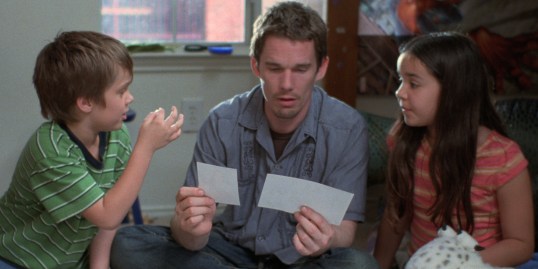
Hey!  It's the picture from Boyhood that we've used a few dozen times over the past two months!

Hey! It’s that picture from Boyhood that we’ve used a few dozen times since November!

Well, it’s been a long and tortured road since I first started this monthly series of Oscar predictions way back in March.  Some contenders have faded.  Some have come out of nowhere.  And some — like Boyhood and J.K. Simmons in Whiplash — have remained consistently strong for the entire year.

Here are my final 2014 Oscar predictions.  The actual Oscar predictions will be announced on Thursday.

(You can check out my predictions of March, April, May, June, July, AugustOctober, November, and December by clicking on the links in this sentence!)

Best Picture

American Sniper

Birdman

Boyhood

The Grand Budapest Hotel

The Imitation Game

Nightcrawler

Selma

The Theory of Everything

Whiplash

Best Actor

Bradley Cooper in American Sniper

Benedict Cumberbatch in The Imitation Game

Jake Gyllenhaal in Nightcrawler

Michael Keaton in Birdman

Eddie Redmayne in The Theory of Everything

(Where’s David Oyelowo?  Originally, I did list him but I don’t know.  With the guild awards, it seems like Selma is losing momentum and American Sniper is gaining it.  I know that a lot of watchers are saying this is due to the Selma screeners being sent out late and that could well be true.  Hopefully, I’ll get to see both Selma and American Sniper this weekend but, until then, I can’t offer an opinion on whether either one deserves to be nominated.  But it’s hard not to feel as if Selma is not shaping up to be quite the Oscar powerhouse that a lot of us were expecting it to be.  We’ll see.)

Best Actress

Jennifer Aniston in Cake

Felicity Jones in The Theory of Everything

Julianne Moore in Still Alice

Rosamund Pike in Gone Girl

Reese Witherspoon in Wild

Best Supporting Actor

Robert Duvall in The Judge

Ethan Hawke in Boyhood

Edward Norton in Birdman

Mark Ruffalo in Foxcatcher

J.K. Simmons in Whiplash

(I still have a hard time believe that Robert Duvall is going to be nominated for The Judge because Duvall was good but not great and the movie kind of sucked.  But, honestly, who else are they going to nominate?  Josh Brolin deserves the spot for Inherent Vice but the film is probably a little bit too odd for a lot of voters.  Maybe if Unbroken‘s Miyavi or Gone Girl‘s Tyler Perry had a little more screen time, they could make a case.  But ultimately, that fifth spot does seem to be Duvall’s.)

Best Supporting Actress

Patrica Arquette in Boyhood

Jessica Chastain in A Most Violent Year

Keira Knightley in The Imitation Game

Emma Stone in Birdman

Naomi Watts in St. Vincent

(I’m going to go out on a limb and predict Watts over Meryl Streep.  Why not?  There always seems to be at least one surprise acting nominee.)

Best Director

Wes Anderson for The Grand Budapest Hotel

Clint Eastwood for American Sniper

Alejandro G. Inarritu for Birdman

Richard Linklater for Boyhood

Morten Tyldum for The Imitation Game

So there they are!  My final “for real” predictions.  Tomorrow, I’ll be posting my annual “If Lisa Had All The Power” post, which will be my personal nominations, the films and performances that I would nominate if I had all the power.  And then, on Thursday, the Oscar nominations will be announced!

Need to kill some time?  Look through all the posts since November and count up how many times this picture has appeared on the site!

Need to kill some time? Look through all the posts since November and count up how many times this picture has appeared on the site!

Here are the DGA Nominations!


The DGA nominations were announced today and the big news will probably be that Ava Duvernay was not nominated for Selma.  Though I’m sure that Sasha Stone will claim this is because the Tea Party has somehow taken over Hollywood, others are suggesting that it could be that the majority of the DGA members did not receive a screener for Selma.

(I haven’t seen Selma yet so I can’t say anything about whether it deserves to be nominated or not.  I have to admit that it worries me to see how stridently the people at Awards Daily are pushing it because I have a theory that the editor of that site promotes films that she knows won’t be nominated so she’ll have an excuse to be all holier-than-thou as a result.  Case in point: the site’s  fanatic insistence that David Fincher’s offensively sexist rehash of The Girl With The Dragon Tattoo was best picture-worthy,  which needless to say is an interesting position for someone who claims to be a feminist to take.)

Anyway, here are the directors who were nominated:

Wes Anderson for The Grand Budapest Hotel

Clint Eastwood for American Sniper

Alejandro Gonzalez Inarritu for Birdman

Richard Linklater for Boyhood

Morten Tyldum for The Imitation Game

Eastwood