Review: Deadwood (by David Milch)


“Be in my joint in two hours—we’re forming a fuckin’ government.” — Al Swearengen

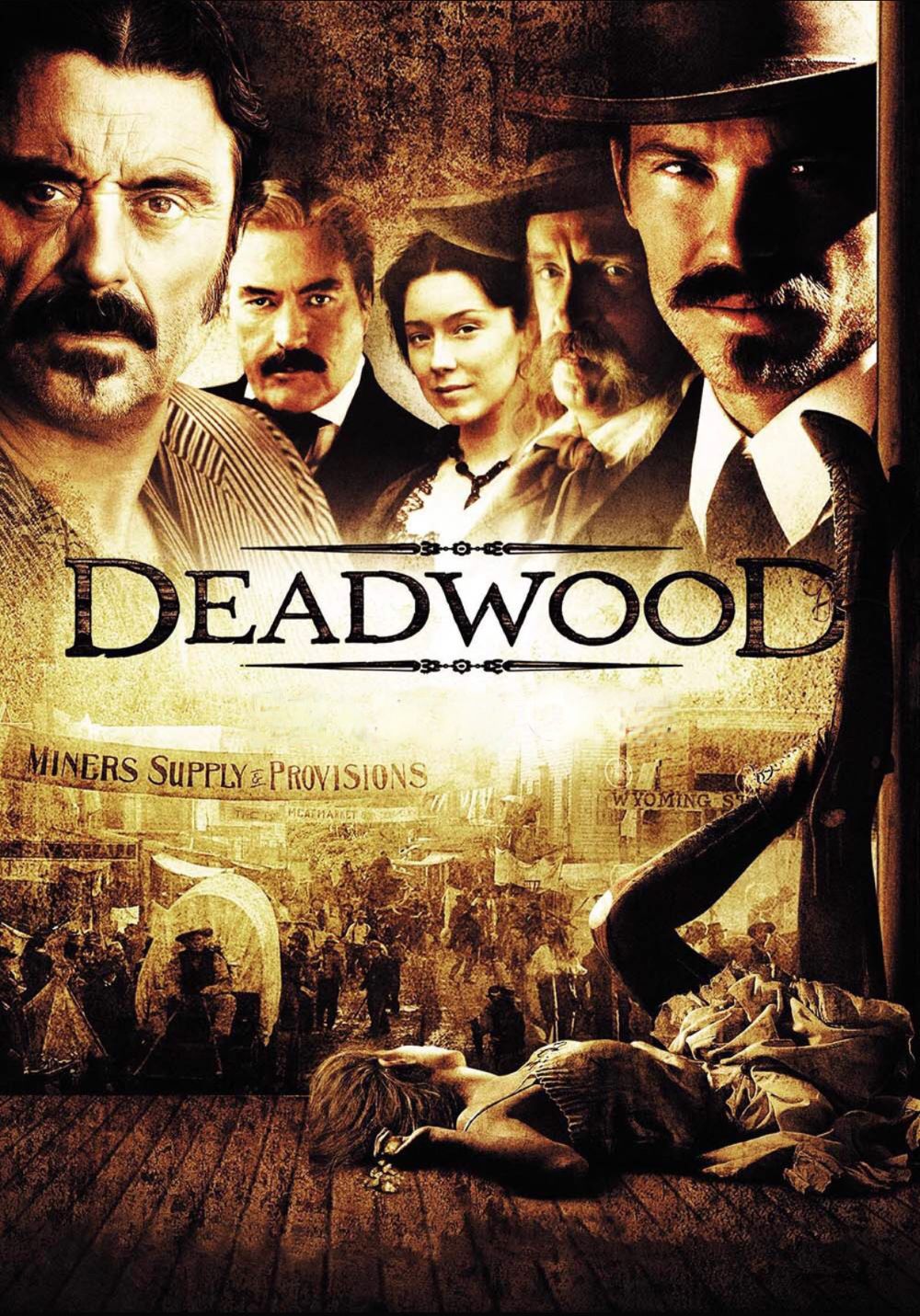
David Milch’s Deadwood is one of those rare television series that feels less like a conventional prestige drama and more like being dropped into a living, breathing, filthy historical world. Set in the rough gold-rush settlement of Deadwood, South Dakota, during the 1870s, the HBO series takes the familiar pieces of the Western—lawmen, gunfighters, prospectors, saloons, prostitutes, corrupt businessmen, and murder—and turns them into something far richer than a genre exercise. It is a Western, but it is also a story about the difficult, often ugly process of creating a society in the middle of chaos. Civilization in Deadwood is not built by noble speeches or clean acts of heroism. It is assembled through greed, fear, business deals, compromise, bloodshed, exploitation, loyalty, and the occasional act of real compassion.

The show’s biggest strength is its ability to make Deadwood itself feel like one of television’s great settings. At the beginning, the camp exists outside the reach of formal American law, which means everyone who arrives sees an opportunity. Some people come looking for gold. Others come looking to escape old lives, make money, gain power, or take advantage of people too desperate to protect themselves. Every character has a different idea of what Deadwood should become, and the series finds drama in the collision between those competing visions. A claim dispute, a murder, a business arrangement, an illness, a newspaper article, or even a random rumor can become part of the larger struggle over who gets to shape the town’s future.

At the center of that struggle is Seth Bullock, played by Timothy Olyphant with an intensity that makes him seem like he is always one bad conversation away from throwing somebody through a window. Bullock arrives in Deadwood with his friend and business partner Sol Star, hoping to start a hardware business and leave behind his past as a lawman. He wants a calmer, more stable existence, but the town almost immediately drags him back toward violence and public responsibility. Bullock has a powerful sense of justice, but he is not a smooth, patient hero. He is rigid, angry, stubborn, and frequently driven by instinct before reflection. Olyphant gives him a clenched physicality—the hard stare, the tense posture, the barely restrained frustration—that makes it clear Bullock is always fighting to keep the more destructive side of himself under control.

That is what makes Bullock such a compelling protagonist. Deadwood never treats him as a simple white-hat sheriff who comes to tame the frontier. He is more decent than many of the people around him, but he is not uncomplicatedly good. His moral certainty can become self-righteousness, and his willingness to defend the vulnerable can slide into an urge to control a situation through force. At times, Bullock’s anger is justified; at other times, it is frightening. Olyphant’s performance works because he does not try to make Bullock effortlessly likable. Instead, he makes him believable as a man who wants order, justice, and dignity in a place that seems designed to expose every violent impulse he is trying to bury.

If Bullock represents Deadwood’s rough version of moral order, Ian McShane’s Al Swearengen represents its ruthless understanding of power. As the owner of the Gem Saloon, Swearengen initially appears to be the obvious villain: a man who profits from vice, manipulation, intimidation, and murder. McShane gives him such enormous control over the role that every scene becomes more charged when Swearengen walks into it. His speech has a strange, unforgettable rhythm, moving between elaborate insults, sly observations, sudden bursts of rage, and dry comedy. He is part Shakespearean king, part criminal entrepreneur, and part exhausted manager trying to hold together a business and a town full of people who are constantly making life harder for him.

What makes Swearengen one of television’s greatest characters is that the series refuses to flatten him into a conventional bad guy. He is undeniably brutal, often monstrous, and capable of treating human beings as disposable pieces in a larger game. The show never asks the audience to forget that. But as Deadwood faces pressure from outside business interests, political maneuvering, and wealthy figures who see the camp as a resource to be absorbed, Swearengen’s investment in the town becomes clearer. He does not become a hero, but he develops into something more complicated: a man whose selfish ambition is inseparable from a practical, almost territorial loyalty to Deadwood. He understands that the camp can only survive if its people occasionally work together, even if he usually has to manipulate them into doing so.

The relationship between Bullock and Swearengen gives the series much of its electricity. They are rivals, reluctant allies, ideological opposites, and men who recognize certain necessary qualities in each other. Bullock sees Swearengen as a moral disease at the center of the camp. Swearengen sees Bullock as an unpredictable nuisance, but also as someone with the strength and authority to be useful. Their confrontations work because neither man can completely dominate the other. Olyphant and McShane create a tension that goes beyond physical threat. Their conflict reflects the show’s larger question: can Deadwood become a place governed by something closer to law and principle, or will it always belong to the people with the most money, violence, and influence?

Still, Deadwood would not be nearly as great if it were only the Bullock and Swearengen show. Its ensemble is one of HBO’s best, filled with actors who make the camp feel populated by people with histories, grudges, private fears, ambitions, and complicated ties to one another. John Hawkes is excellent as Sol Star, Bullock’s business partner and closest friend. Sol is quieter and more patient than Bullock, but Hawkes never lets that quietness fade into the background. He gives Sol an intelligence and decency that make him a crucial moral and emotional counterweight to Bullock’s volatility. His friendship with Bullock is one of the show’s most believable relationships because Sol understands the good in Bullock without ignoring the damage Bullock’s anger can cause.

Molly Parker is equally strong as Alma Garret, a wealthy widow who gradually becomes much more than an outsider caught in Deadwood’s orbit. Alma could have been written as a standard symbol of refinement in a crude frontier town, but Parker gives her tremendous resolve, intelligence, and emotional restraint. Her story is about survival in a different but no less dangerous form. She is forced to navigate grief, addiction, business interests, motherhood, and the expectations placed on a woman in a violently male world. Her relationship with Bullock is complicated in the best way because it is built from longing, frustration, guilt, repression, and circumstance rather than easy romance.

Anna Gunn brings similar depth to Martha Bullock, who becomes increasingly essential as the series develops. Martha could have been pushed aside as merely the protagonist’s wife, but Gunn makes her one of the clearest-eyed people in the camp. She understands the weight of family, grief, responsibility, and compromise, and she gives the character an emotional firmness that Bullock himself often lacks. Martha does not need grand speeches to establish her strength. Her endurance and intelligence gradually make her one of the show’s most quietly powerful figures.

Robin Weigert’s Calamity Jane is another unforgettable character, and one of the series’ most heartbreaking. Jane is loud, drunk, funny, self-destructive, and seemingly incapable of admitting how deeply she cares about people without covering it in profanity or sarcasm. Weigert finds the sadness beneath every messy outburst. Her love for Wild Bill Hickok, her loyalty to those who treat her with kindness, and her profound discomfort with herself make Jane much more than a colorful Western side character. She can be hilarious one minute and devastating the next, which is exactly the emotional balance Deadwood handles so well.

The supporting cast is so strong that the show continually finds new ways to make minor characters feel essential. Gerald McRaney brings a cold, weathered authority to George Hearst, the wealthy mining magnate whose arrival makes Deadwood’s conflicts larger and more dangerous. Hearst is not simply another local schemer. He represents the corporate and political forces that can crush a place like Deadwood from the outside, turning its chaos into something colder and more organized. McRaney plays him with a calm menace that is often more unsettling than open rage. He does not need to shout to make it clear how much power he has.

Brian Cox is terrific as Jack Langrishe, the theatrical and charismatic impresario whose arrival adds another kind of intelligence to the camp. Langrishe can be charming, funny, and seemingly generous, but Cox always lets the audience see the calculation behind the performance. He understands how to survive around men like Swearengen and Bullock because he knows that people are always playing roles, especially when power is on the line. Garrett Dillahunt also does remarkable work in two very different roles. He first appears as Jack McCall, the disturbed and dangerous killer whose actions leave a permanent mark on the camp. Later, he returns as Francis Wolcott, a polished, educated, deeply unsettling man whose manners barely conceal something vicious underneath. Dillahunt’s ability to make those roles feel so distinct is one of the more impressive acting achievements in the series.

Keith Carradine gives Wild Bill Hickok a tired, melancholy gravitas that makes the legendary lawman feel human rather than mythical. He is aware of his reputation, perhaps exhausted by it, and Carradine captures the loneliness beneath the public image. Jeffrey Jones is wonderfully eccentric as A. W. Merrick, Deadwood’s nervous but idealistic newspaper editor. Merrick’s love of language and belief in the importance of a free press make him both funny and unexpectedly vital. In a town shaped by violence and backroom deals, the act of recording events and trying to tell the truth becomes its own form of resistance.

Kim Dickens is excellent as Joanie Stubbs, a woman carrying deep emotional scars while trying to carve out independence in a world that treats vulnerability as an invitation to exploit someone. Her performance brings tenderness and pain to a character who could have easily been reduced to a plot device. Brad Dourif is another major presence as Doc Cochran, the camp’s exhausted, haunted physician. Dourif makes him funny, strange, compassionate, and spiritually worn down by everything he has seen. Jim Beaver is equally memorable as Whitney Ellsworth, the gruff prospector who gradually reveals himself to be one of the show’s warmest and most honorable people. Powers Boothe’s Cy Tolliver, meanwhile, offers a sharp contrast to Swearengen. He is just as ambitious and cruel, but he lacks Swearengen’s strange capacity for loyalty and for understanding that a town, however dirty and violent, is still an ecosystem that must be maintained.

Milch’s writing is famous for its dense, ornate, profanity-heavy dialogue, and it can take a little time to adjust to the show’s rhythm. These characters do not speak in the clean, direct language of a standard television Western. They circle around their meanings, launch into bizarrely poetic insults, turn routine negotiations into verbal duels, and sometimes say more through implication than through plain statements. But once the language clicks, it becomes one of Deadwood’s greatest pleasures. The dialogue gives the show its own identity. It makes the town sound as alive and unpredictable as it looks.

That stylized language also supports what Deadwood is really about. The series is not interested in selling a clean myth of American rugged individualism. It shows the frontier as a collision between people who need one another and often cannot stand one another. Deadwood grows through compromise, manipulation, sacrifice, corruption, and a slow recognition that nobody can survive entirely alone. Even the most vicious people become tied to a larger network of obligations. The show understands that communities are not built by saints. They are built by flawed, wounded, selfish people who occasionally discover that cooperating is better than destroying each other.

The original series ended after three seasons, which leaves it with an undeniably unfinished quality, but that does not lessen its accomplishments. If anything, the lack of a neat conclusion suits the show’s view of history. Deadwood is always changing, always threatened, and never fully settled. The later film provides a welcome return to the characters and offers some emotional closure, but the series remains the core achievement.

Deadwood is demanding television, but it is never hollow television. Its violence has consequences, its humor is vicious and surprisingly warm, and its characters become richer the more time the audience spends with them. Timothy Olyphant gives Seth Bullock the rage of a man trying to force order onto a world that resists it. Ian McShane turns Al Swearengen into a full, contradictory human being rather than a one-note villain. Around them, Milch assembled an extraordinary ensemble that makes every saloon, storefront, street, and muddy patch of ground feel inhabited. People may start the show for the gunfights, the outlaw mythology, and the famously inventive profanity, but the reason Deadwood endures is its people. It understands that civilization is not born cleanly. It is dragged into existence, often unwillingly, by damaged people trying to make a home in a place that barely resembles one.

Film Review: Sully (dir by Clint Eastwood)


sully_xxlg

The new film Sully is about several different things.

Most obviously, it’s about what has come to be known as the Miracle on the Hudson.  On January 15th, 2009, US Airways Flight 1549 had just departed from New York’s LaGuardia Airport when it was struck by a flock of geese.  (They say that it was specifically hit by Canadian Geese but I refuse to believe that Canada had anything to do with it.)  With both of the engines taken out and believing that he wouldn’t be able to get the plane back to either LaGuardia or an airport in New Jersey, the flight’s plot, Chelsey “Sully” Sullenberger (played by Tom Hanks) landed his plane on the Hudson River.  Not only did Sullenberger manage to execute a perfect water landing but he also did so without losing a single passenger.

I’m sure that we can all remember that image of that plane sitting on the river with passengers lined up on the wings.  We can also remember what a celebrity Sully became in the days following the landing.  At a time of national insecurity and cynicism, Sully reminded us that people are still capable of doing great things.  It also helped that Sully turned out to be a rather humble and self-effacing man.  He didn’t use his new-found fame to host a reality TV show or run for Congress, as many suggested he should.  Instead, he wrote a book, raised money for the National Suicide Prevention Lifeline, and appeared in two commercials for St. Jude Children’s Research Hospital.

Wisely, Sully opens after the Miracle on the Hudson, with Sully still struggling to come to terms with suddenly being a celebrity.  (That said, we do get to see the landing in flashbacks.  In fact, we get to see it twice and it’s harrowing.  The “Brace! Brace!” chant is pure nightmare fuel.)  Tom Hanks plays up Sully’s modesty and his discomfort with suddenly being a hero.  Even while the rest of the world celebrates his accomplishment, Sully struggles with self-doubt.  Did he make the right decision landing the plane on the Hudson or did he mistakenly endanger the lives of all the passengers and crew members?

A lot of people would probably say, “What does it matter?  As long as he succeeded, who cares if he actually had to do it?”  Well, it matters to Sully.  Some of it is a matter of professional pride.  And a lot of it is because the soulless bureaucrats at the National Transportation Safety Board are investigating Sully’s landing.  If it’s determined that he could have made it back to airport and that he unnecessarily endangered the lives of everyone on the plane, he could lose his job and his pension.  As we see in a few scenes with Sully’s wife (Laura Linney, who is somewhat underused), the Sullenbergers really need that pension.

That brings us to another thing that Sully is about.  It’s a celebration of not only individual heroism but individuality itself.  The NTSB claims that they have computer-generated recreations that prove Sully had enough time and fuel to return to an airport but, as Sully himself points out, the NTSB has ignored the human element in their recreations.  As a result of their obsession with regulation and procedure, the bureaucrats have forgotten that planes are not flown by computers but individuals who have to make split-second decisions.

That’s one of the things that I loved about Sully.  In this time when we’re constantly being told that our very future is dependent upon always trusting the bureaucrats and following their rules and regulations, Sully reminds us that the government is only as good as the people who work for it.  And, far too often, the people are smug and complacent morons.

(For the record, Sullenberger has said that the real-life hearings were not as confrontational as the ones depicted in the film.  However, even taking into account the dramatic license, the overall message still rings true.)

And finally, Sully is a film about what America has become in the wake of 9-11.  Just as in real-life, the film’s Sully suffers from PTSD in the days immediately following the Miracle on the Hudson.  Even while the rest of the world celebrates him, Sully has nightmares about what could have happened if he hadn’t made the landing.  When we watch as Sully’s plane collides with a New York skyscraper, it’s impossible not to be reminded of the horrible images of September 11th.  Not only does it drive home what was at stake when Sully made that landing but it also reminds us that, regardless of what some would want us to beg, there are still heroes in the world.  Not every story has to end in tragedy.  People are still capable of doing great things.  Heroism is not dead.  With tomorrow being the 15-year anniversary of the day when 3,000 people were murdered in New York, Pennsylvania, and D.C., it’s important to be reminded of that.

Sully is a powerful and crowd-pleasing film.  (The normally cynical audience at the Alamo Drafthouse broke into applause at the end of the movie.)  Director Clint Eastwood tells this story in a quick, no-nonsense style.  During this time of bloated running times, Sully clocks in at 97 minutes and it’s still a million times better than that 150-minute blockbuster you wasted your money on last week.  Toss in Tom Hanks at his best and you’ve got one of the best films of the year so far.

Trash TV Guru : “Breaking Bad” Series Finale


breaking-bad-season-5-episode-16-b

The promotional blurbs on A&E’s cover packaging for the various box set and stand-alone DVD releases of Patrick McGoohan’s classic series The Prisoner refer to it as “television’s first masterpiece,” but let’s be brutally honest here — for a good long time there it probably stood as television’s only “masterpiece.”

Which isn’t to say that there haven’t been some good shows over the years, but start-to-finish, wire-to-wire masterpieces have been pretty tough to come by. I won’t speculate here as to why that’s been with any kind of probing analysis, apart from making the obvious observation that American TV, in particular, has been geared to appeal to the so-called “lowest common denominator” for so long now that frankly most people don’t even expect for there to be anything good on the tube when they turn it on, even with 200-300 channels to choose from. We all just sorta watch it anyway.

I’ll be the first to admit that my two favorite shows of all time — Doctor Who and Twin Peaks — hardly fit the definition of “masterpiece” even though I love ’em dearly. Hell, one of the best things about Who — and I’m referring to old-school Who  here, not the current abomination running around cloaked in its title, which hasn’t held much of any appeal to me since the end of its first return season with Christopher Eccleston in the lead role — is that it’s so damn imaginative and clever and stupid in a fun way and addictively, insanely watchable and re-watchable in spite of its glaring production value weaknesses, often hammy acting, and atrocious dialogue that those so-called “deficiencies” actually become part of its charm. And I’m willing to be that “charm” is one of the things that has engendered such a strong following for various other “fan-driven” series, such as  Joss Whedon’s  Buffy The Vampire Slayer and Angel, both of which have rabid cult followings, to be sure, but neither of which, I think,  even the most zealous Whedon fan (and there’s plenty of competition for that title) would admit, at least in their more honest moments, was anything like a “masterpiece.”

Charm is not something that Breaking Bad ever had much of, though, is it? From the outset, we knew we were being asked to become involved in the life story of a guy who was dying, and furthermore was broke and dying. It’s been a pretty “heavy” show from day one, hasn’t it?

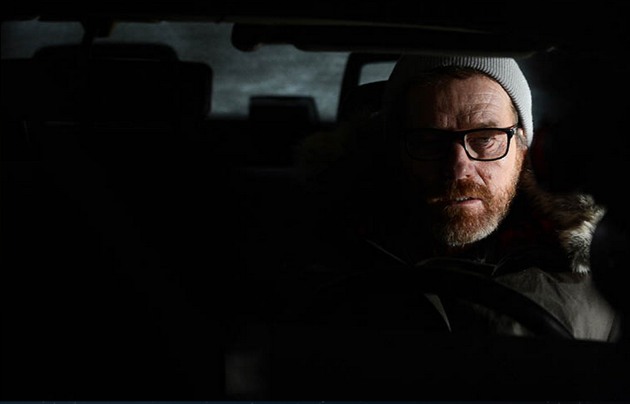
Which isn’t to say that it didn’t have lighter moments interspersed here and there throughout, because of course it did, and in early days it even looked like Dean Norris’ Hank character was never going to amount to much more than bog-standard, albeit well-written, comic relief. But as things progressed, even he became a more multi-dimensional character, and as Bryan Cranston’s Walter White sold out more and more of his soul to purportedly “provide for” his family, a show that started out heavy only became heavier.

And yet — lack of charm and a general “bummer” tone don’t preclude a show from being great, do they? And I would contend that Breaking Bad will be remembered as being more than just great, it will be remembered as — here’s that term again — a masterpiece (the third by my count anyway, in TV history — anyone care to guess what I think the second was? The only hint I’ll give is that it was a relatively recent show).

It was difficult, at times, to be sure. Watching the lives of all these people go to hell in a handbasket even became something of a chore during this final season, particularly the season’s second half following its over-12-month hiatus. Walt was a real bastard, wasn’t he? And that could be downright excruciating to witness. But here’s the thing:

You just never knew what the hell was going to happen next. Series creator Vince Gilligan and his coterie of writers always had another rabbit in their hat, another brightly- colored handkerchief tied to that long string of them coming out of their sleeve. The show never once lost its power to surprise.

Until tonight’s series finale, “Felina,” written and directed by Gilligan himself, which pretty much saw all loose ends tied up more or less exactly as you thought they would be.

I’m sure there might be some hand-wringing among fans that long-suffering characters like Anna Gunn’s Skyler and Aaron Paul’s Jesse weren’t given necessarily “that much to do” in this wrap-up episode — hell, RJ Mitte’s hapless Walter Jr./Flynn didn’t even have a single line of dialogue! Meanwhile, a couple characters we hadn’t seen much of since the second season, Gretchen and Elliot Schwartz, played a pivotal part in Gilligan’s last script.

And yet — everything ended on just the right note for all these people, whether they were given too much to do, too little, or just enough. Events played out more or less in exactly the fashion we expected them, maybe even needed them, to.

And that, finally, may prove to be Breaking Bad’s greatest trick of all : a series that thrived on the element of surprise gave us an entirely predictable conclusion that nonetheless felt exactly right.

Walter White is dead and gone now, and Heisenberg with him. His hat’s off. And so is mine. This series hit it out of the park from the word “go” to the word “stop.” As a slow-burn tale of human tragedy — hell ,of loss of humanity altogether — it stands unequaled. A “happy ending” or “loose, interpretive ending” would have been a huge cop-out. There’s only one way things could have gone here — only one way they were ever going to go.

That’s how they went. And that’s just perfect.

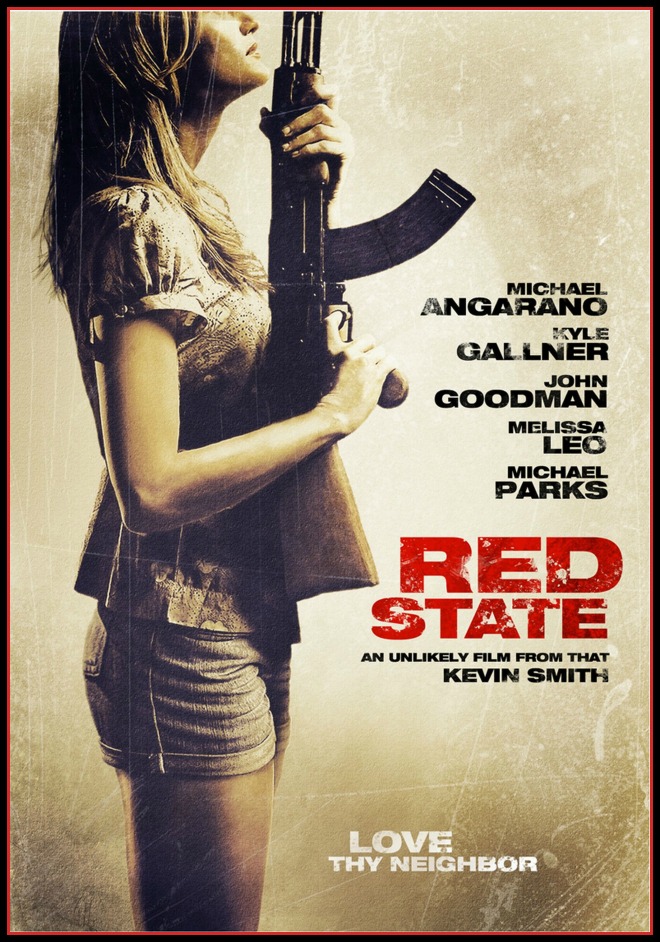
Horror Review: Red State (dir. by Kevin Smith)


Kevin Smith’s 2011 film was a major departure for him. It wasn’t the usual comedy (his last one being the very awful buddy-cop comedy, Cop Out) but instead his first foray into one of film’s earliest film genre: the horror film. Say what you want or feel about Kevin Smith (and there’s a huge range of people who either love the man or hate him like the second coming of the Antichrist) but when he decides to make a film he puts everything of himself on display and he wears his emotions on his sleeves when it comes to his films. It’s this aspect of Smith’s personality which has gained him such a loyal following, but has also earned him the scorn and, for some, hate of film bloggers who now constitute the bulk of film criticism in the digital age. This first horror film for Kevin Smith would be called Red State and it would be a film that would continue to expand the gulf between those who hate him and those who support him. Lost in this playground-like tiff was whether the film would be a return to form for Smith or just a continuation of some very bad films in the last half-decade.

Red State could almost be called a coming-of-age story since the film begins with three high school boys joining together to travel to a neighboring town where they  hope to engage in some sexual extracurricular activities. It’s also in this very town that we learn very early on in the film that the Five Points Church calls home. This church and it’s congregation has one Pastor Abin Cooper (Michael Parks) as it’s leader with it’s membership either related by blood to Cooper or by way of marriage. In this picture would arrive an ATF task force led by Special Agent Keenan (John Goodman) to investigate the illegal doings of Cooper and his flock. It’s between these two groups that the three teenage boys would find themselves in a horrific situation with their lives in the balance.

Let’s just say that this film had much potential in it’s plot and how it’s initially set-up. The character of Pastor Abin Cooper and his flock was definitely patterned after the Westboro Baptist Church led by Fred Phelps who’re infamous for picketing funerals of soldiers and for being outright homophobic in their teachings and ideology. The ATF group with Keenan in command looks to be set-up to represent the Federal government and it’s police agencies run amok in their attempt to fight terrorism since Sept. 11, 2001. Then Smith drops in three horny teenage boys in the mix and it sure must’ve read like a surefire story with horror and action.

What we get instead was a film which didn’t seem to know how to proceed with the initial set-up. The film began and played out like something similar to Hostel and films of a similar vein. Unsuspecting teens lured by sex to be made an example of by a group of people extreme in their passions and ideas. If the film had continued with just those two groups as the core of the film’s story then it could’ve made for a decent survival horror film, but the addition of the ATF task force and how they impacted the dynamics between the congregation and the teens unbalanced everything. Now what was suppose to be a horror film turned into an action-drama.

The performances by the cast was also inconsistent. This could be due to the weakness of the screenplay which tried too hard to push Cooper and his people as batshit crazy through overly long sermons. Sermons by Abin Cooper that was delivered by Michael Parks in convincing fashion at times and then mumbled incoherently at others. The three teens were also a problem in that they weren’t sympathetic by any means. Even knowing what awaited them didn’t lessen the fact that these three teens were obnoxious and vulgar to the point that we didn’t care if Cooper and his people tortured and killed them.

One would expect that the addition of John Goodman as the ATF special agent and Kevin Pollak as his assistant would at least bring some serious acting chops to the proceedings, but their characters were so thinly-written and their dialogue so forced that one couldn’t believe them as real characters. It’s a shame that the film’s overall screenplay couldn’t provide the necessary foundation for a cast that had a very good veteran ensemble which included Melissa Leo, James Parks and Stephen Root.

Red State really failed in the very thing that was suppose to make this film the beginning of a shift in Kevin Smith’s career. It failed as a horror film in the most general sense. There was never any true feeling of horror to be had throughout the film. Even the first death of an unnamed homosexual kidnapped by the congregation to be used as an example during one of Cooper’s sermons failed to elicit any form of horror. This was a film which had much potential for some horrific sequences but it never explored it. The film doesn’t even work as a thriller which would be the closest this film ever got to be. Even the ending of the film which tried to inject a semblance of the supernatural didn’t even work as it turned out to be a major bait-and-switch that didn’t come off as creative once it was explained.

Does the film justify some of the venom hurled at it from Kevin Smith’s detractors?

I would say no in that the film wasn’t the worst thing he has made by a long shot. It did have some moments that hinted at something special could’ve been made if someone else was involved or if the film had more time to be worked on. I do believe that if Red State was made by anyone else other than Kevin Smith it would be considered average to good. But having such a polarizing figure as it’s creator and marketer might have blinded some in actually watching this film with an open-mind.

Does this mean Red State was actually a good film?

I would say no with the reasoning I’ve mentioned above. But I will say that the film wasn’t dull or boring. As unnecessary as the ATF task force to the story as a whole their arrival and the subsequent reaction of the congregation to them made for some exciting few minutes. Even Michael Park’s performance was quite good despite some of his line deliveries coming off as incoherent mumblings.

If Red State was to be Kevin Smith’s attempt to try and move away from his history of making comedies then it was a failed one. While it was a failure I wouldn’t mind him going back to the genre to hone his skills in doing more horror. If Uwe Boll could continue making even worst materials then surely Smith could be given another chance to make another and fix the very things which he did wrong with Red State with another horror film project. One thing for sure he would not be lacking in actors wanting to work with him.

Red State (Teaser Trailer)


I will admit that I’m not the biggest fan of Kevin Smith as a filmmaker though I don’t dislike or even loathe the man the way some film bloggers seem to. He’s definitely much more talented than Uwe Boll despite what some people may say. I just think that Kevin Smith had ended up listening too much to his own press about how he was the indie darling of the 90’s. He lived too much in his past glories and stagnated as a creative artist.

His last few films were either bombs financially and/or critically. Smith just tried too much to replicate what he had done in the past when he should’ve been trying to expand his horizons and attempt new things. To say that his Cop Out was awful would be an understatement. One of the worst films of recent memory, but for some reason actors still want to work with the guy.

It’s a good thing that good actors still want to work with him because his upcoming film, a horror film at that and a straight out one, in 2011 looks to be Smith reinventing himself beyond his “Jay and Silent Bob” era.

Red State looks like it’s just plain horror and the teaser trailer doesn’t seem to show any black humor or any humor at all that seem to be part and parcel of any Kevin Smith production. The teaser has a fundamentalist eerie vibe to it and with Michael Parks in what looks to be a Fred Phelps of Westboro Baptist Church infamy has definitely peaked my interest.

If Neil Gaiman, who has already seen the finished product (or close to being finished), was shaken by the experience but in a good way then my optimism for this film may not result in another Kevin Smith disappointmen. One can only hope.