Retro Television Review: St. Elsewhere 3.23 “Bang The Eardrum Slowly”


Welcome to Retro Television Reviews, a feature where we review some of our favorite and least favorite shows of the past! On Fridays, I will be reviewing St. Elsewhere, a medical show which ran on NBC from 1982 to 1988.  The show can be found on Daily Motion.
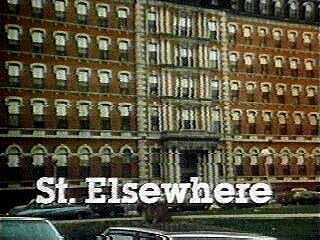
This week, everyone’s thinking about death.

Episode 3.23 “Bang the Eardrum Slowly”

(Dir by David Anspaugh, originally aired on March 20th, 1985)

Every by the standards of St. Elsewhere, this was a depressing episode.

Auschlander buys his morning newspaper and discovers that his old friend Dr. Wyler was murdered by revolutionaries in Africa. The terminally ill Auschlander finds himself thinking about his own death and how he’ll be remembered. Will he also only rate a small mention in the local newspaper? Will anyone care or will they just shrug off his death and go on with their lives? The only thing that kept this storyline from being unbearably depressing was the knowledge that, in real life, Norman Lloyd would live to be 106.

Elliot has been entrusted with Mrs. Hufnagle’s ashes. He spends most of the episode carrying them around in a cigarette box and thinking about how someone’s entire life can be reduced to just a small amount of ashes. After an unpleasant meeting with Hufnagle’s estranged son (Boyd Bodwell), Elliot and Fiscus spread Hufnagle’s ashes at sea. Alone amongst the doctors at St. Eligius, Elliot feels bad that Hufnagle checked into the hospital and died due to her doctors and nurses getting tired of dealing with her. Elliot has a point. Hufnagle’s son really should be suing the Hell out of that place.

Westphall …. oh Hell, you already know that Westphall spent this episode depressed. Westphall is depressed in every episode. He’s perhaps the most glum character that I’ve ever come across. Even when something good happens, Westphall finds an excuse to get upset about it. This week, he’s depressed that he’s moving out of his house. He’s also depressed that his son Tommy would rather watch cartoons than talk to him. Seriously, Westphall can be difficult to deal with. I’ve been in a bit of melancholy mood myself and watching Westphall does not help.

Dr, Craig is not so much depressed as he’s annoyed by the news that his son, Stephen, is engaged. Craig has never forgiven Stephen for getting hooked on drugs and dropping out of medical school. Ellen says that, as Stephen’s parents, they have to be supportive and happy for him. Good luck convincing your husband of that, Ellen.

Finally, Luther is deafened by a boiler room explosion. His hearing eventually returns but Luther finds himself haunted by how close he came to dying. I would be haunted by the idea of getting seriously injured at a hospital that appears to be as much of a death trap as St. Eligius.

What a dark episode! This was a difficult one for me to get through, though that’s not necessarily a criticism. It’s just an acknowledgement of the fact that St. Elsewhere didn’t hesitate or offer false hope when it came to issues of mortality. Next week, season 3 comes to a close. Let’s hope for the best!
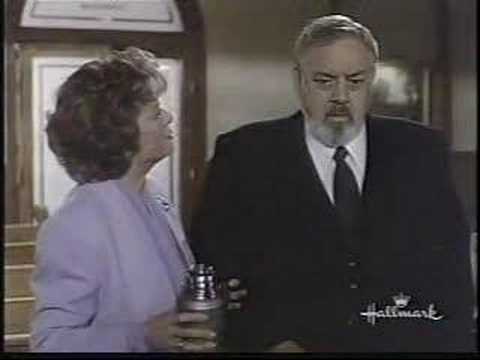
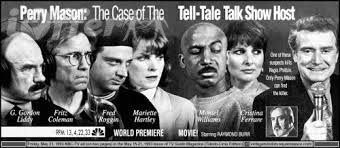
I Watched Perry Mason: The Case Of The Telltale Talk Show Host (1993, Dir. by Christian I. Nyby II)


At the end of this movie… PERRY KISSED DELLA!

On the lips!

I knew they were in love!  Obviously, Della (Barbara Hale) was also in love with Paul Drake, Sr. but with Paul gone and Paul Drake, Jr. doing his own thing, she and Perry (Raymond Burr) can finally be together.  It was about time, too.  Even though Perry comes across like he would be too work-obsessed to really be a good husband or even boyfriend, it has also been obvious that Perry and Della were in love ever since Perry Mason Returns.

As for the mystery itself, it’s a really simple one and I was able to guess who the killer was from the start.  I know that Raymond Burr was terminally ill when he shot this film (and it was the last time Perry Mason movie to ai during his life time) and maybe that’s why the plot isn’t as complicated as usual.  The guest cast is really good, though.  Regis Philbin plays the owner of a talk radio station who is murdered by one of his hosts.  Every host is a suspect and they’re all strange enough to be fun to watch.  Both Montel Williams and G. Gordon Liddy are in this thing!

Knowing this was the last of the films to air during Burr’s lifetime made watching The Case of the Telltale Talk Show Host feel a little sad.  As sick as he was, Raymond Burr still dominated the courtroom.  That was one reason why the kiss made me so happy.  Perry (and Burr) didn’t have much time left but he made sure we all knew how he felt about Della.


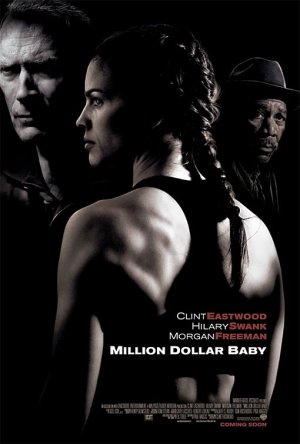
Embracing the Melodrama Part II #105: Million Dollar Baby (dir by Clint Eastwood)


Million_Dollar_Baby_poster

(This review and the Spanish trailer below are dedicated to mi madre, who saw Million Dollar Baby when it was first released and told me that, even though the film had been nominated for lots of Oscars, I shouldn’t watch it until I was in a better and more stable place emotionally.  She was right.)

Two months ago, I started Embracing the Melodrama Part II.  At the time, I announced that I would be reviewing 126 cinematic melodramas and I would get it all done in 3 weeks time!  Well, here we are 8 weeks into it and we are just now approaching the finish line.  That’s okay, though.  Even if it’s taken me longer than I thought it would, I’ve still been having fun writing and sharing these reviews.

I’ve been posting these reviews in chronological order.  Though it may be hard to remember, we started with a 1927 silent classic called Sunrise.  From Sunrise, we’ve worked our way through history and we’ve taken a look at films that are both famous and obscure.  And now, 104 reviews later, we finally reach the 2004 best picture winner, Million Dollar Baby.

When I first saw Million Dollar Baby, I had two reactions.  On the one hand, I thought it was a great film.  I thought it was a film that featured great performances and which gave me a chance to experience a world that I did not know much about.  I thought to myself, “This is a film that future directors will cite as an influence.  This is a film that proves that, even if he does sometimes make movies like Hereafter or Jersey Boys, Clint Eastwood still deserves to be known as a great American filmmaker.”  On the other hand, I thought to myself, “This film is so damn depressing that there’s no way I’m ever going to watch it again.”

And really, it is an amazingly sad film.  When the film starts, of course, you don’t think it’s going to be sad.  You think it’s going to be your standard sports film, the one where the underdog beats the odds and becomes a champion.  For one thing, the film is narrated by Morgan Freeman and Morgan’s got that voice that makes you believe that there is some justice to the universe.  Secondly, Hillary Swank is so appealing in the role of Maggie, a waitress who wants to become a boxer, that you just know she deserves a happy ending.  At first, veteran trainer Frankie (Clint Eastwood) refuses to work with her but her determination wins him over.  And soon, Frankie — who, in typical Clint movie fashion, has a strained relationship with his daughter — becomes a father figure for Maggie.

And as you watch Maggie find success as a boxer, you’re so happy for her.  I certainly was, despite the fact that I know next to nothing about boxing beyond the fact that it’s something that I would never want to do.  And when Clint starts to soften up to her, you’re not surprised.  After all, he’s craggly old Clint Eastwood.  He’s scary but we all know he has a heart of gold.  Add to that, Morgan Freeman’s still telling the story and surely the voice of God would not allow anything bad to happen…

And then … tragedy.  By the time that I finally saw Million Dollar Baby, I already knew the story’s big twist.  I knew that, as a result of a brutal fight, Maggie would be left paralyzed.  I knew that she would beg Frankie to euthanize her.  But seriously, imagine what a shock it must have been for audiences when this film first came out.

I mean, everything’s going perfectly and then suddenly, it’s not.

To a certain extent, I was jealous of those who got to see Million Dollar Baby without any advanced knowledge of the tragedy that defines the final third of the film.  When I watched the film, I found myself dreading the thought of enjoying any of Maggie’s triumphs because I knew what was going to happen.  Those who watched the film with know knowledge may have been shocked but at least they got to believe, for a few scenes, that Maggie could find that perfect sports film ending.

Then again, Million Dollar Baby is a great film because it refuses the temptation to give us the ending that we all want and expect.  Instead, it’s a movie that celebrates the people who will be there for you even when thing’s suddenly aren’t perfect.

That’s why Million Dollar Baby works as well as it does.  Unfortunately, it’s also why it’s a film that I could only watch once.