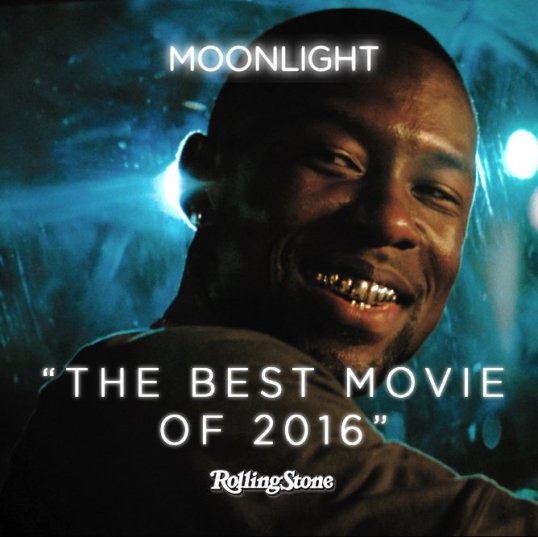
The Indiana Film Journalists announced their picks for the best of 2016 on the 19th! Along with picking Moonlight for best film, they also gave best actress to the destined-to-be-nominated-some-day Rebecca Hall for Christine!
The Women Film Critics Circle has announced their picks for both the best and the worst of 2016! And here they are:
BEST MOVIE ABOUT WOMEN
Hidden Figures BEST MOVIE BY A WOMAN 13TH BEST WOMAN STORYTELLER [Screenwriting Award] 13TH, Ava DuVernay BEST ACTRESS Natalie Portman, Jackie BEST ACTOR Casey Affleck, Manchester By The Sea BEST YOUNG ACTRESS Hailee Steinfeld, The Edge Of Seventeen BEST COMEDIC ACTRESS Kate McKinnon, Ghostbusters BEST FOREIGN FILM BY OR ABOUT WOMEN The Handmaiden BEST DOCUMENTARY BY OR ABOUT WOMEN 13TH BEST FEMALE IMAGES IN A MOVIE Hidden Figures WORST FEMALE IMAGES IN A MOVIE Neighbors 2 BEST MALE IMAGES IN A MOVIE Loving WORST MALE IMAGES IN A MOVIE Dirty Grandpa WOMEN’S WORK/BEST ENSEMBLE Hidden Figures SPECIAL MENTION AWARDS COURAGE IN FILMMAKING Ava DuVernay, 13TH COURAGE IN ACTING [Taking on unconventional roles that radically redefine the images of women on screen] Rebecca Hall, Christine *ADRIENNE SHELLY AWARD: For a film that most passionately opposes violence against women American Honey *JOSEPHINE BAKER AWARD: For best expressing the woman of color experience in America Hidden Figures *KAREN MORLEY AWARD: For best exemplifying a woman’s place in history or society, and a courageous search for identity Hidden Figures *THE INVISIBLE WOMAN AWARD: [Performance by a woman whose exceptional impact on the film dramatically, socially or historically, has been ignored] The women of Hidden Figures BEST SCREEN COUPLE Loving BEST FEMALE ACTION HERO The women of Ghostbusters
Before I forget, The Independent Spirit Award Nominations were announced earlier today! In a year that has yet to see a Spotlight, a Mad Max, or even a Big Short, the Oscar race remains undeniably murky. Maybe the Spirit nominations will help to clarify things.
(Sad to say but I haven’t seen most of the films that were nominated. They’ve either just opened down here in Dallas or they’ll be opening next month. So, you’ll have to forgive me if I can’t provide much commentary beyond saying that I look forward to seeing and reviewing them all for myself!)
(I will say, however, that I’m happy to see that American Honey was nominated because, even though I missed seeing the film, it’s directed Andrea Arnold. Arnold’s previous film, Fish Tank, is pretty much one of my essential movies.)
BEST ACTOR Casey Affleck, “Manchester by the Sea”
David Harewood, “Free In Deed”
Viggo Mortensen, “Captain Fantastic”
Jesse Plemons, “Other People”
Tim Roth, “Chronic”
BEST ACTRESS Annette Bening, “20th Century Women”
Isabelle Huppert, “Elle” Sasha Lane, “American Honey”
Ruth Negga, “Loving”
Natalie Portman, “Jackie”
BEST DOCUMENTARY “13th”
“Cameraperson”
“I Am Not Your Negro”
“O.J.: Made in America”
“Sonita”
“Under the Sun”
BEST INTERNATIONAL PICTURE “Aquarius” (Brazil)
“Chevalier” (Greece)
“My Golden Days” (France)
“Toni Erdmann” (Germany and Romania)
“Under the Shadow” (Iran and U.K.)
BEST FIRST FEATURE “The Childhood of a Leader”
“The Fits”
“Other People”
“Swiss Army Man” “The Witch”
BEST FIRST SCREENPLAY “Barry”
“Christine”
“Jean of the Joneses”
“Other People” “The Witch”
JOHN CASSAVETES AWARD (best feature made for under $500,000)
“Free In Deed”
“Hunter Gatherer”
“Lovesong”
“Nakom”
“Spa Night”
Here’s some of the trailers that have come out over the past two weeks! Sadly, none of those trailers involve kitties! Meh!
Fifty Shades Darker
They’re back! And this time, Ana’s in charge.
Miss Sloane
The good news is that a flame-haired one, Jessica Chastain, is in this film. The bad new is that the script for this film was on last year’s Black List. The Black List is supposed to be a list of the best unmade scripts in Hollywood so why do Black List films almost always end up sucking?
Nocturnal Animals
I thought this movie had to be about kitties but instead, it’s about Jake Gyllenhall and Amy Adams! But the trailer still looks really good and supposedly this movie is going to win all sorts of Oscars!
Annabelle 2
The scary doll is back!
Christine
This looks like a great role for Rebecca Hall but will probably be too depressing for humans! Meh!
The Bye Bye Man
This could be scary but it’s coming out in January and nothing good comes out in January.
Smurfs: The Lost Village
I ate a smurf once. Meh!
The Eyes of My Mother
This looks scary!
Allied
Some people are saying this movie led to the upcoming divorce of Brad Pitt and Angelina Jolie! The flame-haired one says she’s Team Jolie all the way. Meh!
Passengers
Chris Pratt and Jennifer Lawrence in the same movie!? And it’s from the director of The Imitation Game. Some people say that this is going to be a big Oscar contender! I think it needs more kitties.
With just minutes left til the end of the day I thought it was time to wish one of my favorite a happy birthday.
I pretty much spent my junior high and high school years reading everything that Stephen King had written and published up to that point. The habit followed me after high school graduation and I’ve picked up on other authors since.
While Stephen King has slowed down some when it comes to the amount of novels he has released in the last decade or so, he is still one of the few authors whose books I will buy without even knowing what it’s about.
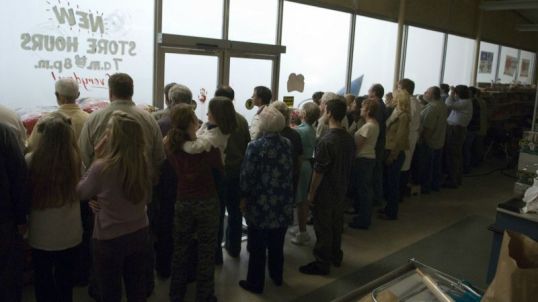
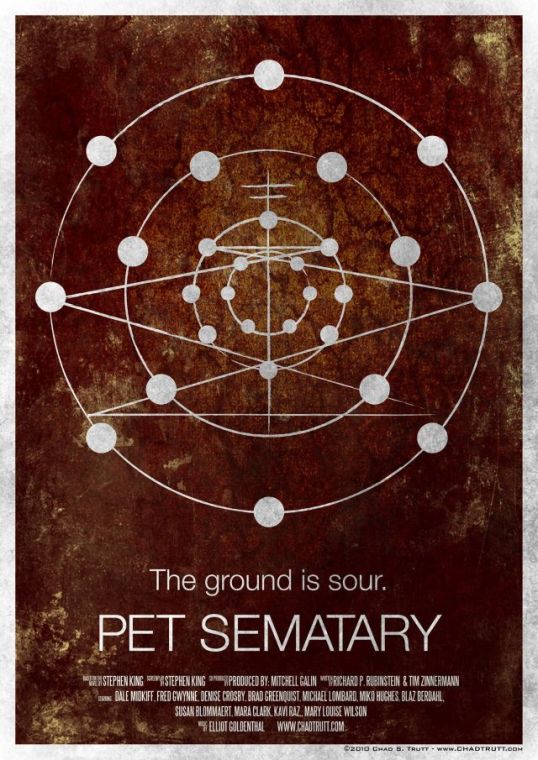
Here are just four films adapted from his stories that I consider favorites of mine. They’re just stories about a boy’s first car, a man waking up from a long sleep, a cat named Church and a grocery store full of people.
“We make up horrors to help us cope with the real ones.” — Stephen King
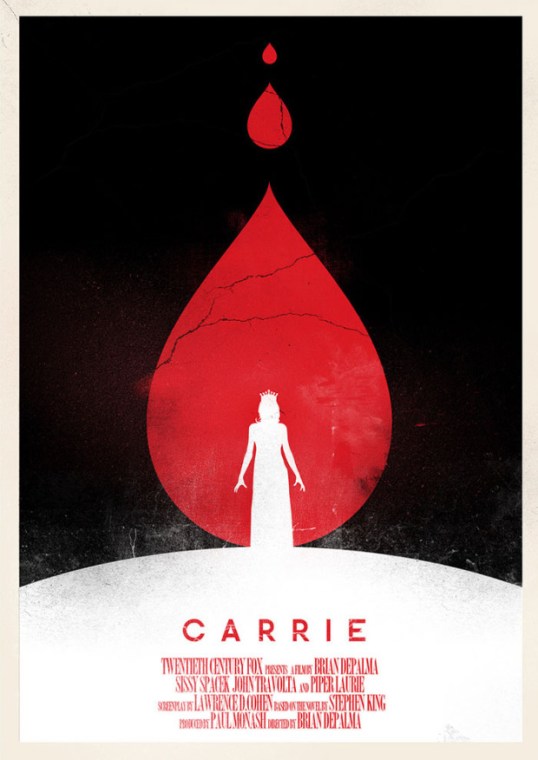
Last week we saw the release of the Carrie remake starring Chloe Grace Moretz and directed by Kimberly Peirce. This got me to thinking that of all the writers I grew up reading it was Stephen King whose novels, novellas and short stories made for easy film adaptations. His stories may be supernatural, horror scifi or dark fantasy but they all share that common denominator of having some basis in the real world.
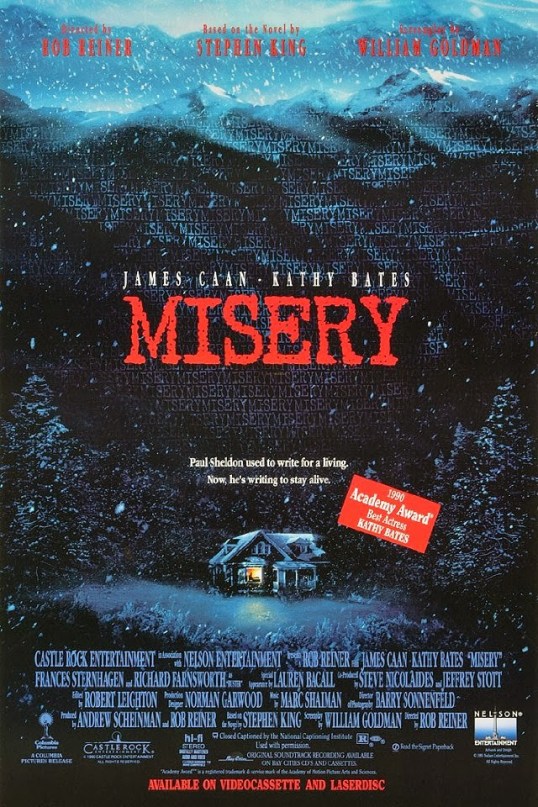
They’re stories of how the real world and it’s seemingly normal inhabitants will react to something just beyond the norm, the pale and the real. In one story we pretty much have a Peyton Place-like setting having to deal with a arrival of a Dracula-like figure. On another we see the isolated work of hotel sitting during the winter turn into something both supernatural and a look into the mind of someone cracking under the pressure of issues both personal and professional.
With all the Stephen King film adaptations since the original Carrie I know I have seen them all and can honestly say that I’ve become an expert on the topic. So, here’s what amounts to what I think would be my top 10 best and bottom 5 worst film/tv adaptations from Stephen King stories.
Here we are again ghouls and ghoulettes. Time for another one of my favorite horror scenes. Some might say that the film I chose my latest favorite scene from is not truly a horror film but more a thriller are so definitely wrong. Both in it’s original novel form and in Carpenter’s film adaptation, Christine is definitely a horror film that eschews overt scenes of gore and violence and goes about it’s scares in a more round-a-bout way. It’s a horror film of a Boy-meets-Girl gone wrong. My own review of the film over a year ago show’s my positive take on this 80’s classic.
One of my favorite scenes from Christine happens midway through the film that also serves as the final clue that something may just be a tad different with Archie’s car named Christine. While the scene itself is not one of horror it does show the supernatural side of this film’s plot (a bit more simplified than the original novel’s but still keeping the theme of possessed inanimate objects giving life to itself). The combination of Christine showing Archie just what she’s capable of and Carpenter’s electronic film score as it segues into a seductive tune adds to the awesomeness of this scene.
Once this scene is over the audience now knows that Archie is fully gone over to Christine’s side and that the story will end not in a very happy note, but until that happens we see just how much this particular Boy seem to have finally met his ideal Girl.
During the late 1970s and early 1980s, one could hardly step into a theater during the fall or winter movie season without seeing a trailer for the newest Stephen King adaptation. His name had become synonymous with cinematic horror, and nearly every year brought a new film promising supernatural terror or psychological unease.
Among this wave of adaptations came a 1983 film that united two masters of the genre—Stephen King, the reigning literary giant of horror, and John Carpenter, the filmmaker who had already cemented his reputation with Halloween and The Thing. Their collaboration resulted in the sleek, deadly story of a boy and his car: Christine.
The film opens on the assembly line of a Plymouth factory in 1957, immediately signaling that something is off about this particular 1958 Plymouth Fury. From the first note of the retro rock soundtrack to the gleam of that deep crimson paint, Carpenter frames the car with both nostalgia and menace. The lighting in this opening feels almost clinical—bright, sterile, mechanical—yet Christine’s red sheen cuts violently through it, a visual omen that this machine is infused with something beyond metal and chrome. Carpenter wastes no time making it clear that this car is not an inanimate prop; it’s a living entity from the moment it’s born.
We’re soon introduced to the film’s human core—Arnie Cunningham (Keith Gordon), a shy, bookish teenager tormented by bullies and smothered by his controlling parents, and his best friend Dennis Guilder (John Stockwell), the confident star athlete who often looks out for him. One afternoon, during their drive home from school, Arnie spots a rusting, decrepit Plymouth Fury in the front yard of an old man named Roland D. LeBay. Where Dennis sees a heap of junk, Arnie sees perfection. Ignoring his friend’s concerns—and later, his parents’ outrage—Arnie buys the car and names it Christine.
As Arnie begins restoring Christine to her former glory, a transformation occurs—not just in the car, but in Arnie himself. The once timid, acne-scarred teenager grows into a confident, even arrogant young man, donning slicker clothes, sharper speech, and a darker aura. Christine becomes his obsession, his refuge, and ultimately, his identity.
Carpenter crafts this metamorphosis with eerie precision, pairing the car’s physical renewal with Arnie’s psychological decay. The cinematography shifts accordingly—the lighting grows darker, drenched in neon reds and shadowy blues, mirroring Christine’s two faces: seductive allure and demonic possession. Carpenter’s score, a pulsing blend of electronic rhythm and minimalistic dread, underscores these shifts. It functions almost like Christine’s heartbeat—steady, mechanical, and ominously sensual.
Between the vintage rock tracks that accompany Arnie’s moments of infatuation and the electronic motifs that follow Christine’s predatory stalks, Carpenter manipulates sound to blur the lines between teenage romance and supernatural horror. Every rev of the engine feels rhythmic, almost musical, as if the car itself communicates through vibration and tone rather than words.
Arnie’s newfound confidence even earns him Leigh Cabot (Alexandra Paul), the most desired girl in school—a relationship that initially feels like a symbol of his triumph. But Christine is no fairy tale. When Arnie’s bullies vandalize his beloved car, the story turns from eerie to vengeful.
In a now-iconic sequence, Christine repairs herself before Arnie’s stunned eyes—the crumpled metal expands, glass re-forms, headlights ignite like eyes opening from a nightmare. Carpenter lights the scene with a soft, golden underglow that turns mechanical resurrection into a hauntingly beautiful transformation. It’s both horrifying and hypnotic—a perfectly scored ballet of vengeance set to the hum of machinery and the director’s unmistakable electronic pulse.
What follows is a furious killing spree. Christine prowls the night streets for retribution, a creature of fire and gasoline more alive than metal should ever be.
While Carpenter’s adaptation diverges from King’s novel, it remains faithful to its emotional and thematic essence. King’s book delves deeply into the idea of objects absorbing the evil of their owners, suggesting that malevolence can linger in things as much as in people. Carpenter, however, turns the focus inward.
His version becomes a tragic character study—a battle for Arnie’s soul between the cold, seductive power of obsession and the fragile warmth of human connection. In one corner stands Christine, the car that offers Arnie unconditional love but demands total possession. In the other are Dennis and Leigh, desperate to save the friend they’re rapidly losing to something they can’t fully understand.
Carpenter’s signature touches—his electronic score, minimalist framing, and cynical tone—imbue the film with a dark romanticism. Christine is less a haunted object than a femme fatale: a mechanized embodiment of jealousy and desire. The film’s atmosphere bridges two eras, combining the nostalgic vibe of 1950s Americana with the grim realism of Reagan-era suburbia.
By the end, Christine becomes both a story of supernatural obsession and a commentary on teenage identity—the hunger to shed weakness, to command respect, and to control one’s fate, even at the cost of one’s soul.
Upon its release in December 1983, Christine performed modestly at the box office but was far from a failure. Over time, it has developed a strong cult following, cherished by both Carpenter devotees and Stephen King fans. Though often overshadowed by Carpenter’s heavier-hitting works like The Thing or Escape from New York, Christine remains one of his most technically polished films. It also stands as a fascinating bridge between studio horror and Carpenter’s independent sensibilities—where the shine of a Hollywood production mingles with the grit of a B-movie heart.
If Christine teaches any lesson, it’s that love and possession are two sides of the same coin. Arnie’s tragedy lies not in falling for the wrong woman, but in falling for one that burns with literal hellfire. In Carpenter’s vision, the road to damnation isn’t paved with good intentions—it’s lined with chrome, lit by headlights, and always hungry for one more ride.











 Through the Shattered Lens