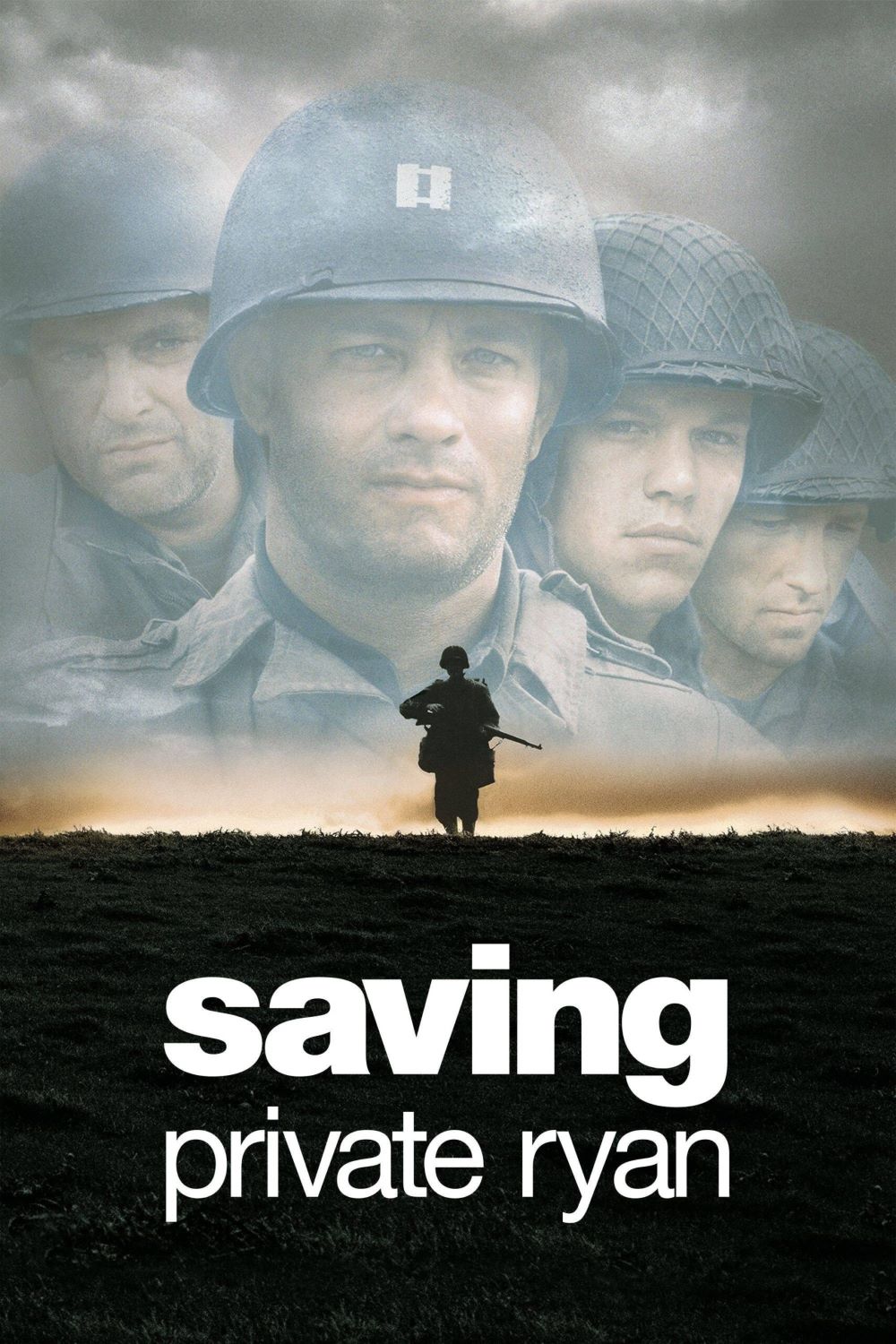
Review: Saving Private Ryan (dir. by Steven Spielberg)


“Someday we might look back on this and decide that Saving Private Ryan was the one decent thing we were able to pull out of this whole godawful, shitty mess.” — Sergeant Horvath

Saving Private Ryan stands as a landmark achievement in war cinema, intricately weaving immersive battle scenes, rich character dynamics, and profound moral themes into a nearly three-hour exploration of World War II’s human cost. One of its most remarkable features is the opening Omaha Beach landing sequence, a meticulously crafted, over 24-minute depiction of warfare’s brutal reality. Spielberg deploys a cinema verité style with handheld cameras capturing disorientation and chaos through the soldiers’ eyes. The sound design envelops the viewer in a sensory onslaught—gunfire, shouting, explosions—creating a visceral experience that immerses audiences directly in the terror and confusion of D-Day.

The filming process drew heavily on historical accuracy, with the production shot on the coast of County Wexford, Ireland, employing amputee actors and practical effects over computer graphics to simulate violent injuries and battlefield horrors. Muted tones evoke wartime photographs, and rapid, shaky editing conveys the disorganized, frantic environment soldiers endured. Consulting WWII veterans and historians, Spielberg created a sequence that reshaped cinematic portrayals of war, influencing how future films would approach the genre’s raw immediacy and emotional weight.

The film’s narrative follows a squad led by Captain Miller on a mission to locate and bring home Private James Ryan, whose three brothers have been killed in combat. The mission is steeped in the real-life tragedy of the five Sullivan brothers who died together aboard the USS Juneau in the Pacific, prompting military policies to prevent similar familial devastation. This historical context frames the story’s ethical heart: risking several men’s lives to save one, raising enduring questions about the value of individual sacrifice within the broader war.

In Saving Private Ryan, sacrifice is portrayed ambiguously—not as the sacrifice of a single hero but as the collective cost borne by the men tasked with rescuing one individual under perilous conditions. As the squad journeys through the war-torn French countryside, the deaths, injuries, and tensions they face underscore war’s randomness and the difficulty of weighing one life against many. The narrative refuses to romanticize or simplify, instead confronting the audience with the tragic truth that countless soldiers lose their lives without recognition or purpose, while some survive against staggering odds.

Duty and camaraderie thread throughout the film, portrayed through the soldiers’ evolving relationships and personal struggles. Each grapples with loyalty not only to their mission but to their fellow men and their own moral codes.

Integral to the film’s power is Tom Hanks’s layered performance as Captain John Miller. Hanks breathes life and emotional depth into Miller, portraying him as a man shaped by civilian life—revealed poignantly when he discloses his pre-war profession as a schoolteacher—now transformed by the relentless demands of war. He embodies an officer who is both composed and vulnerable, carrying the heavy burden of leadership with quiet dignity. Hanks’s portrayal reveals the internal struggles beneath Miller’s stoic exterior: moments of doubt, moral conflict, and fatigue subtly expressed through a trembling hand or a weary gaze. This humanity makes Miller relatable, as a man trying to maintain order and purpose amid chaos.

Hanks skillfully balances Miller’s authoritative presence with warmth and empathy, particularly evident in his paternal interactions with younger soldiers, reinforcing Miller’s role as both a leader and protector. His nuanced acting delivers the complexity of a man constantly negotiating duty and compassion. In scenes of high tension or moral quandaries, Hanks conveys the weight of command while allowing glimpses into Miller’s psychological strain, deepening the film’s emotional resonance.

Following Hanks’s Miller, a standout amongst the supporting cast is Tom Sizemore’s portrayal of Technical Sergeant Mike Horvath, Miller’s steady second-in-command. Sizemore embodies the pragmatic, battle-hardened soldier whose loyalty and experience provide emotional grounding for the squad. Sizemore portrays Horvath’s weariness and quiet commitment, adding layers of realism that deepen the exploration of how war reshapes individuals. The chemistry and shared history between Miller and Horvath are palpable, illustrating the bonds that sustain soldiers through hardship and lending emotional weight to the narrative.

The film wrestles with intense moral ambiguity throughout. The mission’s premise—to risk many lives to save one—compels both characters and viewers to confront complex questions about justice, value, and the cost of war. Scenes presenting difficult choices, such as the decision to spare or execute prisoners, dramatize these ethical dilemmas and highlight the emotional burdens borne by soldiers.

Technically, the film excels, with Janusz Kaminski’s dynamic cinematography capturing both the chaos of battle and intimate moments with evocative clarity. The immersive sound design reinforces the brutal reality, stripping warfare of glamor and confronting audiences with its daunting human costs.

Despite the overwhelming destruction and loss, Saving Private Ryan offers moments of humanity and hope. The rescue mission serves as a fragile symbol of compassion in the midst of devastation, while the film’s closing reflections on memory and legacy emphasize the lasting significance of sacrifice and survival.

Saving Private Ryan stands as a monumental achievement in the war genre, combining visceral combat realism, compelling characters, and moral complexity. Through Hanks’s deeply human Captain Miller and the nuanced supporting performances, especially Sizemore’s grounded Horvath, the film explores themes of sacrifice, duty, and brotherhood with unflinching honesty. Its enduring legacy lies in its unvarnished yet empathetic portrayal of war’s cost and the profound sacrifices made by those who lived it.
Film Review: Battlefield Earth (dir by Roger Christian)


After avoiding it for 25 years, I finally watched the infamous 2000 fiasco, Battlefield Earth, last night.

Battlefield Earth, based on a superlong novel by creepy cult guru L. Ron Hubbard, was a longtime passion project of John Travolta’s.  Travolta, a Scientologist, had long wanted to make a movie out of Hubbard’s science fiction epic and, on a hot streak following films like Pulp Fiction and Get Shorty, he finally did so in 2000.  He played Terl, a member of a giant alien race called the Psychlos.  The Psychlos have conquered Earth and humanity has regressed back to an almost prehistoric standard of living.  When a brave human, Johnnie Goodboy Tyler (Barry Pepper), defies his elders and proceeds to venture out into the ruins of Denver, he’s captured by Terl.  Eventually, Johnnie is shown a copy of the Declaration of Independence and it inspires him to lead a revolution against the Psychlos.

Battlefield Earth turned out to be just as bad as I had heard, a charmless wannabe epic that used far too many Dutch angles and relied on slow motion to try to create a heroic (or, in some cases, tragic) feel to the action.  The plot of the film felt like something recycled from an old 1930s serial, which makes sense when you consider that L. Ron Hubbard was a pulp writer before he decided to become a guru.  What I was not prepared for was just how mind-numbingly dull Battlefield Earth is.  Most bad movies can at least make the claim of being entertaining in their badness.  If nothing else, you can often admire them for their ambition.  Take a film like Plan 9 From Outer Space.  Plan 9 From Outer Space is often derided as being the worst film of all time but it’s still terrifically entertaining and there’s a likable earnestness at the heart of it.  Director Ed Wood may not have had a budget and his main star may have been present only through stock footage but, dammit, Wood was determined to make a science fiction epic that would double as a plea for world peace and he did just that.  There’s a heart at the center of Plan 9 From Outer Space and that makes it a film that you can mock but you never quite dislike.  For all the talk of Battlefield Earth being a passion project for Travolta, the end result is an empty and rather soulless film.

(I nearly listed Battlefield Earth as being one of our Icarus Files but then I remembered that Icarus at least managed to get close to the sun.  Battlefield Earth can’t even get out of Denver.)

Travolta’s career has never really recovered from Battlefield Earth.  He is an actor who can claim to have appeared in two of the biggest, most influential films of all time — Pulp Fiction and Saturday Night Fever — but his legacy appears to be walking around on stilts in Battlefield Earth.  As for Barry Pepper, he does probably about as well as anyone could with the role of Johnnie Goodboy Tyler but still, it’s sad to see a good actor wasted in such a bad movie.  (In fact, there’s quite a few good actors — Forest Whitaker, Kim Coates, Richard Tyson — wasted in this movie.)  From what I understand, the movie only covered the first 400 pages of Hubbard’s 1100-page novel.  Travolta had hopes to do a sequel but that’s not going to happen.

It’s for the best.  If people need to see a movie about L. Ron Hubbard’s belief system, they can always rewatch The Master.


A Baseball Scene That I Love: Roger Maris Breaks Babe Ruth’s Record In 61*


The Rangers are losing again so I’m going to treat my sorrows with a scene that I love from a baseball movie.  In this scene from 61*, Roger Maris gets his sixty-first homerun of the season and he breaks Babe Ruth’s record.

I love this scene because it’s what baseball is all about.

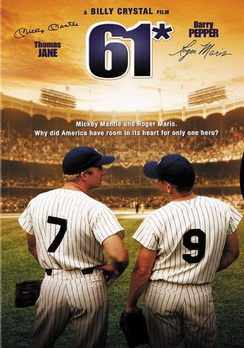
I Watched 61* (2001, Dir. by Billy Crystal)


61* is about two baseball player and two friends who couldn’t seem to be more different.

Roger Maris (Barry Pepper) is an introverted family man who doesn’t like it when reporters show up at his house in search of a story or a quote.  He’s a good ball player, one of the best, but he doesn’t want to be a celebrity.  Mickey Mantle (Thomas Jane) is a larger-than-life personality, a beloved figure on the field and in the dugout.  Mickey loves being famous and the fans love him.  Both Maris and Mantle are members of the New York Yankees.  Because Mantle is struggling with his drinking, he becomes Maris’s roommate when they’re on the road.  In 1961, the two friends both go after Babe Ruth’s record of 60 home runs in a season.  The press presents their season as a battle, a race to see who will be the first to hit the sixty-first home run of the season.  Mantle and Maris, though, are just swinging the bat and making plays.

I really enjoyed 61*, which is a baseball film made by and for people who love baseball.  I liked the contrast between the quiet Maris and the charismatic Mantle.  Even though Maris is a hard worker and a good ballplayer, Mantle is the fan favorite and the one that people actually want to break the record.  I appreciated that Maris and Mantle remained friends even when the press tried to turn them into rivals.  That’s what teamwork is all about.  Barry Pepper and Thomas Jane were great as Maris and Mantle and the movie showed how each man dealt with the stress of possibly breaking Babe Ruth’s record.

(Why is there an asterisk in the title?  Babe Ruth set his record in a season that only had 154 games.  The 1961 baseball season was 8 games longer.  The asterisk was added as a reminder that Maris and Mantle had 8 more games than Ruth did to try to break the record.  Baseball fans understand how important accurate statistics are to a player’s career and a team’s season.)

61* celebrates the way baseball used to be, a game played by athletes who had to depend on skill and teamwork instead of performance enhancing drugs.  The movie opens with Maris’s family watching as Mark McGuire closes in on breaking the record.  McGuire would only briefly hold the record.  He would lose it, for 48 minutes, to Sammy Sosa and then, three years after winning it back, he would lose it a second time to Barry Bonds.  Of course, Roger Maris won the record without using steroids so, as far as I’m concerned, it still belongs to him.

If you’re a baseball fan, 61* is a film that you have to see.

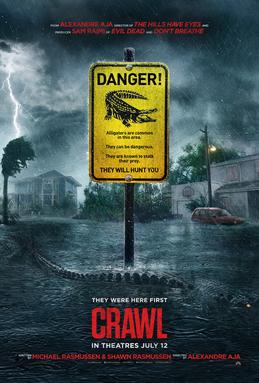
Film Review: Crawl (dir by Alexandre Aja)


Crawl is a masterpiece of the pulp imagination.

Kaya Scodelario plays Haley Keller, a swimmer at the University of Florida who has a loving but troubled relationship with her father, Dave (Barry Pepper).  With a Category 5 hurricane on a collision course with the state of Florida,  everyone has been ordered to evacuate the area.  However, Haley is concerned that her father may not have gotten the message or, being the stubborn type that he is, he may have gotten the message and just decided to ignore it.  (I could totally relate to Haley’s frustration.  When Dallas got hit by tornadoes last month, my Dad not only refused to hide in his laundry room but he also called me up to inform me that he was sitting out on his back patio watching for any twisters.)  With the storm raging all around her, Haley searches for her father.  When she finally finds him, he’s in the crawlspace of their vacation home.  He’s unconscious.  He’s wounded.  And he’s surrounded by alligators!  It’s now up to Haley to save the lives of not only her father but also the family dog.  And, of course, she has to do all of this without getting eaten by an alligator herself.  Even worse, even if they do manage to outswim the alligators, Haley and Dave are still going to have to deal with the ever intensifying storm that is raging outside.

Crawl is an intense and exciting film, one that clocks in at a brisk 87 minutes and which has a lot more going on underneath the surface than might be readily apparent.  Yes, this is a film about two people and a dog who are trapped in a flooded crawlspace by a bunch of hungry alligators.  And yes, I’m sure that some people will be totally boring and predictable and make a big deal about the film’s environmental subtext.  (“How many more innocent people have to be eaten by alligators before we pass the Green New Deal!?”)  But, at its heart, this is a film about relationships.  Dave has always been hard on Haley.  Haley has always both loved and resented her father.  The flooding and subsequent alligator attacks may justify the pressure that Dave put on Haley to become the best but, even more importantly, it allows Haley to show that she actually is the best and that she doesn’t always need Dave to tell her what to do.  With Dave spending the majority of the film incapacitated in one way or the other, it’s often up to Haley to keep them both from getting eaten as they try to move from one flooded location to another.  It’s up to Haley to keep fighting and fight she does.  Haley never gives up and never surrenders and, for me, Crawl is a thousand times more empowering than Captain Marvel or any of the other more obviously heavy-handed “girl power” films that have come out this year.

As directed by Alexandra Aja, there’s not a single wasted moment to be found in Crawl.  He plunges straight into the story and the film is pretty much an unrelenting thrill ride from beginning to end.  Even more importantly, Aja is smart enough to trust his audience to be able to read between the lines of this genre film without necessarily beating the audience over the head with its message.  This is a film that can be appreciated as both a thriller and a heartfelt look at a difficult but loving relationship.  This is a grindhouse film with a heart, featuring a strong and committed performance from Kaya Scodelario.  As Haley is, again and again, forced to prove her strength, she becomes a stand-in for all of us.  Crawl is genre filmmaking at its best, along with being one of the most impressive films of 2019.

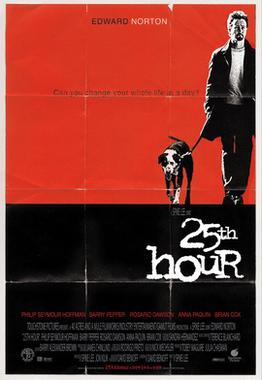
Film Review: 25th Hour (dir by Spike Lee)


(SPOILERS)

First released in 2003, 25th Hour is one of those films that gets better and better with each subsequent viewing.

Monty Brogan (Edward Norton) may have done some very bad things in the past but nearly everyone has benefited.  His childhood friends, a trader named Frank (Barry Pepper) and a teacher named Jacob (Philip Seymour Hoffman), both get to live vicariously through their friend, even if neither one of them is quite willing to admit it.  Monty’s father (Brian Cox) is a retired fireman who now owns a bar that was largely purchased with the money that Monty made from dealing drugs.  Monty’s girlfriend, Naturelle (Rosario Dawson), is “living high” off of the profits of Monty’s drug deals.  For that matter, so is Monty.  Monty has a nice apartment, a loyal dog, and a supportive boss named Uncle Nikolai (Levan Uchaneishvili).

Of course, Monty understands that he’s in the business of destroying lives.  When Monty first met Naturelle, he had just completed a transaction with a well-dressed businessman.  Years later, when Monty is sitting on a bench with his dog, that same man approaches him and begs for more drugs.  The man’s no longer wearing a suit.  Now, he’s apparently homeless and so addicted that he takes it personally when Monty informs him that he’s no longer in the drug-selling business.

Why is Monty no longer selling?  Someone told on Monty.  When the DEA showed up at his apartment, it didn’t take long for them to find the packages that he had hidden in the cushions of the couch.  For all of his swagger and confidence, it would appear that Monty wasn’t quite as clever as he thought he was.  Monty was arrested and subsequently sentenced to seven years in prison.

The majority of 25th Hour takes place during Monty’s final night of freedom, a night that he’s planning on spending it with Frank and Jacob, both of whom could have made the same mistakes that he did but, for whatever reason, they didn’t.  Needless to say, Monty’s got a lot on his mind.  For all of his attempts to hide it, Monty isn’t as tough as he pretends to be.  He knows that it’s not going to be easy for him to do seven years in confinement.  He’s terrified of getting raped in prison and he worries that he’s going to be locked in a holding cell with 200 other criminals.  Both he and his friends know that, even if he does survive, he’ll be a different man when he gets out.  Frank suggests that he and Monty could open a bar when Monty is released but they both know this is an empty promise.  Not only is Monty is scared of the future but he’s haunted by the past.  Is he getting what he deserves?  What if he had made different choices?  Will Nautrelle wait for him or, as some of his associates suggest, is she the one who betrayed him in the first place?

Over the course of the night, both Frank and Jacob are also forced to deal with their feelings towards Monty.  Frank is a Type A personality, the one who spends his day screaming into telephones and who eagerly looks forward to exploiting bad economic news for his own financial gain.  Frank says that Monty is getting what he deserves but, as the film progresses, it becomes obvious that Frank knows that he has more in common with Monty than he wants to admit.  Jacob, on the other hand, is a socially awkward teacher who is struggling to deal with a crush that he’s developed on one of his students (Anna Paquin).  If Frank fears that he’s more like Monty than he wants to admit, Jacob wishes he could be more like him.  At first, it’s hard to imagine that these three men could ever have been close friends but, as soon as you see them together, it all makes sense.

As directed by Spike Lee, one of American cinema’s greatest provocateurs, 25th Hour is more than just the story of one man’s last night of freedom.  Over the course of the film, Monty becomes a symbol of not just New York City but of America itself.  Driven by self-interest, Monty has spent his life ignoring the consequences of his actions and, now that he has no choice but to confront them, it’s too late.  During the film’s most famous scene, Monty stares in a mirror while his reflection rants against every single neighborhood and ethnic group in New York City.  The rant is such a powerful scene that it’s easy to miss the most important point.  Only at the end of the rant does Monty’s reflection admit that he’s as much to blame for his life as any of them.

Oh yes, the Rant.  The Rant is so famous that I was almost tempted to not mention it in this review, just because it doesn’t seem as if there’s much left to be said about it.  Even people who dislike the film seem to be in agreement that the Rant is one of the most powerful and incendiary moments in early 21st century cinema.  The Rant gives us a portrait of a divided and angry society in collapse and it’s a portrait that is probably even more relevant today than it was when the film was first released.  The Rant feels like such a classic Spike Lee moment that it’s surprising to discover that the Rant was included in the script even before Lee was attached to the film.

http://www.youtube.com/watch?v=bLtq4n59Vic

A few things about the Rant:

  1. The film deliberately leaves it ambiguous as to whether or not Monty is actually speaking.  We see the back of his head and his reflection but the movement of his head rarely seems to match the movement of his reflection.  Regardless of whether Monty is actually speaking or just imagining the rant, the scene does make clear that, even on his way to prison, Monty can only truly express himself while alone.  Of course, once he’s locked up, Monty’s not going to be alone for at least seven years.
  2. “Enron!”  I have to admit that, when I recently rewatched film, I laughed when Monty started ranting about Enron.  I can vaguely remember a time when everyone was obsessed with Enron and Halliburton and all that other stuff so I found it funny that I briefly had to struggle to recall just what exactly Enron was.  16 years from now, I wonder if people will watch old movies and TV shows and say, “Why are they all so obsessed with Russia?”

As well-done and brilliantly acted as it may be, the Rant has tended overshadow an even better moment.  It has been said that the key to a successful work of art is a good ending.  As a writer, I can tell you that endings are a hundred times more difficult than beginnings.  Fortunately, 25th Hour has an absolutely brilliant ending.

After having finally convincing Frank to beat him up (in an effort to make himself look tougher once he arrives in prison), Monty is being driven to the prison by his father.  As they leave New York City, Monty takes one final look at the city and it’s citizens enjoying freedom that he’ll never again have.  (This is such a New York City that you can’t help but feel that it’s adding insult to injury that Monty’s going to have to serve his time upstate.)  As he drives, Monty’s father begins to talk…

It’s all about decisions and consequences.  Monty made his decisions years ago.  Over the course of Monty’s last night of freedom, Frank, Jacob, Naturelle, and even Uncle Nikolai made their decisions.  And now, as he drives his son to prison, Monty’s father is forced to make a decision of his own.  There’s so much great acting to be found in 25th Hour but, during that final soliloquy, Brian Cox upstages all of them.  Brian Cox is one of those character actors who seems as if he’s been around forever.  He’s the type of dependable actor who, much like Monty’s father, is often taken for granted.  If nothing else, you have to be thankful for a film like 25th Hour because it gives everyone a chance to be reminded of just how brilliant an actor Brian Cox truly is.

(Here’s a random bit of a Brian Cox trivia.  While everyone knows that, in Manhunter, Brian Cox was the first actor to play Hannibal Lecter, he also played Winton Churchill the same year that Gary Oldman won an Oscar for playing the same role in Darkest Hour.)

25th Hour is not an easy film to watch.  At times, it’s one of the most depressing films ever made.  It’s tempting to say that, as bad as things ultimately turn out for him, you’re glad that Monty has his father and his friends but that’s really not true.  No matter how much his friends care about him or how much Naturelle and his father love him, Monty’s going to prison and his story is simply not going to have a happy ending.

And yet, 25th Hour is one of those films that you can’t look away from and, after you watch it, you simply can’t forget.  Every time I watch 25th Hour, I find new details to appreciate.  With each subsequent viewing, the pungent dialogue becomes even more multi-layered.  With each subsequent viewing, Monty becomes even more of an intriguing and tragic figure.  This is a film that makes you appreciate the brilliance of Edward Norton and mourn the fact that Barry Pepper rarely gets roles as good as his role here.  With each viewing, 25th Hour reminds you of what a great talent we lost when we lost Philip Seymour Hoffman.  It’s film that gets better with each viewing.

Assuming that Monty survived and managed to stay out of trouble, he should be out of prison by now.  Hopefully, wherever he is, he’s doing okay.

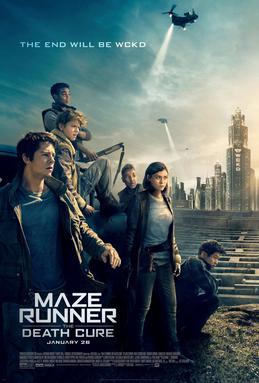
Film Review: Maze Runner: The Death Cure (dir by Wes Ball)


Here are a few good things about Maze Runner: The Death Cure.

First off, and most importantly, Dylan O’Brien is still alive.  When The Death Cure first went into production way back in 2016, O’Brien was seriously injured on the set.  While it’s never really been disclosed just how serious the injuries were, they were bad enough that it took O’Brien several months to recover.  There was even some speculation that his career might be over.  Fortunately, that wasn’t the case.  Last year, O’Brien returned to the screen and gave a superior performance as the lead in American Assassin.  In The Death Cure, O’Brien returns as Thomas and even if the character is still a bit of cipher, O’Brien does a good job playing him.

Secondly, Gally lives!  In the first Maze Runner, Gally was a villain but, because he was played by Will Poulter, he was also strangely likable.  Maze Runner was the first film in which I ever noticed Will Poulter and I have to admit that I’ve always felt that both the actor and the character deserved better than to be casually killed off at the end of the first movie.  Since Maze Runner, Poulter has given great performances in both The Revenant and Detroit.  (He was also briefly cast as Pennywise in It, though the role was ultimately played by Bill Skarsgard.)  In The Death Cure, it is not only revealed that Gally is still alive but he also finally gets to be one of the good guys.

Third, the Death Cure confirms what I felt when I first saw The Maze Runner.  Wes Ball is a talented director.  Despite whatever narrative flaws that the Maze Runner films may have, they’re always watchable.  Death Cure opens with a genuinely exciting action sequence and there are more than a few visually striking shots.

Fourth, Death Cure actually ends the Maze Runner saga.  That may sound like a strange or back-handed compliment but it’s not.  Death Cure resists the temptation to try to milk more money out of the franchise by unnecessarily splitting the finale in two.  I’ve always felt that The Hunger Games made a huge mistake with its two-part finale.  (The first part was good but the second part dragged.)  Divergent appears to be destined to be forever unfinished because the first part of it’s two-part finale bombed at the box office.  Death Cure refuses to indulge in any of that nonsense.  Unfortunately, this also means that Death Cure ends up lasting an unwieldy 142 minutes but still, that’s better than forcing the film into two parts.  With the current YA dysptopia cycle winding down, now is the right time to end things.

Finally, I appreciated the fact that the bad guys in Death Cure were named WCKD.  There’s nothing subtle about that but this isn’t a movie the demands subtlety.  As opposed to many other films based on dystopian YA fiction, The Maze Runner films have always been aware of just how ludicrous they often are.  Unlike the Divergent films or The Fifth Wave, the Maze Runner films have always been smart enough not to take themselves too seriously.

Anyway, as for Death Cure itself, it’s big and noisy and your enjoyment will largely depend on how much you remember about the first two films.  It’s been nearly three years since The Scorch Trials came out, which is an eternity when it comes to a franchise like Maze Runner.  Death Cure pretty much jumps right into the action and if you don’t remember all of the details from the first two films … well, good luck getting caught up!  (Unfortunately, it doesn’t help that, while the first movie was fun, Scorch Trials was a lot easier to forget.)  It’s pretty much a typical tale of YA dystopia, complete with tragic deaths, shocking betrayal, and a chosen one.  If you’re a fan of the previous two films or the books, you’ll probably enjoy Death Cure.  For the rest of us, it’s a bit of a confusing ride but at least there’s a lot of up-and-coming talent on display.

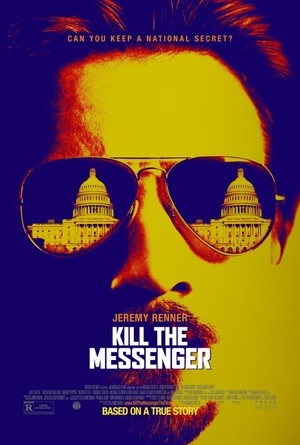
Insomina File No. 16: Kill The Messenger (dir by Michael Cuesta)


What’s an Insomnia File? You know how some times you just can’t get any sleep and, at about three in the morning, you’ll find yourself watching whatever you can find on cable? This feature is all about those insomnia-inspired discoveries!

Kill_the_Messenger_poster

Last night, if you were awake and unable to get any sleep at 1:45 in the morning, you could have turned over to Cinemax and watched the 2014 conspiracy thriller, Kill The Messenger.

Kill The Messenger opens with one of those title cards that assures us that the movie we’re about to see is based on a true story.  We are then introduced to Gary Webb (Jeremy Renner), a California-based reporter who we know is a rebel because he has a precisely trimmed goatee.  Gary is interviewing a suspected drug smuggler (Robert Patrick) at the smuggler’s luxurious mansion.  Suddenly, the DEA storms the house, shouting insults and roughly throwing everyone to the ground, including Gary.  It’s actually exciting and promising opening, one that perfectly establishes both Gary as a truth seeker and the U.S. government as an invading army that’s fighting a war that’s full of collateral damage.

Gary, of course, has nothing to do with smuggling drugs.  He was just in the wrong place at the wrong time.  If he was treated unfairly by the DEA, it’s just because the government is serious about winning the war on drugs!

Or is it?

Following up on a tip, Gary comes across evidence that, in order to raise money for pro-Amercian rebels in Central America, the CIA not only helped to smuggle drugs into the U.S. but also arranged for the drugs to largely be sold in poor, minority neighbors where, in theory, no one would notice or care.

When the story is finally published, Gary is briefly a celebrity.  Not surprisingly, the government denies his accusations and start tying to discredit him.  However, Gary also finds himself being targeted by his fellow journalists.  Angry over being outscooped by a relatively unknown reporter, The Los Angeles Times and The Washington Post both launch their own investigations.  Instead of investigating Gary’s allegations, they jealously and viciously investigate Gary himself.

Soon, both Gary’s career and his family are falling apart and Gary finds himself growing more and more paranoid…

Remember when everyone was expecting Kill The Messenger to be a really big deal?  It was due to come out towards the end of 2014, right in the middle of Oscar season.  Jeremy Renner was being talked up as a contender for best actor.  Then the film came out, it played in a handful of theaters for a week or two, and then it sunk into obscurity.  Some commentators even complained that Focus Features buried the release of Kill The Messenger and that the film was ignored because of its leftist politics…

Of course, it’s just as probable that Focus Features realized that The Theory of Everything was more likely to charm audiences than a movie that suggested the U.S. government was behind the drug epidemic.

Or it could have just been that, despite telling a potentially intriguing story, Kill The Messenger was an oddly bland film.  Other than one scene in which he admits to cheating on his wife, Gary Webb is portrayed as being such a saint that it actually causes the film to lose credibility.  (Don’t get me wrong.  For all I know, he was a saint.  But, from a cinematic point of view, sainthood is never compelling.)  This is one of those earnest films that gets so heavy-handed that, even if you agree with what the movie is saying, you still resent being manipulated.  (Of course, some of us have grown so cynical about the media that we automatically doubt the veracity any movie that opens with those dreaded words: “Based on a true story.”)  Watching Kill The Messenger, one gets the feeling that a documentary about Gary Webb would probably be more compelling (and convincing) than a fictionalized dramatization.

(Unfortunately, if you think it’s difficult to get an audience to watch a movie that suggested the U.S. government was behind the drug epidemic, just try to get them to watch a documentary about … well, anything.  I know most of our readers would probably happily watch a documentary but that’s because y’all are the best and a thousand times better than the average person.  Love you!)

Here’s what did work about Kill The Messenger: the performances.  Jeremy Renner, who also produced this film, gives an excellent performance as Gary, especially in the scenes where he realizes that both the government and the press are now conspiring about him.  Rosemarie DeWitt has the traditionally thankless role of being the supportive wife but she still does a good job.  And finally, Ray Liotta shows up for one scene and is absolutely chilling in that way that only Ray Liotta can be.

Kill The Messenger doesn’t quite work but, thanks to the cast, it is, at the very least, a watchable misfire.

Previous Insomnia Files:

  1. Story of Mankind
  2. Stag
  3. Love Is A Gun
  4. Nina Takes A Lover
  5. Black Ice
  6. Frogs For Snakes
  7. Fair Game
  8. From The Hip
  9. Born Killers
  10. Eye For An Eye
  11. Summer Catch
  12. Beyond the Law
  13. Spring Broke
  14. Promise
  15. George Wallace

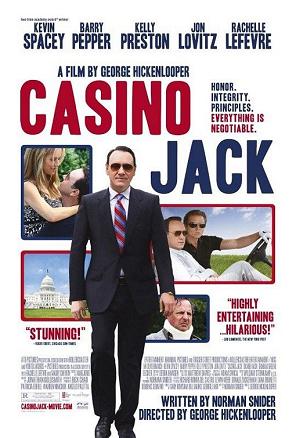
Shattered Politics #86: Casino Jack (dir by George Hickenlooper)


Casino_JackI had two reactions to the 2010 film Casino Jack.

My first reaction was to think, “Wow, Kevin Spacey really can act!”  I mean, don’t get me wrong.  I knew that, especially when working with a director who is strong enough to curb his natural tendency to go overboard, Kevin Spacey was capable of giving a great performance.  However, Spacey is one of those actors who has such a unique look and style about him that I think sometimes we forget that he’s capable of doing more than just playing variations on Kevin Spacey.*

And it is true that, in the role of real-life Washington D.C. lobbyist Jack Abramoff, Kevin Spacey gave a performance that was full of the usual Spacey tricks.  By that, I mean we got the Spacey voice going from a purr to a roar in just a manner of seconds.  We got the Spacey glare, where he narrows his eyes and stares at whoever has offended him with an intensity that lets you know that something bad is about to happen.  We got that somewhat strained Kevin Spacey smile, the way facial expression that lets us know that we don’t want to know what’s going on behind that friendly facade.

But, even though Spacey was up to his usual tricks, all of those tricks still came together to create a unique character.  As I watched the film, I forgot that I was watching Kevin Spacey.  Instead, I really felt that I was watching and listening to one of the most powerful lobbyists in American history.

And, when Abramoff was eventually arrested and prosecuted for defrauding his clients, I couldn’t help but feel a little bit of sympathy for him.  Spacey plays the character with such a combination of hyperactive charm and righteous fury that you can’t help but be a little bit enthralled by him.  That’s not to say that Kevin Spacey turns Jack Abramoff into a sympathetic character.  (Indeed, as good as Spacey is, there are a few moments when his contempt for Abramoff comes through and his performance suddenly turns into a one-dimensional caricature.)  But what Spacey does do is show that Jack Abramoff was less an inhuman monster and more the logical product of Washington culture.  The only difference between Abramoff and everyone else in Washington is that Abramoff got caught.

But, at the same time, the move itself is never quite as interesting as Spacey’s lead performance. The movie’s main theme appears to be that Washington is corrupt and we’d do better if we curtailed the power of lobbyists but … well, do you really need a movie to tell you this?  I mean I’m pretty much apolitical and I knew that long before I saw Casino Jack!

Casino Jack: Good performance.  Boring message.  Bleh movie.

http://www.youtube.com/watch?v=w1igM1mfzPI

* This is better known as the Christopher Walken syndrome.

44 Days of Paranoia #21: Broken City (dir by Allen Hughes)


For today’s entry in the 44 Days of Paranoia, let’s take a look at one of the most disappointing films of 2013, Broken City.

It’s a bit hard to describe the plot of Broken City, not because it’s particularly clever but just because there’s so much of it.  The film starts with New York police detective Billy Taggart (Mark Wahlberg) murdering a man in cold blood.  But don’t worry, the murdered man was a murderer himself who was only out of jail on a technicality.  The Mayor of New York, Nicholas Hostetler (Russell Crowe, who sounds like he’s as much of a New Yorker as I am and I ain’t no New Yorker), pulls some strings and get a judge to drop the charges against Billy.  The Mayor tells Billy that he’s a hero but Billy is still forced to leave the police.

Jump forward seven years later.  Mayor Hostetler is locked in a tight re-election battle.  His opponent is a liberal councilman named Jack Valliant (Barry Pepper.)  Yes, the man’s last name is Valliant and — surprise! — it turns out that he’s actually a really sincere guy who wants to make New York a great place to live.  We know this because we get to sit through an endless debate between him and Hostetler.  While Hostetler gives a speech about how he’s against higher taxes, Valliant says that all he’s doing is asking the rich “to pay their fair share.”  The debate audience, of course, explodes into applause.  Valliant never gets around to saying, “If you like your plan, you can keep your plan.”  Maybe they’re saving that for the sequel.

Meanwhile, Billy is now a private investigator.  His girlfriend is an actress who has just appeared in an independent film.  When Billy goes to the premiere, he’s so upset over the sight of his girlfriend being taken from behind on the big screen that he starts drinking and attacking random strangers on the street.

Meanwhile, (in many ways, Broken City is a movie of meanwhiles) Mayor Hostetler has hired Billy to follow his wife Cathleen (Catherine Zeta-Jones) and discover who she’s having an affair with.  Working with his assistant (played by Alona Tal), Billy follows Cathleen and discovers that she’s been spending time with Paul Andrews (Kyle Chandler), who happens to be the manager of the Valliant campaign…

Or is she?  As Billy subsequently discovers, the truth is a lot more complicated than it seems (or probably needs to be).

Broken City got a lot of attention because the script was listed on the 2008 Black List.  The Black List is an annual list of the “best” unproduced scripts in Hollywood.  Now, it should be understood that the concept of what makes something the “best” is always open to interpretation.  In the case of the Black List, the “best” is determined by a survey of studio and production executives.  The Black List comes out every December and it usually provides an excuse for lazy entertainment writers to write yet another article or blog post bemoaning all of the Hollywood remakes while so many creative and original scripts remain unproduced.

But here’s the thing.  Since, I started reviewing films for the Shattered Lens, I’ve had the chance to see several films that were produced from Black List scripts.  A few of them have been good but the majority of them have either been likable but forgettable (i.e., Cedar Rapids) or else they’ve been total and complete disasters, like The Beaver.  Typically, Black List films tend to be overly complicated, overly ambitious, and never quite as intelligent as they may seem.  Frequently, Black List scripts tend to be a bit cutesy in a way that’s effective on paper but annoying on screen.  (For example, naming your film’s only good politician Jack Valliant is one of those cutesy concepts that tend to turn up in a lot of Black List scripts.)  Several of these scripts, Broken City included, are thrillers that attempt to use the conventions of the genre film to make some larger point about American society.  They’ve usually got some sort of dreary political subtext and they always seem to feature a twist that’s surprising only because it doesn’t make any sense.

And that is certainly the case when it comes to Broken City.  Don’t get me wrong — the film starts well and Mark Wahlberg is well-cast as the hero.  But, with each passing minute of film, things get messier and messier until, finally, it’s impossible to take the film seriously.  It’s obvious that director Allen Hughes meant for Broken City to be more than just a thriller.  Instead, in much the same way that Charles Dickens used London, Hughes makes a valiant effort to use the film’s New York as a metaphor for our own corrupt society.  Under Hughes’s direction, Broken City does a lot without doing any of it that well.

Indeed, if I could give this film an A for effort and ambition, I certainly would.  However, in the end, a film should first be judged by what is actually seen on-screen.  Taken by that standard, Broken City is a mess, a disorganized collection of themes and subplots that attempts to do so much that it accomplishes very little.  Russell Crowe and Catherine Zeta-Jones both struggle to sound like New Yorkers while Barry Pepper is so overly intense and wired as the saintly Valliant that I would be scared to vote for him.  Seriously, he seems like the type who would start a war in the name of social justice and then end up having so much fun killing and conquering that he’d forget what the reason for fighting was in the first place.  On a positive note, Mark Wahlberg and Alona Tal have a very likable chemistry and it’s too bad that the rest of the film didn’t take better advantage of it.

Broken City?  Broken film.

Other Entries In The 44 Days of Paranoia 

  1. Clonus
  2. Executive Action
  3. Winter Kills
  4. Interview With The Assassin
  5. The Trial of Lee Harvey Oswald
  6. JFK
  7. Beyond The Doors
  8. Three Days of the Condor
  9. They Saved Hitler’s Brain
  10. The Intruder
  11. Police, Adjective
  12. Burn After Reading
  13. Quiz Show
  14. Flying Blind
  15. God Told Me To
  16. Wag the Dog
  17. Cheaters
  18. Scream and Scream Again
  19. Capricorn One
  20. Seven Days In May