An Offer You Can’t Refuse #1: The Public Enemy (dir by William Wellman)


For this month, I’ve decided to review movies about mobsters.

There’s no specific reason for that, beyond the fact that I just happen to love mobster movies.  Of course, a good gangster film is rarely just about crime.  Anyone who has ever seen The Godfather can tell you that.  At their best, American gangster films are about the American dream and the lengths that some will go to achieve it.

Plus, they’re just a lot of fun to watch.  Some of the greatest actors of all time made their mark in gangster films.

Take 1931’s The Public Enemy, for instance.

Produced during the final days of prohibition and the early years of the Great Depression, The Public Enemy tells the story of three boys who grew up poor.  Tom Powers (James Cagney) and his friend, Matt Doyle (Edward Woods) pursued a life of crime, rising through the ranks of organized crime before eventually meeting a tragic end.  The third, Mike Powers (Donald Cook), stayed on the straight-and-narrow path.  He went into the Marines and he rebuked his brother, Tom, when he discovered that Tom’s money was due to “blood and beer.”

The film opens and closes with a title card that basically tells us that Mike Powers has the right idea but, when you watch the film, you can’t help but wonder if maybe Tom had a point about his brother being kind of a sap.  Mike might be a decent citizen and he might have a chestful of medals as the result of his wartime heroics but what else does he have?  Tom Powers, meanwhile, has no education and, it would appear, no conscience, no real friends, and no one that he really loves and yet he becomes a rich man who is acquainted with powerful figures.  While Mike stays at home with their mother, Tom lives in an ornate penthouse.  When his first girlfriend (Mae Clarke) gets on his nerves, Tom shoves a grapefruit in her face and then gets an even more glamorous girlfriend, Gwen (Jean Harlow).  (Meanwhile, even dumb old Matt is doing okay for himself, marrying a woman played by Joan Blondell.)  It’s hard not to imagine that the film’s original audience — who were still reeling from the Stock Market Crash of 1929 — looked at Mike and Tom Powers and quickly decided that they’d much rather be a part of Tom’s life than Mike’s.  Even if Tom is destined for an early grave or a lifetime behind bars, at least he appears to be having fun.  Speaking for myself, I’d much rather go out with the guy who has nice clothe and his own luxury apartment than with the self-righteous dud who is still living at home with his mother.

Of course, another reason why we gravitate towards Tom Powers is because he’s played by James Cagney, who was one of the most charismatic of the stars of Hollywood’s Golden Age and whose performance still holds up today.  Cagney gives a ferocious performance, snarling out his lines and always moving like a caged animal, even when he’s just preparing to have breakfast.  He’s full of an energy that’s both dangerous and exciting to watch.  Cagney also brings a very powerful anger to the role of Tom Powers.  As played Cagney, Tom Power is not just a criminal because he’s greedy.  He’s also a criminal because he has no use for a society that he feels has rejected him since birth and which has never given him a fair chance.  He becomes wealthy not just because he wants money but because he wants to taunt everyone who ever said that he wouldn’t amount to anything.  He’s every crime is more than act of greed.  It’s also an act of rebellion, a joyful to a society that wants to tell people what they’re allowed to believe and do.  He’s the ultimate 1930s rebel, giving the the finger to not only the two Hoovers (Herbert and J. Edgar) but also to the good government leftists would be soon be swept into power with FDR.  Despite the fact that The Public Enemy was made nearly 90 years ago, there’s nothing creaky about Cagney’s performance.  It still feels vital and powerful today and it elevates the entire film.

The Public Enemy holds up surprisingly well.  The film may be close to 90 but Cagney’s ferocious performance still feels fresh and powerfully alive.


Operation Thunderbolt (1977, directed by Menahem Golan)


On June 27th, 1976, four terrorists hijacked an Air France flight and diverted it to Entebbe Airport in Uganda.  With the blessing of dictator Idi Amin and with the help of a deployment of Ugandan soldiers, the terrorists held all of the Israeli passengers hostage while allowing the non-Jewish passengers to leave.  The terrorists issued the usual set of demands.  The Israelis responded with Operation Thunderbolt, a daring July 4th raid on the airport that led to death of all the terrorists and the rescue of the hostages.  Three hostages were killed in the firefight and a fourth — Dora Bloch — was subsequently murdered in a Ugandan hospital by Idi Amin’s secret police.  Only one commando — Yonatan Netanyahu — was lost during the raid.  His younger brother, Benjamin, would later become Prime Minister of Israel.

A year after the the raid on Entebbe, Menahem Golan would direct a film the recreated that heroic moment.  Originally, Operation Thunderbolt was intended to be a Hollywood production, with none other than Steve McQueen playing the role Yonatan Netanyahu.  When McQueen withdraw for the project (as he did from a lot of productions in the 70s), Golan and the project returned to Israel, where it was produced with the help of the Israeli military and the Israeli government.  (Yitzhak Rabin and Shimon Peres are among the notable Israeli leaders who appear as themselves.)  Singer and comedian Yehoram Gaon was cast as Netanyahu while veteran exploitation stars Klaus Kinski and Sybil Danning were cast as the German terrorists.

The end result is a rousing action film that takes a semi-documentary approach to telling its story.  Imagine a less flamboyant version of Golan’s The Delta Force, one that tells a similar story but without the oversized personas of Chuck Norris, Robert Forster, and Lee Marvin.  Though the film celebrates the bravery of Yonni Netanyahu, the emphasis is more on the IDF working as a team than on individual heroics.  (The film open with the IDF running a drill that mirrors the eventual raid on Entebbe, a reminder that Israel and the IDF were determined not to be caught off guard.)  The film is not only a celebration of the strength of the Israeli people but, with the Germanic Kinski and Danning cast the villains, it’s only a very loud cry of “NEVER AGAIN!”  It may be an exciting action film but it’s an action film with a message: Don’t mess with us.

(At the same time, the hijacker portrayed by Klaus Kinski is not presented as being cardboard villain, which may seem surprising given Kinski’s reputation as an actor and Golan’s reputation as a director.  Kinski’s terrorist does get a chance to explain his ideological motivations, with the film presenting him as being more misguided than evil.)

Though I will always consider The Delta Force to be the greatest film ever made (if just for it’s cry of “Beer!  America!” at the end), Operation Thunderbolt features Golan’s best work as a director.  Menahem Golan was a frequently crass director but, with Operation Thunderbolt, it’s obvious that he was motivated by more than just making a hit movie.  Golan’s aim with Operation Thunderbolt was to make a film that would celebrate both Israel and the strength of the Jewish people.  With Operation Thunderbolt, Menahem Golan succeeded.

Lisa Marie’s Oscar Predictions For May (For What They’re Worth)


Are we even going to have an Oscar ceremony next year?

Who knows?  I hope we do because I think that it would provide some sort of normalcy.  Even if everyone chooses not to watch it, at least they’ll have that choice.  (People tend to forget how important, psychologically and emotionally, it is for people to have a choice.  All of these cheery “We’re all in it together” commercials don’t mean shit if people are feeling imprisoned.)  Up until this week, I was pretty confident that we would because COVID-19 was in decline and restrictions were being lifted and things seemed like they were heading in the right direction.  (Or, at least, that’s the way it seemed in my part of the world.  I know that some people disagreed with my assessment.)  Now, we’re in the middle of nation-wide rioting and a divisive presidential election so who knows what’s going to happen with the rest of this year.  Will theaters even want to risk reopening before 2021?  Will they be able to?  The Academy has said that streaming films will qualify this year but how many studios want to release all of their big productions VOD?

I’m going to continue to make my monthly Oscar predictions, though.  My reasons are pretty selfish: making them helps to keep me centered.  I’m a compulsive scheduler and keeping that schedule (which is really what I’m doing with these monthly predictions) helps me deal with my ADD.

So, with that in mind, here are my Oscar predictions.  Take them with a grain of salt.  And be sure to check out my previous predictions for January, February, March, and April!

Best Picture

Ammonite

The Father

Hillbilly Elegy

Minari

News of the World

Nomadland

Respect

Soul

The Trial of Chicago 7

West Side Story

Best Director

Paul Greengrass for News of the World

Ron Howard for Hillbilly Elegy

Francis Lee for Ammonite

Steven Spielberg for West Side Story

Chloe Zhao for Nomadland

Best Actor

Matt Damon in Stillwater

Tom Hanks in News of the World

Anthony Hopkins in The Father

Bill Murray in On The Rocks

Gary Oldman in Mank

Best Actress

Jennifer Hudson in Respect

Angelina Jolie in Those Who Wish Me Dead

Sofia Loren in The Life Ahead

Frances McDormand in Nomadland

Kate Winslet in Ammonite

Best Supporting Actor

David Alvarez in West Side Story

Tom Burke in Mank

Delroy Lindo in Da 5 Bloods

Forest Whitaker in Respect

Steven Yeun in Minari

Best Supporting Actress

Abigail Breslin in Stillwater

Glen Close in Hillbilly Elegy

Olivia Colman in The Father

Saoirse Ronan in Ammonite

Helena Zengel in News of the World

That’s it for this month!  Hopefully, next month will bring a bit more clarity.


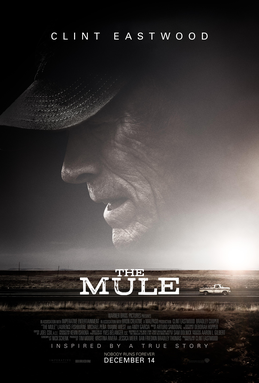
Film Review: The Mule (dir by Clint Eastwood)


In The Mule, Clint Eastwood plays Earl Stone.

In some ways, Earl is typical of the characters that Eastwood has played during the latter part of his career.  He’s grouchy.  He’s alienated almost everyone who was previously close to him.  He drives an old pickup truck and he has no idea how to text and he seems to literally snarls whenever he sees anyone under the age of 60.  He served in the Korean War and he’s not scared of guns.

In other ways, Earl is not a typical Eastwood character at all.  First off, he’s on the verge of financial ruin.  Earl may not be the first Eastwood character to not know how to responsibly handle money but he is perhaps the first one to be on the verge of homelessness as a result.  (He’s perhaps the first of Eastwood’s modern character to face real-world consequences for his flaws.)  Secondly, Earl often seems to be lost in the 21st century world.  In Gran Torino and Trouble With The Curve, Eastwood played grumpy old men who could still hold their own when it came to dealing with younger people.  But, in The Mule, Earl seems to be defeated by life.  The only thing that he really has going for him is his reputation as a horticulturist and, as the film makes clear, that’s not a skill that’s going to bring in much money.

That all changes when Earl has a chance meeting with Rico (Victor Rasuk), a friend of his granddaughter’s.  Knowing that Earl is desperate for money, Rico tells him that he could make a quick payday by transporting a package for some friends.  After giving it some thought, Earl agrees.  When Earl meets Rico’s friends, everyone is shocked at how old he is.  They’re even more shocked when Earl says that he doesn’t know how to text.  Earl is given a phone and told to answer it whenever it rings but to never use it to call anyone.  A package is put in the back of Earl’s pickup truck.  It’s suggested that Earl not look in the package.

Does Earl know that he’s transporting drugs?  At first, it’s hard to say.  While it seems obvious to us, Earl is from a different time.  Still, once Earl does eventually learn that he’s being used as a drug mule, it doesn’t seem to bother him.  If nothing else, Earl actually seems to get a kick out of being a real-life outlaw.  He continues to make his runs and he continues to make money and, perhaps most importantly, he now has a purpose in life.  In a strange way, the drug runners even become his new family.  (They call him Tata, which is Spanish for grandfather.)  Of course, they’re a family that makes it cleat that they’ll kill Earl if he’s ever late delivering the package but that doesn’t seem to matter to Earl.

Meanwhile, the DEA (represented by Laurence Fishburne, Bradley Cooper, and — somewhat inevitably — Michael Pena) are hearing reports about a new drug mule who has been nicknamed Tata.  What they don’t suspect, of course, is that Tata is a 90 year-old man who has no criminal record and who is always very careful to obey all the traffic laws.  Even when Earl is pulled over by the police, he’s such a nice old man that they let him go without bothering to really search his vehicle.  It seems like Earl’s got a perfect thing going but, unfortunately, things are never as good as they seem and eventually, the reality of Earl’s situation intrudes on his fantasy….

It’s been said that The Mule is going to be Eastwood’s final film as an actor and he gives an excellent performance as Earl.  The Mule, which feels, in many ways, like a good-natured companion piece to Gran Torino, features Eastwood at both his most vulnerable and, probably not coincidentally, his most likable and sympathetic.  In this film, Eastwood makes clear that he’s no longer the righteous Dirty Harry or the mythological Man With No Name.  Now, he’s just a man nearing the end of his life and trying to come to terms with the mistakes and the decisions of the past.  Eastwood plays Earl like a man who knows that his time is limited.  Smuggling drugs gives him a chance to feel like he’s alive again but, throughout it all, there’s still a deep sadness.  Earl can use his money to pay his bills and to fix up the local VFW hall but he still can’t buy his family’s forgiveness.  Watching the film, it’s impossible not to feel for Earl.  You’re happy that he found at least a little satisfaction with his criminal career, even though you immediately suspect that things probably aren’t going to turn out well for him.

Admittedly, there is one cringe-worthy scene in which it’s suggested that the 90 year-old Earl has had a threesome with two twenty year-olds (and one gets the feeling that the scene would not have been included if not for the fact that the film’s star was also the director).  For the most part, though, this is a thoughtful film that features a poignant performance from Eastwood and which is directed in a restrained, but empathetic manner.  If this is Eastwood’s swan song as an actor, it’s a good note to go out on.

4 Shots From 4 Films: Special Clint Eastwood Edition


Clint Eastwood in Revenge of the Creature (1955)

4 Shots From 4 Films is just what it says it is, 4 shots from 4 of our favorite films. As opposed to the reviews and recaps that we usually post, 4 Shots From 4 Films lets the visuals do the talking!

Today is Clint Eastwood’s 90th birthday!

Though Clint famously had to go to Italy to really get his film career going, he’s gone on to become an icon of American film.  While his early films were often criticized as glorifying violence and of being reactionary, his later films have — more often than not — been meditations on aging, moral ambiguity, and what a lifetime of violence does to a person’s soul.  Though Eastwood has fallen out-of-favor with a few critics as a result of the speech he gave at the 2012 Republican Convention (Film Twitter, to the shock of no one, had a particularly over-the-top reaction to it as many of them discovered, I guess for the first time, that not every artist is a Leftist), he’s a filmmaker whose legacy will be rediscovered and probably appreciated in the future.

Here are….

4 Shots From 4 Films

For A Few Dollars More (1965, dir by Sergio Leone)

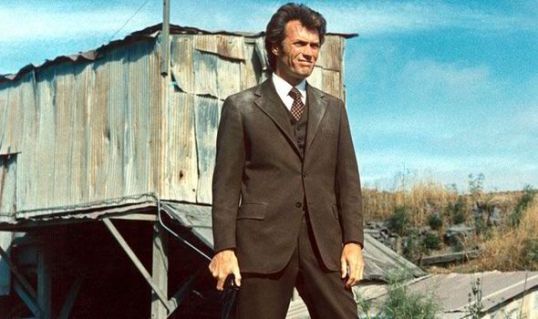
Dirty Harry (1971, dir by Don Siegel)

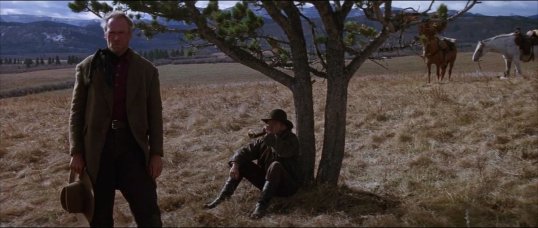
Unforgiven (1992, dir by Clint Eastwood)

Gran Torino (2008, dir by Clint Eastwood)

Red Zone Cuba (1966, directed by Coleman Francis)


An escaped convict named Griffin (Coleman Francis) meets up with two other men (Anthony Cardoza and Harold Samuels) and, for some reason, all three of the fly down to Cuba where they join up with the mercenaries who are planning on overthrowing Castro during the Bay of Pigs invasion.  That doesn’t work out so, after escaping from a Cuban POW camp, they decide to fly back to America so that they can rob a mine.  Along the way, they shoot several people and they run into John Carradine who gives them a ride on a train and also sings the film’s theme song, Night Train to Mondo Fine.  “He ran all the way to Hell,” Carradine says about Griffin, even though Griffin spends most of the film either flying or moving at an ambling gait.

Red Zone Cuba is best known for being one of three Coleman Francis films to be showcased on Mystery Science Theater 3000.  Watching this film with Mike and the Bots commenting on the action is a lot of fun.  Trying to watch it without Mike the and the Bots is a different experience all together.  I always assumed that the plot seemed incoherent because I was distracted by Mike, Tom Servo, and Crow talking through the film but it turns out that the plot is incoherent regardless of how you watch the film.  Coleman Francis tried to make a tough and gritty desert noir but the only part he got right was the desert.  There’s a lot of desert in this movie.

Red Zone Cuba is a painfully slow movie but at least John Carradine’s in it for a few minutes.  A reporter shows up to interview him about the three men who rode his train all the way to Hell and Carradine answers his questions with the type of grim determination that briefly fools you into thinking Red Zone Cuba is going to be better than its reputation.  Carradine exits the film quickly, though.  He got his paycheck and then headed off to his next role, leaving Coleman Francis to carry the weight of the film.

Red Zone Cuba is a slow mess of a film that’s not even entertainingly bad but I do have to wonder: was this the first narrative film to use the Bay of Pigs as a plot point?  Hats off to Coleman Francis if it was.


A Blast From The Past: Tomorrow’s Drivers


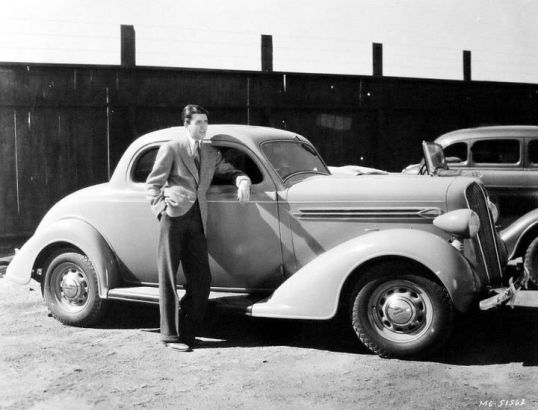
Jimmy Stewart Standing Beside One Of His Many Cars

Since this is the ten year anniversary of the Shattered Lens, I’ve been making an effort to observe notable birthdays here on the site.  I’m sad to say that somehow, I missed the birthday of Jimmy Stewart!

Jimmy Stewart was born on May 20th, 1908 in Indiana, Pennsylvania.  He’s my favorite of the Golden Age stars, not to mention the star of one of my top films of all time, It’s A Wonderful Life.  He also served bravely in World War II and I think it can be argued that he was Jimmy Stewart before he went to war and James Stewart afterwards.

Anyway, better late than never, here’s a short 1954 film that Stewart narrated, Tomorrow’s Drivers.  The film features a bunch of kindergarten kids learning how to drive.  Apparently, it was a program designed to make sure that kids grew up with good driving habits and didn’t end up becoming a bunch of jerks like their parents.  It actually seems like a good idea to me.  Stewart doesn’t appear onscreen but he provides the narration for the film and, with his tone, he strikes just the right mix of whimsy and seriousness.

Enjoy!

4 Shots From 4 Films: Special Howard Hawks Edition


4 Shots From 4 Films is just what it says it is, 4 shots from 4 of our favorite films. As opposed to the reviews and recaps that we usually post, 4 Shots From 4 Films lets the visuals do the talking!

Today is the 124th anniversary of cinematic pioneer Howard Hawks!  Whether it’s gangster film, a western, or a screwball comedy, it’s hard to think of a single cinematic genre that doesn’t owe a debt of gratitude to Howard Hawks!

Here are….

4 Shots From 4 Films

Scarface (1932, dir by Howard Hawks)

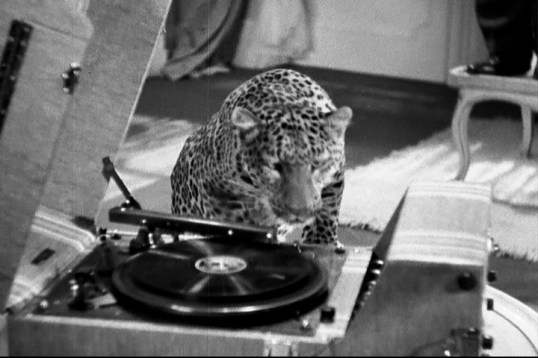
Bringing Up Baby (1938, dir by Howard Hawks)

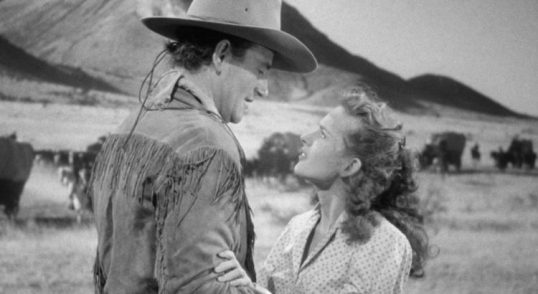
Red River (1948, dir by Howard Hawks)

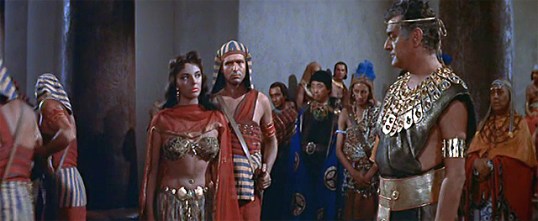
Land of the Pharaohs (1955, dir by Howard Hawks)

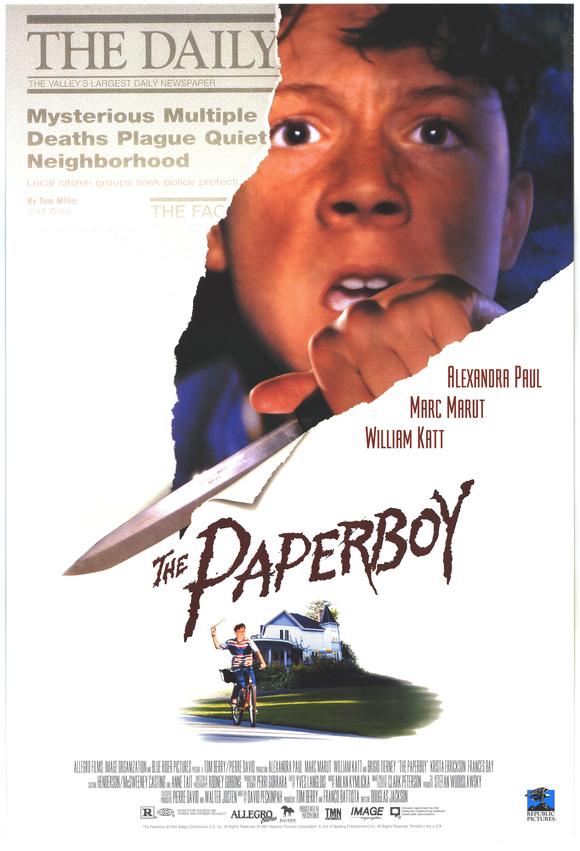
Cinemax Friday: The Paper Boy (1994, directed by Douglas Jackson)


12 year-old Johnny McFarley (Marc Marut) is a paperboy who desperately wants to be a part of a stable family.  He wants Melissa Thorpe (Alexandra Paul) to be his mother but Melisssa has moved to a different town.  Johnny solves that problem by suffocating Melissa’s mother with a plastic bag, which causes Melissa to return home.  That’s one way to do it!

As soon as Melissa and her daughter, Cammie (Brigid Tierney), move into Melissa’s mother’s old house, Johnny starts making himself indispensable by doing things like mowing the lawn for free.  He also does things like break into the house in the middle of the night, plant hidden cameras, and demand that Melissa bake him a pie.  He wants Melissa to be his mother and because Melissa feels sorry for him, she indulges Johnny and his mood swings.  Even after everyone else in the neighborhood tells her that Johnny is a little bit off, Melissa continues to allow him into the house.  Not even the crazy religious lady saying that Johnny has “the mark of Cain” can dissuade Melissa.

Johnny will do anything to make Melissa his new mother.  But then Brian (William Katt), Melissa’s boyfriend, shows up and Johnny really goes off the deep end.

The Paperboy is an adequate killer child film.  Marc Marut gives a good performance as the creepy and disturbed Johnny and the movie does make an attempt to provide him with a believable backstory to explain why he’s become the little killer that he is.  The kills are all imaginatively staged and all the more disturbing because they feature a child as the killer and that really is the whole point of the whole psycho kid genre.  The main problem with the movie is that Melissa keeps overlooking Johnny’s clearly unstable behavior.  At the point when just about anyone else would have told Johnny to stay away and perhaps even called the cops on the little bugger, Melissa keeps letting him back into her life.  By the time that Melissa finally realizes that maybe Johnny actually is as dangerous as everyone has been telling her, you’re too frustrated with her to care.

One good thing about The Paperboy is that it features William Katt in a supporting role.  If there’s ever a Late Night Cinemax Hall of Fame, William Katt will be entitled to an entire wing.  Even though he spent the majority of the 90s appearing in low-budgets movies like this one, Katt always gave a good performance, like he does here.


4 Shots From 4 Films: Special Josef von Sternberg Edition


4 Shots From 4 Films is just what it says it is, 4 shots from 4 of our favorite films. As opposed to the reviews and recaps that we usually post, 4 Shots From 4 Films lets the visuals do the talking!

Today we celebrate the 126 anniversary of the birth of cinematic pioneer, Josef von Sternberg!  That means that it’s time for….

4 Shots From 4 Films

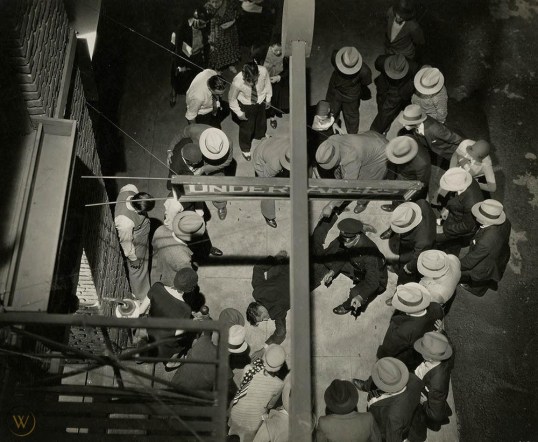
An American Tragedy (1931, dir by Josef von Sternberg)

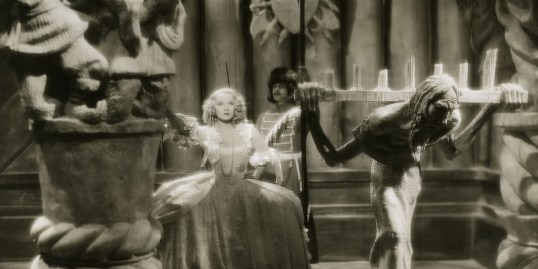
The Scarlet Empress (1934, dir by Josef von Sternberg)

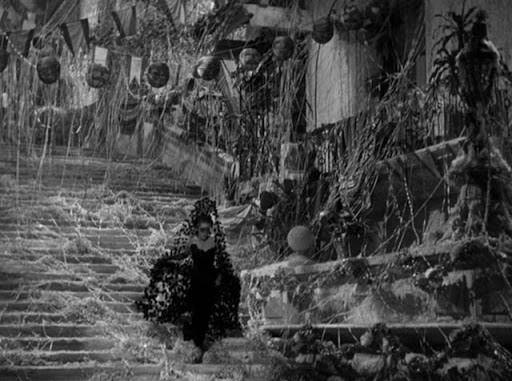
The Devil is A Woman (1935, dir by Josef von Sternberg)

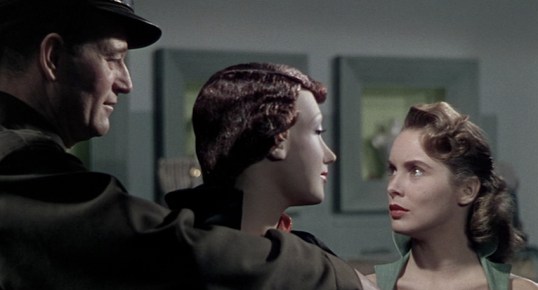
Jet Pilot (1957, dir by Josef von Sternberg)