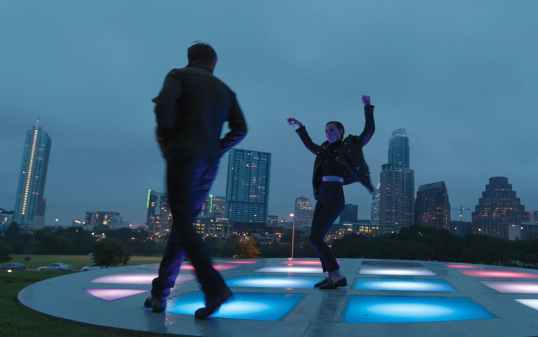
4 Or More Shots From 4 Or More Films is just what it says it is, 4 shots from 4 of our favorite films. As opposed to the reviews and recaps that we usually post, 4 Shots From 4 Films lets the visuals do the talking!
4 Shots From 4 Fantasy Films
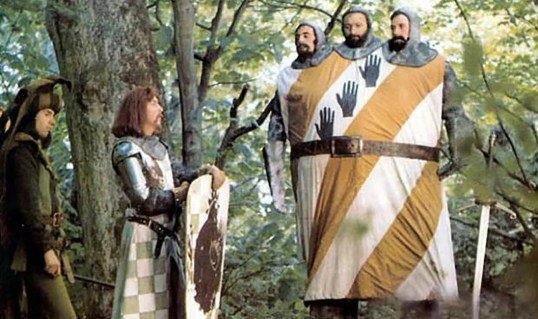
Monty Python and the Holy Grail (1975, Dir. by Terry Gilliam and Terry Jones)
Legend (1985, Dir. by Ridley Scott)
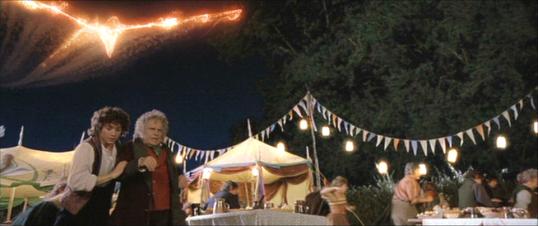
The Lord of the Rings: The Fellowship of the Ring (2001, Dir by Peter Jackson)
How To Train Your Dragon (2010, Dir. by Chris Sanders and Dean DeBlois)
“A nutless monkey can do your job.” — Les Grossman
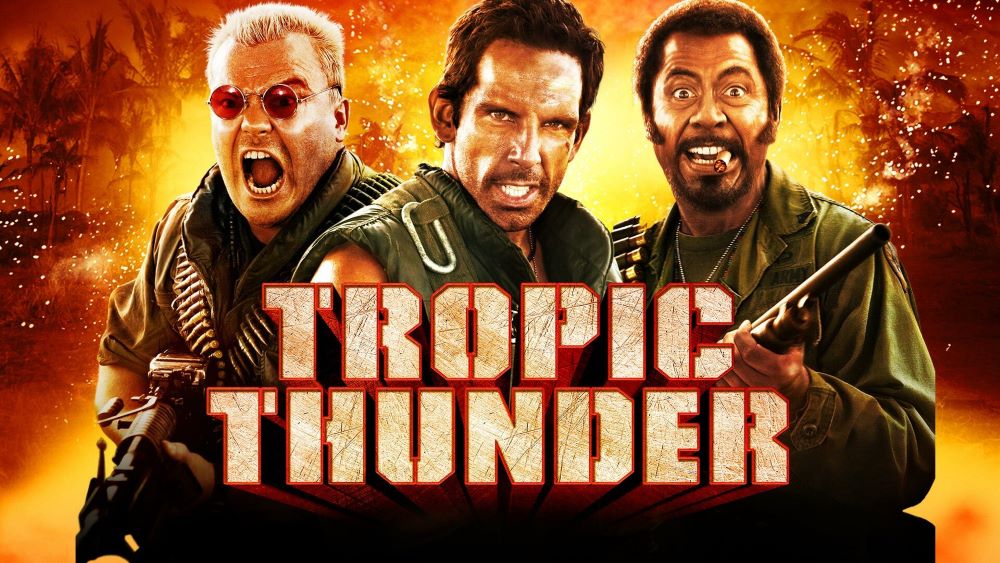
Ben Stiller’s Tropic Thunder is a bold, chaotic comedy that dives headfirst into the wild world of Hollywood satire. The film, which Stiller directed, co-wrote, and starred in, feels like a high-energy roast of the movie industry itself, blending action, parody, and sharp commentary into one explosive package. The cast is stacked with familiar faces like Robert Downey Jr., Jack Black, Jay Baruchel, Brandon T. Jackson, and even Tom Cruise in a shockingly hilarious cameo, all committed to the film’s madcap, anything-goes spirit.
A distinctive touch that shows Tropic Thunder’s deep commitment to Hollywood satire is how it begins—not with a typical studio logo or title sequence—but with a series of fake movie trailers. These trailers parody different film genres and Hollywood clichés, setting an irreverent tone before the actual film even starts. The highlight is undoubtedly the “Oscar-bait” trailer for Satan’s Alley, a pitch-perfect send-up of self-serious, emotionally heavy dramas designed for awards season attention. By embedding these faux trailers, the film immerses viewers in its meta commentary and signals from the outset that it’s willing to mock and take apart the film industry at all levels.
This movie-within-a-movie begins with a group of egotistical actors trying to make a serious war film based on the fictional memoir of a Vietnam veteran. Their attempt at gritty realism falters under the weight of their own vanity and cluelessness, turning the set into a feverish comedy of errors. When the director dies and the actors are abandoned in a real jungle with actual dangers, the film blurs the lines between fantasy and reality, leading to a relentless cascade of absurd situations and insider jokes about Hollywood machinery.
Robert Downey Jr.’s portrayal of Kirk Lazarus, a method actor who undergoes extreme skin pigmentation surgery to play a Black character, is both provocative and hilarious. His performance skewers Hollywood’s past mistakes with race and casting, while his tense exchanges with Brandon T. Jackson’s Alpa Chino, who plays a genuinely Black rapper, provide sharp moments that balance discomfort with comedy. Downey Jr.’s “blackface” was a conscious satire of method acting and Hollywood egos, an attempt to ridicule extreme lengths actors go for acclaim rather than an endorsement of offensive practices. However, even at its release in 2008, it sparked conversations about the boundaries of comedy and racial sensitivity—an issue that would be even more controversial in 2025’s cultural climate.
Similarly, the film’s handling of ableist humor through the subplot of Simple Jack, a fictional movie starring Ben Stiller’s character as a person with intellectual disabilities, drew mixed reactions. While intended as a biting critique of Hollywood’s exploitation of disability for sympathy and awards, the portrayal nonetheless walked a tightrope that made some audience members uncomfortable. This nuanced but risky satire highlights how Tropic Thunder throws a wide net in exposing Hollywood’s many blind spots, yet its fearless approach also invites legitimate questions about respect and representation.
Jack Black delivers wild physical comedy as Jeff Portnoy, a drug-addled comedian losing control, offering a blend of slapstick and oddly sincere moments. Meanwhile, Tom Cruise steals the film with his iconic turn as Les Grossman, the balding, foul-mouthed studio exec whose explosive rants and dance moves have reached legendary status. Industry insiders often note that Grossman’s tempestuous persona seems inspired by real-life producer Scott Rudin, known for a similarly volatile temperament.
Much of the film’s humor targets Hollywood’s obsession with awards and ego, skewering Oscar-bait films, blockbuster excess, and ridiculous celebrity antics. The fake trailers highlight these themes, and Lazarus’s infamous line “Never go full retard, man!” takes aim at acting extremes motivated by prestige rather than authenticity. Stiller’s direction embraces loud, over-the-top action sequences that mimic classic Vietnam War movies but infuse them with cartoonish chaos, while the lush jungle serves as a satirical arena for exposing the actors’ incompetence.
While Tropic Thunder is gleefully offensive and hilarious, its treatment of race and disability sparked debate about where satire crosses lines. The film’s biting self-awareness and sharp commentary doesn’t always prevent discomfort, but it highlights the difficulty of balancing edgy humor with social consciousness in comedy. The film’s reception reveals how comedy evolves with cultural awareness; what passed as biting satire in 2008 would face even fiercer scrutiny in today’s more sensitive and politically aware environment.
From an entertainment standpoint, the movie delivers nonstop laughs, with rapid-fire jokes, strong chemistry among the cast, and sharp Hollywood references that keep fans engaged. Downey Jr.’s method acting antics, Black’s physical comedy, and Cruise’s outrageous studio boss combine into a relentless comedic assault. It’s not a film for those who prefer safe or sanitized humor, but for those who appreciate biting satire with reckless energy, it’s a must-watch.
Looking back, Tropic Thunder stands as a snapshot of a moment before social media and instantaneous backlash reshaped Hollywood comedy. Its controversial content might not get greenlit today, much like the boundary-pushers Blazing Saddles and Airplane! before it. Yet, as history shows, comedy will always find new ways to challenge sensibilities and push limits. Only time will tell what the next film is that dares to cross such lines again.
If you haven’t experienced Tropic Thunder, prepare for a relentlessly funny, sharply satirical comedy that skewers everything from celebrity egos to studio politics with savage wit and over-the-top energy.
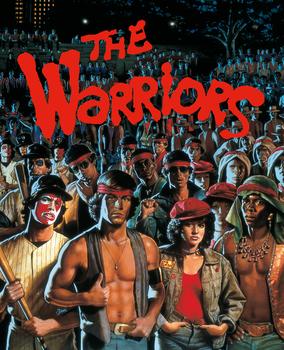
From 1979’s The Warriors, here’s a scene that I love. Playing the role of Cyrus, the man who could bring all of the gangs of New York together, is Roger Hill. Playing the role of his assassin is the great David Patrick Kelly.
Cyrus knew what he was talking about but the world wasn’t ready for him.
I’m a huge fan of samurai movies. As such, I love the Japanese actors Toshiro Mifune and Tatsuya Nakadai. I came for the samurai movies and soon learned that both actors are incredible in a wide variety of films. They are truly two of the best of all time, and I seldom think of one without thinking of the other. It made me quite sad when I read that Nakadai passed away a few days ago on November 8th at 92 years of age. Back in 1962, Nakadai starred in possibly the greatest samurai film of all time, Masaki Kobayashi’s HARAKIRI. It’s truly a masterpiece, with a powerful story and incredible action. In honor of Tatsuya Nakadai, I’m sharing the trailer for HARAKIRI below, and I recommend it to everyone!
“Someday we might look back on this and decide that Saving Private Ryan was the one decent thing we were able to pull out of this whole godawful, shitty mess.” — Sergeant Horvath
Saving Private Ryan stands as a landmark achievement in war cinema, intricately weaving immersive battle scenes, rich character dynamics, and profound moral themes into a nearly three-hour exploration of World War II’s human cost. One of its most remarkable features is the opening Omaha Beach landing sequence, a meticulously crafted, over 24-minute depiction of warfare’s brutal reality. Spielberg deploys a cinema verité style with handheld cameras capturing disorientation and chaos through the soldiers’ eyes. The sound design envelops the viewer in a sensory onslaught—gunfire, shouting, explosions—creating a visceral experience that immerses audiences directly in the terror and confusion of D-Day.
The filming process drew heavily on historical accuracy, with the production shot on the coast of County Wexford, Ireland, employing amputee actors and practical effects over computer graphics to simulate violent injuries and battlefield horrors. Muted tones evoke wartime photographs, and rapid, shaky editing conveys the disorganized, frantic environment soldiers endured. Consulting WWII veterans and historians, Spielberg created a sequence that reshaped cinematic portrayals of war, influencing how future films would approach the genre’s raw immediacy and emotional weight.
The film’s narrative follows a squad led by Captain Miller on a mission to locate and bring home Private James Ryan, whose three brothers have been killed in combat. The mission is steeped in the real-life tragedy of the five Sullivan brothers who died together aboard the USS Juneau in the Pacific, prompting military policies to prevent similar familial devastation. This historical context frames the story’s ethical heart: risking several men’s lives to save one, raising enduring questions about the value of individual sacrifice within the broader war.
In Saving Private Ryan, sacrifice is portrayed ambiguously—not as the sacrifice of a single hero but as the collective cost borne by the men tasked with rescuing one individual under perilous conditions. As the squad journeys through the war-torn French countryside, the deaths, injuries, and tensions they face underscore war’s randomness and the difficulty of weighing one life against many. The narrative refuses to romanticize or simplify, instead confronting the audience with the tragic truth that countless soldiers lose their lives without recognition or purpose, while some survive against staggering odds.
Duty and camaraderie thread throughout the film, portrayed through the soldiers’ evolving relationships and personal struggles. Each grapples with loyalty not only to their mission but to their fellow men and their own moral codes.
Integral to the film’s power is Tom Hanks’s layered performance as Captain John Miller. Hanks breathes life and emotional depth into Miller, portraying him as a man shaped by civilian life—revealed poignantly when he discloses his pre-war profession as a schoolteacher—now transformed by the relentless demands of war. He embodies an officer who is both composed and vulnerable, carrying the heavy burden of leadership with quiet dignity. Hanks’s portrayal reveals the internal struggles beneath Miller’s stoic exterior: moments of doubt, moral conflict, and fatigue subtly expressed through a trembling hand or a weary gaze. This humanity makes Miller relatable, as a man trying to maintain order and purpose amid chaos.
Hanks skillfully balances Miller’s authoritative presence with warmth and empathy, particularly evident in his paternal interactions with younger soldiers, reinforcing Miller’s role as both a leader and protector. His nuanced acting delivers the complexity of a man constantly negotiating duty and compassion. In scenes of high tension or moral quandaries, Hanks conveys the weight of command while allowing glimpses into Miller’s psychological strain, deepening the film’s emotional resonance.
Following Hanks’s Miller, a standout amongst the supporting cast is Tom Sizemore’s portrayal of Technical Sergeant Mike Horvath, Miller’s steady second-in-command. Sizemore embodies the pragmatic, battle-hardened soldier whose loyalty and experience provide emotional grounding for the squad. Sizemore portrays Horvath’s weariness and quiet commitment, adding layers of realism that deepen the exploration of how war reshapes individuals. The chemistry and shared history between Miller and Horvath are palpable, illustrating the bonds that sustain soldiers through hardship and lending emotional weight to the narrative.
The film wrestles with intense moral ambiguity throughout. The mission’s premise—to risk many lives to save one—compels both characters and viewers to confront complex questions about justice, value, and the cost of war. Scenes presenting difficult choices, such as the decision to spare or execute prisoners, dramatize these ethical dilemmas and highlight the emotional burdens borne by soldiers.
Technically, the film excels, with Janusz Kaminski’s dynamic cinematography capturing both the chaos of battle and intimate moments with evocative clarity. The immersive sound design reinforces the brutal reality, stripping warfare of glamor and confronting audiences with its daunting human costs.
Despite the overwhelming destruction and loss, Saving Private Ryan offers moments of humanity and hope. The rescue mission serves as a fragile symbol of compassion in the midst of devastation, while the film’s closing reflections on memory and legacy emphasize the lasting significance of sacrifice and survival.
Saving Private Ryan stands as a monumental achievement in the war genre, combining visceral combat realism, compelling characters, and moral complexity. Through Hanks’s deeply human Captain Miller and the nuanced supporting performances, especially Sizemore’s grounded Horvath, the film explores themes of sacrifice, duty, and brotherhood with unflinching honesty. Its enduring legacy lies in its unvarnished yet empathetic portrayal of war’s cost and the profound sacrifices made by those who lived it.
4 Or More Shots From 4 Or More Films is just what it says it is, 4 shots from 4 of our favorite films. As opposed to the reviews and recaps that we usually post, 4 Shots From 4 Films lets the visuals do the talking!
4 Shots From 4 Films
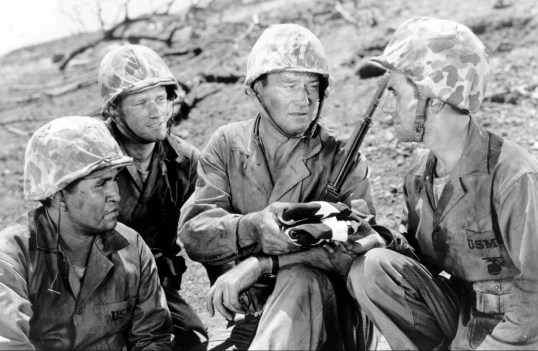
Sands of Iwo Jima (1949, Dir by Allan Dwan)
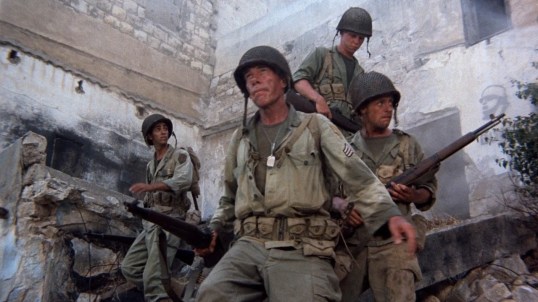
The Big Red One (1980, Dir by Sam Fuller)
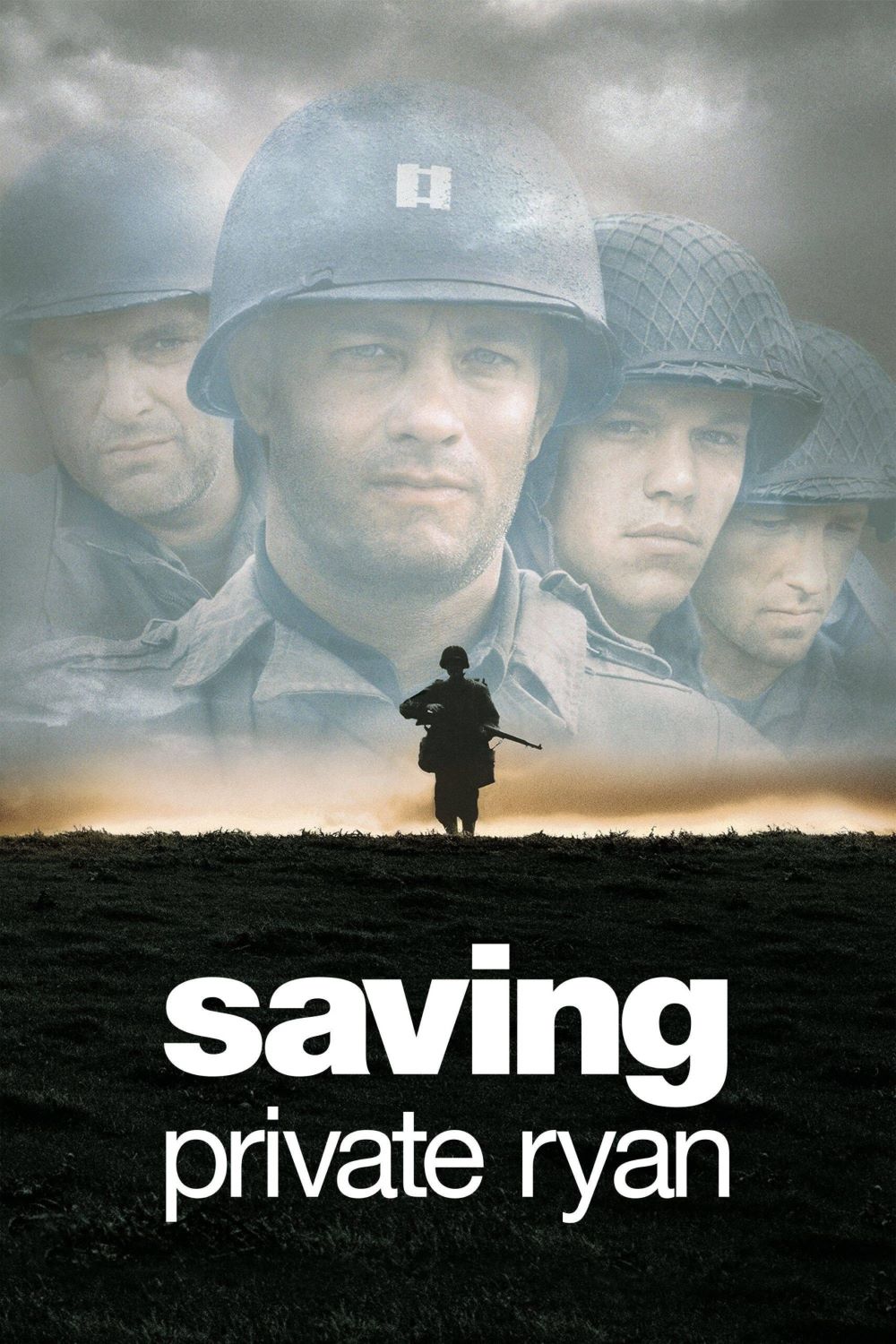
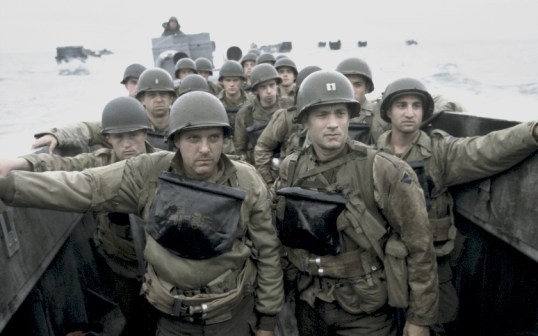
Saving Private Ryan (1998, Dir by Steven Spielberg)
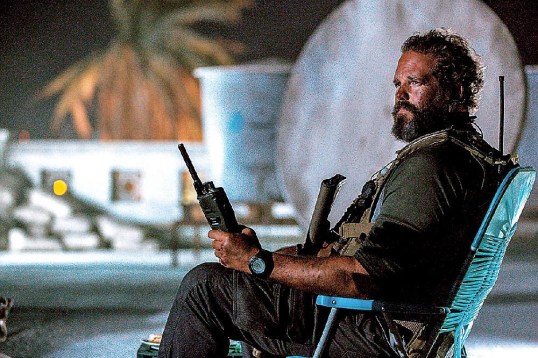
13 Hours: The Secret Soldiers of Benghazi (2016, Dir. by Michael Bay)
“We will not sterilize every Jew and wait for them to die. We will not sterilize every Jew and then exterminate the race. That’s farcical.” — Reinhardt Heydrich
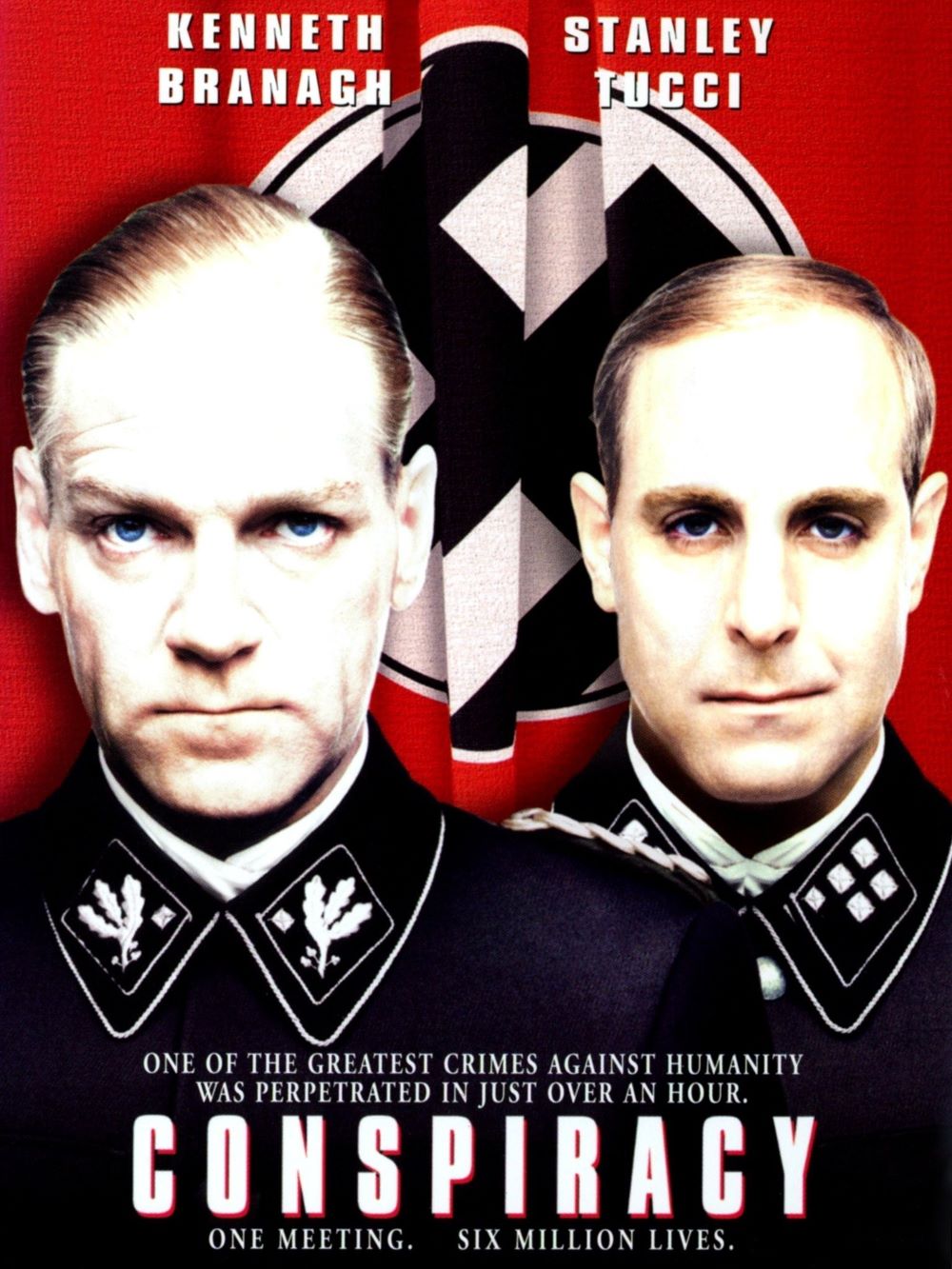
HBO’s Conspiracy (2001) masterfully dramatizes the infamous Wannsee Conference, held on January 20, 1942, where high-ranking Nazi officials orchestrated the Final Solution. The film’s running time mirrors the historical meeting itself, distilling one of the darkest moments in history into a single, chilling sitting that balances historical fidelity, psychological insight, and dramatic restraint. The premise is stark and deceptively simple: a group of men, most of whom had never previously met, gather in a sun-drenched villa outside Berlin to discuss systematic mass murder while enjoying fine food and polite conversation. This contrasting setting, rendered with careful attention to period detail, powerfully underscores what Hannah Arendt called the “banality of evil.” In Conspiracy, evil is not the property of villainous caricatures, but of functionaries and technocrats—chillingly rational and disturbingly mundane.
Much of the film unfolds in real time, utilizing dialogue taken from the sole surviving minutes of the Wannsee Conference. Screenwriter Loring Mandel and director Frank Pierson avoid unnecessary embellishments, allowing the facts and the conversations themselves to carry the full, horrifying weight. Kenneth Branagh gives an Emmy-winning performance as Reinhard Heydrich, the orchestrator and presiding presence at the conference. Branagh’s portrayal is both urbane and authoritative, presenting Heydrich as a figure whose affable composure thinly veils his unwavering commitment to genocide. There is no soaring rhetoric or overt menace; Heydrich’s evil is presented with administrative casualness, making it all the more chilling.
Stanley Tucci is equally compelling as Adolf Eichmann, Heydrich’s logistical right hand and the architect of the machinery of death. Tucci infuses Eichmann with a quiet efficiency and bureaucratic pride—a portrait of a man more attached to process than morality, disturbingly bland in his demeanor. The supporting cast is no less impressive. Colin Firth, as Dr. Wilhelm Stuckart, portrays a legal architect of Nazi race law who appears increasingly unsettled as the agenda shifts from disenfranchisement to extermination. Each attendee is rendered with psychological nuance. Some are disturbingly enthusiastic about their roles, while others are quietly apprehensive, yet ultimately complicit. These subtle gradations of doubt, ambition, and opportunism animate the film’s psychological landscape.
The dialogue, rooted in the actual transcript and skillful dramatic writing, eschews melodrama. The horror emerges not through spectacle, but in analytic exchanges about logistics, quotas, and definitions—the cold calculus of genocide. The men’s debates around how to classify mixed-race Jews, whether sterilization is preferable to extermination, and who should be spared create a bureaucratic puzzle as vile as its intent. Their discussions are delivered in a neutral, even mundane tone, which heightens the chilling reality of what they are planning. Pierson’s direction is restrained; the film never leaves its confined setting, emphasizing the claustrophobic mood of collective complicity. The camera lingers on faces rather than violence, building tension through small gestures—a glance, a pause, the clinking of glassware. The impact of what is said is matched only by the weight of what goes unsaid, until Heydrich, in a quietly devastating moment, makes the true purpose explicit.
More than a simple history lesson, Conspiracy meditates on themes of collective guilt, moral responsibility, and the terrifying ease with which ordinary people become accessories to atrocity. The film is haunted by bureaucracy; if everyone is “just following orders” or “simply doing their job,” the boundaries of blame blur and diffuse. The characters’ debates skillfully skirt the language of murder, favoring euphemisms such as “evacuation” or “resettlement.” This allows viewers to witness, in real time, the kind of moral erosion that enables atrocity on a massive scale. The dry, matter-of-fact tone of the film deepens its emotional impact, forcing the audience to comprehend that such horrors were conjured not in a frenzy, but in calm administrative exchanges over lunch.
For both historians and general audiences, Conspiracy earns praise for its meticulous adherence to historical detail. The screenplay closely follows the Wannsee minutes, and the film’s design choices—muted score, period-accurate costumes, and careful pacing—all serve to render bureaucratic evil as mundane and unremarkable. This unwavering restraint, however, does impose certain limits. The film’s dramatic arc is inherently subdued; the absence of conventional action or narrative tension makes it unfold like an extended negotiation rather than a traditional drama. Some viewers may find this lack of overt conflict stifling or static, resulting in a work that feels more “important” than “entertaining,” but this is clearly by design.
Conspiracy received widespread acclaim for both its historical gravity and psychological depth. Branagh and Tucci, in particular, were celebrated for their nuanced performances. The film is often cited as a model example of how the “banality of evil” operates—not through monsters, but through functionaries in tailored uniforms, sipping wine and rationalizing extermination. For those unfamiliar with the events, the manner in which these men discuss matters of life and death with casual detachment is shocking. As one critic noted, “Most people believe they know what evil looks like… But in Conspiracy, men of true evil met in pristine, gorgeous surroundings… and go about their business leisurely… with a smile and barely a hint of remorse.”
Within the canon of Holocaust cinema, Conspiracy stands apart from films like Schindler’s List or The Pianist, which focus on the suffering and survival of victims. Instead, it occupies a space similar to Downfall and the earlier Die Wannseekonferenz, dramatizing not the machinery of genocide but the mindsets of its architects. By confining itself to dialogue and implication, the film compels viewers to reflect on how civilization’s facades both enable and obscure horror.
The film’s lingering effect is not found in dramatic catharsis or tears, but in an enduring sense of discomfort. Conspiracy dramatizes not just a choice among evil options, but the ease with which those choices become rote procedure and social negotiation. The silence in the final act, as the men calmly disperse after codifying genocide, lands with a cold, almost procedural finality. The closing captions, briefly summarizing the fates of those present, deliver a sobering message: accountability was sporadic, often delayed, and never guaranteed.
Conspiracy is not casual entertainment, nor is it meant to be. Instead, it is essential viewing for anyone interested in the psychology of atrocity, the peril of bureaucratic amorality, and the enduring question of how ordinary people become complicit in extraordinary evil. With a screenplay of surgical precision, outstanding ensemble cast (especially Branagh and Tucci), and a director committed to understatement, HBO’s film demonstrates how history’s darkest decisions are forged not in chaos, but in chilling consensus. To those seeking to understand not only what happened at Wannsee, but how, Conspiracy offers an unblinking and quietly devastating answer.
I’ve been really busy the last few days preparing to record the next episode for the THIS WEEK IN CHARLES BRONSON Podcast. We’ll be covering THE STONE KILLER where Bronson plays a tough cop who stumbles upon a mafia revenge scheme decades in the making. It’s an interesting film that I can’t wait to cover in detail with a great group of Bronson enthusiasts. Did you know that THE STONE KILLER contains an incredibly underrated “car chases a motorcycle” sequence? The 70’s were so full of great stunts that some of the very best have almost been forgotten. Well that just doesn’t set well with me, so I’m sharing that chase with all of you. It’s a sequence that was filmed in 1973, the same year I was born, so it’s extra special to me. Enjoy my friends!
4 Or More Shots From 4 Or More Films is just what it says it is, 4 shots from 4 of our favorite films. As opposed to the reviews and recaps that we usually post, 4 Shots From 4 Films lets the visuals do the talking!
4 Shots From 4 Texas Films
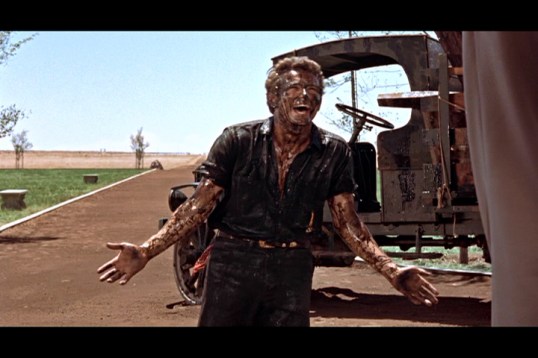
Giant (1956, Dir by George Stevens)
North Dallas Forty (1979, Dir. by Ted Kotcheff)
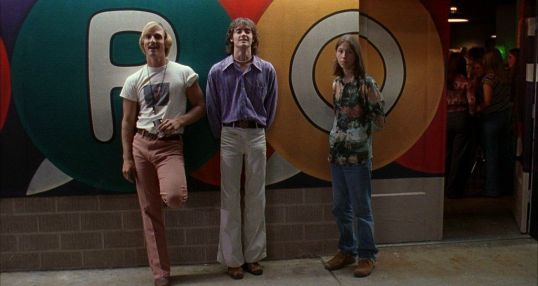
Dazed and Confused (1993, Dir by Richard Linklater)
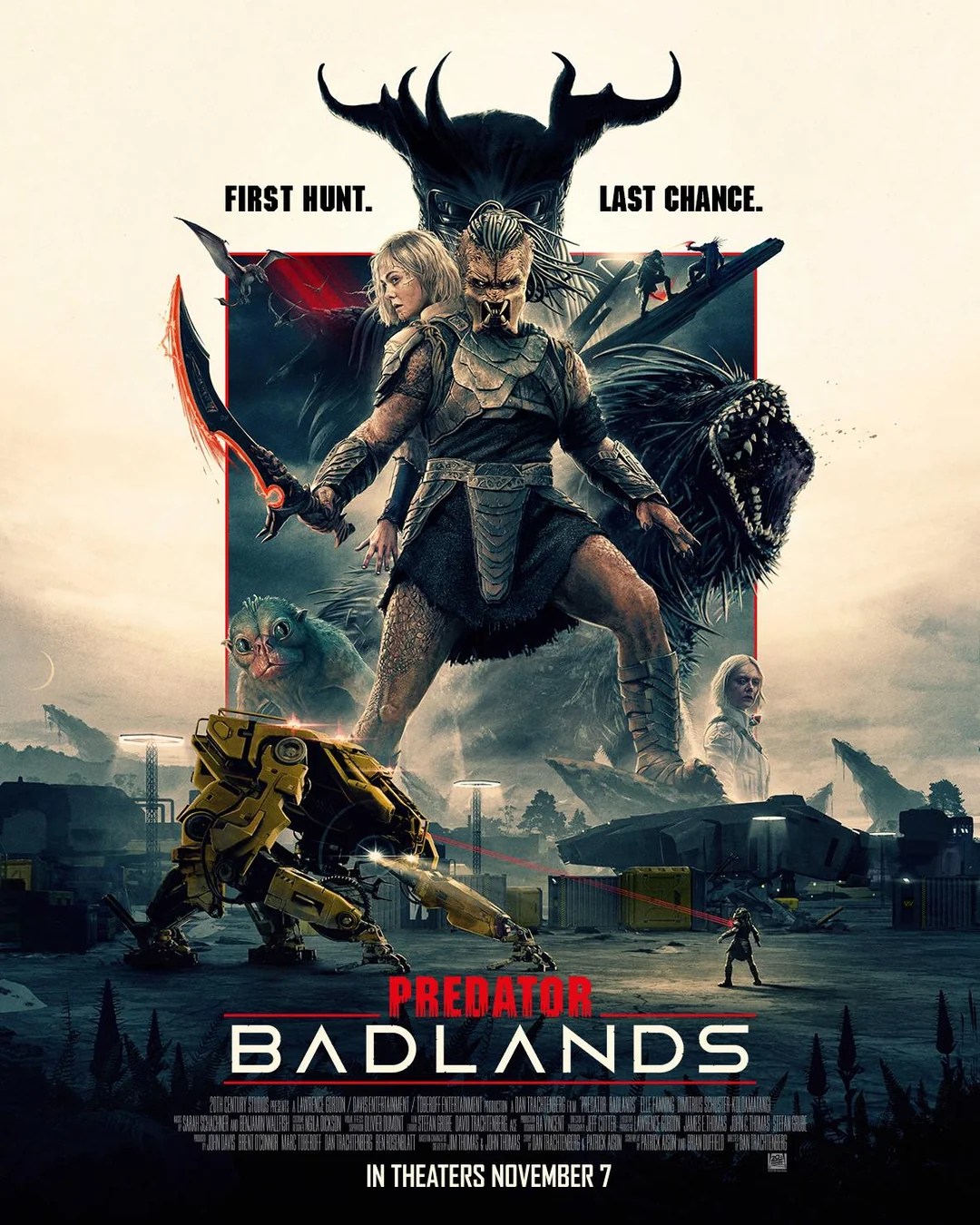
“Here, you’re not the predator. You’re the prey.” — Thia
Predator: Badlands, directed by Dan Trachtenberg, marks a significant evolution within a franchise that has captivated audiences for nearly four decades. Known for its intense action and the enigmatic extraterrestrial hunters called the Yautja, the Predator series has continuously explored themes of survival, honor, and primal combat. Trachtenberg’s vision shifts the focus toward a more intimate and nuanced perspective by centering the narrative on Dek, the youngest and smallest member of the Predator clan. Through Dek’s journey, the film delves deep into Predator culture, ritual, and the personal struggles of one cast out from his tribe.
Dek, the youngest and smallest member of his Predator clan, finds himself exiled and cast out due to perceptions of weakness. Determined to prove himself worthy, he crash-lands on the hostile planet Genna—infamously named “The Death Planet”—where he must navigate a dangerous ecosystem full of lethal creatures and unpredictable hazards. Struggling to survive alone, Dek forms an uneasy alliance with Thia, a damaged synthetic android with knowledge of the planet. Together, they embark on a perilous journey that will test their strengths, challenge their beliefs, and redefine what it means to be predator and prey.
The chemistry between Dimitrius Schuster-Koloamatangi and Elle Fanning as Dek and Thia is notably believable and compelling. Their performances breathe life into this unconventional duo—Dimitrius conveys Dek’s internal struggle and fierce determination almost entirely through physicality and subtle expression, while Fanning’s portrayal of Thia is richly layered with intelligence, resilience, and warmth despite her synthetic nature. Their interactions—marked by moments of tension, wit, and genuine connection—ground the narrative emotionally, making their partnership feel authentic even amid the film’s relentless action and alien setting.
At the emotional core of the film lies this evolving relationship, where Thia’s intelligence, wit, and empathy contrast Dek’s warrior stoicism. Physically bound to Dek early on, their partnership forged from necessity deepens into a profound bond that challenges traditional Predator stereotypes of ruthless isolation, opening space for exploration of trust, companionship, and mutual reliance in an unforgiving universe.
Adding to this complexity, Fanning also portrays Thia’s sister Tessa, embodying a dogmatic loyalty to the Weyland-Yutani corporation’s ruthless agenda. This dual role enriches the film’s meditation on identity, autonomy, and control, as the opposing android personas reflect divergent paths of resistance and compliance. The tension between Thia’s compassion and Tessa’s dogmatic obedience mirrors Dek’s own conflict between inherited tribal honor and his emerging personal values shaped by empathy and survival.
The narrative intensifies in the second act as the story shifts from Dek and Thia navigating Genna’s rough terrain to confronting the formidable forces of Weyland-Yutani and their synthetic android enforcers. This escalation brings broader stakes and a shift from survival to active resistance, with Dek’s combat style evolving into inventive use of the alien ecosystem’s deadly plants and creatures. His resourcefulness and adaptability are tested as much as his physical prowess.
Thia’s role grows beyond mere survival partner, serving as a moral compass guiding Dek through escalating challenges. Their deepening bond underscores themes of loyalty and defiance against overwhelming power. The rivalry between Thia and Tessa encapsulates both personal and systemic struggles, enriching the narrative’s emotional and thematic layers.
Action scenes in this act blend visceral intensity with strategic ingenuity, highlighting the evolving dynamic between Dek’s warrior instincts and Thia’s empathetic intelligence. This partnership provides an emotional anchor amid rising external threats.
Visually, while some of the VFX may not reach the technical heights of blockbuster films like Avatar, Predator: Badlands excels in blending digital effects with practical makeup and effects work. This approach makes the portrayal of Dek and the other Yautja—particularly when not helmeted—convincing and tangible. The hybrid effects allow Dek’s Yautja character to emote convincingly, adding crucial depth and relatability to a typically masked and silent character. This tactile realism enhances the immersive quality of the film and brings the Predator characters to life in a way that CGI alone might not achieve.
A distinct departure for the franchise, the film carries a PG-13 rating—a strategic decision enabled by the filmmakers’ exclusive use of non-human characters—synthetic androids and other alien beings—in violent scenes. This choice eliminates the display of red human blood, substituting blue synthetic fluids, thereby maintaining intensity while broadening audience accessibility. Although this approach softens the visceral brutality traditionally associated with the franchise, it allows for sustained creative violence and suspense without an R-rating’s restrictions. Some fans may find the absence of traditional gore reduces the raw impact and immediacy familiar to previous entries.
Throughout, the violence is intentional and purpose-driven, enriching the narrative rather than serving gratuitous spectacle. The film’s conclusion thoughtfully underscores themes of self-determination, as Dek eschews rigid tribal expectations in favor of personal autonomy, while Thia embraces an evolving identity beyond her synthetic origins.
One of the film’s most impressive achievements—and a testament to its commitment to authenticity—is the introduction of a fully constructed Yautja language. Developed by linguist Britton Watkins, who was recommended by Paul Frommer (the creator of the Na’vi language for James Cameron’s Avatar), this language was crafted with respect for the anatomical and cultural traits of the Predator species. Lead actor Dimitrius Schuster-Koloamatangi and his fellow Yautja cast members learned to perform fluently in this language. This effort adds remarkable depth and realism to the Predator characters, creating a linguistic culture that supports the film’s immersive world-building. Scenes featuring Yautja dialogue are carefully subtitled, offering fans a fascinating and detailed glimpse into Predator communication and ritual.
Predator: Badlands is a layered, compelling addition to the saga. It pairs exhilarating action with thoughtful meditations on identity, survival, and connection. The evolving relationship between Dek and Thia, amplified by Elle Fanning’s complex dual roles, grounds the film emotionally and thematically, broadening the Predator mythos in significant ways.
Director Dan Trachtenberg has firmly cemented his position as the franchise’s caretaker, continuing a remarkable three-film streak following the critically acclaimed Prey and the animated Predator: Killer of Killers. Each installment boasts distinctive narrative voices and innovative approaches that have successfully engaged and expanded the fanbase. Trachtenberg’s vision skillfully balances honoring the franchise’s core elements with fresh storytelling, ensuring Predator remains vital and intriguing for both longtime followers and new viewers alike.