Here’s The Latest In Precursor News: The USC Scripter and the Makeup and Hairstyling Guild Nominations!


Nightcrawler

Awards season continues!  The Makeup and Hairstyling Guild announced their nominees for the best of 2014 today!

FEATURE LENGTH MOTION PICTURE (FEATURE FILMS)
BEST CONTEMPORARY MAKE-UP

Captain America: The Winter Soldier

Gone Girl

Guardians of the Galaxy

Interstellar

Nightcrawler

FEATURE LENGTH MOTION PICTURE (FEATURE FILMS)
BEST PERIOD AND/OR CHARACTER MAKE-UP

Hunger Games: Mockingjay – Part 1

Into the Woods

The Grand Budapest Hotel

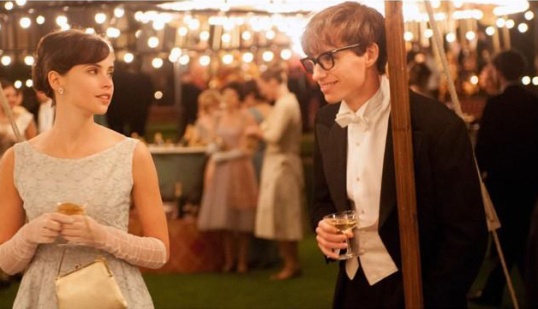
The Theory of Everything

Unbroken

FEATURE LENGTH MOTION PICTURE (FEATURE FILMS)
BEST SPECIAL MAKE-UP EFFECTS

Foxcatcher

Guardians of the Galaxy

Into the Woods

Maleficent

The Hobbit: The Battle of the Five Armies

FEATURE LENGTH MOTION PICTURE (FEATURE FILMS)
BEST CONTEMPORARY HAIR STYLING

Birdman

Guardians of the Galaxy

Interstellar

St. Vincent

Winter’s Tale

FEATURE LENGTH MOTION PICTURE (FEATURE FILMS)
BEST PERIOD AND/OR CHARACTER HAIR STYLING

Get on Up

Into the Woods

Selma

The Grand Budapest Hotel

The Theory of Everything

theory-of-everything-new

And here are the nominees for the 27th Annual USC Scripter Awards!  The Scripter Award specifically recognizes screenplays that were adapted from other works.

Gone Girl

The Imitation Game

Inherent Vice

The Theory of Everything

Wild

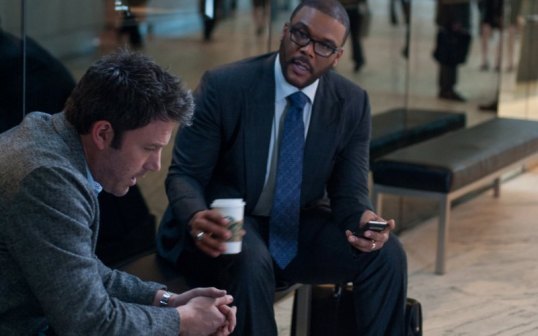
Tyler Perry in Gone Girl


2014 in Review: Lisa Marie’s 26 Favorite Films of 2014


Well, here we are!  This is my favorite part of the TSL’s look back at the previous year!  Below, you’ll find my picks for the 26 best films of 2014!

(Why 26?  Because Lisa doesn’t do odd numbers.)

Guardians-of-the-Galaxy-gang

Before looking at the list, there are two things that I would ask you to keep in mind.  First off, these are my picks and my picks alone.  There are 12 writers here at the TSL and we are all very opinionated individuals.  Needless to say, we don’t always agree.  Just because I love a film doesn’t mean that Arleigh, Leonard, Ryan, or anybody else here agree or disagrees.  (Even my own sister occasionally disagrees with me…)  When the other writers get around to posting their picks, I imagine that some of the films below will appear on those lists. And some of them most definitely will not.  Vive la difference!

Also, it should be understood that, unlike some film critics, I only list movies that I’ve actually seen.  Unfortunately, since I live in the middle of the country, that means that there are a few 2014 films that have yet to be released in my part of the world.  Over the upcoming two weeks, I plan to see Inherent Vice, Selma, American Sniper, A Most Violent Year, and The Imitation Game.  Any one of these films could potentially end up in my top 26, in which case I will update this post to reflect that.

(1/10/15 Update — I have updated the list to include Inherent Vice.  And, since I don’t do odd numbers, I also added Blue Ruin so that the list is currently an even 28 films.)

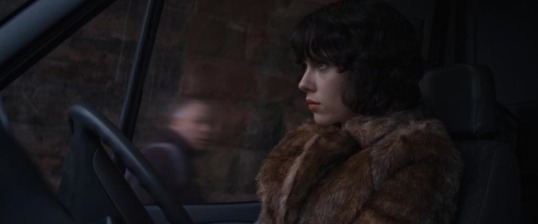
Under the Skin

As for my list, as I look over it, I have to admit that I’m a little bit surprised by some of the films that made the biggest impression on me this year.  Whereas in previous years, my favorite films were far outside of the mainstream, my favorite film of 2014 was the epitome of blockbuster entertainment.  The list is an interesting combination of spectacle and existential dread, featuring everything from the latest entries in the Marvel Cinematic Universe to a few neglected masterpieces of ennui.

(If you’d like to see my picks for 2010, 2011, 2012, and 2013, click on the links!)

reese-witherspoon-wild-slice

And without further ado, here’s the list!

  1. Guardians of the Galaxy
  2. Wild
  3. Boyhood
  4. Under the Skin
  5. The LEGO Movie
  6. Nightcrawler
  7. The Fault In Our Stars
  8. Foxcatcher
  9. Palo Alto
  10. The Grand Budapest Hotel
  11. Captain America: The Winter Soldier
  12. Joe
  13. Birdman
  14. Venus in Fur
  15. A Field in England
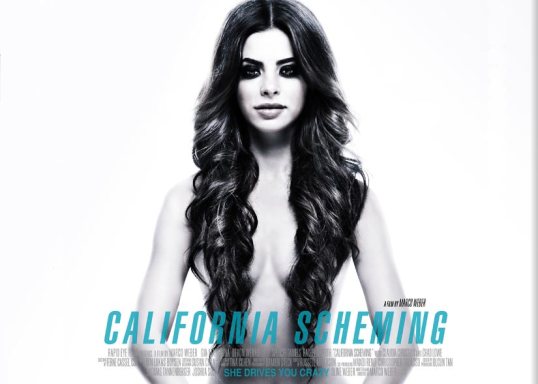
  16. California Scheming
  17. Gone Girl
  18. Chef
  19. Snowpiercer
  20. Cold In July
  21. Jodorowsky’s Dune
  22. Whiplash
  23. Inherent Vice
  24. Begin Again
  25. The Purge: Anarchy
  26. Devil’s Due
  27. Only Lovers Left Alive
  28. Blue Ruin

Agree?  Disagree?  Let me know in the comments below!

CaliforniaScheming

Previous Entries In TSL’s Look Back At 2014

  1. 2014 In Review: Things Dork Geekus Dug In 2014 Off The Top Of His Head
  2. 2014 In Review: The Best Of Lifetime and SyFy
  3. 2014 In Review: Lisa’s Picks For The 16 Worst Films Of 2014
  4. 2014 In Review: 14 Of Lisa’s Favorite Songs Of 2014
  5. 2014 In Review: Necromoonyeti’s Top 10 Metal Albums of 2014
  6. 2014 In Review: 20 Good Things Lisa Saw On TV In 2014
  7. 2014 In Review: Pantsukudasai56’s Pick For The Best Anime of 2014
  8. 2014 in Reivew: Lisa’s 20 Favorite Novels of 2014
  9. 2014 In Review: Lisa’s Top 10 Non-Fiction Books of 2014

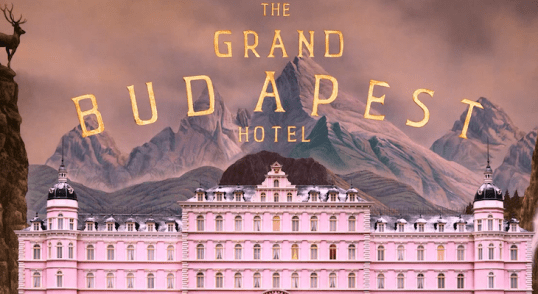
A Few Very Late Thoughts On Wes Anderson’s The Grand Budapest Hotel


grand-budapest-hotel

It took me a while to come around to appreciating The Grand Budapest Hotel.

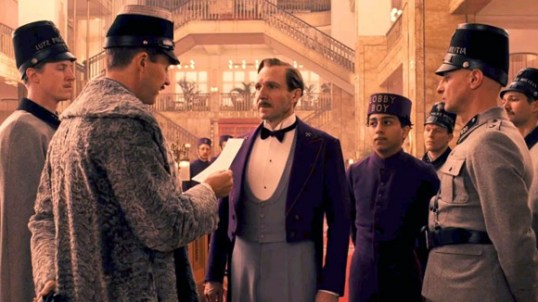
When I first saw Wes Anderson’s latest film, way back in March, I have to admit that I was somehow both impressed and disappointed.  The film’s virtues were obvious.  Ralph Fiennes gave a brilliant lead performance as Gustave, the courtly and womanizing concierge of the Grand Budapest Hotel.  As played by Fiennes, Gustave came to represent a certain type of old world elegance that, I’m assuming, died out long before I was born.  As is typical of Anderson’s film, The Grand Budapest Hotel was visual delight.  Even when the film’s convoluted storyline occasionally grew self-indulgent, The Grand Budapest Hotel was always interesting and fun to watch.

At the same time, I had some issues with The Grand Budapest Hotel.

One of the major ones — and I will admit right now that this will seem minor to some of you — is that halfway through the film, a cat is killed.  The evil Dimitri Desgoffe von Taxis (Adrien Brody) is attempting to intimidate a nervous lawyer, Kovacs (Jeff Goldblum).  Kovacs’s owns a cat and, at one point, Dimitri’s henchman, Jopling (Willem DaFoe), tosses the cat out of a window.  Kovacs runs to window and sees his dead cat splattered on the sidewalk below…

And this is when the audience in the theater laughed and I got very angry.

To me, there was nothing funny about killing that man’s cat.  But the more I’ve thought about it, the more that I’ve come to realize that my reaction had more to do with the audience than the film.  The film was not saying that the cat’s death was funny.  The film was saying that Dimitri and Jopling were evil and dangerous, as their actions throughout the film would demonstrate.  It was the audience that decided, since Grand Budapest Hotel is full of funny moments and has the off-center style that one has come to expect from Wes Anderson, that meant every scene in the film was meant to be played strictly for laughs.  The fact of the matter is that a typical Wes Anderson film will always attract a certain type of hipster douchebag.  They were the ones who loudly laughed, mostly because they had spent the entire movie laughing loudly in order to make sure that everyone around them understood that they were in on the joke.

But that’s not the fault of the film.  Despite what you may have heard and what the Golden Globes would have you believe, The Grand Budapest Hotel is not a comedy.  For all the deliberately funny and quirky moments, The Grand Budapest Hotel is actually a very serious film.  For all of the slapstick and for all of Ralph Fiennes’s snarky line readings, The Grand Budapest Hotel ultimately ends on a note of deep melancholy.

When I first saw The Grand Budapest Hotel, it seemed like it was almost too quirky for its own good.  And, to be honest, I could still have done without some of Anderson’s more self-indulgent touches.  The sequence at the end, where Gustave, who has been framed for murder, gets help from a series of his fellow hotel concierges started out funny but, as everyone from Bill Murray to Owen Wilson put in an appearance, it started to feel less like the story of Gustave and more like the story of all of Wes Anderson’s famous friends.

However, the more I’ve thought about it (and The Grand Budapest Hotel is a film that I’ve thought about a lot over the past year), the more I’ve realized that the quirkiness is only a problem if you made the mistake of thinking that the film is meant to be taken literally.

The more I thought about it, the more obvious it became that the most important scenes in The Grand Budapest Hotel were to be found at the beginning and the end of the film.

The film opens with a teenage girl sitting in front of the grave of a great author.  She opens a book and starts to read.

As soon as the girl starts to read, we flashback 29 years to 1985 where the author (Tom Wilkinson) sits behind his office desk and starts to talk about the time that he visited the Grand Budapest Hotel.  

We flashback again to 1969, where we see how the author (now played by Jude Law) met the owner of the Grand Budapest Hotel, a man named Zero (played by F. Murray Abraham).  Over dinner, Zero tells the author the story of how he first came to the Grand Budapest and how he eventually came to own the hotel.

And again, we go back in time, this time to 1932.  We see how the young Zero (Tony Revolori) first met and came to be the protegé of Gustave (Ralph Fiennes).  We see how Gustave taught Zero how to be the perfect concierge.  Eventually, Gustave would be framed for murdering a guest, Zero would meet and fall in love with Agatha (Saoirse Ronan), and then Zubrowska (the fictional Eastern European country in which this all takes place) would be taken over by fascists who would eventually claim the hotel as their own.

After the story of Gustave, Zero, and Agatha has been told, we suddenly flash forward to the author talking to Zero and then to the old author telling the story to his grandson and then finally back to the teenage reader sitting in the cemetery.

In other words, the Grand Budapest Hotel may be the story of Zero but we’re experiencing it through the memories of the author as visualized by the reader.  Gustave, Zero, and the entire Grand Budapest Hotel are not just parts of a story.  Instead, they become symbols of an old way of life that, though it may have been lost, still exists in the memories of old travelers like the author and the imaginations of young readers like the girl in the cemetery.

As I said at the start of this, I was vaguely disappointed with The Grand Budapest Hotel when I first saw it but, perhaps more than any other movie that I saw last year, this has been a film that I haven’t been able to get out of my mind.  Having recently rewatched the film on HBO, I can also attest that both The Grand Budapest Hotel and Ralph Fiennes’s performance not only hold up on a second viewing but improve as well.

I still stand by some of my original criticisms of The Grand Budapest Hotel.  I still wish that cat had not been thrown out the window, even though I now understand that Anderson’s main intent was to show the evil of Dimitri and Jopling.  And I still find some of the cameos to be jarring, precisely because they take us out of the world of the film.

But you know what?

Despite those flaws, The Grand Budapest Hotel is still a unique and intriguing film.  When I sat down tonight and made out my list of my top 26 films of 2014, I was not surprised that Grand Budapest Hotel made the list.  But I was a little bit surprised at how high I ended up ranking it.

But then I thought about it and it all made sense.
The-Grand-Budapest-Hotel-580


Film Review: The Woman In Black: The Angel of Death (dir by Tom Harper)


The-Woman-in-Black-poster-excerpt

Welcome to January!

This is the time of year the studios release the films that they don’t have much faith in, hoping to make a little money while all of the critics and more discriminating audiences are distracted by the Oscar race.  Typically, films are released in January that the studios are specifically hoping will be forgotten by June.

Case in point: the horror sequel The Woman In Black 2: The Angel of Death.

Now, as you all know, I love horror movies.  It’s rare that I can’t find something to enjoy about a horror movie, whether it’s the atmosphere or the suspense or just the chance to do some old-fashioned screamed.  Some of my favorite horror films have been the ones that — much like The Woman In Black 2 — were snarkily dismissed by most mainstream critics.  And, needless to say, I’m a natural born contrarian.  The lower a film’s score on Rotten Tomatoes, the more likely it is that I will find a reason to defend it.

Taking all of that into consideration, it’s hard for me to think of any film, horror or not, that has left me feeling as indifferent as The Woman In Black 2.  I would not say that I was terribly impressed by the film but, at the same time, I didn’t hate it either.  Instead, I felt it was an amazingly average film and I was just incredibly indifferent to the whole thing.

The Woman In Black 2: Angel of Death picks up 30 years after the end of the first Woman In Black.  It’s World War II and German bombs are falling on London.  A group of school children are evacuated to the countryside under the care and watch of two teachers, Eve (Phoebe Fox) and Jean (Helen McCrory).  Naturally enough, they end up taking refuge in the abandoned Eel March House.  The Woman in Black is still haunting the house and she’s determined to claim all of the children as her own.

While Jean refuses to accept that anything paranormal is happening at the house, Eve quickly comes to realize that they are not alone and that the Woman in Black seems to be particularly determined to claim young Edward (Oaklee Pendergast).  Working with Harry (Jeremy Irvine), a pilot who is deathly afraid of water, Eve tries to save the children…

The Woman in Black 2 goes through all the motions.  Floorboards creek.  Doors open and slam shut on their own.  The Woman in Black often appears standing in the background and occasionally jumps into the frame from out of nowhere while screaming.  The film is darkly lit and there’s a lot of atmospheric shots of the fog covered moors.

But, ultimately, the film never really establishes an identity of its own.  Instead, it feels like a collection of outtakes from every other haunted house film that has been released lately.  While I wasn’t a huge fan of the first Woman in Black, I did think that it benefited from having a sympathetic lead character but the cast here seems oddly detached from the story that they’re supposed to be telling.  You never believe in their characters and, as a result, you never really buy into any of the menace surrounding them.

And, the end result, is indifference.

the-woman-in-black-2

Here’s The Latest From The Guilds: WGA, CDG, and ASC


Timothy Spall in Mike Leigh's Mr Turner

Here’s the latest news from Awards Season!  Today, three more guilds announced their nominees for the best of 2014.

First off, the American Society of Cinematographers (ASC) nominated the following five films:

Birdman

The Grand Budapest Hotel

The Imitation Game

Mr. Turner

Unbroken

And then, the Costume Designers Guild (CDG) nominated the following fifteen films:

Excellence in Contemporary Film
Birdman – Albert Wolsky
Boyhood – Kari Perkins
Gone Girl – Trish Summerville
Interstellar – Mary Zophres
Wild – Melissa Bruning

Excellence in Period Film
The Grand Budapest Hotel – Milena Canonero
The Imitation Game – Sammy Sheldon Differ
Inherent Vice – Mark Bridges
Selma – Ruth E. Carter
The Theory of Everything – Steven Noble

Excellence in Fantasy Film
Guardians of the Galaxy – Alexandra Byrne
The Hobbit: The Battle of the Five Armies – Bob Buck, Lesley Burkes-Harding, Ann Maskrey
The Hunger Games: Mockingjay, Part 1 – Kurt and Bart
Into the Woods – Colleen Atwood
Maleficent – Anna B. Sheppard, Jane Clive

(Is anybody else surprised to learn that Interstellar is apparently a contemporary film?)

And finally, here are the Writer’s Guild (WGA) nominations!  As always, the WGA nominations should be taken with a grain of salt as several Oscar front runners — Birdman, Selma, The Theory of Everything, and Mr. Turner, had been ruled ineligible for a WGA nomination.  Over the years, many films that were ineligible for a WGA nomination have gone on to win Oscars for original and adapted screenplay.

ORIGINAL SCREENPLAY
Boyhood, Written by Richard Linklater; IFC Films
Foxcatcher, Written by E. Max Frye and Dan Futterman; Sony Pictures Classics
The Grand Budapest Hotel, Screenplay by Wes Anderson; Story by Wes Anderson & Hugo Guinness; Fox Searchlight
Nightcrawler, Written by Dan Gilroy; Open Road Films
Whiplash, Written by Damien Chazelle; Sony Pictures Classics

ADAPTED SCREENPLAY
American Sniper, Written by Jason Hall; Based on the book by Chris Kyle with Scott McEwen and Jim DeFelice; Warner Bros.
Gone Girl, Screenplay by Gillian Flynn; Based on her novel; 20th Century Fox
Guardians of the Galaxy, Written by James Gunn and Nicole Perlman; Based on the Marvel comic by Dan Abnett and Andy Lanning; Walt Disney Studios Motion Pictures
The Imitation Game, Written by Graham Moore; Based on the book Alan Turing: The Enigma by Andrew Hodges; The Weinstein Company
Wild, Screenplay by Nick Hornby; Based on the book by Cheryl Strayed; Fox Searchlight

DOCUMENTARY SCREENPLAY
Finding Vivian Maier, Written by John Maloof & Charlie Siskel; Sundance Selects
The Internet’s Own Boy: The Story of Aaron Swartz, Written by Brian Knappenberger; FilmBuff
Last Days in Vietnam, Written by Mark Bailey & Kevin McAlester; American Experience Films
Red Army, Written by Gabe Polsky; Sony Pictures Classics

richard-linklaters-boyhood-movie-film-still-ellar-coltrane

Here’s The Trailer For The Lazarus Effect!


So, here’s yet another trailer.  I say yet another because the trailer for The Lazarus Effect resembles the trailer for just about every other horror film that will probably be released during the first half of 2015.  However, I’m still sharing this trailer because the film appears to have a cast that’s much more interesting than its premise.  Not only do we have Olivia Wilde and mumblecore pioneer Mark Duplass but it also features none other than Community‘s Donald Glover!

Unfortunately, the trailer seems to indicate just what exactly Glover’s fate is going to be in this particular film.  Between Donald Glover in the trailer for The Lazarus Effect, Joel McHale in Deliver Us From Evil, and Alison Brie in Scream 4, what’s the deal with Community actors dying in horror movies?

2014 In Review: Lisa’s Top 10 Non-fiction Books of 2014


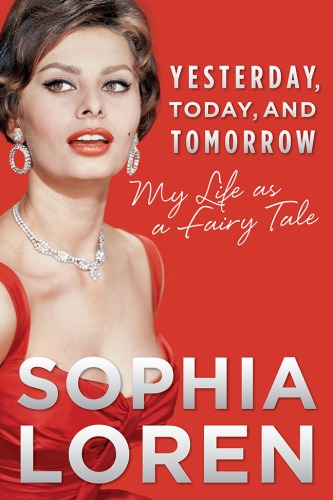
Yesterday_Today_and_Tomorrow_Cover_embed


I should admit that the title of this post is misleading.  While it is true that listed below are 10 of my favorite non-fiction books of 2014, I’ve specifically limited my picks to books that dealt with entertainment, pop culture, and the creative process.  With that in mind, here are my 10 favorite non-fiction books of 2014:

(And yes, you should read everyone of them.)

  1. Yesterday, Today, Tomorrow: My Life As A Fairy Tale by Sophia Loren
  2. Five Came Back: A Story of Hollywood and the Second World War by Mark Harris
  3. Life In Motion: An Unlikely Ballerina by Misty Copeland
  4. Werner Herzog: A Guide for the Perplexed by Paul Cronin
  5. My Salinger Year by Joanna Rakoff
  6. The Year of Reading Dangerously by Andy Miller
  7. Tinseltown: Murder, Morphine, and Madness at the Dawn of Hollywood by William J. Mann
  8. Scandals of Classic Hollywood: Sex, Deviance, and Drama From the Golden Age of American Cinema by Anne Helen Petersen
  9. As You Wish by Cary Elwes
  10. Heavy Metal Movies by Mike McPadden

primary_FiveCameBack-678x1024

Tomorrow, I conclude my look back at the previous year with the list that everyone has been waiting for: my 26 top films of 2014!

Previous Entries In TSL’s Look Back At 2014

  1. 2014 In Review: Things Dork Geekus Dug In 2014 Off The Top Of His Head
  2. 2014 In Review: The Best Of Lifetime and SyFy
  3. 2014 In Review: Lisa’s Picks For The 16 Worst Films Of 2014
  4. 2014 In Review: 14 Of Lisa’s Favorite Songs Of 2014
  5. 2014 In Review: Necromoonyeti’s Top 10 Metal Albums of 2014
  6. 2014 In Review: 20 Good Things Lisa Saw On TV In 2014
  7. 2014 In Review: Pantsukudasai56’s Pick For The Best Anime of 2014
  8. 2014 in Reivew: Lisa’s 20 Favorite Novels of 2014

International Trailer: Good Kill


Everyone seems to be in agreement that Ethan Hawke is going to get an Oscar nomination next week for his performance in Boyhood.  Everyone also seems to be in agreement that there’s no way anyone other than J.K. Simmons is going to actually win the Oscar for best supporting actor.  But that’s okay.  Whether you’re watching him in Before Midnight or Dead Poets Society or even Sinister, one thing that is always obvious is that Ethan Hawke is a very good actor.  And he will definitely have other opportunities to win an Oscar or two.

He might even get another chance later this year, with the release of Good Kill.  In Good Kill, he plays a drone pilot who spends his day dropping bombs on people on the other side of the world.  As the job starts to take a toll on both his family and his sanity, he wonders whether the “mission” is really worth it.

This film got a lot of attention at the Toronto Film Festival last year and it was there that it was picked up by Voltage Pictures for a 2015 release.  And, just from watching the international trailer that was released yesterday, Good Kill looks exactly like the type of film that’s always more popular with festival goers than it is with mainstream audiences.  The trailer looks heavy-handed, with Bruce Greenwood doing his Bruce Greenwood thing as Hawke’s commanding officer and January Jones looking way too glamorous to play Hawke’s estranged wife.

But, even if the film itself looks like it might have problems, Ethan Hawke’s performance looks impressively intense.  Of course, we won’t know how impressive (or non-impressive, as the case may be) Hawke’s performance actually is until the film itself is released.

Here’s the international trailer for Good Kill!

Film Review: Wild (dir by Jean-Marc Vallee)


reese-witherspoon-wild-slice

Wild opens with Cheryl Strayed (played by Reese Witherspoon) standing on the edge of a cliff.  She has been hiking for days and, because her hiking boots are too small, she’s limping and in a great  deal of pain.  She takes off a boot and a sock and stares at her bloody big toe.  With trembling fingers, she removes what is left of her big toenail.  And then, she throws her boot over the edge of the cliff while screaming, “FUCK YOU!”

And, from that moment, Wild had me.

For the next two hours, I sat there and I was absolutely enthralled as Cheryl, an aspiring writer and a recovering drug addict who was still struggling to come to terms with the death of her mother (played, in heart-breaking flashbacks, by Laura Dern), hiked her way from the Mexican border up to the Canadian border.  I watched as she learned how to survive in the wilderness, how she cautiously learned to trust some of her fellow hikers, and as she dealt with sexist rangers and creepy hunters.

And there were a lot of reasons why Wild held me so enthralled.  There was Reese Witherspoon’s performance, for one thing.  Reese is on screen during every minute of Wild and, for a lot of that time, she’s alone with her thoughts and her emotions.  She gives an amazingly focused performance, one that should regain her some of the respect that she sacrificed by appearing in movies like This Means War and publicly asking, “Do you know who I am?”  Both the film and Reese’s performance resist the temptation to idealize Cheryl.  Instead, both the film and the performance feel real and because Cheryl comes across as a real person (flaws and all), it makes her journey and her achievement all the more powerful.

I couldn’t help but relate to Cheryl.  Like her, I’m an aspiring writer.  Like her, I’m still learning how to deal with the loss of my mom.  Like her, I have trust issues.  Like her, I am sometimes too stubborn for my own good.  Like her, I like to leave quotes in guest books.  Like her, I always pack a few paperbacks before I go on a trip and I like to write in my journal.  Like Cheryl, I’m a survivor and I’m proud of it.

Unlike Cheryl, however, I’ve never gone hiking and I doubt if I ever will.  As much as I loved Wild (and it’s definitely one of my favorite films of 2014), it didn’t leave me with any great desire to go on a hike.  That’s largely because of that first scene.  When Cheryl threw away her boots and screamed, I thought to myself, “That would so be me.”  Of course, the difference is that Cheryl did that after hiking for a month.  I would probably end up doing that after the 2nd day.  And then I’d turn around, go back home, and spend the weekend watching Netflix.

But here’s the thing: Wild is not really about hiking.  Wild is about the journey.  What’s important is not that Cheryl hiked but that Cheryl accomplished what she set out to do.  No matter how difficult it got, no matter how many people told her she should give up, Cheryl walked from Mexico to Canada.  By the end of the film, I felt like, if Cheryl could do that even with boots that were too small, than there was nothing that I could not do.

As a result, Wild is not only one of the best films of 2014.

It’s the most empowering as well.


Film Review: Palo Alto (dir by Gia Coppola)


Palo Alto came out in May of last year and it never quite got as much attention as it deserved.  A lot of that is because the film is based on a collection of short stories by James Franco and a lot of critics apparently decided ahead of time that Palo Alto was some sort of vanity project.

Of course, nothing could be further from the truth.  Palo Alto is actually one of the better films of 2014, a minor masterpiece of ennui that also serves as a promising directorial debut for Gia Coppola.  (Of course, Gia’s aunt Sofia made her directorial debut with an ennui-centric literary adaptation of her own, The Virgin Suicides.)

Palo Alto follows several teenagers over the course of one school year.  (It’s no coincidence that, at one point, Fast Times At Ridgemont High shows up on a TV screen.)  The film itself is deceptively plotless, with its occasionally drifting narrative mirroring the lives of protagonists who literally have no direction.  April (Emma Roberts), who is too intelligent to really fit in with either her shallow friends or her flakey family, plays soccer and has a crush on both Teddy (Jack Kilmer) and her coach, Mr. B (James Franco, playing an unapologetically sleazy character).  Teddy is a talented artist who, after a drunk driving accident, finds himself on probation and sentenced to do community service.  Making it difficult for Teddy to stay out of trouble is his best friend, Fred (Nat Wolff), who hides his sociopathic nature behind a constant stream of jokes.  And then there’s Emily (Zoe Levin), who hides her insecurities behind a wall of blow jobs and demeaning sexual encounters.

As for the adults of Palo Alto, they’re for the most part a collection of grim but ineffective authority figures and parents who don’t want to grow up.  Mr. B hides his predatory nature behind a kind smile and a paternal nature.  April’s stepfather (Val Kilmer) is permanently stoned.  Teddy’s mother is unconcerned with her son’s drinking.  Meanwhile, Fred’s father (Chris Messina) offers weed to and hits on his son’s friends.

And it may all sound a bit familiar.  Every year, it seems like there is a countless number of indie films about directionless teenagers and irresponsible parents.  But Palo Alto is distinguished by Gia Coppola’s confident and frequently surreal direction.  Coppola has a good eye for detail and, as a result of the gorgeous cinematography of Autumn Durald, the film is always interesting to watch regardless of how familiar the story may seem.  The entire cast does a good job as well, with Emma Roberts and Nat Wolff as clear stand-outs.

And, I have to admit, that on a personal level, there was a lot of Palo Alto to which I related.  Whether it was the awkward conversations between April and Teddy or the sad look on Emily’s face as she stared at her reflection, there were so many small moments that just felt true.  As I watched Palo Alto, it was impossible for me not to think about my own time in high school.  I knew quite a few Teddys.  I even knew a few Freds.  And sometimes, I was April and then other times, I could have been any of the other characters who wander throughout Palo Alto.

Don’t listen to the haters.  Palo Alto is more than worth your time.