Music Video Of The Day: Dangerous by Olivia Krash (2016, dir by ????)


This video features Olivia Krash covering one of my favorite songs, Big Data’s Dangerous!

Covers are always interesting.  I like covers when they bring something new to the song and I think that Olivia Krash definitely does that with her version of Dangerous.  Her version is a bit less paranoid than the original version that was performed by Big Data and Joywave.  It takes an anthem to suspicion and turns it into a party song and there’s nothing wrong with that.  In the future, all parties will be paranoid.  Really, they already should be.  I remember there was a Brinks Home Security commercial that featured a woman throwing a house warming party and discovering, to her surprise, that she didn’t know one of the guests.  His name was AJ and later, he broke into her house.  If she had been properly paranoid, she would have said, “Hey, what’s the stranger doing at my party!?”  Instead, she was just like, “Who’s that?  I don’t know him!  Ha ha!”  It’s not so funny once you’ve got a broken window that you’re going to have to pay to get repaired, is it?

My least favorite covers, by the way, are the ones that sound like duplicates of the original.  I mean, what’s the point?  I’m also not a fan of extremely overdramatic cover versions.  For instance, there used to be a WGU commercial that featured the most over-the-top version of The Times They Are A Changing that I had ever heard and it was so terrible that I always had to hit mute whenever I came across that commercial.  I’m also not a huge fan of the song Amazing Grace, largely because everyone who sings it always seems like they’re on the verge of tears and that’s just not fun to watch.  Plus, I just take issue with any song that requires me to describe myself as being a wretch.  I mean, I like songs that make me feel confident, y’know?  Calling myself a wretch would be the exact opposite of that.

Enjoy!

TV Review: Night Gallery 2.1 “The Boy Who Predicted Earthquakes/Miss Lovecraft Sent Me/The Hand of Borgus Weems/Phantom of What Opera?”


The second season of Night Gallery premiered on September 15th, 1971.  Once again, Rod Serling led viewers through a darkened museum, inviting them to look upon macabre paintings and imagine the story behind image.

The first episode had four — that’s right, four! — different stories!  Apparently, the show’s producers demanded that, for the 2nd season, each episode feature shorter stories along with some light-heated segments.  From what I’ve read, Rod Serling was not particularly happy with the directive and it’s perhaps significant that, after writing every story featured in Night Gallery‘s first season, he only wrote one of the stories featured in the second season premiere.
The Boy Who Predicted Earthquakes (dir by John Badham, written by Rod Serling)

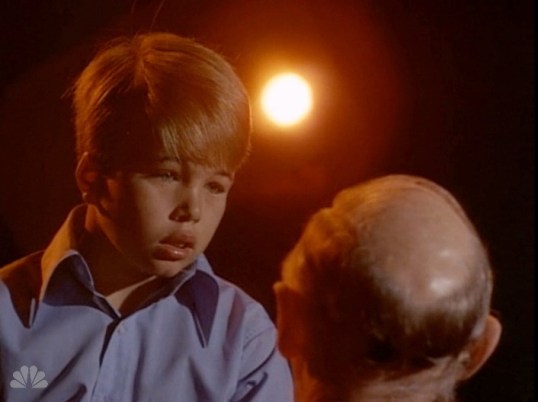
Herbie (played by 12 year-old Clint Howard, younger brother of Ron) is a little boy with a very special gift.  He can see the future.  He seems like a normal child, the type who rambles about random subjects except that, at random, he’ll suddenly stop and ominously predict the future.  After Herbie correctly predicts both the rescue of a missing girl and an earthquake, Herbie is given his own TV show.  For a year, Herbie makes predictions, all of which come true.  Then, suddenly, Herbie refuses to shares his latest prediction and says that he doesn’t want to do the show anymore.  What has Herbie seen and is it a good thing or a bad thing?

The Boy Who Predicted Earthquakes gets the second season of Night Gallery off to a good start.  Centered by a natural performance from Clint Howard, The Boy Who Predicted Earthquakes is an intelligently written and thought-provoking story.  Not only does it examine the burden of being able to see the future but it’s also a provocative look at how society exploits the gifted.  With the exception of Herbie’s grandfather (William Hansen), the people around Herbie are less concerned with what he predicts than that people keep watching.  The segment ends on an appropriately dark note, one that will keep the viewer thinking.
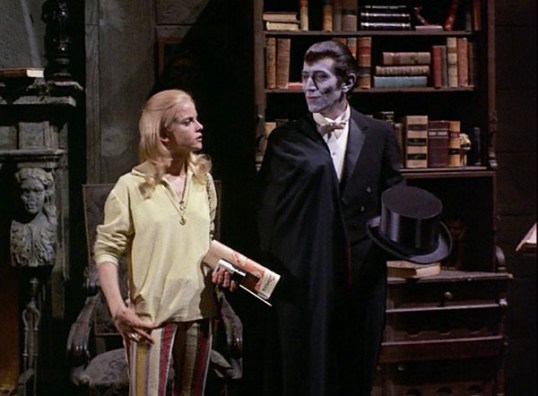
Miss Lovecraft Sent Me (dir by Gene Kearney, written by Jack Laird)

A gum-chewing babysitter (Sue Lyon) show up for her latest job.  It’s at a castle!  And the owner of the castle (played by Joseph Campanella) has gray skin, is wearing a cape, and has a Transylvanian accent!  What could it all mean?

This is a short comedic segment.  Apparently, the producer of Night Gallery, Jack Laird, had the idea to liven things up with sketches like this one.  Serling was apparently not a fan of the idea but Miss Lovecraft Sent Me isn’t that bad.  It’s silly and insubstantial because Joseph Campanella and Sue Lyon handled their roles well.  It’s impossible not to laugh when the babysitter reads aloud the names of the books that Campanella has sitting on his bookshelf.
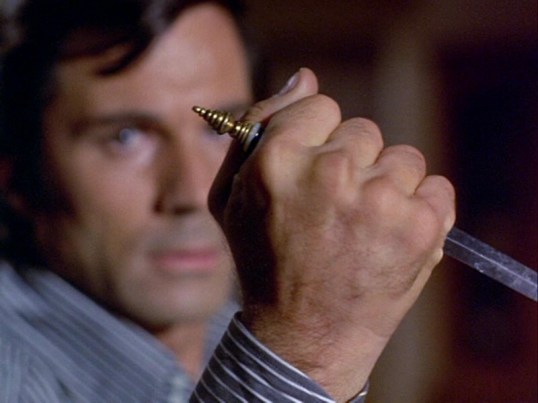
The Hand of Borgus Weems (dir by John M. Lucas, written by Alvin Sapinsley)

Peter Lacland (George Maharis) sits in a doctor’s office and asks Dr. Ravadon (Ray Milland) to remoe his right hand.  Peter explains that his right hand has a mind of its own and that it keeps trying to kill everyone who Peter comes into contact with.  Peter explains that his hand has been possessed!

There’s a surprisingly large number of stories out there about possessed hands.  The Hand of Borgus Weems doesn’t necessarily bring anything new to the genre and it gets a bit bogged down with its flashback structure but it’s still an enjoyably creepy little segment, featuring good performances from George Maharis and Ray Milland.  Possessed hands are also creepy, no matter what.  Like The Boy Who Predicted Earthquakes, it also has an effective ending, which is quite a contrast to the often insubstantial conclusions of Night Gallery’s first season.
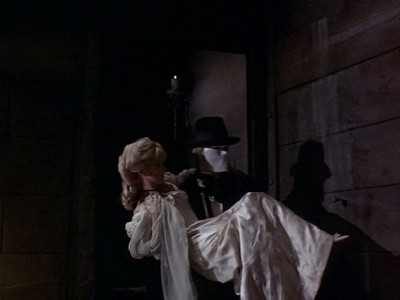
Phantom Of What Opera?  (written and dir by Gene Kearney)

This is a short, 4-minute comedic story — a skit really — featuring Leslie Nielsen as the Phantom of the Opera and Mary Ann Beck as Christine. This version starts out like a typical Phantom segment, with the Phantom kidnapping Christine, taking her down to the dungeon, and telling her never to remove his mask.  Christine, of course, removes his mask while he’s playing the organ just for him to then discover that she’s also wearing a mask.  It all leads to love and a happy ending!  It’s kind of a sweet segment, actually.

So the 2nd season of Night Gallery got off to a pretty good start!  Would future episodes continue the trend?  We’ll find out soon as I continue to watch Night Gallery.

Previous Night Gallery Reviews:

  1. The Pilot
  2. The Dead Man/The Housekeeper
  3. Room With A View/The Little Black Bag/The Nature of the Enemy
  4. The House/Certain Shadows on the Wall
  5. Make Me Laugh/Clean Kills And Other Trophies
  6. Pamela’s Voice/Lone Survivor/The Doll
  7. They’re Tearing Down Tim Riley’s Bar/The Last Laurel
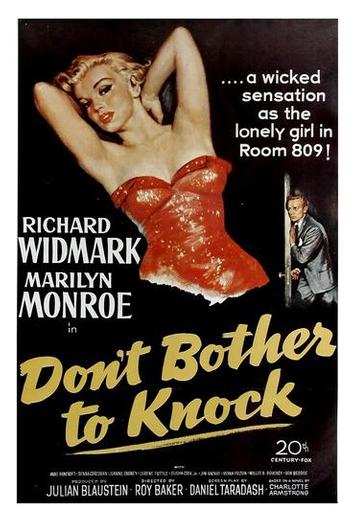
Scenes That I Love: Marilyn Monroe in Don’t Bother To Knock


Marilyn Monroe would have been 94 years old today.

Unfortunately, Marilyn died when she was just 36 years old and also when she was only starting to get a chance to reveal what she was truly capable of as an actress.  It’s a shame, because I would have liked to have seen what type of roles she would have played in her 40s and her 50s.  Would she have eventually become a respected, award-winning character actor or would she have ended up like Bette Davis, doing cameos in films that weren’t particularly worthy of her talents?  Who knows but it’s a shame that the world will never get to find out.

For her birthday, I’m going to share a scene from one of her earlier films, 1952’s Don’t Bother To Knock.  In this film, Marilyn plays an unstable woman who is staying at a hotel.  Her cousin (played by Elisha Cook, Jr.) gets her job as a babysitter but is shocked to find out that Marilyn has been trying on her employer’s clothes.  After getting admonished by her cousin and pretending to be sorry, she proceeds to then summon another gust (played by Richard Widmark) over to her room.

It’s a simple scene but it’s wonderfully played by Monroe.  This was one of her first truly dramatic roles and she does a good job with it.

From Don’t Bother To Knock, here is a scene that I love:

4 Shots From 4 Films: Special Morgan Freeman Edition


4 Shots From 4 Films is just what it says it is, 4 shots from 4 of our favorite films. As opposed to the reviews and recaps that we usually post, 4 Shots From 4 Films lets the visuals do the talking!

Today is Morgan Freeman’s 83rd birthday!

Morgan Freeman is one of my favorite actors but then again, I think he’s one of everyone’s favorite actors.  He’s an icon, not just for that famous voice but also because he’s a damn good actor.  Though he seems to get cast in a lot of mentor roles, he’s shown that he’s capable of playing a wide variety of roles, from heroes to villains to Gods.

(I have to admit that I would be so intimidated if I ever met Morgan Freeman, if just because I know that if I accidentally said something stupid, he’d probably give me a look of such utter disappointment that it would probably haunt me for the rest of my life.)

Here are….

4 Shots From 4 Films

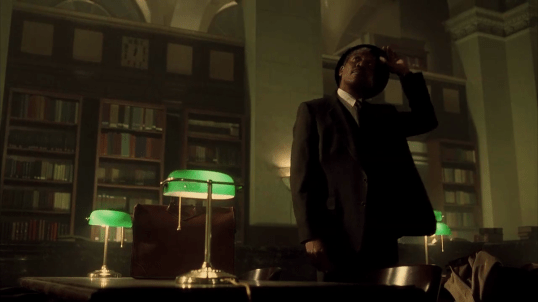
Seven (1995, dir by David Fincher)

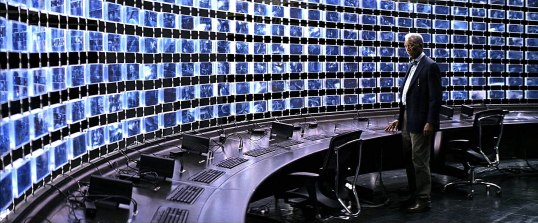
The Dark Knight (2008, dir by Christopher Nolan)

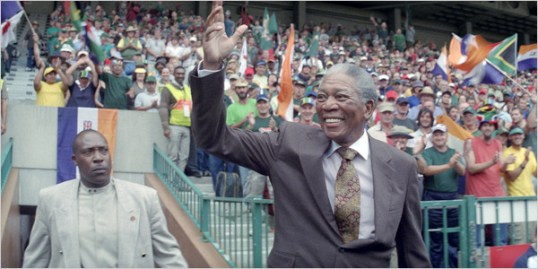
Invictus (2009, dir by Clint Eastwood)

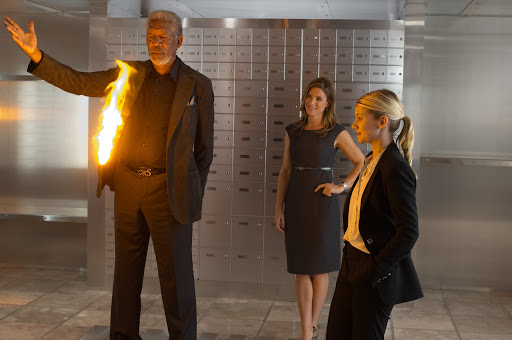
Now You See Me (2013, dir by Louis Leterrier)

An Offer You Can’t Refuse #1: The Public Enemy (dir by William Wellman)


For this month, I’ve decided to review movies about mobsters.

There’s no specific reason for that, beyond the fact that I just happen to love mobster movies.  Of course, a good gangster film is rarely just about crime.  Anyone who has ever seen The Godfather can tell you that.  At their best, American gangster films are about the American dream and the lengths that some will go to achieve it.

Plus, they’re just a lot of fun to watch.  Some of the greatest actors of all time made their mark in gangster films.

Take 1931’s The Public Enemy, for instance.

Produced during the final days of prohibition and the early years of the Great Depression, The Public Enemy tells the story of three boys who grew up poor.  Tom Powers (James Cagney) and his friend, Matt Doyle (Edward Woods) pursued a life of crime, rising through the ranks of organized crime before eventually meeting a tragic end.  The third, Mike Powers (Donald Cook), stayed on the straight-and-narrow path.  He went into the Marines and he rebuked his brother, Tom, when he discovered that Tom’s money was due to “blood and beer.”

The film opens and closes with a title card that basically tells us that Mike Powers has the right idea but, when you watch the film, you can’t help but wonder if maybe Tom had a point about his brother being kind of a sap.  Mike might be a decent citizen and he might have a chestful of medals as the result of his wartime heroics but what else does he have?  Tom Powers, meanwhile, has no education and, it would appear, no conscience, no real friends, and no one that he really loves and yet he becomes a rich man who is acquainted with powerful figures.  While Mike stays at home with their mother, Tom lives in an ornate penthouse.  When his first girlfriend (Mae Clarke) gets on his nerves, Tom shoves a grapefruit in her face and then gets an even more glamorous girlfriend, Gwen (Jean Harlow).  (Meanwhile, even dumb old Matt is doing okay for himself, marrying a woman played by Joan Blondell.)  It’s hard not to imagine that the film’s original audience — who were still reeling from the Stock Market Crash of 1929 — looked at Mike and Tom Powers and quickly decided that they’d much rather be a part of Tom’s life than Mike’s.  Even if Tom is destined for an early grave or a lifetime behind bars, at least he appears to be having fun.  Speaking for myself, I’d much rather go out with the guy who has nice clothe and his own luxury apartment than with the self-righteous dud who is still living at home with his mother.

Of course, another reason why we gravitate towards Tom Powers is because he’s played by James Cagney, who was one of the most charismatic of the stars of Hollywood’s Golden Age and whose performance still holds up today.  Cagney gives a ferocious performance, snarling out his lines and always moving like a caged animal, even when he’s just preparing to have breakfast.  He’s full of an energy that’s both dangerous and exciting to watch.  Cagney also brings a very powerful anger to the role of Tom Powers.  As played Cagney, Tom Power is not just a criminal because he’s greedy.  He’s also a criminal because he has no use for a society that he feels has rejected him since birth and which has never given him a fair chance.  He becomes wealthy not just because he wants money but because he wants to taunt everyone who ever said that he wouldn’t amount to anything.  He’s every crime is more than act of greed.  It’s also an act of rebellion, a joyful to a society that wants to tell people what they’re allowed to believe and do.  He’s the ultimate 1930s rebel, giving the the finger to not only the two Hoovers (Herbert and J. Edgar) but also to the good government leftists would be soon be swept into power with FDR.  Despite the fact that The Public Enemy was made nearly 90 years ago, there’s nothing creaky about Cagney’s performance.  It still feels vital and powerful today and it elevates the entire film.

The Public Enemy holds up surprisingly well.  The film may be close to 90 but Cagney’s ferocious performance still feels fresh and powerfully alive.


Music Video Of The Day: I Hate Everything About You by Three Days Grace (2003, dir by Steve Gainer)


Back when we were both in college, my friend Evelyn and I would often greet each other by loudly exclaiming, “I hate everything about you!”  That always got us a few weird looks but you have to understand that, at the time, we were both making a point about avoiding easy sentiment and …. well, we also liked getting weird looks because we felt like that was a sign that we were bringing down the establishment in some sort of way.  That may sound silly now and, to be honest, it sounded silly back then.  But still, we had fun and that’s the important thing.

Anyway, I Hate Everything About You is one of those songs that’s really appealing when you’re trying to be a rebel and you want the world to know how pissed off and disillusioned you are.  At the same time, it’s also a song that lends itself to all sorts of parody.  (Who knows how many people sang, “I.  Ate.  Everything.  About.  You!” back in the day?)  It’s a catchy song.  You can kind of dance to it.  You can play it really loud when you’re trying to freak out your mom.  The lyrics are fun to write inside your diary whenever you’ve had a bad day.

The music video features three people who hate everything about someone else.  One guy is being cheated upon by his girlfriend.  One girl is going out with the type of smirkey douchebag who has been killed in countless Lifetime films.  Another teenager has to deal with an abusive father.  They all go to a hill where they destroy stuff.  It’s kind of like how you’re supposed to set your lover’s pictures on fire if you break up.  Personally, I say keep the pictures and get a voodoo doll.  Just a few pokes from a sharp pin and you’ll have all the revenge you want!  And you won’t have to go to some ugly old hill either.  Voodoo is a revenge that you can practice from the safety of your own bedroom.  Voodo?  You do!

The music video was directed by Scott Winig.  The cinematography was done by Steve Gainer, who was also one of the credited cinematographers on Movie 43.  I mean, goddamn, you want to talk about hate.

Anyway, I hope that you’re not hating anyone right now.  I used to hate my neighbor because his dogs were always barking but then I remembered that karma is harsh and unforgiving.  This is indeed a disturbing universe, one that is perhaps ruled by the blind and dumb Azathoth.

Just a reminder: In his house at R’lyeh, dead Cthulhu waits dreaming.

Enjoy!

Lisa Marie’s Week In Review: 5/25/20 — 5/31/20


I started out this week happy that the lockdown restrictions were being eased across the country.  I’m ending under curfew (along with a lot of other people across the country) because of riots.  Who knows what next week will look like?

Here’s what I got watched and listened to this week:

Films I Watched:

  1. Alco Beat (1965)
  2. American Anthem (1986)
  3. Apollo 18 (2011)
  4. Bang The Drum Slowly (1973)
  5. Black Mama, White Mama (1973)
  6. The Bottle & The Throttle (1961)
  7. The Crossroads Crash (1973)
  8. The Cutting Edge (1992)
  9. An Education (2009)
  10. Highball Highway (1963)
  11. I Like Bikes, But…. (1978)
  12. Indiana Jones and the Last Crusade (1989)
  13. Joy Ride (1976)
  14. Last Prom (1980)
  15. The Man Who Shot Liberty Valance (1962)
  16. The Mule (2018)
  17. The Murder of Nicole Brown Simpson (2020)
  18. Night Gallery (1969)
  19. The Oblong Box (1969)
  20. Red Dawn (1984)
  21. Safety Belt for Susie (1962)
  22. Scream and Scream Again (1969)
  23. Stop Making Sense (1984)
  24. The Talking Car (1969)
  25. Terror Train (1980)
  26. The Time of their Lives (1946)
  27. Tomorrow’s Drivers (1954)

Television Shows I Watched:

  1. Bar Rescue
  2. The Bold and the Beautiful
  3. Community
  4. Daily Mass
  5. Days of Our Lives
  6. Doctor Phil
  7. General Hospital
  8. Ghost Whisperer
  9. It’s Always Sunny In Philadelphia
  10. Night Gallery
  11. Seinfeld
  12. Solemn Mass of Pentecost From Rome
  13. The Twilight Zone
  14. The Young and the Restless

Music To Which I Listened:

  1. Above & Beyond
  2. Adi Ulmansky
  3. Afrojack
  4. Alvin Risk
  5. Aoki
  6. Armin van Buuren
  7. Avicii
  8. Big Data
  9. Blanck Mass
  10. Bob Dylan
  11. Britney Spears
  12. The Chemical Brothers
  13. Cedric Gervais
  14. Coldplay
  15. The Crystal Method
  16. Daft Punk
  17. Deadmau 5
  18. Dillon Francis
  19. DJ Judaa
  20. DJ Snake
  21. Elle King
  22. Ellie Goulding
  23. Hayden James
  24. Icona Pop
  25. Jakalope
  26. Joywave
  27. Kedr Livanskiy
  28. Lady Gaga
  29. Lindsay Lohan
  30. Muse
  31. Neon Indian
  32. Olivia Krash
  33. Phantogram
  34. Saint Motel
  35. Siouxsie and the Banshees
  36. Swedish House Mafia
  37. Talking Heads
  38. Tiesto
  39. The Tom Tom Club
  40. Tove Lo
  41. twenty-one pilots
  42. UPSAHL
  43. Zedd

Links From the Site:

  1. Case reviewed The Chilling Adventures of Sabrina!
  2. Erin was busy this week, sharing music videos from Justin Moore, Filter, Chelsea Dash, 98 Degrees, O-Town, Mandy Moore, and Paula Cole!  She also wrote about Memorial Day and The Rookie.  She shared the covers of Top Notch and also shared: An Explosion of Color, True Gang Life, Odds Against Tomorrow, The Lusty Men, Film Fun, A Matter of Morals, and The Case Of The Caretaker’s Cat!
  3. Jeff reviewed Framed, Moonrunners, The Hunter, One Man And His Shoes, The Paper Boy, Red Zone Cuba, and Operation Thunderbolt!
  4. Ryan reviewed Spewey, Four Stories, and Across the Diner!
  5. I reviewed the pilot for Night Gallery, followed by episodes one, two, three, four, five, and six!  I shared a scene that I loved from The Man Who Shot Liberty Valance!  I paid tribute to Peter Cushing, Christopher Lee, Vincent Price, Josef von Sternberg, Howard Hawks, and Clint Eastwood!  I reviewed The Mule and Tomorrow’s Drivers!  I shared my Oscar predictions for May!

More From Us:

  1. Ryan has a patreon!  Consider subscribing!
  2. Over on SyFy Designs, I shared: Memorial Day 2020, Why I Will No Longer Be Using The Term “Karen,” Christopher Lee, Vincent Price, and Peter Cushing, A Trip To The Bank, and Chaos!
  3. At my music site, I shared songs from Saint Motel, Hayden James & Icona Pop, Olivia Krash, Jakalope, Lindsay Lohan, Britney Spears, and Tove Lo!
  4. On her photography site, Erin shared: Corner, White Door, Lamp, Grill, Bird, Moon, and Another Bird!
  5. On Pop Politics, Jeff shared: Jo Jorgensen for President?, George Floyd Should Be Alive Today, It Gets Worse, and End of May.

Want to see what I did last week?  Click here!

Lisa Marie’s Oscar Predictions For May (For What They’re Worth)


Are we even going to have an Oscar ceremony next year?

Who knows?  I hope we do because I think that it would provide some sort of normalcy.  Even if everyone chooses not to watch it, at least they’ll have that choice.  (People tend to forget how important, psychologically and emotionally, it is for people to have a choice.  All of these cheery “We’re all in it together” commercials don’t mean shit if people are feeling imprisoned.)  Up until this week, I was pretty confident that we would because COVID-19 was in decline and restrictions were being lifted and things seemed like they were heading in the right direction.  (Or, at least, that’s the way it seemed in my part of the world.  I know that some people disagreed with my assessment.)  Now, we’re in the middle of nation-wide rioting and a divisive presidential election so who knows what’s going to happen with the rest of this year.  Will theaters even want to risk reopening before 2021?  Will they be able to?  The Academy has said that streaming films will qualify this year but how many studios want to release all of their big productions VOD?

I’m going to continue to make my monthly Oscar predictions, though.  My reasons are pretty selfish: making them helps to keep me centered.  I’m a compulsive scheduler and keeping that schedule (which is really what I’m doing with these monthly predictions) helps me deal with my ADD.

So, with that in mind, here are my Oscar predictions.  Take them with a grain of salt.  And be sure to check out my previous predictions for January, February, March, and April!

Best Picture

Ammonite

The Father

Hillbilly Elegy

Minari

News of the World

Nomadland

Respect

Soul

The Trial of Chicago 7

West Side Story

Best Director

Paul Greengrass for News of the World

Ron Howard for Hillbilly Elegy

Francis Lee for Ammonite

Steven Spielberg for West Side Story

Chloe Zhao for Nomadland

Best Actor

Matt Damon in Stillwater

Tom Hanks in News of the World

Anthony Hopkins in The Father

Bill Murray in On The Rocks

Gary Oldman in Mank

Best Actress

Jennifer Hudson in Respect

Angelina Jolie in Those Who Wish Me Dead

Sofia Loren in The Life Ahead

Frances McDormand in Nomadland

Kate Winslet in Ammonite

Best Supporting Actor

David Alvarez in West Side Story

Tom Burke in Mank

Delroy Lindo in Da 5 Bloods

Forest Whitaker in Respect

Steven Yeun in Minari

Best Supporting Actress

Abigail Breslin in Stillwater

Glen Close in Hillbilly Elegy

Olivia Colman in The Father

Saoirse Ronan in Ammonite

Helena Zengel in News of the World

That’s it for this month!  Hopefully, next month will bring a bit more clarity.


TV Review: Night Gallery 1.6 “They’re Tearing Down Tim Riley’s Bar/The Last Laurel)


The first season of Night Gallery came to a conclusion on January 20th, 1971.  Though the first season was undoubtedly uneven, it did end on a high point.  The first segment in the 6th episode, They’re Tearing Down Tim Riley’s Bar, is widely considered to be the best episode of Night Gallery and one of Rod Serling’s best teleplays.  It also brought Night Gallery one of it’s few Emmy nominations when it was nominated for Outstanding Single Program of the year.  (It lost to The Andersonville Trial, a theatrical adaptation that was produced for PBS.)

They’re Tearing Down Tim Riley’s Bar (dir by Don Taylor, written by Rod Serling)

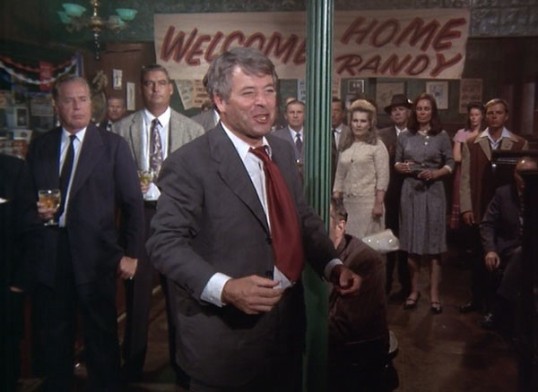
They’re Tearing Down Tim Riley’s Bar tells the story of Randy Lane (William Windom).  In 1945, Sgt. Randy Lane returned home from serving in World War II, a war hero who had a wonderful future ahead of him.  He had just gotten married.  He had just gotten a good job at an up-and-coming company called Pritzker Plastics.  When he came home, the first place he went was Tim Riley’s Bar, where his father and the other bar patrons toasted him and told him to look forward to the future.

Twenty-five years later, the middle-aged Randy Lane is looking at his life and asking, “Is this as good as it gets?”  He’s now a sales director at Pritzker Plastics but his boss (John Randolph) doesn’t appreciate him, his assistant (Bert Convy) is plotting to steal his job, and the only person who seems to care about him is his sympathetic secretary (Diane Baker).  Randy’s wife died in 1952, while Randy was out of a sales call.  Randy now lives alone.  Even his neighborhood bar — Tim Riley’s Bar — has closed and been abandoned.  With the bar schedule to be torn down, Randy wonder what happened to all of the promise and happiness of the past.

When Randy goes by the deserted bar and looks through the front window, he’s shocked to see all of his old friends and his father waving at him.  But when Randy rushes into the bar to join them, he discovers the bar is deserted.  Later, Randy is at work when suddenly, he sees Pritzker Plastics the way it was back in 1948.  Even later, when he enters his house, he finds himself standing in a hospital hallway in 1952, once again getting the news that his wife has died.

In many ways, They’re Tearing Down Tim Riley’s Bar is an atypical Night Gallery segment.  Though there are hints of the supernatural throughout the story, it’s hardly a work of horror.  Instead, it’s a rather melancholy meditation on aging, disappointment, and regret.  Is the past forever lost?  Can things ever be as good as they once were?  These are the questions that are raised in this well-directed and well-acted segment.

The Last Laurel (dir by Daryl Duke, written by Rod Serling)

Clocking in at 8 minutes, The Last Laurel is yet another segment about a bitter man (in this case, Jack Cassidy) who suspects that his wife (in the case, Martine Beswick) is cheating on him with his doctor (in this case, Martin E. Brooks) so he teaches himself a supernatural skill in order to get revenge.  In this case, it involves astral projection.  Not surprisingly, it ends with a twist that’s pretty much dependent on one of the characters doing something extremely stupid.

The Last Laurel is well-acted but predictable.  It’s not bad but, especially when compared to something like They’re Tearing Down Tim Riley’s Bar, it feels rather insubstantial.  It feels like filler.

The first season of Night Gallery came to an end with an excellent episode.  Starting tomorrow — season 2!

Previous Night Gallery Reviews:

  1. The Pilot
  2. The Dead Man/The Housekeeper
  3. Room With A View/The Little Black Bag/The Nature of the Enemy
  4. The House/Certain Shadows on the Wall
  5. Make Me Laugh/Clean Kills And Other Trophies
  6. Pamela’s Voice/Lone Survivor/The Doll

Film Review: The Mule (dir by Clint Eastwood)


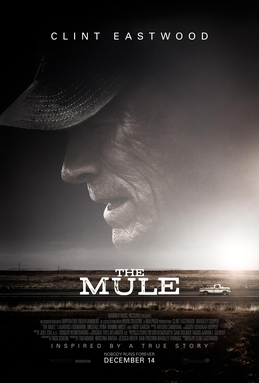
In The Mule, Clint Eastwood plays Earl Stone.

In some ways, Earl is typical of the characters that Eastwood has played during the latter part of his career.  He’s grouchy.  He’s alienated almost everyone who was previously close to him.  He drives an old pickup truck and he has no idea how to text and he seems to literally snarls whenever he sees anyone under the age of 60.  He served in the Korean War and he’s not scared of guns.

In other ways, Earl is not a typical Eastwood character at all.  First off, he’s on the verge of financial ruin.  Earl may not be the first Eastwood character to not know how to responsibly handle money but he is perhaps the first one to be on the verge of homelessness as a result.  (He’s perhaps the first of Eastwood’s modern character to face real-world consequences for his flaws.)  Secondly, Earl often seems to be lost in the 21st century world.  In Gran Torino and Trouble With The Curve, Eastwood played grumpy old men who could still hold their own when it came to dealing with younger people.  But, in The Mule, Earl seems to be defeated by life.  The only thing that he really has going for him is his reputation as a horticulturist and, as the film makes clear, that’s not a skill that’s going to bring in much money.

That all changes when Earl has a chance meeting with Rico (Victor Rasuk), a friend of his granddaughter’s.  Knowing that Earl is desperate for money, Rico tells him that he could make a quick payday by transporting a package for some friends.  After giving it some thought, Earl agrees.  When Earl meets Rico’s friends, everyone is shocked at how old he is.  They’re even more shocked when Earl says that he doesn’t know how to text.  Earl is given a phone and told to answer it whenever it rings but to never use it to call anyone.  A package is put in the back of Earl’s pickup truck.  It’s suggested that Earl not look in the package.

Does Earl know that he’s transporting drugs?  At first, it’s hard to say.  While it seems obvious to us, Earl is from a different time.  Still, once Earl does eventually learn that he’s being used as a drug mule, it doesn’t seem to bother him.  If nothing else, Earl actually seems to get a kick out of being a real-life outlaw.  He continues to make his runs and he continues to make money and, perhaps most importantly, he now has a purpose in life.  In a strange way, the drug runners even become his new family.  (They call him Tata, which is Spanish for grandfather.)  Of course, they’re a family that makes it cleat that they’ll kill Earl if he’s ever late delivering the package but that doesn’t seem to matter to Earl.

Meanwhile, the DEA (represented by Laurence Fishburne, Bradley Cooper, and — somewhat inevitably — Michael Pena) are hearing reports about a new drug mule who has been nicknamed Tata.  What they don’t suspect, of course, is that Tata is a 90 year-old man who has no criminal record and who is always very careful to obey all the traffic laws.  Even when Earl is pulled over by the police, he’s such a nice old man that they let him go without bothering to really search his vehicle.  It seems like Earl’s got a perfect thing going but, unfortunately, things are never as good as they seem and eventually, the reality of Earl’s situation intrudes on his fantasy….

It’s been said that The Mule is going to be Eastwood’s final film as an actor and he gives an excellent performance as Earl.  The Mule, which feels, in many ways, like a good-natured companion piece to Gran Torino, features Eastwood at both his most vulnerable and, probably not coincidentally, his most likable and sympathetic.  In this film, Eastwood makes clear that he’s no longer the righteous Dirty Harry or the mythological Man With No Name.  Now, he’s just a man nearing the end of his life and trying to come to terms with the mistakes and the decisions of the past.  Eastwood plays Earl like a man who knows that his time is limited.  Smuggling drugs gives him a chance to feel like he’s alive again but, throughout it all, there’s still a deep sadness.  Earl can use his money to pay his bills and to fix up the local VFW hall but he still can’t buy his family’s forgiveness.  Watching the film, it’s impossible not to feel for Earl.  You’re happy that he found at least a little satisfaction with his criminal career, even though you immediately suspect that things probably aren’t going to turn out well for him.

Admittedly, there is one cringe-worthy scene in which it’s suggested that the 90 year-old Earl has had a threesome with two twenty year-olds (and one gets the feeling that the scene would not have been included if not for the fact that the film’s star was also the director).  For the most part, though, this is a thoughtful film that features a poignant performance from Eastwood and which is directed in a restrained, but empathetic manner.  If this is Eastwood’s swan song as an actor, it’s a good note to go out on.