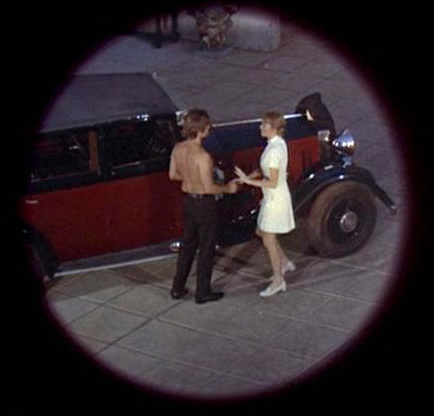
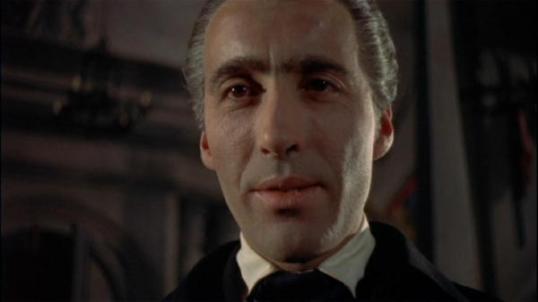
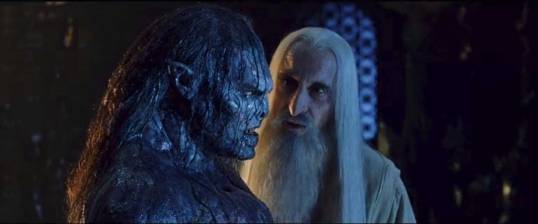
4 Shots From 4 Films: Special Clint Eastwood Edition


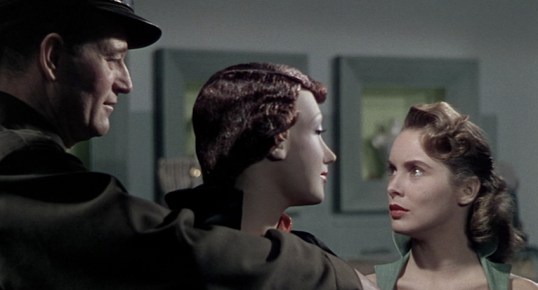
Clint Eastwood in Revenge of the Creature (1955)

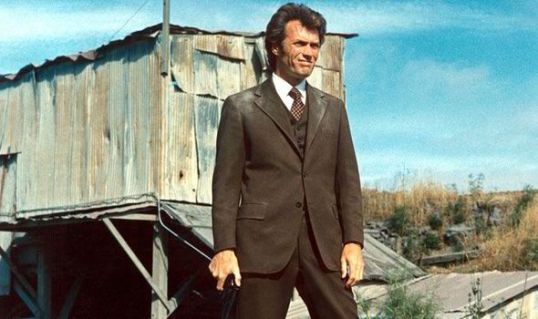
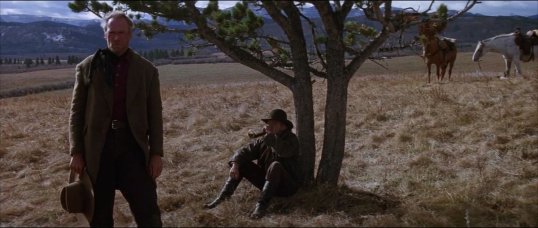
4 Shots From 4 Films is just what it says it is, 4 shots from 4 of our favorite films. As opposed to the reviews and recaps that we usually post, 4 Shots From 4 Films lets the visuals do the talking!

Today is Clint Eastwood’s 90th birthday!

Though Clint famously had to go to Italy to really get his film career going, he’s gone on to become an icon of American film.  While his early films were often criticized as glorifying violence and of being reactionary, his later films have — more often than not — been meditations on aging, moral ambiguity, and what a lifetime of violence does to a person’s soul.  Though Eastwood has fallen out-of-favor with a few critics as a result of the speech he gave at the 2012 Republican Convention (Film Twitter, to the shock of no one, had a particularly over-the-top reaction to it as many of them discovered, I guess for the first time, that not every artist is a Leftist), he’s a filmmaker whose legacy will be rediscovered and probably appreciated in the future.

Here are….

4 Shots From 4 Films

For A Few Dollars More (1965, dir by Sergio Leone)

Dirty Harry (1971, dir by Don Siegel)

Unforgiven (1992, dir by Clint Eastwood)

Gran Torino (2008, dir by Clint Eastwood)

TV Review: Night Gallery 1.5 “Pamela’s Voice/Lone Survivor/The Doll”


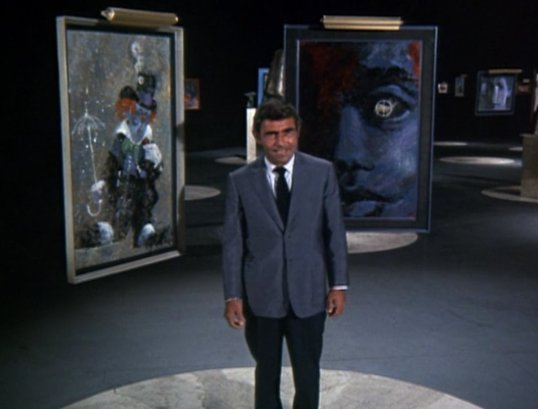
The fifth episode of Night Gallery originally aired on January 13th, 1971.  It featured three stories, each one of which was introduced by Rod Serling walking through a darkened museum.
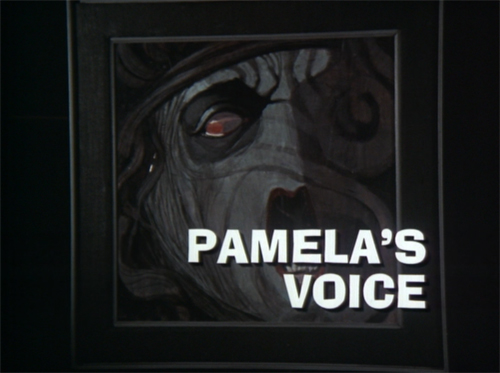
Pamela’s Voice (dir by Richard Benedict, written by Rod Serling)

Jonathan (John Astin) kills his wife, Pamela (Phyllis Diller), because he’s sick of listening to her shrill voice.  However, it turns out that not even death can stop Pamela.  While Jonathan is staring at a coffin, he starts to hear Pamela’s voice.

At first, you might think that this is going to be one of those stories where it’s going to turn out that the murderer has been driven made by his crimes and he’s imagining being taunted by his victim.  But then Pamela makes an post-death appearance herself and the story reveals it’s final twist.

For the most part, Pamela’s Voice is entertaining.  Both John Astin and Phyllis Diller give such eccentric performances that their fun to watch even if the majority of the audience will be able to guess this segment’s big twist.
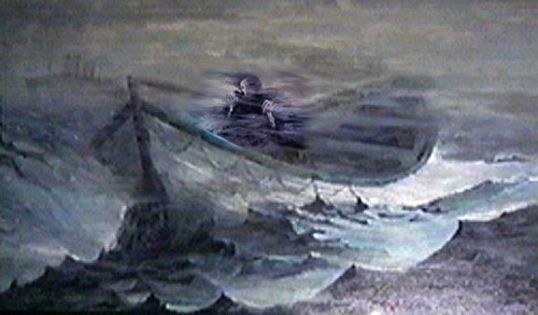
Lone Survivor (dir by Gene Levitt, written by Rod Serling)

This wonderfully atmospheric story opens in 1915, with the crew of the Lusitania discovering a man (John Colicos) floating in a lifeboat.  The lifeboat is from the Titanic and the man, who claims to be a crewmember of that doomed ship, is wearing a dress, leading the ship’s doctor to assume that the man survived the sinking of the Titanic by pretending to be a woman and stealing someone else’s rightful spot in the lifeboat.

At first, his rescuers are skeptical.  If the man was indeed a survivor of the Titanic, that would mean that he had spent the past three years floating in that lifeboat?  How could the man have survived?  And, assuming that he is telling the truth about the ship that he came from, what has now brought him to the Lusitania?  Could the man possibly be a German spy?  After all, World War I has just broken out and the sea is no longer as safe as it once was….

Lone Survivor is an example of this often uneven show at its best.  It’s a genuinely creepy short film, one that ends on a frightening and rather sad note.  Lone Survivor is the tale of man trying to escape both his own guilt and the whims of fate and discovering that neither can be easily conquered.  In the main role, John Colicos gives a wonderfully intense and haunted performance.
The Doll (dir by Rudi Dorn, written by Rod Serling)

“Our painting is called The Doll,” Rod Serling says as he introduces this one, “and it’s one that you better not play with.”  Truer words were never spoken!

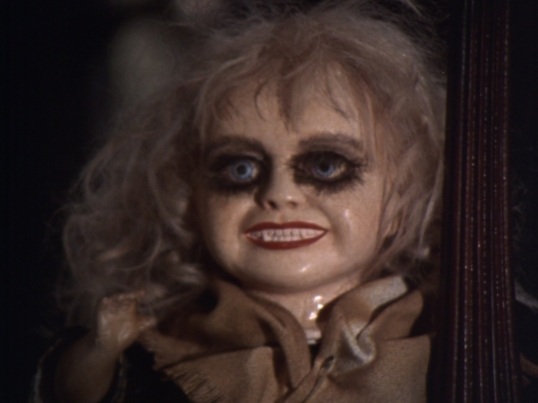
In this one, British Col. Hymber Masters (John Williams) returns home from India and discovers that his niece (Jewel Branch) has a new doll.  Someone mailed the doll to her.  Everyone assumed that Col. Masters sent the doll but he actually had nothing to do with it.  Masters is not happy to see his niece carrying around that doll and it makes sense when you consider just how ugly the doll is.  I mean, this is one creepy doll!

It turns out that the Masters was correct to be concerned because the doll was sent by Pandit Chola (Henry Silva), who holds Masters responsible for the death of his brother.  The doll has been sent to take revenge….

The Doll is another triumph, largely because the doll itself is so creepy that it looks like something that sprung straight out of a nightmare.  John Williams does a good job playing the well-meaning if somewhat stuffy colonel and Henry Silva is well-cast as the villain of the piece.  This segment deserves a lot of credit for taking a fanciful story and playing it totally straight.

The fifth episode of Night Gallery is a triumph.  After a run of uneven episodes, this episode is consistently creepy and entertaining.  For this episode, at least, Night Gallery lived up to its potential.
Previous Night Gallery Reviews:

  1. The Pilot
  2. The Dead Man/The Housekeeper
  3. Room With A View/The Little Black Bag/The Nature of the Enemy
  4. The House/Certain Shadows on the Wall
  5. Make Me Laugh/Clean Kills And Other Trophies

A Blast From The Past: Tomorrow’s Drivers


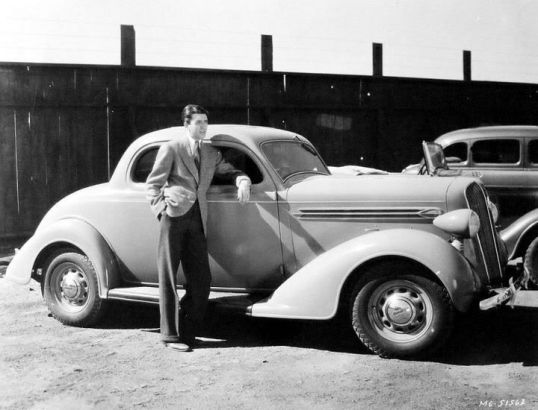
Jimmy Stewart Standing Beside One Of His Many Cars

Since this is the ten year anniversary of the Shattered Lens, I’ve been making an effort to observe notable birthdays here on the site.  I’m sad to say that somehow, I missed the birthday of Jimmy Stewart!

Jimmy Stewart was born on May 20th, 1908 in Indiana, Pennsylvania.  He’s my favorite of the Golden Age stars, not to mention the star of one of my top films of all time, It’s A Wonderful Life.  He also served bravely in World War II and I think it can be argued that he was Jimmy Stewart before he went to war and James Stewart afterwards.

Anyway, better late than never, here’s a short 1954 film that Stewart narrated, Tomorrow’s Drivers.  The film features a bunch of kindergarten kids learning how to drive.  Apparently, it was a program designed to make sure that kids grew up with good driving habits and didn’t end up becoming a bunch of jerks like their parents.  It actually seems like a good idea to me.  Stewart doesn’t appear onscreen but he provides the narration for the film and, with his tone, he strikes just the right mix of whimsy and seriousness.

Enjoy!

4 Shots From 4 Films: Special Howard Hawks Edition


4 Shots From 4 Films is just what it says it is, 4 shots from 4 of our favorite films. As opposed to the reviews and recaps that we usually post, 4 Shots From 4 Films lets the visuals do the talking!

Today is the 124th anniversary of cinematic pioneer Howard Hawks!  Whether it’s gangster film, a western, or a screwball comedy, it’s hard to think of a single cinematic genre that doesn’t owe a debt of gratitude to Howard Hawks!

Here are….

4 Shots From 4 Films

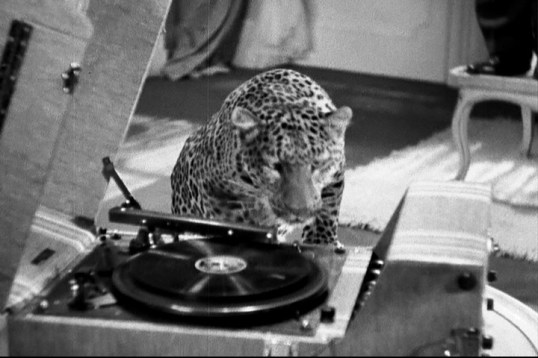
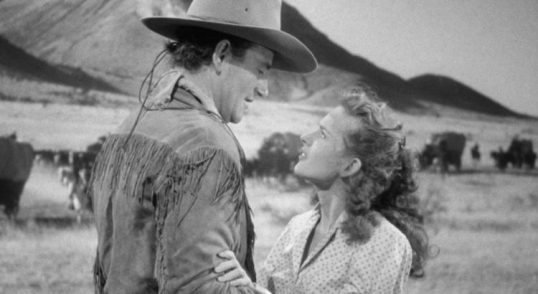
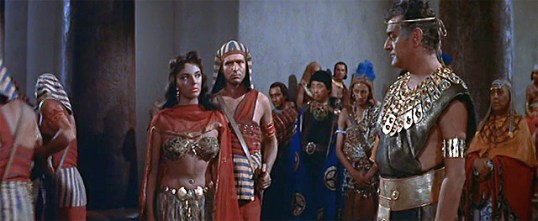
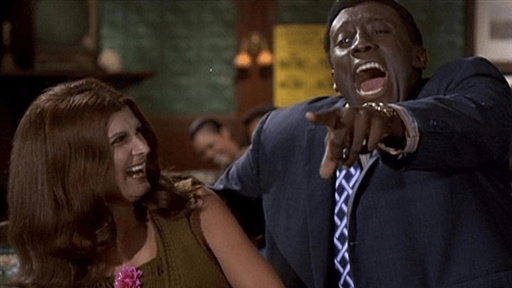
Scarface (1932, dir by Howard Hawks)

Bringing Up Baby (1938, dir by Howard Hawks)

Red River (1948, dir by Howard Hawks)

Land of the Pharaohs (1955, dir by Howard Hawks)

Night Gallery 1.4 “Make Me Laugh/Clean Kills And Other Trophies”


The fourth episode of Night Gallery originally aired on January 6th, 1971.  It was the first episode of the new year and it continued to open with Rod Serling walking through a most curious museum, inviting us to take a look at the macabre paintings on display and consider the stories behind them.

This episode featured two stories.

Make Me Laugh (dir. by Steven Spielberg, written by Rod Serling)

Jackie Slater (Godfrey Cambridge) is a comedian who can’t make anyone laugh.  He’s just been fired from his latest job and even his loyal agent (Tom Bosley) is suggesting that it might be time to throw in the proverbial towel.  While Jackie drowns his sorrows at a bar, he’s approached by a man named Catterje (Jackie Vernon).  Chatterje explains that he can cast miracles but, because he’s not very good at his job, the miracles often have unintended consequences.  “I don’t care!”  Jackie says, “I’ll take the risk!”  Jackie wants people to laugh at him.  Jackie gets his wish but it turns out that he should have listened to Chatterje’s warning.

This segment was directed by Steven Spielberg, back when he was just starting his career and he was largely working in television.  Spielberg also directed Eyes, which was a highlight of the Night Gallery pilot.  Unfortunately, his direction of Make Me Laugh is a bit less successful than his work on Eyes.  Spielberg’s direction features none of the inspired touches that made Eyes so successful.  Part of the problem may be that this story takes place in the word of comedy and comedy has never been a topic for which Spielberg has shown much affinity.

Make Me Laugh does feature a good lead performance from Godfrey Cambridge.  Otherwise, this segment is largely forgettable.

Cleans Kills And Other Trophies (dir by Walter Doniger, written by Rod Serling)
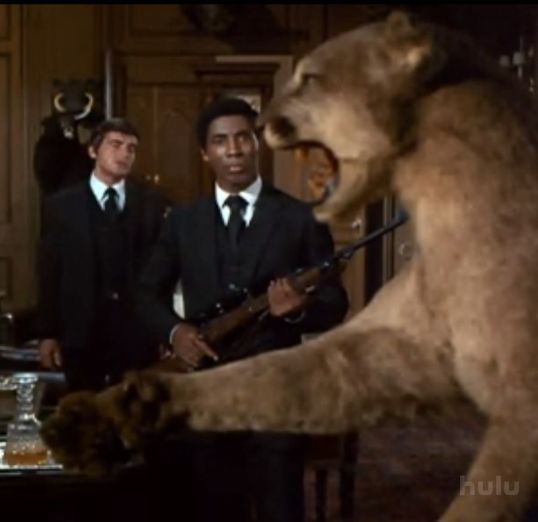
Raymond Massey plays Col. Archie Dittman, a wealthy racist who is obsessed with hunting and killing.  He even has a study full of the mounted heads of all of the animals that he’s killed.  Archie’s son, Archie, Jr. (Barry Brown), has just graduated from college and has no interest in hunting.  Col. Dittman demands that his son go on a hunt or risk being disinherited.  What the colonel fails to take into consideration is that both his bloodlust and his racism has offended his butler (Herbert Jefferson, Jr.) and that his butler has a magic-related revenge in mind.

Clean Kills and Other Trophies is hardly subtle but it does create and maintain a properly ominous atmopshere.  Raymond Massey gives a wonderfully villainous performance and it’s hard not to be amused by the fact that his son is wearing a peace signal prominently on his lapel, as if the segment’s director took one look at it and said, “What’s one thing that we can do to make the themes of this segment even more heavy-handed?”  The segment ends on a note that is so entertainingly over-the-top that it’s hard not to love it.

This episode was uneven.  Make Me Laugh does’t quite work but Cleans Kills and other Trophies is good enough to make up for the disappointing segment that precedes it.

Previous Night Gallery Reviews:

  1. The Pilot
  2. The Dead Man/The Housekeeper
  3. Room With A View/The Little Black Bag/The Nature of the Enemy
  4. The House/Certain Shadows on the Wall

4 Shots From 4 Films: Special Josef von Sternberg Edition


4 Shots From 4 Films is just what it says it is, 4 shots from 4 of our favorite films. As opposed to the reviews and recaps that we usually post, 4 Shots From 4 Films lets the visuals do the talking!

Today we celebrate the 126 anniversary of the birth of cinematic pioneer, Josef von Sternberg!  That means that it’s time for….

4 Shots From 4 Films

An American Tragedy (1931, dir by Josef von Sternberg)

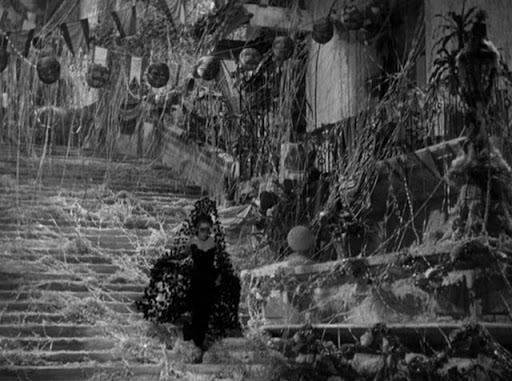
The Scarlet Empress (1934, dir by Josef von Sternberg)

The Devil is A Woman (1935, dir by Josef von Sternberg)

Jet Pilot (1957, dir by Josef von Sternberg)

TV Review: Night Gallery 1.3 “The House/Certain Shadows on the Wall”


The third episode of Night Gallery aired on December 30th, 1970.  While Americans were undoubtedly finalizing their plans for a wild New Year’s Eve (because, after all, Nixon was president and every day was a party), NBC and Rod Serling invited viewers to take a tour through a darkened museum, one where every painting told a story.

This episode of Night Gallery featured two stories:

The House (dir by John Astin, written by Rod Serling)

The House opens with Elaine Latimer (Joanna Pettet) talking about a recurring dream.  She’s driving her car through the countryside when she comes across a large house.  Though she’s never seen the house, she finds herself drawn to it, as if she somehow belongs in the house.  As Elaine describes her dream, we come to realize that she’s talking to a psychiatrist (Steve Franken) and that Elaine is recovering from mental breakdown.  Her doctor tells Elaine that the dream is nothing to worry about.

However, when Elaine is driving home, she realizes that the countryside looks familiar.  Soon, she’s pulling up in front of the house from her dreams!  When Elaine gets out of the car, she’s greeted by a real estate named Peugeot (Paul Richards) who asks her if she’s interested in buying the house.  As Peugeot gives her a tour of the estate, he mentions that the house is thought to be haunted….

I liked The House.  It was an atmospheric little tale and, from the minute that Elaine started talking about her dream, the story captured my attention.  (I should admit that I also have recurring dreams about a house that I’ve never actually seen before.)  Admittedly, the story does play out at a very deliberate pace and requires a bit of patience but the dream sequences are effectively surreal and Joanna Pettet gives an empathetic performance in the lead role.

Certain Shadows On The Wall (dir by Corey Allen, written by Rod Serling)

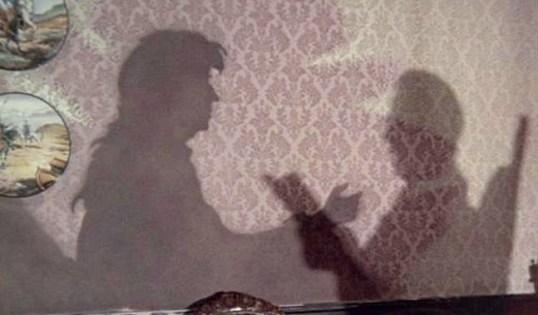
This segment features Agnes Moorehead as the sickly Emma, who is poisoned by her own brother, the despicable Stephen (Louis Hayward).  After Emma’s death, Stephen is shocked to discover that, even though Emma is gone, her shadow remains on the wall.  While Stephen is trying to make sense of that, his other two sisters (played by Grayson Hall and Rachel Roberts) have plans of their own for how to deal with their duplicitous brother.

Like The House, Certain Shadows On The Wall is appropriately atmospheric.  The ending is a bit weak as Stephen gets what he deserves but the shadow itself doesn’t have much to do with his actual fate.  Just when you’re waiting for Agnes Moorehead to make a sudden, ghostly appearance, the story comes to an end.  Still, this is an effective segment and it features excellent work from its ensemble.  I especially liked the performance of Grayson Hall, which features one of the most frightening glares that I’ve ever seen.

The third episode of Night Gallery was a definite improvement over the two that came before it.  Both segments tell intriguing stories, though it’s obvious that the show was still better at coming up with good premises than effective endings.

Previous Night Gallery Reviews:

  1. The Pilot
  2. The Dead Man/The Housekeeper
  3. Room With A View/The Little Black Bag/The Nature of the Enemy

TV Review: Night Gallery 1.2 “Room With A View/The Little Black Bag/The Nature of the Enemy”


The second episode of Night Gallery originally aired on December 23rd, 1970 and it featured three stories, two of which were written by Rod Serling.  Serling, himself, introduced all three of the stories by inviting us to look at the paintings that may or may not have been inspired from them.

Room With A View (dir by Jerrold Freedman, written by Hal Dresner)

When a cranky, bed-bound man (Joseph Wiseman) discovers this his wife (Angel Tompkins) is cheating on him, he comes up with an elaborate scheme to get revenge.  It all hinges on his somewhat nervous nurse (Diane Keaton), who has no idea that she’s being manipulated.

This short segment is well-done but it doesn’t really feel like it belongs on an episode of Night Gallery.  There’s no elements of horror or science fiction to be found in this story.  Instead, it’s just about a manipulative man seeking revenge on his wife.  It’s actually easy to imagine this segment as being a flashback on a Monk-style detective show.  You just need a detective saying, “I finally figured out how you did it!”

For most viewers, probably the most interesting thing about this segment will be the presence of a young Diane Keaton, playing the nurse and laughing nervously at her patient’s rather intrusive questions.

The Little Black Bag (dir by Jeannot Szwarc, written by Rod Serling)

In the 30th Century, a careless accident at a time travel station sends a black medical bag into the past.  It arrives in 1971, where it’s discovered by two homeless gentlemen.  One of the men is a disgraced former doctor named William Fall (Burgess Meredith).  The other, Hepplewhite (Chill Wills), has no medical experience but he does have a greedy spirit.  Fall wants to use the bag to do good,  Hepplewhite wants to use the bag to make money.  Meanwhile, in the future, poor put-upon Gillings (George Furth) is just trying to figure out what to do about the missing bag.

The Little Black Bag is this episode’s high point, featuring good performances from Meredith, Wills, and Furth and also ending with properly macabre twist.  This is another Rod Serling story about how terrible, at heart, most people are but Jeannot Szwarc’s direction is fast-paced and he never allows things to get too heavy-handed.

The Nature of the Enemy (dir by Allen Reisner, written by Rod Serling)

NASA’s latest expedition to the Moon has run into trouble.  The astronauts have discovered that there is something living on the lunar surface.  On Earth, the director of NASA (Joseph Campanella) tries to keep everyone calm while also figuring out the nature of the enemy.

This segment has an intriguing premise but it’s let down by a so-so execution.  Like a lot of less-than-effective Night Gallery segments, this one features a story that doesn’t so much conclude as it just stops after a somewhat weak punchline.

So, the second episode of Night Gallery was not an improvement on the first and it was nowhere close to matching the pilot.  Watching this episode, it was hard not to feel that the show had a few growing pains.  Did it want to be a horror anthology or a collection of short skits?  The 2nd episode reveals a show that was still trying to find it’s voice.

Previous Night Gallery Reviews:

  1. The Pilot
  2. The Dead Man/The Housekeeper


A Blast From The Past: Vincent Price Reads The Raven


109 years ago, Vincent Price was born in St. Louis, Missouri.

I have to admit that I’m always somewhat surprised to be reminded that Vincent Price was born in Missouri.  It seems like such a …. normal place to be born, especially for someone who was as wonderfully and cheerfully eccentric as Vincent Price.

Vincent Price is best-known for his horror roles, though he actually appeared in all sorts of films during his career.  He started out as a romantic lead and then he became a character actor, showing up in acclaimed films like The Song of Bernadette, Wilson, and Laura.  Early on his career, Price was even considered for the role of Ashley Wilkes in Gone With The Wind.  Later, he would be listed by Frank Capra as a possibility for the role of Mr. Potter in It’s A Wonderful Life.

That said, Price was always be best-known for his horror work and, because of the films that he made with Roger Corman, he will also always be associated with Edgar Allen Poe.  With today being his birthday, it seems like the perfect time to share this video of Vincent Price reading The Raven.

Unfortunately, I don’t know exactly when this was filmed.  But no matter!  It’s Vincent Price reading Edgar Allen Poe!

Enjoy!

4 Shots From 4 Films: Special Christopher Lee Edition


4 Shots From 4 Films is just what it says it is, 4 shots from 4 of our favorite films. As opposed to the reviews and recaps that we usually post, 4 Shots From 4 Films lets the visuals do the talking!

98 years ago today, the greatest actor of all time, Christopher Lee, was born in London!  Today, we honor a legacy of iconic performances, in films that were both good and bad.  Lee worked with everyone from Terence Fisher to Peter Jackson to Martin Scorsese to Laurence Olivier to John Huston to ….. well, if they were an important director, they probably made at least one movie with Christopher Lee!  He was Dracula.  He was Saruman.  He was one of the best Bond villains and it’s been rumored that, during World War II, Lee was a bit of a James Bond himself.

Today, we honor a brilliant career with….

4 Shots From 4 Films

Dracula A.D. 1972 (1972, dir by Alan Gibson)

The Man With The Golden Gun (1974, dir by Guy Hamilton)

Lord of the Rings: The Fellowship of the Ring (2001, dir by Peter Jackson)

Hugo (2011, dir by Martin Scorsese)