6 Shots From 6 Films: Special Alfred Hitchcock Edition


4 Or More Shots From 4 Or More Films is just what it says it is, 4 shots from 4 of our favorite films. As opposed to the reviews and recaps that we usually post, 4 Shots From 4 Films lets the visuals do the talking!

124 years ago, the master of suspense was born in England.  Today, we honor the career and legacy of the great Alfred Hitchock with….

6 Shots From 6 Alfred Hitchcock Films

Rebecca (1940, dir by Alfred Hitchcock, DP: George Barnes)

Shadow of a Doubt (1943, directed by Alfred Hitchcock, DP: Joseph A. Valentine)

Notorious (1946, dir by Alfred Hitchcock, DP: Ted Tetzlaff)

Vertigo (1958, dir by Alfred Hitchcock, DP: Robert Burks)

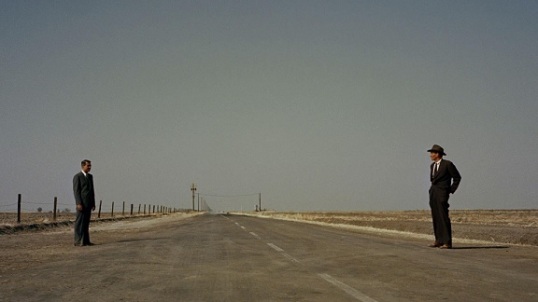
North by Northwest (1959, dir by Alfred Hitchcock, DP: Robert Burks)

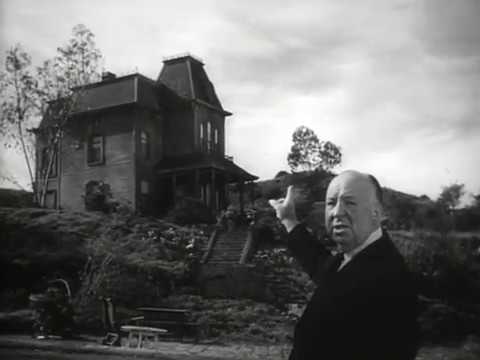
Psycho (1960, dir by Alfred Hitchcock, DP: John L. Russell)

12 Oscar Snubs From the 1950s


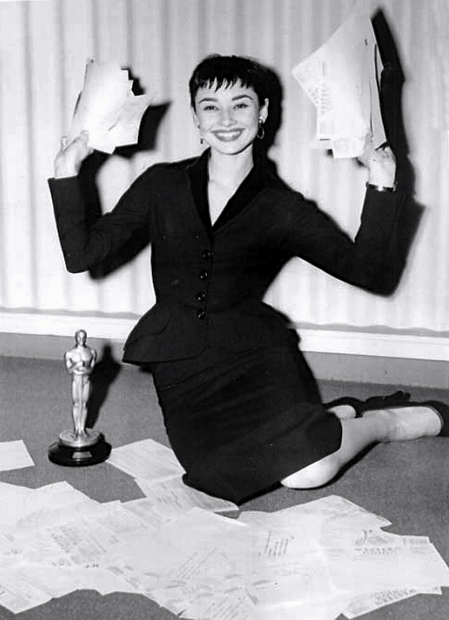
Audrey Hepburn and her Oscar.  At least the Academy didn’t snub her!

Continuing our look at the Oscar snubs of the past, it’s now time to enter the 50s!

World War II was over. Eisenhower was President. Everyone was worried about communist spies. And the Hollywood studios still reigned supreme, even while actors like Marlon Brando and James Dean challenged the establishment.  There were a lot great film released in the 50s.  There were also some glaring snubs on the part of the Academy.  Here’s twelve of them.

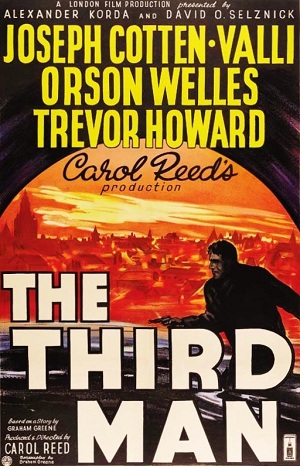
1950: The Third Man Is Not Nominated For Best Picture

….and Orson Welles was not nominated for Best Supporting Actor!  The Third Man received three Oscar nominations, for Director, Cinematography, and Editing.  The fact that Welles, Joseph Cotten, Alida Valli, and the film’s score were not nominated (and that King Solomon’s Mines was nominated for Best Picture instead of The Third Man) remains one of the more surprising snubs in Oscar history.

1952: Singin’ In The Rain Is Not Nominated For Best Picture

What the Heck, Academy!?  This was the year that The Greatest Show On Earth won the Best Picture Oscar.  Personally, I don’t think The Greatest Show On Earth is as bad as its reputation but still, Singin’ In The Rain is a hundred times better.

1953: Alan Ladd Is Not Nominated For Best Actor For Shane

How could Shane score a nomination for Best Picture without Shane himself receiving a nomination?

1954: Rear Window Is Not Nominated For Best Picture

Rear Window was not totally ignored by the Academy.  Alfred Hitchcock received a nomination for directing.  It also received nominations for Best Adapted Screenplay, Cinematography, and Sound.  However, Rear Window was not nominated for Best Picture and James Stewart, Grace Kelly, Raymond Burr, and Thelma Ritter all went unnominated as well.  Today, Rear Window is definitely better-remembered than the majority of 1954’s Best Picture nominees.  Certainly, it deserved a nomination more than Seven Brides For Seven Brothers and Three Coins in The Fountain.

1955: Ralph Meeker Is Not Nominated For Best Actor For Kiss Me Deadly

I guess I shouldn’t be surprised.  If the Academy wasn’t going to nominate Rear Window for Best Picture, there was no way that they would have nominated Ralph Meeker for playing a sociopathic private detective who, even if inadvetedly, helps to bring about the end of the world.

1955: Rebel Without A Cause Is Not Nominated For Best Picture or Best Actor

The 1955 Best Picture lineup was a remarkably weak one.  The eventual winner was Marty, a likeable film that never quite escapes its TV roots.  Picnic has that great dance scene but is otherwise flawed.  Mister Roberts was overlong.  Love Is A Many-Splendored Thing and The Rose Tattoo are really only remembered by those of us who have occasionally come across them on TCM.  Perhaps the best-remembered film of 1955, Rebel Without A Cause, received quite a few nominations but it was not nominated for Best Picture.  And while the Rebel himself, James Dean, was nominated for Best Actor, it was for his performance in East of Eden.  1955 was a strange year.

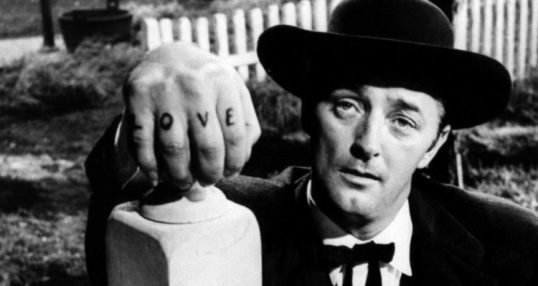
1955: Robert Mitchum Is Not Nominated For Best Actor For The Night of the Hunter

Robert Mitchum only received one Oscar nomination over the course of his entire career, for 1945’s The Story of G.I. Joe.  He deserved several more.  His performance as the villainous preacher in The Night of Hunter made Reverend Harry Powell into one of the most iconic film characters of all time.

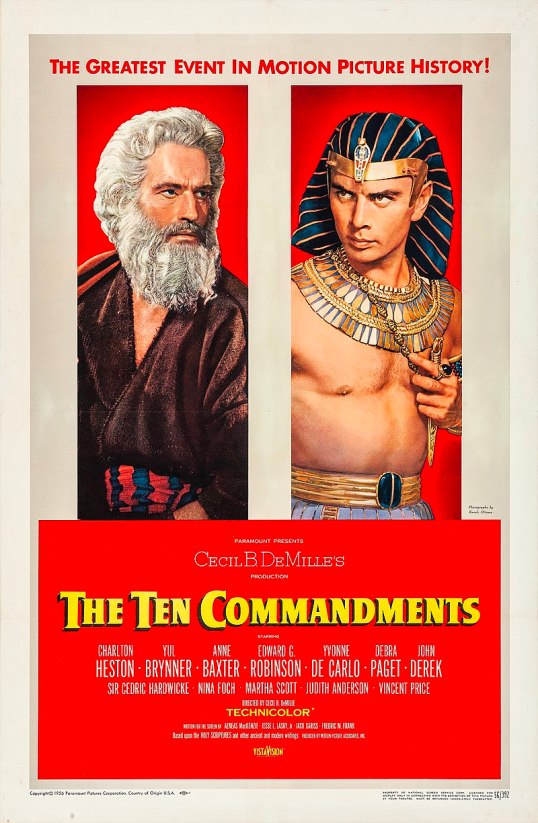
1956: Cecil B. DeMille Is Not Nominated For Best Director For The Ten Commandments

Cecil B. DeMille was only nominated once for Best Director, for 1952’s The Greatest Show On Earth.  DeMille, however, deserved to be nominated for The Ten Commandments.  As campy as DeMille’s films can seem today, he was an expert storyteller and that’s certainly evident when one watches The Ten Commandments, a film that holds the viewer’s attention for nearly four hours.  DeMille deserved a nomination for the Angel of Death scene alone.  The screams in the night are haunting.

1957: Henry Fonda Is Not Nominated For Best Actor For 12 Angry Men

With 12 Angry Men, Fonda did something that very few actors can.  He made human decency compelling.  One gets the feeling that, much like Tom Hanks in Captain Phillips, Fonda made it look so easy that the Academy took him for granted.

1958: Touch Of Evil Is Totally Ignored

Anyone who had researched the history of the Academy knows that there was no way that the 1950s membership would have ever honored Orson Welles’s pulp masterpiece, Touch of Evil.  That said, it still would have been nice if they had.  Touch of Evil has certainly go on to have a greater legacy than Gigi, the film that won Best Picture that year.

1958: Vertigo Is Almost Totally Ignored

Vertigo did receive nominations for Art Direction and Sound but Alfred Hitchcock, James Stewart, and the film itself were snubbed.

1959: Some Like It Hot Is Not Nominated For Best Picture or Best Actress

Some Like It Hot received 6 Oscar nominations, including nominations for Best Director, Best Actor, and Best Adapted Screenplay.  It did not receive a nomination for Best Picture and, sadly, Marilyn Monroe did not receive a nomination for Best Actress.  Much as with Henry Fonda in 12 Angry Men, one gets the feeling that the Academy took Monroe for granted.  It’s sad to realize that, while two actresses have been nominated for playing Marilyn Monroe, Monroe herself would never be nominated.

Agree?  Disagree?  Do you have an Oscar snub that you think is even worse than the 12 listed here?  Let us know in the comments!

Up next: Things get wild with the 6os!

Night of the Hunter (United Artists 1955; D: Charles Laughton)

6 Shots From 6 Films: Special Alfred Hitchcock Edition


4 Or More Shots From 4 Or More Films is just what it says it is, 4 shots from 4 of our favorite films. As opposed to the reviews and recaps that we usually post, 4 Shots From 4 Films lets the visuals do the talking!

123 years ago, the master of suspense was born in England.  Today, we honor the career and legacy of the great Alfred Hitchock with….

6 Shots From 6 Alfred Hitchcock Films

The Lodger (1926, dir by Alfred Hitchcock, DP:Gaetano di Ventimiglia )

Shadow of a Doubt (1943, directed by Alfred Hitchcock, DP: Joseph A. Valentine)

Vertigo (1958, dir by Alfred Hitchcock, DP: Robert Burks)

North by Northwest (1959, dir by Alfred Hitchcock, DP: Robert Burks)

Psycho (1960, dir by Alfred Hitchcock, DP: John L. Russell)

The Birds (1963, dir by Alfred Hitchcock, DP: Robert Burks)

4 Shots From 4 Films: Special Alfred Hitchcock Edition


4 Shots From 4 Films is just what it says it is, 4 shots from 4 of our favorite films. As opposed to the reviews and recaps that we usually post, 4 Shots From 4 Films lets the visuals do the talking!

121 years ago today, the master of suspense, Alfred Hitchcock, was born!

In honor of the most influential director all time, here are….

4 Shots From 4 Films

Spellbound (1945, dir by Alfred Hitchcock)

Vertigo (1958, dir by Alfred Hitchcock)

Psycho (1960, dir by Alfred Hitchcock)

The Birds (1963, dir by Alfred Hitchcock)

20 Shots from 20 Alfred Hitchcock Films


Happy National Hitchcock Day!

20 Shots From 20 Films

The Pleasure Garden (1925)

The Lodger (1927)

Blackmail (1929)

The Man Who Knew Too Much (1934)

The 39 Steps (1935)

The Lady Vanishes (1938)

Rebecca (1940)

Shadow of a Doubt (1943)

Lifeboat (1944)

Notorious (1946)

Strangers on a Train (1951)

Rear Window (1954)

The Wrong Man (1956)

Vertigo (1958)

North by Northwest (1959)

Psycho (1960)

The Birds (1963)

Topaz (1969)

Frenzy (1972)

Family Plot (1976)


TV Review: Twin Peaks 1.7 “Realization Time” (dir by Caleb Deschanel)


“What I want and what I need are two different things, Audrey”

— Dale Cooper (Kyle MacLachlan) in Twin Peaks 1.7 “Realization Time)

In anticipation of the Showtime revival in May, Leonard, Jeff, and I have been reviewing every single episode of the original Twin Peaks!  Today, I will be taking a look at the 7th episode of season 1, “Realization Time.”

Now, I have to admit that I was not originally assigned to review this episode.  Much as I did with Zen, or the Skill To Catch A Killer, I literally got down on my knees and begged for the chance to review this episode.  Once again, as I explained why I felt that I was predestined to write this review, I shed many tears and threatened to utilize the power of excessive whining unless I allowed to do so.  Eventually, it paid off.

Why did I want to review this episode?  Well, first off, it’s a strong Audrey episode and, as I discovered while writing my previous Twin Peaks review, Audrey Horne is who I would be if I was a character on Twin Peaks.  She is the character to whom I most relate.

(Audrey was such a popular character during the initial run of Twin Peaks that, apparently, Mulholland Drive was originally conceived as being a spin-off in which Audrey would have gone to Hollywood and solved crimes.  In other words, no Audrey, no Mulholland Drive, no polls declaring Mulholland Drive to be the best film, so far, of the 21st century.)

Secondly, this was the final episode to feature Waldo the Myna Bird and I just happen to love the way that whenever Harry Goaz, in the role of Deputy Andy, said the name “Waldo,” he would drag out each syllable so that the bird’s name became “Walllll DOE.”

Anyway, with all that in mind, let’s take a look at Realization Time!
We start with those beautiful opening credits, that mix of machinery and nature that reminds us that Twin Peaks is a David Lynch production, even if this particular episode was directed by noted cinematographer Caleb Deschanel.

(Deschanel’s wife, Mary Jo, also played Ben Horne’s unhappy wife.  Interestingly enough, in the 1983 best picture nominee The Right Suff , for which Caleb Deschanel received an Oscar nomination, Mary Jo played the wife of John Glenn.)

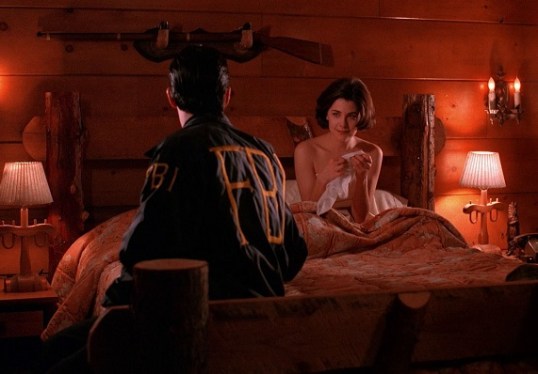
This episode opens where the last one left off.  Audrey (Sherilyn Fenn) is naked in Dale Cooper’s (Kyle MacLachlan) bed and Dale is explaining that he is an agent of the FBI and, as such, he has taken an oath to uphold certain principles.  He tells Audrey that she needs a friend and he says he is going to get them two malts and that she is going to tell him all of her troubles.

This is one of those scenes — and there’s a lot of them to be found in the first season of Twin Peaks — that really shouldn’t work and yet it does.  Everything about it, from Cooper’s corny sincerity to the promise of two malts, serves to remind us that Twin Peaks often has more in common with an idealized 1950s than with any recognizable modern era.  I think that only Kyle MacLachlan could have made Cooper’s lines come across as being sincere as opposed to condescending.  Being rejected by an older man who has just found you naked in his bed is not as pleasant experience as this episode makes it appear to be.  And yet, Fenn and MacLachlan both do a great job at selling this scene.

And yet, there’s one key line in this scene that I think is often overlooked.  When Audrey says that she can’t tell Cooper all of her secrets, she then asks him, “Do you have any secrets?”  Cooper says, “No.”  However, we know that’s a lie.  We know because we saw the way that Cooper smiled when Laura kissed him in his dream.  We know that Cooper is not the asexual puritan that he pretends to be.  When Cooper says that there’s a difference between what he wants and what he needs, we perhaps understand his meaning more than he does.

We learn one of Cooper’s secrets the next morning when he shows up at the police station and discovers Harry (Michael Ontkean) and Doc Hayward (Warren Frost) looking in on Waldo the Myna Bird.  Doc Hayward explains that myna bird’s have an amazing ability to mimic the human voice but they only do it when they’re feeling playful and Waldo is definitely not in the mood.  He asks Cooper if he wants to give Waldo some food.  Cooper replies, “I don’t like birds,” and steps back in such a dramatic fashion that you’re left wondering what terrible bird-related misfortune befell Cooper during his youth.

(Personally, I suspect this was meant to be yet another one of the first season’s many Hitchcock references.  There’s a few more in this episode, which we’ll be getting too shortly.)

Don’t feel to bad for Waldo, though.  While Dale, Hayward, and Harry are watching the bird, Deputy Hawk (Michael Horse) enters with the forensic report on Jacques Renault’s cabin.  There was only one exposed negative on the roll of film and it’s a picture of Waldo biting Laura Palmer’s shoulder.  BAD WALDO!
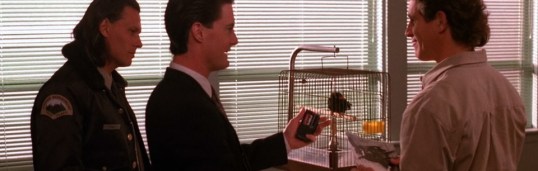
Realizing that, regardless of how much he may hate birds, Waldo is the only witness they have, Dale leaves a voice-activated tape recorder at the base of Waldo’s cage.  When Waldo speaks, they’ll have it on tape.  Dale also suggests heading up to Canada and investigating One-Eyed Jacks.  When Harry points out that he has no legal authority in Canada, Dale says, “That’s why I was thinking it would be a good job for the Bookhouse Boys.”  Yay!  Vigilante justice!

Last episode, Shelly (Madchen Amick) shot Leo Johnson (Eric Da Re) and we all cheered.  Well, it turns out that Leo survived.  He’s hanging out in the woods, watching his house through a pair of binoculars.  That’s how he sees Bobby showing up at his house and Shelly greeting him with a kiss.  It’s interesting to note that, when Shelly was talking about Leo in The One-Armed Man, she lamented that she only married him because of his red corvette.  However, Bobby — who seems to be destined to grow up to be another Leo — drives a black corvette.  Shelly needs to stop picking her men based on their car.

While Leo sits outside with a sniper rifle, a sobbing Shelly confessed to Bobby that she shot Leo.  Shelly may be upset but Bobby thinks that all this sounds like a good thing.  “Leo Johnson is history!” he declares.  No, Bobby, Leo is sitting outside with a sniper rifle.  Fortunately, for Bobby, Leo has a police scanner with him and he hears Lucy (Kimmy Robertson) announcing that Waldo has been talking.  Leo gets into his pickup truck and drives off.

At the Hayward House, Donna (Lara Flynn Boyle), James (James Marshall), and Maddy (Sheryl Lee) listen to the tape that Maddy found in Laura’s room.  It turns out to be one of several tapes that Laura recorded for Dr. Jacoby (Russ Tamblyn.)  On the tape, Laura wonders why it’s so easy for her to get men to like her and, for a few minutes, I was worried that we’d have to deal with another “James-Gets-Weepy” scene.  Fortunately, Maddy distracts him by pointing out that there’s one empty case in Laura’s collection of tapes.  The missing tape was recorded the night that Laura was killed.  James deduces that Jacoby must have it and that Jacoby might also be Laura’s killer.  He comes up with a plan to get Jacoby out of his office so that he and Donna can search for the tape.  What if Jacoby gets a call from Laura?  Everyone looks over at Maddy.

At Horne’s Department Store, Audrey attempts to convince a customer to buy a perfume that will make her smell like a forest.  Since most forests smell like death, the customer really isn’t interested.  She wants a perfume that makes a statement.  Audrey suggests hanging the perfume around her neck.  “It’s a perfume.  It’s a fashion accessory.  Two statements for the price of one?”  “I don’t appreciate your attitude,” the customer says.  If only I had a dime for every time that I’ve heard that…

Anyway, Audrey isn’t really all that concerned about making sales.  She’s got an investigation to conduct!  This means hiding in the manager’s office and listening while he recruits one of Audrey’s co-workers to go work at One-Eyed Jack’s as a “hospitality girl.”  The manager says that the co-worker’s positive and money-hungrey attitude will take her far in life.  (It’s all about attitude at Horne’s Department Store.)  Later, Audrey deftly manipulates that co-worker into giving her the number to One-Eyed Jacks.  Audrey’s the best.

Meanwhile, at the Double R, Hank (Chris Mulkey) is working at his new job and boring Shelly with inspiring stories about his time in jail.  Little does Shelly know that, before she shot Leo, Hank beat him up.  They have something in common and personally, I think they’d make a cute couple.  I mean, Hank may be sleazy but he’s so damn likable.

Of course, Harry doesn’t like Hank but that’s probably just because of all the drug dealing and other assorted crimes that Hank has committed.  When Cooper and Harry stop by the diner, Harry tells Hank that if he misses one meeting with his parole officer, he’ll be sent back to jail.  Harry tells Cooper that people never change but Cooper is too busy appreciating a cup of black coffee to worry about Hank Jennings.  Cooper tells Harry that the secret of happy living is to give yourself a random present, like a good cup of coffee.

(It’s played for laughs but again, the important word to remember is secret.  Twin Peaks is all about to secrets.)

At the Hurley House, Nadine (Wendy Robie) watches the latest episode of Invitation to Love.  When Big Ed (Everett McGill) enters the room, Nadine announces that she’s eating bon bons because a patent attorney rejected her silent drape runners.  Ed assures her, in one of my favorite lines ever, “Nadine, there’s plenty of patent attorneys.  We’re just going to have to keep looking until we find one that understands drape runners.”  McGill delivers that line with just the right amount of gravitas too.  If I ever lose an eye and become obsessed with drapes, I hope my man will be as understanding as Big Ed Hurley.

At the Packard Mill, Pete Martell (Jack Nance) laments to Harry that a fish he recently caught was bigger before he sent it to the taxidermist.  “Once they take all the innards out,” he explains, the fish loses something, a reminder that everything that makes existence interesting (in both Twin Peaks and life itself), lies directly under the surface.

Harry’s come to see Josie (Joan Chen).  He knows that she was at the Timber Falls Motel on Tuesday but he doesn’t know why.  (She was spying on Ben and Catherine.)  At first, Josie lies and says she was at the mill on Tuesday but eventually, she reveals her secret.  She also tells Harry that she heard Catherine talking about burning down the mill.  Harry swears that he won’t let that happen.

Later, that night, Cooper, looking incredibly dashing in a tuxedo, is preparing to go to One-Eyed Jacks with Harry, Hawk, and Ed.  Cooper has $10,000 of the FBI’s money for them to use in the casino.  “Whenever I gamble with the bureau’s money, I like a 10 to 15% return,” he says.  Cooper’s a gambler?  Who would have guessed, especially since Cooper claimed to have no secrets?
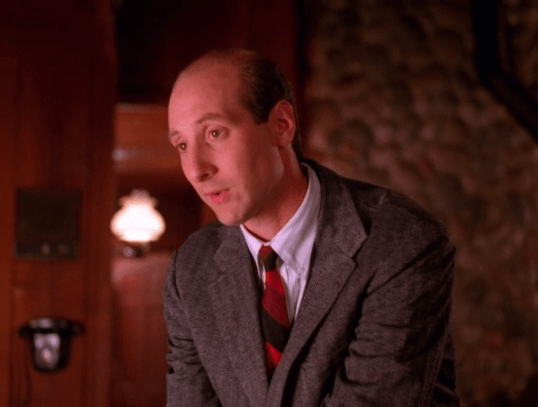
Walter Neff

Twin Peaks, like most of David Lynch’s films, borrowed a lot from classic film noir and nowhere is that more obvious than in the next scene.  An insurance agent (Mark Lowenthal) had dropped in on Catherine Martell (Piper Laurie).  The agent’s name is Mr. Neff, as in Walter Neff from Double Indemnity.  He’s visiting because a life insurance policy has been taken out on Catherine by … Josie Packard!  And, as Mr. Neff goes on to explain, it appears that Ben Horne (Richard Beymer) originally said that he would make sure that Catherine signed the papers!   Apparently, thinking it was strange that Catherine would be “too busy” to appear in person to sign the policy, Mr. Neff held off on giving Josie and Ben the last page that needed to be signed.  Catherine, realizing that she’s been set up, coolly says that she’ll have to look over the policy with her lawyer before signing anything.  It’s a fascinating scene because both Catherine and Neff realize what’s happening but neither comes right out and says it.  Apparently, this was Neff’s only appearance and that’s shame because Mark Lowenthal gives a fun, scene-stealing performance in the role.

Meanwhile, at the police station, Waldo the Myna Bird is feeling well enough to say, “Laura … Laura…” Suddenly, there’s a gunshot.  Hawk, Dale, and Ed — who were busy trying on disguises in the next room — run into the conference room.  Someone — and we know that had to be Leo because he was the one with the sniper rifle — has killed Waldo!

And I have to admit that I felt really bad about Waldo.  The shot of Waldo’s blood dripping down on the uneaten conference room donuts is far more horrifying than you would think, based on the description.  In just one and a half episodes, I had grown rather attached to Waldo.  The fact that we know he was talking because he was finally feeling playful again makes his death all the more tragic.  Andy, with tears in his eyes, reaffirms why he’s one of my favorite minor characters when he says, “Poor Wall-DOE!”
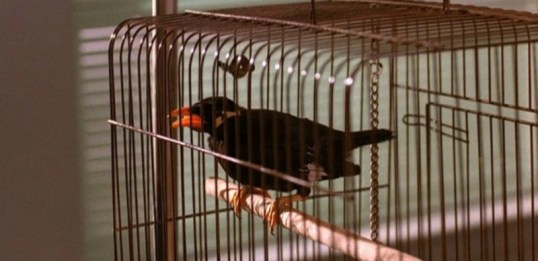
Rest in Peace, Waldo

Dale listens to the tape.  As Angelo Badalamenti’s somber music plays in the background, we hear Waldo say, “Laura!  Laura!  Don’t go there!  Hurting me!  Hurting me!  Stop it!  Stop it!  Leo, no!”  As the camera cuts between Dale and Harry listening to Waldo mimicking Laura’s death, I stopped to once again marvel at the genius of Twin Peaks.  This scene should have been ludicrous.  Instead, I’m getting teary-eyed just writing about it.
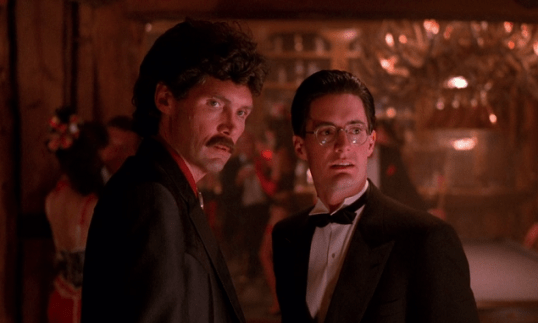
Leaving behind the unfortunate Waldo, we go to One-Eyed Jacks.  Cooper and a bewigged Big Ed show up.  (Cooper’s wearing a pair of glasses that look unbelievably adorable on him.)  Blackie (Victoria Catlin) approaches them, which gives us a chance to witness flirtatious Cooper.  On the one hand, flirtatious Cooper is specifically written to be kind of dorky.  That’s just who Dale Cooper is.  But, on the other hand, nothing he says is as dorky as the way Jerry and Ben Horne behaved when they visited One-Eyed Jacks in Zen, or the Skill To Catch A Killer.  Cooper, at least, has the excuse of being undercover.

Blackie takes one look at Big Ed and announces, “You look like a cop.”  Cooper smiles and says, “I’m the cop,” which leads to Blackie says that Dale looks like Cary Grant.  Ironically, MacLachlan would play Cary Grant in the 2004 film, Touch of Pink.
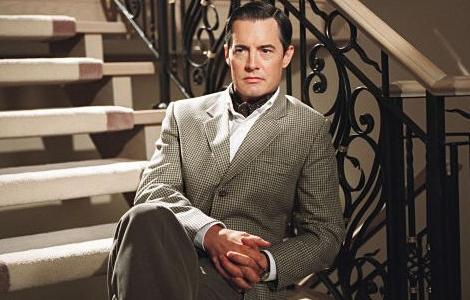
Kyle MacLachlan as Cary Grant in Touch of Pink

Meanwhile, Maddy sneaks out of the Palmer House, barely noticed by Leland (Ray Wise), who is sitting in the shadows.  It’s time for Operation Freak Out Jacoby and here’s where we get this episode’s other big Hitchock reference.  In order to fool Jacoby, Maddy has not only taken off her oversized glasses but she’s also put on Laura’s clothes and is now wearing a blonde wig.  Now is as good a time as any to point out that Madeleine Ferguson’s name comes from Hitchcock’s Vertigo, a film that starred Kim Novak as Madeleine and Jimmy Stewart as Scottie Ferguson.  In Vertigo, of course, Novak played two roles, just as Sheryl Lee does here.  In Vertigo, Novak was used to trick Jimmy Stewart into believing the woman he loved was still alive.  Essentially, that’s the same thing that James and Donna are planning to use Maddy to do to Jacoby.

Back at the Great Northern, Jerry (David Patrick Kelly) and Ben (Richard Beymer) are partying with the Icelandic businesspeople.  (Iceland appears to be full of a lot of fun people.)  Jerry is enraptured with the Icelandic people but Ben is more concerned about getting the contracts signed.  It turns out that the Icelanders only want to sign the contracts if they can do it at One-Eyed Jacks.  Ben agrees and then sends Jerry out of the office so that he can call Josie.  Apparently, the plan is to kill Catherine in the fire that Ben hired Leo to set.

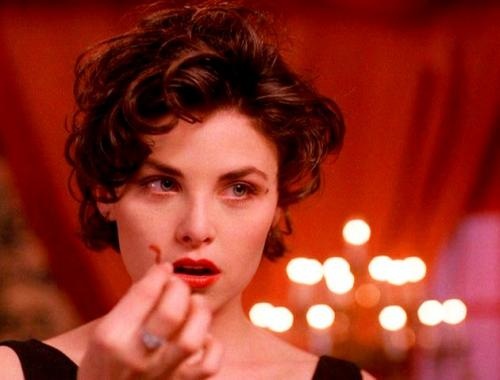
It turns out that Ben and Jerry are not the only Hornes heading to One-Eyed Jacks,  Audrey has already arrived and is meeting with Blackie. As soon as Audrey enters Blackie’s office, we immediately notice all of the red curtains.  That’s never a good sign.  Audrey hands Blackie her resume.  “Hester Prynne,” Blackie says, as she looks the resume over, “Pretty name.”

Audrey has made the mistake of claiming to have worked extensively in Canada.  When Blackie started to quiz Audrey about where specifically she had worked, I yelled, “Degrassi!  Say Degrassi!”  (Later I realized that was foolish on my part, as Twin Peaks predates Degrassi by over a decade,)  Instead, Audrey makes the mistake of mentioning an obviously fake “dude ranch,” (which I guess is where they grow dudes because I’ve never quite understood that term) and answers a question that Blackie asks about someone named Big Amos.

Big mistake.  It turns out that Big Amos is a dog and Blackie read The Scarlet Letter in Canadian high school.

(That said, borrowing the name of a Nathaniel Hawthorne heroine is such an Audrey thing to do that it automatically becomes the greatest thing ever.)

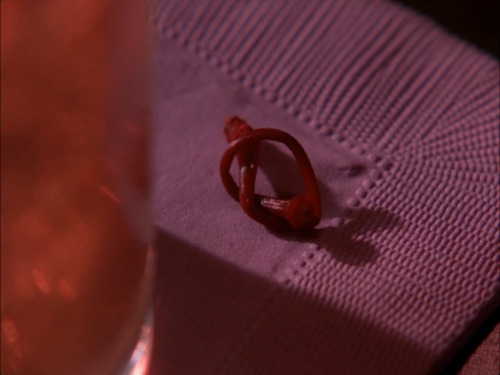
Blackie asks Audrey for one good reason not to kick her out.  Fortunately, there’s a cheery nearby so that Audrey can take it, eat it, and then use her tongue to tie the stem in a knot.  (Before anyone asks, despite having a very flexible tongue, I cannot do that.  However, neither can Sherilyn Fenn.  Apparent, she already had a pre-tied stem in her mouth when they shot the scene.)  Audrey has the job, which — considering how much her father and uncle love visiting One-Eyed Jacks — has the potential to be all sorts of creepy.

 

Inside the casino, Dale is playing blackjack,  His original Jamaican dealer goes on break and is replaced by … JACQUES RENAULT (Walter Olkewicz).

At Jacoby’s office, the good doctor (Russ Tamblyn) is watching Invitation to Love because, apparently, that’s the only show that plays on Twin Peaks television.  When the phone rings, the Hawaii-obsessed Jacoby answers with a somewhat perfunctory, “Aloha.”  (In my experiences, a true Hawaiian can make even the most somber “Aloha” sound like an invitation to the greatest party ever.)  On the other end, Maddy pretends to be Laura.  She tells Jacoby to go to his door.  “There’s something waiting for you.”
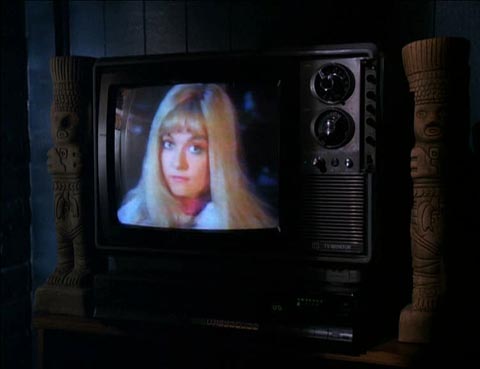
And indeed there is!  A VHS tape has been left outside Jacoby’s office.  The tape features Maddy (as Laura) holding that day’s newspaper.  From the payphone, Maddy tells Jacoby to “Meet me at Sparkwood and 21 in ten minutes.”

(Everything in the town of Twin Peaks revolves around wood, both figuratively and literally.)

What James, Maddy, and Donna don’t realize is that they’re being followed by Bobby, who is just as shocked as Jacoby to see “Laura” apparently alive.  (Now is as good a time as any to, once again, point out that Laura was named after the title character from Otto Preminger’s Laura, a film noir about a woman who is incorrectly believed to be dead.)

When Jacoby runs off to find “Laura,” James and Donna sneak into his office.  Meanwhile, Bobby plants cocaine in James’s motorcycle.  As for Maddy, she hangs out around the gazebo, little realizing that someone is watching her from behind the trees…

What a great episode!  Tomorrow, Leonard looks at the finale of season 1!

By the way, if you want even more Lynch, be sure to check out Gary’s review of three of Lynch’s short films and Val’s look at a music video that was made for one of Lynch’s songs.

Previous Entries in The TSL’s Look At Twin Peaks:

  1. Twin Peaks: In the Beginning by Jedadiah Leland
  2. TV Review: Twin Peaks 1.1 — The Pilot (dir by David Lynch) by Lisa Marie Bowman
  3. TV Review: Twin Peaks 1.2 — Traces To Nowhere (directed by Duwayne Dunham) by Jedadiah Leland
  4. TV Review: Twin Peaks 1.3 — Zen, or the Skill To Catch A Killer (dir by David Lynch) by Lisa Marie Bowman
  5. TV Review: Twin Peaks 1.4 “Rest in Pain” (dir by Tina Rathbone) by Leonard Wilson
  6. TV Review: Twin Peaks 1.5 “The One-Armed Man” (directed by Tim Hunter) by Jedadiah Leland
  7. TV Review: Twin Peaks 1.6 “Cooper’s Dreams” (directed by Lesli Linka Glatter) by Lisa Marie Bowman


The Preacher Is About To Begin Mass


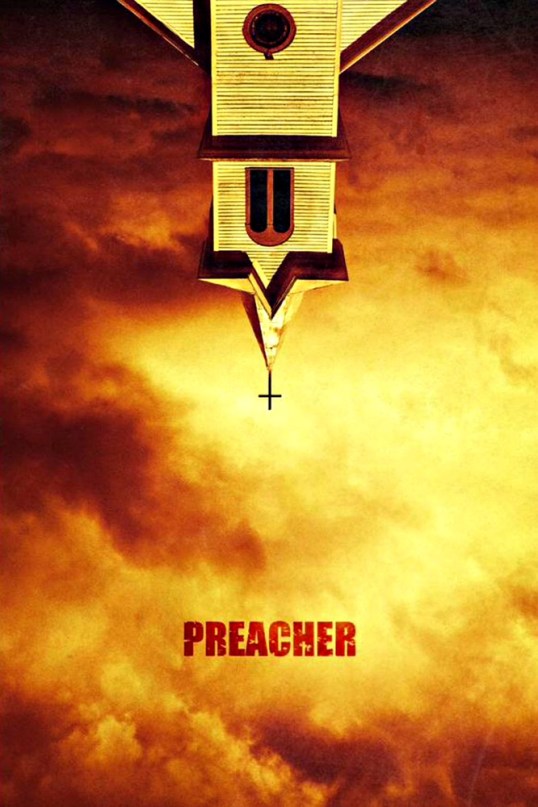
Preacher

Preacher the comic book that came out in 1995 and became the title that everyone gravitated to to balance out all the superhero titles that were coming out from Marvel, DC, Image and every small publisher in-between. The book was written by Garth Ennis and drawn by Steve Dillon. It was the book that took on the institutions of the Church, government and family in the most irreverent and blasphemous way one could think of at the time.

The book had been talked of within Hollywood since it’s release as one title that producers (seems all of them at one time or another) wanted to adapt for the big-screen. It wasn’t a superhero title so there was no need to worry about trying to adapt tights-wearing heroes and villains. Yet, the book’s subject matter which tended to go into the extreme at times became something that kept the title from being adapted.

After almost two decades of futile attempts to get Preacher up onto the big-screen it took the star-power of one big-screen star (Seth Rogen) to finally get the book adapted, but not on the big-screen, but on the small-screen to become part of AMC’s stable of unique series titles (The Walking Dead, Better Call Saul, Into the Badlands).

So, fans of the books only have until 2016 to wait for their dreams of Preacher finally coming to live-action life and non-readers will finally see what all the hype has been all about.

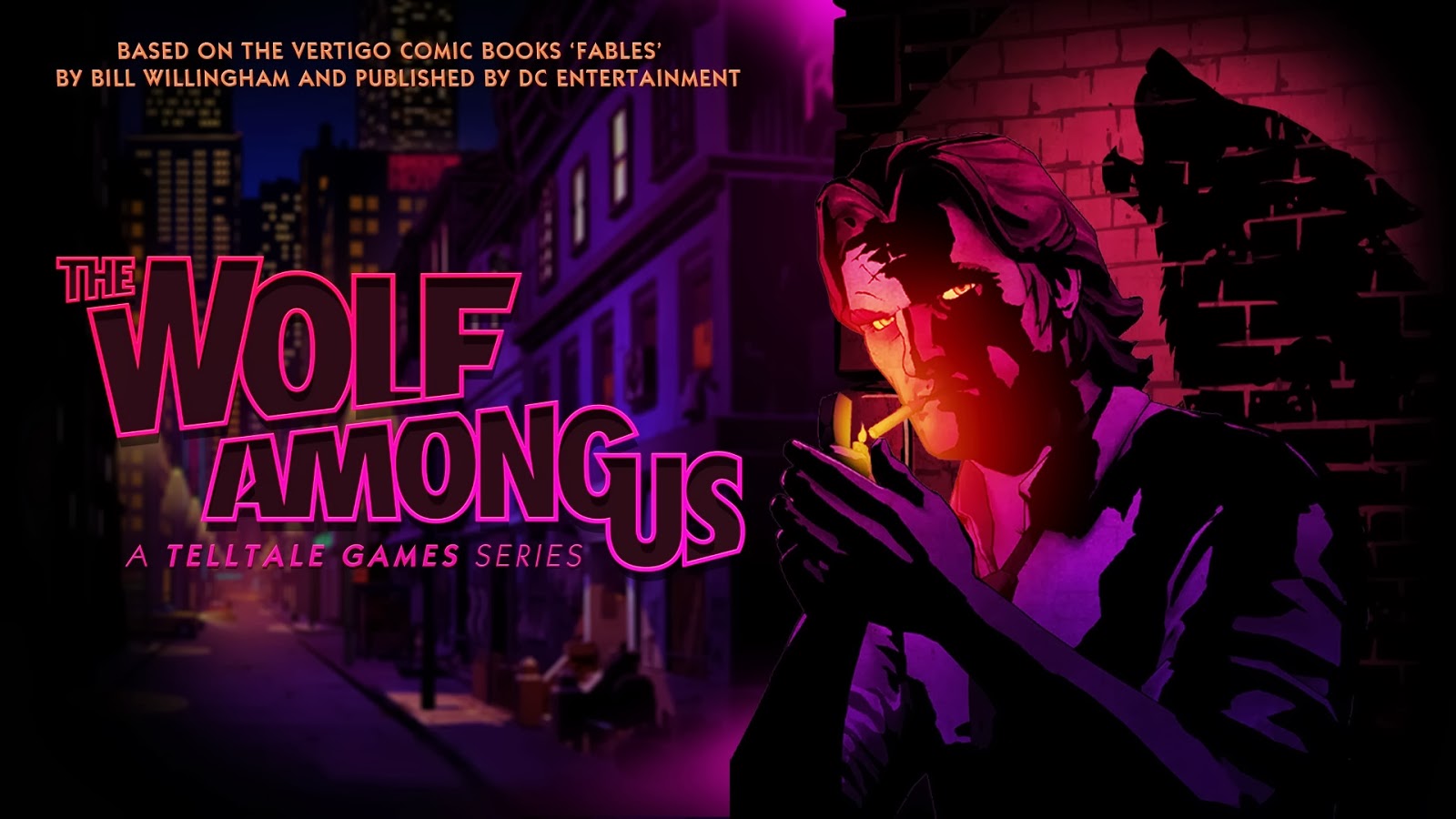
Review: The Wolf Among Us


The-Wolf-Among-UsThe Wolf Among Us was the first game released by Telltale after the extraordinary success of The Walking Dead. They had finally found their element, and decided (prudently) to stick with it. But how do you follow up a title based on a comic book series recognized by some as the best game of its year?

It’s simple. Make another title based on a comic.

Fables, the series Telltale’s following project was based upon, is about fairy tale characters we grew up reading about secretly living in our real world, in a real city, hiding their existence by creating their own society. None of that Once Upon A Time cutsey niceness. They are opressed and opressors, have severe flaws in their characters, vices and, in some cases, signs of antisocial personality disorder. That is to say, they’re often psychopaths.

I'll reconcile the shit out of you!

I’ll reconcile the shit out of you!

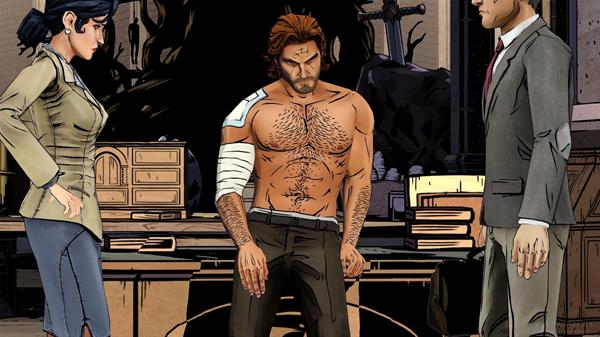
The game gives you control of Bigby Wolf, sheriff of the fables. As you might have guessed, previously known as the Big Bad Wolf of Little Red Riding Hood and Three Little Pigs fame. Reformed and willing to put his past behind him, Bigby tries to reconcile the poor and rebelious with the powerful and bureaucratic, in a very socially imbalanced society of mythical people.

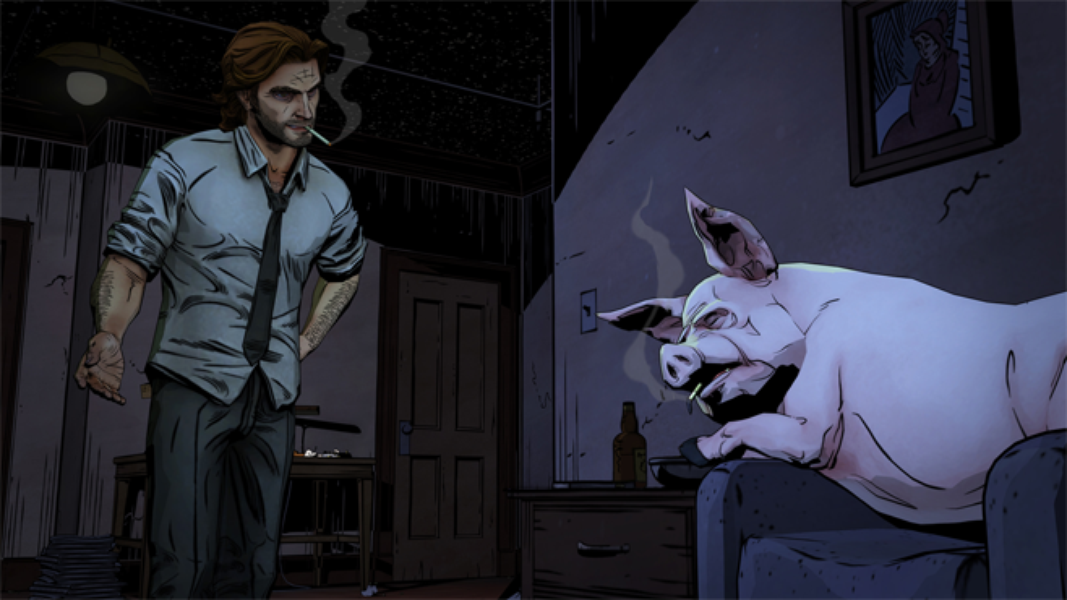
Bigby is the most human of all characters, ironically. Given the task of upholding the law in this broken, small society where everyone knows everyone else, he lives a lonely life, being recognized and feared for doing his job, which frustrates him. His tendency to bend the rules makes the fables’ mayor office see him as a loose cannon. Bigby is a noir hero, chain smoking and full clad in trenchcoat. Bitter with having to raise his hand against unsatisfied citizens and with the impunity of guileful villains; forced against rebellion, but resentful towards the bureaucrats, he often passes his own kind of law. His humanity is revealed through conversations with the only people close to him. Colin, one of the three pigs he used to terrorize, and Snow White, secretary of the mayor office and object of his affections.

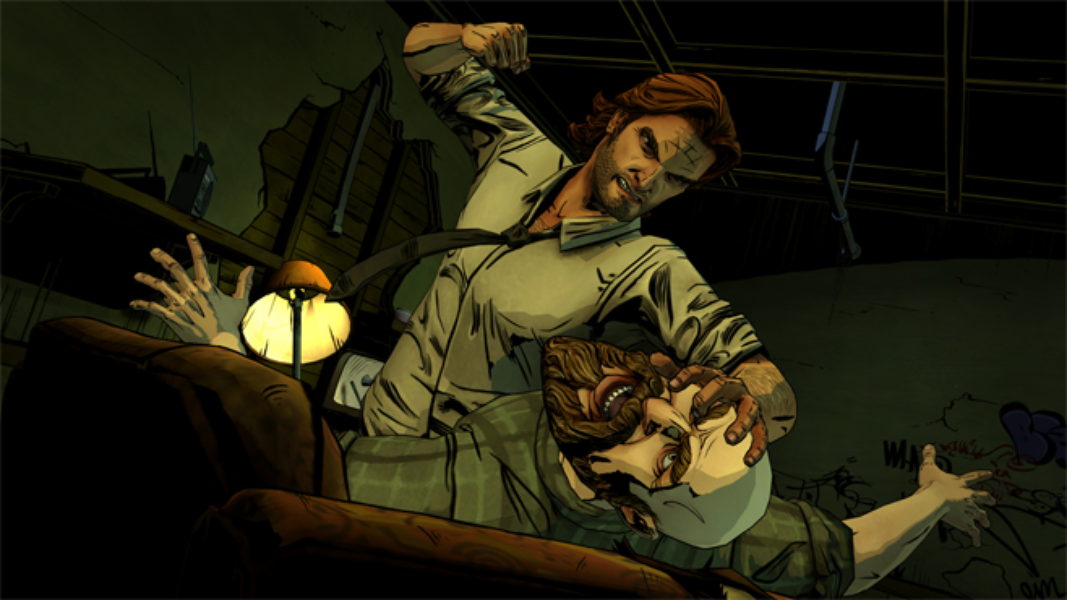
the-wolf-among-us-004The amount of deviance from the path of justice in the game vary depending on your playing style. As you solve a series of murders during the span of the game, you decide how violent Bigby will be towards everyone, from the mostly innocent to the very guilty. However, this is not a story about choices like The Walking Dead, but about people leading double lifes. By taking fables, one of our most powerful cultural symbols of purity and innocence, and twisting and corrupting them, The Wolf Among Us is a modern and allegorical story with heavy noir influences, with fantasy and magic playing a part in the narrative.

It is not without flaws, however. It should be noted that, as the game needs a central story, the mystery of the series of murders obfuscate this amazing world, and one purely interested in the big picture; the unjust society of the fantastical, would be better served by reading the Fables comics. The Wolf Among Us has lots of ups far too early in the game and a few too many downs too late into it. It serves as a decent mystery thriller, and more importantly as an origin story for the comic book series, and it does have absolutely thrilling moments. However, it doesn’t bring much new to the table of longtime Fables fans other than focusing on one of the most interesting characters of its mythos.

the-wolf-among-us-episode-3-review-a-crooked-mile-1109968

As a standalone story, The Wolf Among Us has amazing action sequences and is a very exciting story up until the last quarter where it disappoints. As part of the Fables series, and possibly first chapter of others to come, it’s a perfect entry point and highly recommended. The complexity of its premise and excellence of some of its moments more than compensates for the lackluster closure of this first chapter. If that’s not enough to convince you, play it for Bigby Wolf, who might just be the coolest detective in videogame history.

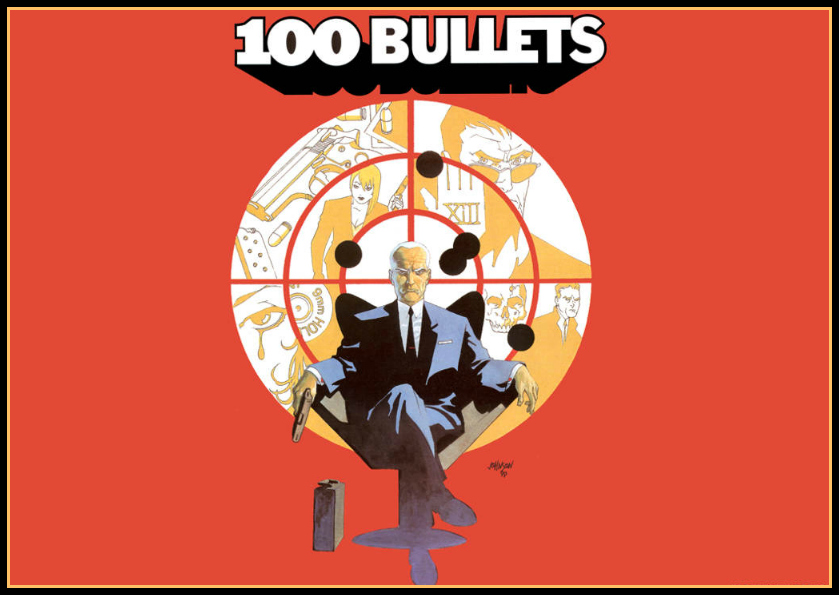
100 Bullets To Be Developed For Showtime


One of my favorite comic book titles ever ended up not being a superhero title, but an inventive take on the pulp noir stories which has it’s basis on the stories of such luminaries as Dashiell Hammett, Mickey Spillane, Jim Thompson and Raymond Chandler. 100 Bullets by DC Comics’ Vertigo imprint is that very title and it’s creative team of Brian Azzarello (writer) and Eduardo Risso (artist) were able to fit a complex, morally ambiguous tale of betrayal, conspiracies and bloodshed.

In years past there had been talk of adapting the 100-issue maxi-series into an HBO series, but those plans went for naught. With DC now hellbent on adapting much of their comic book properties to the big and small screen it was a nice surprise to read from Slashfilm.com that 100 Bullets is in development for premium cable channel Showtime with David Goyer executive producing the show. Whether this news ultimately reaches it’s logical conclusion and Showtime picks up the show is still up in the air.

The fact that there’s a good chance the series will finally have it’s live-action realization has made this news a happy one for me. I have always thought that Azzarello and Risso created something that was tailor-made for premium cable. Even the way Risso drew the scenes on the pages of the comic was done so as if through a film camera recording every detail. The series also has quite a cast of characters that makes it easy for an audience to latch onto and invest themselves emotionally for their well-being.

Here’s to hoping that Goyer is able to set aside his ego and find quality writers to help him adapt the series. Of all the details about this news it’s his name that worries me the most. Showtime definitely needs a new series to counter the runaway hit HBO has in it’s hands with it’s Game of Thrones series. I believe that 100 Bullets could be Showtime’s counter to HBO’s new show if they decide to pick it up.

Source: /Film

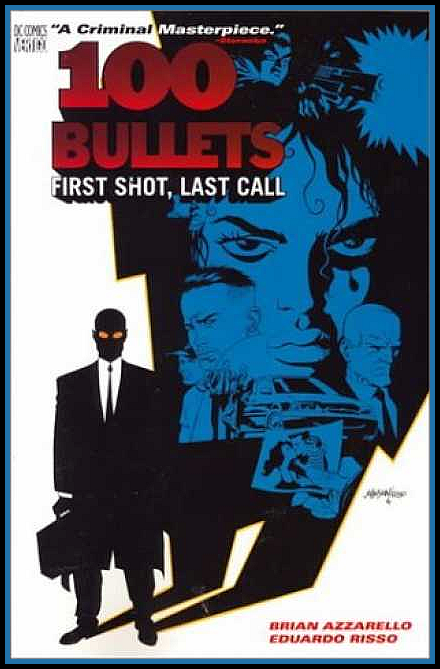
Review: 100 Bullets Vol. 1 – First Shot, Last Call


I missed out on the initial release for 100 Bullets, but I’ve since rectified that problem.

Brian Azzarrello’s 100 Bullets continues the long line of excellent mature comic titles from DC Comic’s Vertigo line. Azzarrello’s hardboiled, crime-thriller noir series brings to mind classic detective-noir works by Hammett, Spillane and Chandler. It’s a more complex continuation of the hyper-noir series Frank Miller began with his Sin City series. I’ve heard people say that this series was better than Sin City and to some respect it was. The stories in each issue contained in this first volume (issues 1 through 5) were abit more complex in nature and execution than Miller’s more simple noir tales. The five stories in this collected volume also laid the basic groundwork for what’ll turn out to be one long-running series lasting exactly 100-issues. Where Sin City‘s simplicity in its storytelling and artwork lay its strength, it’s in the complexities in the tales and the detailed, but economical artwork that 100 Bullets shined through.

In First Shot, Last Call we’re introduced to the gamemaster of the tale: Agent Graves. Looking like an ever-present government agent who has seen all that life has thrown at him and ready for more, Agent Graves picks a recently paroled Latino lass by the name of Dizzy Cordova with a proposition. He offers Dizzy an attache case with a gun and 100 bullets that’re untraceable and definite proof that certain individuals caused her heartache and grief that has ruined her life. He only offers her the attache case, its content and the proof within. The choice is Dizzy’s to make on what she should do with what’s offered her. This set-up and premise is the beauty of 100 Bullets. The story’s basically a morality tale of choices offered to the characters. Will they use the offer to exact vengeance and get away with it scott-free, or will they refuse the offer and live on with their life. The choice of revenge really doesn’t bring back lost time and loved ones and only feeds the need for retribution. Agent Graves doesn’t really force Dizzy’s hand, but a supporting character knowledgable of the offer does — for his own agenda not yet known — prods, pushes and guides her to picking the more primal choice. Dizzy’s choice in the end was both understandable and in the end inevitable.

The second story arc deals with Lee Dolan who also has had his life turned upside-down by people unknown to him. His life and family taken away by the stink of a child pornography accusation in the past. Agent Graves makes him the same offer of the attache case and its untraceable 100 bullets. Dolan’s reaction to this offer is different from that of Dizzy’s, but in the end his ultimate choice doesn’t give him the same resolution and new life path that Dizzy made. It’s a tribute to Azzarrello’s great writing that the decision both Dizzy Cordova and Lee Dolan made were understandable when taken into context of their personalities and yearning to fix the problem that led them to their current state in their lives.

To complement Azzarrello’s words perfectly were Eduardo Risso’s artwork. It would be a misnomer to say that Risso’s art style was minimalist like those of Frank Miller’s woodcut-engraving style for Sin City or Mike Mignola’s chiasroscuro-style for his Hellboy series. There’s a sense of the cinematic in Risso’s work. The scenes were always drawn with a mind for action even when it’s just people standing around. Risso has quite the filmmaker’s eye in how he’s drawn 100 Bullets which just adds to its noirish feel. The characters and environment were drawn not to scale and real-world proportion, but just enough not to look cartoonish. I would agree that there’s an abundance for cleavage on the women drawn, but Risso doesn’t do it gratuitously. Instead he uses this detail to showcase the sexuality of the strong female characters. It paints the female characters like Dizzy Cordova and Megan Dietrich with a sense of both strength and sensuality without pandering to the teenage boy demographic. Plus, he gives these ladies their own personality and character with how he draws them. Dizzy truly has the Latina sensual curves while Megan has the icy-cold Aryan beauty that serves her well.

100 Bullets: First Shot, Last Call was a great discovery and a wonderful beginning to a very mature, intelligent and hardhitting comic series. Congratulations must got to its creator Brian Azzarrello for writing such great characters and memorable stories. I can’t forget the work of his artist and partner-in-crime, Eduardo Risso. Risso’s artwork has stamped themselves in my mind as the only way to see 100 Bullets in. Both Azzarrello and Risso complement each other well and their continued collaboration right up to the end of the series helped make this series one of the best of the past decade.