Flight Risk, Mel Gibson’s first directorial effort since the Oscar-nominated Hacksaw Ridge, opens with Winston (Topher Grace) being arrested by Madolyn (Michelle Dockery), a U.S. Marshal.
Winston is an accountant, one who moved around a lot of money for the Mafia and who arranged for a lot of bribes to high-ranked officials. That said, Winston is not a particularly dangerous or even cunning fugitive. If anything, he’s extremely neurotic. He worries about the safety of his mother. He tells Madolyn (and the audience) way more than anyone could possibly need to know about his bathroom habits. He’s on the run because the government wants him to testify against his former employers. Winston is far more frightened of the Mafia than he is of the government and with good reason. The Mafia wants him dead. The government still needs him alive.
After Winston is arrested in Alaska, Madolyn arranges for them to be flown to Anchorage by a Texas-born bush pilot named Darryl Booth. When a man claiming to be Darryl (Mark Walhberg) shows up, Madolyn and Winston promptly get on the plane. From the minute Wahlberg started speaking, I was rolling my eyes. Wahlberg’s Texas accent was perhaps the worst that I’ve ever heard in a modern movie and that’s saying something. Fortunately, it turned out that Wahlberg’s accent was deliberately bad. The man calling himself Darryl Booth is not actually Darryl Booth. He’s not from Texas. He’s not a professional pilot. Instead, he’s a hitman who has been sent to kill both Winton and Madolyn. Unfortunately, Madolyn and Winston don’t realize that until the plane has already taken off.
Flight Risk starts out as an enjoyably silly movie but it’s ultimately done in by the limitations of its plot. Nearly the entire film takes place in that cramped and nondescript airplane and neither Madolyn nor Darryl are really compelling enough to hold onto your interest over the entire course of the film’s 90 minute running time. Winston, on the other hand, is actually a compelling character and Topher Grace shows, once again, that he deserves a bigger film career than the one he has. Unfortunately, Winston spends the majority of the film incapacitated. He’s either in handcuffs and stuck in the back of the plane or he’s sitting up front and freaking out but he never gets to do as much as one might wish. Instead, the entire film comes down to Darryl taunting his targets and Madolyn struggling to figure out how to fly the plane. To be honest, the film actually makes flying look pretty easy. I mean, Madolyn has no experience as a pilot and she somehow still manages not to crash. How difficult could it be?
Of the three main actors, Topher Grace gives the best performance, managing to give a fully-rounded performance even when Winston is incapable of moving. For the first thirty minutes or so of the film, Mark Wahlberg is enjoyably over-the-top but then his character just becomes a standard talkative villain. Michelle Dockery is stuck playing a boring character and she never brings much life to her flat dialogue. If anything, she’s outacted by an unseen Leah Remini, who provides the voice of Madolyn’s partner and proves that she can still curse like a champ.
Flight Risk continues the pattern of scripts that rank high on Hollywood’s “black list,” (that is, the annual list of the most popular unproduced scripts in Hollywood), being turned it into disappointing films. At least it’s slightly more fun than Cedar Rapids.
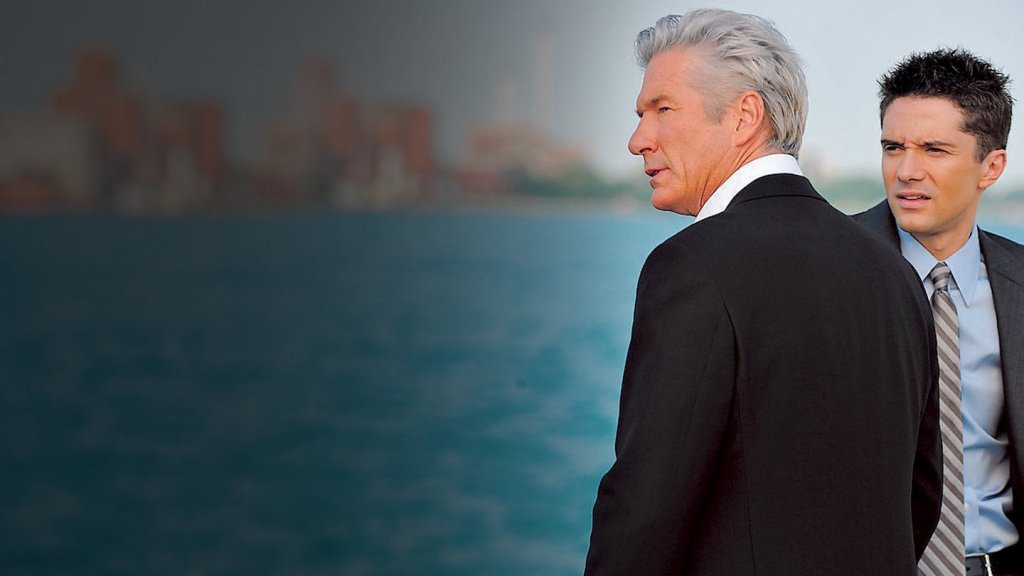
Every Monday night at 9:00 Central Time, my wife Sierra and I host a “Live Movie Tweet” event on X using the hashtag #MondayMuggers. We rotate movie picks each week, and our tastes are quite different. Tonight, Monday February 3rd, we’re watching THE DOUBLE starring Richard Gere, Topher Grace, and Martin Sheen.
Sierra had a day off from work last week and she watched this movie 3 times. Then she told me it would be her choice for the week! I’d say she really likes the movie!
THE DOUBLE is the story of a retired CIA operative (Gere), who’s paired with a young FBI agent (Grace), trying to solve the mystery of a senator’s murder. All of the signs are pointing towards an assassin from the Soviet Union!
Here is some interesting trivia about the film:
THE DOUBLE is directed and written by Michael Brandt. After directing this film, Brandt would be the driving force behind the various Chicago based TV series’ CHICAGO FIRE, CHICAGO P.D., and CHICAGO MED. He also wrote the screenplays to 3:10 TO YUMA (2007) and WANTED (2008). This is a talented man!
Filming was halted for six weeks after Richard Gere dislocated his shoulder during a fight sequence with actor Tamer Hassan.
If you enjoyed the TV show CASTLE, the beautiful Stana Katic is in this movie. She’s billed 5th, but she only has about 5 minutes of screen time. That shows you how popular that show was at the time of this films release in 2011.
So join us tonight to for #MondayMuggers and watch THE DOUBLE! It’s on Amazon Prime.
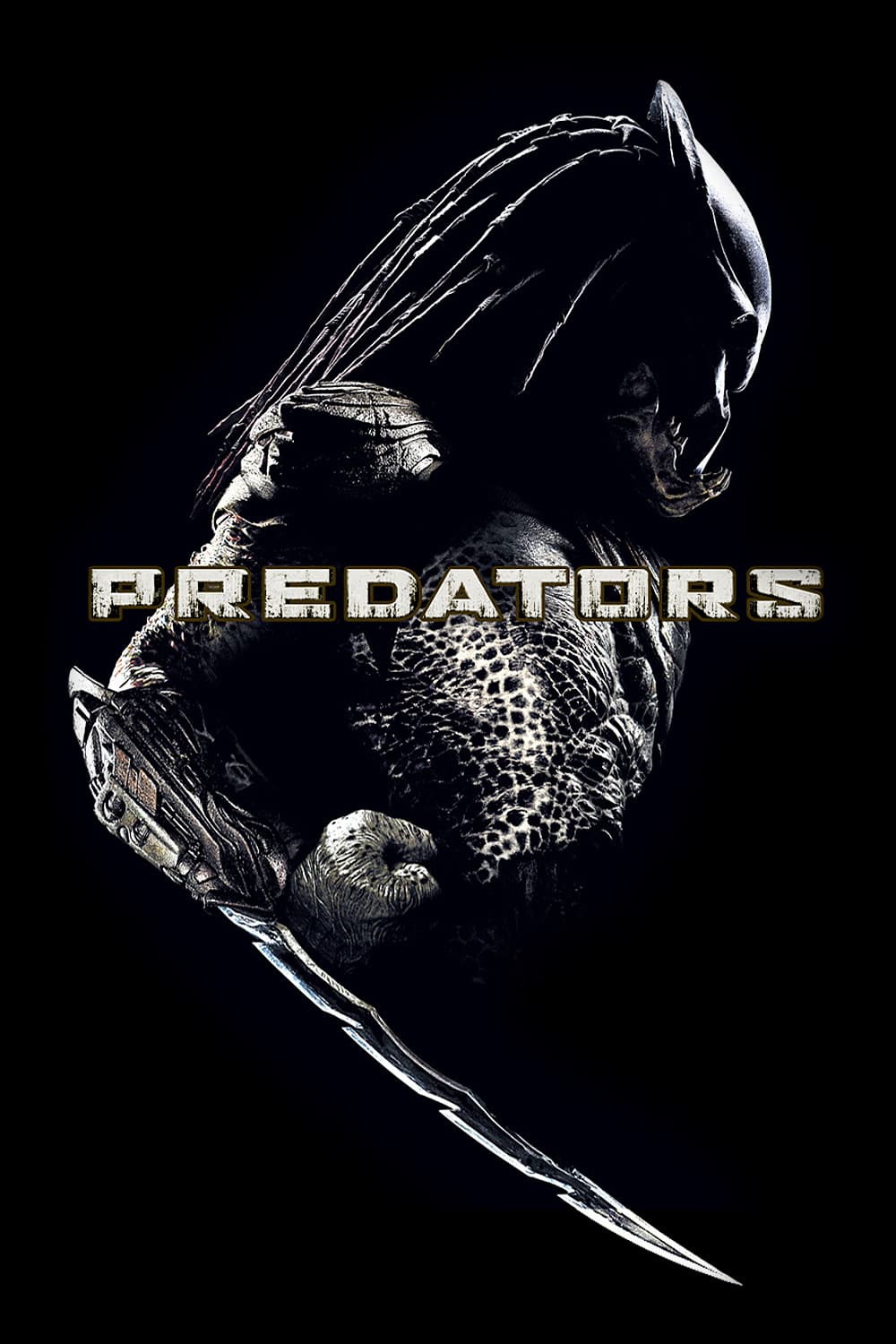
It would be twenty years before those space-faring hunters, the Predators, would return to the big screen. Sure, they appeared in the two Aliens vs. Predator films of the early 2000s, but I don’t count those as part of the Predator franchise—mostly because they weren’t the headliners. Plus, those two mash-up films were all kinds of awful.
2010’s Predators, directed by Nimród Antal and produced by Robert Rodriguez, set out to breathe new life into the sci-fi action franchise that the two AvP entries had drained of excitement. From the early 1990s until this film’s release, the Predator mythology had steadily expanded through novels, comics, and games, creating a world as rich as any in science fiction. Longtime fans came to understand the Predators’ culture, mindset, and technology.
For some, that world-building stripped away the mystery that made the Predator such an iconic monster. Others felt it helped establish consistent rules, allowing future stories to build on a solid foundation instead of endlessly one-upping what came before.
Predators embraced this expanded lore while adding a new wrinkle: the introduction of the so-called “Super Predators,” bigger, faster, and meaner than the classic hunters we’d seen over the decades. Another new element placed the story on an unnamed planet serving as an extraterrestrial game preserve, where Predators could hunt their chosen prey on familiar ground.
This setup lent a new dimension to the narrative. The humans being hunted had nowhere to run, and whatever advantage they might have enjoyed on Earth vanished instantly. They were now being hunted on Predator turf—a cruel inversion of game hunting, like a safari where the prey has no chance against its well-equipped pursuers.
Despite these new additions to the lore, the film mostly works as an action-thriller. We get the requisite band of misfits, murderers, and killers—the worst humanity has to offer, but the best at what they do. They range from black-ops mercenaries and elite snipers to cartel enforcers and even a serial killer.
Leading this reluctant ensemble is the enigmatic Royce, played by Oscar-winner Adrien Brody, who surprisingly pulls off the wiry, cold-hearted black-ops soldier. The film hinges on his performance. He’s not a team player, nor is he likable—he fits the antihero mold perfectly, willing to sacrifice anyone if it means surviving another hour. Yet he understands that his best chance lies in keeping others alive, if only as tools for his own survival. He’s the audience surrogate, the one who rolls his eyes as everyone else makes one bad decision after another.
Antal’s action direction recalls the McTiernan era. He favors long, sweeping takes that clearly define the geography of each battle—a quality too rare in modern action cinema, where quick cuts and shaky edits often stand in for real dynamism. Where the film falters is in its reliance on exposition-heavy dialogue. After nearly every action set piece, the momentum stalls as characters explain what’s happening. Laurence Fishburne even appears in a role that exists purely to deliver exposition.
Now, about those Super Predators: they’re an intriguing trio who expand the series’ creature variety, though at the cost of making the classic Predator seem almost obsolete. There’s the Tracker, who uses alien hunting dogs to flush out prey; the Falconer, who employs a cybernetic drone that feels straight out of the Marvel Cinematic Universe; and the Berserker, the biggest and most brutal of the three, relying on raw power rather than skill or strategy.
They look fantastic but slightly diminish the menace of the original Predator design. Against this new breed, the traditional hunters seem almost helpless.
Still, Predators stands several notches above what audiences got from the two AvP movies. Despite an exposition-heavy script and a bold but polarizing decision to downplay the classic Predator’s threat, Antal’s entry injects enough adrenaline and fresh lore to reenergize the series. It’s unfortunate that the AvP films’ lingering stench colored its reception, but over time, more fans have come to appreciate Predators for what it is: a fun, muscular, and engaging slice of sci-fi action.
Well, here we are. We’re more than halfway through the year and, to be honest, the Oscar forecast seems just as cloudy as ever.
To be honest, I’m starting to get the feeling that this is going to be a year where the Academy is more concerned with sending a message than anything else. Just as the Emmy nominations were all about sticking it to Trump (as opposed to actually honoring the best that television has to offer), it wouldn’t surprise me to see the Academy try to do the same thing. That doesn’t mean that the nominees aren’t going to deserve to be nominated, of course. Instead, it just means that this might be a good year for films with a political agenda.
Anyway, here are my predictions for July! They’re still pretty random, to be honest. Be sure to also check out my predictions for January, February, March, April,May, and June!
What’s an Insomnia File? You know how some times you just can’t get any sleep and, at about three in the morning, you’ll find yourself watching whatever you can find on cable? This feature is all about those insomnia-inspired discoveries!
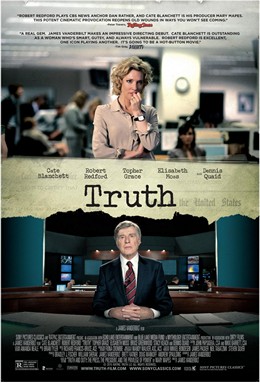
If, last night, you found yourself awake at three in the morning, you could have turned over to Starz and watched the 2015 film, Truth.
I can’t say for sure whether or not Truth would have put you to sleep. It kept me awake, largely because I was in a state of shock that any movie could be as bad as what I was watching. Without running the risk of hyperbole, I can say that Truth is one of the worst fucking movies that I’ve ever seen in my entire life. It’s not just that the film is poorly scripted, inconsistently acted, and directed in the most heavy-handed way possible. No, the problems with Truth went far beyond mere execution. Truth is a film with an agenda, one that I kind of agree with, but it’s such a total misfire that it ends up doing more damage to its cause than good. Truth is meant to be a defense of the much maligned mainstream media but it’s so poorly put together that it’s easy to imagine it being one of Donald Trump’s guilty pleasures. Remember how all of us musical theater nerds used to hatewatch Smash? I imagine that the White House staff does the same thing with Truth.
Truth is ostensibly based on a true story. In 2004, veteran anchorman Dan Rather (played by Robert Redford) reported a story that then-President George W. Bush got preferential treatment while he was serving in the Air National Guard. This story was considered to be especially big because 1) the Iraq War was deeply unpopular, 2) Bush was in a tight race for reelection, 3) his opponent, John F. Kerry, didn’t have much to offer beyond having served in Vietnam, and 4) questions were being raised about what Kerry actually did in Vietnam.
One of the most important pieces of evidence in Rather’s story were four memos that had been provided by a retired Lieutenant Colonel from the Air National Guard, a veteran Bush-hater named Bill Burkett (played, in the film, by Stacy Keach). Shortly after the story aired, conservative bloggers claimed that the memos were obvious forgeries. After spending weeks defending the story and haughtily dismissing anyone who didn’t collect an eight-figure paycheck from CBS, Rather admitted on air that the authenticity of the memos could not be verified. In the wake of the scandal, Rather’s longtime producer, Mary Mapes (Cate Blanchett), was fired. Rather retired a year earlier than expected and went on to become one of those reliably dull commentators who occasionally emerges to complain about how the world hasn’t been the same since Adlai Stevenson died. Mapes later wrote a book, which argued that 1) the memos were authentic and 2) it didn’t actually matter whether they were authentic, even though they like so totally were.
With all the current talk about fake news and whether both the media and Hollywood exist in a bubble, Truth is a film that should be especially relevant but, as previously stated, it’s so clumsy and heavy-handed that it actually does more harm than good. About halfway through the film, there’s a hilarious scene in which literally the entire country is shown watching 60 Minutes with awe-struck expression on their face. Children are watching. Customers in a bar are watching. The cooking staff in the kitchen pauses in their work to watch the report. Heroic music rises on the soundtrack. This scene, with all of its self-important grandeur, pretty much sums up everything that’s wrong with Truth. It’s one thing to argue that the news media does, should, and must play an important role in American life. It’s another thing to make your argument by constructing a fantasy world where the entire country plots their lives around watching 60 Minutes. But that’s the way Vanderbilt directs the entire film. He’s so high on the fumes of his good intentions that he doesn’t realize his film basically comes across like a parody of those intentions.
Especially in the second half of the film, there’s a lot of speeches about why journalism is important. And those speeches may actually make a great point but the problem is that none of them convince us that Mary Mapes and Dan Rather didn’t get fooled by some painfully obvious forgeries. In its laudable effort to defend journalism, Truth makes the mistake of excusing shoddy journalism. When, towards the end of the film, Mapes exclaims that the memos were only a minor part of the overall story and not necessary to prove that Bush got preferential treatment, you want someone to ask her, “If you could prove the story without them, then why did you include these unverifiable documents in the first place, especially considering that they were received from a questionable source?” But nobody does because none of the film’s saintly characters have been written or portrayed with the nuance necessary to be able to survive a question like that. Truth‘s problem is that it wants to have it both ways. “It doesn’t matter that this story was based on obviously fake documents,” Truth says, “And, because Mary Mapes and Dan Rather were sent by God to tell the truth, the obviously fake documents were completely real.”
And then there’s the film’s performers. Stacy Keach is great as Burkitt and his eccentric performance suggests the film that Truth could have been if it wasn’t so concerned with trying to portray its lead characters as saints. But then there’s Robert Redford, whose portrayal of Dan Rather has all the nuance and personality of a wax figure. (Redford wears suspenders. That’s the extent of his performance.) As Mary Mapes, Cate Blanchett is totally wasted. She doesn’t really have a character to play, beyond her male director’s conception of what a professional woman is supposed to be like. (She also has a traumatic back story of abuse, which the film trots out in such a klutzy manner that it’s actually incredibly insulting to real-life abuse victims.) Dennis Quaid, Topher Grace, and Elisabeth Moss all show up as members of Mapes’s team. Quaid is playing a military man so he gets to salute in slow motion. Grace is playing a hipster with a beard so he gets this embarrassing scene where he rants about how he’s being targeted not because of sloppy reporting but because of a corporate conspiracy. (This was obviously meant to be a huge applause moment but, like a lot of the movie, it doesn’t explain how the progressive cause is helped by shoddy journalism.) Moss doesn’t get to do anything, other than sit in the background. To waste a cast of this quality is a crime.
So why did this mostly terrible film get respectful reviews? Why did Sasha Stone and Jeff Wells insist that Truth was destined to be an Oscar contender? Call it confirmation bias. Truth plays to mainstream liberals (which includes the majority of film reviewers) in much the same way that God’s Not Dead 2 plays to Christians. But just because you agree with a film’s ideology, that doesn’t make it an example of good filmmaking. While artistic films are often political, it’s rare that political films are ever art. If every anti-Bush film was an artistic masterpiece, we would be living in a cinematic golden age.
Here’s the thing. We live in a time when the media is under attack and being used a convenient scapegoat for every bad thing in America. Donald Trump largely won in 2016 by portraying the media as being biased and that’s a charge that will undoubtedly be repeated many times over the next four years. A heavy-handed mess like Truth doesn’t help anything.
I have mixed feelings about Steven Soderbergh. On the one hand, his talent cannot be denied and you have to respect the fact that he’s willing to take chances and make films like The Girlfriend Experience and The Informant. On the other hand, he’s also the director who has been responsible for overrated messes like Contagionand utter pretentious disasters like Haywire. And it doesn’t help that Soderbergh’s fanbase seems to be largely made up of the type of hipsters who end up leaving comments under the articles at The A.V. Club. Some people mourned Soderbergh’s retirement. Personally, I think he made the right decision. He retired before his misfires ended up outnumbering all of his masterpieces.
The thing about Soderbergh is that his good films are so good that it makes it all the more frustrating to watch his failures. If Soderbergh was just your typical bad director than a film like Contagion wouldn’t be as annoying. But this is the man who also gave us Traffic!
And Traffic is a very good film.
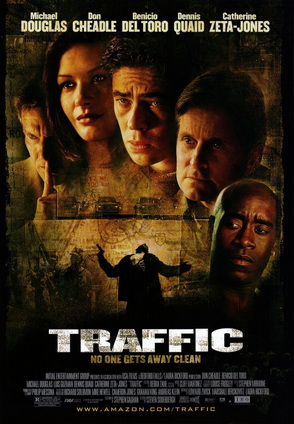
First released in 2000, Traffic attempted to deal with the American war on drugs, a war that the film suggests might not even be worth fighting. (Full disclosure: I support the legalization of drugs and, for that matter, just about everything else. And yes, I am biased towards films that agree with me. So is every other film critic out there. The difference is that I’m willing to admit it.) Traffic won four Oscars, including Best Director and Best Supporting Actor for Benicio Del Toro. It was also nominated for best picture but lost to Gladiator.
Traffic tells three, barely connected stories. Each story is given its own distinct look, feel, and color scheme. And while it takes a few minutes to get used to film’s visual scheme, it ultimately works quite well. Though all of the film’s characters share the same general existence, they live in different worlds. The only thing linking them together is drugs.
Judge Andrew Wakefield (Michael Douglas) is a judge on the Ohio Supreme Court who has recently been named as the new drug czar. However, while Judge Wakefield is going around the country and talking to politicians (Harry Reid shows up playing himself and is just as creepy as always), his daughter Caroline (Erika Christensen) is dating Seth (Topher Grace) and getting addicted to cocaine and heroin. When Caroline run away, Judge Wakefield recruits Seth and, using him as a guide, searches the ghetto for his daughter.
The Wakefield scenes are bathed in cold and somber blues. They’re beautiful to look at but, in some ways, they’re also some of the weakest in the film. The whole plotline of Caroline going from being an innocent honor’s student to being a prostitute who sells her body for heroin feels a lot like the notorious anti-drug film Go Ask Alice. At the same time, it’s interesting and a little fun to see Topher Grace playing such a little jerk. Grace gets some of the best lines in the film, especially when he attacks Wakefield’s feelings of smug superiority.
In the film’s second storyline, two DEA Agents (Don Cheadle and Luis Guzman) arrest drug trafficker Eddie Ruiz (Miguel Ferrer). Eddie works for the Ayala syndicate and, once he’s arrested, he turns informant. Drug lord Carlos Ayala (Steven Bauer) is arrested. While Carlos sits on trial, his pregnant wife (Catherine Zeta-Jones) and his sleazy business associate (Dennis Quaid) struggle to hold together the business and find a way to kill Ruiz before he can testify.
This storyline is filmed in bright and vibrant colors and why not? The Ayalas are rich and, unlike the Wakefields, they don’t feel the need to hide their material wealth. This is actually probably my favorite storyline, largely because it’s the best acted and the most entertaining. Miguel Ferrer, in particular, steals every scene that he’s in. The scene where he explains the economics of being a drug trafficker is fascinating to watch.
The Ayala storyline may be my favorite but the film’s most thought-provoking storyline is the third one. Taking place in Mexico, it stars Benicio Del Toro as Javier Rodriguez, a casually corrupt police officer who gets recruited to work for General Salazar (Tomas Milian), who is heading up Mexico’s war on the cartels. Following the orders of Salazar, Javier captures assassin Frankie Flowers (Clifton Collins, Jr.) who is then savagely tortured by Salazar until he turns informer. Javier comes to realize that Salazar is actually working for one of Mexico’s cartels. When he decides to inform on Salazar, he puts his own life at risk.
The Mexico storyline is also the harshest and visually, it reflects that fact. The heat literally seems to be rising up from the desert and the streets of Tijuana. It takes a few minutes to adjust to the look of the Mexico scenes but, once you do, they become enthralling.
And Traffic, as a film, is undeniably enthralling as well. Soderbergh deftly juggles the multiple storylines and brings them together to create a portrait of a society that’s being destroyed by the efforts to save it. Hopefully, if Soderbergh ever does come out of retirement, he’ll give us more films like Traffic and less films like Contagion.
Will Interstellar be as much a game changer as Kubrick’s own 2001: A Space Odyssey? Some are already hyping that it may just be on that very level.
Now, let’s not crown Christopher Nolan upcoming film (his first since concluding his Dark Knight trilogy) as an instant classic when we haven’t seen anything outside of the trailers released. Yet, the teases and brief explanation of the film’s plot hints at something that may just turn out to be incredible.
I know at least one person here at Through the Shattered Lens who is bursting at the seams at trying not to overhype the film for himself. It may just be a losing battle if his reactions to this latest Interstellar trailer is any indication.
Interstellar is set for a limited release on November 5, 2014 (70mm and 35mm film formats) then wide on November 7, 2014 on digital format.
I missed the 80s retro-themed comedy Take Me Home Tonightwhen it was released to theater earlier this year. It was one of those films that I meant to see but then it ended up spending such a short time in theaters that I just never got the chance. A few days ago, via OnDemand, I finally got a chance to see Take Me Home Tonight in the comfort of my own bedroom.
Plotwise, Take Me Home Tonight feels like a cinematic Frankenstein monster, stitched together from elements from all those old school 80s comedies. Therefore, it’s appropriate that the film itself is set in 1988. Matt (Topher Grace) is a recent graduate from M.I.T. who is spending his post-graduate life working at Suncoast Video. One day, while at work, he happens to run into Tori (Teresa Palmer), his high school crush. When Tori asks Matt what he’s doing with his life post-high school, Matt quickly replies that he’s working at Goldman Sachs. Tori then invites Matt to attend a weekend party being held by Kyle Masterson (Chris Pratt), a vaguely insane frat boy type who also happens to be the boyfriend of Matt’s twin sister, Wendy (Anna Faris). In typical 80s comedy fashion, this leads to Matt and his friend Barry (Dan Folger) stealing a car, coming across a secret stash of cocaine, destroying a suburban neighborhood with a big metal ball, and eventually coming to several heart-warming (but not too heart-warming) conclusions about what they want out of life and what the future holds.
For a film like this to work, you have to care about the characters enough to be willing to stick with them even though they spend the majority of the film acting like complete morons. Fortunately, the film is very well-cast with nice supporting turns from Folger, Faris, and Michael Biehn (who plays Matt’s father and who gets a great scene where he “arrests” his own son). Folger is especially good, bringing a hilarious intensity to a familiar role. From the minute that little baggie of cocaine first shows up on-screen, you know that Folger’s going to end up with a white powder all over his face. What you don’t expect is just how hilarious a committed comic performer can make even the most familiar of comedic developments. Dan Folger rubs cocaine on his teeth as if the world depended upon it.
However, the film really belongs to Topher Grace (who not only stars in but also co-produced and co-wrote the film). Now, I have to admit that when I was much younger, I used to love That 70s Show and I had the biggest crush on Topher Grace. (I had an even bigger crush on Danny Masterson but that’s another story.) As this film was apparently put together by many of the same people who were involved with That 70s Show, it’s not surprising that Take Me Home Tonight almost feels like it could be a sequel to that show. Much as he did in That 70s Show, Grace provides the anchor here, keeping the film grounded (at times just barely) in reality. It seems like whenever I see Topher Grace in the movies, he’s always playing some sort of psycho. So, it was nice to see him back to doing what he does best, playing the sympathetic everyman who spends every day walking the fine line between cool and awkward.
When Take Me Home Tonight was released in theaters earlier this year, it was greeted with mediocre reviews and poor box office. But you know what? It’s really not that bad of a film. Yes, the plot is predictable and the jokes are more warmly amusing than laugh-out-loud funny. However, this film is predictable in much the same way a funny but oft-told joke is predictable. Take Me Home Tonight is a case where familiarity breeds not contempt but comfort. It’s a type of comfort that’s probably better suited for being watched on a television while multi-tasking as opposed to being seen on the big screen with no other distractions. Seriously, if Take Me Home Tonight was a weekly sitcom, it would probably end up getting nominated for all sorts of Emmys.



 Through the Shattered Lens