Horror Scenes I Love: In the Mouth of Madness


sutter-canes-agent

John Carpenter’s contribution and influence in horror and genre filmmaking could never be disputed. This man’s films, especially his work from the 70’s and early 80’s have made him one of the undisputed masters of horror (joined by such contemporaries as Wes Craven and George A. Romero). While his worked had become so-so at the tail-end of the 1990’s and quite sparse during the 2000’s his name still evokes excitement whenever something new comes out where he’s intimately involved in it’s creation (these days a series of synth-electronic albums).

It was during the mid-1990’s that we saw a John Carpenter already tiring of constantly fighting the Hollywood system, yet still game enough to come up with some very underrated and underappreciated horror and genre films. One such film was 1995’s In the Mouth of Madness. This was a film that didn’t so well in the box office yet has become a cult horror classic since. Part of his unofficial Apocalypse Trilogy (The Thing and Prince of Darkness the other two), In the Mouth of Madness combined Lovecraftian eldritch horror with the horror of the mundane that made Stephen King so popular with the masses.

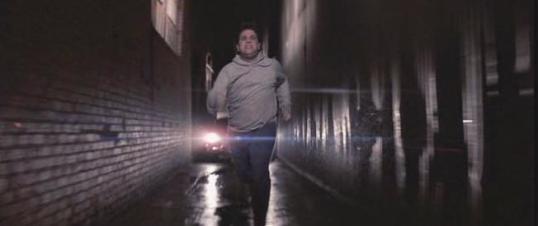
This scene early in the film just showcases not just Carpenter’s masterful camera and editing work, but was ahead of its time in exploring the toxic nature of fandoms and groupthink. In 1995 such a concept might have been relegated to B-movie horror, but in 2016 it’s become synonymous with such everyday occurrences and topics as Gamergate, Tea Party and Trump supporters to SJW crusaders, Marvel vs. DC and Democrats and Republicans. Everyone believes their group to be the only righteous in whatever argument they happen to be part of and everyone else must be silenced (and in the scene below silenced equates to death).

John Carpenter might have turned into that old and cantankerous, albeit cool, dude who couldn’t care less what you thought of him, but it seems that he saw what was happening today as far back as the 1990’s.

Harbinger Down Goes International


HarbingerDown

Kickstarter, GoFundMe, Indiegogo are just a couple of ways the general public have been able to crowdfund things they really like. Crowdfunding has even entered film production with a film set for release being one of my more anticipated films of 2015.

Harbinger Down is the brainchild of Practical FX artists Alec Gillis and Tom Woodruff, Jr. As more and more studios begin to rely heavily on CGI-effects for their films the practical effects and make-up FX industry has taken a major hit. We’ve already seen practical effects master Rick Baker announce his retirement from the industry and many smaller effects studios either close shop or sold to larger studios.

The film by Gillis and Woodruff, Jr. looks to bring back practical effects as not just a viable option for films looking to create fantastical creatures and effects, but also show that practical effects is an art form that lends a certain level of realism to those very fantastical ideas.

From the look of the trailer it looks like Harbinger Down takes some inspiration from two classic scifi horror films of the past with Alien and John Carpenter’s The Thing. With legendary genre veteran Lance Henriksen headlining the ensemble cast, Harbinger Down is something genre fans deserve.

Hottie of the Day: Mary Elizabeth Winstead


MARY ELIZABETH WINSTEAD

With this being horror-theme month here at Through the Shattered Lens I thought it was time for another “Hottie of the Day” entry and one who has some experience atbeing a scream queen in horror films these past couple years.

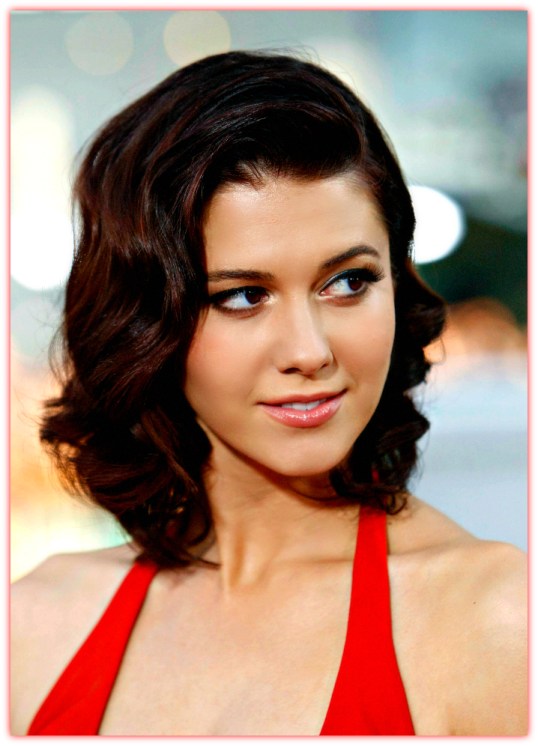
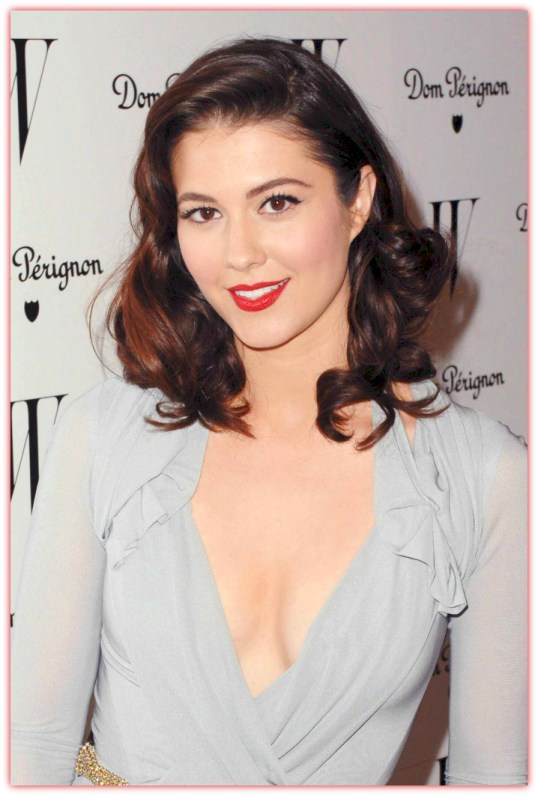
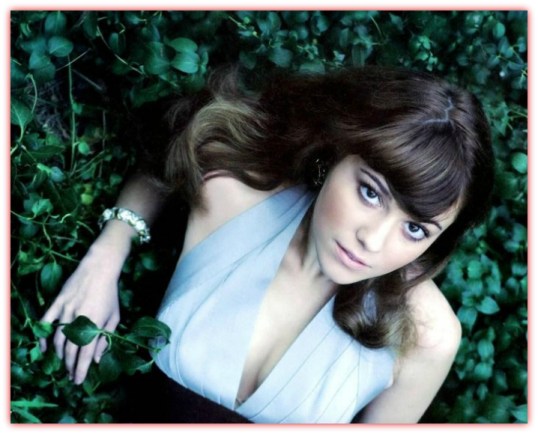
Mary Elizabeth Winstead is better known for the role (perfectly cast and played) of Ramona Flowers in Edgar Wright’s wright’s film adaptation of Scott Pilgrim vs. The World, but she has done quite a bit of work in the horror genre. One of her earliest films was as the lead in Final Destination 3. Then she has followed that up with roles in Quentin Tarantino’s half of Grindhouse as a naive young actress being stalked by Kurt Russell’s psychotic stuntman in Death Proof. Her last couple films have also been in the field of horror as she had major roles in both The Thing prequel and the fantasy horror mash-up this past summer with Abraham Lincoln: Vampire Hunter.

Ms. Winstead has become a favorite of genre fans and not just for her All-American girl-next-door look, but for the fact that she has talent as an actress and makes the most of every role she plays even in films that critically fails. Of late her work has gotten her noticed as a contender for the end of the year awards for best performance in a film with her performance as Kate Hannah in the comedy-drama Smashed.

Whether she wins awards later this year or not, here’s to hoping that she doesn’t stop doing genre projects while moving on towards more serious work.

PAST HOTTIES

Poll: Which Films Are You Most Looking Forward To Seeing In November?


Last month, at this time, we asked you which four films you were most looking forward to seeing in the month of October.  The results are in and it appears that October is going to be all about The Thing, Footloose, The Rum Diary, The Skin I Live In, and The Ides of March.  Thank you to everyone who voted.

Here’s November’s poll.  As always, you can vote for up to four films and write-ins are accepted.  So, let us know — which films are you looking forward to seeing in November?

Trailer: The Thing (prequel) Red Band


One of the films which I’m looking forward to with some trepidation, but also some excitement is the prequel to John Carpenter’s The Thing that was released in 1982. This prequel will show the initial unearthing of the “Thing” from the Antarctic ice by Norwegian researchers from the 1982 film (shown only as video recordings) and how it got loose and destroyed the Norwegian Camp.

Dutch filmmaker Matthijs van Heijningen Jr. was the one picked to direct the film with Mary Elizabeth Winstead (known by many as Ramona from Edgar Wright’s Scott Pilgrim vs. The World) taking the lead role. Many fans of the Carpenter film feel this prequel should never have been made. As a hardcore of the Carpenter film I can’t say that I agree with the decision to create this prequel, but I also won’t say that I’m not looking forward to it.

There had always been noise to create a sequel to Carpenter’s classic and at times even the master himself was involved in trying to get it done. This prequel became the final stab at continuing the story first started by Carpenter and I’m interested in how this new cast and crew will tell a story only hinted at in the original film.

The Thing is set for an October 14, 2011 release date.

Trailer: The Thing “Prequel” (Official)


If there’s one film which genre fans have been up in arms about being remade it would be John Carpenter’s The Thing. It’s one of those films which just continues to gain a loyal and zealous following despite being a major flop in the box-office when it was first released in 1982. One way producers were able to drop the remake idea was just to set a film as a prequel to the Horror Master’s classic sci-fi horror.

Using a screenplay by Eric Heisserer (which used elements from Ronald D. Moore’s own script for a possible prequel/sequel), 2011’s The Thing will be a prequel set on the ill-fated Norwegian Antarctic Research Station. Dutch-filmmaker Matthijs van Heijningen, Jr. will be doing the directing duties with Mary Elizabeth Winstead, Joel Edgerton and Ulrich Thomsen leading a cast half of which are Norwegian.

The film has been in production since March 2010 and was suppose to have a 2010 October release date. Problems either with the film’s post-production or just problems within Universal Pictures shelved the film for almost a year.

The Thing definitely looks to use Carpenter’s Steadicam and minimalist-style and the trailer shows scenes that seemed lifted right out of Carpenter’s own film. Maybe it was how the trailer was cut, but it also seemed to have more jump-scares than the ’82 classic. Some people will never accept this film even without seeing the final product. I, who consider Carpenter’s film one of the best films ever made in that era, will give this film a look-see before making a final judgement. I thought remaking Dawn of the Dead was going to be a disaster, but that film more than lived it to it’s predecessor and was very good on its own merits. I hope Matthijs van Heijningen, Jr.’s prequel also does just as well.

The Thing is set to have an October 14, 2011 release date.

Site Review’s of Carpenter’s The Thing: Arleigh’s and Leonard’s

Quick Review: John Carpenter’s The Thing


When I was little, my family used to have this cable service called WHT. I can’t remember what it stood for, but recall that it was a one channel station that would constantly show movies. It was like Starz for anyone who didn’t want to pony up the extra money for actual HBO at the time. Since it was set up at my Grandparents house (where I lived), sometimes we’d all gather around for a Movie Night on Saturdays. This is something my family’s done often during the years, and the current part of my family does this on Sundays now, premiering films we haven’t seen yet.

It was one of these Saturday nights that I first witnessed John Carpenter’s The Thing. I had to go to bed for it, being as young as I was for the film, but with the door open I could hear the music and sounds from my bed. At one point, I climbed out of the top bunk and snuck to the stairs, watching the film in my PJ’s. My family would get pretty engrossed with movies, so they never bothered to glance in my direction. After all, this was the first time any of them were seeing this film, and they all loved the original.

I was doing fine until that Husky’s head split open. If I just kept my mouth shut, I could have seen the whole film. After that, I couldn’t stop screaming, “Omigod! The doggie!!” I was met with cries of “Go to Bed!!” from just about everyone. Even though I climbed back into bed, there was no way I was able to fall asleep. Every gunshot, every yell caused me to bundle myself under my blankets with my eyes wide open.

Since then, The Thing has become a family favorite, a reliable go to film for any time it’s cold or rainy or dark. I even showcased it for my friends in Oregon who hadn’t seen it before and they also had almost the same reaction to that poor dog.

So, what is The Thing?

Other than maybe being John Carpenter’s strongest film (which many will argue, because there’s always a place for Big Trouble in Little China for me), it’s a great example of a work in progress that was just done and put to print. Like Jaws, the film ran into some problems. Special FX member Rob Bottin suffered from exhaustion from working so hard on the film. They had some issues with coming up with the final representation of The Thing that wouldn’t appear too cartoon-like or animatronic. There was even a fire during the taping of a huge effect shot involving a body ripping open because of the chemicals that were put into the latex workup. Even though the movie takes place in Antarctica (which I believe roughly 6 months of night), the film actually has a day and night cycle, having filmed in Juneau, Alaska. On top of that, with all of the money thrown at the film, it pretty much tanked at the box office. As quirky as all those elements are, the movie just works because of both the isolation of the characters, the trust issues that occur as a result of the events, and the claustrophobic space they live in. In some ways, it’s very similar to Ridley Scott’s Alien to me (sans the trust issues), but with much better lighting. The Thing is pretty much a cult classic at this point.

The story of The Thing is boosted if you’ve seen the original The Thing From Another World with the late James Arness, but it’s not a requirement. It starts off with a dog being chased by a helicopter, who manages to reach a Research Outpost in Antarctica, occupied by Twelve members. The crew soon discovers that that things aren’t exactly what they seem, but neither are they. Unlike the original movie, the creature in this film has the ability to absorb and mimic whatever organism comes into contact with (which actually is pretty creepy in its own right, that sense of violation). Trust plays a huge part in the story as the crew fight to save themselves while still trying to keep a close eye on who’s walking among them.

The atmosphere of the film is really augmented by the sound. As old as the film is, the sound quality holds up incredibly well on a surround system. The wind from the snow, bullets ricocheting, the panting of dogs and of course the dripping of blood all sound like someone put a microphone right up to all of them to capture it as best they could. The outpost, as big as it is, actually has a lot of narrow hallways with canisters stacked to the sides in many places, giving the place a cramped feel. Add to that Ennio Morricone’s haunting theme and you’ve got a recipe for horror. I mean, for someone who’s scored fantastic Westerns, one would think that Morricone and a Carpenter film might not gel well, but it really does.

Visually, compared to films today, The Thing is pretty tame for it’s effects, and some (the final rendering of the Thing itself, in particular) can be a little dated, but not so much that you should groan about it. At the time, however, it was considered gory (and I guess when you’re in shock on seeing a dog’s face split open, there’s someone smiling somewhere saying to themselves..”Yeah, that worked right there”).

The Thing marks another John Carpenter / Kurt Russell pairing. Russell’s R.J. MacReady is the figure we follow through the film. It’s through him that we try to make sense of everything going on. In one scene that involves him huddled in a corner with a flamethower and some dynamite, defending himself from his friends, you get the notion that you want to be on that guy’s side. Even if following him means getting blown up to a million pieces, because it really becomes difficult to trust anyone in this film. Paranoia plays a huge role.

The cast is rounded out by a few other notable members. Richard Dysart (L.A. Law, Prophecy) plays Doc Copper, and is actually pretty good here. Keith David (Requiem for a Dream, They Live) plays Childs, who really doesn’t believe in any of that “voodoo bullshit”. Thomas Waites (The Warriors) is Windows, who for me, represents the scared kid of the group. He’s not sure what’s up, he just wants to be away from it. Then, of course, you have Wilford Brimley, who seems to realize the problem but takes measures in his own hands rather telling the others just how bad things could get.

Overall, The Thing is highly recommended. I know there’s a remake in the works, and part of me is a little excited for it, hoping that it’s done well. I can’t imagine the filmmakers today running into half of the issues they had in the original.

The Thing also marks one of the best Director commentaries I’ve heard. If you have a chance to watch the film with the Director track on (which I believe Russell also has a hand in with Carpenter in talking about the film), it’s pretty interesting what they elaborate on. Also noteworthy (and funny) is Rob Bottin’s story on the effect sequence that started a fire.  That’s definitely worth a listen.

Song of the Day: Humanity Part II (by Ennio Morricone)


Day Three of the week-long horror-themed “Song of the Day” feature brings us one of the greatest pieces of film music ever composed. I’m talking about the score for John Carpenter’s remake of The Thing from Another World. The remake retains only the first two words of the original’s title, and that alone speaks volumes.

At first listen, one might mistake this music as being composed by John Carpenter himself—an accomplished film composer in his own right, known for scoring most of his own films. Its similarity to his iconic Halloween theme and even his earlier work on Assault on Precinct 13 makes the connection understandable. But one would be wrong to assume Carpenter had a hand in writing it. For the first time, Carpenter allowed someone else to compose the score, and for the task he selected none other than the Italian maestro Ennio Morricone.

By the time he collaborated with Carpenter on this sci-fi horror masterpiece, Morricone was already firmly established as one of the great masters of film composition. Audiences knew him best for his legendary work on Sergio Leone’s “spaghetti westerns” as well as numerous classics of Italian cinema. While Morricone’s full score for The Thing deserves a complete discussion of its own, I’ll focus on the one track that most powerfully captures the themes of horror, isolation, dread, and paranoia that make Carpenter’s film such a landmark: “Humanity (Part II).”

The piece opens with a heartbeat-like sequence that pulses steadily through most of its length. Strings layer on top of this rhythm, creating a mournful, dirge-like quality, while the bass thump lurks ominously just beneath the surface, as though danger is present but unseen. For much of its runtime, the music exudes a stark sense of emptiness, forcing the listener into the same suffocating isolation as the characters onscreen, stranded in the vast Arctic wasteland. The repetition and looping structure almost feel like a trap, with no release or resolution, mirroring the crew’s paranoia as suspicion and fear close in tighter than the snowstorms outside. Each cycle draws the listener deeper into a psychological cage, heightening the dread with its unrelenting stillness.

It isn’t until the final two minutes that the track breaks from its oppressive restraint. Here, Morricone channels Carpenter’s trademark minimalism with unsettling synthesizer tones, jagged and piercing against the steady backdrop. The music shifts from mournful to dissonant, almost alien, capturing the horrifying essence of the creature in its most grotesque form. This sharp intrusion is not just an auditory shock but a symbolic transformation—the moment when the lurking horror finally emerges from shadow into focus, confirming that the paranoia has been justified all along. It is this careful build, held back until the very end, that demonstrates Morricone’s mastery at fusing Carpenter’s sensibilities with his own, delivering a piece that is both restrained and devastatingly effective.

There’s a reason so many film aficionados cite Carpenter’s The Thing as one of their all-time favorites. Its reputation owes much to Carpenter’s skill as a filmmaker and editor, but Morricone’s score plays an equally crucial role in shaping the film’s atmosphere. “Humanity (Part II)” stands as one of the finest pieces of horror film music ever written.

The Thing Prequel Casts Its Leads


The Hollywood Reporter blog has reported that Mary Elizabeth Winstead has been cast in the lead role of the soon-to-be filming prequel of the classic scifi/horror The Thing. Slashfilm has picked up on this story and I have confirmed with someone involved in the casting process that she has been cast who I trust explicitly.

She will play the role of Kate Lloyd, the paleontologist chosen to travel to Antarctica to help the research team in the Norwegian camp which has found something buried in the Antarctic ice. The casting of Joel Edgerton in the male lead role of Sam Carter, the American helicopter pilot tasked with bringing the character Kate Lloyd to the Norwegian base, rounds out the news on lead casting.

Ms. Winstead has had her share of being part of a genre production (Final Destination 3 and Grindhouse) so she will not be out of place in such a production. She has enough acting skills to balance out her good looks. With the relatively young look of both leads there’s a chance that writer Eric Heisserer may include a romantic subplot between the two characters. I sure hope that is not the case since this film doesn’t really need it to appeal to the audience. Would I be averse to having some sort mutual attraction, even if just hinted at, between the two character? Not at all, but a fullblown romance just for the sake of having it in the story would be the wrong way to go about it.

Source: The Hollywood Reporter

Review: The Thing (dir. by John Carpenter)


In what may well be John Carpenter’s finest film—greater even than Halloween and Escape from New York—the director boldly remakes Howard Hawks’ 1950s sci‑fi classic The Thing from Another World and, incredibly, surpasses the original. Unlike Hawks’ version, steeped in Cold War anxiety, Carpenter draws more directly from John W. Campbell Jr.’s short story Who Goes There?, shifting the focus to paranoia festering within an isolated group of men. His setting, an American scientific station buried deep in the frozen desolation of Antarctica, becomes the perfect pressure cooker for suspicion, distrust, and barely contained madness.

Carpenter’s vision announces itself immediately. The film begins with an overhead shot of jagged, snow‑capped mountains—an endless expanse of icy barrenness. This stark imagery is paired with Ennio Morricone’s minimalist score, a low, pulsating bass throb that mimics a heartbeat. In just these opening moments, Carpenter and Morricone establish the film’s defining tone: desolation, unease, and a creeping inevitability. Carpenter never lets this sense of dread relent; the unease initiated in the opening frames lingers throughout, until the final note of the end credits.

Where the 1951 film wasted no time showing an alien in the flesh, Carpenter follows Campbell’s original concept more faithfully: the creature hides, assimilates, and imitates. It kills and replicates members of the Antarctic crew, transforming everyday interactions into moments of terror. This conceit allows Carpenter to stage his film not just as a monster movie, but as a psychological exercise in tension. Each man is a potential threat. Each argument, however trivial, is laced with suspicion. The audience feels trapped alongside the crew, caught in their spiral of mistrust. At its core, the film is less about the monster’s abilities than about what happens when trust is stripped away from a community forced to live in isolation. The most chilling moments often occur not during the creature’s violent reveals, but in quiet exchanges where fear and doubt spread faster than the Antarctic cold.

The special effects remain legendary, an enduring benchmark even decades later. In the early 1980s, CGI was not a viable option, so Carpenter entrusted Rob Bottin, then in his early 20s, with designing the creature effects. Puppetry, animatronics, latex, and rivers of stage blood combined to create some of the most grotesque and imaginative transformations ever put on film. The kennel scene—when the alien first erupts from the body of a sled dog—remains a horrifying pinnacle of practical effects, unsettling in its creativity and biological plausibility. Bottin’s work is still studied in film schools as a triumph of practical ingenuity. The tactile, slimy, unpredictable reality of these effects would be nearly impossible to replicate with CGI. If any film demonstrates why computer graphics can feel cold and weightless compared to visceral practical effects, The Thing is it.

Anchoring the film is Kurt Russell as helicopter pilot R.J. MacReady, equal parts rugged pragmatist and reluctant leader. Russell’s performance gives the film its center of gravity, portraying a man forced into command when order collapses. Keith David brings an equally commanding presence as Childs, his wary, confrontational energy making him a perfect foil to Russell. The ensemble cast is one of Carpenter’s great strengths here. Each character is distinct, each performance meaningful; there are no throwaway roles. Even smaller parts resonate, as every man crumbles at his own pace under the weight of fear. One of the film’s most unsettling turns comes from Wilford Brimley, whose genial, trustworthy persona makes his gradual descent into paranoia and violence all the more disturbing.

The music deserves as much recognition as the visuals. Rather than scoring the film himself, as he had done in his earlier works, Carpenter handed the task to legendary composer Ennio Morricone. The gamble paid off. Morricone’s spare, throbbing motifs mesh seamlessly with Carpenter’s minimalist style, complementing the stark visuals rather than overwhelming them. The score is skeletal, almost primal—music that feels less composed than unearthed, vibrating with dread. It remains one of the finest examples of how sound can serve as a force multiplier for tension.

The Thing is not for the squeamish. The violence is graphic, the gore extreme, and the imagery deeply unsettling. Yet for those who admire masterful filmmaking, it stands as essential viewing: a perfect marriage of vision, execution, and atmosphere. For students of cinema, it offers a lesson in how genre filmmaking can transcend cliché and attain something close to pure, operatic terror. In the end, Carpenter’s The Thing is more than a remake—it is a redefinition. It strips away the veneer of mid‑century optimism and replaces it with a stark meditation on distrust, survival, and the alien within us all. Few horror films hold up this well or manage to stay this scary for fans old and new.