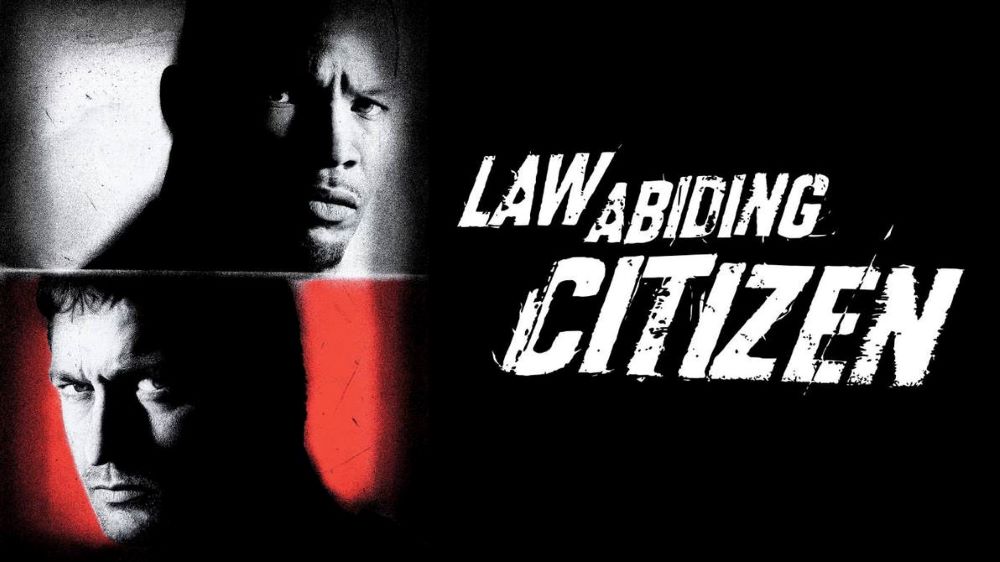
Review: Law Abiding Citizen (dir. by F. Gary Gray)


“Christ! Whatever happened to right and wrong!? Whatever happened to the people!? Whatever happened to justice!?” — Clyde Shelton

Law Abiding Citizen is one of those thrillers that grabs you right from the start and refuses to let go, even as it spirals into moral chaos. Directed by F. Gary Gray and released in 2009, the film pits two central performances—Gerard Butler as Clyde Shelton and Jamie Foxx as Nick Rice—against each other in a brutal chess match of justice, revenge, and control. On the surface, it’s a revenge thriller about a man wronged by a broken justice system. But dig a little deeper, and it becomes a dark commentary on the limits of law, the manipulation of morality, and the ethics of punishment. It’s not perfect—it veers toward implausibility at times—but it’s undeniably gripping, stylishly cold, and lingers in your mind long after the credits roll.

The film begins with a horrifying scene that immediately sets the tone for what’s to come. Clyde Shelton, an inventor and family man, watches helplessly as his wife and young daughter are brutally murdered in their home. When the killers are caught, Assistant District Attorney Nick Rice cuts a deal that lets one murderer go free in exchange for testifying against his partner. The decision, made in the name of efficiency and legal pragmatism, destroys Clyde’s faith in the justice system. Ten years later, when the murderer is executed under mysterious and gruesome circumstances, Clyde resurfaces—not as a grieving victim but as a brilliant, calculated force determined to expose the system’s corruption in the most explosive way imaginable.

What makes Law Abiding Citizen so effective early on is its sympathy play. The audience initially feels the same fury Clyde does. We understand his pain and disillusionment, and for a brief moment, we want him to succeed in making the system accountable. Butler captures that emotional transition perfectly—from quiet devastation to methodical vengeance. The scene where Clyde calmly watches his first victim die, having orchestrated the man’s death with near-surgical precision, is shocking yet disturbingly satisfying. This is where the film hooks its audience: it asks whether revenge can ever be justified when justice fails.

But as the killings pile up and Clyde’s plan grows more elaborate, that empathy begins to slip. The real tension of the film lies in that moral gray space—where Clyde’s righteous anger turns monstrous. His war isn’t just against the criminals but against the entire justice system, targeting judges, lawyers, and anyone he sees as complicit. Nick Rice, on the other hand, becomes the face of that system. He’s young, successful, and smug—a prosecutor obsessed with his win-loss record. Jamie Foxx’s performance gives Rice an icy veneer of confidence that slowly cracks as Clyde’s campaign escalates. The interplay between these two men—the avenger and the pragmatist—is the film’s heartbeat. It’s less about who will win and more about whether either man can still claim moral authority when the dust settles.

From a narrative standpoint, Law Abiding Citizen is structured like a dark puzzle. Each scene unveils another layer of Clyde’s intelligence and ruthlessness. The tension comes not from knowing who’s doing it—we know—but from wondering how he’s doing it. The film’s most audacious twist is that Clyde continues orchestrating murders even while locked in a high-security prison cell. This push toward psychological warfare turns the story into a cat-and-mouse game with shades of Seven and The Silence of the Lambs. However, where those films maintained a clear thematic direction, Law Abiding Citizen sometimes stumbles under the weight of its ambition. The logic of Clyde’s omnipotence starts to stretch believability, and the film sacrifices realism for spectacle. Still, it’s hard to look away when the spectacle is this sharp and aggressive.

Visually, F. Gary Gray directs with a crisp, metallic style. The cinematography uses muted tones and sharp contrasts to reflect the film’s moral ambiguity. The more the story dives into Clyde’s schemes, the colder and more sterile the visuals become, echoing his detachment from human empathy. The editing is snappy and kinetic, especially during the interrogation scenes and courtroom exchanges. Brian Tyler’s score underscores the tension with brooding, pulsing beats that heighten the sense of dread. Every technical element supports the emotional core—revenge as obsession, intelligence as a weapon.

Gerard Butler, best known for roles that highlight his physicality, delivers one of his most controlled performances here. His portrayal of Clyde is chilling because of how calm it is. He doesn’t yell or flail; his menace is intellectual. Even in scenes where the dialogue leans toward theatrical monologues about justice and morality, Butler maintains focus, grounding the performance in conviction rather than chaos. Jamie Foxx, meanwhile, brings subtlety to Nick Rice. His transformation from ambitious lawyer to shaken moralist is gradual. By the final act, Nick’s self-assurance has eroded into doubt—about the system, his choices, and his own complicity. Foxx and Butler’s dynamic never feels forced; it’s built on escalating tension, mutual respect, and bitter irony.

Where Law Abiding Citizen truly provokes is in its ethical questioning. What does justice mean when the system serves convenience instead of truth? Is it right to play by the rules if those rules protect the guilty? Clyde’s crusade, as twisted as it becomes, emerges from a very real frustration—one viewers can sympathize with, especially in a world full of technicalities that favor the powerful. But the film also serves as a warning. In trying to dismantle corruption, Clyde becomes its reflection. His vigilante justice ultimately mirrors the same indifference he condemns. By the time the film reaches its explosive climax, viewers are left torn—not cheering for Clyde’s punishment, but not wanting him to win either. This ambiguity gives the film an edge that lingers long after the credits roll.

That said, the story’s final act is where opinions tend to divide. Once strategy gives way to spectacle, the film trades nuance for action. The ending, while satisfying in terms of closure, feels somewhat abrupt and simplified compared to the build-up. The moral complexity that defined the first two acts begins to blur into a conventional revenge-thriller showdown. Still, even in its imperfections, the film sustains a dark fascination. It never feels lazy or hollow—it’s just that its ideas might have deserved a slightly more refined execution.

Despite its narrative stretches, Law Abiding Citizen remains a standout in the late-2000s thriller landscape. It’s unapologetically intense, dramatically charged, and philosophical enough to make its explosions feel earned rather than gratuitous. The film thrives on its contradictions: it condemns violence while indulging in it, critiques the system while sensationalizing its collapse. For all its over-the-top plotting, the emotional truth stays intact—when justice becomes negotiable, vengeance becomes inevitable. And whether viewers side with Clyde or Nick, the uneasy feeling the film leaves behind is its greatest triumph.

At its core, Law Abiding Citizen is less about revenge and more about control—who wields it, who loses it, and how the pursuit of it can consume both sides. F. Gary Gray’s direction, backed by two commanding performances, turns what could’ve been a formulaic thriller into something more charged and psychological. It’s a film that asks uncomfortable questions about morality, justice, and the price of vengeance, even if its answers are messy. And maybe that’s the point—justice, like humanity, rarely fits into a clean equation.

The Alliance of Women Film Journalists Honor Nomadland


The Alliance of Women Film Journalists have announced that their pick for the best of 2020 is Nomadland.  Just as the AWFJ did with their nominations, they announced the winners in an exclusive for Variety.  Fear not, though — my picks for the best of 2020 will be released exclusively to this site.  Two can play at this game.

(I joke, of course.  Ever since Clayton Davis took over, Variety’s Oscar coverage has been wonderful and the AWFJ deserves a lot of credit for having categories that are a bit more interesting than the usual stuff.)

Anyway, here’s the winners!

AWFJ BEST OF AWARDS

(These awards are presented to women and/or men without gender consideration)

Best Film

  • “Minari” (A24)
  • “Never Rarely Sometimes Always” (Focus Features)
  • “Nomadland” (Searchlight Pictures) – WINNER
  • “One Night in Miami” (Amazon Studios)
  • “Promising Young Woman” (Focus Features)
  • “The Trial of the Chicago 7” (Netflix)

Best Director 

  • Emerald Fennell, “Promising Young Woman” (Focus Features)
  • Regina King, “One Night in Miami” (Amazon Studios)
  • Kelly Reichardt, “First Cow” (A24)
  • Aaron Sorkin, “The Trial of the Chicago 7” (Netflix)
  • Chloé Zhao, “Nomadland” (Searchlight Pictures) – WINNER

Best Actor

  • Riz Ahmed, “Sound of Metal” (Amazon Studios)
  • Chadwick Boseman, “Ma Rainey’s Black Bottom” (Netflix) – WINNER
  • Delroy Lindo, “Da 5 Bloods” (Netflix)

Best Actress 

  • Viola Davis, “Ma Rainey’s Black Bottom” (Netflix)
  • Vanessa Kirby, “Pieces of a Woman” (Netflix)
  • Frances McDormand, “Nomadland” (Searchlight Pictures) – WINNER
  • Carey Mulligan, “Promising Young Woman” (Focus Features)

Best Actor in a Supporting Role 

  • Sacha Baron Cohen, “The Trial of the Chicago 7” (Netflix)
  • Bill Murray, “On the Rocks” (A24/Apple TV Plus)
  • Leslie Odom Jr, “One Night in Miami” (Amazon Studios) – WINNER

Best Actress in a Supporting Role

  • Maria Bakalova, “Borat Subsequent Moviefilm” (Amazon Studios)
  • Ellen Burstyn, “Pieces of a Woman” (Netflix)
  • Amanda Seyfried, “Mank” (Netflix)
  • Yuh-Jung Youn, “Minari” (A24) – WINNER

Best Screenplay, Original 

  • “Mank” (Netflix) – Jack Fincher
  • “Promising Young Woman” (Focus Features) – Emerald Fennell – WINNER
  • “The Trial of the Chicago 7” (Netflix) – Aaron Sorkin

Best Screenplay, Adapted

  • “First Cow” (A24) – Kelly Reichardt and Jonathan Raymond
  • “Nomadland” (Searchlight Pictures) – Chloé Zhao – WINNER
  • “One Night in Miami” (Amazon Studios) – Kemp Powers

Best Animated Film

  • “Over the Moon” (Netflix)
  • “Soul” (Pixar) – WINNER
  • “Wolfwalkers” (Apple TV Plus/GKIDS)

Best Cinematography 

  • “Mank” (Netflix) – Erik Messerschmidt
  • “Nomadland” (Searchlight Pictures) – Joshua James Richards – WINNER
  • “One Night in Miami” (Amazon Studios) – Tami Reiker

Best Editing 

  • “One Night in Miami” (Amazon Studios) – Tariq Anwar
  • “Nomadland” (Searchlight Pictures) – Chloé Zhao – WINNER
  • “The Trial of the Chicago 7” (Netflix) – Alan Baumgarten

Best Documentary 

  • “All In: The Fight for Democracy” (Amazon Studios) – WINNER (tie)
  • “Athlete A” (Netflix)
  • “Crip Camp” (Netflix)
  • “The Painter and the Thief” (Neon) – WINNER (tie)
  • “Time” (Amazon Studios)

Best Non-English-Language Film

  • “Another Round” – Denmark – WINNER
  • “Beanpole” – Russia
  • “The Mole Agent” – Chile
  • “The Painted Bird” – Czech Republic

Best Ensemble Cast – Casting Director

  • “Da 5 Bloods” (Netflix) – Kim Coleman
  • “One Night in Miami” (Amazon Studios) – Kimberly Hardin – WINNER (tie)
  • “The Trial of the Chicago 7” (Netflix) – Francine Maisler – WINNER (tie)

EDA FEMALE FOCUS AWARDS

(These awards honor WOMEN only, excluding women who’ve won the category in the Best Of Awards.

Best Woman Director 

  • Emerald Fennell, “Promising Young Woman” (Focus Features) – WINNER
  • Eliza Hittman, “Never Rarely Sometimes Always” (Focus Features)
  • Regina King, “One Night in Miami” (Amazon Studios)
  • Channing Godfrey Peoples, “Miss Juneteenth” (Vertical Entertainment)
  • Kelly Reichardt, “First Cow” (A24)
  • Chloé Zhao, “Nomadland” (Searchlight Pictures)

Best Woman Screenwriter 

  • Radha Blank, “The Forty-Year-Old Version” (Netflix) – WINNER
  • Emerald Fennell, “Promising Young Woman” (Focus Features)
  • Eliza Hittman, “Never Rarely Sometimes Always” (Focus Features)
  • Chloé Zhao, “Nomadland” (Searchlight Pictures)

Best Animated Female 

  • “22” in “Soul” (Pixar) – portrayed by Tina Fey – WINNER
  • “Mebh Óg MacTíre” in “Wolfwalkers” (Apple TV Plus/GKIDS) – portrayed by Eva Whittaker
  • “Robyn Goodfellowe” in “Wolfwalkers” (Apple TV Plus/GKIDS) – portrayed by Honor Kneafsey

Best Woman’s Breakthrough Performance 

  • Radha Blank, “The Forty-Year-Old Version” (Netflix)
  • Sidney Flanigan, “Never Rarely Sometimes Always” (Focus Features) – WINNER
  • Helena Zengel, “News of the World” (Universal Pictures)

Outstanding Achievement by a Woman in the Film Industry 

  • All female heads of film festivals who successfully transitioned from live to online events to sustain festival culture through the pandemic.
  • All indie female writers and directors who normalized abortion as a vital element in the cultural conversation in films such as “Saint Frances,” “Never Rarely Sometimes Always,” “Sister of the Groom,” “Once Upon a River,” The Glorias” and others. – WINNER
  • Emerald Fennell for creating a film that forces empathy to put an end to the toxic sexist rape culture pervasive through modern history.
  • Sophia Loren for a brilliant comeback at age 86 in “The Life Ahead,” the latest in her record-setting career. Loren won a Best Actress Oscar in 1962 for “Two Women” and was the first actor to win for a foreign language movie. She was also nominated in 1965 for “Marriage Italian Style.” If she’s nominated in 2021, it will be a 56-year span between her two most recent nominations – the current record is held by Henry Fonda, who had a 41-year gap between nominations.

EDA SPECIAL MENTION AWARDS

Grand Dame Award for defying ageism.

  • Ellen Burstyn, “Pieces of a Woman” (Netflix)
  • Tsai Chin, “Lucky Grandma” (Good Deed Entertainment)
  • Sophia Loren, “The Life Ahead” (Netflix) – WINNER
  • Frances McDormand, “Nomadland” (Searchlight Pictures)

Most Egregious Lovers’ Age Difference Award 

  • “The Burnt Orange Heresy” (Sony Pictures Classics) – Elizabeth Debicki and Claes Bang (23 years)
  • “Devil All the Time” (Netflix) – Riley Keough and Jason Clarke (20 years)
  • “Mank” – Amanda Seyfried and Charles Dance (39 years), Gary Oldman (27 years)
  • “Tenet” – Elizabeth Debicki and Kenneth Branagh (30 years) – WINNER

She Deserves A New Agent Award 

  • Rose Byrne, “Like a Boss” (Paramount Pictures)
  • Tiffany Haddish, “Like a Boss” (Paramount Pictures)
  • Katie Holmes, “Dare to Dream” (Gravitas Ventures)
  • Uma Thurman, “The War with Grandpa” (101 Studios) – WINNER

Most Daring Performance Award 

  • Maria Bakalova, “Borat Subsequent Moviefilm’ (Amazon Studios) – WINNER
  • Haley Bennett, “Swallow” (IFC Films)
  • Vanessa Kirby, “Pieces of a Woman” (Netflix)
  • Elisabeth Moss, “The Invisible Man” (Universal Pictures)
  • Carey Mulligan, “Promising Young Woman” (Focus Features)

Time Waster Remake or Sequel Award 

  • “The Croods: A New Age” (DreamWorks Animation)
  • “Doolittle” (Universal Pictures) – WINNER
  • “Rebecca” (Netflix)

Here Are The 2020 Nominations of the Alliance of Women Film Journalists!


Earlier on Wednesday, the Alliance of Women Film Journalists announced their nominations for the best and the worst of 2020.  The nominations were announced in the pages of Variety and you can read more about them by clicking here.

Nomadland led with the most nominations which seems to be the way that the awards season is going to go.  Personally, when it comes to the AWFJ, I’m always more interested in the snarky nominations than in the serious ones.  For instance, the nominees for the She Deserves A New Agent award always leave me thinking.

The nominations are below.  The winners will be announced on January 4th.

AWFJ BEST OF AWARDS
(These awards are presented to women and/or men without gender consideration)

Best Film
“Minari” (A24)
“Never Rarely Sometimes Always” (Focus Features)
“Nomadland” (Searchlight Pictures)
“One Night in Miami” (Amazon Studios)
“Promising Young Woman” (Focus Features)
“The Trial of the Chicago 7” (Netflix)

Best Director
Emerald Fennell, “Promising Young Woman” (Focus Features)
Regina King, “One Night in Miami” (Amazon Studios)
Kelly Reichardt, “First Cow” (A24)
Aaron Sorkin, “The Trial of the Chicago 7” (Netflix)
Chloé Zhao, “Nomadland” (Searchlight Pictures)

Best Actor
Riz Ahmed, “Sound of Metal” (Amazon Studios)
Chadwick Boseman, “Ma Rainey’s Black Bottom” (Netflix)
Delroy Lindo, “Da 5 Bloods” (Netflix)

Best Actress
Viola Davis, “Ma Rainey’s Black Bottom” (Netflix)
Vanessa Kirby, “Pieces of a Woman” (Netflix)
Frances McDormand, “Nomadland” (Searchlight Pictures)
Carey Mulligan, “Promising Young Woman” (Focus Features)

Best Actor in a Supporting Role
Sacha Baron Cohen, “The Trial of the Chicago 7” (Netflix)
Bill Murray, “On the Rocks” (A24/Apple TV Plus)
Leslie Odom Jr, “One Night in Miami” (Amazon Studios)

Best Actress in a Supporting Role
Maria Bakalova, “Borat Subsequent Moviefilm” (Amazon Studios)
Ellen Burstyn, “Pieces of a Woman” (Netflix)
Amanda Seyfried, “Mank” (Netflix)
Yuh-Jung Youn, “Minari” (A24)

Best Screenplay, Original
“Mank” (Netflix) – Jack Fincher
“Promising Young Woman” (Focus Features) – Emerald Fennell
“The Trial of the Chicago 7” (Netflix) – Aaron Sorkin

Best Screenplay, Adapted
“First Cow” (A24) – Kelly Reichardt and Jonathan Raymond
“Nomadland” (Searchlight Pictures) – Chloé Zhao
“One Night in Miami” (Amazon Studios) – Kemp Powers

Best Animated Film
“Over the Moon” (Netflix)
“Soul” (Pixar)
“Wolfwalkers” (Apple TV Plus/GKIDS)

Best Cinematography
“Mank” (Netflix) – Erik Messerschmidt
“Nomadland” (Searchlight Pictures) – Joshua James Richards
“One Night in Miami” (Amazon Studios) – Tami Reiker

Best Editing
“One Night in Miami” (Amazon Studios) – Tariq Anwar
“Nomadland” (Searchlight Pictures) – Chloé Zhao
“The Trial of the Chicago 7” (Netflix) – Alan Baumgarten

Best Documentary
“All In: The Fight for Democracy” (Amazon Studios)
“Athlete A” (Netflix)
“Crip Camp” (Netflix)
“The Painter and the Thief” (Neon)
“Time” (Amazon Studios)

Best Non-English-Language Film
“Another Round” – Denmark
“Beanpole” – Russia
“The Mole Agent” – Chile
“The Painted Bird” – Czech Republic

Best Ensemble Cast – Casting Director
“Da 5 Bloods” (Netflix) – Kim Coleman
“One Night in Miami” (Amazon Studios) – Kimberly Hardin
“The Trial of the Chicago 7” (Netflix) – Francine Maisler

EDA FEMALE FOCUS AWARDS
(These awards honor WOMEN only)

Best Woman Director
Emerald Fennell, “Promising Young Woman” (Focus Features)
Eliza Hittman, “Never Rarely Sometimes Always” (Focus Features)
Regina King, “One Night in Miami” (Amazon Studios)
Channing Godfrey Peoples, “Miss Juneteenth” (Vertical Entertainment)
Kelly Reichardt, “First Cow” (A24)
Chloé Zhao, “Nomadland” (Searchlight Pictures)

Best Woman Screenwriter
Radha Blank, “The Forty-Year-Old Version” (Netflix)
Emerald Fennell, “Promising Young Woman” (Focus Features)
Eliza Hittman, “Never Rarely Sometimes Always” (Focus Features)
Chloé Zhao, “Nomadland” (Searchlight Pictures)

Best Animated Female
“22” in “Soul” (Pixar) – portrayed by Tina Fey
“Mebh Óg MacTíre” in “Wolfwalkers” (Apple TV Plus/GKIDS) – portrayed by Eva Whittaker
“Robyn Goodfellowe” in “Wolfwalkers” (Apple TV Plus/GKIDS) – portrayed by Honor Kneafsey

Best Woman’s Breakthrough Performance
Radha Blank, “The Forty-Year-Old Version” (Netflix)
Sidney Flanigan, “Never Rarely Sometimes Always” (Focus Features)
Helena Zengel, “News of the World” (Universal Pictures)

Outstanding Achievement by a Woman in the Film Industry
All female heads of film festivals who successfully transitioned from live to online events to sustain festival culture through the pandemic.
All indie female writers and directors who normalized abortion as a vital element in the cultural conversation in films such as “Saint Frances,” “Never Rarely Sometimes Always,” “Sister of the Groom,” “Once Upon a River,” “The Glorias” and others.
Emerald Fennell for creating a film that forces empathy to put an end to the toxic sexist rape culture pervasive through modern history.
Sophia Loren for a brilliant comeback at age 86 in “The Life Ahead,” the latest in her record-setting career. Loren won a Best Actress Oscar in 1962 for “Two Women” and was the first actor to win for a foreign language movie. She was also nominated in 1965 for “Marriage Italian Style.” If she’s nominated in 2021, it will be a 56-year span between her two most recent nominations – the current record is held by Henry Fonda, who had a 41-year gap between nominations.

EDA SPECIAL MENTION AWARDS

Grand Dame Award for defying ageism.
Ellen Burstyn, “Pieces of a Woman” (Netflix)
Tsai Chin, “Lucky Grandma” (Good Deed Entertainment)
Sophia Loren, “The Life Ahead” (Netflix)
Frances McDormand, “Nomadland” (Searchlight Pictures)

Most Egregious Lovers’ Age Difference Award
“The Burnt Orange Heresy” (Sony Pictures Classics) – Elizabeth Debicki and Claes Bang (23 years)
“The Devil All the Time” (Netflix) – Riley Keough and Jason Clarke (20 years)
“Mank” – Amanda Seyfried and Charles Dance (39 years), Gary Oldman (27 years)
“Tenet” – Elizabeth Debicki and Kenneth Branagh (30 years)

She Deserves A New Agent Award
Rose Byrne, “Like a Boss” (Paramount Pictures)
Tiffany Haddish, “Like a Boss” (Paramount Pictures)
Katie Holmes, “Dare to Dream” (Gravitas Ventures)
Uma Thurman, “The War with Grandpa” (101 Studios)

Most Daring Performance Award
Maria Bakalova, “Borat Subsequent Moviefilm” (Amazon Studios)
Haley Bennett, “Swallow” (IFC Films)
Vanessa Kirby, “Pieces of a Woman” (Netflix)
Elisabeth Moss, “The Invisible Man” (Universal Pictures)
Carey Mulligan, “Promising Young Woman” (Focus Features)

Time Waster Remake or Sequel Award
“The Croods: A New Age” (DreamWorks Animation)
“Dolittle” (Universal Pictures)
“Rebecca” (Netflix)

AWFJ Hall of Shame Award
Shia LeBoeuf for his ongoing abusive behavior
Christopher Nolan for insisting that “Tenet” be screened exclusively in theaters during a pandemic.
Dallas Sonnier and Adam Donaghey at Cinestate for sexual harassment, abuse and cover-up.

Lisa And The Academy Agree To Disagree


The Oscar nominations were announced today and, for the most part, it’s pretty much what you would expect.  Below is the list of nominees.  If a nominee listed in bold print, that means they also appeared on my own personal list of nominations.

Best motion picture of the year

Black Swan
The Fighter
Inception
The Kids Are All Right
The King’s Speech
127 Hours
The Social Network
Toy Story 3
True Grit
Winter’s Bone

(The Academy and I agree on five of the ten nominees.  That’s actually more than I was expecting.)

Performance by an actor in a leading role

Javier Bardem (Biutiful)
Jeff Bridges (True Grit)
Jesse Eisenberg (The Social Network)
Colin Firth (The King’s Speech)
James Franco (127 Hours)

(The only real surprise here is Bardem.  I haven’t seen Biutiful but I’ve heard amazing things about it.)

Performance by an actor in a supporting role

Christian Bale (The Fighter)
John Hawkes (Winter’s Bone)
Jeremy Renner (The Town)
Mark Ruffalo (The Kids Are All Right)
Geoffrey Rush (The King’s Speech)

(Yay for John Hawkes!  Some people are surprised that Andrew Garfield wasn’t nominated for The Social Network.  I’m disappointed he wasn’t nominated for Never Let Me Go.)

Performance by an actress in a leading role

Annette Bening (The Kids Are All Right)
Nicole Kidman (Rabbit Hole)
Jennifer Lawrence (Winter’s Bone)
Natalie Portman (Black Swan)
Michelle Williams (Blue Valentine)

(I’m happy to see Lawrence and Portman recognized but I still so wish that the Academy had recongized Noomi Rapace and Katie Jarvis as well.  I knew it wouldn’t happen but still…)

Performance by an actress in a supporting role

Amy Adams (The Fighter)
Helena Bonham Carter (The King’s Speech)
Melissa Leo (The Fighter)
Hailee Steinfeld (True Grit)
Jacki Weaver (Animal Kingdom)

(Weaver — Yay!) 

Achievement in directing

Darren Aronofsky (Black Swan)
David O Russell (The Fighter)
Tom Hooper (The King’s Speech)
David Fincher (The Social Network)
Joel Coen and Ethan Coen (True Grit)

(The snubbing of Christopher Nolan for Inception is probably the closest thing to an outrage that the Oscars will produce this year.)

Adapted screenplay

127 Hours – Danny Boyle & Simon Beaufoy
The Social Network – Aaron Sorkin
Toy Story 3 – Michael Arndt (screenplay); John Lasseter, Andrew Stanton and Lee Unkrich (story)
True Grit – Joel Coen and Ethan Coen
Winter’s Bone – Debra Granik & Anne Rosellini

Original screenplay

Another Year – Mike Leigh
The Fighter – Scott Silver, Paul Tamasy and Eric Johnson (screenplay); Keith Dorrington, Paul Tamasy and Eric Johnson (story)
Inception – Christopher Nolan
The Kids Are All Right – Lisa Cholodenko and Stuart Blumberg
The King’s Speech – David Seidler

Best animated feature film of the year

How to Train Your Dragon
The Illusionist
Toy Story 3

 (I haven’t seen The Illusionist yet but I’m looking forward to it because the previews look great, it’s based on a script by Jacques Tati, and I love all things French.  Still, I kinda wish that Despicable Me had been nominated just so Arleigh could see the minions at the Academy Awards.)

Best foreign language film of the year

Biutiful (Mexico)
Dogtooth (Greece)
In a Better World (Denmark)
Incendies (Canada)
Outside the Law (Hors-la-loi) (Algeria)

Art direction

Alice in Wonderland – Robert Stromberg (production design), Karen O’Hara (set decoration)
Harry Potter and the Deathly Hallows Part 1 – Stuart Craig (production design), Stephenie McMillan (set decoration)
Inception – Guy Hendrix Dyas (production design), Larry Dias and Doug Mowat (set decoration)
The King’s Speech – Eve Stewart (production design), Judy Farr (set decoration)
True Grit – Jess Gonchor (production design), Nancy Haigh (set decoration) 

Achievement in cinematography

Matthew Libatique (Black Swan)
Wally Pfister (Inception)
Danny Cohen (The King’s Speech)
Jeff Cronenweth (The Social Network)
Roger Deakins (True Grit) 

Achievement in costume design

Colleen Atwood (Alice in Wonderland)
Antonella Cannarozzi (I Am Love)
Jenny Beavan (The King’s Speech)
Sandy Powell (The Tempest)
Mary Zophres (True Grit)

(That’s right, I ended up going 0 for 5 as far as Costume Design is concerned.  Which I guess goes to prove that I have better taste than the Academy.)

Best documentary feature

Exit Through the Gift Shop (Banksy and Jaimie D’Cruz)
Gasland (Josh Fox and Trish Adlesic)
Inside Job (Charles Ferguson and Audrey Marrs)
Restrepo (Tim Hetherington and Sebastian Junger)
Waste Land (Lucy Walker and Angus Aynsley)

 (If Banksy wins, I’ll be happy.  I have a feeling the award will go to Inside Job, however.  As a documentary, Inside Job reminded me a lot of Capt. Hindsight from the South Park Coon Vs. Coon And Friends trilogy.  Also, I’m a little bit surprised that Waiting for Superman wasn’t nominated.  I’m even more surprised that I actually saw enough feature documentaries last year to even have an opinion.  Also, interesting to note that Restrepo — a very nonpolitical look at military in the mid-east — was nominated while The Tillman Story, a much more heavy-handed and stridently political documentary was not.)

Best documentary short subject

Killing in the Name (Nominees to be determined)
Poster Girl (Nominees to be determined)
Strangers No More (Karen Goodman and Kirk Simon)
Sun Come Up (Jennifer Redfearn and Tim Metzger)
The Warriors of Qiugang (Ruby Yang and Thomas Lennon)

(It’s always interesting that nobody knows what these movies are about yet their producers always end up giving the longest speeches at the Oscars.  I’m hoping that Poster Girl wins because the actual producers have yet to be determined.  I imagine that means there might be some sort of legal action going on which means that, if it wins on Oscar night, there might be a big fight at the podium.  Plus, I like the title.  It makes me want to walk up to people I barely know, lean forward, and go, “Can I be your poster girl?”)

Achievement in film editing

Andrew Weisblum (Black Swan)
Pamela Martin (The Fighter)
Tariq Anwar (The King’s Speech)
Jon Harris (127 Hours)
Angus Wall and Kirk Baxter (The Social Network) 

Achievement in makeup

Adrien Morot (Barney’s Version)
Edouard F Henriques, Gregory Funk and Yolanda Toussieng (The Way Back)
Rick Baker and Dave Elsey (The Wolfman)

Achievement in music written for motion pictures (original score)

John Powell (How to Train Your Dragon)
Hans Zimmer (Inception)
Alexandre Desplat (The King’s Speech)
AR Rahman (127 Hours)
Trent Reznor and Atticus Ross (The Social Network)

Achievement in music written for motion pictures (original song)

Coming Home (from Country Strong, music and lyrics by Tom Douglas, Troy Verges and Hillary Lindsey)
I See the Light (from Tangled, music by Alan Menken, lyrics by Glenn Slater)
If I Rise (from 127 Hours, music by AR Rahman, lyrics by Dido and Rollo Armstrong)
We Belong Together (from Toy Story 3, music and lyrics by Randy Newman)

(I’ll just say it now — 4 nominations and I didn’t agree with a single one of them.  Seriously, they could have nominated up to 5 songs but instead of giving at least one nomination to Burlesque, they just nominated 4 songs.  What a load of crap.)

Best animated short film

Day & Night (Teddy Newton)
The Gruffalo (Jakob Schuh and Max Lang)
Let’s Pollute (Geefwee Boedoe)
The Lost Thing (Nick Batzias, Shaun Tan and Andrew Ruhemann)
Madagascar, carnet de voyage (Madagascar, a Journey Diary) (Bastien Dubois)

(I’ve actually seen Day & Night since it was shown before Toy Story 3.  I thought it went on a little bit too long, to be honest.)

Best live action short film

The Confession (Tanel Toom)
The Crush (Michael Creagh)
God of Love (Luke Matheny)
Na Wewe (Ivan Goldschmidt)
Wish 143 (Ian Barnes and Samantha Waite) 

Achievement in sound editing

Inception (Richard King)
Toy Story 3 (Tom Myers and Michael Silvers)
Tron: Legacy (Gwendolyn Yates Whittle and Addison Teague)
True Grit (Skip Lievsay and Craig Berkey)
Unstoppable (Mark P Stoeckinger)

Achievement in sound mixing

Inception (Lora Hirschberg, Gary A Rizzo and Ed Novick)
The King’s Speech (Paul Hamblin, Martin Jensen and John Midgley)
Salt (Jeffrey J Haboush, Greg P Russell, Scott Millan and William Sarokin)
The Social Network (Ren Klyce, David Parker, Michael Semanick and Mark Weingarten)
True Grit (Skip Lievsay, Craig Berkey, Greg Orloff and Peter F Kurland)

 (I would have probably had more matches in the sound category if I actually knew the difference between sound editing and sound mixing.)

Achievement in visual effects

Alice in Wonderland (Ken Ralston, David Schaub, Carey Villegas and Sean Phillips)
Harry Potter and the Deathly Hallows Part 1 (Tim Burke, John Richardson, Christian Manz and Nicolas Aithadi)
Hereafter (Michael Owens, Bryan Grill, Stephan Trojanski and Joe Farrell)
Inception (Paul Franklin, Chris Corbould, Andrew Lockley and Peter Bebb)
Iron Man 2 (Janek Sirrs, Ben Snow, Ged Wright and Daniel Sudick)

So there you go.  I went 50/50 on the Best Picture nominations and — well, it all pretty much went downhill from there, didn’t it?  Oh well.