Anime You Should Be Watching: Cowboy Bebop (Kaubōi Bibappu)


“Men always seem to think about their past before they die, as though they were frantically searching for proof that they truly lived.” — Spike Spiegel

There are certain works of art that transcend their medium to become cultural landmarks, and Cowboy Bebop is one of them. Shinichirō Watanabe’s magnum opus isn’t just a great anime; it’s the classic for many, the show that gets brought up in the same breath as Akira and Ghost in the Shell when people talk about anime as an art form. Even now, decades after its initial run, it absolutely earns that reputation, which is why it non-negotiably belongs on any new anime fan’s must-see list. If someone tells me they want to get into anime but don’t know where to start, this is the first title I throw at them, because it serves as the ultimate gateway, a perfect primer on what the medium is capable of.

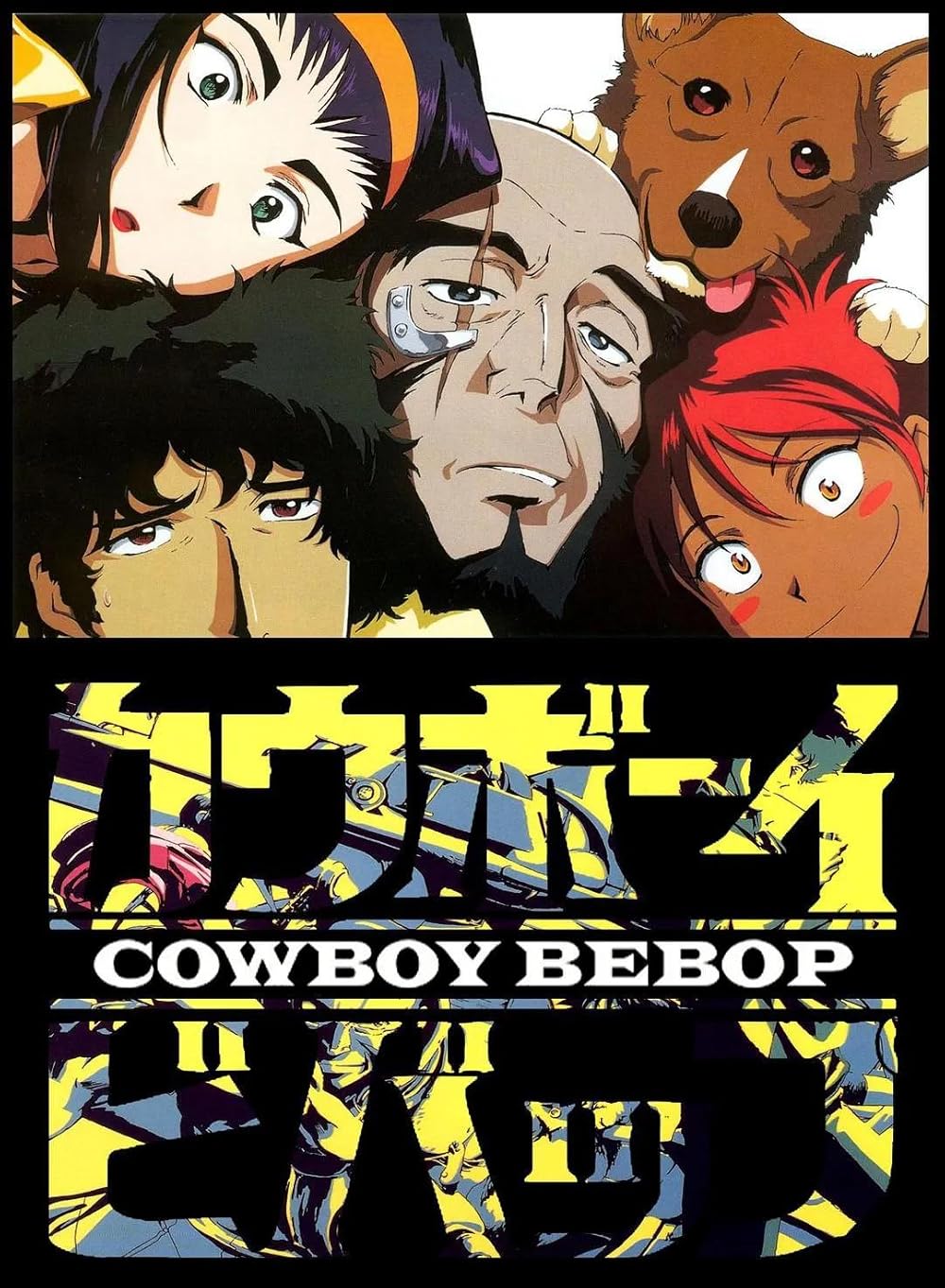
At its core, Cowboy Bebop is a space western noir, a genre mash-up that sounds chaotic on paper but plays out with such effortless cool that you never question it. You’ve got Spike Spiegel, a former syndicate hitman with a killer right hook and a death wish; Jet Black, a grizzled ex-cop with a cybernetic arm and a heart of gold; Faye Valentine, a femme fatale with amnesia and a gambling problem; Radical Edward, a chaos-gremlin child hacker; and Ein, a data-dog who is frankly way smarter than everyone else. They’re bounty hunters in the year 2071, just scraping by in a solar system that’s still recovering from a major accident that made Earth largely uninhabitable, and they’re not saving the world—they’re just trying to make enough woolongs to afford their next meal of bell peppers and beef, which, as Jet will remind you, never actually has any beef.

The episodic structure is a huge part of the show’s charm, as you never really know what you’re going to get from one episode to the next. One week, it’s a high-octane action romp; the next, it’s a somber, almost silent meditation on loss; and then it might pivot to a bizarre, almost comedic episode about a fridge floating through space. This variety keeps things endlessly fresh, but it’s the overarching narrative, the slow burn of Spike’s past with the Red Dragon Syndicate, that gives the whole thing its devastating emotional weight. The show rewards multiple viewings because you pick up on new little details, new visual cues, and new emotional resonances every time, and the animation by Sunrise, even by today’s standards, is fluid and expressive with a cinematic flair that often feels like watching a classic film.

If you talk about Cowboy Bebop and don’t immediately mention the music, you’ve missed the entire point. The influence of the soundtrack is so profound that it’s essentially another main character, as Watanabe has always had a brilliant, intuitive understanding of music’s power in storytelling. With composer Yoko Kanno at the helm, he created something that transcends a typical score; the music isn’t just there to heighten the mood, it shapes the mood, defines the narrative, and creates the show’s entire identity. “Tank!” is perhaps the most iconic anime opening of all time, a roaring, brassy jazz piece that screams “style and energy” before you’ve even seen a single frame, but Kanno’s genius is in her range, shifting seamlessly from the bluesy harmonica of “Rain” to the ethereal, Celtic-tinged vocals of “Adieu” to the frantic rock of “What Planet is This?” during a chaotic fight, all of which makes the space-faring adventure feel gritty and lived-in but also achingly beautiful.

This masterful use of sound creates the overall mood of the series, which is one of profound, melancholy cool, steeped in a pervasive sense of loneliness and existential drift. Each of the main characters is running from something—a past they can’t escape, a memory they can’t forget, or a future they can’t imagine—and Spike lives by a philosophy that a man only dies when he’s forgotten, with his entire arc about confronting a past he’s been trying to outrun. They are a found family, but they’re a family of loners, each so wrapped up in their own personal baggage that they can never truly connect on a deeper level; they share meals, they bicker, they fight together, but they rarely share their deepest fears or true feelings, creating a bittersweet undercurrent to all their interactions. This juxtaposition—the cool, action-packed surface and the lonely, emotional depth—is what makes Cowboy Bebop so unforgettable.

For a newcomer, that blend is exactly why the show serves as a perfect gateway, as you don’t need to be steeped in anime tropes or have a tolerance for over-the-top melodrama to appreciate it. The storytelling is grounded, character-driven, and deeply human, with a cinematic sensibility that feels instantly familiar to anyone who loves Western films, noir, or sci-fi, sidestepping the more esoteric quirks that can sometimes be a barrier for new fans and delivering pure, universal storytelling. It shows that anime can be mature, thoughtful, and emotionally complex without being dark and miserable for the sake of it, setting the bar incredibly high and giving newcomers a clear benchmark for quality.

So, is it as good as everyone says it is? Yes, it’s a masterclass in visual storytelling, world-building, and character development, managing to be mature without being gratuitous, philosophical without being pretentious, and deeply sad without being depressing. It’s a singular work of art where every single element—the animation, the story, the characters, and most importantly, the music—aligns perfectly to create something that is so much more than the sum of its parts. Honestly, if you watch Cowboy Bebop and don’t find something to love, anime might just not be your thing, but for the vast majority, it’s the beginning of a beautiful, lifelong obsession. It’s the show you’ll recommend to your friends, rewatch years later, and still find yourself tearing up at the finale—essential viewing, plain and simple. It’s a perfect, beautiful, jazz-infused tragedy, and you’re gonna carry that weight, whether you want to or not.

Anime You Should Be Watching

4 Shots From 4 Films: Special F.W. Murnau Edition


4 Shots From 4 Films is just what it says it is, 4 shots from 4 of our favorite films. As opposed to the reviews and recaps that we usually post, 4 Shots From 4 Films lets the visuals do the talking.

Today was celebrate the visionary director, F.W. Murnau!  Murnau was born 135 years ago today, in Germany.  He went on to become a leading expressionist and one of the most influential filmmakers of all time.  Needless to say, it’s time for….

4 Shots From 4 F.W. Murnau Films

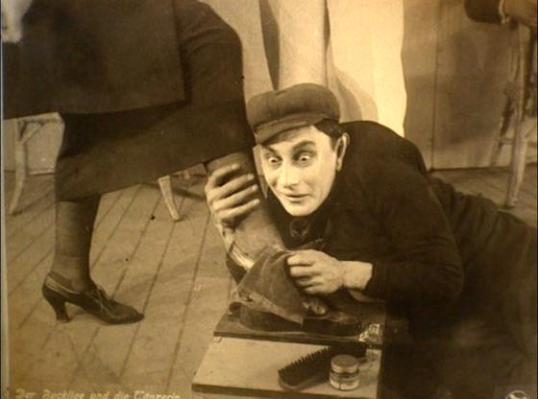
The Hunchback and the Dancer (1920, dir by F.W. Murnau)

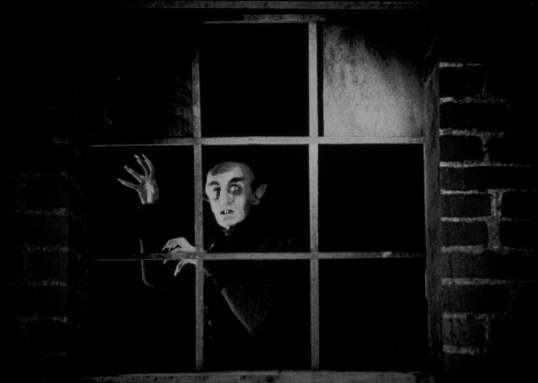
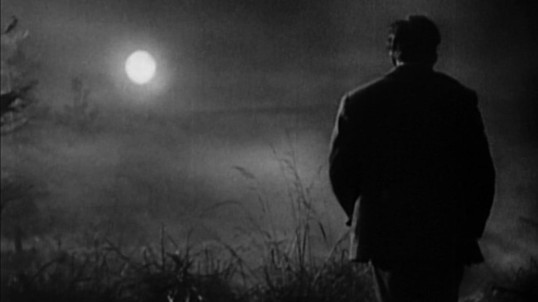
Nosferatu (1922, dir by F.W. Murnau)

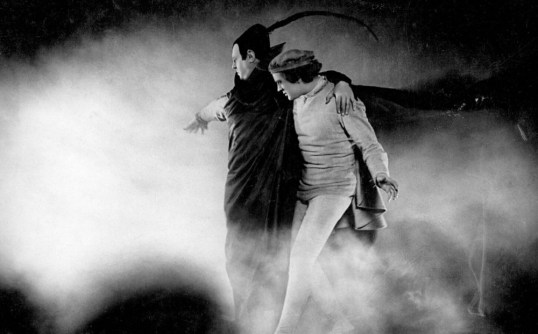
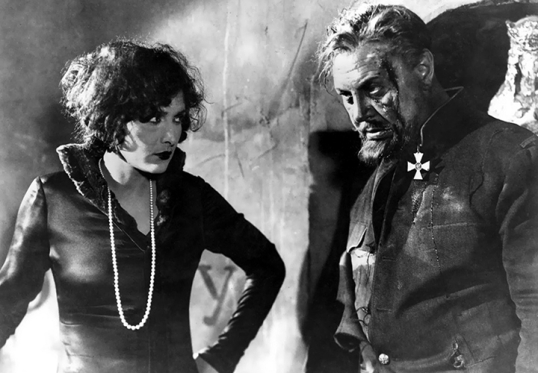
Faust (1926, dir by F.W. Murnau)

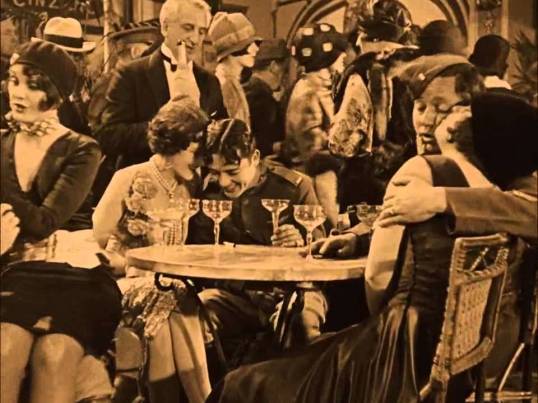
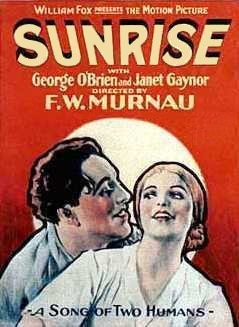
Sunrise: The Story of Two Humans (1927, dir by F.W. Murnau)

The Films of 2024: Sunrise (dir by Andrew Baird)


In the Pacific Northwest, animals are being killed and their blood is being drained.  Some of the locals theorize that it’s the work of the Red Coat, a legendary creature that demands constant sacrifices to keep it at bay.

Reynolds (Guy Pearce, with a wild preacherman beard) doesn’t care about the Red Coat.  He’s more upset about the fact that he and his buddies are feeling displaced in America.  He’s been driven to rage by the fact that there’s a family named Loi living in his community.  He hates immigrants.  He blames minorities for every problem that America is facing.  He says “ain’t” instead of “is not” because that’s the way this film lets us know that its characters are supposed to be blue collar.

Reynolds has murdered Mr. Loi (Chike Chin) and he’s targeting Yan Loi (Crystal Yu) and her teenage son, Edward (William Gao).  Fortunately, the Loi Family has a protector.  Fallon (Alex Pettyfer) wanders through the misty countryside with a grim look on his face and a darkly-colored wardrobe that is designed to let us know that he’s seeking vengeance.  Along with defending the Loi Family, Fallon has a personal reason for seeking vengeance on Reynolds.  Fallon also has an insatiable need for blood….

Sunrise is a somber, slowly-paced, and rather shallow-minded film.  It takes itself very seriously and it definitely wants you to know that it has important stuff on its mind, unlike those other vampire films that just seek to be entertaining.  Of course, as any student of the grindhouse knows, an entertaining film can often be the most effective form of propaganda around.  People aren’t going to think about your message is they’re bored out of their mind.

At times, Sunrise seems to think that it’s the first film to ever use vampirism as a way to comment on current events, which I’m sure would be news to Bram Stoker, Jean Rollin, Anne Rice, Stephen King, Kim Newman, John Carpenter, Werner Herzog, Francis Ford Coppola, Spike Lee, Abel Ferrara, Guillermo del Toro, Kathyrn Bigelow, David Conenberg, Bill Gunn, Dan Curtis, and just about anyone else who has ever written or directed anything that involved a vampire.  Reynolds rants and rave about his hated of immigrants in speeches that are so overwritten and so florid that they verge on parody.  (At one point, he saps at a deputy for not drinking an American beer.)  His character is a fever dream of what Leftists think blue collar workers sound like when they’re not cheering their favorite football team or laughing about climate change.  I suppose the filmmakers deserve some credit for having enough discipline to realize that having Reynolds shout, “This is MAGA country!” would be a bit too heavy-handed for even this film but one can tell that the temptation was definitely there.

At first, I thought that the film’s cinematography would be its saving grace but eventually, I got bored with all of the artfully composed shots of the misty northwest.  There’s really not much difference between Sunrise‘s visuals and the visuals of the Twilight films.  Then I thought that Guy Pearce’s intensity might elevate the film but then I realized that Pearce has played this same character several times and he’s been more interesting in other films.  As for Alex Pettyfer, he’s just as boring here as he was in Magic Mike.  In Magic Mike, he at least danced.

Interestingly, this film — with its portrayal of rampant racism in the American northwest — is an Irish production that was shot not in Washington or Oregon but instead in Belfast.  That perhaps explains why the characters often sound like they learned how to speak by watching American cop shows on television.  Personally, I am not amongst those who feels that people should only be allowed to make movies about their own countries.  I don’t believe in limiting the imagination in that style.  As an American of Irish (and Italian and Spanish) descent, I think that an American filmmaker would be totally justified in directing a film about Ian Paisley’s followers terrorizing the Catholic minority in Northern Ireland.  (They could even shoot it around Austin, Texas.)  Or maybe someone could make a movie about that Irish basketball team who refused to shake hands with an opposing team because the team was from Israel.  All’s fair.

6 Shots From 6 Best Picture Winners: 1927 — 1939


4 Shots From 4 Films is just what it says it is, 4 shots from 4 of our favorite films. As opposed to the reviews and recaps that we usually post, 4 Shots From 4 Films lets the visuals do the talking!

Today, I’m using this feature to take a look at the history of the Academy Award for Best Picture.  Decade by decade, I’m going to highlight my picks for best of the winning films.  To start with, here are 6 shots from 6 Films that won Best Picture during the early days of the Academy Awards!  Here are….

6 Shots From 6 Best Picture Winners

Sunrise: A Song of Two Humans (1927, dir by F.W. Murnau, DP: Charles Rosher and Karl Struss)

Wings (1927, dir by William Wellman, DP: Harry Perry)

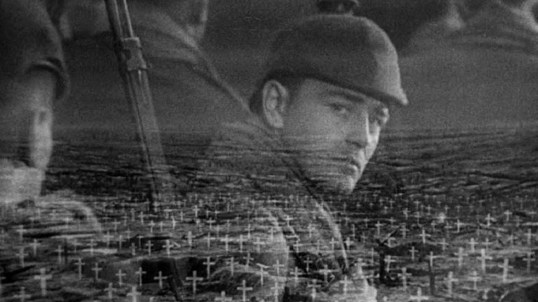
All Quiet On The Western Front (1930, dir by Lewis Milestone, DP: Arthur Edeson)

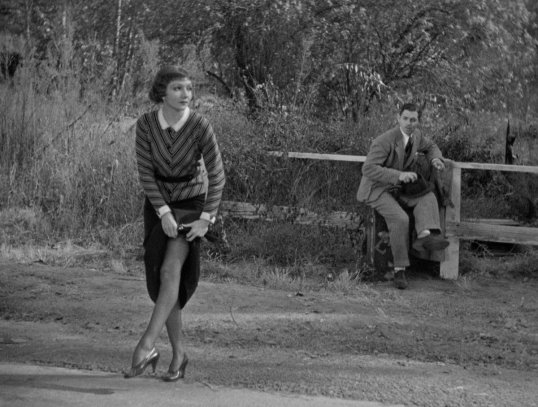
It Happened One Night (1934, dir by Frank Capra, DP: Joseph Walker)

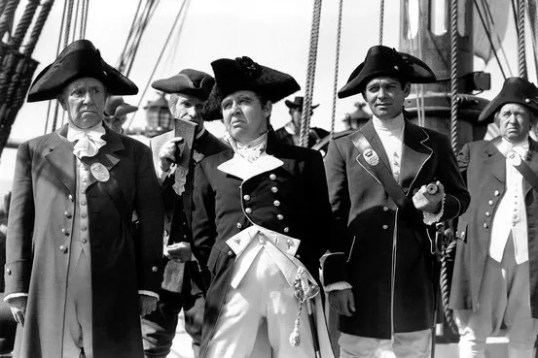
Mutiny on the Bounty (1935, dir by Frank Lloyd, DP: Arthur Edeson)

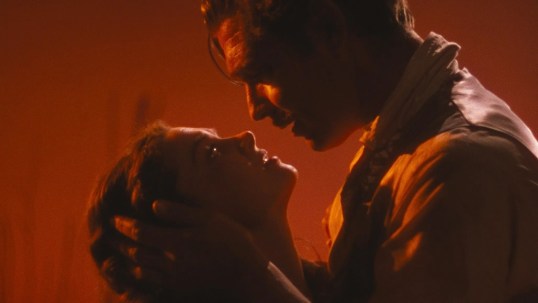
Gone With The Wind (1939, dir by Victor Fleming, DP: Ernest Haller)

4 Shots From 4 Films: Special F.W. Murnau Edition


4 Shots From 4 Films is just what it says it is, 4 shots from 4 of our favorite films. As opposed to the reviews and recaps that we usually post, 4 Shots From 4 Films lets the visuals do the talking.

Today was celebrate the visionary director, F.W. Murnau!  Murnau was born 135 years ago today, in Germany.  He went on to become a leading expressionist and one of the most influential filmmakers of all time.  Needless to say, it’s time for….

4 Shots From 4 F.W. Murnau Films

The Hunchback and the Dancer (1920, dir by F.W. Murnau)

Nosferatu (1922, dir by F.W. Murnau)

Faust (1926, dir by F.W. Murnau)

Sunrise: The Story of Two Humans (1927, dir by F.W. Murnau)

4 Shots From 4 Films: Special F.W. Murnau Edition


4 Shots From 4 Films is just what it says it is, 4 shots from 4 of our favorite films. As opposed to the reviews and recaps that we usually post, 4 Shots From 4 Films lets the visuals do the talking.

Today was celebrate the visionary director, F.W. Murnau!  Murnau was born 132 years ago today, in Germany.  He went on to become a leading expressionist and one of the most influential filmmakers of all time.  Needless to say, it’s time for….

4 Shots From 4 Films

The Hunchback and the Dancer (1920, dir by F.W. Murnau)

Nosferatu (1922, dir by F.W. Murnau)

Faust (1926, dir by F.W. Murnau)

Sunrise: The Story of Two Humans (1927, dir by F.W. Murnau)

4 Shots From 4 Inaugural Oscar Winners: Wings, Sunrise, The Last Command, Seventh Heaven


4 Shots From 4 Films is just what it says it is, 4 shots from 4 of our favorite films. As opposed to the reviews and recaps that we usually post, 4 Shots From 4 Films lets the visuals do the talking.

Today is the 90th anniversary of the very first Academy Awards ceremony!

On May 16th, 1929, a private dinner was held at the Hollywood Roosevelt Hotel in Los Angeles, California.  The dinner was largely meant to celebrate the establishment of the Academy of Motion Picture Arts and Sciences.  The brainchild of Louis B. Mayer, the AMPAS was founded to help mediate labor disputes between the studios and the unions.  As almost an afterthought, it was decided that AMPAS would also give out annual awards to honor the best films of the year.

12 awards were handed out on May 16th, before an audience of 270 people.  The entire awards ceremony took 15 minutes.  That’s quite a contrast to what the Academy eventually became.

In honor of that 15-minute ceremony, here’s….

4 Shots From 4 Films Honored At The Very First Oscar Ceremony

Wings (1927, dir by William Wellman) Won The Outstanding Production Awards

Sunrise (1927, dir by F.W. Murnau) Won Best Unique and Artistic Picture

The Last Command (1928, dir by Josef von Sternberg) Won Best Actor — Emil Jannings

Seventh Heaven (1927, dir by Frank Borzage) Winner Best Actress — Janet Gaynor

Along with her performance in Seventh Heaven, Janet Gaynor was also honored for her work in Street Angel and Sunrise.  Emil Jannings was honored for his work in both The Last Command and The Way of all Flesh,

Here’s what else won at the inaugural Oscar ceremony:

Best Direction, Comedy Picture — Lewis Milestone for Two Arabian Knights

Best Direction, Drama Picture — Frank Borzage for Seventh Heaven

Best Original Story — Ben Hecht for Underworld

Best Adaptation — Benjamin Glazer for Seventh Heaven, based on the play by Austin Strong

Best Art Direction — William Cameron Menzies for The Dove and Tempest

Best Cinematography — Charles Rosher and Karl Struss for Sunrise

Best Engineering Effects — Roy Pomeroy for Wings

Best Title Writing — Joseph Farnham for Fair Co-Ed; Laugh, Clown, Laugh; and Telling the World.

Embracing the Melodrama, Part II: Sunrise (dir by F.W. Murnau)


Sunrise_vintage

Last year, I published 60 film reviews under the heading of Embracing the Melodrama.  Embracing the Melodrama was one of the first review series that I had ever done and I had so much fun doing it that I figured, “Why not try it again?”

In other words, welcome to Embracing the Melodrama, Part II!

Over the next three weeks, I will posting, in chronological order, 128 reviews of films that embrace the melodrama.  As before, these reviews will be in chronological order and they will include everything from Oscar winners to grindhouse exploitation to made-for-television dramas.  It should be fun!

And, considering that we’re talking about 128 reviews here, it should at least help me make a dent in my goal to see every single movie that has ever been made.

Let’s start things off by taking a quick look at the 1927 silent film, Sunrise.  Directed by German expressionist F.W. Murnau, Sunrise is widely considered to be one of the greatest films ever made and for once, popular opinion is correct.  The film tells a simple story.  The Woman From The City (Margaret Livingston) takes a vacation out in the country.  (We know she’s dangerous because she wears black lingerie.)  She stands outside of a farmhouse and whistles.  Soon, the Man (George O’Brien) steps out of the farmhouse and joins the Woman.  Inside the farmhouse, the Wife (Janet Gaynor) can only dream of what life was like when she and the Man first fell in love.

The Man and the Woman meet at the edge of the lake and kiss as the moon shines down on them.  They’re having an affair, though the film — in its dream-like way — leaves it ambiguous as to just how long the affair has been going on.  (Indeed, the film almost seems to suggest that The Woman has sprung from the Man’s subconscious, a creation of his darkest desires.)  The Woman wants the Man to murder his wife and come back to the city with her.  At first, the Man refuses but, as the Woman talks to him, he starts to visualize the city.  And, make no mistake about it — the city that the man visualizes is a scary place that resembles the dreamworld of The Cabinet of Dr. Caligari.  But, at the same time, it’s also a lot more fun than the farm.

Now, you may be wondering why this familiar sounding tale is considered to be one of the best films of all time.  The story itself is simple and deliberately allegorical.  The film is less about the story and more about how Murnau tells it.  Murnau fills the screen with hauntingly surreal images that are both beautiful and frightening at the same time.  When the title cards appear on-screen, the lettering literally fades in and out and adds to the entire movie’s dream-like feel.  Watch the scene below where the Woman first suggests killing the Wife and the Man visualizes the city:

Infatuated with the Woman, the Man plans to drown the Wife but, at the last minute, has a change of heart.  The Wife, however, flees to the city herself.  The Man follows her and attempts to win back her love.  The city itself changes when the Man and the Wife are in it together.  What seemed dark and threatening under the influence of the Woman is now revealed to be fun and vibrant.  The film transforms from being an early example of film noir to being a screwball comedy.

How many other films can you think of that feature both a murderous femme fatale and a drunk pig?

And yet, as much joy as the Man and the Wife find in the city, both the farm and the Woman await their eventual return.  And there’s a storm coming…

Interestingly enough, at the first Oscar ceremony, two awards were given for Best Picture of the year.  The first award — for Outstanding Production — went to Wings, a big budget action spectacular about World War I.  The other award — for Unique And Artistic Presentation — went to Sunrise.  I’ve read a lot of speculation about which film the Academy meant to name the best of the year but, to me, it’s fairly obvious that the Academy meant for Outstanding Production to honor the year’s big blockbusters while Unique and Artistic Presentation would honor the “art” films.

And, to be honest, I think that, way back in 1928, the Academy had the right idea.  Why should they only give out one award for best picture, as if all films can be judged by only one standard?  Why not give out separate awards for the best comedy or the best thriller or the best film made for a certain amount of money?  Why not bring back the Oscar for Unique and Artistic Presentation?

For whatever reason, the Academy discontinued the Unique and Artistic Presentation Award after the 1st ceremony and, in the future, only one film would be named best of the year.  Since Outstanding Production eventually become known as Best Picture, Wings has been immortalized as the first film to win best picture.

And, nothing against Wings, but the Academy would have been smarter to have gone with Sunrise.  Certainly, it would have won them the respect of future film students.

You can watch Sunrise below!