Lisa’s Way Too Early Oscar Predictions For April


michael-keaton-birdman

As I explained in March, I’m going to be doing a monthly series of posts in which I’m going to attempt to predict which 2014 films will be Oscar-nominated.

Obviously, at this point of the year, the nominations listed below are less like predictions and more like random guesses.  However, if nothing else, these early predictions will be good for a laugh or two once the actual Oscar race becomes a bit more clear.

Below, you’ll find my predictions for April.  Check out my predictions for March here.

Best Picture

Birdman

Boyhood

Foxcatcher

Get On Up

The Imitation Game

Interstellar

Unbroken

Whiplash

Wild

Best Director

Alejandro Gonzalez Inarritu for Birdman

Angelina Jolie for Unbroken

Richard Linklater for Boyhood

Morten Tyldum for The Imitation Game

Jean-Marc Vallee for Wild

Best Actor

Chadwick Boseman in Get On Up

Steve Carell in Foxcatcher

Benedict Cumberbatch in The Imitation Game

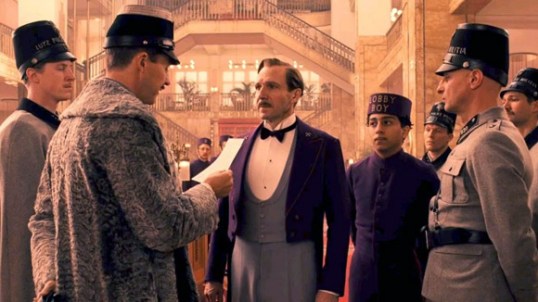
Ralph Fiennes in The Grand Budapest Hotel

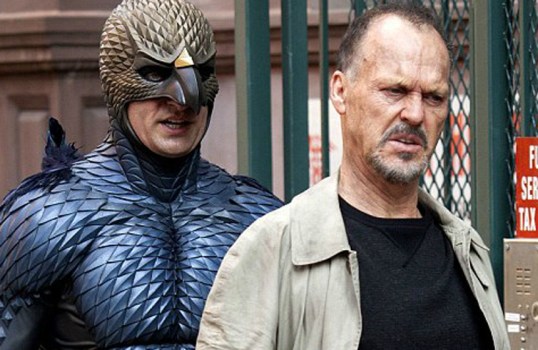
Michael Keaton in Birdman

Best Actress

Amy Adams in Big Eyes

Jessica Chastain in A Most Violent Year

Rosamund Pike in Gone Girl

Emma Stone in Magic in the Moonlight

Reese Whitherspoon in Wild

Best Supporting Actor

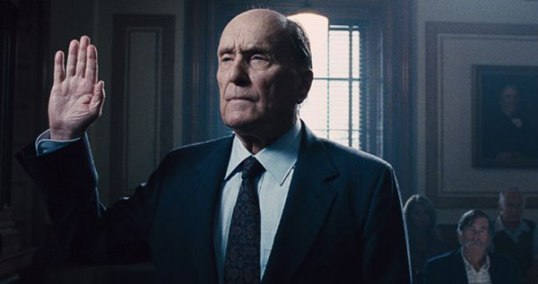
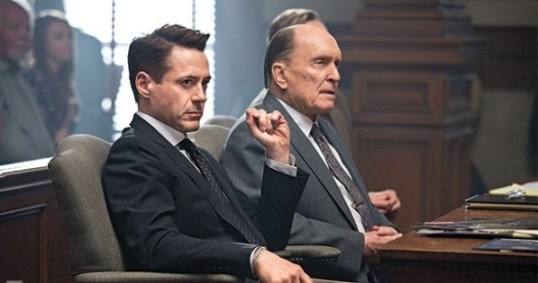
Robert Duvall in The Judge

Mark Ruffalo in Foxcatcher

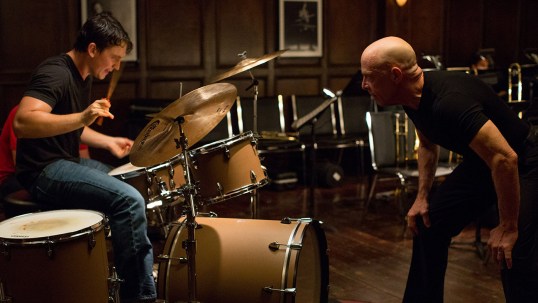
J.K. Simmons in Whiplash
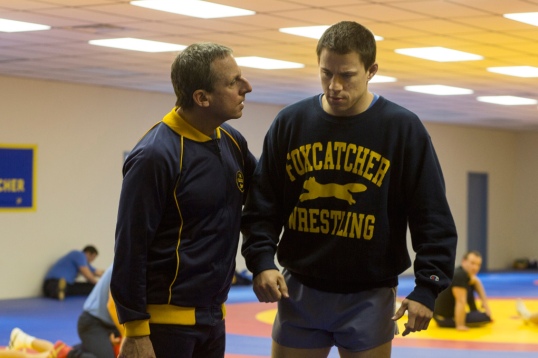
Channing Tatum in Foxcatcher

Christopher Walken in Jersey Boys

Best Supporting Actress

Viola Davis in Get On Up

Marcia Gay Harden in Magic In The Moonlight

Kiera Knightley in The Imitation Game

Amy Ryan in Birdman

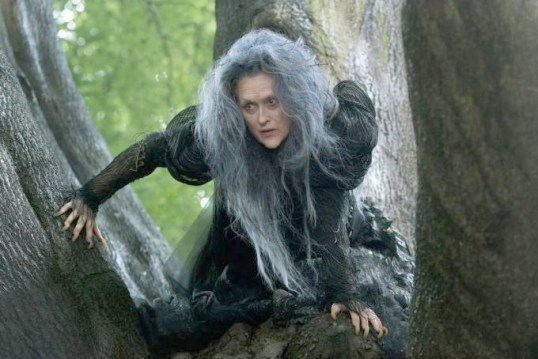
Meryl Streep in Into The Woods

Meryl-Streep-Into-The-Woods

The March Edition Of Lisa’s Way Too Early Oscar Predictions


foxcatcher-trailer-hd

Is it ever too early to start trying to predict what films will be nominated for Oscars next year?

In a word … yes.

After all, it’s only March.  Grand Budapest Hotel has just now been released in New York and Los Angeles.  Whiplash and Boyhood were acclaimed at Sundance.  But otherwise, this is the time of year when the studios release films like The Legend of Hercules and Jack Ryan: Shadow Recruit. 

Yes, it’s way too early and, quite frankly, a bit silly to try to predict anything right now.

But, a lot of us are still going to try.

Below you can find my way too early predictions for the 2015 Oscar nominations.  Needless to say, these are blind guesses and should not be taken too seriously.

Some may notice that three films that are very popular with other award watchers are not listed on my list of best picture predictions.  I have not listed Grand Budapest Hotel because the Academy, in the past, has not exactly been receptive to the films of Wes Anderson.  As for David Fincher’s Gone Girl, I’m predicting it will have more in common with his rehash of The Girl With The Dragon Tattoo than The Social Network.  Finally, I’m looking forward to seeing Paul Thomas Anderson’s Inherent Vice but I think the material will be too quirky for the Academy.

Best Picture

Birdman

Boyhood

Foxcatcher

Get On Up

The Imitation Game

Interstellar

Unbroken

Whiplash

Wild

Best Director

Alejandro Gonzalez Inarritu for Birdman

Angelina Jolie for Unbroken

Richard Linklater for Boyhood

Morten Tyldum for The Imitation Game

Jean-Marc Vallee for Wild

Best Actor

Chadwick Boseman in Get On Up

Steve Carell in Foxcatcher

Benedict Cumberbatch in The Imitation Game

Brendan Gleeson in Calvary

Timothy Spall in Mr. Turner

Best Actress

Amy Adams in Big Eyes

Jessica Chastain in A Most Violent Year

Rosamund Pike in Gone Girl

Emma Stone in Magic in the Moonlight

Reese Whitherspoon in Wild

Best Supporting Actor

Robert Duvall in The Judge

Idris Elba in Beasts of No Nation

Mark Ruffalo in Foxcatcher

J.K. Simmons in Whiplash

Christopher Walken in Jersey Boys

Best Supporting Actress

Viola Davis in Get On Up

Amy Ryan in Birdman

Kristen Scott-Thomas in Suite Francaise

Meryl Streep in Suffragette

Jacki Weaver in Magic in the Moonlight

Those are my predictions for now.  Come April, I’ll sit down and make (and post) another collection of blind guesses.  If nothing else, these way too early predictions will give everyone something to laugh about when, next year, the actual Oscar nominations are announced.

Agree?  Disagree?  Let me know in the comments.

reese-witherspoon-wild-slice

A Quickie With Lisa Marie: The Conversation (dir. by Francis Ford Coppola)


As a result of my continuing effort to see every single film ever nominated for best picture, I’ve been lucky enough to both discover and rediscover a handful of excellent films that, for whatever reason, have ended up forgotten and neglected in the years since they scored their nominations.  One of the more recent of these films was Francis Ford Coppola’s masterpiece of a paranoia, the 1974 Best Picture nominee The Conversation.*

The Conversation tells the story of Harry Caul (played by Gene Hackman), a surveillance expert who, along with his colleague Stan (played by the great John Cazale), is hired by a businessman (Robert Duvall) to bug a conversation between Duvall’s much younger wife (played by Cindy Williams) and a man who might be her lover (played by Fredric Forrest).  Harry, we quickly discover, is a man who values his privacy and who manages to find a balance between his unsavory job and his devout religious faith by maintaining an impenetrable shield of detachment from the rest of humanity.  He is a man who hides from the world inside of his apartment, only allowing himself to show the slightest hint of emotion when playing his saxophone.  In one of the film’s best scenes, Harry finds himself awkwardly socializing with a far more sleazy acquaintance (played by Alan Garfield, one of the great character actors of the 70s) and it becomes apparent that Harry may be the best in the business but he’s still the ultimate outsider.

However, Harry is forced to confront the contradictions of his own lifestyle when he listens to the conversation between Forrest and Williams and believes that he might have found evidence that both Forrest and Williams are in fear for their lives.  With Duvall’s operatives demanding the surveillance tapes, Harry Caul soon finds himself becoming more and more paranoid and unstable as he finds it more and more difficult to justify his detachment.  Harry finds himself obsessively listening to the conversation over and over again, going over every possible nuance and emphasis to try to figure out what’s actually being said.  Of course, by the end of the film, it’s obvious to both Harry and the audience that nothing is as simple as it sounds. 

Compared to the Godfather films and Apocalypse Now, the Conversation is a surprisingly low-key and rather muted film.  A lot of this is because, as opposed to the Corleones and Martin Sheen’s Captain Willard, Gene Hackman’s Harry Caul is a complete and total introvert, a man who makes his living by observing a world that he refuses to be a part of.  Though the film works quite well as a thriller, it works best when viewed as a sympathetic character study of a paranoid and anti-social human being.  Hackman full inhabits the role, bringing Harry — with all of his frustrating contradictions and conflicted actions — to oddly vibrant life.  The film ultimately serves as a sad-eyed look at how a good person can justify doing bad things and how the inevitable consequences of those bad things can only be delayed for so long.

On a final note, an impossibly young Harrison Ford shows up here as Duvall’s sinister assistant.  He plays the role with just the right amount of prissy arrogance and he has a great scene where he asks Harry is he wants to try a homemade cookie.  “They’re good,” Ford assures him.

So is The Conversation.

—–

* Of course, another Coppola film — The Godfather, Part II — beat the Conversation for best picture.  However, The Conversation did win the Palme D’Or at Cannes that year.  It was a good year to be Francis Ford Coppola.

What could have been: The Godfather


I don’t know about you but I love to play the game of “What if.”  You know how it works.  What if so-and-so had directed such-and-such movie?  Would we still love that movie as much?  Would so-and-so be a star today?  Or would the movie have failed because the director was right to reject so-and-so during preproduction?

I guess that’s why I love the picture below.  Taken from one of Francis Ford Coppola’s notebooks, it’s a page where he jotted down a few possibilities to play the roles of Don Vito, Michael, Sonny, and Tom Hagen in The Godfather.  It’s a fascinating collection of names, some of which are very familiar and some of which most definitely are not.  As I look at this list, it’s hard not wonder what if someone like Scott Marlowe had played Michael Corleone?  Would he had then become known as one of the great actors of his generation and would Al Pacino then be fated to just be an unknown name sitting on a famous list?

(This page, just in case you happen to be in the neighborhood , is displayed at the Coppola Winery in California.)

The production of the Godfather — from the casting to the final edit — is something of an obsession of mine.  It’s amazing the amount of names — obscure, famous, and infamous — that were mentioned in connection with this film.  Below is a list of everyone that I’ve seen mentioned as either a potential director or a potential cast member of The Godfather.  Consider this my contribution to the game of What If….?

Director: Aram Avankian, Peter Bogdonavich, Richard Brooks, Costa-Gravas, Sidney J. Furie, Norman Jewison, Elia Kazan, Steve Kestin, Sergio Leone, Arthur Penn, Otto Preminger, Franklin J. Schaffner, Peter Yates, Fred Zinnemann

Don Vito Corleone (played by Marlon Brando): Melvin Belli, Ernest Borgnine, Joseph Callelia, Lee. J. Cobb, Richard Conte, Frank De Kova, Burt Lancaster, John Marley, Laurence Olivier, Carlo Ponti, Anthony Quinn, Edward G. Robinson, George C. Scott, Frank Sinatra, Rod Steiger, Danny Thomas, Raf Vallone,  Orson Welles

Michael Corleone (played by Al Pacino): John Aprea, Warren Beatty, Robert Blake, Charles Bronson*, James Caan, David Carradine, Robert De Niro, Alain Delon, Peter Fonda, Art Genovese, Dustin Hoffman, Christopher Jones, Tommy Lee Jones, Tony Lo Bianco, Michael Margotta, Scott Marlowe, Sal Mineo, Jack Nicholson, Ryan O’Neal, Michael Parks, Robert Redford, Burt Reynolds, Richard Romanus, Gianni Russo, Martin Sheen, Rod Steiger**, Dean Stockwell

Sonny Corleone (played by James Caan): Lou Antonio, Paul Banteo, Robert Blake, John Brascia, Carmine Caridi, Robert De Niro, Peter Falk, Harry Guardino, Ben Gazzara, Don Gordon, Al Letteiri, Tony LoBianco, Scott Marlowe, Tony Musante, Anthony Perkins, Burt Reynolds***, Adam Roarke, Gianni Russo, John Saxon, Johnny Sette, Rudy Solari, Robert Viharo, Anthony Zerbe

Tom Hagen (played by Robert Duvall): James Caan, John Cassavettes, Bruce Dern, Peter Donat, Keir Dullea, Peter Falk, Steve McQueen, Richard Mulligan, Paul Newman, Jack Nicholson, Ben Piazza, Barry Primus, Martin Sheen, Dean Stockwell, Roy Thinnes, Rudy Vallee****, Robert Vaughn, Jerry Van Dyke, Anthony Zerbe

Kay Adams (played by Diane Keaton): Anne Archer, Karen Black, Susan Blakeley, Genevieve Bujold, Jill Clayburgh, Blythe Danner, Mia Farrow, Veronica Hamel, Ali MacGraw, Jennifer O’Neill, Michelle Phillips, Jennifer Salt, Cybill Shepherd, Trish Van Devere

Fredo Corleone (played by John Cazale): Robert Blake, Richard Dreyfuss, Sal Mineo, Austin Pendleton

Connie Corleone (played by Talia Shire): Julie Gregg, Penny Marshall, Maria Tucci, Brenda Vaccaro, Kathleen Widdoes

Johnny Fontane (played by Al Martino): Frankie Avalon, Vic Damone*****, Eddie Fisher, Buddy Greco, Bobby Vinton, Frank Sinatra, Jr.

Carlo Rizzi (played by Gianni Russo): Robert De Niro, Alex Karras, John Ryan******, Sylvester Stallone

Virgil “The Turk” Sollozzo (played by Al Letteiri): Franco Nero

Lucas Brasi (played by Lenny Montana): Timothy Carey, Richard Castellano

Moe Greene (played by Alex Rocco): William Devane

Mama Corleone (played by Morgana King): Anne Bancroft, Alida Valli

Appollonia (played by Simonetta Steffanelli): Olivia Hussey

Paulie Gatto (played by John Martino): Robert De Niro*******, Sylvester Stallone

—-

* Charles Bronson, who was in his mid-40s, was suggested for the role of Michael by the then-chairman of Paramount Pictures, Charlie Bluhdorn.

** By all accounts, Rod Steiger – who was then close to 50 – lobbied very hard to be given the role of Michael Corleone.

*** Some sources claim that Burt Reynolds was cast as Sonny but Brando refused to work with him.  However, for a lot of reasons, I think this is just an cinematic urban legend.

**** Despite being in his 60s at the time, singer Rudy Vallee lobbied for the role of the 35 year-old Tom Hagen.  Supposedly, another singer — Elvis Presley — lobbied for the role as well but that just seems so out there that I couldn’t bring myself to include it with the “official” list.

***** Vic Damone was originally cast as Johnny Fontane but dropped out once shooting began and announced that the project was bad for Italian Americans.  He was replaced by Al Martino.

****** John P. Ryan was originally cast as Carlo Rizzi but was fired and replaced with Gianni Russo.  Ryan went on to play the distraught father in Larry Cohen’s It’s Alive.  Russo went on to co-star in Laserblast.

******* Robert De Niro was originally cast in this role but dropped out to replace Al Pacino in The Gang That Couldn’t Shoot Straight.  Pacino, incidentally, had to drop out of that film because he was given the role of Michael in The Godfather.

Film Review: Network (dir. by Sidney Lumet)


With the recent passing of director, Sidney Lumet, I decided to watch one of Lumet’s best-known films, the 1976 best picture nominee Network.

Network tells the story of Howard Beale (played by Peter Finch).  Howard is a veteran news anchor at a fictional television network.  Because his ratings are in decline, Howard is fired.  Howard reacts to this by announcing that he will commit suicide at the end of the next broadcast.  Ironically, so many people tune in to see Howard kill himself that his ratings improve and Howard gets to keep his job under the watchful eyes of news director Max Shumacher (William Holden) and network executive Dianne Christiensen (Fay Dunaway). 

At the same time, Max and Dianne are adulterous lovers.  The course of the film’s narrative finds Max abandoning his wife (Beatrice Straight) and Dianne, who is described as a “child of the tube,” enthusiastically trying to produce an early reality television show starring a group of Marxist revolutionaries.  They do this under the paranoid eyes of network president Frank Hackett (Robert Duvall) and Frank’s boss, the corrupt Arthur Jenson (Ned Beatty).

However, Howard Beale isn’t just an over-the-hill news anchor.  He’s actually a seriously mentally ill man who hears voices and who starts to see himself as some sort of messiah.  Eventually, this leads to a disheveled Howard giving a crazed speech in which he encourages viewers to yell, “I’m as mad as Hell and I’m not going to take it anymore!”  Yes, this is the famous scene that is always used whenever some pompous media jackass wants to criticize the current state of television.  Even though I think it’s one of the most overrated scenes in history, here it is:

Anyway, after this scene, Dianne starts to promote Howard as the “Mad Prophet of the Airwaves” and Max gets all outraged over how the news no longer has any integrity (bleh, Max is kinda full of himself) and eventually, Howard’s mad rantings get the attention of Arthur Jenson who has plans of his own for Howard.  The whole thing eventually ends on one of those rather dark notes that’s impressive the first time you watch it but just seems more heavy-handed and clumsy with subsequent viewings.

As you might be able to tell from my review, I almost felt as if I was watching two different movies when I watched Network.  For the first hour, the movie is a sharp and clever satire on the media.  The characters are sharply drawn, the performance are full of nuance, and even the villainous Dianne is allowed a bit of humanity.  And then, Howard gives his famous “mad as Hell” speech and the entire freaking film pretty much just falls apart as suddenly, all the characters start to act like cartoons.  The film’s satire becomes so heavy-handed that you actually find yourself wanting to watch something mindless and brainless just because you know it would piss off self-righteous old Max.  The actors stop acting and instead concentrate on shouting.  Whatever humanity Dianne had been allowed suddenly vanishes and she just becomes yet another stereotypical “castrating bitch.”  Max gets to spend a lot of time telling her why she’s worthless and it pretty much all comes down to the fact that 1) she’s under 40 and 2) she has a vagina.  (Never mind the fact that Max has abandoned his wife, apparently men are allowed to be assholes.)  By the time the 2nd half of the film ends, you don’t care about whatever the film’s message may have been.  You’re just happy that everyone has finally shut up.

As I sat through the second half of this film, it soon became apparent to me why Aaron Sorkin has continually cited Network‘s screenwriter Paddy Chayefsky as a major influence.  Chayefsky won an Oscar for writing Network and he’s constantly cited as one of the greatest screenwriters of all time but, quite frankly, his script isn’t that good.  Much like Sorkin’s work, you’re aware of the screenplay not because of what the characters say but because they say so much.  This is the type of film that is often wrongly called prophetic by bitter old men.  This is largely because the script itself was written by a bitter old man.  The only true insight one gets from this movie is the insight that the old will always view the young and the new as a threat.

And yet, even as the second half of the film collapses around us, Network still holds our attention.  We’re still willing to stick around to see how all of this ends (and keep an eye out for a 17 year-old Tim Robbins who made his uncredited film debut at the end of Network).  This has nothing to do with anything written by Paddy Chayefsky and everything to do with the direction of Sidney Lumet.  I once read somewhere that you can’t make a good film out of a bad script.  I’m not sure who said that though it has a definite William Goldman sound to it.   Well, if nothing else, Network proves that this is not always the case. 

To me, there is no more fitting tribute to Sidney Lumet than to say that he somehow managed to create something worthwhile out of Network.

Review: Open Range (dir. by Kevin Costner)


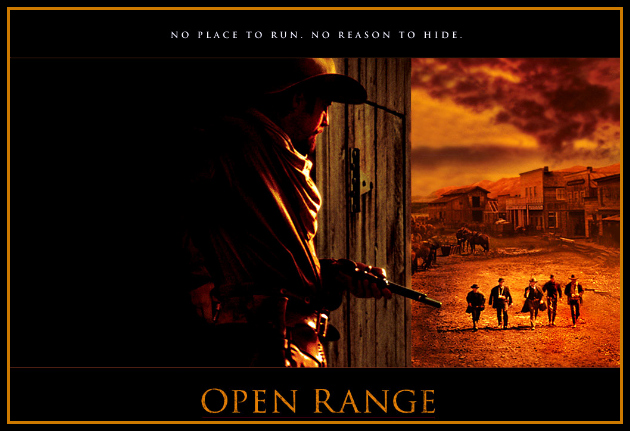
2003 marked a sort of a small comeback for Kevin Costner both as a director and as an actor. The work in question was the very well-done Western, Open Range. Open Range was a moderately budgeted film which has more in common with Costner’s first directorial work, Dances with Wolves than his last big-budget flop, The Postman.

The film was an adaptation of the Lauran Paine novel, The Open Range Men, and it captures much of the themes found in the novel. This was probably due to the fact that screenwriter Craig Storper didn’t deviate from the novel’s basic story. There were no superfluous action sequences and gunfights to ratchet up the action. Everything about Open Range was about the gradual and inevitable final confrontation between the “free-grazers” and the “barbed-wire” men. The free-grazers were played by Kevin Costner and Robert Duvall as Charles Waite and Boss Spearman, respectively. On the other side of the conflict was Michael Gambon playing Denton Baxter, the ruthless land-baron whose attempt to keep the free-grazers from grazing on his land also hides another agenda. Caught in-between these two strong-willed groups were the people in the town Baxter pretty much controls through his “town marshal” (played with fake bravado by James Russo) and the herd helpers under Boss Spearman’s employ.

The theme of freedom to roam the open country versus the rights of a landowner echoes throughout the film. Set in the latter end of the 19th-century, Open Range shows the clash of the more natural ways of the Old West slowly eroding to be replaced by the more industrial, monopolistic practices that became prevalent during the 1880’s, also known in US History as the Gilded Age. Even the personalities of the conflicting characters mirror this theme as the free-grazers only want to use the land as it has been used for years upon years and thats sharing between all men of the West. The land-baron has other ideas in mind and everything boils down to him owning everything around him, even if it means using ruthless tactics to gather even more property.

Open Range also has a bit of modernism in its subplot of Charley Waite’s growing attraction to the sister of the town doctor and the same sister’s well-rounded characterization. It’s not often that a traditional Western shows women in a very positive light instead of the usual submissive and stay-at-home characters of Western’s past. This could also be attributed to the wonderful, underrated performance by Annette Bening who plays Sue Barlow, the doctor’s sister and Charley Waite’s love interest. Bening doesn’t play Sue as the traditional Western female. She also doesn’t go overboard and turn Sue into a 20th-century feminist. She instead plays the character as someone who knows her place in the world, but also one who is strong-willed and willing to stand for what is right.

Open Range was a wonderful throwback to what made such modern Westerns like Unforgiven and Tombstone such a success both for traditionalists and new fans. Kevin Costner’s direction was very low-key. Allowing the story to tell itself at its own pace until the final confrontation. The final gunfight in the end gets a lot of well-earned attention from critics and fans. The entire sequence takes at least 10-15 minutes from start to finish. The fight itself was done in a realistic fashion. There was no sharpshooter dead-eyes in this film, but individuals who had skill but still missed. It was a fight where it wasn’t who was the fastest, but who was the calmest under fire. There’s also a suddenness to the brutality in the final gunfight that demystifies the old-style Western shootouts of past. Some complained that the film was very slow and took too long to get to the “good stuff”, but I actually thought the gradual pacing of most of the film’s length gave the final confrontation even more impact. Costner seem to have learned the lesson all good directors know: less means more.

Open Range won’t go down as a great piece of film making. It surely won’t go down as one of the best in history. What Open Range did accomplish was putting the Western back to its epic and majestic roots, but at the same time keeping the intimacy of a character-driven story. In time, Open Range would probably go down as one of the underrated gems of the last decade and find a place next to its closest comparison, Unforgiven, as one of the best Westerns of the new era.

Hey SAG! Where’s Jacki?


Is there any organization out there right now that isn’t handing out either awards or nominations?  Earlier today, The members of the Screen Actors Guild became the latest organization to join in the fun when they announced their nominations for the best film performances of 2010.

Here’s the nominees.  I apologize, in advance, for the lack of sarcastic commentary but I have a headache and, as a result, my wit is sleeping on the couch for now.

Ensemble:
Black Swan
The Fighter
The Kids Are All Right
The King’s Speech
The Social Network

Actress, Lead:
Annette Bening, The Kids Are All Right
Nicole Kidman, Rabbit Hole
Jennifer Lawrence, Winter’s Bone
Natalie Portman, Black Swan
Hilary Swank, Conviction

Actor, Motion Picture
Jeff Bridges, True Grit
Robert Duvall, Get Low
Jesse Eisenberg, The Social Network
Colin Firth, The King’s Speech
James Franco, 127 Hours

Supporting Actor
Christian Bale, The Fighter
John Hawkes, Winter’s Bone
Jeremy Renner, The Town
Mark Ruffalo, The Kids Are All Right
Geoffrey Rush, The King’s Speech

Actress, Supporting
Amy Adams, The Fighter
Helena Bonham Carter, The King’s Speech
Mila Kunis, Black Swan
Melissa Leo, The Fighter
Hailee Steinfeld, True Grit

Well, okay, maybe I’ll make a few comments along the lines of “Yay for the love shown to Natalie Portman, John Hawkes, James Franco, Jennifer Lawrence, and Mila Kunis!”

But seriously, SAG, where’s Animal Kingdom’s Jacki Weaver?  I mean, I can understand why Noomi Rapace was snubbed.  The Mainstream doesn’t want to remind people that there was a perfect Lisbeth Salander before Rooney Mara.  That’s how the game is played.  That’s why the people over at awardsdaily.com are already trying to claim David Fincher’s remake of The Girl With The Dragon Tattoo as the film to beat for best picture next year.

But nobody’s remaking Animal Kingdom.  There’s nothing wrong with admitting that, in a year of excellent female performances, few were as a note perfect and unexpected as Jacki Weaver’s.

10 Reasons Not To Sit In A Theater Full Of Old People


This is the most difficult post I’ve ever had to write.

This is largely because I wore my glasses (instead of my contacts) last night because I knew I was going to be sleeping over at Jeff’s place.  Now, it’s the morning and we can’t find my glasses.  So, while he continues to search, I am sitting here trying to write despite being blind.  Seriously, as I type this, my face is less than half-an-inch away from Jeff’s monitor.  If I squint real hard, I can kinda sorta make out the letter-shaped blobs that are blinking in front of me.

In other words, there might be some typos in this post.  Sorry — I’ll correct them once I can see again.

This post came to me last night as we were watching the new Robert Duvall film Get Low at the Regal Keystone Park 16 in Richardson, Texas.  Get Low is a good movie and Duvall gives a brilliant performance but, from the minute we first found our seats, I realized that I was literally the youngest person in the audience. 

I suppose I should define just what exactly this article’s definition of “old” is.  Originally, I was thinking of old as being anyone who is older than me (that is, anyone born before 1985).  However, that would include Jeff, all three of my sisters, and just about every other contributor to this site.  So, I revised my definition. 

From now on, old is anyone over the age of 40.

With that cleared up, on to this list:

1) Old people never show up for the movie on time.  Seriously, the first 20 minutes of Get Low were pretty much dominated by fat old people wandering around in the dark, searching for a seat.  Considering that movies never actually start when they’re supposed to and even then there’s about 15 minutes worth of commercials and trailers, there’s really no excuse for being that late.  Beyond, I guess, the arrogance that comes from being old.

2) Old people are mean.  It’s true!  And who wants to sit in the dark with a bunch of mean people?

3) Old people reek of buttery popcorn and stale nachos.  Listen, I like popcorn and I like butter on my popcorn.  And I like nachos too though I prefer the real thing as opposed to the lukewarm American version.  And, sometimes, I’ll get some popcorn to eat during the movie.  That, in itself, is not a sin.  That’s just being American.  However, I don’t use popcorn as a substitute for any of the major food groups.  But my God — what is the deal with old people who come waddling into the theater late and, of course, they’ve got a giant tub of popcorn in one hand and a giant tray of nachos in the other.  And since they waddle, what that means is that every step they take means that popcorn is going to be flying everywhere.  And then, once they do find a seat, they seem to feel the need to shake their giant tub of popcorn every few minutes as if to remind the rest of us that they’ve got a giant tub of popcorn and we don’t.  I mean, seriously, it’s time that the obese old people of the world accept the fact that not everything has to revolve around them.

4) Many old people are obese.  Before anyone says anything, I don’t feel good about writing that.  Obesity is a legitimate health concern and it’s often more the result of low self-esteem than anything else.  If I had enough money to get every obese old person liposuction, I would.  But I don’t and it doesn’t change the fact that obese old people make it difficult to enjoy a night out at the movies.  Whether it’s the fact that it takes them forever to find a seat and sit down or just the fact that they remind me of death, the grotesquely obese can be an issue.

5) Old people can’t drive.  This is less an issue when you’re watching the movie but definitely a concern when you’re trying to leave the theater afterward.  I mean, I understand that cars worked differently back in the Middle Ages but  seriously, we’ve reached a point where the engine’s not going to explode just because you tap the accelerator a little.

6) Old people can’t hear.  I love movies that are full of twists and turns.  What I can’t stand, however, is when I have to listen to the person behind me explaining all those twists and turns as they happen just because her companion is too freaking stubborn to get a hearing aid! 

7) Old people always want to do the whole Roger Ebert thing.  By this, I mean that after the movie ends, old people always want to sit there and go, “I didn’t like that…” or “The plot was too predictable.”  Okay, good for you, you’ve got an opinion.  So do I.  But I, at least, try to express my opinions in an interesting way.  “That plot was too predictable.”  Seriously, with all your years of life experience, you can be more witty than that.

8 ) Old people make weird noises.  Seriously, if you have to clear your throat that many times, you should probably be at the ER instead of the movies.

9) Old people don’t respect your privacy.  Seriously, what me and a friend choose to do while the movie is playing is our own business.  Keep your eyes on the screen, you old perverts.

10) Old people create awkward situations.  Seriously, no disrespect is meant by this but if someone in the audience dies while the movie’s playing, what is my obligation here beyond calling 911?  Is it acceptable for me to then watch the rest of the movie once I’ve called 911 or would that be considered a faux pas on my part?  I mean, what if it’s a really good movie?

2010: The Year In Film So Far


Everyone views history in their own individual way.  Some people remember past years by what they saw on the evening news (hence, 2004 becomes “the year Bush was reelected”) but I define them by what was playing at the nearest movie theater.  Ask me when I was born and I won’t tell you, “1985.”  Instead, I’ll tell you that I was born the same year that Terry Gilliam’s Brazil was butchered by Sid Shienberg.  For me, the quality of a year is determined by the quality of the movies that were released during those twelve months.  You may have hated 2009 because of the economy.  I hated it because it was the year of the overrated movie, the year in which otherwise sensible people ignored great films like An Education, A Serious Man, District 9, and Inglorious Basterds (which, praised as it was, deserved considerably more) in favor of Avatar and The Hurt Locker.

2010, however, is shaping up to be a far better year.  Though a final judgment can’t be passed on 2010 until 2011, here’s a few thoughts on the year so far.

Best Film (so far): Exit Through The Gift Shop, a quasi-documentary that might just be one of the most perfectly executed mindfucks in modern history.  Runners-up: The Girl With The Dragon Tattoo, Fish Tank, Please Give, Winter’s Bone, A Prophet, Toy Story 3, and Inception.

Best Male Performance of the year so far: John Hawkes, in Winter’s Bone.  Hawkes has been overshadowed by Jennifer Lawrence but he dominates every scene that he appears in.  Just consider the scene where he “talks” his way out of a traffic stop. Runners-ups: John C. Reilly in Cyrus, Ben Stiller in Greenberg, Leonardo DiCaprio in Inception and Shutter Island, and Sam Rockwell in Iron Man 2.

Best Female Performance of the year so far: Noomi Rapace as the Girl With The Dragon Tattoo and The Girl Who Played With Fire.  Rapace is my new role model, a Ms. 45 for the 21st century.  Runners-up: Jennifer Lawrence in Winter’s Bone, Katie Jarvis for Fish Tank, Rebecca Hall in Please Give, Greta Gerwig in Greenberg, and Chloe Grace Moretz in Kick-Ass.

Best Ending: The final shot of Inception.

Best Horror Film: The Wolf Man, which should have been oh so bad but instead turned out to be oh so good with Anthony Hopkins and Hugo Weaving both giving brilliant supporting performances. 

Best Bad Movie: Sex and the City 2.  Yes, if I’m going to be honest, it was a horrible movie.  But it was fun. the clothes were to die for, and the film managed to bring new depths of shallowness to the examination of the oppression of women in the Middle East.

Worst Film Of The Year (so far): Chloe.  Oh, Atom Egoyan, poor baby, what have you done, sweetheart?  You made a trashy, campy softcore movie and then you forgot that these things are supposed to be fun!  Runner-up: Robin Hood, because the entire freaking movie was a lie.  However, it did feature Oscar Isaac screaming, “Outlawwwwww!” and that saves it from being named the worst.

Worst Horror Film So Far: The Black Waters On Echo’s Pond.  So.  Fucking.  Bad.

The Get-Over-It-Award For The First Half Of 2010: The makers of Prince of Persia, who just had to try to turn an otherwise entertainingly mindless action film into yet another half-assed cinematic allegory for the Invasion of Iraq.  Ben Kingsley will probably be playing thinly disguised versions of Dick Cheney for the rest of his life.  I was against the Invasion of Iraq from the start but seriously, I’m so bored with every movie released using it as a way to try to fool the audience into thinking that they’re seeing something more worthwhile than they are.

The Read-The-Freaking-Book-Instead Award: The Killer Inside Me.  A lot of viewers are disturbed by the violent way that the main character deals with the women in his life.  I’m more disturbed by the fact that all the women in his life are presented as being simpering idiots.  The original novel is by Jim Thompson and it is a classic.

The worst ending of 2010 so far: Splice with the Killer Inside Me as a strong runner-up.

Future Film I’m Not Looking Forward To: Roland Emmerich’s Gusher, an ecological thriller based on the BP oil spill, starring Will Smith as the President, Dev Patel as the governor of Louisiana, Paul Bettany as the head of the evil oil company, and Ben Kingsley as Dick Cheney who will be seen cackling as oil-drenched doves wash up on the shores of California.  (How did the oil get to California?  Emmerich magic.)  Of course, the nominal star of the movie will be Jake Gyllenhaal as the young engineer who says stuff like, “This well is going to blow!” and who is trying to reconcile with his estranged wife (played by — does it really matter?  Let’s just say Emily Blunt gets the role this time around).  And let’s not forget Robert Duvall, who will play a grizzled old-timer who says a lot of grizzled old-timer stuff.  Look for it in 2012.

My prediction for which film will be the most overrated of 2010: The Social Network, which has not opened yet but Sasha Stone at awardsdaily.com seems to think that it’s a slam dunk for greatness which is usually a pretty good indication that the end result is going to be a predictable, bourgeois crapfest.

So, that’s 2010 so far.  It’s shaping up to be a good year.  I’m still looking forward to the release of Blue Valentine, Animal Kingdom, Get Low, The Disappearance of Alice Creed, The Last Exorcism, Wall Street, and the rerelease of Godard’s classic Breathless, which is one of my favorite movies and now I’m going to get a chance to see it in a theater!  Life is good.