Lisa Marie’s 10 Worst Films of 2021


Also be sure to check out my picks for 2020, 201920182017201620152014201320122011, and 2010!

10. Paradise Cove (dir by Martin Guigi)
9. Eternals (dir by Chloe Zhao)
8. Spiral: From the Book of Saw (dir by Darren Lynn Bousman)
7. Space Jam: A New Legacy (dir by Malcolm D. Lee)
6. Falling (dir by Viggo Mortensen)
5. Deadly Illusions (dir by Anna Eizabeth James)
4. Being the Ricardos (dir by Aaron Sorkin)
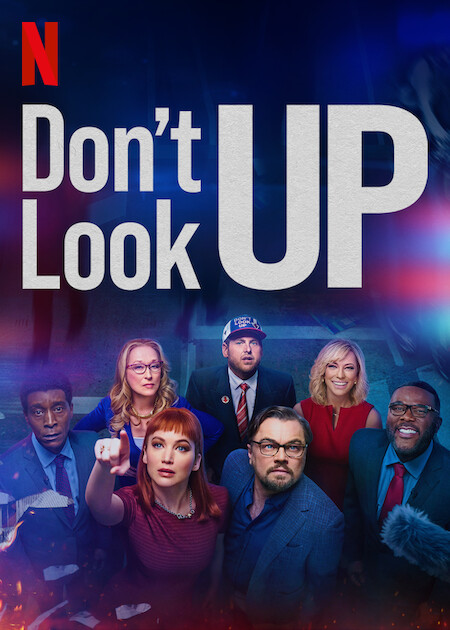
3. Don’t Look Up (dir by Adam McKay)
2. After We Fell (dir by Castille Landon)
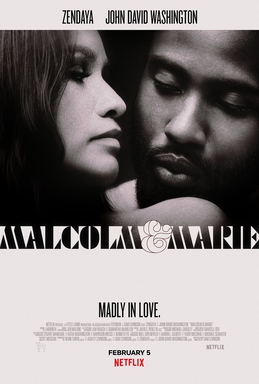
1. Malcolm & Marie (dir by Visionary Sam Levinson)

12 Good Things I Saw On Television In 2020


What to say about television in 2020?

It’s hard to come up with much, largely because there really wasn’t a whole lot of television to watch.  With the pandemic shutting down several productions and even knocking out stuff like the Olympics, network television was even more of a wasteland than usual.  As far as the major networks were concerned, 2020 was a year of rerurns and overproduced celebrity-themed game shows.

I’m sure that some would say that the presidential election livened things up and I have to admit that I did enjoy snarking on Michael Bloomberg, Tom Steyer, and MJ Hegar, all three of whom seem to be competing to see whose campaigns could put out the most cringe-worthy commercials possible.  But, with Trump on one side and Biden on the other, there was little about this election that was enjoyable to watch.  Indeed, I’ve reached the point where just thinking about hearing someone say, “Fake news” or “Come on, man,” makes me want to throw something across the room.

Even my old reliables failed me this year.  Survivor halted production.  The Amazing Race and Big Brother both featured the least likable cast imaginable.   It’s hard to get excited when bullies are winning your favorite shows.

As usual, the streaming services did a bit better than the networks but, in the end, it feels as if I spent most of 2020 watching the retro channels.  Whenever the real world got too stressful, annoying, or stupid, I would go out to my private office and I’d watch a channel like MeTV, AntennaTV, ForwardTV*, or maybe even CoziTV.  To be honest, it really didn’t matter what old shows they were showing.  All that mattered was that watching those shows of the past provided an escape from all the bad stuff happening in the present.  They provided non-threatening background noise and there’s something to be said for that.  They’re televised time capsules, perfect for a history nerd like me.

(*To be honest, I’m not sure that there really is a network called ForwardTV.  I do know that I frequently watch Ghost Whisperer on one of the retro channels and I’ve never actually caught the name of the channel.  Maybe it’s ForwardTV.  Who knows?)

So, this year, my list of good things that I saw on TV is going to be shorter than usual.  Who knows?  It could be for the best.  I usually watch too much TV as it is.

  1. A Teacher

This miniseries, about a teacher who has an affair with a student and how it continues to determine the shape of their lives long after the affair ends, was an unusually intelligent and thought-provoking show.  As the teacher and the student, Kate Mara and Nick Robinson both gave realistic and empathetic performances.

2. Bad Education

One of the best films of the year premiered on HBO.  On the one hand, it’s sad to think that the film would have been eligible the Oscars if it had only been bought by Netflix.  On the other hand, though, it’s totally possible that more people saw it on HBO than would have seen it otherwise.  Hugh Jackman didn’t win an Emmy and he’s not going to get an Oscar but he still gave one of the best performances of 2020.

3. Michael Bloomberg blowing it during his first Democratic Debate

Considering how obnoxious and ever-present his commercials were (“Mike will get it done!”), there was something deeply satisfying about watching this smug technocrat totally blow it when he actually found himself on live TV and having to deal with actual human beings.  There wasn’t much to enjoy as far as politics went in 2020 but seeing Bloomberg get booed after trying to explain away all of the HR complaints against him was a joy.

4. Seduced: Inside the NXIVM Cult

There were two high-profile NXIVM series last year.  HBO had The Vow, which was a lengthy series that was produced by a bunch of former NXIVM members and which tried to make the director of What The Bleep Do We Know into some sort of hero.  Seduced, meanwhile, was an honest look at life in the cult, one that pulled no punches and which made The Vow look worse and worse with each episode.

5. Saved By The Bell: The Reboot

The Saved By The Bell reboot turned out to be a 100 times better than it had any right to be.

6. 9-1-1: Lone Star

This show is a guilty pleasure for me, I’ll admit it.  On the one hand, it does a fairly good job of capturing the feel and attitude of my homestate.  On the other hand, I don’t know that there’s as many volcanoes in Texas as this show seems to think.  No matter, though!  It’s over-the-top and fun.

7. The Mandalorian

I’m not even into Star Wars and even I had to admit that The Mandalorian was pretty damn cool.  I’m among the many people who started watching for Baby Yoda and who stuck around because the show itself turned out to be so unexpectedly entertaining.

8. Better Call Saul 

Saul Goodman never lets us down.

9. The Queen

Neither does Queen Elizabeth.

10. Ghost Whisperer Reruns

And neither does Melinda!  Eve when she’s appearing in reruns airing on Hulu and whatever ForwardTV actually is.

11. Coronation Sreet

They have a ton of episodes on Hulu!  Considering that it often seemed as if I might never get to leave the country again, there was something nice about being able to go on Hulu and watch something as British as this show.

12. I learned to appreciate the Daytime Dramas

When you’re working from home in the middle of a pandemic, there’s something oddly comfortable about turning on the TV and seeing something like the Bold and the Beautiful or General Hospital.  Those shows are always there, they’re always dealing with same stuff that it’s been dealing with for decades, and they are also the shows most likely to get interrupted by a breaking news alert.  So, as long as I turn on the TV at 12:45 and I see The Bold and the Beautiful instead of Norah O’Donnell looking somber, I know that the day’s probably going to be crisis-free.

TSL Looks Back at 2020:

  1. Lisa Marie’s Top 8 Novels of 2020 (Lisa Marie Bowman)
  2. Lisa Marie’s Top 8 Non-Fiction Books of 2020 (Lisa Marie Bowman)
  3. Lisa Marie’s 20 Favorite Songs of 2020 (Lisa Marie Bowman)
  4. Lisa Marie’s 16 Worst Films of 2020 (Lisa Marie Bowman)
  5. My Top 20 Albums of 2020 (Necromoonyeti)
  6. 25 Best, Worst, and Gems That I Saw In 2020 (Valerie Troutman)
  7. Top 10 Vintage Collections (Ryan C)
  8. Top 10 Contemporary Collections (Ryan C)
  9. Top 10 Original Graphic Novels (Ryan C)
  10. Top 10 Ongoing Series (Ryan C.)
  11. Top 10 Special Mentions (Ryan C.)
  12. Top Ten Single Issues (Ryan C)

Lisa Marie’s Top 8 Novels of 2020


As I said earlier today when I posted my top 8 non-fiction books of the year, I’m disappointed in myself.  Considering how much time that I spent at home in 2020, I should have read more books.  I should have read every book that I have in the house.  That was certainly what I was expecting to happen but, as the lockdown went on and on, a combination of frustration and depressing kicked in and I basically totally lost focus.

So, I didn’t read as much as I should have.  But, at least I can say that I did read.  To be honest, I imagine that’s more than a lot of other people did.  Language is a wonderful thing and it’s dying.  Though I may not have read as much as I wanted to, I still read some very good novels over the course of 2020.  Listed below are eight of my favorites.

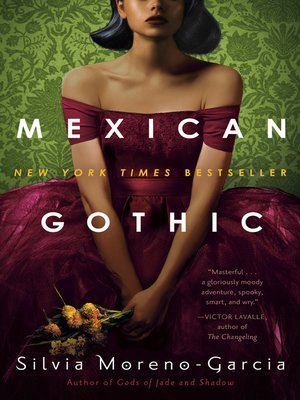
  1. Mexican Gothic by Silvia Moreno-Garcia — This was a wonderfully atmospheric book, one that took all of the traditional gothic elements and imagined them through the prism of Mexican culture and history.  This was a wonderful read, both entertaining and thought-provoking.  Apparently, it’s being turned into a miniseries for Hulu and I’ll definitely be watching.
  2. The Swap by Robyn Harding — Swapping partners leads to chaos!  (Well, yeah.)  This is an enjoyable thriller about a drunken night and the drama that follows. The characters are all sharply etched, especially Low, a the manipulative teenager who you’ll kind of sympathize with even when you know you shouldn’t.
  3. The House on Fripp Island by Rebecca Kauffman — Two families share a vacation house on Fripp Island.  One family is rich and one family is poor and both families are full of secrets and lies.  The House on Fripp Island is the literary equivalent of a good Lifetime film and, if you know how I feel about Lifetime films, then you know that’s a huge compliment.  I will also admit that I another reason why I liked this book was because it featured a character named Lisa.
  4. The Sister-in-Law by Sue Watson — Speaking of books that would make a good Lifetime film, The Sister-in-Law is another book about a family at a vacation home.  Once again, it’s all about secrets and lies and melodrama and it’s an incredibly fun read.
  5. Regretting You by Colleen Hoover — This book is an examination of the relationship between a overprotective mom and a rebellious daughter.  It rang true in all the best ways.  I could relate.
  6. The Midnight Library by Matt Haig — Nora is given a chance to see how her life would have turned out if she had made a few different choices.  This book made me laugh, it made me cry, and it made me think.  This is a perfect read for anyone struggling with regret.
  7. Wild Child by Audrey Carlan — What happens when you combine a serial killer thriller with a romance?  You get this well-written and fast-paced book about how Simone goes from nearly being a victim to falling in love with a handsome FBI agent.
  8. Plain Bad Heroines by Emily M. Danforth — Though this book may be a bit overlong at 640 pages, this epic and sprawling novel about love, history, and yellow jackets still held my interest.  It’s a challenging and well-written book by the author of The Miseducation of Cameron Post.

TSL Looks Back at 2020:

  1. Lisa Marie’s Top 8 Non-Fiction Books of 2020 (Lisa Marie Bowman)
  2. Lisa Marie’s 20 Favorite Songs of 2020 (Lisa Marie Bowman)
  3. Lisa Marie’s 16 Worst Films of 2020 (Lisa Marie Bowman)
  4. My Top 20 Albums of 2020 (Necromoonyeti)
  5. 25 Best, Worst, and Gems That I Saw In 2020 (Valerie Troutman)
  6. Top 10 Vintage Collections (Ryan C)
  7. Top 10 Contemporary Collections (Ryan C)
  8. Top 10 Original Graphic Novels (Ryan C)
  9. Top 10 Ongoing Series (Ryan C.)
  10. Top 10 Special Mentions (Ryan C.)
  11. Top Ten Single Issues (Ryan C)

Lisa Marie’s 8 Top Non-Fiction Books of 2020


I have to admit that I’m a little bit disappointed in myself.  Considering that I pretty much spent 9 months on lockdown, I didn’t read anywhere near as much as I should have in 2020.

Certainly, when I was first told that I’d be working from home, I thought to myself, “Finally!  I can work my way through my library!”  I thought I was going to read a book a day and watch 100 movies every week.  It didn’t work out that way.  To be honest, I got so frustrated with the whole endless lockdown thing that I often couldn’t focus enough to do anything productive with my time.  I’m sure I’m not alone in that.

That said, I may not have read as much as I was hoping to read but I still read some very good books.  So, without further ado, here are my top eight non-fiction books of 2020!

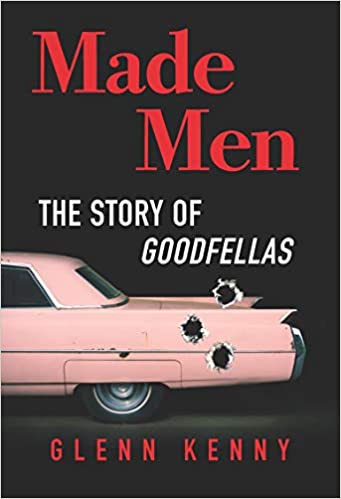
  1. Made Men: The Story of Goodfellas by Glenn KennyGoodfellas is one of the best films of all time and Glenn Kenny’s examination of both the movie and it’s place in pop culture is perhaps one of the best film books of all time.  Kenny not only details the true story behind Goodfellas but he also examines the film scene-by-scene.  This book is full of unexpected insight and behind-the-scenes trivia.  It’s everything you could want from a film book.
  2. Alright, Alright, Alright: The Oral History of Richard Linklater’s Dazed and Confused by Melissa Maerz — This is a frequently fascinating oral history about one of the greatest Texas films of all time, Dazed and Confused.  Maerz was able to interview almost everyone involved with the film and the end result is funny, touching, and thought-provoking look at a classic film.  This is worth it just for the chapters on Shawn Andrews.
  3. Dolls! Dolls! Dolls! Deep Inside Valley of the Dolls, the Most Beloved Bad Book and Movie of All Time by Stephen Rebello — This fun book details everything you could possibly want to know about the film version of Valley of the Dolls.  Especially interesting are the chapters that deal with the actresses and actors who were considered for the film.  There are indeed some surprising names to found.
  4. Taking Shape II: The Lost Halloween Sequel by Dustin McNeill and Travis Mullins — Probably the only thing I like more than a good book about the production of a film is a good book about a film that didn’t go into production.  Taking Shape II is an exhaustive look at all of the sequels that have been proposed for Halloween over the years.  The book not only details what each film could have been but also why they ultimately weren’t produced.  If you’re a horror fan, this is essential reading.
  5. Cinema ’62: The Greatest Year at the Movies by Michael McClellan and Stephen Farber — Was 1962 the greatest year in film?  This book makes a good case that it may have been.
  6. The Big Goodbye: Chinatown and the Last Years of Hollywood by Sam Wasson — This is another fascinating behind-the-scenes look at a classic film.  The Big Goodbye not only tells you everything you could want to know about Chinatown but it also places it in its correct cultural and historical context.
  7. The Office: The Untold Story of the Greatest Sitcom of the 2000s: An Oral History by Andy Greene — This oral history of my favorite sitcom is both a funny tribute to a great show and also a rather sad look at how The Office was often screwed over by NBC.  The only thing keeping this book from being ranked higher is the lack of fresh interviews with Steve Carell, John Krasinski, Jenna Fischer, and some of the other principles.  Indeed, much of the “oral history” is lifted from various DVD commentaries.  Still, Greene does a good job of organizing the information and the book will definitely make you want to sit down and rewatch the show.
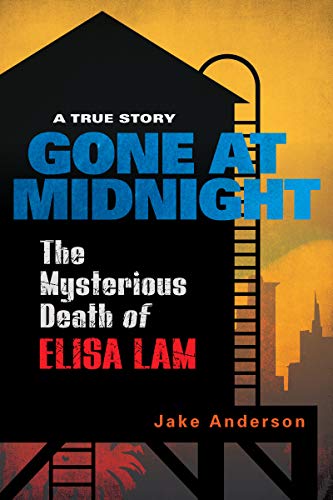
  8. Gone at Midnight: The Tragic True Story Behind the Unsolved Internet Sensation by Jake Anderson — This is a thought-provoking examination of the mysterious death of Elisa Lam and the internet culture that sprung up around the video of her final hours.


TSL Looks Back at 2020:

  1. Lisa Marie’s 20 Favorite Songs of 2020 (Lisa Marie Bowman)
  2. Lisa Marie’s 16 Worst Films of 2020 (Lisa Marie Bowman)
  3. My Top 20 Albums of 2020 (Necromoonyeti)
  4. 25 Best, Worst, and Gems That I Saw In 2020 (Valerie Troutman)
  5. Top 10 Vintage Collections (Ryan C)
  6. Top 10 Contemporary Collections (Ryan C)
  7. Top 10 Original Graphic Novels (Ryan C)
  8. Top 10 Ongoing Series (Ryan C.)
  9. Top 10 Special Mentions (Ryan C.)
  10. Top Ten Single Issues (Ryan C)
Lisa Marie’s 20 Favorite Songs of 2020


Every January, I list my favorite songs of the previous year and, every January, I include the same disclaimer.  My favorite songs are not necessarily the favorite songs of any of the other writers here at the Shattered Lens.  We are a large and diverse group of people and, as such, we all have our own individual tastes.

If you ever visited the TSL Bunker, you would be shocked by the different music coming out of each office.  You would hear everything from opera to death metal to the best of Frank Sinatra and Dean Martin.  And then, of course, you would reach my office and you would discover that my taste in music pretty much runs the gamut from EDM to More EDM.

Now, usually, I do try to listen to a variety of music.  You can go to my Song of the Day site — Lisa Marie’s Song of the Day — and see that I do occasionally listen to other types of music.  But, I have to be honest.  2020 was not a year that inspired me to really leave me comfort zone.  If anything, music provided me with some much needed consistency in an otherwise chaotic year.  2020 was a year that made me want to dance until it was all over and, for the most part, my favorite songs of the year reflect that fact.

Before I list my songs, I should make something else very clear.  These are my favorite songs of 2020.  I’m not saying that they’re necessarily the best songs of 2020.  I’ll leave that debate for others.  Instead, there are the songs that I found myself listening to over and over again.  These are the songs made me dance.  These are the songs that made me sing.  A few of these songs relaxed me when I needed to be relaxed.  These are songs that I liked.

You might like them.

Or you might not.

That’s the beautiful thing about art.  Everyone experiences it in their own individual way.  For instance, if you want to see an example of the different tastes of music that you’ll find here at TSL, be sure to check out Necromoonyeti’s top albums of 2020.  And also go to Days Without Incident and check out some of the songs that Leonard has posted.  To quote my friend Shirley Loh, “we all like different things.”

Here are my favorite songs of 2020:

20) No Sleep by Jessie Frye

19) Ghost In These Streets by Kate Vogel

18) Matches by Britney Spears and Backstreet Boys

17) You Do you by Dillon Francis and BabyJake

16) Into the Abyss by Zeds Dead x REZZ

15) Teacher by Chromatics

14) Stardew by Purity Ring

13) Everybody Here Hates You by Courtney Barnett

12) Swimming in the Stars by Britney Spears

11) Don’t Wanna by Haim

10) Preach by Saint Motel


9) Famous Monsters by Chromatics

8) Break my Heart by Dua Lipa

7) Feel Something by Armin van Buuren feat. Duncan Laurence

6) Dance Again by Selena Gomez

5) Phobos by Space 92

4) Pomegranate by deadmau5 & The Neptunes

3) Castles In The Sky by i_o

2) The Steps by Haim

1) A Good Song Never Dies by Saint Motel

Finally, allow me to offer up two honorable mentions to my favorite cinematic musical moments of the year.  From Eurovision Song Contest: The Story of Fire Saga:

And from What Did Jack Do?:

TSL Looks Back at 2020:

  1. Lisa Marie’s 16 Worst Films of 2020 (Lisa Marie Bowman)
  2. My Top 20 Albums of 2020 (Necromoonyeti)
  3. 25 Best, Worst, and Gems That I Saw In 2020 (Valerie Troutman)
  4. Top 10 Vintage Collections (Ryan C)
  5. Top 10 Contemporary Collections (Ryan C)
  6. Top 10 Original Graphic Novels (Ryan C)
  7. Top 10 Ongoing Series (Ryan C.)
  8. Top 10 Special Mentions (Ryan C.)
  9. Top Ten Single Issues (Ryan C)
 

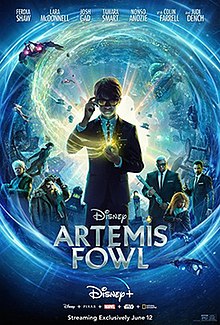
The Films of 2020: Artemis Fowl (dir by Kenneth Branagh)


What exactly is Artemis Fowl about?

Basically, it opens with news reports about the home of millionaire businessman Artemis Fowl (Colin Farrell) being raided by the police and the discovery that Fowl has apparently been stealing ancient artifacts from across the world.  A bearded man named Mulch Diggums (Josh Gad) is arrested at the house and is interrogated by …. someone.  I guess he’s being interrogated by an intelligence agency, I don’t know.  Mulch explains that he’s a dwarf and that he’s about to tell a story that will prove that magic exists which …. okay, I guess.

The story is about Artemis Fowl’s 12 year-old son, who is also named Artemis Fowl (Ferdia Shaw).  The younger Artemis Foul is a criminal mastermind, just like his father, and he wears a suit and dark glasses and basically, he looks like a 12 year-old who dressed up like one of the Men In Black for Halloween.  Artemis Fowl the younger is investigating the disappearance of Artemis Fowl the older which leads to a search for a missing magical object.  Somehow, it all involves faeries and other magical figures. Judi Dench pops up a few times, looking stern.  There’s a lot of chase scenes and a few fight scenes, none of which really make much of an impression.

The plot of Artemis Fowl is pretty much impossible to follow, especially if you haven’t read (or, in my case, recently reread) the books on which the film is based.  A huge part of the problem is that the film itself doesn’t really develop any sort of individual personality.  For a film about a 12 year-old wearing a suit and concocting criminal schemes, Artemis Fowl is surprisingly bland.  It feels like a collection of scenes from other YA adaptations.  We get the slow motion fight scenes.  We get the magical scenes that feel as if they were lifted from a lesser entry from the Harry Potter series.  Indeed, a huge chunk of the film seems to be made up of discarded scenes from director Kenneth Branagh’s previous excursion into the world of fantasy and vaguely defined magic, Thor.  The film moves quickly but since nothing interesting or unusual is happening, you find yourself wishing that maybe the film would slow down for a just a minute or two and spend a bit of time exploring the world in which the two Artemis Fowls live.  It’s a remarkably undetailed fantasy world that Artemis Fowl presents us with.  I spent the majority of the movie wondering whether Judi Dench was supposed to be an elf or a faerie.  One of the great actress, Dench spends the entire film wearing pointed ears and looking rather annoyed.

Much like Dolittle, Artemis Fowl ends with the promise of more cinematic adventures, though it’s doubtful that promise will actually be fulfilled.  Also — and again like Dolittle — it’s hard not to feel that Artemis Fowl would have worked much better as an animated film than as a live action spectacular.  Unfortunately, Artemis Fowl is just too bland and borderline incoherent to really make much of a lasting impression.

The Films of 2020: Dolittle (dir by Stephen Gaghan)


Dolittle tells the story of Dr. Dolittle (Robert Downey, Jr.), the eccentric doctor who can talk to the animals and who hasn’t had much use for humans ever since the tragic death of his wife, Lily (Kasia Smutniak).  Dolittle would be happy to just spend his entire life locked away in his estate, talking to Poly the Parrot (voice of Emma Thompson) and Chee-Chee the Gorilla (voice of Rami Malek) and all of the other animals but Dolitle has to eventually leave his home because otherwise, there wouldn’t be a movie.

When Queen Victoria (Jessie Buckley) is mysteriously taken ill, only Dolittle can save her.  Dolittle quickly realizes that the Queen has been poisoned and that the only cure for the poison is to be found on a tree that’s located on an island that no one has ever seen before.  Soon, Dolittle and the animals are sailing in search of the island.  Accompanying them is Tommy Stubbins (Harry Collett), a sensitive teen who hates to hunt and who hopes to become Dolittle’s apprentice.  Pursuing Dolittle is the evil Dr. Blair Mudfly (Michael Sheen), who went to college with Dolittle and who is in cahoots with the conspirators who are trying to do away with Queen Victoria.

Got all of that?  I hope so because we haven’t even gotten to the dragon with a set of bagpipes crammed up her ass.  Yes, you read that correctly.

Last year, Dolittle was one of the few major studio productions to actually get a wide release before COVID-19 closed down all the theaters.  It was released in January, which is traditionally the time when studios release the films that they hope everyone will have forgotten about by the time April rolls around.  January is traditionally the month when studios release the films that they know aren’t any good.  And, indeed, the reviews of Dolittle were overwhelmingly negative.  Not only did the critics hate Dolittle but audiences were also rather unenthusiastic and the film bombed at the box office.  Indeed, under normal circumstances, the reaction to Dolittle and its subsequent box office failure would be considered one of the year’s biggest disasters.  However, 2020 was a year of disasters.  Compared to everything else that ended up happening over the past 12 months, Dolittle’s lukewarm reception seems almost quaint now.

Earlier today, I finally watched Dolittle on HBOMax.  I was expecting the film to be terrible but it’s actually not quite as bad as I had been led to believe.  I mean, don’t get me wrong.  Dolittle has a ton of problems.  The tone is all over the place as the film tries to mix cartoonish humor with thrilling adventure in a style that owes more to the Pirates of the Caribbean franchise than it does to Dr. Dolittle.  Despite a few self-consciously manic moments, Robert Downey, Jr. seems remarkably bored in the lead role.  Many of the jokes fall flat and the awkward attempts to shoehorn the usual message of “be true to yourself” into the film just felt awkward.  That said, the CGI animals were cute enough to hold my interest and that’s really the most important thing when it comes to a film like Dolittle.  Cute animals — even computer generated ones — help to make up for a lot of flaws.

Dolittle’s final scene hints at a sequel or even a franchise.  Considering the reaction to the first film, I doubt we’ll get a second.  I do think Dr. Dolittle could make for an enjoyable PIXAR film but it might be time to give the live action adaptations a rest.

The Films of 2020: Let Them All Talk (dir by Steven Soderbergh)


Let Them All Talk is the latest film from Steven Soderbergh.  Meryl Streep plays Alice Hughes, a novelist who is traveling to London on the Queen Mary so that she can accept a literary prize.  Accompanying her are two friends from college, Roberta (Candice Bergen) and Susan (Dianne Wiest), both of whom have far less glamorous lives than Alice’s.  Roberta is also still angry because she feels that Alice used details from Roberta’s life in one of her novels.

Also on board the Queen Mary are Alice’s nephew, Tyler (Lucas Hedges, who overacts to such an extent that it’s almost as if he’s daring the Academy to take back that nomination for Manchester By The Sea) and Karen (Gemma Chan), who is Alice’s new agent and who is trying to figure out what Alice’s next book is going to be about.  (Karen hopes that it’ll be a sequel to her first novel, the one that was full of details stolen from Roberta’s life.)  Though Alice keeps insisting that she wants Tyler to keep Roberta and Susan entertained while she works on her latest book, Tyler is far more interested in getting to know Karen.

The film was shot on the Queen Mary, while the ship was actually making the voyage across the Atlantic.  Though the actors had a story outline, the majority of the dialogue was improvised and Soderbergh essentially just sat in a wheelchair with his camera and followed the actors around.  In short, this is a film that you probably could have shot, the only difference being that you probably wouldn’t have been able to get Meryl Streep to agree to appear in it.  I’m tempted to say that the story of the production is actually more interesting than the film itself but, to be honest, Steven Soderbergh shooting an improvised film isn’t that interesting.  Soderbergh’s always had a weakness for gimmicks like improv.  You may remember that, decades ago, he and George Clooney insisted on trying to produce largely improvised television shows for HBO.  Though the shows got a lot of hype before they premiered, both K Street and Unscripted mostly served to prove that improv is often more interesting in theory than in practice.

That’s certainly the case with Let Them All Talk, which is one of the most mind-numbingly dull films that I’ve ever sat through.  I think the assumption was that Meryl Streep, Candice Bergen, and Dianne Wiest would automatically be interesting to watch no matter what they said but it doesn’t work out that way.  Meryl Streep, in particular, is so excessively mannered that she comes across like a retired drama teacher playing the lead in the community theater production of Mame.  Candice Bergen does a bit better but Dianne Wiest is stranded with a role and subplot that seems almost like an afterthought.  In the end, the film just isn’t that interesting.  The “just start filming and see what happens” approach has its limits.

To be honest, as I watched Let Them All Talk, I found myself wondering if maybe Steven Soderbergh was deliberately trolling everyone by seeing how bad of a film he can make before critics stop reflexively praising everything that he does.  Let Them All Talk currently has a score of 89% at Rotten Tomatoes so Soderbergh still has a ways to go.


The Films of 2020: Ma Rainey’s Black Bottom (dir by George C. Wolfe)


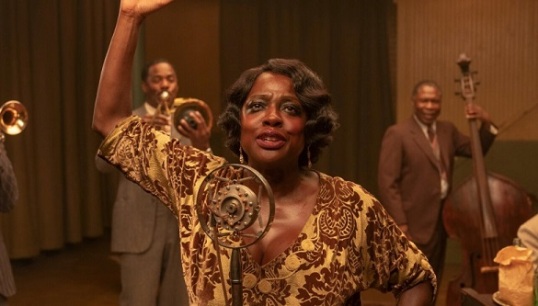
The year is 1927 and the place is Chicago.  6 men are in a claustrophobic recording studio, waiting for the arrival of blues singer Ma Rainey (Viola Davis).  While Ma’s agent, Irv (Jeremy Shamos) and studio owner Mel Sturdyvant (Johnny Coyne) wait upstairs, the members of Ma’s band gather in the rehearsal room.  They’ve been given a list of songs to rehearse.  As is quickly made clear, the band doesn’t have much say about which songs they’re going to perform and record.  In fact, Irv and Mel pretty much go out of their way to have as little contact with the black musicians as possible.

The band is made up of Cutler (Colman Domingo), Slow Drag (Michael Potts), Toledo (Glynn Turman), and a trumpet player named Levee (Chadwick Boseman).  Cutler may be their unofficial leader but Levee is the most outspoken.  Levee is sick of playing what he calls “jug band music.”  He’s written his own songs and he’s shown them to Sturdyvant.  He’s convinced that he’s going to start his own band and that he’s going to become a bigger star than Ma Rainey ever was.  The rest of the band views Levee with a mix of humor and distrust.

As for Ma, she arrives an hour late, accompanied by her girlfriend Dussie (Taylor Paige) and her nephew, Sylvester (Dusan Brown).  She doesn’t apologize for being late and, as soon as she arrives, she starts to make her voice heard.  She wants Sylvester to perform a spoken word intro on the record, despite the fact that Sylvester stutters.  When Irv and Sturdyvant fail to bring her a coke, she brings recording to a halt until she gets one.  She argues about which songs she wants to record and she reprimands Levee for trying to change the arrangement of one of her songs.  Ma’s difficult but, as she explains it, she has to be difficult.  Irv and Sturdyvant don’t care about her, they don’t care about what her music is actually about, and they certainly don’t care about paying her what she deserves.  Irv may claim to care about her but, as Ma tells Cutler, he’s only invited her to his home once and that was so she could sing for his white friends.  When they’re in the recording studio, Ma has all of the power and she’s not going to let anyone forget it.

Meanwhile, the members of the band continue to talk among themselves with the conversation always coming back to what it takes to survive in a society run by white people.  The three older men seem to have accepted that the world is what it is and that’s it’s never going to change but Levee believes that he has a future.  When the other members of the band poke fun at him for the obsequious way that he talks to Sturdyvant, Levee discusses the horrifying trauma of his past.  As the recording sessions continues, tempers start to flare until finally, the film climaxes in an act of sudden violence.

Ma Rainey’s Black Bottom is based on a play by August Wilson and, despite a few efforts to open up the story by including a few scenes on the streets of Chicago, it’s an undeniably stagey film.  You never forget that you’re essentially watching a film version of a theatrical experience.  Fortunately, the performances are so powerful and the dialogue is so sharp that it’s easy to forgive both the film’s staginess and the occasional lapses in pace.

In his final performance before his tragic passing, Chadwick Boseman transforms Levee into a character who manages to be frustrating, sympathetic, and occasionally frightening.  From his powerful monologue about what he and his family experienced during his youth to the film’s final anguished moments, Boseman holds your attention every second that he’s on screen.  Boseman captures not only Levee’s anger and his ambition but also Levee’s fragile confidence.  At the start of the film, he may be bitter about having to play Ma’s music but he’s also perhaps the most hopeful musician in that recording studio and there’s something undeniably tragic about watching him come to realize the truth of his situation.  He’s a character about whom many viewers will have mixed feelings but Boseman is never less than compelling.  Viola Davis, as well, gives a powerful performance as Ma Rainey, playing her as someone who knows that she can’t afford to show a single moment of weakness.  Ma knows that the white men who are in charge of the studio need her more than she needs them and she’s not going to let them forget it.  Of the rest of the cast, Glynn Turman is a stand-out as a piano player who knows and understands history in a way that his bandmates don’t.

Ma Rainey’s Black Bottom is currently streaming on Netflix.


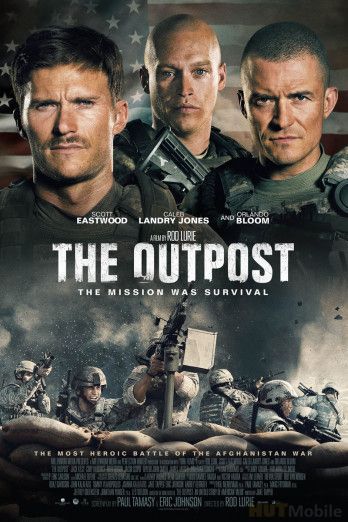
The Films of 2020: The Outpost (dir by Rod Lurie)


The Outpost, which is currently streaming on Netflix and which deserves far more attention than it’s been given, is a film that left me breathless.  Seriously, as the film came to its conclusion, I realized that I was so emotionally overwhelmed by what I had just seen that I actually had to stop for a few minutes and catch my breath.  Once I was breathing again, I started to cry.  I cried all the way through the end credits.  That’s the sign of a powerful film.

Based on a true story, The Outpost takes place in 2009.  PRT Kamdesh is an American military outpost in Northern Afghanistan.  The post is located in a valley.  The mountains, which rise high up into the sky, are not only beautiful but they also provide the perfect cover for the Taliban.  The outpost is attacked on a nearly daily basis.  At the start of the film, we’re told that one military strategist said that the base should have been named after George Custer because it was impossible to defend and that, should a big attack ever truly come, all 53 of the man on the base would essentially be sitting ducks.

The Outpost follows those 53 men as they go about their daily lives on the base.  Commanders die and are replaced.  The soldiers try to hold onto their sanity, even though they know that the “big attack” is inevitable.  Though more than a few of the men have families back home, they try not to think about them.  They can’t risk the distractions.  Even the act of adopting a dog is seen as being a potentially dangerous move.  The humor is dark, to the extent that the base’s theme song is “Everybody Dies.”  While dealing with daily attacks, the base’s commanders try to win the support of the local villagers.  One of the local elders asks if the Americans are the same invaders who have been in Afghanistan for the last 40 years.  “No,” the flummoxed commander tries to explain, “those were the Russians.”  It quickly becomes apparent that the soldiers and the villagers have at least one thing in common: no one is quite sure why the Americans are there or if they’ll ever able to leave.  Orders are sent down by faceless generals and the men of PRT Kamdesh wait for the attacks that they all know are coming,

When the attack does come, it leads to one of the most visceral battle scenes that I’ve ever seen.  There’s nothing glamorous about the way that The Outpost portrays war.  Instead, it’s a confusing, loud, and terrifying nightmare.  The Outpost establishes early on that anyone can die, an important lesson when you consider how many action movies have been made about heroes who are mythically impervious to even the slightest of injuries.

For roughly the final hour of the film, The Outpost puts us into the middle of the Battle of Kamdesh.  The film pays tribute to the soldiers who fought in the battle, showcasing their bravery and the quick thinking that kept the battle from being even more of a disaster than it was.  At the same time, it also reminds us that war is not fun and that the scars of combat are not just physical.  When a soldier breaks down into tears while trying to talk about the battle, the film treats his feelings with the respect that they deserve.  It’s been said that few people are as anti-war as the people who have actually experienced combat and The Outpost shows us why that is.

The Outpost is an important film.  It’s especially important now that we have a new president and the national media is probably going to go back to ignoring whatever happens in Afghanistan for at least the next four years.  For far too many people, it’s become the forgotten war, even though it’s still ongoing.  The Outpost is a film that reminds us that no war and no soldier should ever be forgotten.

I’ve been pretty critical of director Rod Lurie in the past but, with The Outpost, he’s given us one of the best films of 2020.