Lisa Marie’s 8 Top Non-Fiction Books of 2020


I have to admit that I’m a little bit disappointed in myself.  Considering that I pretty much spent 9 months on lockdown, I didn’t read anywhere near as much as I should have in 2020.

Certainly, when I was first told that I’d be working from home, I thought to myself, “Finally!  I can work my way through my library!”  I thought I was going to read a book a day and watch 100 movies every week.  It didn’t work out that way.  To be honest, I got so frustrated with the whole endless lockdown thing that I often couldn’t focus enough to do anything productive with my time.  I’m sure I’m not alone in that.

That said, I may not have read as much as I was hoping to read but I still read some very good books.  So, without further ado, here are my top eight non-fiction books of 2020!
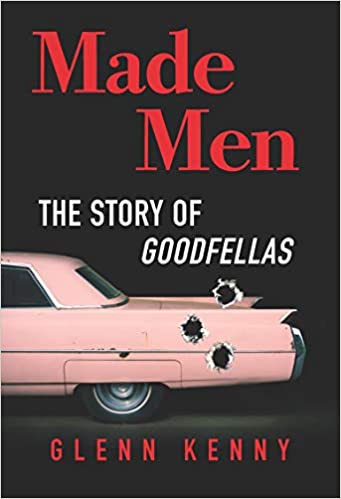
  1. Made Men: The Story of Goodfellas by Glenn KennyGoodfellas is one of the best films of all time and Glenn Kenny’s examination of both the movie and it’s place in pop culture is perhaps one of the best film books of all time.  Kenny not only details the true story behind Goodfellas but he also examines the film scene-by-scene.  This book is full of unexpected insight and behind-the-scenes trivia.  It’s everything you could want from a film book.
  2. Alright, Alright, Alright: The Oral History of Richard Linklater’s Dazed and Confused by Melissa Maerz — This is a frequently fascinating oral history about one of the greatest Texas films of all time, Dazed and Confused.  Maerz was able to interview almost everyone involved with the film and the end result is funny, touching, and thought-provoking look at a classic film.  This is worth it just for the chapters on Shawn Andrews.
  3. Dolls! Dolls! Dolls! Deep Inside Valley of the Dolls, the Most Beloved Bad Book and Movie of All Time by Stephen Rebello — This fun book details everything you could possibly want to know about the film version of Valley of the Dolls.  Especially interesting are the chapters that deal with the actresses and actors who were considered for the film.  There are indeed some surprising names to found.
  4. Taking Shape II: The Lost Halloween Sequel by Dustin McNeill and Travis Mullins — Probably the only thing I like more than a good book about the production of a film is a good book about a film that didn’t go into production.  Taking Shape II is an exhaustive look at all of the sequels that have been proposed for Halloween over the years.  The book not only details what each film could have been but also why they ultimately weren’t produced.  If you’re a horror fan, this is essential reading.
  5. Cinema ’62: The Greatest Year at the Movies by Michael McClellan and Stephen Farber — Was 1962 the greatest year in film?  This book makes a good case that it may have been.
  6. The Big Goodbye: Chinatown and the Last Years of Hollywood by Sam Wasson — This is another fascinating behind-the-scenes look at a classic film.  The Big Goodbye not only tells you everything you could want to know about Chinatown but it also places it in its correct cultural and historical context.
  7. The Office: The Untold Story of the Greatest Sitcom of the 2000s: An Oral History by Andy Greene — This oral history of my favorite sitcom is both a funny tribute to a great show and also a rather sad look at how The Office was often screwed over by NBC.  The only thing keeping this book from being ranked higher is the lack of fresh interviews with Steve Carell, John Krasinski, Jenna Fischer, and some of the other principles.  Indeed, much of the “oral history” is lifted from various DVD commentaries.  Still, Greene does a good job of organizing the information and the book will definitely make you want to sit down and rewatch the show.
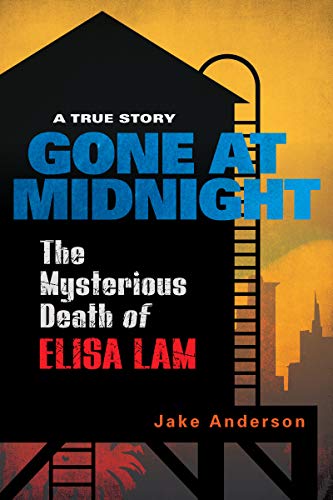
  8. Gone at Midnight: The Tragic True Story Behind the Unsolved Internet Sensation by Jake Anderson — This is a thought-provoking examination of the mysterious death of Elisa Lam and the internet culture that sprung up around the video of her final hours.
 

TSL Looks Back at 2020:

  1. Lisa Marie’s 20 Favorite Songs of 2020 (Lisa Marie Bowman)
  2. Lisa Marie’s 16 Worst Films of 2020 (Lisa Marie Bowman)
  3. My Top 20 Albums of 2020 (Necromoonyeti)
  4. 25 Best, Worst, and Gems That I Saw In 2020 (Valerie Troutman)
  5. Top 10 Vintage Collections (Ryan C)
  6. Top 10 Contemporary Collections (Ryan C)
  7. Top 10 Original Graphic Novels (Ryan C)
  8. Top 10 Ongoing Series (Ryan C.)
  9. Top 10 Special Mentions (Ryan C.)
  10. Top Ten Single Issues (Ryan C)

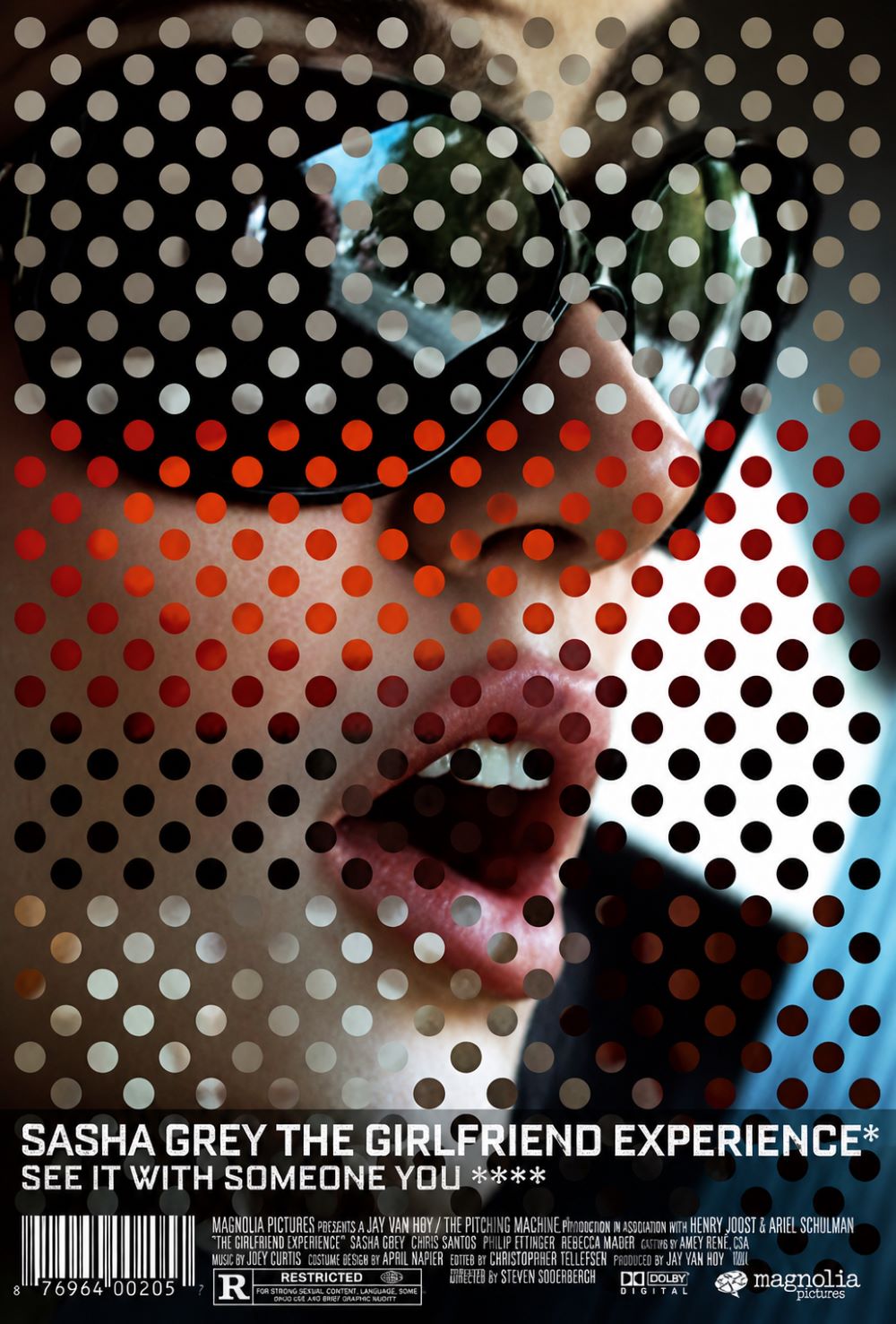
Review: The Girlfriend Experience (dir. by Steven Soderbergh)


“Sometimes clients think they want the real you, but at the end of the day, they say they don’t. They want what you want to be.” — Chelsea

In between his larger projects (the Che biopic) and studio work (Ocean’s 11 through 13), Steven Soderbergh has kept busy with low-budget, experimental films like Bubble and Full Frontal. His latest entry in this HD-shot, minimalist phase is The Girlfriend Experience. When it was first announced in 2008, much of the buzz centered on Soderbergh’s decision to cast real-life porn star Sasha Grey in the lead role. From that point through its festival run, discussion of the film fixated heavily on that choice. Yet The Girlfriend Experience is ultimately a more intriguing work than its casting gimmick suggests, attempting to draw parallels between the high-end sex industry and the power structures of modern capitalism.

First off, Sasha Grey is not the film’s weak link, despite expectations tied to her background. While her performance can be uneven, there are several moments where she displays clear presence and control. What some have interpreted as a flat or vacuous screen persona actually aligns closely with the character. Chelsea is a $10,000-a-night escort whose clientele consists of wealthy, powerful men—people accustomed to buying whatever and whoever they want. What they purchase from Chelsea is the illusion of intimacy: the “girlfriend experience.”

One of the earliest scenes illustrates this perfectly, as Chelsea spends time with a client in what initially appears to be a normal relationship between a successful man and a poised, younger partner. That illusion, however, defines the entire film. Chelsea is not simply selling sex; she is selling the performance of a perfect relationship. On the surface, everything appears polished and authentic, but beneath it lies something transactional and deeply artificial.

Grey captures this duality effectively. Where some may see a performer out of her depth, her detachment instead feels intentional—part of the character’s constructed identity. It becomes difficult to distinguish where Grey ends and Chelsea begins. Whether this translates into a long-term mainstream acting career is uncertain, but with the right material and direction, she shows potential beyond the limitations of typecasting.

Despite its subject matter, The Girlfriend Experience is less about sex than it is about the commodification of fantasy. Even Chelsea’s boyfriend, Chris (played by Chris Santos), participates in this economy of illusion as a personal trainer selling physical transformation and confidence. The film avoids sentimentality, and when it briefly leans in that direction, it feels out of step with its otherwise clinical tone. Its strength lies in exposing how fragile these constructed realities are once stripped away.

Chelsea herself embodies this contradiction. She is savvy and business-minded, clearly aware of how to leverage her work into future opportunities, yet she clings to a lingering naivete. As competition emerges and her client base becomes less secure, her vulnerability surfaces. Despite operating within a world of calculated transactions, she remains susceptible to the same power dynamics that define her clients’ world.

Shot quickly during the financial collapse of 2008–2009, the film subtly mirrors that instability. Soderbergh draws a parallel between Chelsea’s profession and the broader economic system—both built on selling aspirational illusions. Just as consumers were sold the dream of prosperity they couldn’t afford, Chelsea sells emotional intimacy that isn’t real. In both cases, the illusion eventually collapses, revealing a harsher truth underneath.

Soderbergh’s direction may be challenging for some viewers. The film unfolds in a non-linear, fragmented style typical of his more experimental work. Those familiar with his filmography will likely adjust, but audiences expecting something closer to his mainstream efforts may find it disorienting. Still, his continued experimentation with HD cinematography is notable. The image is strikingly crisp—sometimes to the point of artificiality—which reinforces the film’s thematic focus on surface versus reality. Beneath that clean exterior lies something far more complicated and unpolished.

Of Soderbergh’s work in this digital format, The Girlfriend Experience stands as his strongest effort so far. It is far from perfect—at times it feels visually and emotionally restrained for a filmmaker of his caliber—but it carries an unmistakable French New Wave influence, particularly reminiscent of Jean-Luc Godard. The film is unlikely to earn major accolades, and it may ultimately be remembered as a curious crossover moment for Sasha Grey. Still, its very existence speaks to a willingness—on both the director’s and the actor’s part—to take risks outside conventional boundaries.

In an industry often driven by safety and predictability, that alone makes The Girlfriend Experience worth noting. Whether or not it succeeds by traditional standards is almost beside the point; the film exists, invites interpretation, and leaves its audience to decide its value on their own terms.