Today’s song of the day is a classic.
Welcome to Late Night Retro Television Reviews, a feature where we review some of our favorite and least favorite shows of the past! On Mondays, I will be reviewing CHiPs, which ran on NBC from 1977 to 1983. The entire show is currently streaming on Prime!
This week, the fifth season comes to an end.
Episode 5.27 “Force Seven”
(Dir by Leslie H. Martinson, originally aired on May 23rd, 1982)
When evil rich guy Nakura (John Rhys-Davies) steals a short-range missile from a military convoy, he informs the Mayor of Los Angeles that he will fire that missile at the city unless he’s paid a healthy ransom. The Mayor wants to send in the SWAT Team but one-eyed Lt. John Legarre (an eyepatch wearing Fred Dryer — yes, the star of Hunter) objects. Guns won’t do the job, Legarre explains. Why not send in Force Seven?
Led by Legarre, Force Seven is a secret division of the LAPD. Including Legarre, there’s only four of them. (So, why aren’t they Force Four?) Sly (Tony Longo — hey, Mad Dog from 1st & Ten) is tough and strong and also a ventriloquist. Cindy (Dona Kei Benz) is small but fast and doesn’t have a sense of humor. Rick Nichols (Tom Reilly) is a rebel cop who does things …. HIS WAY! What do they all have in common? They all know karate!
This doesn’t sound like an episode of CHiPs, does it?
Well, technically, it’s not. It’s a backdoor pilot. Ponch and Baker appear at the start of the episode, arresting an engineer who is carrying the schematics for the stolen missile. And they also appear at the very end of the episode, in which Getraer asks them if they remember that engineer they pulled over. However, neither Ponch nor Baker interact with anyone from Force Seven. I get the feeling that the Force Seven pilot was shot and then someone decided, “Why don’t we add Erik Estrada and Larry Wilcox and disguise this as an episode of CHiPs?”
Imagine if you were a CHiPs fan in 1982. It’s the night of the season finale. You turn on the TV because you want to watch motorcycle chases and car crashes. Instead, you find yourself watching Fred Dryer wearing an eye patch and Tony Longo using a puppet to discuss elements of Eastern philosophy. That’s one reason why backdoor pilots have never made sense to me. They always seem like they would have just ticked off anyone who was watching.
Force Seven did not become a show. From watching this episode, I think it probably would have been enjoyably dumb if it had led to a series. As I already mentioned, Fred Dryer wears an eye patch. Tony Longo is made up to look like Sylvester Stallone. (His character is even named Sly!) There’s something kind of amusing about two guys who are so big that they could obviously just take anyone out with one punch instead choosing to drag out every fight with karate.
(Amusingly enough, in Force Seven, the mayor of Los Angeles was played by former real-life mayor Sam Yorty, who ran for President in 1972. The police commissioner was played by Ed Davis, the real life former chief of the LAPD who was serving in the California State Senate at the time and who later ran for the U.S. Senate in 1986.)
It is a little sad that this was Larry Wilcox’s final episode of CHiPs. Fed up with Estrada getting all of the good storylines, Wilcox did not return for Season 6. (His replacement would be played by Force Seven‘s Tom Reilly, though as a different character.) For the first two seasons, Wilcox was the main character while Erik Estrada was the comedic sidekick. However, by the time season 5 rolled around, it was clear that the producers were far more interested in Estrada than Wilcox. As an actor, Wilcox wasn’t a showy as Estrada but he was more believable a cop. In his final episode, Wilcox gets not a grand goodbye but instead appears only in two brief scenes.
Next week, we’ll start the sixth and final season!
Welcome to Retro Television Reviews, a feature where we review some of our favorite and least favorite shows of the past! On Mondays, I will be reviewing Crime Story, which ran on NBC from 1986 to 1988. The entire show can be found on Tubi!
Our story so far….
Episode 1.11 “Crime Pays”
(Originally aired on December 5th, 1986)
This week’s show will be easy to review because it’s a clip show. It’s a bit more honest than most television clip shows. It doesn’t feature the character sitting around saying stuff like, “I’ll never forget that time we gunned down half of Luca’s crew.” Instead, the show’s narrator (Jack Angel) tells us that we’re going to see the story so far and then we see just that. The best thing about this episode is Angel’s tough guy voice.
It’s not bad for a clip show. It’s basically all of the Torello and Luca scenes without any of the filler. If nothing else, it lets us know which of the past plotlines we should remember and which ones we can safely forget. (Remember that Torello is obsessed with Luca. Remember that Luca is determined to become a big man in the mob. Don’t necessarily forget about David Arbams’s storylines but, at the same time, don’t worry if your memory’s a little fuzzy.) But it’s still a clip show, nonetheless.
Today’s sonf of the day is Public Service Broadcasting’s inspiring tribute to space exploration, The Other Side!
Yes, those are the voices of actual NASA engineers and astronauts, experiencing the dark side of the moon for the very first time.
This is from PSB’s classic album, Race for Space.
Enjoy!
Welcome to Retro Television Reviews, a feature where we review some of our favorite and least favorite shows of the past! On Sundays, I will be reviewing Homicide: Life On The Street, which aired from 1993 to 1999, on NBC! It can be viewed on Peacock.
This week, both Munch and Pembleton go on an inner journey.
Episode 5.17 “Kaddish”
(Dir by Jean de Segonzac, originally aired on February 21st, 1997)
When Munch and Kellerman investigate a crime scene in which a woman has been found murdered, Munch is stunned when the woman is revealed to be Helen Rosenthal, his high school crush. In between flashbacks to Munch’s awkward teen years, Munch and Kellerman investigate the crime. At first, it seems like the murderer might be one of two former classmates, one of whom was Helen’s ex-husband. Ultimately, the truth turns to be much simpler. As if so often the case, Helen was the victim of stranger. She was in the wrong place at the wrong time.
During the investigation, Munch bonds with Helen’s daughter, Sarah (Jean Louisa Kelly). Per Jewish law, Helen is buried within 24 hours and Munch and Kellerman later attend her shiva, where Munch begs out of being a part of the minyan. Because Kellerman has apparently never met a Jewish person in his life, Munch has to explain to him the concept of sitting shiva and reciting the Kaddish. On the one hand, I wish this episode didn’t resort to making Kellerman into a total doofus. (At one point, he even asks what a “shiksa” is,) but, on the other hand, I did appreciate that it dealt with a side of Munch that we really haven’t seen before. As a viewer, I’m so used to seeing Munch as just being the squad’s resident cynic that it was interesting to see him dealing with issues of faith.
Speaking of faith, Pembleton is continually to struggle with his. He even goes to Mass in this episode and remember a debate he once had with a nun about whether or not any signs of God can be found while working as a homicide detective. Pembleton does find a sign towards the end of the episode. Called in when a woman dies in home hospice care, Bayliss and Pembleton discover that no murder occurred. Instead, the woman has passed with a look of peace on her face and a crucifix on her nightstand. Having lost his family and nearly his life, Pembleton finally seems to have found his faith. And I’m glad about that because Pembleton the Heretic was getting to be a bit of a slog.
This was a good episode, one that used death as a way to shine a light on life. Richard Belzer gave one of his better performances in the role of John Munch and, as always, Andre Braugher was outstanding as Pembleton. I’m also happy to say that Pembleton and Bayliss are once again partners. That’s the way it should be.
Welcome to Late Night Retro Television Reviews, a feature where we review some of our favorite and least favorite shows of the past! On Saturdays, I will be reviewing Saved By The Bell, which ran on NBC from 1989 to 1993. The entire show is currently streaming on Tubi!
This week, Kelly’s make a life-changing decision …. or does she?
Episode 2.10 “Model Students”
(Dir by Don Barnhart, originally aired on November 10th, 1990)
Zack and the Gang take over the school store from the group of “Bayside Nerds” who were running it. Zack decides that a swimsuit calendar — made up of pictures taken by a wetsuit wearing Screech — is the way to build up business. Actually, considering that no one actually gave consent to being photographed, it seems like an even better way to get sued and maybe jailed for stalking.
Anyway, fashion photographer Adam Trask (Greg Keen) somehow sees the calendar and, before anyone can say, “Hey, why were you looking at a calendar full of underage girls?,” he’s offered Kelly a modeling contract. She just has to go to Paris for a few months.
It’s a great opportunity but Zack is scared that he’ll loser her so he conspires to trick her into staying. It doesn’t work but Kelly promises that she’ll be back before he knows it.
And, indeed, she was back in the very next episode.
This episode is a reminder that nothing that happens on Saved By The Bell matters. Kelly goes to Paris to be a model. That sounds like a big deal. It will never be mentioned again. Kelly’s family will continue to struggle financially, despite the fact that the main reason Kelly took the modeling gig was to help her family. As for the student store, don’t ever expect to see that place again. The Gang took it over but I’m going to assume they abandoned it in much the same way they abandoned their radio station.
Saved By The Bell was so silly.
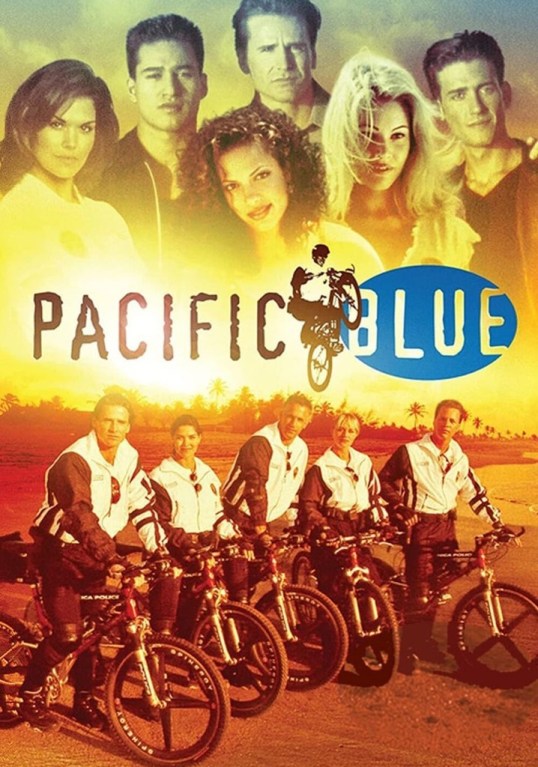
Welcome to Retro Television Reviews, a feature where we review some of our favorite and least favorite shows of the past! On Saturdays, I will be reviewing Baywatch, which ran on NBC and then in syndication from 1989 to 2001. The entire show can be viewed on Tubi.
This week, Mitch is in trouble.
Episode 2.11 “If Looks Could Kill”
(Dir by Douglas Schwartz, originally aired on November 25th, 1991)
Mitch rescues Allison (Shannon Tweed) after her car crashes into the ocean. Mitch quickly falls in love and Allison seems to fall for Mitch. What Mitch doesn’t know is that Allison is actually a murderer and that she’s just using him to try to find the money that was in her car when it crashed. For once, Eddie is the one who suspects the truth and who has to keep Mitch from being killed by someone who he trusts.
Baywatch occasionally did crime-related episodes and they always felt out of place. This episode opens with Allison drowning her latest lover and it’s actually a rather disturbing sequence. It’s effective but it doesn’t feel right for a show in which the main appeal is the fact that everything is lightweight and easy-going.
I imagine David Hasselhoff enjoyed episodes like this, if just because nearly every episode during the first season of Baywatch Nights was exactly like this one.

There’s a movie podcast I love to listen to called the “Podcast on Fire.” Kenny B and his various co-hosts focus on Asia, especially the films of Hong Kong and South Korea. They have a large back catalogue, and I’ve been catching up on their episodes related to South Korean horror. In the middle of a show on the WHISPERING CORRIDORS series, co-host Paul Quinn mentioned THE CALL, a film that was released on Netflix during the pandemic. I’m usually not a consumer of freaky horror, but his enthusiasm for the film proved infectious, so I decided I’d check it out when I got home from work.
THE CALL centers on two 28 year old women. There’s Seo-yeon (Park Shin-hye), who’s visiting her childhood home in the country when she receives a series of phone calls from 28 year old Young-sook (Jeon Jong-seo). They soon realize that Young-sook is calling Seo-yeon from the same house… just from 20 years in the past. Both with severe mommy issues, the two ladies initially seem to form a friendship. They even use their knowledge of events in the past to help each other in ways that change the future. But as you might guess, these changes come with severe consequences, and the story eventually turns into one of bloody survival!
I wasn’t expecting it, but I kept thinking of one of my favorite movies, FREQUENCY (2000), while watching THE CALL. In FREQUENCY, an adult son is able to talk to his deceased dad from 30 years in the past on their family’s old ham radio. We may not really understand the science behind it all, but we just accept it. Their discussions start out as heartwarming, and their actions that change the future seem good at first, but then eventually bad things happen. That’s pretty much what takes place in THE CALL, with the exception that these ladies are not family and the radio has been replaced by one of those late 20th century cordless phones. The heartwarming early moments eventually devolve into a lot of crying, screaming, and gaping neck wounds.
While the concept has been done before, the filmmakers do a good job of building genuine suspense. It’s one of those movies where the stakes keep getting raised, and when you think they’re as high as they can go, they’re ramped up another notch. There are a few effective jump scares here, but the primary tension is in the growing sense of dread concerning how the actions in the past will affect the present. Let’s just say that some of the characters in the present aren’t allowed to enjoy their newfound health and well-being for very long.
I wasn’t familiar with either of the lead actresses going in, but they’re both excellent. In the present time, Park Shin-hye invests enough vulnerability in her character of Seo-yeon that you can’t help but pull for her, especially as her world is continuously turned upside down. And I can’t say enough about Jeon Jong-seo, who gets the showier role in the past timeline. Her character starts out as sympathetic, but she doesn’t stay that way. It’s an unnerving character and performance.
At the end of the day, I had a good time with THE CALL. It’s been awhile since I watched a film from South Korea, so it was fun for me to jump back in. If you enjoy a good horror-suspense-thriller, this one’s an easy recommendation!

This is a song that I first heard when I first watched Palo Alto.
Ever since then, it’s a song that has randomly popped into my head at certain times, usually whenever I’m possessed by the melancholy spirit that always seems to follow me around this time of year. It’s a song that always makes me feel better, despite what happened in Palo Alto.
Here’s a clip from 1977 of a young David Hasselhoff, singing for the first time on television.
Stay strong, Hoff, we’re all rooting for you.