Lisa Marie Does…Season of the Witch (dir. by Dominic Sena)


I have to write this review quickly because I have a feeling that, in another 30 minutes or so, my body’s immune system will succeed in destroying any trace of Season of the Witch.

In Season of the Witch, Nicolas Cage and Ron Perlman play two Crusaders who eventually get disillusioned with killing people so they desert the army, end up in a small village somewhere, and are informed that the town is being destroyed by the plague because a curse has been put on the town by a witch.  Cage and Perlman are then recruited by the local town’s cardinal (Christopher Lee, who is pretty much wasted under all of this really nasty plague makeup) to take the witch to a monastery that is located somewhere else.  You’re never really sure where any one location is in relation to another in this film, which is a bit of a problem since the majority of the film is taken up with the journey to the monastery. 

Anyway, the Monks at the monastery have this ancient book that apparently contains all these incantations that can be used against evil.  This book is the only one left in existence which leads to the question of why nobody ever bothered to make more than a handful of copies of all of these amazingly important books.  I mean, seriously, people.  So the idea is to take this witch to the monastery and read this book which will end the plague.

So, we go through the whole journey thing and a few unimportant characters are killed off along the way and Cage and Perlman discuss the meaning of life and faith and, at first, we’re led to doubt whether or not the accused witch is actually guilty but then she starts causing all of these supernatural, witch-like thing to happen so I guess the filmmakers got bored with that whole subplot early.

Then we reach the monastery and a whole other movie starts.  Seriously, I cannot begin to put into words just how massively the tone of the film changes once they reach the monastery.  The film actually becomes good in a kind of silly, over-the-top way as soon our knights are dealing with all of these flying demons and there’s disfigured monks all over the place, and the priest gets to say, “We’re going to need more holy water,” at one point.  (“Yay!” I nearly shouted out in the audience, “Catholic action movie one-liners!”)  The tone changes so massively that Season of the Witch actually becomes a really fun and entertaining little action movie but, unfortunately, just as soon as things start to get really fun — bang!  Movie is over.  Thank you for coming out tonight, folks.  Now get the Hell outta here.

Season of the Witch is, to put it politely, a mess.  This isn’t all that surprising as the movie is being released in January and January is, of course, reserved for either Oscar contenders going into wide release, films starring Jason Statham, or movies that are being released because the studio is contractually obligated.  Ron Perlman, being a veteran of both Guillermo Del Toro and Jean-Pierre Jeneut, knows exactly how play his role but Cage just rides around on his horse looking like he’s late for Halloween party.  Director Dominic Sena appears to have a mancrush on Zack Snyder and does the whole speed up the camera randomly then go into slow-mo even more randomly thing but it doesn’t really add up to anything more than just confusion.

Finally, I left this film feeling very betrayed because, seriously — how can you call your film Season of the Witch and not feature the classic Donovan song?

Film Review: Easy A (directed by Will Gluck)


For some reason, I didn’t see Easy A during its initial run even though it was one of those films that, every time I saw the commercial, seemed to be beckoning me to come down to the theater.  All of my girlfriends saw it and loved it and told me that I had to see it because apparently they sat through the whole movie going, “Oh, that’s so Lisa.”  And then, before long, every guyfriend of mine ended up seeing the film and they all came back to me and said, “You have to see this film because my date kept going, ‘Oh, that’s so Lisa!'”  Of course, when I heard that, it was time for me to start doing the whole talk-to-the-hand motion  and going, “Oh no, she didn’t!” because that’s what you do when a guy says that his girlfriend was talking about you.  Anyway, I got so busy pretending to be on Maury that I ended up missing my chance to see Easy A in a real theater.

Instead, I had to settle for seeing in a dollar theater on Thursday and can I just get off topic here for a few minutes?  Can I?  Will you indulge me for just a second for me to speak the truth?  Okay, I know that some people kinda think I’m a film snob because I’m always raving about the Angelika and finding excuses to mention that I don’t have the read the subtitles when I go to a French film.  Well, so be it.  Call me a film snob because I am now convinced that Dante’s Inferno is a dollar movie theater.  Seriously, until I saw Red and Easy A this week, I just assumed that people with really bad hygiene just didn’t go to the movies.  Now, I see that they just hang out at the dollar theaters.  And here’s the thing — even though they’re only paying a dollar, they still can’t show up for the freaking movie on time!  Seriously, what is the deal with these dumbfug toadsuckers who just want to come in to the theater 30 minutes late and then spend 10 more minutes wandering around in the dark looking for a seat.  Look, you can look in a newspaper, you can look online, you can call the mutherfracking theater — IT IS NOT THAT HARD TO FIND OUT WHEN YOUR FREAKING MOVIE IS STARTING, PEOPLE!    And then, you  not only show up late but you bring your own food with you because, of course, who doesn’t want to spend an hour listening to you trying to open up one of those loud, crinkly bags of Sun Chips while everyone else is trying to pay attention to the movie?  I mean, you’re already late, you only paid a froking dollar to get in — JUST BUY SOME FRICKING POPCORN, YOU SELF-CENTERED, MYNA BIRD-LOOKING, DUMBFUG MOTHAFRACKER!  I MEAN…GAWD!

I’m sorry…where was I?

Oh yeah, Easy A.  It’s a good movie, probably one of the best high school films I’ve ever seen.  How good was this movie?  I still loved it even though I was watching it in Dante’s Inferno.

Emma Stone plays Olive, a high school student who — in order to get out of going on a weekend camping trip with her best friend — tells a lie about having a date with a boy named George.  (And I can’t blame her because seriously, camping?  BLEH!)  The next Monday, Olive is asked for the details of her imaginary date and her inability to give anything more than the vaguest of details is interpreted to mean that she lost her virginity over the weekend.  (Vagueness being interpreted as sluttiness happens far more often than most of us like to admit.)  Olive’s story about losing her V-card is overheard by Marianne (Amanda Bynes) and soon the entire school is aware that Olive is no longer hymenally challenged.  In short, Olive is now … a girl with a reputation! (Cue ominous music and Vincent Price laughter.)

Soon, Olive — previously a perfectly content wallflower — is the most notorious student at school.  Popular boys want to talk to her.  Unpopular girls want to be her.  At first, Olive tries to tell people the truth, that she was just telling a story.  After people refuse to believe her, Olive starts to go with the flow and enjoy the benefits that come from being extremely popular.  After her gay friend asks her to pretend that she had sex with him in order to help him survive the homophobic world of high school, Olive finds herself being given money and giftcards from other boys in school, all of whom are paying for the right to say that they’ve had sex with her.  Olive decides to embrace her new role of faux-fatale by dressing like she’s on the CW and stitching an A (a la the Scarlet Letter) on all of her clothes. 

And then, she starts to discover the truth about having a reputation in high school.  A reputation makes you both popular and an outcast at the same time and Olive finds herself trapped in a web made up not so much by her lies as by everyone else’s assumptions.  Can Olive escape and find happiness?  Can she find true love with Todd (played by Penn “Oh. My. God! He’s so freaking hot!” Badgley)?  Will she get a chance to have the pointless musical number that she assures us, at one point, her story truly does need?  Will Emma Stone receive an Oscar nomination for her performance as Olive?

Well, the answer to that last question is probably no (though she did receive a Golden Globe nomination) because Easy A is not the type of movie that usually gets nominated for Oscars.  And that’s a shame because Stone gives one of the best performances of the year here.  In the comedic scenes, she manages to generate a hundred more genuine laughs than Annette Bening did in The Kids Are All Right and in the dramatic scenes, she proves herself to an actress of true range.  If you want to see some truly great acting, just consider the scene where Olive goes on her first actual date since becoming known as “the school slut.”  Staring out nervously talking too much and giddily laughing at her own private dates (one of the many scenes that made me go, “Oh my God!  I do that too!”), Stone effortlessly transitions to having an emotional breakdown in a parking lot after discovering that her date has no interest in her and is only with her because he heard she would be an easy lay.  I don’t think there’s a girl over the age of 15 who doesn’t know how painful that feels, to be reduced only to what strangers think of you.  It’s a pain that stays with you and Stone captures it perfectly and, silly as it may sound and at the risk of going all girl power here, I almost felt that when I saw Olive triumphing over it that there was hope for me and for everyone else.

Easy A rang very true to me, not the least because I was one of the girls with a “reputation” while I was in high school.  Then again, I don’t think there’s many girls who didn’t have a reputation for something in school.  Some of us had a reputation for doing it and some had a reputation for not but in the end, it was usually all used to keep us in the same prison of insecurity, resentment, and entrapment.  To its credit, Easy A not only captures the negative side of having a reputation but also realizes and show that having a reputation can be fun and liberating as well.

Even beyond such larger concerns, Easy A is an entertaining, funny movie that not only rings true but is genuinely likable in way that a similar film like Juno never was.  I mean, I loved Juno but in the end, you couldn’t hep but feel that the film was mostly about screenwriter Diablo Cody trying to make herself into a cooler teenager than she actually was.  (And that’s not meant as a criticism, just an impression.)  Juno was almost too perfect and too brilliantly sarcastic.  You liked her but never quite believed in her.  Olive, as played by Emma Stone, is a normal teenager who doesn’t always say the perfect thing and, who most of the time, is just as much of a dork as the rest of us.  My favorite sequence in the whole film is one where Olive ends up spending a weekend growing obsessed with the song “Pocketful of Sunshine” and it wasn’t because it fed into some sort of wish-fulfillment fantasy.  Instead, it was because it was a scene that made me very honestly think, “Oh my God, I’ve done that so many times.”

Easy A is a surprisingly thoughtful and intelligent movie that just happens to be disguised as a breezy, teen comedy.  That high school, in general, is a world full of fucked up ideas and attitudes about sex is no great secret but Easy A is smart enough to realize that the real world is pretty much just one big high school.  I saw the movie too late to include it on my list of the Top 25 Films of 2010 but it is one of the best films of 2010.

Quick Take: Breath of Death VII: The Beginning


Quick Take

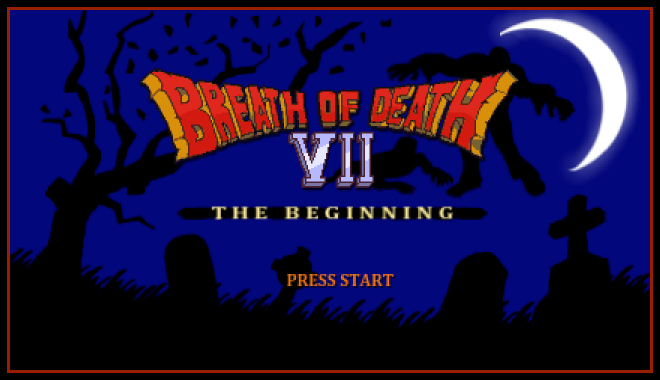
So here’s a random little Indie game that I caught wind of a couple months back. I guess I was behind the curve on this one, but I’ve always been in favour of promoting indie developers. We need more people making great games. And not all of those people are going to work for EA. So, in that respect, the Indie Game Marketplace on Xbox Live is one of the greatest inventions of our time. On the other hand, there’s so many bad games being released on there, that it can be difficult to even trust the cost of downloading one of these titles. Well, if you’re afraid of a title that lacks quality, then you have nothing to worry about with Breath of Death VII: The Beginning (which I will hereafter refer to as BoD7).

It’s a satirical (or parody, I suppose) throwback experience, hearkening back to the days of 8-bit RPGs on the NES. You have the true top-down environments with their (mostly) non-interactive terrain. You have your sprite-based characters, your very traditional 8-bit combat screens. Really, you have it all, except for a beautiful score which pays homage to, but isn’t, an 8-bit tracklist. The game is well put together. It has the polished feel that you’d expect from any professional game in its presentation, the way the game plays, and so on. There are no gameplay glitches or issues to be found in BoD7. I guess that reflects the dedication of the developer once again.

So obviously, you’re not playing this game for the graphics. You’re not playing it for the storyline (but you may very well be playing it for the satire of a typical 8-bit storyline) and you’re not, strictly speaking, playing it for the game system. Fortunately, BoD7 doesn’t reflect 8-bit releases in every way. The system is very intuitive. Characters level up quickly, and get access to a lot of cool powers without much difficulty. Don’t be fooled by the ease with which you’ll breeze through the early parts of the game though – in the tradition of 8-bit games, the game gets pretty hard as it goes on. Of course, it’s still far from unplayable, and you should still have fun progressing through the whole world that Zeboyd has presented for you.

The bottom line? It’s definitely worth the couple of bucks it’s going to cost you. Check it out!

Book Review: The Eurospy Guide by Matt Blake and David Deal


Sometimes, believe it or not, I feel very insecure when I come on here to talk about movies because, unlike most of my fellow writers and the site’s readers, I’m actually pretty new to the world of pop culture and cult films.  Up until 8 years ago, ballet was my only obsession.  It was only after I lost that dream that I came to realize that I could feel that same passion for other subjects like history and writing and movies.  In those 8 years, I think I’ve done a fairly good job educating myself but there’s still quite a bit that I don’t know and, at times, I’m almost overwhelmed by all the movies that I’ve read so much about but have yet to actually see.  And don’t even get me started on anime because, honestly, my ignorance would simply astound you.  What I know about anime — beyond Hello Kitty — is pretty much limited to what I’ve read and seen on this site.  (I do know what a yandere is, however.  Mostly because Arleigh explained it to me on twitter.  I still don’t quite understand why my friend Mori kept using that as her own personal nickname for me back during my sophomore year of college but that’s a whole other story…)

The reason I started soul searching here is because I’m about to review a book — The Eurospy Guide by Matt Blake and David Deal — that came out in 2004 and I’m about to review it as if it came out yesterday.  For all I know, everyone reading this already has a copy of The Eurospy Guide in their personal collection.  You’ve probably already spent 6 years thumbing through this book and reading informative, lively reviews of obscure movies.  You may already know what I’ve just discovered.  Well, so be it.  My education is a work in progress and The Eurospy Guide has become one of my favorite textbooks.

The Eurospy Guide is an overview of a unique genre of films that started in the mid-60s and ended with the decade.  These were low-budget rip-offs — the majority of which were made in Italy, Germany, and France — of the Sean Connery-era James Bond films.  These were films with titles like Code Name: Jaguar, Secret Agent Super Dragon, More Deadly Than The Male, and Death In a Red Jaguar.  For the most part, they starred actors like George Nader, Richard Harrison, and Eddie Constantine who had found the stardom in exploitation cinema that the mainstream had never been willing to give to them.  They featured beautiful and underappreciated actresses like Marilu Tolo and Erika Blac and exotic, over-the-top villainy from the likes of Klaus Kinski and Adolfo Celi.  Many of these films — especially the Italian ones — were directed by the same men who would later make a name for themselves during the cannibal and zombie boom of the early 80s.  Jess Franco did a few (but what genre hasn’t Jess Franco experimented with) and even Lucio Fulci dabbled in the genre.  Their stories were frequently incoherent and, just as frequently, that brought them an undeniably surreal charm. 

And then again, some of them were just films like Operation Kid Brother, starring Sean Connery’s younger brother, Neil.  (Operation Kid Brother was an Italian film, naturally.)

Well, all of the films — from the good to the bad (and no, I’m not going to add the ugly) — are covered and thoroughly reviewed in The Eurospy Guide.  Blake and Deal obviously not only love these films but they prove themselves to be grindhouse aficionados after my own heart.  Regardless of whether they’re reviewing the sublime or the ludicrous, they approach each film with the same enthusiasm for the potential of pure cinema run amuck.  It’s rare to find reviewers who are willing to pay the same respect to a film like The Devil’s Man that they would give to a sanctioned classic like The Deadly Affair.

Along with reviewing a countless number of films, Deal and Blake also include two great appendices in which they detail the review some of the film franchises that came out of the genre and provide biographies of some of the more prominent stars of the eurospy films.

The highest compliment I can pay to The Eurospy Guide is that, even with all the various films guides I own (and I own a lot), I found films reviewed and considered in this book that I haven’t found anywhere else.  Everytime I open this book, I learn something that, at least to me, is new.  The book was an obvious labor of love for Blake and Deal and I love the results of their labor.

So, if you already own a copy, you rock. 

And if you don’t, order it.

Film Review: Made in Dagenham (dir. by Nigel Cole)


Made in Dagenham, an immensely likable and even inspiring film from England, is based on a true story.  It dramatizes the 1968 strike of sewing machinists at the Ford assembly plant in Dagenham, England.  The all-female workforce walked off the job in protest to the fact that they were not being paid an equal rate with their male co-workers.  Going from being treated as a sexist punchline to eventually shutting down production at the Dagenham plant, these women brought the issue of equal pay for equal work to the world’s attention and, ultimately, played a large part in the passage of legislation designed to guarantee equal pay regardless of sex.  And, while it might sound like the material for standard, overly sentimental move-of-the-week, Made in Dagenham is both a warm-hearted tribute and an immensely entertaining film.

Usually, I’m wary of films that claims to “pay tribute to strong women,” largely because they always 1) seem to be rather condescending towards the women they’re claiming to pay tribute and 2) always seem to be intent on providing a very narrow definition of what it means to be “strong.”  Far too often, either stridency or an idealized noble savagery is presented in the place of “strength.”  What makes Made in Dagenham a true tribute to strong women is that it portrays women as individuals and as human beings (as opposed to idealized figures of either reverence or loathing).  What a novel idea!  All of the strikers — from Sally Hawkins as the strike’s leader to Geraldine James as the oldest striker to Jaime Winestone as the youngest — are treated with a definite (and refreshing) respect yet at the same time they’re never so idealized as to become plastic saints.  They’re not presented as being models of perfection.  Instead, they’re just working mothers and wives who are simply standing up for their rights and you would have to be heartless not to end up rooting for them.

On my list of my 25 favorite films of 2010, Made in Dagenham was number #22 and that’s largely because of Sally Hawkins’ performance as the strike leader.  Hawkins is hardly a household name but if you’ve seen her in films like Happy-Go-Lucky, An Education, and Never Let Me Go, then you know that Hawkins is one of those rare performers who is capable of both being ordinary and a star at the same time.  She brings an authentic feel to her working class characters even when she’s acting for a condescending and elitist director like Mike Leigh.  To understand just how important Hawkins is to the success of this movie, just try to imagine the exact same film but starring either Sandra Bullock or Julia Roberts.  One can imagine that either Bullock or Roberts would be given a lot more inspiring speeches (complete with triumphant music in the background) and a few scenes where they would get to say something sassy (and ultimately pointless) to all the one-dimensional male chauvinists standing in their way.  They also probably would have contracts to keep from having to act underneath the hideous (but historically authentic) beehive hairdoes  that Hawkins and the other women in the film have.  Hawkins, however, gives her performance without any of the usual Hollywood safety nets and she is completely and totally winning playing a strong-willed but inherently nice woman who struggles to be a wife, a mother, a worker, and an activist all at the same time.  As I watched her performance, I couldn’t help but be reminded of my mom who raised four daughters on her own and who was the strongest woman I know.  I ultimately felt as if Hawkins performance was a tribute to not only my mom but every other woman throughout history whose strength is, far too often, ignored by those who do the recording.

Made in Dagenham is not a perfect film.  For all the authentic moments in the film, there’s a few that are a bit too obvious and, when they show up, they fit in so awkwardly with everything else on-screen that they temporarily throw the whole film out of whack.  This is the type of film where, as Sally Hawkins gives the most important speech of her life at a labor conference, she looks up just in time to see that her husband (Daniel Mays) has shown up in just the nick of time and is now standing in the back of the room, watching her with an apologetic smile on his face.  It’s a sweet scene and, for all I know, it actually did happen that way but it still temporarily makes the movie feel like a self-consciously inspirational Lifetime movie.

And then there’s the issue of Miranda Richardson, who essentially has an extended cameo role as Barbara Castle.  Though Castle is known not at all in the States (most of the people in the theater with me seemed to think Richardson was supposed to be playing Margaret Thatcher and I might have thought the same if I hadn’t looked the movie up on Wikipedia before seeing it), she was quite prominent in the UK.  A left-wing member of Parliament and a pioneer for women in politics, Castle was Secretary of State for Employment at the time of the strike and, as shown in the film, she eventually intervened in the strike and helped to bring about legislation designed to guarantee women equal pay with their male co-workers.  As such, Castle is as much of a part of this story as the actual strikers and you can’t fault the movie for including several briefs scenes featuring her watching the situation from afar.  What you can fault director Nigel Cole for is allowing Richardson to overact to such an extent that her scenes come across as so heavy-handed that they epitomize every negative cliché of a feminist film.  Richardson plays her role with an attitude that seems to shout, “The real star is here,” and I found myself resenting her because she seemed to be determined to ruin a truly inspiring film.

But the thing is, despite these flaws, Made in Dagenham is an inspiring film.  It’s inspiring because of Hawkins and it’s inspiring because of an ensemble of actresses (including Hawkins’ Education co-star Rosamund Pike who does a great job in a role that could have felt artificial if performed by a lesser actress) who come together perfectly.   I saw Made in Dagenham on January 1st and it was the perfect film to start 2011 off with.

A Quickie With Lisa Marie: Red (dir. by Robert Schwentke)


Red (which I saw at the dollar theater this previous Monday) is a lot like the boy who took you to Homecoming: likable, occasionally enjoyable, but ultimately rather forgettable.  It’s a movie that you enjoy for what it is but, at the same time, it’s hardly a film I could ever imagine watching twice.  I never went out with Taylor again after Homecoming either. 

Anyway, the movie itself is about a retired CIA agent (Bruce Willis) who spends all of his time flirting on the phone with Sarah (Mary Louise Parker) who works for the company that sends Willis his pension checks.  (Willis always rips the checks up so he’ll have an excuse to call Parker.)  As the Christmas season approaches, Willis is paid a visit by a bunch of men dressed in black who proceed to blow up his house.  Willis escapes death, kidnaps Parker (under the pretense that her life is in danger because of how much they talk but mostly just so he can date her), and sets about getting all of his fellow retired spies (Morgan Freeman, John Malkovich, and Helen Mirren) together.  Meanwhile, a determined, young, and hot CIA agent (Karl Urban) has been assigned to track Willis down and kill him.

The plot is really pretty standard but director Robert Schwentke keep things interesting by both playing up and acknowledging just how ludicrous the standard action movie is.  If nothing else, this is a film that respect its audience.  It undesrstand that we understand that we’re watching an action movie and it assumes that we’ve seen enough action movies that we know how the genre is supposed to work.  And while Schwentke pulls off all of the standard action moves like a pro, what makes the movie memorable are the small moments where he plays with and subverts our expectations. 

He’s helped by his cast, a solid group of professionals who could play these roles in their sleep but yet, to their credit, still appear to invest themselves in the film.  All of the performers make strong individual impressions yet still manage to gel perfectly as an ensemble.  As opposed to most films of this sort, you really believe that these characters are old friends and that they do have a shared history.  One of the film’s main strengths comes from observing how all the different characters respond to each other — nobody has the exact same reaction.  This is kind of what Sylvester Stallone tried to pull off with The Expendables.  The difference here, I suppose, is that Red features John Malkovich, Morgan Freeman, Helen Mirren, and Bruce Willis while Stallone had to work with Jason Stathan and Terry Crewes.

Among the cast, Malkovich is probably the real crowd pleaser as a former MK-Ultra experiment.  He is convincingly insane in his role and he gets almost all of the film’s best one liners.  He also has a scene where he deflects an incoming rocket in a way that made the audience cheer.  However, for me, the best part of the film was the unexpected chemistry between Parker and Willis.  Through all of the action sequences and self-referential humor, you really do hope they end up together.

That said, there’s still something missing from the film.  It never quite goes as far as you would like in embracing the inherent absurdity of the action genre and, after a strong start, the film does have some trouble maintaining its frantic pace.  Add to that, Richard Dreyfuss shows up and and throws the whole ensemble out of whack by attempting to chew any piece of scenery he can get his teeth on.  Still, for what it is, Red is an enjoyable little movie and sometimes, that’s enough.

Review: League of Legends


The Bottom Line

A top notch multi-player experience sometimes marred by its terrible community.

Unfocused Ramblings

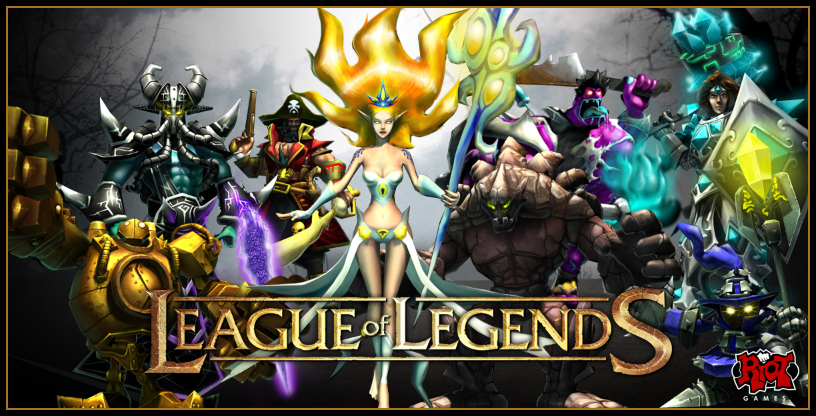
When a friend of mine first told me about League of Legends during its Beta period in 2009, my interest was piqued, but I’d been drawn in by World of WarCraft, and it wasn’t until early in 2010 when I finally took the time to download the free client and begin playing League of Legends with my friends. I wish I hadn’t waited. Even years after I stopped playing WarCraft 3 or The Frozen Throne for their own merits, I had continued to occasionally play a game or two of Defense of the Ancients: All Stars. As powerful as the World Editor was in WarCraft 3, there were still always going to be limitations on how far Defense of the Ancients could progress solely as a custom map within a game published by someone else. The natural evolution of course was for some of the developers of Defense of the Ancients to go to work for Riot Games to produce their own title; an experience totally under their control but based on the same style as the wildly successful custom maps that preceded it.

If you liked Defense of the Ancients, the odds are pretty strong that you’re going to love League of Legends. It incorporates most of the things that made Defense of the Ancients great, and eliminates some of the inherent weaknesses of working within a real-time strategy engine. After all, WarCraft 3 is designed to have a little inherent command latency, and the engine itself limits what kinds of spells and special powers (as well as the physical skinning of) any and all heroes. Moreover, the core game-play statistics can’t be changed for the benefit of a single custom map (obviously), so League of Legends is a much more polished experience. Now we have Ability Power as a core game-play stat to increase the power of spells and helping to balance the scales between powerful physical damage heroes and heroes with ridiculous spell abilities in the late-game, among a thousand other things.

Okay, for the rest of you who didn’t waste many hours of your lives playing Defense of the Ancients, what is League of Legends? It’s a duel between two teams of either three or five champions supplemented by a limitless army of minions. Each champion is a heroic figure with five unique special abilities (as well as a variety of “core” game statistics, like movement speed, attack range, damage dealt, total armor, etc.) and your objective is to breach the defenses of the opposing army by knocking out their defensive towers to gain access to their base, and ultimately, to destroy the opposing Nexus, a capitol building, which ends the game in victory. Your Champions gain experience points to progress through 18 levels (at each level gaining or improving one of their special abilities) as well as harvest gold pieces which are used to buy items that enhance your Champion in various ways. Along the way to victory or defeat, obviously, you will be opposed by the Champions of the other team, controlled by other human beings. They represent your true opposition, and you’ll have to overcome them if you plan to win the day.

Playing matches levels up your Summoner (that is, the personification of the player) and allows you access to a tree of “Masteries” which offer little bonuses to various things that your Champions can do, as well as access to customizable “pages” of Runes. Each match you select a Rune page from your book, which provides fully customized benefits to your Champion such as increased Mana regeneration, a higher chance to dodge enemy attacks, and more. Your multiplayer games also net you access to “Influence Points” which can be used to buy new Champions as well as Runes inside of the League of Legends store. You can download the client and play the game for free even to this day, but Riot also allows players to purchase “Riot Points” from their store which can be used to purchase champions, alternate skins for them, and other bonus content within the store as well. New content is added very frequently, and the product is at a consistently high quality, which really speaks well of Riot Games and its staff of developers.

The Big Question

Aside from ‘why did it take even this long to create a title like League of Legends‘ ? The question absolutely must be: Where do we go from here? It’s a common theme amongst my game reviews; I know. It’s an important question, though. League of Legends is an impressively complete experience. The developers have adequately explored core game-play mechanics, and the game and its objectives themselves are somewhat non-negotiable. Obviously we can continue to enjoy new Champions and Items eternally, but this isn’t truly a source of growth. A third question might be, “where did all the trolls come from” ? One thoroughly maligned aspect of League of Legends is the community, many of which are players that came from Defense of the Ancients, who are a surly, foul-mouthed lot. It’s hard to defend the community, and people with a thin skin might want to avoid this game.

Overall Game-Play: 9.0

The game play very occasionally suffers from graphical or camera glitches. Since they’re always correctable (if only by recalling to base in some cases) it’s not a game-breaking problem, but it’s also the only real criticism I have for a game-play system that is very tight for the most part. Because the interface is designed intentionally for the player to command only their own Champion, you don’t end up targeting another unit and losing control of your hero (as could happen frequently within the WarCraft 3 engine). The four ‘active’ hot keys are consistent amongst every Champion (Q, W, E, R, matching the skills from left to right on your interface) and aren’t competing with internal game commands (as occasionally happened in WarCraft 3). In addition, there’s no inherent latency, so commands are executed crisply and cleanly (barring lag, of course) which makes so-called ‘skill shots’ (that is, abilities which must be aimed and strike the target to take effect) much more common and much more use-able than they ever were before.

The match-making system, champion selection screens, and other framework for the game also deserves a notable mention. Although it’s gone through a couple of iterations by now, the system works very well. New users will learn their way around quickly.

Story 6.0

Although the game obviously has no single player aspect to it, the creators still actually took the time to create a world in which the game is set. Each Champion comes with their own piece of back-story that fits into a larger overall narrative about a world in turmoil, the various nations within, and their larger-than-life heroes – who obviously bring their talents to the institutional League of Legends to test themselves against other such powerful figures. It’s obviously not a focus of the title, but the story is cohesive, and to my mind, appreciated. It’s nice to have a little understanding of who my favourite Champion is, how s/he gained their powers, and what their goals are. Of course, it’s all just fluff, and you can ignore all of the story elements of the game and never miss a beat in terms of game-play.

Graphics 7.0

The graphics are of the cell-shaded variety and look very nice. The most impressive graphics are, of course, the skins of the Champions themselves. Given how many custom looks are available for your Champions and the sheer number of Champions that now are available in the game, I have to give a little nod to Riot. Of course, there’s no real place in the game for incredibly flashy or ultra-realistic graphics, so you won’t see anything in-game that’s going to blow you away. That having been said, all of the models are nicely crafted, and the game’s graphics definitely have a polished feel. The graphical performance is smooth and doesn’t break, and the look and ‘feel’ is consistent across the character models despite their diversity.

Sound 7.0

The sound in this case comes from combat and spell sounds, a relatively quiet announcer (who nonetheless is unfailing in her ability to identify key gameplay situations), and a simple score. Oh, and the unique voice acting for every single one of the League’s champions. Obviously this last part is what you’re going to deal most with, as your Champion responds to everything from you initially selecting them before the game begins to moving about, attacking, or casting spells. We’re not treated to an epic score in the background that fires our passions as we play, but the sound, like the graphics, is a polished effort that doesn’t disappoint.

Multi-Player 9.0

Well, in this case, there is literally no single player aspect to the game, so I suppose this could stand as an overall score for the title. Personally, I find little to complain about. The most important thing for you to know, though, is that Riot is dedicated to keeping this game updated, changing, and improving. I touched on this briefly in my open, but it’s important to expound on the point. Riot patches League of Legends frequently, tweaking abilities and items in order to provide the most balanced experience. Just as importantly, the stream of new Champions is very steady, which ultimately is the only method by which the game can expand. Obviously, there’s not much (if anything) that is going to change about the way the game is played from start to finish, so everything is in the details here.
A Quickie With Lisa Marie: True Grit (directed by Joel and Ethan Coen)


True Grit is probably the most straight-forward film that has ever come from the irony-laced imaginations of Joel and Ethan Coen.  Perhaps that’s appropriate since the movie is essentially an homage to that most All-American of all movie genres, the western.

Taking place in 1878, True Grit tells the story of Mattie Ross, a 14 year-old girl (Hailee Stienfeld) whose father is killed by a drifter named Tom Chaney (Josh Brolin).  Tom flees into Oklahoma so Mattie goes to Ft. Smith, Arkansas and hires alcoholic, one-eyed U.S. Marshal Rooster Cogburn (Jeff Bridges) to track Chaney down.  Cogburn agrees and teams up with a Texas ranger named LeBouef (Matt Damon) who is also looking to capture Chaney for an unrelated crime (and to pick an equally unrelated reward).  The three of them form an unlikely and uneasy alliance as they search the harsh wilderness for Chaney, who has hooked up with outlaw Ned Pepper (Barry Pepper).  Along the way, reality proves itself to be far less prosaic and ideal and justice turns out to be far less straight forward than Mattie had originally assumed.

As you might expect from a Coen Brothers film, there’s a lot of moral ambiguity on display.  Cogburn is a former outlaw who is mainly motivated by his own greed while LeBouef is an arrogant blowhard.  Meanwhile, the nominal villains often show more humanity than our “heroes.”  Even Tom Chaney appears to be more overwhelmed than evil.  This is a western where the “good guys” ambush their enemies and shoot them in the back.  Throughout the film, the Coens contrast the beautiful cinematography of Roger Deakins and Carter Burwell’s traditional score with the brutality and violence on-screen.

True Grit is a remake of a 1969 film and Jeff Bridges is getting a lot of attention for taking on a role that was originally played by John Wayne.  I haven’t seen the original film so I can’t say if Bridges gives a better performance than Wayne.  However, to be honest, Bridges probably gives the least interesting performance in the entire film.  I know that a lot of people are raving about his work here but I think those raves are more about the actor and less about the performance itself.  When people look back on this movie, they won’t remember Rooster Cogburn as much as they’ll remember Jeff Bridges wearing an eyepatch and slurring his words like your alcoholic cousin on the 4th of July.  Bridges gives a good enough performance but there’s nothing here that couldn’t have been done just as well (or better) by either Tommy Lee Jones or Joe Don Baker.

If anything, the movie belongs to Steinfeld who gives a wonderfully focused performance as Mattie and who serves as the perfect audience surrogate.  As the two main villains, Brolin and Pepper both give excellent performances and the fact that both of them are almost likable only serves to make them all the more effective as “bad” guys.

True Grit is a good movie because the Coen Brothers aren’t capable of doing any less.  Technically, it’s probably one of the best films of 2010.  Still, the movie left me vaguely disappointed.  For what it is — a straight genre piece — it’s a superior work of craftsmanship.  However, from the Coens, I’ve come to expect a bit more. 


Film Review: The Fighter (directed by David O. Russell)


I’m usually pretty cynical when it comes to “inspiring” movies, especially when they’re 1) based on a true story and 2) centered around some sort of professional sport.  Usually, these films turn out to be not so much inspiring as just insipid and predictable.  However, there is always an exception to any rule and this year, that exception is David O. Russell’s touching and exciting boxing film, The Fighter.

To put it mildly, professional athletics are not my thing.  I get bored with football and the squeaky shoes of basketball annoy me.  I did briefly get caught up in the world series this year but then the Rangers lost to the Giants and I pretty much swore never to allow my heart to be broken again.  Tennis would be tolerable if not for all the grunting.  I will occasionally watch a minute or two of golf but that’s just because I think golf courses are pretty.  However, boxing does hold a certain primal fascination for me.    Maybe it’s because I’ve seen far too many guys do the whole “Who you calling a bitch, bitch?” routine without ever throwing a punch (I swear, guys remind me of cats when they try to verbally spar, with all the hissing and staring) that it’s just undeniably exciting (in so many ways) to actually see two men actually punching each other until one is undeniably the winner.  However, boxing — as a sport — is still largely a mystery to me.  I don’t know who the current champion is nor do I know how or why he got to be the champion.  I can name a few boxers — Muhammad Ali (because everyone knows him), Mike Tyson (ditto), George Foreman (because we own one of his grills), Oscar De La Hoya (because he’s cute), and Lennox Lewis (because he was on the first season of The Celebrity Apprentice).

And now, thanks to The Fighter, I know of “Irish” Mickey Ward and his half-brother Dicky Eklund.

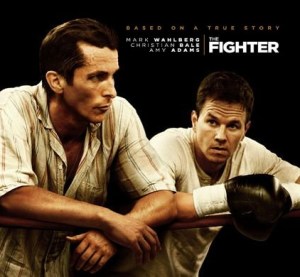
In the film, Mickey Ward (played by Mark Wahlberg) is portrayed as being a well-meaning, blue-collar guy who lives in Lowell, Massachusetts (home of Jack Kerouac) and who makes a living as a “stepping stone,” a below-average boxer who is used by better boxers as just a “stepping stone” on their way to a bigger fight.  He is managed by his overbearing mother (Melissa Leo) and is trained by his half-brother, Dicky (Christian Bale).  Dicky used to be a pro-boxer himself but, as the film begins, he  is more interested in smoking crack than throwing punches.  Still, Dicky remains a local hero and his mother’s favorite and Mickey lives in his shadow.

After one final humiliating defeat in the ring, Ward decides to stop boxing and instead devotes his time to his new girlfriend, a bartender named Charlene (Amy Adams).  Dicky, meanwhile, ends up getting sent to prison.  With Dicky locked away, Mickey starts to come into his own as a person and a boxer and he eventually reenters the ring.  Eventually, he gets his chance at a championship fight.  However, at the same time, Dicky is released from prison and trying desperately to reenter Mickey’s life despite Charlene’s insistence that Mickey stay away from his loving but self-destructive family. 

By the film’s conclusion, the story has become less about Mickey Ward’s fights in the boxing ring and more about his own battle to find the confidence necessary to stop being dominated by the people around him and to live and take responsibility for his own life and his own future.  As undeniably exciting as all of the boxing is, it’s the film’s portrait of Mickey Ward as an essentially nice guy struggling to be independent that makes The Fighter such a moving film.

If you’ve read Sharon Waxman’s Rebels in the Backlot, then you might feel that know a bit about director David O. Russell.  Of the six directors profiled in that book, Russell came across the most negatively, a temperamental prima donna who was portrayed as being the type to accidentally make a great film.  Well, I don’t know if that portrait is an accurate one but The Fighter is no accident.  Russell directs this film with an energy and an attention to detail that puts so-called “nice guy” directors like Ed Zwick to shame.  For me, Russell is at his best in the film’s opening scenes where Mickey and Dicky strut through the streets of Lowell while Heavy’s How You Like Me Now plays in the background.  Not much happens in these scenes.  For the most part, Dicky just BSes with the locals while Mickey shyly watches.  But, in just a matter of minutes, Russell manages to tell us everything that we need to know about Mickey Ward, Dicky Eklund, and Lowell, Massachusetts.

Russell also gets four excellent performances from his lead actors.  Everyone already knows that Christian Bale is amazing in the role of Dicky.  Let’s be honest — we all know he would be even before this film opened.  He’s Christian Bale and Dicky Eklund is a great role.  So instead of repeating what you already know, I’m going to take some time to praise Bale’s co-stars, all three of whom give excellent performances.

As Mickey Ward, Mark Wahlberg once again proves that he’s one of the few leading men working today who can actually bring an air of authenticity to a blue-collar role.  At first, it seems like Wahlberg is going to be overshadowed by both Bale and Melissa Leo (much as Mickey was initially overshadowed by Dicky and his mother).  However, once Dicky has been sent to jail and the movie focuses on Mickey’s relationship with Charlene, you suddenly realize that Wahlberg really is the movie’s heart and soul.  It helps that he has a very real chemistry with Amy Adams.  There’s very few actors who can convince you that they’re falling in love on-screen but Wahlberg proves, in this film, that he’s one of them.

Playing Mickey’s mother and manager, Melissa Leo is alternatively touching and horrifying.  Whether she’s scolding Dicky for continually choosing drugs over family or accusing Charlene of being an “MTV girl,” Leo dominates every scene she’s in.  With this film, Welcome to the Riley’s, and Frozen River, Melissa Leo has quickly become one of my favorite actresses.

Finally, in the role of Charlene, Amy Adams is finally given a chance to show what she’s actually capable of when given an actual character to play.  I’ve always liked Amy Adams because she’s always come across as so genuinely sweet in almost every role she’s played.  Plus, we’re both redheads, we both wanted to be ballerinas, and we both briefly worked at the Gap when we were 18 (though not at the same time, obviously.  And not at the same Gap either).    Furthermore, before breaking into acting, Amy Adams was a Hooters girl and I once applied for a job at Hooters though my mom made me go back and withdraw my application an hour later.  Plus, Amy was born in Italy which is where I would have been born in an ideal world.  And, in an ideal world, I would have her nose as opposed to the one I got stuck with.  (Sorry, I love being a fourth Italian but I still have issues with my big, Italian nose…)

So, yes, Amy Adams is one of my favorite actresses which is why it pained me to see her give such an annoying performance in Julie and Julia last year.  I was worried that maybe all the sweetness had finally given way to self-parody.  However, much as the Fighter is about characters searching for redemption, the movie is also a redemption of sorts for Amy Adams.  Yes, Charlene is another sweet-and-nurturing-girlfriend role for Adams but she brings an unexpected edginess and a very genuine anger to her role.  Charlene may be a nurturer but she’s no doormat and, for me, there’s something very refreshing about seeing a strong, independent woman in a movie who is also still very feminine, nurturing, and unapologetically sexual.  As I previously stated, Wahlberg and Adams have a very real, very definite chemistry in this film and, as a result, this film about a very violent sport is one of the most genuinely romantic that I’ve seen in a long time.

One final note: On a personal level, this movie almost made me want to go out and find a boxer to date.  Why?  So I’ll have an excuse to get dressed up all sexy-like whenever he has a fight.  Seriously, I want that black dress that Charlene wears to all of Mickey’s fights.  It’s to die for.

Film Review: Tron: Legacy (directed by Joseph Kosinski)


As we were sitting in one of the theaters at the AMC Valley View, waiting for Tron: Legacy, I leaned over to Jeff, placed my head on his shoulder, and told him that he should feel very special.

“Why’s that?” he asked.

“Because there’s like a hundred guys in this theater and you’re the only one here with a girl.”

And it was true!  The theater was full of guys who all looked like Jesse Eisenberg but there were literally only three or four other girls in the audience and I think they were all together.

Now, one thing I’ve always wondered — why are guys so scared to sit next to each other in the movies?  Seriously, there were all these little Jesse Eisenberg-looking guys out in the audience but each one had to have an empty seat on either side of him.  Yet, it was obvious that they all knew each other because they were loudly shouting comments to each other through the entire film and, once the movie was over, they all left together.  So, guys, sorry but it was a group date regardless of how many empty seats there were between you.

So, that’s one of two things I learned from seeing Tron: Legacy: boys who look like Jesse Eisenberg are homophobic.

What else did I learn?  Well, whenever the hero of Tron: Legacy started fighting or talking about fighting or driving too fast, Jeff would go, “Let’s do this — LEROY JENKINS!”  And I was like, “Who the frickin frack is Leroy Jenkins!?”  Anyway, after the movie, Jeff showed me this video on Youtube.  So, now I kinda know who Leroy Jenkins is.

Anyway, if I seem like I’m talking about everything but Tron: Legacy that’s because Tron: Legacy really didn’t make much of an impression on me. 

Tron: Legacy is a sequel.  The original film was called Tron and I’ve never seen it but I have seen the You Have 0 Friends episode of South Park and Jeff says that’s close enough. 

Tron: Legacy is one of those movies that are mostly made to show off what can be done with CGI and the CGI is impressive in this film for about fifteen minutes.  Then, after those 15 minutes, the CGI starts to get repetitive (I mean, there’s only so many times I can be impressed by the big orange space ships coming up over the horizon) and now you’re going to have to pay attention to things like plot and acting and that’s when everything pretty much falls apart.

Anyway, the plot of Tron: Legacy goes something like this: Sam Flynn (Garrett Hedlund) is the son of Kevin Flynn (Jeff Bridges) who is apparently some sort of video game guru who vanishes when Sam is 7.  20 years later, Sam is an angry young man who rides a motorcycle and posts silly Youtube videos of his dog and somehow he ends up getting sucked into a really old computer where he discovers the Matrix.

And wow, is the Matrix boring.  There’s like these gladiator style games going on and all the citizens are actually computer programs and they’re ruled over by CLU (also played by Jeff Bridges) and everyone keeps calling Sam a “user” and then there’s this club that’s ruled over by a Castor (Michael Sheen) who is portrayed as being extremely fey and treacherous which I guess is meant to show that even computer programs can be homophobic. 

Anyway, Sam is tossed into one of the gladiator games and then he’s rescued by a program named Quorra (Olivia Wilde) and it turns out that Quorra lives offgrid with Sam’s father!  It seems that Kevin has been trapped in this world for the past 20 years and now Sam only has a few hours left to get out and Kevin wants to make sure Quorra gets out as well and this is important because Quorra has some sort of digital DNA that’ll end all world suffering but CLU wants to kills Quorra because she’s “an imperfection” and…

Oh, who cares?  Well, the filmmakers apparently because this is an amazingly talky film.  For all the emphasis put on the CGI and the endless stream of action sequences (Sam gets into either a fight or a chase every 10 minutes or so), this is a really verbose film.  Once Sam finds his father, all of the action suddenly halts as the audience is subjected to a seemingly endless monologue that is designed to explain how CLU was created, why CLU looks like a young, sexy Jeff Bridges, and how Quorra can synthesize religion and science and philosophy.  The dialogue brings up all these intellectual and philosophical questions but why?  It’s all very shallow, like listening to someone who just finished an Intro. To Philosophy class trying to explain the work of Jean-Paul Sartre.  (“Hell is other people!  Shit, man…”)  I mean, the explanations make little to no sense yet they keep going on and on!  It’s one thing to make a movie with a nonsensical plot.  It’s another thing to not only continually call attention to that fact but do so in a way that is so humorless and so lacking in any self-awareness that the plot goes from being silly to stupid to borderline offensive.

Anyway, I know this review has been pretty negative so far so instead of dwelling on everything that didn’t work in this movie, I’m going to mention some good things about Tron: Legacy.

Let’s see — well,  I think I may have a girlcrush on Olivia Wilde now.  She kicks ass with style and bring a sly sense of humor to her role.  Unfortunately, she has next to no chemistry with either Bridges or Hedlund.

As CLU, Jeff Bridges is made up to look young and sexy and is obviously being filmed through a lens that has been coated with vaseline.

It’s always nice to see one of my favorite actors, Michael Sheen.  Even though his role here is kind of a waste of his talents, at least he’s not playing Tony Blair again.

Speaking of Michael Sheen, Tron: Legacy might not be a good film but it’s still more entertaining than Frost/Nixon.

Some of the CGI is cool in a “Hey!  Look!  CGI!” sorta way.

However, the best thing about Tron: Legacy is the original score by Daft Punk.  Seriously, this might be the best film score of the year.  The score is a mixture of electronic and orchestral music and it has a perfect sort of other worldliness to it.  To a large extent, the music provides the emotional highs and lows that the rest of the film fails to supply. 

My final verdict on Tron: Legacy: Skip the film, buy the soundtrack.