Scenes That I Love: Bugsy Attacks in Once Upon A Time In America


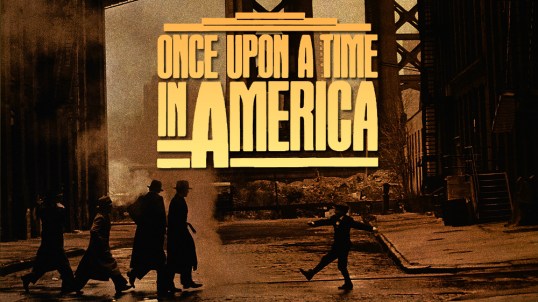
In honor of Sergio Leone’s birthday, today’s scene that I love comes from his final film, 1984’s Once Upon A Time In America. 

In this scene, which takes place in 1918 in New York City, a group of young street kids who fancy themselves sophisticated criminals are ambushed by their rival, Bugsy.  With the combination of Ennio Morricone’s score and Leone’s haunting vision of New York City at the start of the 20th Century, this scene captures the loss of innocence that will eventually lead to all of the characters becoming ruthless (albeit successful) gangsters in their adult years.

4 Shots From 4 Films: Special Sergio Leone Edition


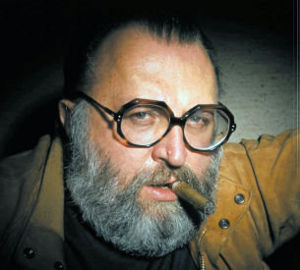
Sergio Leone (1929 — 1989)

4 Or More Shots From 4 Or More Films is just what it says it is, 4 shots from 4 of our favorite films. As opposed to the reviews and recaps that we usually post, 4 Shots From 4 Films lets the visuals do the talking!

95 years ago today, Sergio Leone was born in Rome, Italy.  The son of actor/screenwriter Vincenzo Leone and silent actress Edvige Valcarenghi, Sergio was born into the Italian film industry.  He began his career in the post-war rebuilding period, working as an assistant to Vittorio De Sica and, as an assistant director, for American films that were shot in Italy.  (Albeit uncredited, he worked on two Oscar-nominated Biblical epics, Quo Vadis and Ben-Hur.)

After making his directorial debut with The Colossus of Rhodes, Leone went on to direct the films that would change the face of international cinema.  Though he was hardly the first director of Spaghetti westerns, he was was the first to achieve far-reaching acclaim.  With the Dollars Trilogy, he made Clint Eastwood a star and Eastwood has often said that the majority of what he knows about directing, he learned from working with Leone and later Don Siegel.  Leone went on to direct the brilliant Once Upon A Time In The West and Once Upon A Time in America, two epic visions of American history that, sadly, were not initially treated well by their distributors.

Though Leone is only credited with directing eight films, his influence cannot be underestimated.  As both a visual artist and a cultural and political commentator, his films continue to influence directors to this day.

For that reason, it’s time for….

4 Shots From 4 Sergio Leone Films

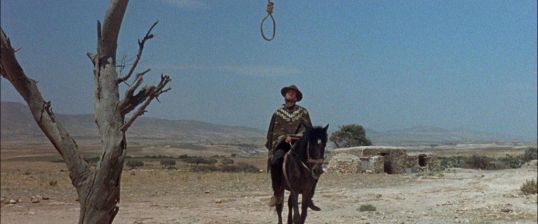
The Good, The Bad, and the Ugly (1966, dir by Sergio Leone, DP: Tonino Delli Colli)

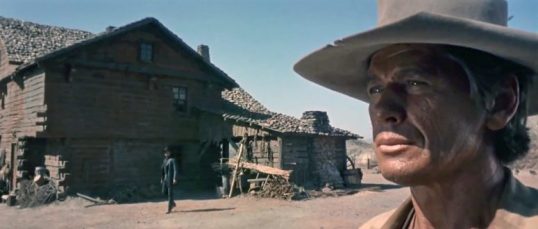
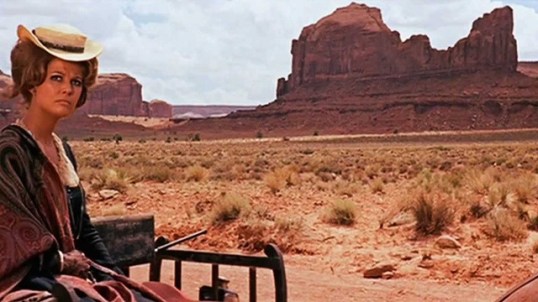
Once Upon A Time In The West (1968, dir by Sergio Leone, DP: Tonino Delli Colli)

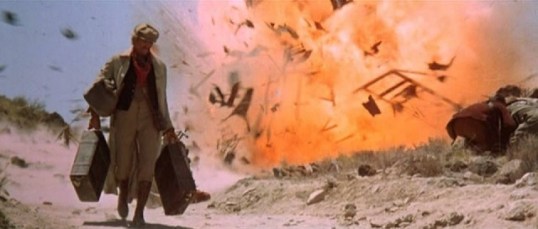
Duck, You Sucker (1971, dir by Sergio Leone, DP: Giuseppe Ruzzolini)

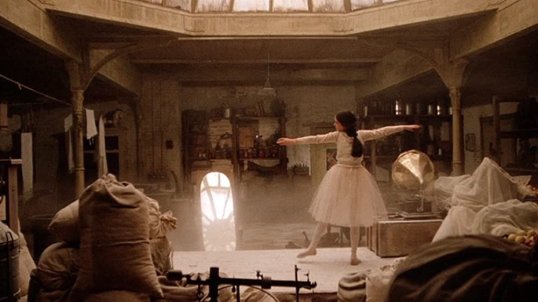
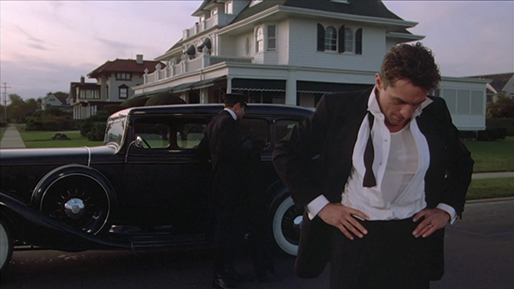
Once Upon A Time In America (1984, dir by Sergio Leone, DP: Tonino Delli Colli)

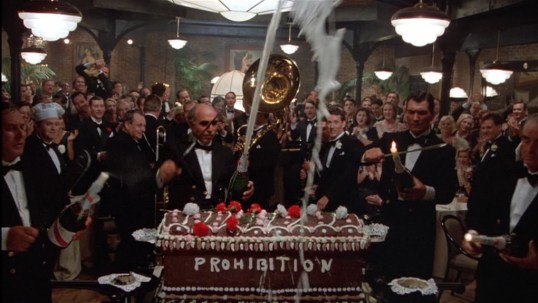
Scenes That I Love: Prohibition’s Funeral From Once Upon A Time In America


Once Upon A Time In America (1984, dir by Sergio Leone, DP: Tonino Delli Colli)

Change comes with a new year.  That’s just an inevitable fact of life.  Sometimes, it’s good chance and sometimes, it’s bad change and sometimes, it’s change that is both good and bad.  That’s certainly the case with today’s scene that I love.

In Serigo Leone’s 1984 masterpiece, Once Upon A Time In America, 1933 brings with it the end of prohibition.  While the nation celebrates the right to once again legally drink, gangsters like the ones played by James Woods and Robert De Niro mourn the loss of their business and try to figure out a new way to pay their bills.

In this scene, Prohibition — that law that was hated by so many — is given a send-off by the people that it made very rich.

10 Oscar Snubs From the 1980s


Ah, the 80s! Ronald Reagan was president. America was strong. Russia was weak. The economy was booming. The music was wonderful. Many great movies were released, though most of them were not nominated for any Oscars. This is the decade that tends to drive most Oscar fanatics batty. So many good films that went unnominated. So many good performers that were overlooked.  Let’s dive on in!

1980: The Shining Is Totally Ignored

Admittedly, The Shining was not immediately embraced by critics when it was first released.  Stephen King is still whining about the movie and once he went as far as to joke about being happy that he outlived Stanley Kubrick.  (Not cool, Steve.)  Well, none of that matters.  The Shining should have been nominated across the board.  “Come and play with us, Danny …. AT THE OSCARS!”

1981: Harrison Ford Is Not Nominated For Best Actor For Raiders of the Lost Ark

Raiders received a lot of nominations.  Steven Spielberg was nominated for Best Director.  The film itself was nominated for Best Picture.  (It lost to Chariots of Fire.)  But the man who helped to hold the film together, Harrison Ford, was not nominated for his performance as Indiana Jones.  Despite totally changing the way that people looked at archeologists and also making glasses sexy, Harrison Ford was overlooked.  I think this was yet another case of the Academy taking a reliable actor for granted.

1982: Brian Dennehy Is Not Nominated For Best Supporting Actor For First Blood

First Blood didn’t receive any Oscar nominations, not even in the technical categories.  Personally, I think you could argue that the film, which was much more than just an action film, deserved to be considered for everything from Best Actor to Best Director to Best Picture.  But, in the end, if anyone was truly snubbed, it was Brian Dennehy.  Dennehy turned Will Teasle into a classic villain.  Wisely, neither the film nor Dennehy made the mistake of portraying Sheriff Teasle as being evil.  Instead, he was just a very stubborn man who couldn’t admit that he made a mistake in the way he treated John Rambo.  Dennehy gave an excellent performance that elevated the entire film.

1984: Once Upon A Time In America Is Totally Ignored

It’s not a huge shock that Once Upon A Time In America didn’t receive any Oscar nominations.  Warner Bros. took Sergio Leone’s gangster epic and recut it before giving it a wide release in America.  Among other things, scenes were rearranged so that they played out in chronological order, the studio took 90 minutes off of the run time, and the film’s surrealistic and challenging ending was altered.  Leone disowned the Warner Bros. edit of the film.  Unfortunately, in 1984, most people only saw the edited version of Once Upon A Time In America and Leone was so disillusioned by the experience that he would never direct another film.  (That said, even the edited version featured Ennio Morricone’s haunting score, which certainly deserved not just a nomination but also the Oscar.)  The original cut of Once Upon A Time In America is one of the greatest gangster films ever made, though one gets the feeling that it might have still been too violent, thematically dark, and narratively complex for the tastes of the Academy in 1984.  At a time when the Academy was going out of its way to honor good-for-you films like Gandhi, it’s probable that a film featuring Robert De Niro floating through time in an Opium-induced haze might have been a bridge too far.

1985: The Breakfast Club Is Totally Ignored

Not even a nomination for Best Screenplay!  It’s a shame.  I’m going to guess that the Academy assumed that The Breakfast Club was just another teen flick.  Personally, if nothing else, I would have given the film the Oscar for Best Original Song.  Seriously, don’t you forget about me.

1986: Alan Ruck Is Not Nominated For Best Supporting Actor For Ferris Bueller’s Day Off

Poor Cameron!

1986: Blue Velvet Is Not Nominated For Best Picture

Considering the type of films that the Academy typically nominated in the 80s, it’s something of a shock that David Lynch even managed to get a Best Director nomination for a film as surreal and subversive as Blue Velvet.  Unfortunately, that was the only recognition that the Academy was willing to give to the film.  It can also be argued that Kyle MacLachlan, Laura Dern, Isabella Rossellini, and Dean Stockwell were overlooked by the Academy.  Dennis Hopper did receive a Supporting Actor nomination in 1986, though it was for Hoosiers and not Blue Velvet.

1987: R. Lee Ermey Is Not Nominated For Best Supporting Actor For Full Metal Jacket

One of the biggest misconceptions about Full Metal Jacket is that R. Lee Ermey was just playing himself.  While Ermey was a former drill instructor and he did improvise the majority of his lines (which made him unique among actors who have appeared in Kubrick films), Ermey specifically set out to play Sgt. Hartmann as being a bad drill instructor, one who pushed his recruits too hard, forgot the importance of building them back up, and was so busy being a bully that he failed to notice that Pvt. Pyle had gone off the deep end.  Because Ermey was, by most accounts, a good drill instructor, he knew how to portray a bad one and the end result was an award-worthy performance.

1988: Die Hard Is Not Nominated For Best Picture, Actor, Supporting Actor, or Director

Die Hard did receive some technical nominations but, when you consider how influential the film would go on to be, it’s hard not to feel that it deserved more.  Almost every action movie villain owes a debt to Alan Rickman’s performance as Hans Gruber.  And Bruce Willis …. well, all I can say is that people really took Bruce for granted.

1989: Do The Right Thing Is Not Nominated For Best Picture

Indeed, it would take another 30 years for a film directed by Spike Lee to finally be nominated for Best Picture.

Agree?  Disagree?  Do you have an Oscar snub that you think is even worse than the 10 listed here?  Let us know in the comments!

Up next: It’s the 90s!

Scene That I Love: “Want to go for a swim?” from Once Upon A Time In America


Since today is Sergio Leone’s birthday, it only seems appropriate to share one of my favorite scenes from Leone’s 1984 gangster epic, Once Upon A Time In America.

For some context, Noodles (Robert De Niro) has just gotten out of prison and has been reunited with Max (James Woods) and all of the other hoodlums that he grew up with.  While Noodles was away, Max has been building up their gang and becoming a force in the underworld.  One of the first post-prison jobs that Noodles is involved with turns out to be a hit on another gangster.  Max, however, did not let Noodles know ahead of time that it was going to be hit.

In this scene, Noodles attempts to learn why.

4 Shots From 4 Films: Special Sergio Leone Edition


Sergio Leone (1929 — 1989)

4 Or More Shots From 4 Or More Films is just what it says it is, 4 shots from 4 of our favorite films. As opposed to the reviews and recaps that we usually post, 4 Shots From 4 Films lets the visuals do the talking!

94 years ago today, Sergio Leone was born in Rome, Italy.  The son of actor/screenwriter Vincenzo Leone and silent actress Edvige Valcarenghi, Sergio was born into the Italian film industry.  He began his career in the post-war rebuilding period, working as an assistant to Vittorio De Sica and, as an assistant director, for American films that were shot in Italy.  (Albeit uncredited, he worked on two Oscar-nominated Biblical epics, Quo Vadis and Ben-Hur.)

After making his directorial debut with The Colossus of Rhodes, Leone went on to direct the films that would change the face of international cinema.  Though he was hardly the first director of Spaghetti westerns, he was was the first to achieve far-reaching acclaim.  With the Dollars Trilogy, he made Clint Eastwood a star and Eastwood has often said that the majority of what he knows about directing, he learned from working with Leone and later Don Siegel.  Leone went on to direct the brilliant Once Upon A Time In The West and Once Upon A Time in America, two epic visions of American history that, sadly, were not initially treated well by their distributors.

Though Leone is only credited with directing eight films, his influence cannot be underestimated.  As both a visual artist and a cultural and political commentator, his films continue to influence directors to this day.

For that reason, it’s time for….

4 Shots From 4 Sergio Leone Films

The Good, The Bad, and the Ugly (1966, dir by Sergio Leone, DP: Tonino Delli Colli)

Once Upon A Time In The West (1968, dir by Sergio Leone, DP: Tonino Delli Colli)

Duck, You Sucker (1971, dir by Sergio Leone, DP: Giuseppe Ruzzolini)

Once Upon A Time In America (1984, dir by Sergio Leone, DP: Tonino Delli Colli)

Scenes That I Love: The Ending of Sergio Leone’s Once Upon A Time In America


(SPOILERS BELOW)

The final moments of Sergio Leone’s epic 1984 gangster film, Once Upon A Time in America, are filed with questions and mysteries.

In 1968, who did Noodles (played by Robert De Niro) see standing outside of Max’s mansion?  When the garbage truck pulled up, did the mysterious man get in the truck or was he thrown in by some unseen force?

Why, in 1968, did Noodles see a car from the 1920s, one that was full of people who appeared to be celebrating the end of prohibition?  Was the car really there, in 1968, or was it an element of Noodles’s past as a gangster suddenly popping into his mind?

When we then see a young Noodles in an opium den, are we flashing back to the 1920s?  Is Noodles remembering the past or is it possible that we’ve been in the 20s the whole time and all of the scenes set in 1968 were actually only a drug-induced dream?

Why, with men looking to kill him and all of his friends apparently dead, does Noodles suddenly smile at the end of the film?  Is that sudden smile a result of the drugs or is there something else going on?

Once Upon A Time In America was Sergio Leone’s final film.  It’s one that he spent decades trying to get made and, once it was finally produced, it was butchered and re-edited by a studio hacks who demanded that the film tell its story in a linear style.  Leone was reportedly heart-broken by how his film was treated.  Some have speculated that his disappointment may have even contributed to the heart attack that eventually killed him.  It was only after Leone passed that his version of Once Upon A Time In America became widely available in the U.S.  This enigmatic epic continues to spark debate.  One thing that can’t be denied is that it’s a brilliant film.

As today is Leone’s birthday, it only seems appropriate to share a scene that I love, the ending of Once Upon A Time In America.

4 Shots From 4 Films: Special Sergio Leone Edition


Sergio Leone (1929 — 1989)

4 Or More Shots From 4 Or More Films is just what it says it is, 4 shots from 4 of our favorite films. As opposed to the reviews and recaps that we usually post, 4 Shots From 4 Films lets the visuals do the talking!

93 years ago today, Sergio Leone was born in Rome, Italy.  The son of actor/screenwriter Vincenzo Leone and silent actress Edvige Valcarenghi, Sergio was born into the Italian film industry.  He began his career in the post-war rebuilding period, working as an assistant to Vittorio De Sica and, as an assistant director, for American films that were shot in Italy.  (Albeit uncredited, he worked on two Oscar-nominated Biblical epics, Quo Vadis and Ben-Hur.)

After making his directorial debut with The Colossus of Rhodes, Leone went on to direct the films that would change the face of international cinema.  Though he was hardly the first director of Spaghetti westerns, he was was the first to achieve far-reaching acclaim.  With the Dollars Trilogy, he made Clint Eastwood a star and Eastwood has often said that the majority of what he knows about directing, he learned from working with Leone and later Don Siegel.  Leone went on to direct the brilliant Once Upon A Time In The West and Once Upon A Time in America, two epic visions of American history that, sadly, were not initially treated well by their distributors.

Though Leone is only credited with directing eight films, his influence cannot be underestimated.  As both a visual artist and a cultural and political commentator, his films continue to influence directors to this day.

For that reason, it’s time for….

4 Shots From 4 Sergio Leone Films

For A Few Dollars More (1965, dir by Sergio Leone, DP: Massimo Dallamano)

The Good, The Bad, and the Ugly (1966, dir by Sergio Leone, DP: Tonino Delli Colli)

Once Upon A Time In The West (1968, dir by Sergio Leone, DP: Tonino Delli Colli)

Once Upon A Time In America (1984, dir by Sergio Leone, DP: Tonino Delli Colli)


4 Shots From 4 Films In Honor Of Sergio Leone’s Birthday


Sergio Leone (1929 — 1989)

4 Shots From 4 Films is just what it says it is, 4 shots from 4 of our favorite films. As opposed to the reviews and recaps that we usually post, 4 Shots From 4 Films lets the visuals do the talking.

91 years ago today, Sergio Leone was born in Rome.  He went to school with future composer and collaborator, Ennio Morricone.  He saw, first hand, the horrors of living under an authoritarian regime and, though it wasn’t always appreciated at the time, all of his film had an anti-fascist political subtext that was informed by growing up under Mussolini.  He went to college to be a lawyer but quickly dropped out and instead, at the age of 18, started a long apprenticeship in the Italian film industry.  He started his career by working as an assistant to Vittorio De Sica on Bicycle Thieves, which is a pretty good way to start things.  Eventually, he went on to become one of the most influential directors of all time.

Taking into mind just how influential his work would be, it’s can be easy to forget that Leone is only credited with having directed 7 films and the majority of those films were not immediately embraced.  (Though it’s generally agreed that Leone was, for all intents and purposes, the co-director of My Name Is Nobody, he was only officially credited with coming up with the film’s story.)  In the 60s, highbrow critics turned their noses up at his spaghetti westerns, even while audiences ate them up and made Clint Eastwood into a film star.  (Eastwood would later dedicate his Oscar-winning Unforgiven to Sergio Leone and Don Siegel.)  The Good, The Bad, and the Ugly and Once Upon A Time In The West are now recognized as two of the greatest westerns ever made but, at the time they were released, they were criticized for being too long and (oddly enough) thematically shallow.  Leone even had to suffer that indignity of having his final (and, in my opinion, best) film, Once Upon A Time In America, edited down by a studio that cared little about the intricate structure that Leone had crafted for his tale of greed, crime, and redemption in America.

Leone died when he was only 60, felled by a heart attack.  However, his legacy remains alive, as his films continue to inspire directors and writers and other film lovers to this day.  His two greatest films — Once Upon A Time In The West and Once Upon A Time In America — have been rediscovered and rescued from the studio hacs who previously served him so badly.  Just last year, Quentin Tarantino paid tribute to Leone with the title of his best film-to-date, Once Upon A Time In Hollywood.

On this day, we honor the legacy of a cinematic great.

4 Shots From 4 Sergio Leone Films

A Fistful of Dollar (1964, dir by Sergio Leone, DP: Massimo Dallamano)

The Good, The Bad, and the Ugly (1966, dir by Sergio Leone, DP; Tonino Delli Colli)

Once Upon A Time In The West (1968, dir by Sergio Leone, DP: Tonino Delli Colli)

Once Upon A Time In America (1984, dir by Serigo Leone, DP: Tonino Delli Colli)

Song of the Day: Deborah’s Theme by Ennio Morricone


Today, I arrived home to the sad news that Ennio Morricone, the world’s greatest composer, had passed away at the age of 91.  Morricone was responsible for so many classic film scores that it’s hard to know where to begin.  I imagine I’ll be sharing a lot of his music over the next couple of days.  Some of it will be familiar and hopefully, some of it will inspire our readers to seek out some of his lesser known scores.

For now, I’d like to share one of my favorite Morricone compositions.  This is Deborah’s Theme from Sergio Leone’s 1984 gangster epic, Once Upon A Time In America.