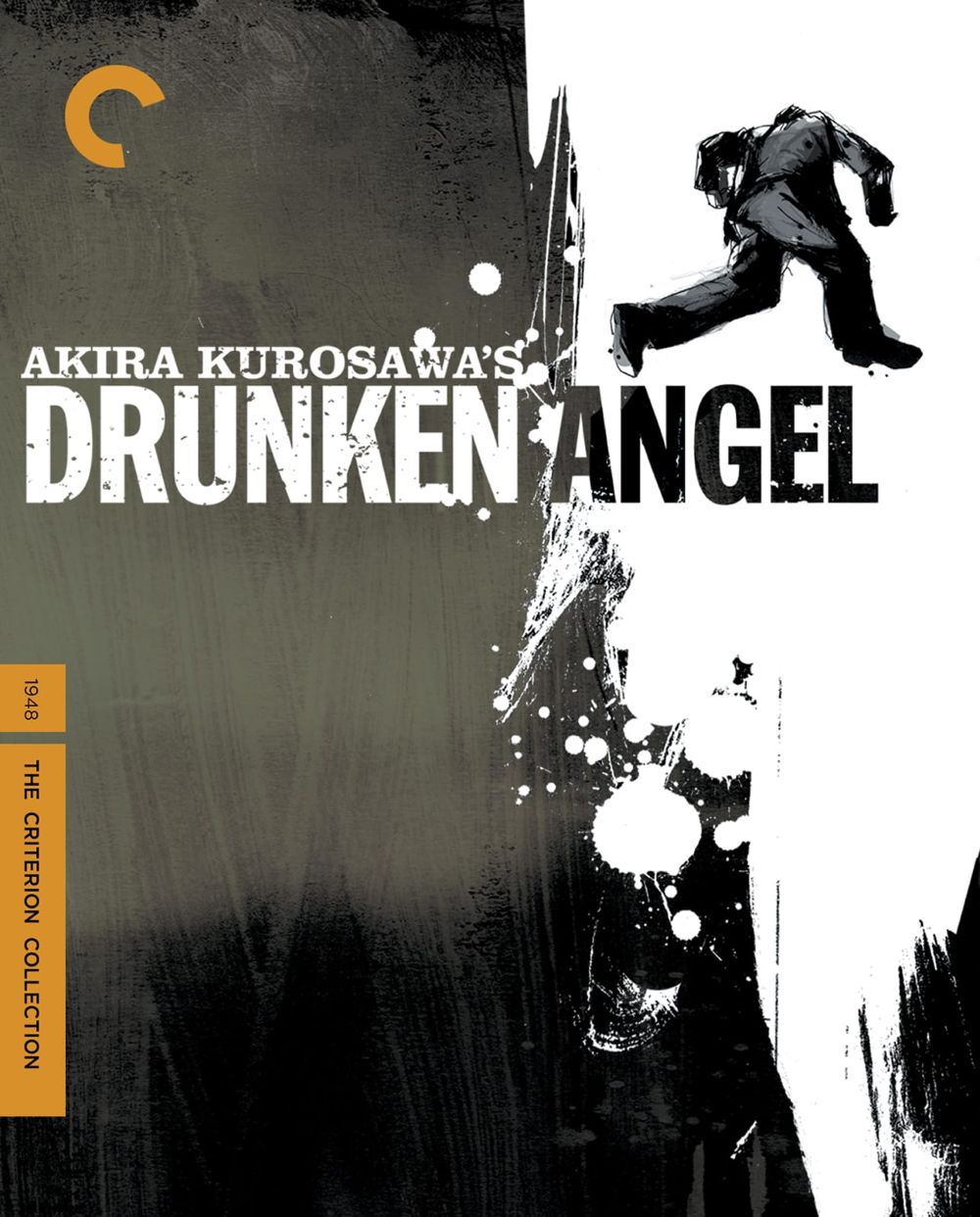
Film Review: Drunken Angel (dir. by Akira Kurosawa)


There’s nothing particularly angelic about the world of Drunken Angel. The streets are filthy, the nightlife feels desperate, and even the local doctor seems more interested in picking a fight than offering comfort. That roughness makes Akira Kurosawa’s film so compelling: it finds compassion somewhere you wouldn’t expect to find much of anything worth saving. Released in 1948, rather than 1947, it also marks the first of sixteen collaborations between Kurosawa and Toshiro Mifune. That partnership would become legendary, but this isn’t just an interesting starting point. It’s a tough, moving film that stands on its own.

The story begins with a transaction that should be simple. Matsunaga, a young gangster played by Mifune, visits a neighborhood doctor to have a bullet removed from his hand. The doctor, Sanada, played by Takashi Shimura, recognizes that his patient has a more serious problem: tuberculosis. Matsunaga doesn’t welcome the diagnosis, especially when accepting it would mean admitting that his intimidating exterior hides a vulnerable body. Sanada, meanwhile, refuses to let the matter drop. What develops is less a conventional friendship than an ongoing argument between two men who have very different ideas about what it means to stay alive.

Mifune is the immediate attraction, and it’s easy to understand why Kurosawa kept working with him. His Matsunaga makes being noticed look like a full-time occupation. The swagger, the sharp clothes, the sudden bursts of aggression: everything suggests someone performing toughness for an audience. Yet Mifune makes the performance within the performance visible. There’s fear underneath all that attitude, and his physical acting gradually exposes it. As Matsunaga’s health deteriorates, the gap between how powerful he wants to appear and how weak he actually feels becomes painful. His body starts contradicting every claim his personality makes. It’s a magnetic performance without being an especially comfortable one.

Just as important, though, is Shimura. It would be easy to describe Sanada as the decent man trying to rescue the delinquent, but that makes him sound considerably tidier than he is. He drinks heavily, loses his temper, and has little patience for the people who need his help. His compassion doesn’t come wrapped in reassuring bedside manners. That’s what makes it persuasive. Shimura gives the impression of someone who has seen enough suffering to become cynical but hasn’t managed to stop caring. Sanada’s anger often feels like the exhausted expression of a responsibility he cannot put down. He’s abrasive because the stakes matter to him.

Together, the actors give the film its unsettled rhythm. Their scenes have the energy of a fight in which neither participant will admit what the fight is really about. Sanada wants Matsunaga to accept treatment, but he also wants him to recognize that the gangster code he follows offers no meaningful protection. Matsunaga wants to dismiss the doctor, yet keeps being pulled back toward someone willing to confront him honestly. What makes their relationship interesting is that affection never quite replaces antagonism. Kurosawa lets concern emerge through irritation, stubbornness, and repeated disappointment rather than a convenient emotional breakthrough.

The setting gives that struggle a larger dimension. This is postwar Tokyo viewed from a neighborhood where recovery feels distant and survival has become an everyday negotiation. A stagnant, polluted pool sits at the center of the community, making the environment seem physically sick before anyone mentions tuberculosis. The symbolism isn’t subtle, but subtlety isn’t always the point. Kurosawa wants the connection between bodily illness and social damage to be impossible to miss. Matsunaga’s condition belongs to him, but the world around him seems to encourage the same habits of denial and neglect. The neighborhood isn’t just a backdrop; it keeps pressing into the drama.

That atmosphere also complicates the film’s gangster appeal. Matsunaga initially has the surface attractions associated with movie criminals: style, confidence, access to nightlife, and the ability to frighten people. But Drunken Angel steadily dismantles the idea that these things amount to security. His standing depends on remaining useful and looking strong, which leaves little room for illness or dependence. The return of another gangster, Okada, exposes how fragile Matsunaga’s position really is. What he treats as loyalty starts looking like an arrangement that can be canceled the moment he becomes inconvenient. His tragedy involves discovering how little the organization values him beneath the swagger.

Kurosawa’s direction keeps that downward movement from becoming visually monotonous. The film moves between cramped medical encounters and the restless energy of the surrounding entertainment district, allowing private suffering and public distraction to rub against each other. Mifune’s nightclub dancing is especially revealing: movement becomes another way for Matsunaga to insist on his vitality, even as the story makes that insistence increasingly desperate. The contrast gives the film an uneasy pulse. Pleasure never quite feels separate from danger, and stillness rarely brings relief. Even when the characters try to escape themselves, the filmmaking keeps their vulnerability close to the surface.

The film does occasionally push its ideas harder than necessary. Sanada’s moral arguments can become speeches, and the repeated connections between sickness, corruption, and personal responsibility leave relatively little interpretive breathing room. Anyone expecting the emotional restraint sometimes associated with older Japanese cinema may be surprised by how forceful this is. Still, the bluntness mostly suits the material. These are people living under pressure, not quietly arranging their feelings into elegant observations. More importantly, the performances keep the argument human. Matsunaga isn’t merely a warning about bad choices, and Sanada isn’t a flawless representative of the right ones. Their contradictions give the film room to breathe.

What ultimately makes Drunken Angel linger is its refusal to confuse caring with control. Sanada can recognize the danger, offer treatment, and argue himself hoarse, but he cannot simply make another person choose differently. That limitation gives the film its sadness without draining away its humanity. Kurosawa finds something worthwhile in the effort to help, even when the effort is ugly, exhausting, and uncertain. Mifune supplies the volatility, Shimura supplies the battered conscience, and neither lets the other settle into an easy role. As the beginning of a major filmmaking partnership, it’s fascinating. As a bruising drama about pride and the difficulty of accepting help, it remains powerful.

4 Shots From 4 Films: Special Toshiro Mifune Edition


4 Shots From 4 Films is just what it says it is, 4 shots from 4 of our favorite films. As opposed to the reviews and recaps that we usually post, 4 Shots From 4 Films lets the visuals do the talking!

106 years ago today, the great Japanese actor Toshiro Mifune was born in Qingdao, Shandong, China, which was under Japanese occupation at the time.  After working as a photographer and as an assistant cameraman, Mifune made his acting debut in 1947, playing a bank robber in Snow Trail.

Mifune would go on to become an international superstar, appearing in hundreds of films before his death in 1997.  Sixteen of those films would be directed by Akira Kurosawa and Mifune’s performances in Kurosawa’s yakuza and samurai films would go on to inspire actors the world over.  When Sergio Leone adapted Yojimbo into A Fistful of Dollars, Clint Eastwood based his performance on Mifune’s performance in the original.  George Lucas would later create the character of Obi-Wan Kenobi with Mifune in mind.

In honor of the man and his career, here are

4 Shots From 4 Films

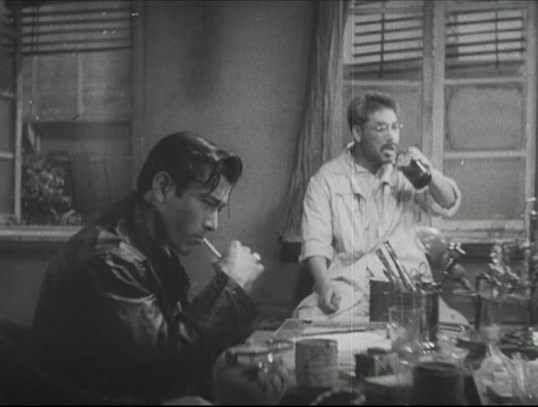
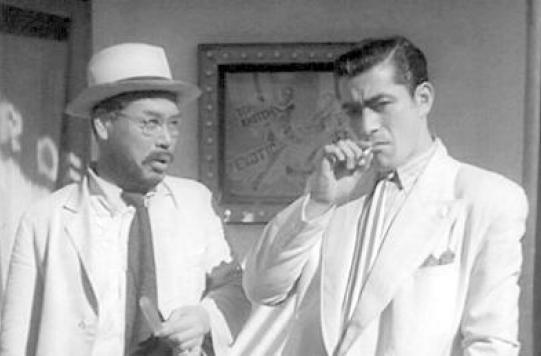
Drunken Angel (1948, directed by Akira Kurosawa)

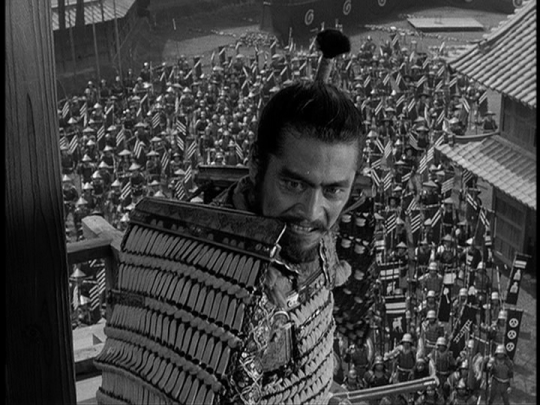
Throne of Blood (1957, directed by Akira Kurosawa)

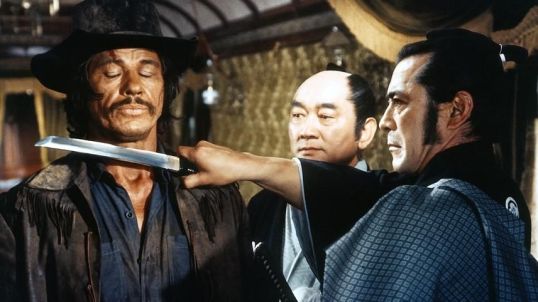
Red Sun (1971, directed by Terence Young)

Shogun (1980, directed by Jerry London)

4 Shots From 4 Films: Special Toshiro Mifune Edition


4 Shots From 4 Films is just what it says it is, 4 shots from 4 of our favorite films. As opposed to the reviews and recaps that we usually post, 4 Shots From 4 Films lets the visuals do the talking!

Today would have been the 105th birthday of the great actor, Toshiro Mifune.  It’s time for….

4 Shots From 4 Toshiro Minfune Films

Drunken Angel (1948, dir by Akira Kurosawa)

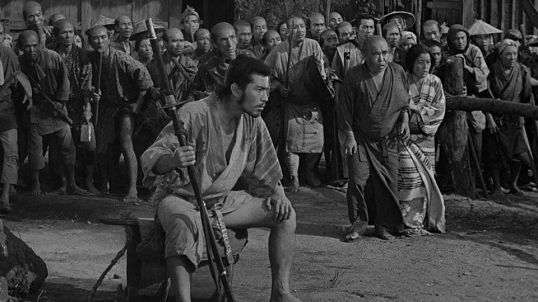
Seven Samurai (1954, dir by Akira Kurosawa)

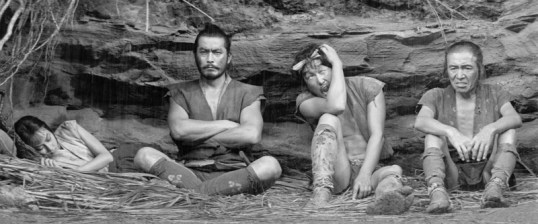
The Hidden Fortress (1958, dir by Akira Kurosawa)

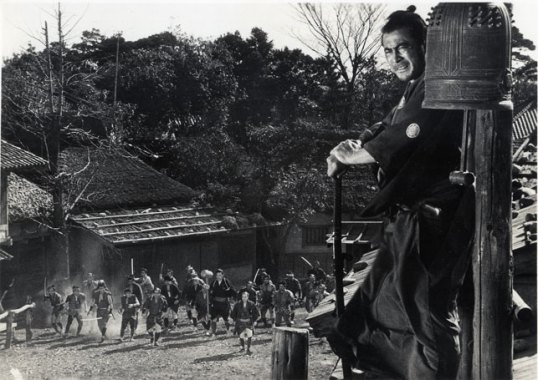
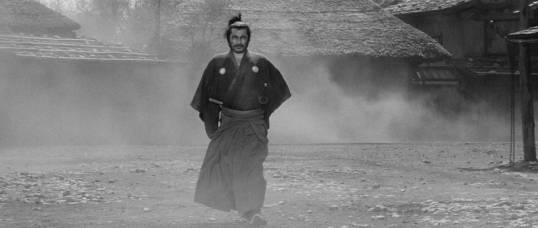
Yojimbo (1961, dir by Akira Kurosawa)

4 Shots From 4 Films: Special Toshiro Mifune Edition


4 Shots From 4 Films is just what it says it is, 4 shots from 4 of our favorite films. As opposed to the reviews and recaps that we usually post, 4 Shots From 4 Films lets the visuals do the talking!

104 years ago today, the great Japanese actor Toshiro Mifune was born in Qingdao, Shandong, China, which was under Japanese occupation at the time.  After working as a photographer and as an assistant cameraman, Mifune made his acting debut in 1947, playing a bank robber in Snow Trail.

Mifune would go on to become an international superstar, appearing in hundreds of films before his death in 1997.  Sixteen of those films would be directed by Akira Kurosawa and Mifune’s performances in Kurosawa’s yakuza and samurai films would go on to inspire actors the world over.  When Sergio Leone adapted Yojimbo into A Fistful of Dollars, Clint Eastwood based his performance on Mifune’s performance in the original.  George Lucas would later create the character of Obi-Wan Kenobi with Mifune in mind.

In honor of the man and his career, here are

4 Shots From 4 Films

Drunken Angel (1948, directed by Akira Kurosawa)

Throne of Blood (1957, directed by Akira Kurosawa)

Yojimbo (1961, directed by Akira Kurosawa)

Shogun (1980, directed by Jerry London)

The International Lens: Drunken Angel (dir by Akira Kurosawa)


The 1948 Japanese film, Drunken Angel, tells the story of two seemingly different men living in a burned-out neighborhood in postwar Tokyo.

Sanada (Takashi Shimura) is an aging and world-weary doctor.  Though he may drink too much and he is occasionally too quick to snap at his patients, he truly cares about the people who live near his clinic.  He worries about the spread of tuberculosis, which was a very real concern in postwar Japan and which remains a concern to this day.  He continually tells his patients that they need to stop drinking and take better care of themselves, even though he does not seem to be capable of taking his own advice.

Matsunaga (Toshiro Mifune) is a young Japanese gangster, a member of the yakuza.  Matsunaga does everything with a swagger, one that he appears to have largely adapted from Hollywood gangster movies.  He not only dresses like an idealized version of an American gangster but he also smokes his cigarettes like one.  Everything about Matsunaga gives the impression that he’s desperate to prove that he’s something more than just a small-time hood living in a bombed-out neighborhood that’s centered around a poisonous bog.

One night, Matsunaga shows up at Sanada’s clinic.  He’s got a bloody hole in his hand.  Mastunaga claims that he walked into a door.  When Sanada responds with skepticism, Matsunaga adds that the door had a nail sticking out of it.  Sanada may not believe Matsunaga but he’s a doctor so he treats Matsunaga’s wound.  Sanada also diagnosis Matsunaga as suffering from tuberculosis and tells him that he has to stop drinking and womanizing.  Needless to say, Matsunaga is not pleased with this diagnosis.

Though they start out as antagonists, a weary friendship grows between the doctor and the gangster.  Matsunaga even starts to follow the doctor’s advice or, at least, he does until his boss, Okada (Reisaburo Yamamoto), is released from prison.  Under Okada’s influence, Matsunaga falls back into his own habits, drinking and going to nightclubs where the musicians perform Americanized music.  Okada is also the ex-boyfriend of Sanada’s nurse and, when he threatens to murder Sanada unless the doctor lead him to her, Matsunaga is finally forced to decide which of his two potential mentors will have his loyalty.

Taken on its own, Drunken Angel is an entertaining gangster film that features two memorable lead performances.  Takashi Shimura is likable as Sanada while Toshiro Mifune is dangerously charismatic as Matsunaga.  Director Akira Kurosawa originally planned for the film to focus solely on Sanada, with Matsunaga only playing a minor role.  Mifune, however, so impressed him that he ended up expanding Matsunaga’s role until Mifune was eventually the film’s co-lead.  (Following Drunken Angel, Kurosawa would go on to make 15 other films with Mifune.)  Kurosawa keeps the action moving at an exciting pace and he frames the story with haunting images of the dilapidated neighborhood that the two men call home.

However, Drunken Angel is even more fascinated with one consider that it was made at a time when Japan, having been defeated in World War II and still traumatized by the nuclear attacks on Nagasaki and Hiroshima, was still occupied by American forces.  The film was made at a time when it was still very much an open question as to what role Japan would play in a postwar world.  Would Japan become dominated by American culture (which, in this film, is represented by gangsters like Okada) or would it remain true to itself?  When Sanada warns Matsunaga that he is surrounded by toxic germs that are making him ill and threatening his future, he could very well have been talking about what Kurosawa perceived as being the threat of Americans transforming Japan into a westernized playground.

In the end, it’s a film that works on many levels, as a gangster film, as a portrait of a friendship, and as a metaphor for a people and a culture trying to find their place in a new and imperfect world.  If you haven’t seen it yet, now is the perfect time to do so.

4 Shots From 4 Films: Special Toshiro Mifune Edition


4 Shots From 4 Films is just what it says it is, 4 shots from 4 of our favorite films. As opposed to the reviews and recaps that we usually post, 4 Shots From 4 Films lets the visuals do the talking!

100 years ago today, the great Japanese actor Toshiro Mifune was born in Qingdao, Shandong, China, which was under Japanese occupation at the time.  After working as a photographer and as an assistant cameraman, Mifune made his acting debut in 1947, playing a bank robber in Snow Trail.

Mifune would go on to become an international superstar, appearing in hundreds of films before his death in 1997.  Sixteen of those films would be directed by Akira Kurosawa and Mifune’s performances in Kurosawa’s yakuza and samurai films would go on to inspire actors the world over.  When Sergio Leone adapted Yojimbo into A Fistful of Dollars, Clint Eastwood based his performance on Mifune’s performance in the original.  George Lucas would later create the character of Obi-Wan Kenobi with Mifune in mind.

In honor of the man and his career, here are

4 Shots From 4 Films

Drunken Angel (1948, directed by Akira Kurosawa)

Throne of Blood (1957, directed by Akira Kurosawa)

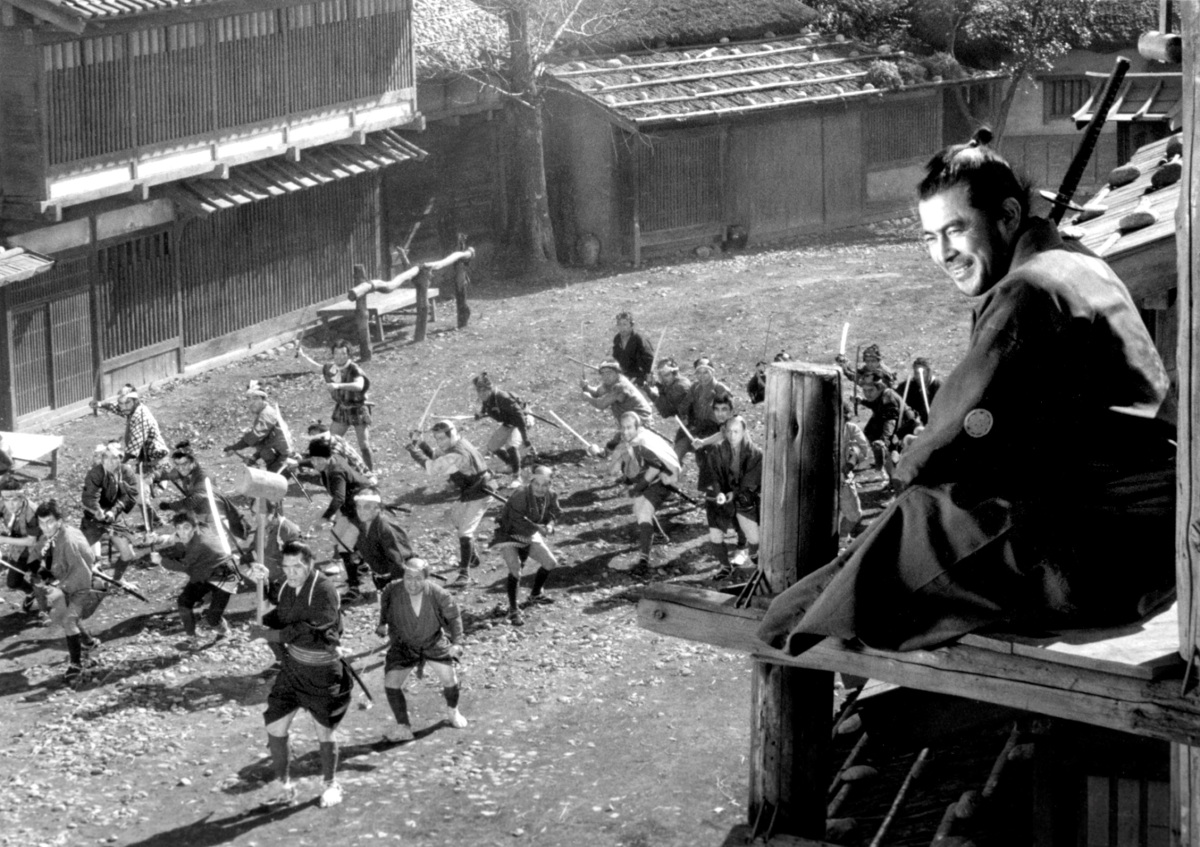
Yojimbo (1961, directed by Akira Kurosawa)

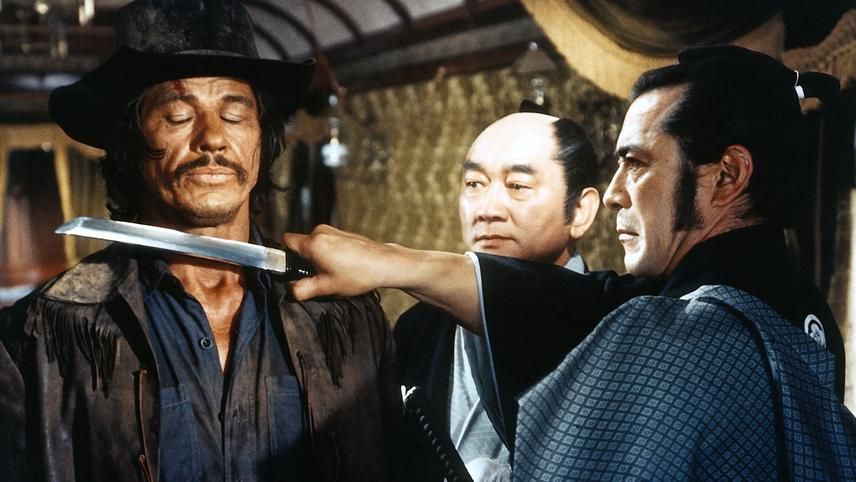
Red Sun (1971, directed by Terence Young)