Tonight, Leonard Nimoy takes a look at ghosts in In Search Of Ghosts! If Leonard Nimoy can’t find them, who can?
Tonight, Leonard Nimoy takes a look at ghosts in In Search Of Ghosts! If Leonard Nimoy can’t find them, who can?
On tonight’s episode of FreakyLinks, Ethan Embry and the crew investigate real-life adrenaline vampires! Agck!
This episode features appearances from Jeffrey Combs, Dennis Christopher, Paige Moss, and Eric Baflour!
This episode originally aired on June 1st, 2001.
Welcome to Retro Television Reviews, a feature where we review some of our favorite and least favorite shows of the past! On Sundays, I will be reviewing Homicide: Life On The Street, which aired from 1993 to 1999, on NBC! It can be viewed on Peacock.
It’s Christmas in Baltimore.
Episode 6.8 “All Is Bright”
(Dir by Matt Reeves, originally aired on December 12th, 1997)
It’s the holidays! Falsone (ugh) is still talking about suing to get custody of his kids. (Seriously, Falsone — either do it or shut up about it. We already had to go through this crap with Felton a few seasons ago.) Lewis and Kellerman are worrying about whether or not Georgia Rae has footage of Kellerman executing Luther Mahoney. Bayliss is suddenly making out with Cox at the Christmas party. Well, why shouldn’t he? It’s impossible to go in a bar or even a shop in Baltimore without running into Dr. Cox.
Meanwhile, Gharty and Ballard are investigating the murder of man in a laundromat. Someone beat him to death and poured bleach down his throat. It turns out that the man was HIV+ and he infected a woman named Rita (the great Kathryne Erbe). Rita is now visibly sick and dying while the man who infected her wasn’t showing any signs of being sick at all. Rita’s guilt is never really in question. The issue is that Ballard feels sorry for Rita and understands her anger while the older and more-traditionally minded Gharty sees her as just being another murderer. It’s a pretty simple story but Callie Thorne and Peter Gerety sold it. The fact that Gharty is obviously in love with Ballard adds a whole other level of meaning to their scenes together.
Speaking of love, Munch’s ex-wife Gwen (Carol Kane) showed up at the bar and recruited Munch to help with her mother’s funeral. Only real-life author Peter Maas showed up for the ceremony. Munch, of course, asked Gwen about Lennie Briscoe. Belzer and Kane were a great team. I’m a bit disappointed that there was apparently never a Munch/Gwen spin-off.
Watching Gharty and Ballard provided a needed relief from all of the Falsone-centered episodes that I’ve had to sit through recently. This was a simple episode but a good one.
What makes us human? What does it mean to have free will? What is love? What is freedom? The questions and more are asked in the low-budget (and rather odd) science fiction epic The Creation of the Humanoids, which you can view below!
Now, I should warn that Creation of the Humanoids is an extremely talky film. And the plot is occasionally difficult to follow. There’s a lot of ennui to be found in this particular film, both from the humans and those who have been built to serve them However, I find it impossible not to love this one because it’s just such a strange movie. I love it for the colorful set design, the contrast between the resentful robots and the paranoid humans, and the fact that the film — despite being made for next to nothing — actually has more ambition than anything ever made by several of the more successful directors working today. And, while it may not really be a horror film in the way that some of our other October films are, it still feels appropriate for the Halloween season. It just has the perfect holiday atmosphere.
First released in 1962, Creation of the Humanoids was reportedly one of Andy Warhol’s favorite films. Keep an eye out for Plan 9 From Outer Space‘s Dudley Manlove.
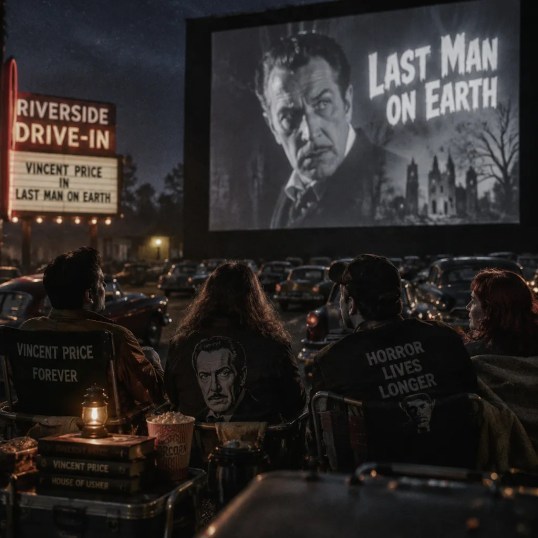
Today, I present to you one of the most important films in horror history. Though it wasn’t appreciated when it was first released back in 1964, The Last Man On Earth was not only the 1st Italian horror film but George Romero has also acknowledged it as an influence on his own Night of the Living Dead.
It’s easy to be a little bit dismissive of The Last Man On Earth. After all, the low-budget is obvious in every scene, the dubbing is off even by the standards of Italian horror, and just the name “Vincent Price” in the credits leads one to suspect that this will be another campy, B-movie. Perhaps that’s why I’m always surprised to rediscover that, taking all things into consideration, this is actually a pretty effective film. Price does have a few over-the-top moments but, for the most part, he gives one of his better performances here and the black-and-white images have an isolated, desolate starkness to them that go a long way towards making this film’s apocalypse a convincing one. The mass cremation scene always leaves me feeling rather uneasy.
The film is based on Richard Matheson’s I Am Legend and no, it’s nowhere as good as the book. However, it’s still a worthy adaptation and one that stays true to the tone of the text, including the fact that Price’s main tormenter was also once his neighbor and best friend. This is one of those films that just hits differently in the wake of 2020’s COVID hysteria.
And now, it’s time for The Last Man On The Earth….
Today’s song comes the hypnotic soundtrack of Paul Schrader’s Cat People. This song was so good that it later showed up and was used to equally strong effect in Quentin Tarantino’s Inglourious Basterds.
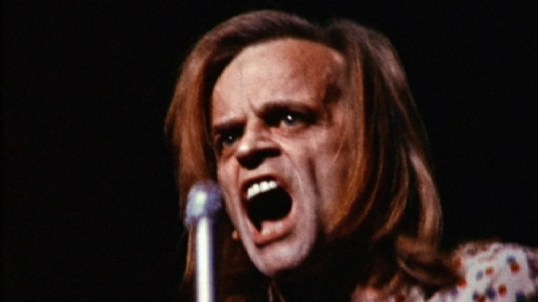
From the 1960s until his death in the early 90s, German actor Klaus Kinski was known for being the enfant terrible of world cinema. Kinski was a volatile talent, an often angry and occasionally violent performer who specialized in playing extreme characters and who reportedly took pride in his ability to drive directors crazy. Kinski appeared in good films and bad films and, in every one of them, he gave the type of unique performance that only he was cable of giving.
Kinski is best-remembered for his work with his frenemy, Werner Herzog. When Herzog and Kinski weren’t making films together, they were often criticizing each other in the press and sending one another death threats. In the documentary My Best Fiend, Herzog documented his partnership with Kinski. Even while Herzog talked about the time that he went to Kinski’s home with the intent of killing him, Herzog’s affection for his frequent star was obvious. Klaus Kinski was one of an unhinged kind.
In Werner Herzog’s 1980 film, Nosferatu, Kinski played the role of Dracula. In this scene, he comes to visit Isabelle Adjani’s Lucy.

In 2017’s Run, Levi (Josiah David Warren) marries Natalie Winters (Taylor Murphy). Natalie is a journalist who has made it a point to report on the growing problem of human trafficking. Her journalism makes her a target for low-life criminals like Jeff Connors (Stephen Baldwin). On their wedding night, Natalie is abducted by two men who are planning on selling her into sex slavery.
The police are useless. So is the FBI. It looks like Levi is going to have to rescue his wife on his own. While Natalie prays in the back of the van in which she’s being held prisoner, Levi hits streets, putting up missing posters and talking to motel maids.
Now, I’m going to post a spoiler here. You can stop reading now, if you want. Otherwise, you have been warned.
Levi does find his wife. He finds her because he just happens to be in the parking lot of a Florida motel when a maid walks by wearing his wife’s scarf. She tells him that she found it in a room. (No judgment from me! For one summer, I lived in a motel with my mom and my sisters and my mom paid for our board by working as a maid. Apparently, people leave stuff behind all the time.) The maid then goes on to say that she saw the van pulling out of the parking lot. She gives a perfect description of the make and the model. She recites the license plate number without hesitation. She then tells Levi exactly which street the van went down and which direction they were heading. Levi then manages to easily track the van down and get the police involved.
WHAT LUCK!
I mean, seriously, for all the time that this movie devoted to Levi trying to find his wife, it all comes down to one maid finding a scarf. I’m sure that some would argue that this is meant to be proof that God arranged for the maid to be in that parking lot at the exact same time as Levi. That’s fine. In the movie, it comes across as being a huge dues ex machina …. which is exactly the same thing, now that I think about it.
Anyway…..
Josiah David Warren has directed a handful of faith-based films and I have to admit that, as a reviewer, I haven’t always been kind to them. Warren’s biggest mistake is that he always casts himself in the lead. He’s not a particularly good actor and, with his perpetually tired expression and unshaven appearance, he tends to come across as being more a stoner than a preacher.
While that continues to be true here, Run is still better than the average Josiah David Warren film. The plot is full of contrivances and the editing is haphazard but Taylor Murphy gives a sympathetic and likable performance as Natalie. For that matter, the often-mocked Stephen Baldwin is convincing as the cocky and dangerous Connors. Baldwin doesn’t get much screentime but he sets a wanted poster on fire with skill and style.
Finally, I appreciated that the film ended on a note of forgiveness and redemption, indicating that there’s hope for everyone. That’s a good message and not one that seems to be particularly popular right now. The film deserves credit for that.
Welcome to Late Night Retro Television Reviews, a feature where we review some of our favorite and least favorite shows of the past! On Saturdays, I will be reviewing Saved By The Bell, which ran on NBC from 1989 to 1993. The entire show can be purchased on Prime!

This week, we meet Jessie’s new stepbrother! I’m sure he’ll be around forever.
Episode 3.10 “Wicked Stepbrother: Part One”
(Dir by Don Barnhart, originally aired on November 2nd, 1991)
Jessie’s mom has gotten married …. again!
Now, in this episode, we don’t actually meet Jessie’s mom. Nor do we meet her new stepfather. In fact, she says next to nothing about her new stepfather. Instead, this entire episode is all about Eric Tramer (Joshua Hoffman), her new stepbrother from New York!
That’s right. Jessie has a stepbrother and I’m sure that he’s going to be a major part of the show!
(Incidentally, I’m assuming that Eric Tramer was named after script consultant Bennett Tramer.)
Unfortunately, Eric is a little bit cocky. He’s got that New York attitude. When Zack pretends to be Jewish so he can skip school on Rosh Hashanah and go to a baseball game, Eric finds out and blackmails him into giving up his locker. When Jessie calls Slater a “curly Conan,” Eric records it and threatens to play it for the whole school. Jessie gives up her bedroom to Eric.
(Hey, remember how, during the first season, Zack and Jessie lived right next to each other and Zack would regularly climb in through Jessie’s window? Apparently, the show forgot about that.)
Eric has a weakness. He has a crush on Lisa but Lisa doesn’t want anything to do with him. Zack has a plan. Belding is away for the weekend and he’s given the keys to his red sportscar to Slater so that Slater can install a CD player. (Hello, 1990s!) Zack offers to give Lisa two tickets to the MC Hammer concert if she agrees to go out with Eric. Then, he and Slater allow Eric to borrow Belding’s car for his date. Their plan is to take a picture of Eric driving Belding’s car and then …. well, I’m not sure what the next step is. I guess they’re going to frame Eric for auto theft and send him to prison so that Zack can get his locker back.
Lisa goes out with Eric. They go to see Casablanca. Eric does a really bad Bogart impersonation. Lisa is charmed. Eric lets Lisa drive the car. Awwww! Zack pops up with his camera and takes a picture. The flash blinds Lisa and she crashes Belding’s car!
“We’re trouble,” Zack says to the audience.
Hey, Zack — your best friend Lisa just crashed a car! Maybe go check on her and make sure she’s not dead….
This is a two-part episode so we’ll take a look at the conclusion next week. As for the first part, this whole thing is a good example of people overreacting to nothing. Because Eric had Screech tape the baseball game, he has video evidence of Zack not being at school. Well, so what? Zack skips class all the time and, in this case, his absence was pre-approved. To get Zack in trouble, Eric would have to prove that Zack was lying about being Jewish and Zack being at a baseball game doesn’t do that. Then, Jessie gives up her room so people won’t know that she called Slater a “curly Conan.” Jessie does this to avoid being embarrassed but would it really be that embarrassing? Slater’s the most popular guy at school and he calls her “mama” in public. And finally, the biggest overreaction is Zack and Slater deciding to frame Eric for a crime as opposed to just ignoring him. It just seems like this whole thing could have been resolved by everyone going out dancing or something.
Can things get any dumber? We’ll find out next week!

The Amazing Race (Wednesday Night, CBS)
I wrote about The Amazing Race here!
Austin City Limits (PBS)
I watched an episode featuring Olivia Rodrigo on Saturday morning.
Bar Rescue (Weekdays, Paramount)
I was up early on Wednesday so I could watch Sweet November on TCM. After the movie ended, I watched two episodes of Bar Rescue on Paramount, The first one was set at an Irish bar that needed some help. The second one was at a North Carolina nightclub that was pouring cheap liquor into expensive bottles and then overcharging the customers. John Taffer got mad and yelled at everyone, as he should have.
In between watching the first and the second episodes of Crystal Lake on Thursday, I ended up watching three episodes of Bar Rescue. I only meant to watch one but I couldn’t help it. I got drawn into all the drama and the shouting,
Baseball: Devil Rays vs Guardians (TBS, Tuesday Night)
My sister was so sweet about watching the Twilight films with me that I watched a baseball game with her on Tuesday night.
Baywatch Nights (YouTube)
David Hasselhoff and two Vikings! I watched a classic episode this week. Valhalla!
Carrie (Prime)
I finished Carrie on Sunday and promptly shared my thoughts.
Crystal Lake (Peacock)
Diff’Rent Strokes (Tubi)
My friend Mark recommended that I watch an episode featuring Arnold, his younger stepbrother Sam, and an epileptic street performer. The performer had a seizure in Central Park and Sam yelled, “It’s Karen! She’s dying!” Later, Arnold cracked a joke about the performer and got yelled at by his housekeeper, who was epileptic herself. That served Arnold right!
The Ghost Writer (YouTube)
I watched this unsold pilot on Monday and I shared my thoughts on Thursday.
Holy Mass In Honor Of Our Lady of Fatima (EWTN, Tuesday Night)
Erin and I watched this on Tuesday. It was very moving.
In Search Of…. (YouTube)
I watched (and shared!) a few episodes of this old Leonard Nimoy-narrated series this week. They were pretty fun! The entire series is on YouTube so I might watch them all.
Jail (Reelz, Weekdays)
I watched two episodes on Wednesday. Just about everyone who was brought into the jail was drunk. The deputies called everyone “buddy.”
Mother Angelica Classics (EWTN, Weekday Mornings)
In a show that probably originally aired in the 80s or the early 90s, Mother Angelica, the founder of EWTN, discussed the importance of faith. At one point, Mother Angelica went to commercial because she was having “mic problems.” It was a nice, humanizing moment.
Night Flight (Night Flight+)
On Friday night, I watched an episode about “women in rock.” I’m pretty sure that I had watched that one before.
SCTV (Netflix)
Erin Nicole and I watched two episodes on Sunday. Mel did his best to host Mel’s Rockpile, despite his audience not having much respect for him. We followed this up with another Mel’s Rockpile episode. Richard Harris came by to sing MacArthur Park.
Seinfeld (KDAF, weeknights)
Erin and I watched two episodes of this show on Tuesday night. The first featured an old movie theater, Elaine losing a button, everyone thinking that George was crazy, and Lloyd Braun (Matt McCoy) acting strange. The second episode features Kramer using butter to shave, Jerry purposefully bombing on stage to make Kenny Bania look bad, and Elaine and Puddy flying back to America after a European vacation. George also pretended to be handicapped so he could get a job at a company that manufactured playground equipment. Who wouldn’t?
Shawn’s Eyes (EWTN, Wednesday Morning)
This sweet short film from 2014 aired on EWTN on Wednesday morning. It was a profile of Shawn, a 41 year-old man with Down’s Syndrome. It was very touching. Both Erin and I had tears in our eyes by the end of it.
Survivor (CBS, Wednesday Night)
Twilight Zone (Paramount+)
On Sunday, Jeff and I watched Nightmare at 20,000 Feet, with William Shatner and the Gremlin.

