Retro Television Review: St. Elsewhere 4.9 “Sanctuary”


Welcome to Retro Television Reviews, a feature where we review some of our favorite and least favorite shows of the past! On Fridays, I will be reviewing St. Elsewhere, a medical show which ran on NBC from 1982 to 1988.  The show can be found on Daily Motion.
This week, Westphall finds something else to feel depressed about.

Episode 4.9 “Sanctuary”

(Dir by Eric Laneuville, originally aired on December 4th, 1985)

Dr. Ehrlich has been demoted to gynecology, the department he most fears. He even begs Dr. Caldwell to allow him to return to plastic surgery, but Caldwell has no sympathy for him. Caldwell tells Ehrlich that he’s a loser and that he’ll always be a loser.

Well, Ehrlich may be a loser, but he also helps deliver a baby in this episode and learns that he can actually get through the day without offending someone. Bobby Caldwell, on the other hand, makes a joke about Lucy’s breasts in front of a patient and ends up getting reported for sexual harassment. When Lucy points out to Auschlander that Caldwell’s statement was both demeaning and uttered in front of a patient, Caldwell argues that Lucy is taking things too personally and that he was just joking. (Ugh. Every woman has had a Bobby Caldwell in her life.) Auschlander asks Lucy to leave the room and then tells Bobby that if he ever makes another joke like that, he’ll be fired. While it’s good that Auschlander makes it clear that Bobby’s conduct was unprofessional, sending Lucy out of the room beforehand only leaves her feeling more isolated. Auschlander is willing to reprimand Caldwell, but only in private, a consideration that Bobby wasn’t willing to show Lucy.

Lucy is angry, and it doesn’t help that Nurse Rosenthal essentially says that Lucy only has herself to blame for being too flirtatious with the doctors in the past. Oh God, this episode was not easy for me to watch. I used to work as an administrative assistant. My boss was a good guy who always treated me with respect. (It undoubtedly helped that he was a good friend of my mom’s and we had more of a father/daughter relationship than a standard boss/employee relationship.) However, I lost track of the number of other men who would tell me that they appreciated it whenever I wore a skirt or who would hang out at my desk and watch whenever I had to lean forward for any particular reason. I would smile and say something silly in response because that just seemed like the easiest way to deal with things. The other women who worked in the building always told me that I should “dress down,” but I didn’t want to do that. I just wanted to be myself.

Meanwhile, Dr. Fiscus loses a patient, a homeless man (Mark Casella) who once helped Fiscus move. Before the man dies, he sees an Egyptian sarcophagus being X-rayed and comments on how people still remember the rulers of ancient Egypt but no one is going to remember him. After he dies, Fiscus and his girlfriend, X-ray technician Mona Polita (Leah Ayres), wrap the man’s body and put him in an empty sarcophagus.

Finally, Westphall’s new housekeeper, Morena (Edith Diaz), is rushed to the ER with back pain. With the help of Dr. Morrison (who speaks fluent Spanish as a result of attending a South American medical school), Westphall learns that Morena was tortured in her native El Salvador. As usual, Dr. Westphall makes Morena’s tragedy all about himself by using her as an example of why the hospital needs to adopt Westphall’s plans to reach out to the community.

The next day, Westphall snaps at the residents about their lack of community spirit. Fiscus finally snaps that he’s sick of being lectured by Westphall and leaves the room. Good for Fiscus! Seriously, Westphall’s self-righteousness has been unbearable this season. Just because Westphall can’t figure out how to communicate with his autistic son, he’s been making everyone else’s life miserable.

This was another rather sad episode of St. Elsewhere. There’s not much happiness to be found in St. Eligius. That said, Lucy’s storyline was touching and also a reminder that, in some ways, 2026 is not that different from 1985. And I was glad that the poor homeless man was given a burial fit for a king. If nothing else, Fiscus will never forget him.
Live Tweet Alert: Join #FridayNightFlix for They Live!


As some of our regular readers undoubtedly know, I am involved in a few weekly watch parties.  On Twitter, I host #FridayNightFlix every Friday and I co-host #ScarySocial on Saturday.  On Mastodon, I am one of the five hosts of #MondayActionMovie!  Every week, we get together.  We watch a movie.  We tweet our way through it.

Tonight, at 10 pm et, I will be hosting #FridayNightFlix!  The movie?  John Carpenter’s They Live!

If you want to join us this Friday, just hop onto twitter, find They Live on Prime, start the movie at 10 pm et, and use the #FridayNightFlix hashtag!  I’ll be there happily tweeting.  It’s a friendly group and welcoming of newcomers so don’t be shy.

See you there!


Scene That I Love: Queeg Cracks in The Caine Mutiny


The Caine Mutiny (1954, dir by Edward Dmytryk, DP: Franz Planer)

Today’s scene that I love comes from 1954’s The Caine Mutiny.

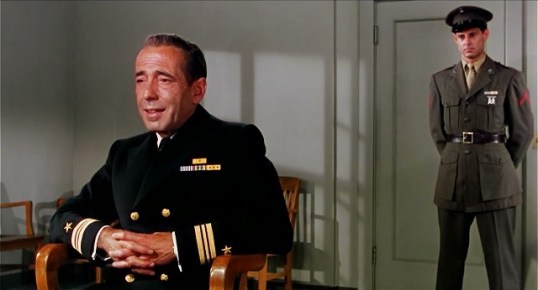
In this scene, Captain Queeg (Humphrey Bogart) is cross-examined by Barney Greenwald (Jose Ferrer).  The court martial concerns whether or not an officer under Queeg’s command was justified in taking over the ship from Queeg.  Greenwald, tasked with defending the head mutineer, knows that the only way to win the case is to expose Queeg himself as a paranoid and unstable officer.  Greenwald does his job but he’s not happy about it.

This scene, directed by Edward Dmytryk, features both Bogart and Ferrer at their absolute best.

4 Shots From 4 Films: Special Edward Dmytryk Edition


4 Or More Shots From 4 Or More Films is just what it says it is, 4 shots from 4 of our favorite films. As opposed to the reviews and recaps that we usually post, 4 Shots From 4 Films lets the visuals do the talking!

117 years ago, on this date in Columbia, Canada, director Edward Dmytryk was born.  Today, we honor this underrated filmmaker with….

4 Shots From 4 Edward Dmytryk Films

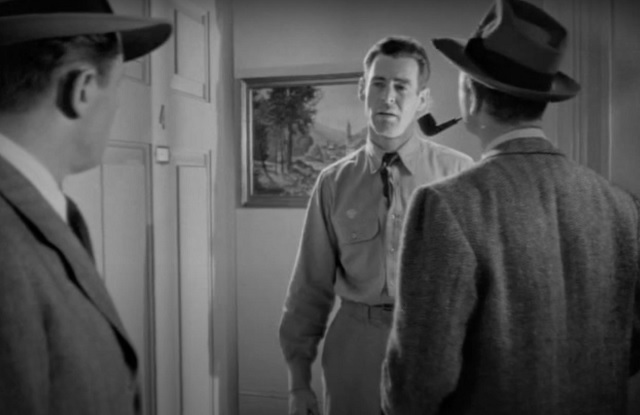
Murder, My Sweet (1944, dir by Edward Dmytryk, DP: Harry J. Wild)

Crossfire (1947, dir by Edward Dmytryk, DP: J. Roy Hunt)

The Caine Mutiny (1954, dir by Edward Dmytryk, DP: Franz Planer)

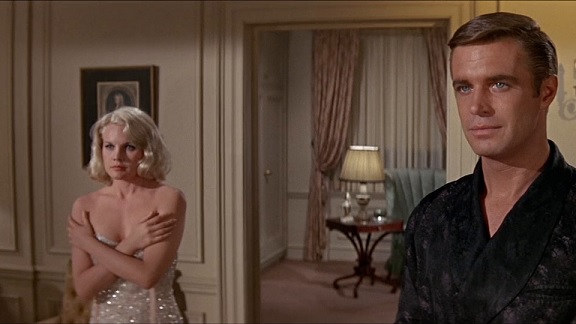
The Carpetbaggers (1964, dir by Edward Dmytryk, DP: Joseph MacDonald)

Late Night Retro Television Review: Hunter 1.19 “Sniper”


Welcome to Late Night Retro Television Reviews, a feature where we review some of our favorite and least favorite shows of the past!  On Thursdays, I will be reviewing Hunter, which aired on NBC from 1984 to 1991.  The entire show is currently streaming on Tubi and several other services!

This week, the first season of Hunter comes to a close.

Episode 1.19 “Sniper”

(Dir by James Whitmore, Jr., originally aired on May 18th, 1985)

Someone is using a sniper rifle to target blonde women who visit a national park. Hunter suspects that the sniper might have Army training, and he focuses his investigation on a nearby military base. Hunter’s instincts are correct. Early on, we’re shown that the sniper is Sgt. Dennis Balzer (Jack Starrett, the actor/director who also played the abusive cop who fell out of the helicopter in First Blood). Years ago, Balzer’s heart was broken by a blonde woman, and now he’s seeking revenge by killing every blonde he sees. It’s always odd to me how Hunter, a show about a detective, never seemed to try to generate any suspense as to who was going to turn out to be guilty. Instead, we usually learn the killer’s identity before Hunter does.

Meanwhile, Hunter also has to deal with something even scarier than a sniper: he’s being audited by the IRS. James Cromwell appears as the IRS agent, who eventually ends up auditing the entire department.

Since its very first episode, Hunter has been a violent show. Both Hunter and McCall have been portrayed as shoot-first, ask-questions-later types of cops, though Hunter does seem to be a much better shot than McCall. This episode was even more violent than usual, and the mix of innocent people getting shot in the head with comedic scenes about tax evasion sometimes felt a bit awkward. That said, who doesn’t hate the IRS? (Anyone who enjoys paying taxes is a commie sap.) I was glad to see that Hunter had the same attitude.

This episode brings the first season of Hunter to a close. Looking over the first season, it can be argued that more than a few of the episodes featured stories that felt a bit generic. The idea of Hunter being the son of a mobster was abandoned early on. And while the violence was undoubtedly part of the show’s appeal, it still feels strange that Hunter can kill so many people every week without getting into any trouble over it. What made this season work was the chemistry between Fred Dryer and Stepfanie Kramer. Fred Dryer may not have been the greatest actor in the world, but he had an engaging smile, he could deliver a one-liner, and the showrunners obviously understood that the sight of the very tall Dryer crammed into a broken-down car would more than make up for what he may have lacked in range. As for Stepfanie Kramer, the first season showed that she could hold her own in the action scenes, and her banter with Dryer was usually the highlight of each episode. That was certainly the case here.

Next week, we start the second season!

Retro Television Review: Warden Duffy Of San Quentin 1.1 “The Hostages”


Welcome to Retro Television Reviews, a feature where we review some of our favorite and least favorite shows of the past!  This Thursday, I will be reviewing Warden Duffy of San Quinten, which aired its only episode on NBC in 1952.  The show can be found on YouTube!

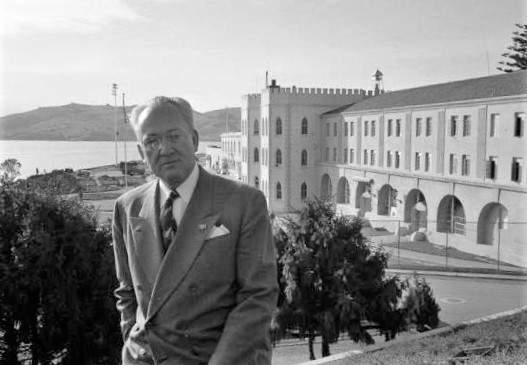
The real-life Warden Clinton Duffy

Episode 1.1 “The Hostages”

(Dir by Walter Doniger, originally aired in 1952)

“Welcome to my hometown,” Warden Clinton Duffy (Paul Kelly) narrates over a montage of still shots of California’s San Quentin Prison. Duffy explains that San Quentin has its own fire department, its own athletic field, its own hospital, and even its own jail, reserved for the prisoners who are too dangerous to be allowed in the general population.

Shot in a noir style, this episode follows one prisoner (John Ireland) who masterminds an attempted jailbreak. He gets his brother (Charles Nolte) to smuggle in a gun. He and his accomplice (Lawrence Tierney) take two members of the prison board hostage and kill a guard. The dapper Clinton Duffy, well known as an advocate for prison reform, tries to negotiate. Negotiations don’t go well, and the episode ends with Tierney, Ireland, and their accomplices dead on the floor of their cell.

Warden Clinton Duffy was a real person. He served as San Quentin’s warden from 1940 to 1952 and had a reputation as a liberal-minded reformer who tried to treat the prisoners with as much humanity as possible. Duffy wrote several books about his time as warden and was also known as an opponent of capital punishment. This show presents him as someone who wants the best for his prisoners but is still willing to give the order to shoot if that’s what is needed to protect innocent lives. Indeed, one gets the feeling that the prisoners’ biggest mistake was taking hostages. If the hostages’ lives hadn’t been in danger, Duffy probably would have been more willing to talk.

Interestingly, Paul Kelly, the actor who plays Duffy, was himself a former San Quentin inmate. Kelly was convicted of manslaughter in 1927 after he beat another actor, Ray Raymond, to death. (Kelly was having an affair with Raymond’s wife and claimed that he had no idea how hard he had hit Raymond when the other actor confronted him.) Kelly served 25 months in San Quentin and, when he was released, was told that while on parole he could take acting jobs, but only if they paid no more than $30 a week. Amazingly, his manslaughter conviction didn’t seem to slow his career at all. Nowadays, an unconfirmed rumor of cannibalism is enough to force a once-prominent actor to start working with Uwe Boll.

As for the pilot, it wasn’t picked up for a series, and it’s easy to see why. The pilot has a noir look that I liked, but the action moved slowly. Stories about hostage negotiations often seem dramatically inert, if only because they always seem to go through the exact same beats. Dog Day Afternoon is the exception to the rule. That said, director Walter Doniger obviously liked the idea of putting Duffy’s story on screen, because he later directed the 1954 film Duffy of San Quentin. In the film, Warden Duffy was again played by Paul Kelly.

Paul Kelly died of a heart attack in 1956, at the age of 57. Clinton Duffy retired as warden of San Quentin in 1952, the same year this pilot aired. He died in 1982.


Join #TubiThursday For Dance or Die!


Hi, everyone!  Tonight, on Mastodon, I will be hosting the #TubiThursday watch party!  Join us for 1987’s Dance or Die!

You can find the movie on Tubi and you can join us on Mastodon at 9 pm central time!  (That’s 10 pm for you folks on the East Coast.)  We will be using #TubiThursday hashtag!  See you then!

Late Night Retro Television Review: 1st & Ten 5.1 “The Book of Zagreb”


Welcome to Late Night Retro Television Reviews, a feature where we review some of our favorite and least favorite shows of the past! On Wednesdays, I will be reviewing 1st and Ten, which aired in syndication from 1984 to 1991. The entire series is streaming on Tubi.

This week, we start season 5!

Episode 5.1 “The Book of Zagreb”

(Dir by Stan Lathan, originally aired on October 11th, 1989)

It’s time for another season of football with the California Bulls.

In the wake of the Bulls finally winning the championship, Zagreb has written a tell-all book about his teammates. He spills that Bubba cheats on his wife, that Dr. Death smokes weed, and that, during the previous season, one member of the Bulls was killed by a bull. Solid continuity from 1st & Ten. About time.

T.D. Parker (O.J. Simpson) is described as a chronic womanizer who collects the underwear of secretaries. T.D. is so furious he could kill someone. Before he does, though, he has to keep the Bulls functioning. Help arrives in the form of a new general manager sent by the Dodds Corporation: Kristy Fulbright (Shannon Tweed). Kristy wants the Bulls to become the first team to win two championships in a row. Coach Denardo agrees.

A few familiar faces are missing from the locker room. Mad Dog has been traded to New York. Former quarterback Doug Clayton is mentioned as having been murdered after the big game. (Yikes. What exactly did he say to T.D.?) Dr. Death is now working as a professional wrestler, but he walks away from the ring the moment he’s told to take a fall.

If this review feels a little random, that’s because the episode is too. As usual with 1st & Ten, there isn’t much of a real plot. Everyone is furious at Zagreb, then they get over it. Dr. Death is done with football, then he gets over it. Bubba is terrified his wife will leave him, then she doesn’t. The show is about football; the characters barely have lives off the field.

The best things here are John Kassir’s handful of funny lines as Zagreb and Shannon Tweed’s red dress, which is to die for. We’ll see how the rest of the season plays out.