The TSL Horror Grindhouse: The Phantom of the Opera (dir by Dwight H. Little)


1989’s The Phantom of the Opera opens in what was then-modern day Manhattan.

Christine Day (Jill Schoelen) is a young opera singer who is searching for the perfect audition piece.  Her friend, Meg (Molly Shannon), suggests that she use an obscure opera piece called Don Juan Triumphant.  The opera was written by Erik Destler, a mysterious composer who was accused of murdering several opera singers in the 1800s.  That morbid fact only makes Christine all the more convinced that she should use the piece in her audition and you know what?  I would probably feel the same way.  If nothing else, it would certainly appeal to my subversive side.

Even after Christine imagines seeing blood seeping off the pages of the opera, she remains committed to auditioning with it.  Unfortunately, at the audition, a sandbag falls on her head.  She’s knocked unconscious and, when she wakes up, she finds herself in 1885 London.  She’s an understudy for a diva named La Carlotta (Sharon Lawrence).  Carlotta has skill and technique but her singing lacks emotion.  She hits each note perfectly but she brings no deeper meaning to her performances.  Christine may lack Carlotta’s polish but she sings with emotion.  For that reason, Carlotta is jealous of Christine.  Meanwhile, Erik Destler (Robert Englund), who lives in the sewers of London’s opera house and who wears a mask over his disfigured face, feels that Christine is the only one who can do his work justice and he’s willing to go to any length to make sure that she’s the one who performs on stage.

At the time he made The Phantom of the Opera, Robert Englund was still regularly playing Freddy Krueger.  The film’s version of Erik Destler does owe a bit to Krueger.  Erik is as ruthless as Freddy, he’s good with a quip, he’s just as willing to kill, and, needless to say, he also has a face that will haunt your nightmares.  That said, Erik is also a creative artist, which is something that Freddy never was.  If Freddy was motivated by revenge, Erik is motivated by a desire to see his work come to life the way that he’s always imagined it.  Erik murders to help Christine (regardless of whether or not Chrsitine actually wants the help) whereas Freddy killed because he enjoyed it.  Englund gives a good performance as Erik, occasionally playing the role with the type of broadness that is to expected from a B-horror film but also still offering hints of the artist that Erik once was.  Englund is well-matched with Jill Schoelen, who brings a likable energy to Christine.

Produced by Menahem Golan and Harry Alan Towers, The Phantom of the Opera is an entertaining B-movie, one that is obviously not meant to be taken too seriously.  Director Dwight H. Little keeps the action moving at a steady pace, the sets and the costumes are to die for, the kills are unapologetically bloody, and the film even manages to put an interesting twist on the whole “it was all dream!” thing.  The Phantom of the Opera is an enjoyably macabre showcase for two of the best horror performers of the 80s and 90s, Jill Schoelen and Robert Englund.


The Films of Dario Argento: Phantom Of The Opera


Dario Argento spent years trying to bring his version of The Phantom of the Opera to life.

Argento has said that he’s always been fascinated by the story of the mysterious and deformed man living underneath the Paris Opera. He has described watching Arthur Lubin’s 1943 version of the tale as one of the formative events of his childhood. In the ’70s, when he was at the height of his popularity, Argento sought to film his own version of the story in Moscow. When that didn’t work out, Argento put his plans for the Phantom aside. It wasn’t until he was filming Trauma and caught a television airing of the 1925 Phantom of the Opera that Argento returned to the project. Argento’s version of The Phantom of the Opera was released in 1998 and was dismissed by most critics. Even today, it has a reputation for being Argento’s worst film. It’s also not an easy one to see. Whereas most of Argento’s films are always streaming somewhere, The Phantom of the Opera usually is not.

Argento’s Phantom of the Opera opens in Paris in the 19th century. A baby is placed in a basket and, much like Moses, is set adrift in a river. A group of empathetic rats save the baby. The baby grows up to be the Phantom of the Opera (Julian Sands), a classically handsome man who lives in the sewers and protects the rats from anyone who might try to harm them. (Just as rats are killed if they leave the sewers, humans are killed if they enter them.) After the Phantom hears Christine Daaé (Asia Argento) singing alone on the stage of the Paris Opera, he approaches her in the empty theater and tells her that her singing has brought light to his heart. The Phantom and Christine develop a telepathic bond, and she becomes the only person whom he allows to enter the sewers and live. Sometimes Christine loves the Phantom and sometimes she doesn’t. Sometimes the Phantom is a tragically romantic figure and sometimes he’s just a black-clad figure who bites people’s tongues out of their mouths. The Phantom becomes obsessed with Christine, and Christine becomes just as obsessed with the Phantom. Meanwhile, Christine’s other suitor—the aristocratic Raoul (Andrea Di Stefano)—smokes opium, hallucinates that Christine has turned into a prostitute, and languidly watches as two men jump into a pool and fight over the merits of Rimbaud. Painter Edgar Degas makes a cameo appearance but manages to avoid the Phantom’s wrath.

As I mentioned earlier, The Phantom of the Opera is not one of Argento’s more highly regarded films. It’s a slow-paced film, one in which the action often seems to go off on strange tangents that don’t really pay off in the long run. (The opium den brings to mind the deliberately ugly orgy scenes that Tinto Brass directed for Caligula, just without the subversive snap.) Argento attempts to portray the Phantom as both an achingly romantic figure and the type of sociopath who brutally kills anyone who enters the sewer. If he were only killing the rat catchers, the Phantom’s actions could be understood. But as soon as he kills two lovers who just happened to be looking for some privacy, it becomes impossible to sympathize with him. Argento’s attempt to portray The Phantom of the Opera as a story of romance sits uncomfortably with scenes in which the Phantom forces himself on Christine.

That said, I actually like Julian Sands’s performance as the Phantom. Argento’s Phantom is not disfigured in any way and, while that may go against the spirit of the story, at least it means Julian Sands didn’t have to wear a mask while filming his role. Sands exudes a cool, sexy danger, and that makes him just right for Argento’s version of the character. Asia Argento plays Christine as someone who only looks innocent, and it does bring an interesting subtext to the story. Indeed, if not for the prologue featuring the rats saving the Phantom as a baby, one could interpret the Phantom as a manifestation of Christine’s own psychosis. As for the rats, they are yet another example of Argento suggesting that animals have special telepathic powers. For all the criticism Argento has taken for the mystical animals he has included in his later films, it appears to be an idea Argento really likes. Personally, I think there’s a quirky charm to it, but I seem to be in the minority.

I can defend elements of The Phantom of the Opera, but I can’t really defend the film as a whole. It’s a bit too cluttered in its storytelling, and the mix of grand romance and brutal violence doesn’t really work. If this film had been made earlier in Argento’s career, perhaps he could have recreated the grandeur of Paris, but at a time when his films were no longer automatic box-office hits and when the Italian film industry itself was struggling, The Phantom of the Opera often looks cheap and unconvincing. Every director has the occasional misfire. Dario Argento has The Phantom of the Opera.

The (Reviewed) Films of Dario Argento:

  1. The Bird With The Crystal Plumage
  2. Cat O’Nine Tales
  3. Four Flies on Grey Velvet
  4. Deep Red
  5. Suspiria
  6. Inferno
  7. Tenebrae
  8. Phenomena
  9. Opera
  10. Two Evil Eyes
  11. Trauma
  12. The Stendhal Syndrome
  13. Dracula 3D (Reviewed by Brad Crain)

Horror On The Lens: The Phantom Of The Opera (dir by Rupert Julian)


Hi there and welcome to October!  This is our favorite time of the year here at the Shattered Lens because October is our annual horrorthon!  For the past several years (seriously, we’ve been doing this for a while), we have celebrated every October by reviewing and showing some of our favorite horror movies, shows, books, and music.  That’s a tradition that I’m looking forward to helping to continue this year!

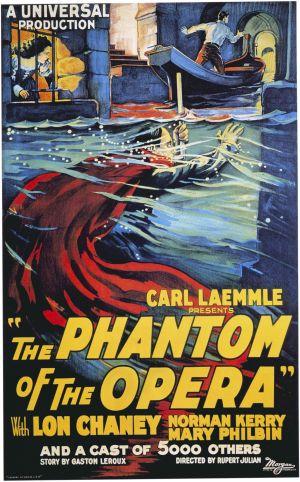
First released in 1925, The Phantom of the Opera is today best known for both Lon Chaney’s theatrical but empathetic performance as the Phantom and the iconic scene where Mary Philbin unmasks him. However, the film is also a perfect example of early screen spectacle. The Phantom of the Opera was released during that period of time, between Birth of the Nation and the introduction of sound, when audiences expected films to provide a visual feast and Phantom of the Opera certainly accomplishes that. Indeed, after watching this film and reading Gaston Leroux’s original novel, it’s obvious that the musical was inspired more by the opulence of this film than by the book.

This film is also historically significant in that it was one of the first films to be massively reworked as the result of a poor test screening. The film’s ending was originally faithful to the end of the novel. However, audiences demanded something a little more dramatic and that’s what they got.

4 Shots From 4 Films: Special Horrorthon Preview


4 Or More Shots From 4 Or More Films is just what it says it is, 4 shots from 4 of our favorite films. As opposed to the reviews and recaps that we usually post, 4 Shots From 4 Films lets the visuals do the talking!

With October approaching, it will soon be time for our annual Horrorthon here at the Shattered Lens.  We’ve been working hard getting things ready!  Here are 4 shots from 4 of the many films that we will be reviewing this October.

4 Shots From 4 Horror Films

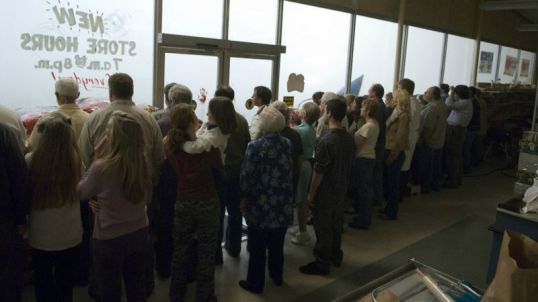
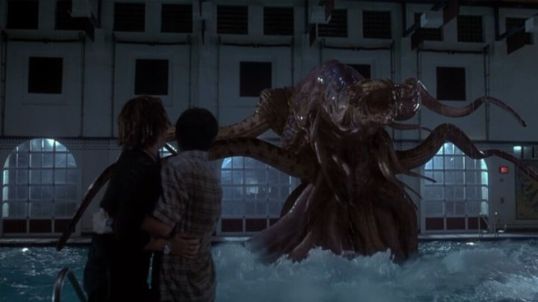
The Mist (2007, dir. by Frank Darabont)

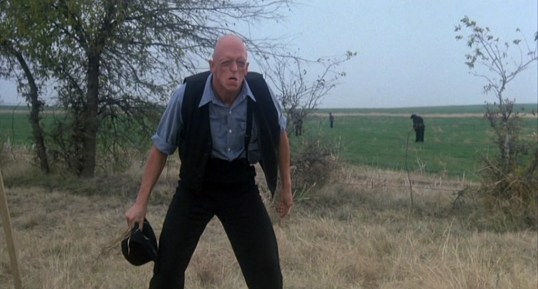
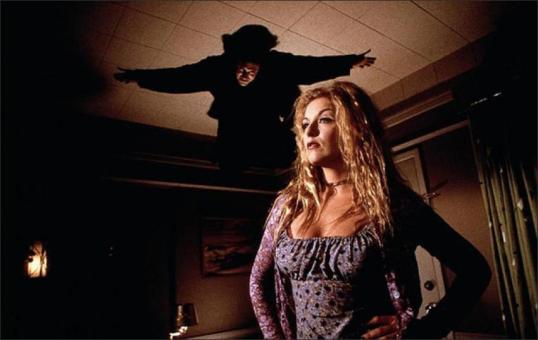
Deadly Blessing (1981, dir by Wes Craven)

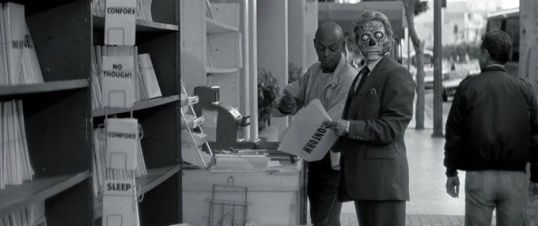
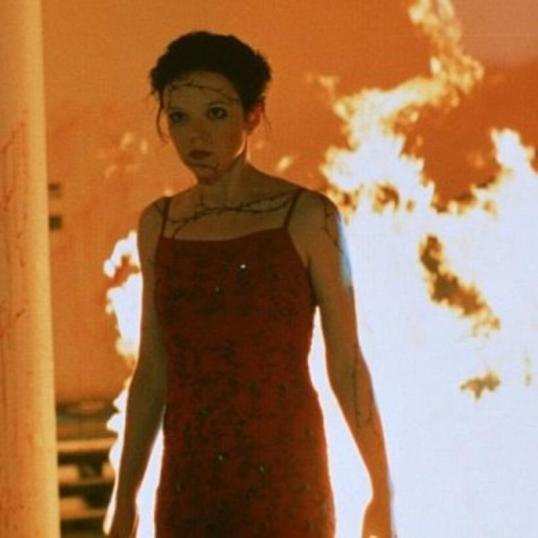
They Live (1988, dir by John Carpenter)

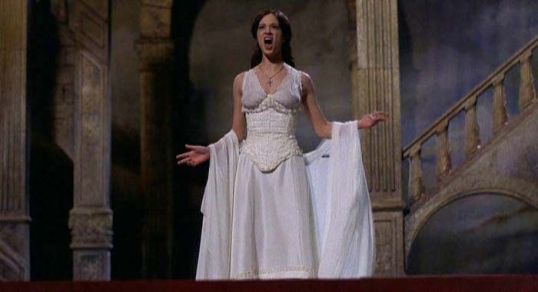
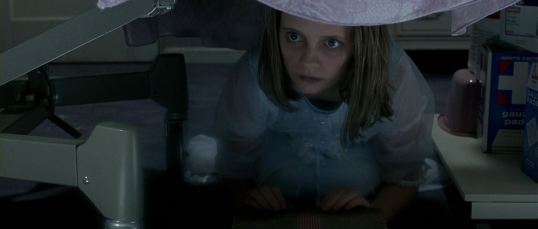
The Phantom of the Opera (1998, dir by Dario Argento)

4 Shots From Horror History: The 1920s Part Two


This October, I’m going to be doing something a little bit different with my contribution to 4 Shots From 4 Films.  I’m going to be taking a little chronological tour of the history of horror cinema, moving from decade to decade.

Today, we take a look at the latter half of the 1920s.

4 Shots From 4 Horror Films

The Phantom of the Opera (1925, dir by Rupert Julian)

The Phantom of the Opera (1925, dir by Rupert Julian)

Faust (1926, dir by F.W. Murnau)

Faust (1926, dir by F.W. Murnau)

London After Midnight (1927, dir by Tod Browning)

London After Midnight (1927, dir by Tod Browning)

The Fall of the House of Usher (1928, dir by Jean Epstein)

The Fall of the House of Usher (1928, dir by Jean Epstein)

Brad’s Musical Number of the Day – Gerard Butler sings “The Music of the Night” from THE PHANTOM OF THE OPERA (2004)!


I’m a big fan of Gerard Butler, mainly because of his macho performances in action films and thrillers. I also appreciate his ability to sing. I remember being surprised and impressed with his performance in Joel Schumacher’s version of THE PHANTOM OF THE OPERA. I really enjoy the song “The Music of the Night,” and since I reviewed one of his thrillers today (SHATTERED), I thought I’d balance it out with a video of him belting out a tune. Enjoy!

Horror On The Lens: The Phantom of the Opera (dir by Rupert Julian)


Today’s horror movie on the Shattered Lens is both a classic of silent era and one of the most influential horror films ever made.  It’s one that I previously shared in 2013, 2015, 2016, 2108, 2019, 2020, 2021, and 2022 but it’s such a classic that I feel that it is worth sharing a second (or fifth or even a sixth or perhaps an ninth) time.

First released in 1925, The Phantom of the Opera is today best known for both Lon Chaney’s theatrical but empathetic performance as the Phantom and the iconic scene where Mary Philbin unmasks him. However, the film is also a perfect example of early screen spectacle. The Phantom of the Opera was released during that period of time, between Birth of the Nation and the introduction of sound, when audiences expected films to provide a visual feast and Phantom of the Opera certainly accomplishes that. Indeed, after watching this film and reading Gaston Leroux’s original novel, it’s obvious that the musical was inspired more by the opulence of this film than by the book.

This film is also historically significant in that it was one of the first films to be massively reworked as the result of a poor test screening. The film’s ending was originally faithful to the end of the novel. However, audiences demanded something a little more dramatic and that’s what they got.

8 Shots From 8 Horror Films: 1997–1999


4 Or More Shots From 4 Or More Films is just what it says it is, 4 shots from 4 of our favorite films. As opposed to the reviews and recaps that we usually post, 4 Shots From 4 Films lets the visuals do the talking!

This October, I’m going to be doing something a little bit different with my contribution to 4 (or more) Shots From 4 (or more) Films.  I’m going to be taking a little chronological tour of the history of horror cinema, moving from decade to decade.

Today, we take a look at 1997, 1998, and 1999!

8 Shots From 8 Horror Films: 1997 — 1999

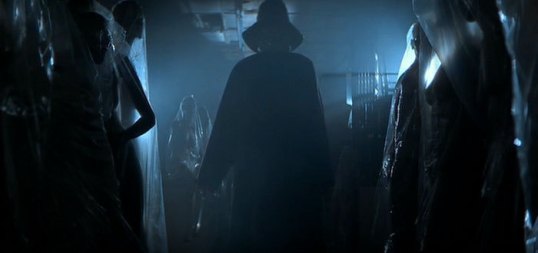
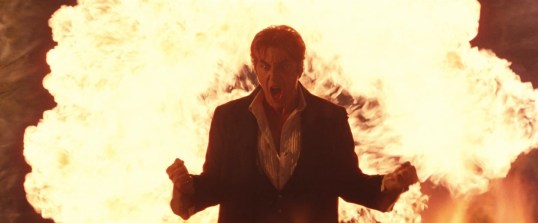
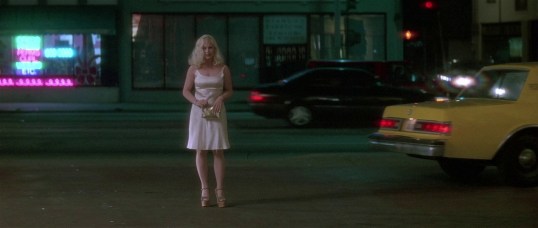
I Know What You Did Last Summer (1997, dir by Jim Gillespie, DP: Denis Crossan)


The Devil’s Advocate (1997, dir by Taylor Hackford, DP: Andrzej Bartkowiak)


Lost Highway (1997, dir by David Lynch, DP: Peter Deming)


Vampires (1998, dir by John Carpenter, DP: Gary B. Kibbe)


The Phantom of the Opera (1998, dir by Dario Argento, DP: Ronnie Taylor)


The Faculty (1998, dir by Robert Rodriguez, DP: Enrique Chediak)


The Rage: Carrie 2 (1999, dir by Katt Shea, DP: Donald M. Morgan)


The Sixth Sense (1999, dir by M. Night Shyamalan, DP: Tak Fujimoto)

Horror On The Lens: The Phantom of the Opera (dir by Rupert Julian)


Today’s horror movie on the Shattered Lens is both a classic of silent era and one of the most influential horror films ever made.  It’s one that I previously shared in 2013, 2015, 2016, 2108, 2019, 2020, and 2021 but it’s such a classic that I feel that it is worth sharing a second (or fifth or even a sixth or perhaps an eighth) time.

First released in 1925, The Phantom of the Opera is today best known for both Lon Chaney’s theatrical but empathetic performance as the Phantom and the iconic scene where Mary Philbin unmasks him. However, the film is also a perfect example of early screen spectacle. The Phantom of the Opera was released during that period of time, between Birth of the Nation and the introduction of sound, when audiences expected films to provide a visual feast and Phantom of the Opera certainly accomplishes that. Indeed, after watching this film and reading Gaston Leroux’s original novel, it’s obvious that the musical was inspired more by the opulence of this film than by the book.

This film is also historically significant in that it was one of the first films to be massively reworked as the result of a poor test screening. The film’s ending was originally faithful to the end of the novel. However, audiences demanded something a little more dramatic and that’s what they got.

Horror On The Lens: The Phantom of the Opera (dir by Rupert Julian)


Today’s horror movie on the Shattered Lens is both a classic of silent era and one of the most influential horror films ever made.  It’s one that I previously shared in 2013, 2015, 2016, 2108, 2019, and 2020 but it’s such a classic that I feel that it is worth sharing a second (or fifth or even a sixth or perhaps a seventh) time.

First released in 1925, The Phantom of the Opera is today best known for both Lon Chaney’s theatrical but empathetic performance as the Phantom and the iconic scene where Mary Philbin unmasks him. However, the film is also a perfect example of early screen spectacle. The Phantom of the Opera was released during that period of time, between Birth of the Nation and the introduction of sound, when audiences expected films to provide a visual feast and Phantom of the Opera certainly accomplishes that. Indeed, after watching this film and reading Gaston Leroux’s original novel, it’s obvious that the musical was inspired more by the opulence of this film than by the book.

This film is also historically significant in that it was one of the first films to be massively reworked as the result of a poor test screening. The film’s ending was originally faithful to the end of the novel. However, audiences demanded something a little more dramatic and that’s what they got.