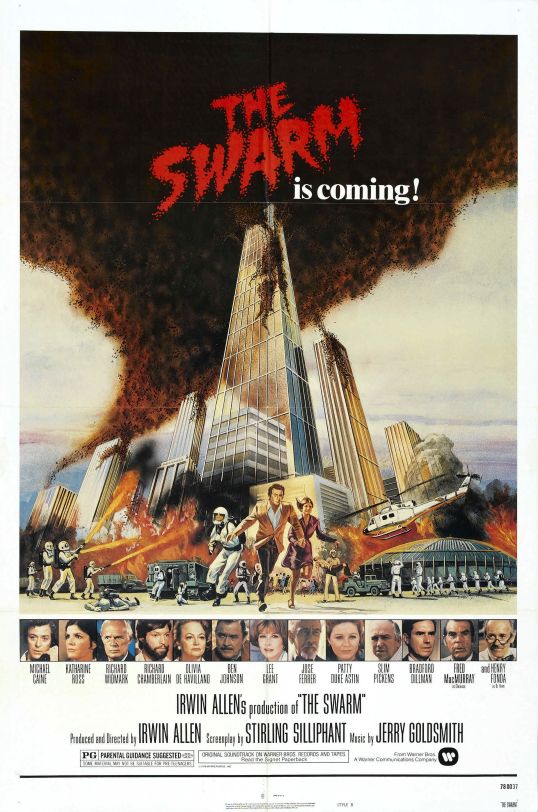
From 1978’s The Swarm.
“Bees! Bees! Millions of bees!”
“Bees?”
Richard Widmark can barely believe it either. Well, can you blame him?
From 1978’s The Swarm.
“Bees! Bees! Millions of bees!”
“Bees?”
Richard Widmark can barely believe it either. Well, can you blame him?
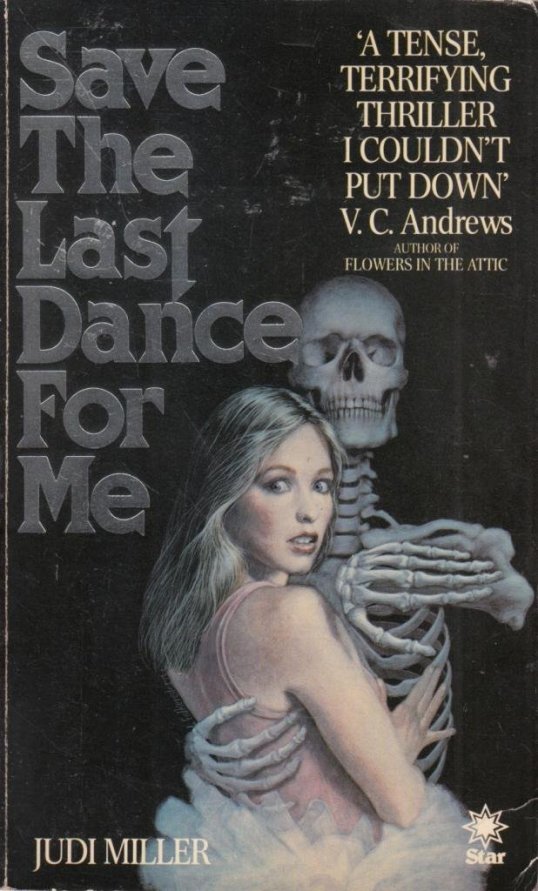
The 1981 novel, Save The Last Dance For Me, is another book that I found in my aunt’s paperback collection. I have to admit that I got really excited when I found it. This is a book that I had wanted to read ever since I came across the cover in Paperbacks From Hell.
Jennifer is blonde, beautiful, young, and ambitious. She’s a driven dancer who is totally obsessed with becoming a soloist for one of New York’s best dance companies. She’s got an older boyfriend, of course. He’s a podiatrist who hopes that Jennifer will abandon her dreams and marry him. Jennifer, however, is not so eager to settle down for a boring domestic life.
Max is a pianist who was raised by a narcissistic alcoholic who continually pressured her young son to learn ballet. Neither Max nor his mother may have had much of a career as a dancer but that hasn’t stopped him from dreaming and obsessing. Max has a basement and a bathroom that is full of ballet slippers.
Together …. THEY SOLVE CRIMES!
No, sorry. (I know, I know. I use that joke a lot but what can I say? It amuses me.) Instead, they have a drunken sexual tryst after Jennifer has an argument with her boyfriend and this leads to Jennifer not only getting locked in the basement but also being forced to eat a totally disgusting hamburger! (EEEEEK!) Max demands that Jennifer learn a terrible solo and he demands that she practice and practice it until she collapses. It turns out to all be an elaborate revenge scheme, with a hint of Phantom of the Opera tossed in. (It’s perhaps not a coincidence that Judi Miller also wrote a book called Phantom of the Soap Opera.)
There’s actually quite a bit going on in Save The Last Dance For Me. This is a very plot-heavy book. It’s full of bitchy and duplicitous characters, all of whom have their own agendas. It also turn out that Max has been killing ballerinas for years. The two detectives who are investigating the murders have to deal with a lot of pervy suspects, all of whom have their own fetishes when it comes to dancers. As someone who grew up dancing, I can tell you that, in its hyper and melodramatic way, this book gets a lot of things right.
Anyway, not surprisingly, I really loved this book. This was one of the most wonderfully trashy books that I’ve ever read, full of twists and subplots and red herrings and even a memorably overdone sex scene. Basically, imagine the most melodramatic and sordid Lifetime movie ever but in book form. In fact, I’m actually kind of surprised that Lifetime hasn’t ever made a movie out of this book. I mean, if they can turn V.C. Andrews novel into an “event,” why not Save The Last Dance For Me? Get on it, Lifetime!
This 1968 Japanese horror film opens with a scene of shocking brutality.
A group of pirates, led by a horribly scarred man wearing reflective glasses, have commandeered a ship. While the crew and the passengers beg for mercy, the pirates ruthlessly and efficiently gun them down. A newlywed (Kikko Matsuoka) is assaulted while her husband watches. Afterwards, both of them are murdered. The dead are dumped overboard and the pirates proceed to move on with their lives.
Three years later, neither the ship nor the dead have ever been recovered. The sister of the murdered newlywed, Saeko (also played by Matsuoka), has been taken in by a friendly priest (Masumi Okada). As we discover, the pirates have all returned to their day-to-day lives in the seaside village, with the only indication of their past evil being the violent flashbacks that appear whenever one of them shows up on screen. Almost all of the pirates appear to have returned to the village, everyone but their scarred leader. What has happened to him and how could a man with such an unforgettable face have simply vanished? The pirates aren’t sure but then again, does it matter? They’ve gotten away with their crime. Everyone thinks that the ship was lost at sea.
However, one day, Saeko and her boyfriend go scuba diving. As they explore the undersea world, they come across hundreds of skeleton, all chained together. That night, a ghostly ship appears out on the ocean and Saeko hears a voice calling for her. The priest counsels Saeko not to obsess over the skeletons and not to fall prey to the temptation of vengeance, but that’s far easier said than done.
Meanwhile, the pirates start to die, one-by-one….
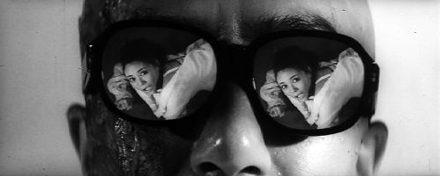
The Living Skeleton is an austere and haunting ghost story. Though the story may be a bit conventional (especially when compared to the other Japanese ghost story that I’ve reviewed this October), the film is so full of grim atmosphere and portents of ominous doom that it doesn’t matter. Playing out at its own deliberate pace, this film is an effective horror story that asks whether the sins of the past can ever be forgiven. (It turns out, not surprisingly, that they can not.) The black-and-white cinematography adds to the film’s dream-like feel. Long after the film ends, you’ll remember the images. You’ll remember the suffering reflected in the lenses of the head pirate’s glasses. You’ll remember the atmospheric shots of the lonely ocean. You’ll remember the film’s ending, with the remaining pirates watching as their former victim descends down a flight of stair. Unfortunately, you’ll probably also remember just how fake the underwater skeletons looked but even that, in its strange way, adds to the film’s effectiveness. They’re such a strange sight, those pristine, clean, and neat skeletons that you can’t help but feel that they belong in the film, just as surely as the unforgettable shot of a pirate’s face being quickly dissolved by highly corrosive acid belongs in the film.
I saw this haunting ghost story on TCM. Keep an eye out for future showings.
4 Shots From 4 Films is just what it says it is, 4 shots from 4 of our favorite films. As opposed to the reviews and recaps that we usually post, 4 Shots From 4 Films lets the visuals do the talking!
This October, we’re using 4 Shots From 4 Films to look at some of the best years that horror has to offer!
4 Shots From 4 2017 Horror Films

Get Out (2017, dir by Jordan Peele)
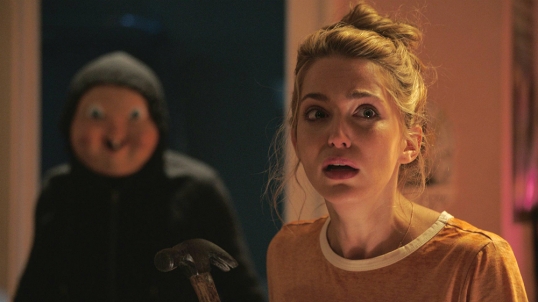
Happy Death Day (2017, dir by Christopher Landon)
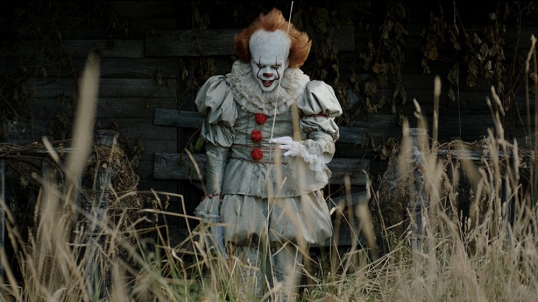
It (2017, dir by Andy Muschietti)
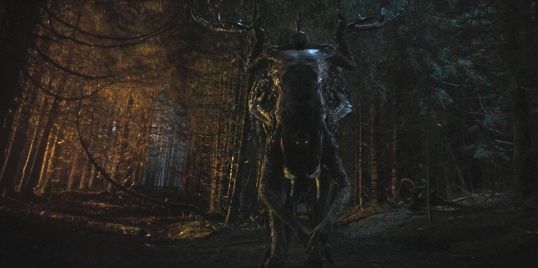
The Ritual (2017, dir by David Bruckner)
“They’re us,” a child says in Jordan Peele’s second film, Us.
And indeed, they are. Us suggests that everyone has at least one doppelganger, living underground in conditions of absolutely misery and awkwardly imitating the same lives as those above ground, just without any of the rewards that those of us above-ground take for granted. Those underground are known as the Tethered, because they’re permanently tied to those of us above ground. Of course, what’s easily overlooked is that we’red tied to them as well. Or, at least, we are until someone picks up a knife or a pair of scissors and violently severs the connection.
It’s probably not a coincidence that the film’s title — Us — can just as easily be read as U.S, as in the United States. Jordan Peele may have said that he wanted Us to be a full-on horror film, as opposed to Get Out‘s mix of comedy, horror, and social commentary, but Us definitely has its political subtext, with the Tethered meant to stand in for every marginalized group that has been pushed underground by American society. Though the film may have been inspired by an episode of The Twilight Zone, it actually has more in common with the classic British shocker, Death Line (a.k.a. Raw Meat.) There’s not a huge amount of difference between the largely mute Tethered and the pathetic cannibal in Death Line who, after growing up in the British Underground, is capable of only telling his victims to “Mind the doors.”
If nothing else, Us proves that Jordan Peele actually is a good filmmaker with a firm grasp on how to make an effective horror movie. Get Out was good but also, I think, a bit overpraised by mainstream critics who often seemed to not realize just how much, in their attempts to make sure that we understood just how much they loved and understood the movie, they sounded like Bradley Whitford bragging about how he would have voted for Obama a third time. When Us came out, a lot of viewers were waiting to see if Peele’s second film could possibly live up to all the hype surrounding its director and, for the most part, it does.
Political subtext aside, this is the all-out horror film that Peele promised, full of jump scares, disturbing imagery, and just enough humor to keep things from getting too unbearably nightmarish. (As bad as you might feel for Elisabeth Moss’s character and her family, it’s hard not to appreciate the irony of the film’s Alexa-substitute misunderstanding a command to call the police.) Interestingly enough, the Tethered are pretty much homicidal as soon as they come above ground. This isn’t a case where a tragic misunderstanding leads to bloodshed that could have been avoided. No, this is a case where the Tethered have spent decades trapped and out-of-sight and they’re pissed off about it. Just because the Tethered may be us, that doesn’t mean that they’re going to have any sympathy for us when they finally do track us down. In the style of Wes Craven’s The Hills Have Have Eyes, Us follows a perfect family as they eventually find themselves resorting to the same violence as the Tethered, in an attempt to save not only their lives but also the lifestyle that they’ve come to take for granted. The Tethred are us indeed.
The film is well-acted, with Lupita Nyong’o standing out as both the mother of an imperiled family and her doppelganger, who has spent years underground and who is one of the few Tethered to be able to speak. Of course, there’s a twist at the end of the movie and I won’t ruin it here, other than to say that it’s effectively done and will actually make you reconsider everything that you’ve just seen.
Us is another triumph from Jordan Peele. Even more importantly, it’s an undeniably effective horror film.
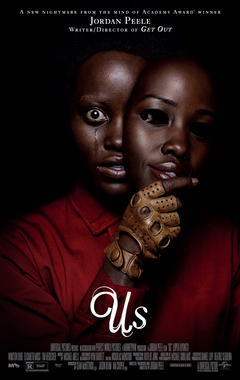
For today’s public domain horror film, I present to you 1959’s Attack of the Giant Leeches. This 60-minute film is a classic Drive-in film. While it has its slow spots, it also features an iconic performance from Yvette Vickers, who is like one of my favorites of the strong, confident, unapologetically sexy women who dominated the old B-movies. (Plus, she was only 5’3 and it’s not easy being brave when you’re having to look up at everyone. Trust me, I know.) This short little film is steamier than Louisiana in August and is full of bayou atmosphere.
I have to admit that I’m kinda freaked out by the scenes of people floating underwater in this film. And leeches … agck! Don’t even get me started on leeches. Especially giant leeches…

Utopia ended on a Halloween.
Now, I’m not talking about utopia as a concept. I imagine that there are still people out there who think that the idea of creating a utopia is a a viable one. (I’m not one of those people but that’s mostly because I think living in a perfect world would be hella dull.) Instead, I’m talking about a reality television show that premiered in September of 2014 and which was canceled one month later.
Though it’s pretty much forgotten today, Utopia was a pretty big deal in the months leading up to its first episode. It’s estimated that Fox spent 50 million dollars to develop and promote the show. Not only would Utopia air twice a week but, much in the style of Big Brother, audiences would be able to watch the show’s participants interact live online. The commercials, which were inescapable that summer, explained that 12 people with radically different philosophies would be expected to come together and form a new society on a California farm. An atheist would live with a minister! A libertarian would have to work with a socialist! An attorney would have to find common ground with an ex-con! A huntress would eat at the same table as a vegetarian! The show was an experiment that would last an entire year and it would answer the question: Can different people come together to start a brave new world?
I have to admit that I was kind of excited for the show. Utopia started just as the 16th season of Big Brother came to an end. That season was one of the worst in the history of Big Brother, largely as the result of the show’s producers putting the insufferable Frankie Grande in the House and then trying to rig the show in his favor. After a terrible season of Big Brother, I was actually had hope that maybe Utopia would be everything that Big Brother had ceased being.

Of course, I was wrong. From the first episode of Utopia, it became obvious that we would never learn whether people could come together to start a brave new world because, for the most part, no one on the show was interested in doing that. There was a lot of drinking, of course. There was also an entire episode devoted to one of the Utopians, a pastor, worrying that he would lust in his heart for the female Utopians unless they started wearing more clothes. For two episodes, a redneck named Red announced that he wanted to start his own society in the woods but eventually he changed his mind. The Utopians lived on a farm but only doomsday prepper Bella seemed to have any farming experience and, as quickly became obvious in her case, having experience doesn’t necessarily mean that you know what you’re doing.
It was a weird show. I’m assuming that Fox thought that there would be instant conflict if they put a libertarian and a socialist together but, for the most part, no one on the show ever discussed their differing philosophies. In fact, it was hard to see that any of them had any philosophy as all. Hex was regularly described as being a “huntress,” despite the fact that we never saw her hunt. Rob was described as being a libertarian but we never actually saw him discuss what that meant and he acted like just as much of a petty authoritarian as the other members of the cast. The show tried to create the appearance of conflict but, like most Americans outside of Twitter, the cast dealt with their differences by not really discussing them. So, as a result, we ended up with entire episodes devoted to doomsday prepper Bella getting upset because veterinary assistant Bri wanted to have some say in how the farm animals were fed.
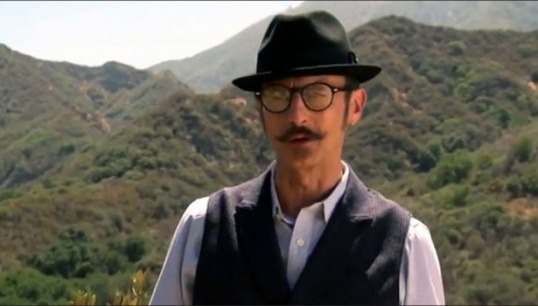
The one thing that kept all of this from being unbearable dull was that the show’s perpetually optimistic host, Dan Piraro, described every minor event in breathless detail. When one of the Utopians got too drunk and acted like an ass, he was put on a trial. The end result of the trial? Everyone asked him to please not get drunk and act like an ass again. “And so the Utopians have created a legal system!” Piraro exclaimed.
As the show progressed, the Utopians started to get bored. Some of them voluntarily left Utopia, largely because they just wanted to find something better to do with their time. After the show’s producers tried to turn attorney Mike Quinn into the star of the show and centered a few episodes around his relationship with “polyamorous Dedeker,” he abruptly left. (“And so Mike leaves Utopia….”) Whenever an old Utopian left, two prospective new ones would be brought in and would explain why they should be selected to live in Utopia but the new Utopians soon proved themselves to be just as boring as the old ones. The Utopians attempted to raise money for food by opening up their farm to the general public. Huntress Hex gave hunting lessons and revealed that she wasn’t really sure how to use a bow and arrow. One of the new arrivals attempted to create a website for the farm, just to have the site besieged by online trolls. Ratings crashed and the show soon went from airing twice a week to only airing on Fridays.
And yet, the worse the show got, the more fascinating it became. Utopia offered audiences the opportunity to watch a month-long train wreck as it unfolded. It was so bad that you couldn’t look away and each attempt by Fox to somehow spice up the show only made it more of a disaster. I would watch each episode just to see how much more pointless the show could become.

The final episode aired on Halloween and it featured the host wearing a cape and, if I remember correctly, plastic fangs at one point. By this point, Fox had changed the show’s concept. Now, the viewers would vote each week on who they wanted to banish from Utopia. (“But I’m an atheist!” Hex wailed, “America’s going to hate me!”) Or, at least, that’s what the show’s producers said was going to happen. Instead, Utopia was canceled before America ever got a chance to vote.
Interestingly, the only people shocked by Utopia‘s cancellation were the people living on the farm. Apparently, the day after Halloween started out normally for them and for whoever might have been watching them on the live feeds. Sometime in the afternoon, the feeds abruptly went down and never came back up. From what I’ve read, the Utopians were called into a meeting and told that they were going home immediately.
Utopia has never been tried again but I fondly remember watching it. The Utopians failed to create a brave new world but they kept me amused for 12 episodes.

Previous Guilty Pleasures
Okay, so I guess you can question whether or not this should be considered an official video.
But it’s close enough, in my opinion! This video features footage of Crud performing their song Reality at Detroit’s Theater of the Bizarre. I’ve never been to The Theater of the Bizarre or to Detroit, for that matter. But it does look like it would be a kickass place to spend Halloween.
Actually, isn’t Detroit where they burn down empty buildings on the night before Halloween?
Anyway, enjoy!
Awwww, that poor pumpkin! Well, hopefully, he’s smiling now!
This animated special originally aired on Halloween night in 1979. I would imagine that the crying pumpkin probably traumatized children across America. Hopefully, all the kids were out trick or treating when this aired. Myself, I remember that when I was a kid, I would help my mom carve a pumpkin every year. And then I would get so depressed when we later had to throw it out. Seriously, I would get really attached to those jack o’lanterns.
Anyway, this cartoon is before my time but I have a feeling that, if I had been around to watch it, I would have been depressed for a whole year afterwards.
Enjoy!
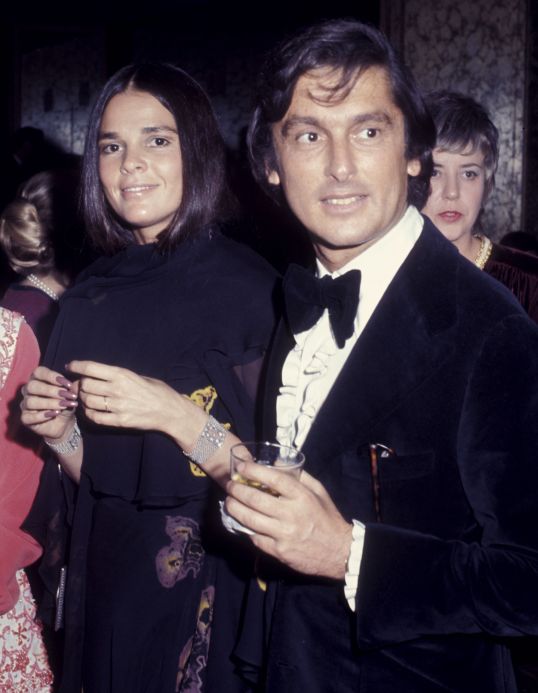
As Jeff reported earlier today, the famed Hollywood producer Robert Evans passed away this weekend. As a student of both Hollywood and history, I have to say that I always found Evans to be a rather fascinating figure. It seemed inevitable that his name would pop up whenever I read a book, an article, or even just an interview concerning the films of the 60s, 70s, and 80s. Robert Evans was nice enough to follow me on twitter and we even exchanged tweets on occasion.
As a producer, Robert Evans is probably more associated with gangster movies like The Godfather and The Cotton Club than horror films. But Evans was involved in a few “scary” and horror-adjacent films, both as an actor and a producer. So, tonight’s edition of Lisa Marie’s Favorite Grindhouse Trailers is dedicated to Robert Evans.
As an actor, Evans began his career by playing Irving Thalberg in this biopic of Lon Chaney, Sr. Evans was specifically chosen for the role by Thalberg’s widow, Norma Shearer. Not surprisingly, the trailer below concentrates on James Cagney’s performance as legendary horror star, Lon Chaney, Sr.
2. The Fiend Who Walked The West (1958)
One of Evans’s rare starring roles was in this western-horror hybrid. Yes, that’s Robert Evans as the “kooky killer.”
3. Rosemary’s Baby (1968)
As head of production at Paramount, Evans was responsible for greenlighting this classic horror film, starring Mia Farrow. Reportedly, Evans arranged for his friend, Jack Nicholson, to screen test for the role of Rosemary’s husband.
4. Marathon Man (1976)
Evans produced this film. Technically, Marathon Man was a thriller/spy movie. But the scenes of Dustin Hoffman in the dentist chair definitely qualify as horror.
5. Sliver (1993)
After spending the 80s financially bereft and an almost forgotten figure, Evans made a comeback by producing this incredibly silly “erotic” thriller.
6. Jade (1995)
Sliver did well enough at the box office that Evans followed it up with another, similarly silly thriller.
Of course, while it’s tempting to laugh at films like Jade and Sliver, it should be remembered that Evans was also involved with some of the best and most important films of all time. Next time you watch The Godfather, be sure to say a little thank you to Robert Evans.
R.I.P.

