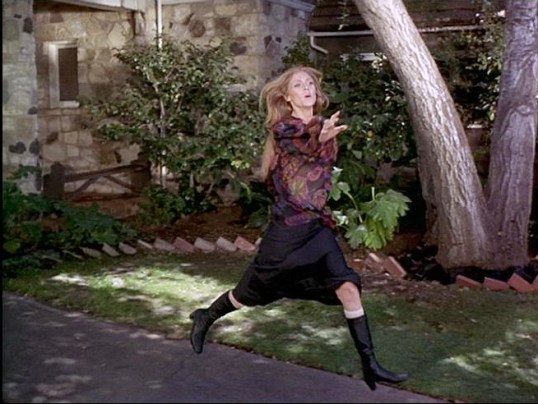
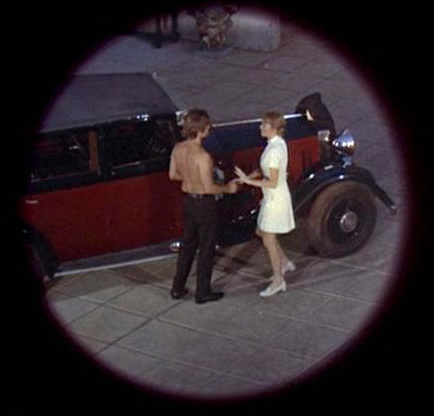
TV Review: Night Gallery 1.6 “They’re Tearing Down Tim Riley’s Bar/The Last Laurel)


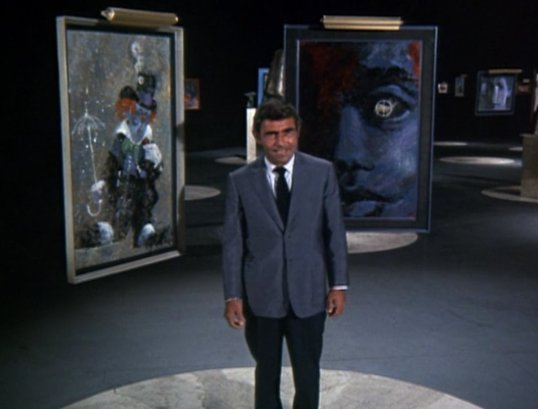
The first season of Night Gallery came to a conclusion on January 20th, 1971.  Though the first season was undoubtedly uneven, it did end on a high point.  The first segment in the 6th episode, They’re Tearing Down Tim Riley’s Bar, is widely considered to be the best episode of Night Gallery and one of Rod Serling’s best teleplays.  It also brought Night Gallery one of it’s few Emmy nominations when it was nominated for Outstanding Single Program of the year.  (It lost to The Andersonville Trial, a theatrical adaptation that was produced for PBS.)
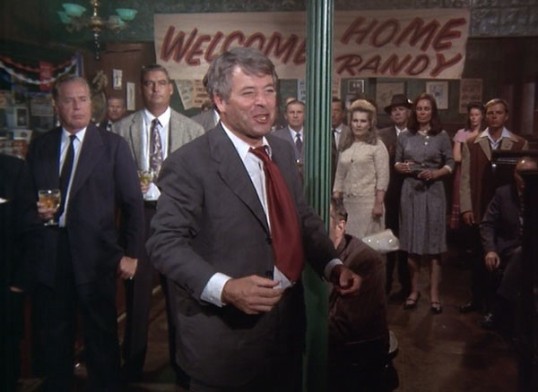
They’re Tearing Down Tim Riley’s Bar (dir by Don Taylor, written by Rod Serling)

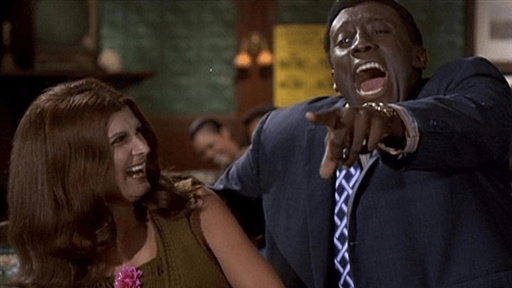
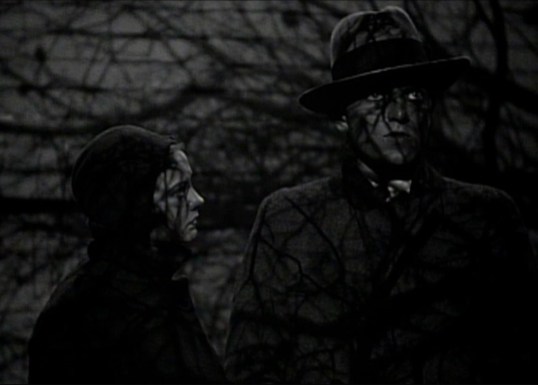
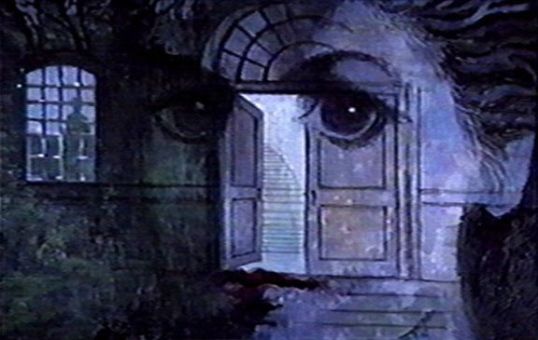
They’re Tearing Down Tim Riley’s Bar tells the story of Randy Lane (William Windom).  In 1945, Sgt. Randy Lane returned home from serving in World War II, a war hero who had a wonderful future ahead of him.  He had just gotten married.  He had just gotten a good job at an up-and-coming company called Pritzker Plastics.  When he came home, the first place he went was Tim Riley’s Bar, where his father and the other bar patrons toasted him and told him to look forward to the future.

Twenty-five years later, the middle-aged Randy Lane is looking at his life and asking, “Is this as good as it gets?”  He’s now a sales director at Pritzker Plastics but his boss (John Randolph) doesn’t appreciate him, his assistant (Bert Convy) is plotting to steal his job, and the only person who seems to care about him is his sympathetic secretary (Diane Baker).  Randy’s wife died in 1952, while Randy was out of a sales call.  Randy now lives alone.  Even his neighborhood bar — Tim Riley’s Bar — has closed and been abandoned.  With the bar schedule to be torn down, Randy wonder what happened to all of the promise and happiness of the past.

When Randy goes by the deserted bar and looks through the front window, he’s shocked to see all of his old friends and his father waving at him.  But when Randy rushes into the bar to join them, he discovers the bar is deserted.  Later, Randy is at work when suddenly, he sees Pritzker Plastics the way it was back in 1948.  Even later, when he enters his house, he finds himself standing in a hospital hallway in 1952, once again getting the news that his wife has died.

In many ways, They’re Tearing Down Tim Riley’s Bar is an atypical Night Gallery segment.  Though there are hints of the supernatural throughout the story, it’s hardly a work of horror.  Instead, it’s a rather melancholy meditation on aging, disappointment, and regret.  Is the past forever lost?  Can things ever be as good as they once were?  These are the questions that are raised in this well-directed and well-acted segment.

The Last Laurel (dir by Daryl Duke, written by Rod Serling)

Clocking in at 8 minutes, The Last Laurel is yet another segment about a bitter man (in this case, Jack Cassidy) who suspects that his wife (in the case, Martine Beswick) is cheating on him with his doctor (in this case, Martin E. Brooks) so he teaches himself a supernatural skill in order to get revenge.  In this case, it involves astral projection.  Not surprisingly, it ends with a twist that’s pretty much dependent on one of the characters doing something extremely stupid.

The Last Laurel is well-acted but predictable.  It’s not bad but, especially when compared to something like They’re Tearing Down Tim Riley’s Bar, it feels rather insubstantial.  It feels like filler.

The first season of Night Gallery came to an end with an excellent episode.  Starting tomorrow — season 2!

Previous Night Gallery Reviews:
  1. The Pilot
  2. The Dead Man/The Housekeeper
  3. Room With A View/The Little Black Bag/The Nature of the Enemy
  4. The House/Certain Shadows on the Wall
  5. Make Me Laugh/Clean Kills And Other Trophies
  6. Pamela’s Voice/Lone Survivor/The Doll

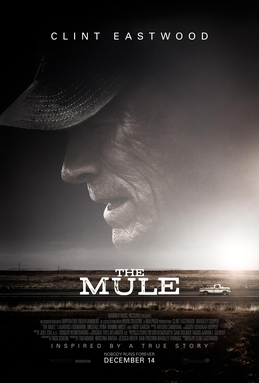
Film Review: The Mule (dir by Clint Eastwood)


In The Mule, Clint Eastwood plays Earl Stone.

In some ways, Earl is typical of the characters that Eastwood has played during the latter part of his career.  He’s grouchy.  He’s alienated almost everyone who was previously close to him.  He drives an old pickup truck and he has no idea how to text and he seems to literally snarls whenever he sees anyone under the age of 60.  He served in the Korean War and he’s not scared of guns.

In other ways, Earl is not a typical Eastwood character at all.  First off, he’s on the verge of financial ruin.  Earl may not be the first Eastwood character to not know how to responsibly handle money but he is perhaps the first one to be on the verge of homelessness as a result.  (He’s perhaps the first of Eastwood’s modern character to face real-world consequences for his flaws.)  Secondly, Earl often seems to be lost in the 21st century world.  In Gran Torino and Trouble With The Curve, Eastwood played grumpy old men who could still hold their own when it came to dealing with younger people.  But, in The Mule, Earl seems to be defeated by life.  The only thing that he really has going for him is his reputation as a horticulturist and, as the film makes clear, that’s not a skill that’s going to bring in much money.

That all changes when Earl has a chance meeting with Rico (Victor Rasuk), a friend of his granddaughter’s.  Knowing that Earl is desperate for money, Rico tells him that he could make a quick payday by transporting a package for some friends.  After giving it some thought, Earl agrees.  When Earl meets Rico’s friends, everyone is shocked at how old he is.  They’re even more shocked when Earl says that he doesn’t know how to text.  Earl is given a phone and told to answer it whenever it rings but to never use it to call anyone.  A package is put in the back of Earl’s pickup truck.  It’s suggested that Earl not look in the package.

Does Earl know that he’s transporting drugs?  At first, it’s hard to say.  While it seems obvious to us, Earl is from a different time.  Still, once Earl does eventually learn that he’s being used as a drug mule, it doesn’t seem to bother him.  If nothing else, Earl actually seems to get a kick out of being a real-life outlaw.  He continues to make his runs and he continues to make money and, perhaps most importantly, he now has a purpose in life.  In a strange way, the drug runners even become his new family.  (They call him Tata, which is Spanish for grandfather.)  Of course, they’re a family that makes it cleat that they’ll kill Earl if he’s ever late delivering the package but that doesn’t seem to matter to Earl.

Meanwhile, the DEA (represented by Laurence Fishburne, Bradley Cooper, and — somewhat inevitably — Michael Pena) are hearing reports about a new drug mule who has been nicknamed Tata.  What they don’t suspect, of course, is that Tata is a 90 year-old man who has no criminal record and who is always very careful to obey all the traffic laws.  Even when Earl is pulled over by the police, he’s such a nice old man that they let him go without bothering to really search his vehicle.  It seems like Earl’s got a perfect thing going but, unfortunately, things are never as good as they seem and eventually, the reality of Earl’s situation intrudes on his fantasy….

It’s been said that The Mule is going to be Eastwood’s final film as an actor and he gives an excellent performance as Earl.  The Mule, which feels, in many ways, like a good-natured companion piece to Gran Torino, features Eastwood at both his most vulnerable and, probably not coincidentally, his most likable and sympathetic.  In this film, Eastwood makes clear that he’s no longer the righteous Dirty Harry or the mythological Man With No Name.  Now, he’s just a man nearing the end of his life and trying to come to terms with the mistakes and the decisions of the past.  Eastwood plays Earl like a man who knows that his time is limited.  Smuggling drugs gives him a chance to feel like he’s alive again but, throughout it all, there’s still a deep sadness.  Earl can use his money to pay his bills and to fix up the local VFW hall but he still can’t buy his family’s forgiveness.  Watching the film, it’s impossible not to feel for Earl.  You’re happy that he found at least a little satisfaction with his criminal career, even though you immediately suspect that things probably aren’t going to turn out well for him.

Admittedly, there is one cringe-worthy scene in which it’s suggested that the 90 year-old Earl has had a threesome with two twenty year-olds (and one gets the feeling that the scene would not have been included if not for the fact that the film’s star was also the director).  For the most part, though, this is a thoughtful film that features a poignant performance from Eastwood and which is directed in a restrained, but empathetic manner.  If this is Eastwood’s swan song as an actor, it’s a good note to go out on.

4 Shots From 4 Films: Special Clint Eastwood Edition


Clint Eastwood in Revenge of the Creature (1955)

4 Shots From 4 Films is just what it says it is, 4 shots from 4 of our favorite films. As opposed to the reviews and recaps that we usually post, 4 Shots From 4 Films lets the visuals do the talking!

Today is Clint Eastwood’s 90th birthday!

Though Clint famously had to go to Italy to really get his film career going, he’s gone on to become an icon of American film.  While his early films were often criticized as glorifying violence and of being reactionary, his later films have — more often than not — been meditations on aging, moral ambiguity, and what a lifetime of violence does to a person’s soul.  Though Eastwood has fallen out-of-favor with a few critics as a result of the speech he gave at the 2012 Republican Convention (Film Twitter, to the shock of no one, had a particularly over-the-top reaction to it as many of them discovered, I guess for the first time, that not every artist is a Leftist), he’s a filmmaker whose legacy will be rediscovered and probably appreciated in the future.

Here are….

4 Shots From 4 Films

For A Few Dollars More (1965, dir by Sergio Leone)

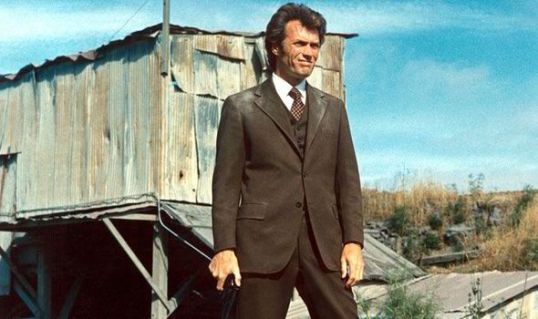
Dirty Harry (1971, dir by Don Siegel)

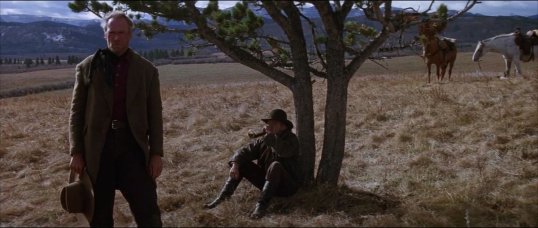
Unforgiven (1992, dir by Clint Eastwood)

Gran Torino (2008, dir by Clint Eastwood)

TV Review: Night Gallery 1.5 “Pamela’s Voice/Lone Survivor/The Doll”


The fifth episode of Night Gallery originally aired on January 13th, 1971.  It featured three stories, each one of which was introduced by Rod Serling walking through a darkened museum.

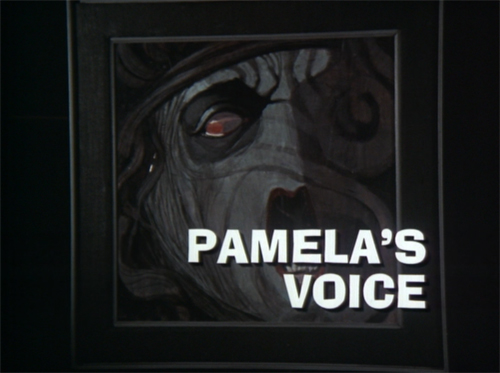
Pamela’s Voice (dir by Richard Benedict, written by Rod Serling)

Jonathan (John Astin) kills his wife, Pamela (Phyllis Diller), because he’s sick of listening to her shrill voice.  However, it turns out that not even death can stop Pamela.  While Jonathan is staring at a coffin, he starts to hear Pamela’s voice.

At first, you might think that this is going to be one of those stories where it’s going to turn out that the murderer has been driven made by his crimes and he’s imagining being taunted by his victim.  But then Pamela makes an post-death appearance herself and the story reveals it’s final twist.

For the most part, Pamela’s Voice is entertaining.  Both John Astin and Phyllis Diller give such eccentric performances that their fun to watch even if the majority of the audience will be able to guess this segment’s big twist.

Lone Survivor (dir by Gene Levitt, written by Rod Serling)

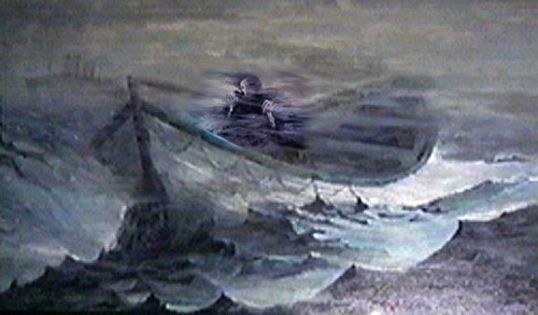
This wonderfully atmospheric story opens in 1915, with the crew of the Lusitania discovering a man (John Colicos) floating in a lifeboat.  The lifeboat is from the Titanic and the man, who claims to be a crewmember of that doomed ship, is wearing a dress, leading the ship’s doctor to assume that the man survived the sinking of the Titanic by pretending to be a woman and stealing someone else’s rightful spot in the lifeboat.

At first, his rescuers are skeptical.  If the man was indeed a survivor of the Titanic, that would mean that he had spent the past three years floating in that lifeboat?  How could the man have survived?  And, assuming that he is telling the truth about the ship that he came from, what has now brought him to the Lusitania?  Could the man possibly be a German spy?  After all, World War I has just broken out and the sea is no longer as safe as it once was….

Lone Survivor is an example of this often uneven show at its best.  It’s a genuinely creepy short film, one that ends on a frightening and rather sad note.  Lone Survivor is the tale of man trying to escape both his own guilt and the whims of fate and discovering that neither can be easily conquered.  In the main role, John Colicos gives a wonderfully intense and haunted performance.

The Doll (dir by Rudi Dorn, written by Rod Serling)

“Our painting is called The Doll,” Rod Serling says as he introduces this one, “and it’s one that you better not play with.”  Truer words were never spoken!

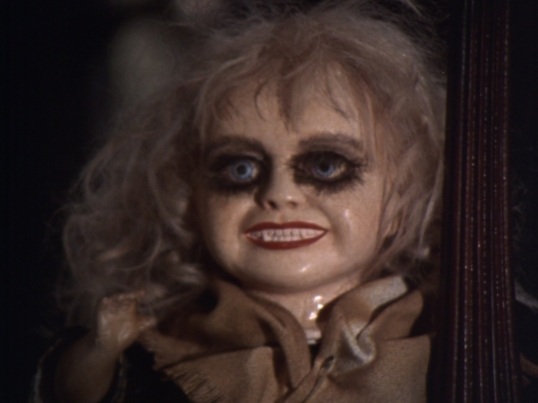
In this one, British Col. Hymber Masters (John Williams) returns home from India and discovers that his niece (Jewel Branch) has a new doll.  Someone mailed the doll to her.  Everyone assumed that Col. Masters sent the doll but he actually had nothing to do with it.  Masters is not happy to see his niece carrying around that doll and it makes sense when you consider just how ugly the doll is.  I mean, this is one creepy doll!

It turns out that the Masters was correct to be concerned because the doll was sent by Pandit Chola (Henry Silva), who holds Masters responsible for the death of his brother.  The doll has been sent to take revenge….

The Doll is another triumph, largely because the doll itself is so creepy that it looks like something that sprung straight out of a nightmare.  John Williams does a good job playing the well-meaning if somewhat stuffy colonel and Henry Silva is well-cast as the villain of the piece.  This segment deserves a lot of credit for taking a fanciful story and playing it totally straight.

The fifth episode of Night Gallery is a triumph.  After a run of uneven episodes, this episode is consistently creepy and entertaining.  For this episode, at least, Night Gallery lived up to its potential.

Previous Night Gallery Reviews:
  1. The Pilot
  2. The Dead Man/The Housekeeper
  3. Room With A View/The Little Black Bag/The Nature of the Enemy
  4. The House/Certain Shadows on the Wall
  5. Make Me Laugh/Clean Kills And Other Trophies

A Blast From The Past: Tomorrow’s Drivers


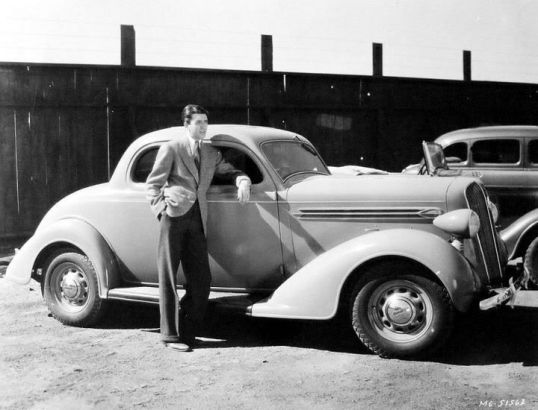
Jimmy Stewart Standing Beside One Of His Many Cars

Since this is the ten year anniversary of the Shattered Lens, I’ve been making an effort to observe notable birthdays here on the site.  I’m sad to say that somehow, I missed the birthday of Jimmy Stewart!

Jimmy Stewart was born on May 20th, 1908 in Indiana, Pennsylvania.  He’s my favorite of the Golden Age stars, not to mention the star of one of my top films of all time, It’s A Wonderful Life.  He also served bravely in World War II and I think it can be argued that he was Jimmy Stewart before he went to war and James Stewart afterwards.

Anyway, better late than never, here’s a short 1954 film that Stewart narrated, Tomorrow’s Drivers.  The film features a bunch of kindergarten kids learning how to drive.  Apparently, it was a program designed to make sure that kids grew up with good driving habits and didn’t end up becoming a bunch of jerks like their parents.  It actually seems like a good idea to me.  Stewart doesn’t appear onscreen but he provides the narration for the film and, with his tone, he strikes just the right mix of whimsy and seriousness.

Enjoy!

4 Shots From 4 Films: Special Howard Hawks Edition


4 Shots From 4 Films is just what it says it is, 4 shots from 4 of our favorite films. As opposed to the reviews and recaps that we usually post, 4 Shots From 4 Films lets the visuals do the talking!

Today is the 124th anniversary of cinematic pioneer Howard Hawks!  Whether it’s gangster film, a western, or a screwball comedy, it’s hard to think of a single cinematic genre that doesn’t owe a debt of gratitude to Howard Hawks!

Here are….

4 Shots From 4 Films

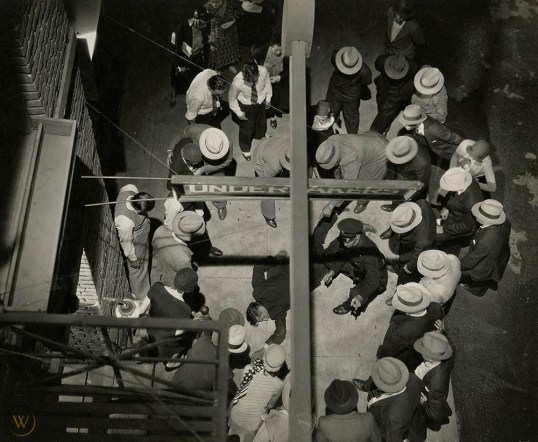
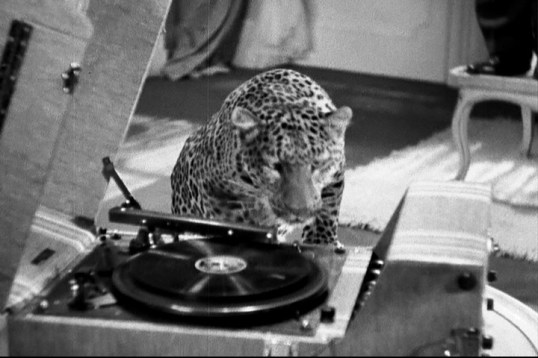
Scarface (1932, dir by Howard Hawks)

Bringing Up Baby (1938, dir by Howard Hawks)

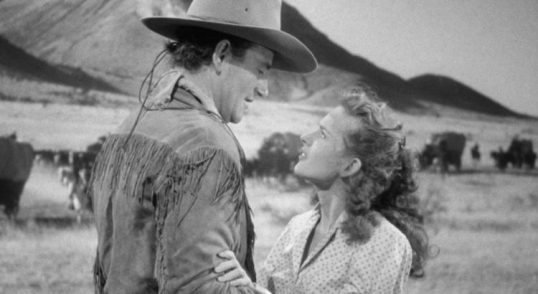
Red River (1948, dir by Howard Hawks)

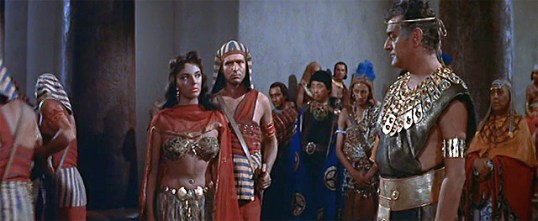
Land of the Pharaohs (1955, dir by Howard Hawks)

Night Gallery 1.4 “Make Me Laugh/Clean Kills And Other Trophies”


The fourth episode of Night Gallery originally aired on January 6th, 1971.  It was the first episode of the new year and it continued to open with Rod Serling walking through a most curious museum, inviting us to take a look at the macabre paintings on display and consider the stories behind them.

This episode featured two stories.

Make Me Laugh (dir. by Steven Spielberg, written by Rod Serling)

Jackie Slater (Godfrey Cambridge) is a comedian who can’t make anyone laugh.  He’s just been fired from his latest job and even his loyal agent (Tom Bosley) is suggesting that it might be time to throw in the proverbial towel.  While Jackie drowns his sorrows at a bar, he’s approached by a man named Catterje (Jackie Vernon).  Chatterje explains that he can cast miracles but, because he’s not very good at his job, the miracles often have unintended consequences.  “I don’t care!”  Jackie says, “I’ll take the risk!”  Jackie wants people to laugh at him.  Jackie gets his wish but it turns out that he should have listened to Chatterje’s warning.

This segment was directed by Steven Spielberg, back when he was just starting his career and he was largely working in television.  Spielberg also directed Eyes, which was a highlight of the Night Gallery pilot.  Unfortunately, his direction of Make Me Laugh is a bit less successful than his work on Eyes.  Spielberg’s direction features none of the inspired touches that made Eyes so successful.  Part of the problem may be that this story takes place in the word of comedy and comedy has never been a topic for which Spielberg has shown much affinity.

Make Me Laugh does feature a good lead performance from Godfrey Cambridge.  Otherwise, this segment is largely forgettable.

Cleans Kills And Other Trophies (dir by Walter Doniger, written by Rod Serling)

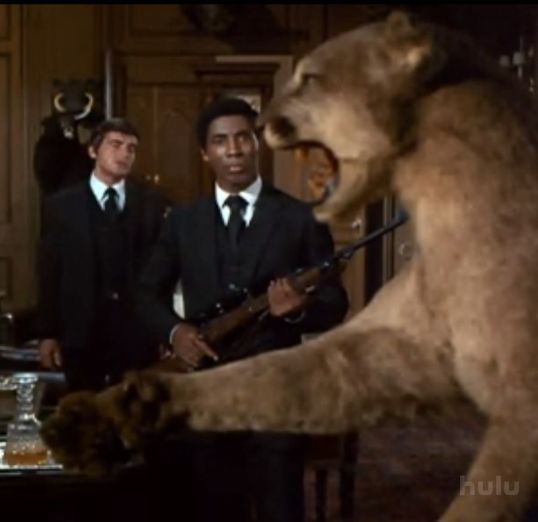
Raymond Massey plays Col. Archie Dittman, a wealthy racist who is obsessed with hunting and killing.  He even has a study full of the mounted heads of all of the animals that he’s killed.  Archie’s son, Archie, Jr. (Barry Brown), has just graduated from college and has no interest in hunting.  Col. Dittman demands that his son go on a hunt or risk being disinherited.  What the colonel fails to take into consideration is that both his bloodlust and his racism has offended his butler (Herbert Jefferson, Jr.) and that his butler has a magic-related revenge in mind.

Clean Kills and Other Trophies is hardly subtle but it does create and maintain a properly ominous atmopshere.  Raymond Massey gives a wonderfully villainous performance and it’s hard not to be amused by the fact that his son is wearing a peace signal prominently on his lapel, as if the segment’s director took one look at it and said, “What’s one thing that we can do to make the themes of this segment even more heavy-handed?”  The segment ends on a note that is so entertainingly over-the-top that it’s hard not to love it.

This episode was uneven.  Make Me Laugh does’t quite work but Cleans Kills and other Trophies is good enough to make up for the disappointing segment that precedes it.

Previous Night Gallery Reviews:
  1. The Pilot
  2. The Dead Man/The Housekeeper
  3. Room With A View/The Little Black Bag/The Nature of the Enemy
  4. The House/Certain Shadows on the Wall

4 Shots From 4 Films: Special Josef von Sternberg Edition


4 Shots From 4 Films is just what it says it is, 4 shots from 4 of our favorite films. As opposed to the reviews and recaps that we usually post, 4 Shots From 4 Films lets the visuals do the talking!

Today we celebrate the 126 anniversary of the birth of cinematic pioneer, Josef von Sternberg!  That means that it’s time for….

4 Shots From 4 Films

An American Tragedy (1931, dir by Josef von Sternberg)

The Scarlet Empress (1934, dir by Josef von Sternberg)

The Devil is A Woman (1935, dir by Josef von Sternberg)

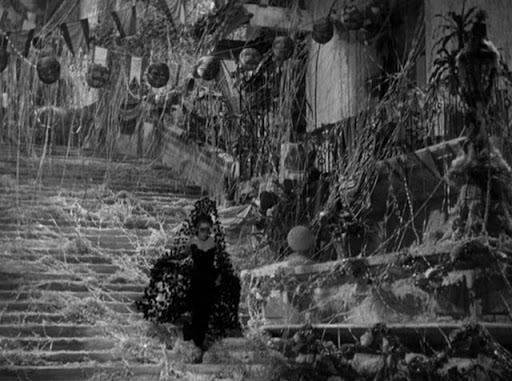
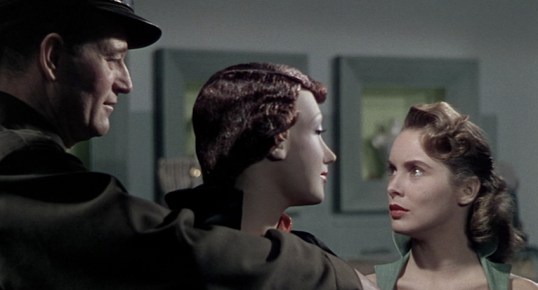
Jet Pilot (1957, dir by Josef von Sternberg)

TV Review: Night Gallery 1.3 “The House/Certain Shadows on the Wall”


The third episode of Night Gallery aired on December 30th, 1970.  While Americans were undoubtedly finalizing their plans for a wild New Year’s Eve (because, after all, Nixon was president and every day was a party), NBC and Rod Serling invited viewers to take a tour through a darkened museum, one where every painting told a story.

This episode of Night Gallery featured two stories:

The House (dir by John Astin, written by Rod Serling)

The House opens with Elaine Latimer (Joanna Pettet) talking about a recurring dream.  She’s driving her car through the countryside when she comes across a large house.  Though she’s never seen the house, she finds herself drawn to it, as if she somehow belongs in the house.  As Elaine describes her dream, we come to realize that she’s talking to a psychiatrist (Steve Franken) and that Elaine is recovering from mental breakdown.  Her doctor tells Elaine that the dream is nothing to worry about.

However, when Elaine is driving home, she realizes that the countryside looks familiar.  Soon, she’s pulling up in front of the house from her dreams!  When Elaine gets out of the car, she’s greeted by a real estate named Peugeot (Paul Richards) who asks her if she’s interested in buying the house.  As Peugeot gives her a tour of the estate, he mentions that the house is thought to be haunted….

I liked The House.  It was an atmospheric little tale and, from the minute that Elaine started talking about her dream, the story captured my attention.  (I should admit that I also have recurring dreams about a house that I’ve never actually seen before.)  Admittedly, the story does play out at a very deliberate pace and requires a bit of patience but the dream sequences are effectively surreal and Joanna Pettet gives an empathetic performance in the lead role.

Certain Shadows On The Wall (dir by Corey Allen, written by Rod Serling)

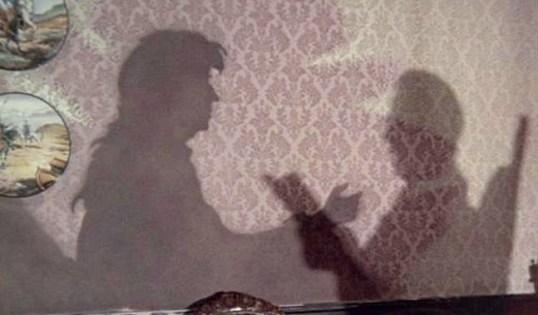
This segment features Agnes Moorehead as the sickly Emma, who is poisoned by her own brother, the despicable Stephen (Louis Hayward).  After Emma’s death, Stephen is shocked to discover that, even though Emma is gone, her shadow remains on the wall.  While Stephen is trying to make sense of that, his other two sisters (played by Grayson Hall and Rachel Roberts) have plans of their own for how to deal with their duplicitous brother.

Like The House, Certain Shadows On The Wall is appropriately atmospheric.  The ending is a bit weak as Stephen gets what he deserves but the shadow itself doesn’t have much to do with his actual fate.  Just when you’re waiting for Agnes Moorehead to make a sudden, ghostly appearance, the story comes to an end.  Still, this is an effective segment and it features excellent work from its ensemble.  I especially liked the performance of Grayson Hall, which features one of the most frightening glares that I’ve ever seen.

The third episode of Night Gallery was a definite improvement over the two that came before it.  Both segments tell intriguing stories, though it’s obvious that the show was still better at coming up with good premises than effective endings.

Previous Night Gallery Reviews:
  1. The Pilot
  2. The Dead Man/The Housekeeper
  3. Room With A View/The Little Black Bag/The Nature of the Enemy

TV Review: Night Gallery 1.2 “Room With A View/The Little Black Bag/The Nature of the Enemy”


The second episode of Night Gallery originally aired on December 23rd, 1970 and it featured three stories, two of which were written by Rod Serling.  Serling, himself, introduced all three of the stories by inviting us to look at the paintings that may or may not have been inspired from them.

Room With A View (dir by Jerrold Freedman, written by Hal Dresner)

When a cranky, bed-bound man (Joseph Wiseman) discovers this his wife (Angel Tompkins) is cheating on him, he comes up with an elaborate scheme to get revenge.  It all hinges on his somewhat nervous nurse (Diane Keaton), who has no idea that she’s being manipulated.

This short segment is well-done but it doesn’t really feel like it belongs on an episode of Night Gallery.  There’s no elements of horror or science fiction to be found in this story.  Instead, it’s just about a manipulative man seeking revenge on his wife.  It’s actually easy to imagine this segment as being a flashback on a Monk-style detective show.  You just need a detective saying, “I finally figured out how you did it!”

For most viewers, probably the most interesting thing about this segment will be the presence of a young Diane Keaton, playing the nurse and laughing nervously at her patient’s rather intrusive questions.

The Little Black Bag (dir by Jeannot Szwarc, written by Rod Serling)

In the 30th Century, a careless accident at a time travel station sends a black medical bag into the past.  It arrives in 1971, where it’s discovered by two homeless gentlemen.  One of the men is a disgraced former doctor named William Fall (Burgess Meredith).  The other, Hepplewhite (Chill Wills), has no medical experience but he does have a greedy spirit.  Fall wants to use the bag to do good,  Hepplewhite wants to use the bag to make money.  Meanwhile, in the future, poor put-upon Gillings (George Furth) is just trying to figure out what to do about the missing bag.

The Little Black Bag is this episode’s high point, featuring good performances from Meredith, Wills, and Furth and also ending with properly macabre twist.  This is another Rod Serling story about how terrible, at heart, most people are but Jeannot Szwarc’s direction is fast-paced and he never allows things to get too heavy-handed.

The Nature of the Enemy (dir by Allen Reisner, written by Rod Serling)

NASA’s latest expedition to the Moon has run into trouble.  The astronauts have discovered that there is something living on the lunar surface.  On Earth, the director of NASA (Joseph Campanella) tries to keep everyone calm while also figuring out the nature of the enemy.

This segment has an intriguing premise but it’s let down by a so-so execution.  Like a lot of less-than-effective Night Gallery segments, this one features a story that doesn’t so much conclude as it just stops after a somewhat weak punchline.

So, the second episode of Night Gallery was not an improvement on the first and it was nowhere close to matching the pilot.  Watching this episode, it was hard not to feel that the show had a few growing pains.  Did it want to be a horror anthology or a collection of short skits?  The 2nd episode reveals a show that was still trying to find it’s voice.

Previous Night Gallery Reviews:
  1. The Pilot
  2. The Dead Man/The Housekeeper