Retro Television Review: Warden Duffy Of San Quentin 1.1 “The Hostages”


Welcome to Retro Television Reviews, a feature where we review some of our favorite and least favorite shows of the past!  This Thursday, I will be reviewing Warden Duffy of San Quinten, which aired its only episode on NBC in 1952.  The show can be found on YouTube!
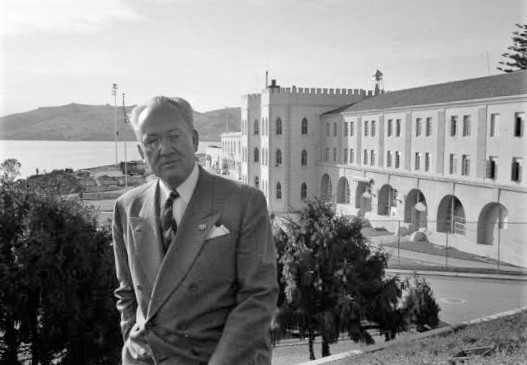
The real-life Warden Clinton Duffy

Episode 1.1 “The Hostages”

(Dir by Walter Doniger, originally aired in 1952)

“Welcome to my hometown,” Warden Clinton Duffy (Paul Kelly) narrates over a montage of still shots of California’s San Quentin Prison. Duffy explains that San Quentin has its own fire department, its own athletic field, its own hospital, and even its own jail, reserved for the prisoners who are too dangerous to be allowed in the general population.

Shot in a noir style, this episode follows one prisoner (John Ireland) who masterminds an attempted jailbreak. He gets his brother (Charles Nolte) to smuggle in a gun. He and his accomplice (Lawrence Tierney) take two members of the prison board hostage and kill a guard. The dapper Clinton Duffy, well known as an advocate for prison reform, tries to negotiate. Negotiations don’t go well, and the episode ends with Tierney, Ireland, and their accomplices dead on the floor of their cell.

Warden Clinton Duffy was a real person. He served as San Quentin’s warden from 1940 to 1952 and had a reputation as a liberal-minded reformer who tried to treat the prisoners with as much humanity as possible. Duffy wrote several books about his time as warden and was also known as an opponent of capital punishment. This show presents him as someone who wants the best for his prisoners but is still willing to give the order to shoot if that’s what is needed to protect innocent lives. Indeed, one gets the feeling that the prisoners’ biggest mistake was taking hostages. If the hostages’ lives hadn’t been in danger, Duffy probably would have been more willing to talk.

Interestingly, Paul Kelly, the actor who plays Duffy, was himself a former San Quentin inmate. Kelly was convicted of manslaughter in 1927 after he beat another actor, Ray Raymond, to death. (Kelly was having an affair with Raymond’s wife and claimed that he had no idea how hard he had hit Raymond when the other actor confronted him.) Kelly served 25 months in San Quentin and, when he was released, was told that while on parole he could take acting jobs, but only if they paid no more than $30 a week. Amazingly, his manslaughter conviction didn’t seem to slow his career at all. Nowadays, an unconfirmed rumor of cannibalism is enough to force a once-prominent actor to start working with Uwe Boll.

As for the pilot, it wasn’t picked up for a series, and it’s easy to see why. The pilot has a noir look that I liked, but the action moved slowly. Stories about hostage negotiations often seem dramatically inert, if only because they always seem to go through the exact same beats. Dog Day Afternoon is the exception to the rule. That said, director Walter Doniger obviously liked the idea of putting Duffy’s story on screen, because he later directed the 1954 film Duffy of San Quentin. In the film, Warden Duffy was again played by Paul Kelly.

Paul Kelly died of a heart attack in 1956, at the age of 57. Clinton Duffy retired as warden of San Quentin in 1952, the same year this pilot aired. He died in 1982.
 

Horror on TV: Ghost Story 1.12 “Creature of the Canyon” (dir by Walter Doniger)


On tonight’s episode of Ghost Story, Angie Dickinson plays a widow who is haunted by the ghost of her late husband’s Doberman.  Agck!  I’m scared enough of real Dobermans without having to deal with one that is undead!

This episode originally aired on December 15th, 1972.

Horror on TV: Ghost Story 1.4 “Bad Connection” (dir by Walter Doniger)


On tonight’s episode of Ghost Story, Karen Black plays a widow who starts to get mysterious phone calls from a man who sounds just like her late husband.  Black later expressed some regret that she ended up getting typecast a horror actress but she definitely did a good job in these roles.

This episode was co-written by Richard Matheson and originally aired on October 6th, 1972.

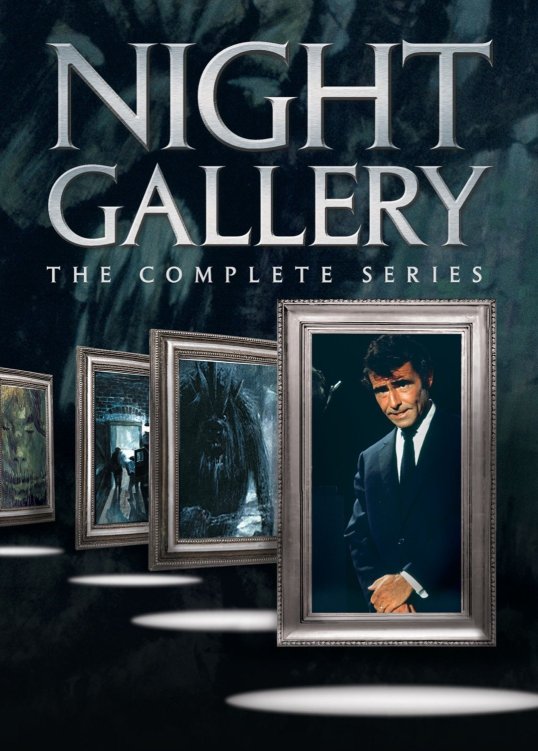
Night Gallery 1.4 “Make Me Laugh/Clean Kills And Other Trophies”


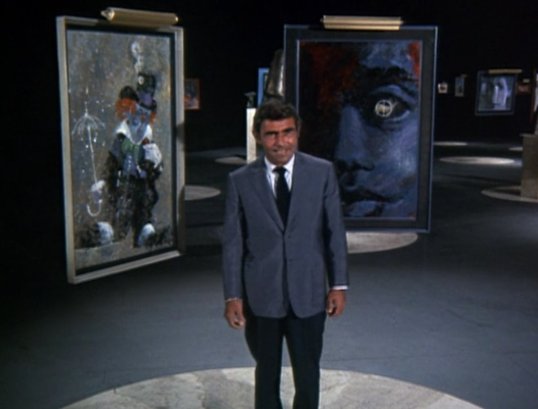
The fourth episode of Night Gallery originally aired on January 6th, 1971.  It was the first episode of the new year and it continued to open with Rod Serling walking through a most curious museum, inviting us to take a look at the macabre paintings on display and consider the stories behind them.

This episode featured two stories.

Make Me Laugh (dir. by Steven Spielberg, written by Rod Serling)

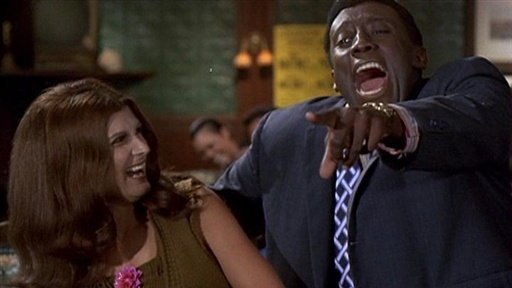
Jackie Slater (Godfrey Cambridge) is a comedian who can’t make anyone laugh.  He’s just been fired from his latest job and even his loyal agent (Tom Bosley) is suggesting that it might be time to throw in the proverbial towel.  While Jackie drowns his sorrows at a bar, he’s approached by a man named Catterje (Jackie Vernon).  Chatterje explains that he can cast miracles but, because he’s not very good at his job, the miracles often have unintended consequences.  “I don’t care!”  Jackie says, “I’ll take the risk!”  Jackie wants people to laugh at him.  Jackie gets his wish but it turns out that he should have listened to Chatterje’s warning.

This segment was directed by Steven Spielberg, back when he was just starting his career and he was largely working in television.  Spielberg also directed Eyes, which was a highlight of the Night Gallery pilot.  Unfortunately, his direction of Make Me Laugh is a bit less successful than his work on Eyes.  Spielberg’s direction features none of the inspired touches that made Eyes so successful.  Part of the problem may be that this story takes place in the word of comedy and comedy has never been a topic for which Spielberg has shown much affinity.

Make Me Laugh does feature a good lead performance from Godfrey Cambridge.  Otherwise, this segment is largely forgettable.

Cleans Kills And Other Trophies (dir by Walter Doniger, written by Rod Serling)

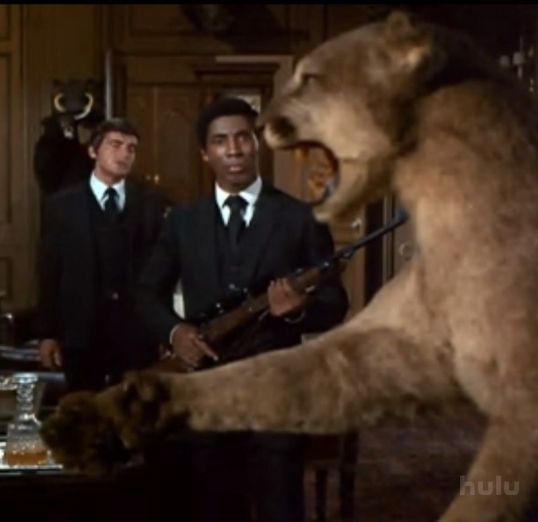
Raymond Massey plays Col. Archie Dittman, a wealthy racist who is obsessed with hunting and killing.  He even has a study full of the mounted heads of all of the animals that he’s killed.  Archie’s son, Archie, Jr. (Barry Brown), has just graduated from college and has no interest in hunting.  Col. Dittman demands that his son go on a hunt or risk being disinherited.  What the colonel fails to take into consideration is that both his bloodlust and his racism has offended his butler (Herbert Jefferson, Jr.) and that his butler has a magic-related revenge in mind.

Clean Kills and Other Trophies is hardly subtle but it does create and maintain a properly ominous atmopshere.  Raymond Massey gives a wonderfully villainous performance and it’s hard not to be amused by the fact that his son is wearing a peace signal prominently on his lapel, as if the segment’s director took one look at it and said, “What’s one thing that we can do to make the themes of this segment even more heavy-handed?”  The segment ends on a note that is so entertainingly over-the-top that it’s hard not to love it.

This episode was uneven.  Make Me Laugh does’t quite work but Cleans Kills and other Trophies is good enough to make up for the disappointing segment that precedes it.

Previous Night Gallery Reviews:

  1. The Pilot
  2. The Dead Man/The Housekeeper
  3. Room With A View/The Little Black Bag/The Nature of the Enemy
  4. The House/Certain Shadows on the Wall