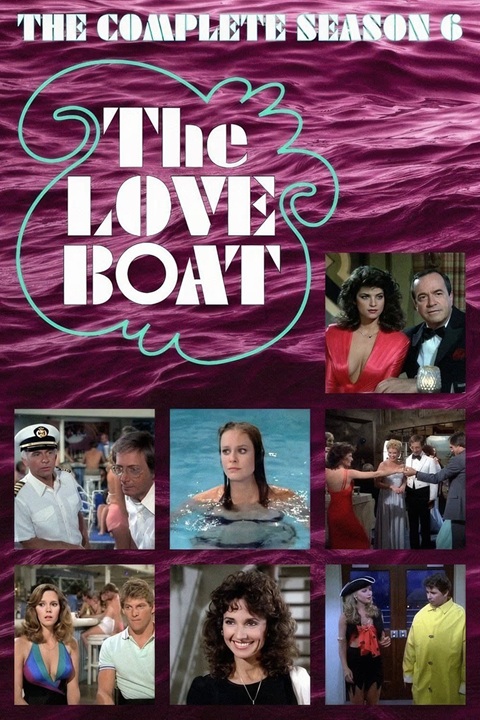
Retro Television Review: The Love Boat 6.26 “The Professor Has Class/When The Magic Disappears/We, The Jury”


Welcome to Retro Television Reviews, a feature where we review some of our favorite and least favorite shows of the past!  On Wednesdays, I will be reviewing the original Love Boat, which aired on ABC from 1977 to 1986!  The series can be streamed on Paramount Plus!

The Love Boat promises something for everyone!

Episode 6.26 “The Professor Has Class/When The Magic Disappears/We, The Jury”

(Dir by Richard Kinon, originally aired on April 2nd, 1983)

I sent a message to my friend Jason, letting him know about this week’s episode of The Love Boat.

“This week’s episode featured a Van Patten and a Van Dyke!” I wrote.

He wrote back, “Two Dicks?”

“No, one Dick and a Barry.”

Dick Van Patten plays The Great Stellini.  He’s upset that his daughter (Mary-Margaret Humes) wants to marry Joey Gardiner (Barry Van Dyke), a novice magician.  The Great Stellini thinks that Joey wants to steal all of his tricks.  His daughter teaches Stellini a lesson by actually disappearing during their stage show.  Stellini is humiliated but he learns an important lesson about letting go and also supporting younger magicians.

Meanwhile, Anne Meara played Jerry Stiller’s former landlady.  Anne was using Jerry for damaging her property.  Gopher decided that a jury made up of the crew should decide the case.  Huh?  Why?  That makes no sense.  But you know what?  Anne Meara and Jerry Stiller were so cute together that it didn’t really matter.

Finally, a 91 year-old professor (Sam Jaffe) was upset to discover that one of his former students (Bettye Ackerman) was going to replace him.  Luckily, everyone fell in love.  Sam Jaffe was one of the great character actors and it was kind of nice to see him on this show, acting opposite his wife, Bettye Ackerman.  This was Jaffe’s final performance and he had a twinkle in his eye.  He seemed to be having fun.

This was a pleasant cruise!

Scenes that I Love: Walter Matthau Talks To Robert Shaw in The Taking of Pelham One Two Three


100 years ago, on this date, Joseph Sargent was born in New Jersey.  Sargent would go on to become one of the busiest directors of the 70s, 80s, and 90s, working in both film and television.  Though he would never receive the type of critical attention as some of his contemporaries, Sargent was a skilled director who specialized in making entertaining, no-nonsense films.  Though his reputation was tarnished a bit by the fourth Jaws film, it should be remembered that Sargent was also responsible for films like Colossus: The Forbin Project, Tribes, Nightmares, and The Taking of Pelham One Two Three.

1974’s The Taking of Pelham One Two Three has come to be recognized as a genre classic.  It’s certainly one of my favorite films about how New Yorkers will be rude to anyone in any circumstances.  You can see an example of this in today’s scene that I love.  Having hijacked a train, Robert Shaw calls in his last of demands and gets a very New York response.

Retro Television Review: Homicide: Life On The Street 3.18 “In Search of Crimes Past”


Welcome to Retro Television Reviews, a feature where we review some of our favorite and least favorite shows of the past!  On Sundays, I will be reviewing Homicide: Life On The Street, which aired from 1993 to 1999, on NBC!  It  can be viewed on Peacock.

This week, Giardello sets a dangerous precedent.

Episode 3.18 “In Search of Crimes Past”

(Dir by Kenneth Fink, originally aired on April 14th, 1995)

A woman (Felicia Shakman) takes Colonel Barnfather hostage, pointing a gun at his head and demanding that Bolander reopen the investigation into a murder that occurred sixteen years ago.  Bolander was the primary on the murder and the man that he arrested is scheduled to be executed in just a matter of hours.  The woman with the gun is the man’s daughter.  Russert wants to bring in the hostage negotiators but Giardello instead orders Bolander to take a look at the files and the evidence and to try to see if he arrested the wrong man.

I’m not really sure I buy Giardello’s response.  Giardello claims he has no choice but actually, it seems to me that Giardello is setting a dangerous precedent.  In Baltimore, if you think a relative has been wrongly convicted, you can apparently just take someone hostage and demand the case be reopened.  I’m not sure those are the rules that anyone wants to set.

Now, of course, it turns out that Bolander did arrest the wrong guy.  It perhaps would have been more interesting if Bolander had look at the files and said, “Yeah, I got the right guy,” but then this episode wouldn’t be able to make a statement against the death penalty.  Bolander realizes that he made a mistake and also that the actual murderer is a man who committed suicide that very evening.

While that’s going on, Pembleton and Bayliss investigate the death of an elderly woman who appears to have slipped and drowned in her bathtub.  Her husband (Barnard Hughes) seems to be heartbroken.  Of course, the husband actually killed her.  He has fallen in love with another woman and he killed his wife so that he could be with her.  I preferred this storyline to the Bolander one, just because it featured a lot of Pembleton/Bayliss scenes and a good performance from Barnard Hughes.

Finally, Munch hired a new bartender.  He didn’t bother to tell his partners beforehand but how could Lewis and Bayliss possibly complain about Munch hiring Jerry Stiller to tend bar?  (Technically, Stiller was playing an Irishman named McGonical.)  This was a minor but likeable storyline, mostly because of Jerry Stiller’s likably bizarre performance.

So, this was yet another good but not great episode.  The Bolander storyline was a bit too melodramatic for its own good.  It’s not the sort of thing that would have happened during the show’s first two seasons, back when the whole point was to be realistic.  But that Bayliss/Pembleton storyline featured the show’s two most compelling characters doing what they did did best.  This episode was not perfect but it held my attention nonetheless.

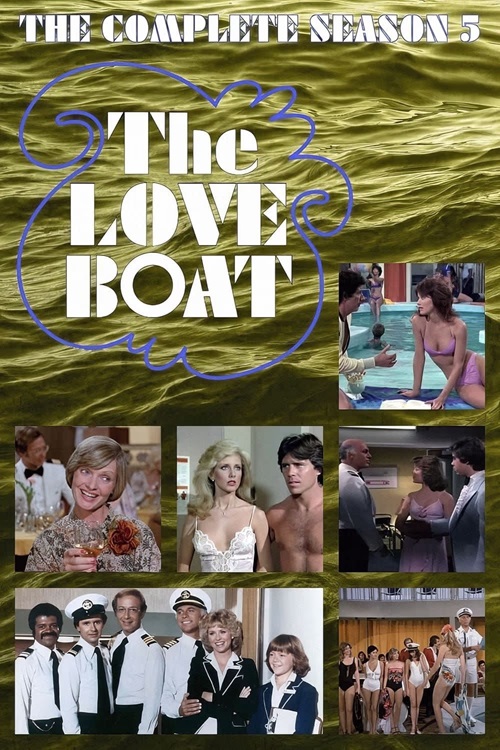
Retro Television Review: The Love Boat 5.10 “Love, Honor and Obey/Gladys and Agnes/Radioactive Isaac”


Welcome to Retro Television Reviews, a feature where we review some of our favorite and least favorite shows of the past!  On Wednesdays, I will be reviewing the original Love Boat, which aired on ABC from 1977 to 1986!  The series can be streamed on Paramount Plus!

This week, Isaac has a problem!  Oh no!  Who will man the bar?

Episode 5.10 “Love, Honor and Obey/Gladys and Agnes/Radioactive Isaac”

(Dir by Robert Scheerer, originally aired on November 28th, 1981)

Oh no!  Isaac’s radioactive!

Well, no, not in the way that you might be thinking.  Before leaving on this week’s cruise, Isaac had some dental work done and his new fillings can pick up radio stations.  The only real problem with that is that Isaac likes a passenger named Patty Phelps (Berlinda Tolbert) and Patty likes him, except for when his teeth start playing music.  It leads Patty to suspect that Isaac is just pulling a big prank on her and she doesn’t have any patience for that nonsense.  Especially when there’s another handsome single man on board (played by Darrow Igus) whose teeth do not pick up radio stations.  Is Isaac willing to sacrifice his fillings for love?

Meanwhile, Jerry Stiller and Anne Meara play …. well, they might as well  just be playing Jerry Stiller and Anne Meara.  I’ve seen Jerry and Anne on a few of these shows and they always play the same two characters regardless of what their characters may be named.  In this case, Jerry and Anne want to renew their wedding vows on the Love Boat.  Captain Stubing is happy to oblige but Anne decides that she doesn’t want to vow to “obey’ her husband.  Jerry and Anne get into a fight and it looks like the marriage might be over!  However, things work out in the end.  They renew their vows and then Anne starts bossing Jerry around.  It was a pretty simple story but Jerry Stiller and Anne Meara were so likable together that it didnt matter.  I was happy they stayed together.

Finally, Agnes (Audra Lindley) and Gladys (Marion Ross) are two sisters who are taking a cruise together.  Agnes meets and falls for Henry Whitewood (Bernard Fox), who is a genuine English earl!  Gladys doesn’t want to lose Agnes and tells Henry that Agnes doesn’t have much money.  It turns out that Henry doesn’t have a lot of money either.  But he’s willing to sell what little land he does have so that he can refurbish the manor and invite Agnes to be his wife.  Awwww!  And don’t worry about Gladys.  She realizes that the most important thing is that her sister’s happy.

This cruise was a bit on the forgettable side.  After last week’s two-hour extravaganza, this week’s episode was rather low-key and almost mild-mannered.  It was pleasant without being particularly memorable.  I think we’ve all had vacations like that!

Speaking of vacations, the holidays are approaching so this is going to be final Love Boat review of 2024.  My reviews will resume on January 1st!


Late Night Retro Television Review: Monsters 2.17 “One Wolf’s Family”


Welcome to Late Night Retro Television Reviews, a feature where we review some of our favorite and least favorite shows of the past! On Wednesdays, I will be reviewing Monsters, which aired in syndication from 1988 to 1991. The entire series is streaming on YouTube.

This week, Jerry Stiller is a werewolf!

Episode 2.17 “One Wolf’s Family”

(Dir by Alex Zamm, originally aired on February 11th, 1990)

In this rather heavy-handed episode of Monsters, Jerry Stiller and Anne Meara star as Victor and Greta, two immigrants who have built a successful life for themselves in America.  Victor is very proud of his heritage and his success.  He’s even more proud of the fact that he and Greta are pure-bred werewolves.  He expects his daughter, Anya (Amy Stiller), to marry a purebred werewolf.

(Ben was apparently busy when they shot this episode.)

So, how will Victor react when he discovers that Amy’s fiancé, Stanley (Robert Clohessy), is a were-hyena!?

*sigh*

Okay, I will give some credit here.  The scene where Victor meets Stanley and they all gather around the kitchen table for dinner does have some funny moments.  Stanley, being a hyena in human form, cannot stop laughing, even when he’s being insulted.  And when Jerry Stiller launches into a rant about how no daughter of his is going to hang out on the roadside and eat trash, I did laugh.  This was largely due to Jerry Stiller’s delivery of the line.  Jerry Stiller was always funny whenever he started to rant.

Otherwise, this episode was pretty disappointing.  There’s a subplot about a nosey neighbor named Agnes (Karen Shallo).  Agnes is upset to discover that her neighbors are werewolves that keep dead bodies in their refrigerator so that they’ll have something to snack on.  “It’s bad enough that they’re immigrants!” Agnes says.  And yes, I get it.  Agnes is supposed to be a small-minded suburbanite who doesn’t understand that America is a country of immigrants and all the rest.  The problem is that, regardless of how Agnes feels about immigrants, she has every right to be concerned about living next door to a werewolf who keeps a dead body in his refrigerator.  When she sees Victor eating a foot, it totally makes sense that she would be upset about it.  The show’s satire would have worked if Agnes’s sole objection to them had been that they were immigrants.  (It would have been even funnier if Agnes has absolutely no problem living next door to werewolves as long as they were born in America.)  But by making them werewolves and having Agnes be upset by the fact that they were werewolves, the show instead suggests that Agnes might have a point.

Not that it matters.  Stanley turns into a hyena and rips off Agnes’s head and brings it to Victor and Greta as a gift.  Stanley is accepted into the family while Jerry Stiller howls a the moon.

Political satire is always hit-and-miss and this episode was definitely a mess.  It’s a shame because Jerry Stiller and Anne Meara were definitely funny people.  (If you’ve ever seen the documentary Have A Good Trip, there’s a scene where Ben Stiller tells a story about accidentally taking several tabs of LSD in college and, in a panic, calling his father for help.  “I know what you’re going through,” Jerry told him, “I once smoked an entire Pall Mall cigarette.”  “My father was Jerry Stiller, not Jerry Rubin,” Ben explains.)  This is one of those episodes that I was really hoping would be good but it just didn’t work.

Retro Television Reviews: The Love Boat 2.26 “April’s Return/Super Mom/I’ll See You Again”


Welcome to Retro Television Reviews, a feature where we review some of our favorite and least favorite shows of the past!  On Wednesdays, I will be reviewing the original Love Boat, which aired on ABC from 1977 to 1986!  The series can be streamed on Paramount Plus!

This week’s cruise features Cyd Charisse!

Episode 2.26 “April’s Return/Super Mom/I’ll See You Again”

(Dir by George Tyne, originally aired on May 5th, 1979)

This episode’s writers would want us to believe that the most important thing that happens during this cruise is that April Lopez (played by Charo) returns to the ship.  During the first season, April was introduced as a stowaway who managed to charm the entire crew despite traveling illegally.  With the help of Captain Stubing, April has gone on to become the cruise line’s most popular entertainer and this week, she’s returns to the Love Boat!

The crew is super-excited because April is such a vivacious force of energy.  Or, at least, she was.  When she shows up on the boat, she seems to be feeling a bit down.  As she explains it to Julie, April has discovered that show business is not all that it’s cracked up to be and that it’s full of lecherous men.  (Shocker!)  April has decided that she would rather be a cruise director.  Julie agrees to show April what the job entails and …. well, it turns out that Julie actually has a pretty easy job.  She just goes to Acapulco Lounge at night, spots people who are alone or shy, and offers to dance with them.  I do that on a regular basis.  I should be a cruise director.

Anyway, April eventually realizes that she makes people happy by performing.  Charo was a popular guest star on The Love Boat and, unlike a lot of other actors who appeared in multiple episodes, she always played April.  (In this episode, she sings the show’s theme song.)  In many ways, Charo was the epitome of The Love Boat, in that her act was meant to be both sexy and old-fashioned at the same time.  The Love Boat was a show where everyone on the boat was constantly looking to get laid but the camera still cut away as soon as the cabin door closed and it was understood that sex on the boat would always lead to marriage on dry land.  It was a show with the customs of the 70s and the morals of the 50s.

The episode spends a lot of time on April’s search for happiness.  Personally, I was more excited by the fact that Cyd Charisse was on the boat.  Cyd Charisse is one of my favorite dancers of all time and was one of my personal role models when I was younger.  From the minute that Charisse boards the boat, the cameras are focused on her legs, which were just as spectacular as they were 20 years earlier in Singin’ In The Rain and Silk Stockings.  Charisse plays Eve Mills, a former USO entertainer who, by an amazing coincidence, happens to be on the same cruise as the man that she fell in love with during World War II, Frank Pearse (Craig Stevens).  By another amazing coincidence, Frank just happens to be an old friend of Captain Stubing’s!

Anyway, Frank and Eve recognize each other and they eventually work up the courage to approach each other.  Eve thought Frank was killed in the war.  Frank thought that Eve ignored all the letters that he sent her while he was recovering from being wounded in action.  (It turns out the letters were never mailed because Frank’s nurse was in love with him.)  Frank is still in love with Eve but he sees that she’s accompanied by a handsome young Frenchman named Francois (Stephen Schnetzer).  Eve reveals to Frank that Francois is not her boyfriend.  Instead, Francois is her son!  And guess who Francois’s father is?  (Really, the fact that he was named Francois should have given it away.)

Finally, Bud (Jerry Stiller) and Margaret (Anne Meara) are on their second honeymoon but, unfortunately, they’ve had to bring along their four bratty kids (one whom is played by a very young Corey Feldman).  Bud wants to have a good time.  Margaret keeps worrying about the kids.  Bud gets a dance lesson from April, which leads to Margaret getting jealous.  Don’t worry, they work it out.  Jerry Stiller and Anne Meara were adorable together but this story was stressful for me to watch, just because the kids were so hyperactive and never stopped running around.  Still, the image of Charo teaching Jerry Stiller how to dance feels like it should be enshrined in a museum devoted to the 1970s.

This episode seemed to exist because the show’s producers really liked Charo and it’s hard not to feel that the rest of episode’s storylines were just treated as being afterthoughts.  That said, I enjoyed the Cyd Charisse/Craig Stevens story.  Stevens was stiff and dull but Cyd Charisse was Cyd Charisse and that’s all that really matters!

Scenes that I Love: Walter Matthau Talks To Robert Shaw in The Taking of Pelham One Two Three


98 years ago, on this date, Joseph Sargent was born in New Jersey.  Sargent would go on to become one of the busiest directors of the 70s, 80s, and 90s, working in both film and television.  Though he would never receive the type of critical attention as some of his contemporaries, Sargent was a skilled director who specialized in making entertaining, no-nonsense films.  Though his reputation was tarnished a bit by the fourth Jaws film, it should be remembered that Sargent was also responsible for films like Colossus: The Forbin Project, Tribes, Nightmares, and The Taking of Pelham One Two Three.

1974’s The Taking of Pelham One Two Three has come to be recognized as a genre classic.  It’s certainly one of my favorite films about how New Yorkers will be rude to anyone in any circumstances.  You can see an example of this in today’s scene that I love.  Having hijacked a train, Robert Shaw calls in his last of demands and gets a very New York response.

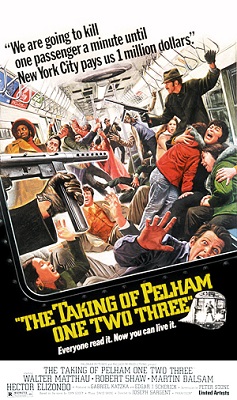
Film Review: The Taking of Pelham One Two Three (dir by Joseph Sargent)


Welcome to New York in the 1970s!  While the intellectuals flock to the latest Woody Allen movie and the wealthy throw radical chic parties in Manhattan and disturbed young men drive taxis at night and pray for a real flood to clear away all the vermin, most of the city’s citizens are just trying to make it through the day.  For many of them, that means spending an hour or two riding the subway.  In some ways, the subway is the great equalizer.  The minute that you sit down on a filthy train car, it doesn’t matter how old you are or how you vote or the color of your skin.  All that matter is finding a way to avoid making eye contact with anyone else.

Four men, all wearing obvious disguised, board the downtown Pelham 1-2-3 train.  They all look suspicious but, this being New York, no one wants to make eye contact.  Everyone just wants to reach their next stop.  The men — who are known as Mr. Blue (Robert Shaw), Mr. Green (Martin Balsam), Mr. Grey (Hector Elizondo), and Mr. Brown (Earl Hindman) — have other plans.  Revealing that they’re armed, they take the 18 passengers of the first car hostage.  Their leader, Mr. Blue, has a simple demand.  He wants a million dollars to be delivered to the car within an hour.  If the money’s late, he will kill one hostage every minute, until he receives what he wants.

While the cold-stricken mayor (Lee Wallace) tries to figure out how to 1) raise a million dollars and 2) handle the situation without losing any potential votes in his reelection campaign, Lt. Zach Garber (Walter Matthau) communicates with Mr. Blue via radio.  With Mr. Blue underground and Zach above ground, the two of them establish a cautious rapport.  Robert Shaw plays Blue as being efficient, polite, but ruthless while Walter Matthau plays Garber with his usual rumpled but intelligent style.  As embodied by Matthau, Garber is New York City in human form while Shaw is perfectly cast as the outsider who, for at least an hour or two, has managed to bring the city to its knees.

Even though the original The Taking of Pelham One Two Three is often described as being a Walter Matthau film or a Robert Shaw film, the film’s main character actually is the city of New York City.  The film portrays the city as being chaotic, angry, and unpredictable but, at the same time, also resilient and strong.  Yes, Garber may spend a lot of time bickering with his co-workers but, in the end, he and Lt. Rico Patrone (Jerry Stiller, another great New York figure) work together to do what has to be done to resolve the situation.  For all the time that’s spent on how Mr. Blue and his compatriots take that train hostage, just as much time is spent focusing on how the police, the politicians, and the Transit Authority react to what’s happened.  Not having any firsthand knowledge of the New York subway system (beyond being told not to use it when I was in NYC a few years ago), I can’t say whether or not the film is realistic but what’s important is that it feels realistic.  Even though the film is full of familiar character actors, it still seems as if you’re just watching a bunch of New Yorkers having a very long day.  Though guns are fired and there is a runway train, The Taking of Pelham One Two Three takes a refreshingly low-key approach to its story.  There’s no huge action set pieces.  The film’s classic final shot hinges not on Garber’s marksmanship but instead on his ability to remember the small details.

The Taking of Pelham One Two Three is one of my favorite heist movies.  It’s well-acted.  It’s got an interesting plot.  It’s got a few moments of unexpected humor.  Robert Shaw is a great (and, at times, almost compelling) villain while Walter Matthau and Jerry Stiller make for a great detective team.  The great Martin Balsam also turns in a wonderful turn and, even though he’s playing a bad guy, it’s hard not to sympathize him.  You need only see his apartment to understand why exactly he felt the city of New York owed him more than it had given him.  Best of all, The Taking of Pelham One Two Tree is a tribute to a great American city.  The Taking of Pelham One Two Three celebrates New York City in all of its rude, messy, and brilliant glory.

A Movie A Day #341: Hot Pursuit (1987, directed by Steven Lisberger)


When high school student Dan Bartlett (John Cusack) is late arriving at the airport, he finds himself watching as the plane taking his girlfriend (Wendy Gazelle) and her parents (Monte Markham and Shelley Fabares) to the Caribbean takes off without him.  Dan catches the next available flight and tries to track down his girlfriend and her family.  Helping him out is a Ganja-smoking islander (Keith David) and a crusty sea captain (Robert Loggia).  Complicating matters is that Dan’s girlfriend has been kidnapped by pirates (Jerry Stiller and his son, Ben)!

John Cusack got his start appearing in dopey 80s teen comedies and Hot Pursuit shows why he eventually declared that he would never appear in another one.  Hot Pursuit relies on the idiot plot.  If everyone in the movie didn’t act like an idiot, there wouldn’t be much of a movie.  Cusack seems bored in his role, only waking up towards the end of the movie when he gets to pick up a machine gun and blow away the pirates’ hideout.  (Cusack even gets to do a Rambo-style yell while riddling the building with bullets.)  This was Ben Stiller’s film debut and he has a few funny scenes.  The movie probably would have worked better if Stiller and Cusack had switched roles.

One final note; Hot Pursuit was produced by Pierre David, who also produced several of David Cronenberg’s early films.  It’s probably not a coincidence that Wendy Gazzelle’s character is named Lori Cronenberg.

Cleaning Out The DVR Yet Again #16: Zoolander 2 (dir by Ben Stiller)


(Lisa recently discovered that she only has about 8 hours of space left on her DVR!  It turns out that she’s been recording movies from July and she just hasn’t gotten around to watching and reviewing them yet.  So, once again, Lisa is cleaning out her DVR!  She is going to try to watch and review 52 movies by Wednesday, November 30th!  Will she make it?  Keep checking the site to find out!)

zoolander_2_poster

On October 14th, I recorded Zoolander 2 off of Epix.

A sequel to the 2001 cult hit, Zoolander 2 came out earlier this year and got absolutely terrible reviews and quickly vanished from theaters.  Watching the film last night, I could understand why it got such terrible reviews.  Zoolander 2 is not only a terrible movie but it’s also a rather bland one.  Somehow, the blandness is even more offensive than the badness.

Zoolander 2 opens with Justin Bieber getting assassinated and Derek Zoolander (Ben Stiller) being forced to come out of retirement and discover why pop stars are being targeted.  And, of course, Zoolander can’t do it without the help of Hansel (Owen Wilson)!  Penelope Cruz is in the film as well, playing  Zoolander’s handler and essentially being wasted in a role that could have been played by anyone.

Oh!  And Will Ferrell returns as well.  Ferrell gives a performance that essentially shouts out to the world, “Fuck you, I’m Will Ferrell and no one is going to tell Will Ferrell to tone his shit down!”

Actually, I think everyone in the world is in Zoolander 2.  This is one of those films that is full of cameos from people who probably thought a silly comedy would be good for their image.  For instance, there’s a huge number of journalists who show up playing themselves.  Matt Lauer shows up and I get the feeling that we’re supposed to be happy about that.  There was a reason why people cheered when the sharks ate him in Sharknado 3.

You know who else shows up as himself?  Billy Zane!  And Billy Zane has exactly the right type of attitude for a film like this.  He shows up and he mocks the whole enterprise by giving the Billy Zaniest performance of Billy Zane’s career.  For that matter, Kiefer Sutherland also shows up as himself.  I’m not really sure what Kiefer was doing in the film but he makes sure to deliver all of his lines in that sexy growl of his.  Kiefer knows what we want to hear.

You may notice that I’m not talking about the plot of Zoolander 2.  That’s largely because I couldn’t follow the plot.  This is an incredibly complicated film but it’s not complicated in a funny way.  Instead, it’s complicated in a way that suggests that the film was made up on the spot.  It’s as if the cast said, “We’re all funny!  Just turn on the camera and we’ll make it work!”

The problem with Zoolander 2 is obvious.  The first film pretty much exhausted the comic possibilities of making a spy film about shallow and stupid models.  Don’t get me wrong — the first film did a good job but it’s not like it left any material untapped.  But I would ask you to indulge me as I imagine an alternate reality.

Consider this: Terrence Malick was reportedly a huge fun of Zoolander.

Let’s take just a minute to imagine a world in which Ben Stiller asked Terrence Malick to write and direct Zoolander 2.  And let’s say, just for the sake of argument, that Malick agreed!

Just think about it — 4 hours of Zoolander and Hansel staring up at the sky and thinking about nature.  “What is this thing that causes the heart of man to beat?” Zoolander asks.  “Are we nature or has nature become us?” Hansel replies.

That would have been a fun film!