Guilty Pleasure No. 92: Brewster’s Millions (dir. by Walter Hill)


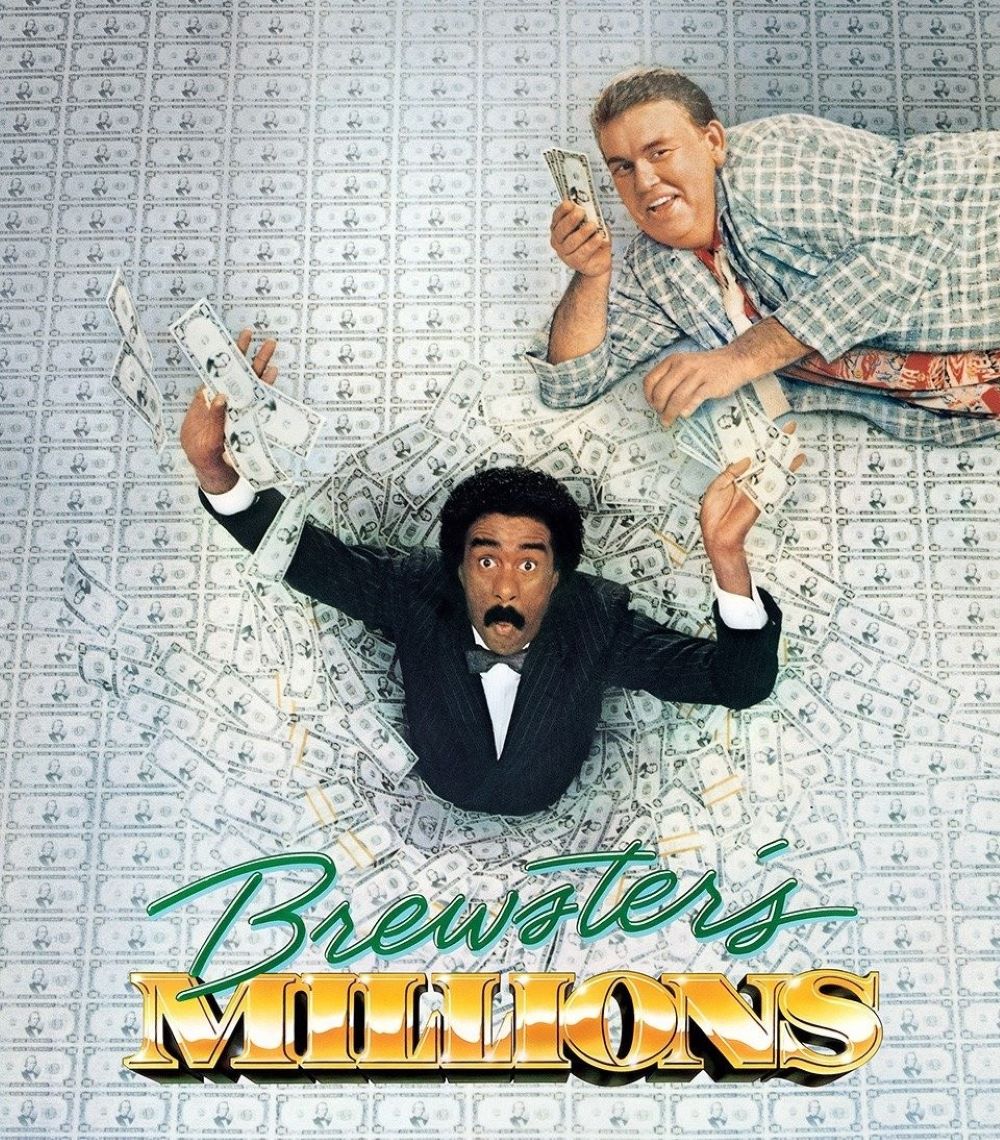
Walter Hill’s Brewster’s Millions (1985) isn’t a perfect movie by any stretch, but it’s the kind of film that sneaks up on you. It may not be sharp enough to qualify as great satire or consistent enough to hit every comedic note, but it has an undeniable charm that pulls you in regardless. It’s loud, uneven, and often ridiculous, yet few comedies from the 1980s are as weirdly entertaining when they’re firing on all cylinders. For many movie fans, it’s that quintessential “guilty pleasure”—a film you know has problems, but that somehow feels impossible to turn off once it starts. And in many ways, that’s exactly where Brewster’s Millions finds its lasting appeal.

The setup alone is too fun to resist. Richard Pryor stars as Montgomery Brewster, a minor league baseball pitcher who unexpectedly inherits the opportunity of a lifetime—to claim a $300 million fortune from a distant relative. The catch? Before he can get it, he has to spend $30 million in 30 days under a bizarre set of conditions that make financial ruin easier said than done. He can’t give the money away, can’t destroy it, can’t buy assets or investments that retain value, and can’t tell anyone why he’s doing it. Fail, and he gets nothing. Succeed, and he becomes one of the richest men alive. It’s the sort of gleefully absurd premise that could only have come from Hollywood in the 1980s, and it’s immediately clear that the film wants audiences to sit back, grab some popcorn, and watch Pryor tear through cash in increasingly funny and desperate ways.

Richard Pryor is, without doubt, the heart and soul of the movie. He imbues Montgomery Brewster with equal parts manic energy and human frustration, giving the character a real emotional arc beneath all the comic spectacle. Pryor’s talent for blending humor with exasperation makes Brewster’s predicament believable, even when it’s insane. Watching him scramble to lose money while the world keeps rewarding him is strangely satisfying. Pryor understood how to play ordinary men caught in extraordinary circumstances, and that quality grounds the film when it could have easily spiraled into total silliness. In scenes where he loses his patience with accountants, schemes wild spending sprees, or watches his good intentions backfire, Pryor’s comic timing keeps the chaos enjoyable.

John Candy adds another layer of charm as Brewster’s best friend and teammate, Spike Nolan. Candy brings warmth, loyalty, and that unmistakable good-heartedness that made him one of the decade’s most beloved comedic actors. The chemistry between Pryor and Candy keeps the film buoyant even through its weaker stretches. Their friendship defines the film’s tone—it’s loose, goofy, and full of bro-ish camaraderie. Without Candy’s infectious energy, the movie’s more hollow comedic beats might have hit the floor with a thud. Together, they create a dynamic that feels real, even inside a premise that’s totally absurd.

As a director, Walter Hill feels like an odd fit for this kind of broad comedy, but that’s part of what makes Brewster’s Millions interesting. Hill, better known for tough, kinetic action films like The Warriors and 48 Hrs., approaches this farce with a surprising amount of structure and visual precision. The film looks slicker and sharper than most comedies of its kind, which gives the excess on-screen an unintentionally epic flair. Hill’s direction keeps the story moving, and though he’s not naturally a comedic filmmaker, his grounded style adds a peculiar edge to all the craziness. It’s chaos with discipline—an aesthetic that somehow works in the movie’s favor.

Still, Brewster’s Millions can’t quite escape its shortcomings. The pacing is uneven, especially in the middle, where the film loses some steam as Brewster cycles through increasingly repetitive spending gimmicks. The story flirts with satire but rarely commits, brushing up against deeper commentary on wealth, politics, and capitalism before retreating to the comfort of broad comedy. The “Vote None of the Above” subplot, where Brewster’s money-wasting political campaign taps into voter cynicism, is one of the smartest parts of the film—but it’s introduced and resolved too quickly to leave a mark. And while the movie is full of lively energy, not every gag lands; a few supporting performances veer into caricature, and some jokes feel very much of their time.

Yet these flaws are partly what make Brewster’s Millions such a delightful guilty pleasure. It’s the cinematic equivalent of junk food—high on calories, low on nutritional value, but deeply enjoyable all the same. Pryor’s constant exasperation, the sheer absurdity of trying to “waste” money legally, and the exaggerated set pieces (like the overblown parties or his failed attempts to lose at gambling) make for irresistible entertainment. Even when the humor dips into predictable territory, the concept keeps pulling you back in. There’s a giddy satisfaction in watching Brewster try—and fail—to lose money, especially because the universe just won’t let him.

The romance subplot with Lonette McKee’s character, Angela Drake, adds just enough heart to balance the absurdity. McKee gives a grounded, intelligent performance that prevents the love story from feeling tacked on, even if it never fully takes center stage. Her presence keeps Brewster tethered to some kind of reality, and the moral through-line—learning that not everything valuable can be bought—lands gently rather than preachily. It’s not profound, but it fits the breezy tone perfectly.

As a comedy of excess, Brewster’s Millions is very much a product of its time. The slick suits, the gaudy parties, the blind faith in wealth, and the Reagan-era optimism about money’s moral neutrality all ooze from every frame. That time-capsule quality is part of its modern appeal. Watching it today, you can’t help but smile at how on-the-nose it feels—a movie from the “greed is good” decade that accidentally ends up mocking the very mindset it sprang from. It’s self-aware only in flashes, but those flashes are enough to make you recognize the movie’s satirical edge hiding beneath its loud surface.

In the end, that’s what makes Brewster’s Millions endure as a lovable guilty pleasure. It has flaws you can’t ignore—uneven pacing, scattershot tone, underdeveloped ideas—but none of them outweigh its charm. Pryor’s comic genius makes even the weakest joke land better than it should. Candy’s warmth keeps the film light. And Hill’s straightforward direction infuses the lunacy with just enough realism to make it believable. The result is a movie that’s too silly to take seriously but too fun to dismiss. You watch it, laugh at its audacity, shake your head at the logic gaps, and yet somehow come away smiling.

Brewster’s Millions may not be a comedy classic, but it’s easy to see why people keep revisiting it. It’s comfort food cinema—lighthearted, clumsy, and endlessly watchable. And like all the best guilty pleasures, it doesn’t need to be perfect to make you happy. Sometimes, seeing Richard Pryor outsmart the meaning of money for two hours is more than enough.

Previous Guilty Pleasures

  1. Half-Baked
  2. Save The Last Dance
  3. Every Rose Has Its Thorns
  4. The Jeremy Kyle Show
  5. Invasion USA
  6. The Golden Child
  7. Final Destination 2
  8. Paparazzi
  9. The Principal
  10. The Substitute
  11. Terror In The Family
  12. Pandorum
  13. Lambada
  14. Fear
  15. Cocktail
  16. Keep Off The Grass
  17. Girls, Girls, Girls
  18. Class
  19. Tart
  20. King Kong vs. Godzilla
  21. Hawk the Slayer
  22. Battle Beyond the Stars
  23. Meridian
  24. Walk of Shame
  25. From Justin To Kelly
  26. Project Greenlight
  27. Sex Decoy: Love Stings
  28. Swimfan
  29. On the Line
  30. Wolfen
  31. Hail Caesar!
  32. It’s So Cold In The D
  33. In the Mix
  34. Healed By Grace
  35. Valley of the Dolls
  36. The Legend of Billie Jean
  37. Death Wish
  38. Shipping Wars
  39. Ghost Whisperer
  40. Parking Wars
  41. The Dead Are After Me
  42. Harper’s Island
  43. The Resurrection of Gavin Stone
  44. Paranormal State
  45. Utopia
  46. Bar Rescue
  47. The Powers of Matthew Star
  48. Spiker
  49. Heavenly Bodies
  50. Maid in Manhattan
  51. Rage and Honor
  52. Saved By The Bell 3. 21 “No Hope With Dope”
  53. Happy Gilmore
  54. Solarbabies
  55. The Dawn of Correction
  56. Once You Understand
  57. The Voyeurs 
  58. Robot Jox
  59. Teen Wolf
  60. The Running Man
  61. Double Dragon
  62. Backtrack
  63. Julie and Jack
  64. Karate Warrior
  65. Invaders From Mars
  66. Cloverfield
  67. Aerobicide 
  68. Blood Harvest
  69. Shocking Dark
  70. Face The Truth
  71. Submerged
  72. The Canyons
  73. Days of Thunder
  74. Van Helsing
  75. The Night Comes for Us
  76. Code of Silence
  77. Captain Ron
  78. Armageddon
  79. Kate’s Secret
  80. Point Break
  81. The Replacements
  82. The Shadow
  83. Meteor
  84. Last Action Hero
  85. Attack of the Killer Tomatoes
  86. The Horror at 37,000 Feet
  87. The ‘Burbs
  88. Lifeforce
  89. Highschool of the Dead
  90. Ice Station Zebra
  91. No One Lives

Brad reviews STRAIGHT TALK (1992), starring Dolly Parton and James Woods! 


STRAIGHT TALK opens with Shirlee Kenyon (Dolly Parton) having a bad day in the town of Flat River, Arkansas. First, she gets fired from her job at a dance studio because she likes to talk to the customers more about their problems than she does teaching them to dance. Then she goes home to her lazy, unemployed boyfriend Steve (Michael Madsen), who’s more interested in drinking beer and bowling than talking to her. She tells him she wants to leave town and go to Chicago for a fresh start. He heads to the bar, so she packs her bags and heads to the Windy City. Upon arriving, she finds a job as a receptionist at a local radio station. Through a case of mistaken identity that can only happen in the movies, Shirlee finds herself on air as “Dr. Shirlee,” where she begins fielding calls from people with all kinds of problems. With her homespun wisdom, Dr. Shirlee soon finds herself to be the toast of Chicago. Feeling guilty that the station is advertising her as a “Doctor” when she’s not, Shirlee reluctantly continues on when her boss Alan (Griffin Dunne) convinces her she’s a “doctor of the heart.” Alan takes that simple lie and creates an entire fake public identity for Shirlee. When reporter Jack Russell (James Woods), in serious need of a story, senses that something’s not adding up with Dr. Shirlee, he convinces his editor Milo Jacoby (Jerry Orbach) to let him try to get close to the city’s new star to see if he can dig up some dirt. As he gets to know her, however, he’s charmed just like the rest of city and the two begin to fall in love. With Shirlee feeling guilty about being marketed as someone she’s not, and with Jack feeling bad about deceiving her for a scoop, is there any chance that their love can survive when the truth finally comes out?

STRAIGHT TALK is one of those movies that lives or dies based on whether or not you like its stars. This early 90’s romantic comedy was made for Dolly Parton’s fans, of which there are many. She looks beautiful, she has a great wardrobe, she sings the catchy soundtrack tunes, and she dispenses down-home country wisdom in a way that only Dolly can. And then there’s James Woods as the cynical reporter / love interest. Not traditionally handsome or known for his performances in romantic comedies, he brings his unique style to the role, and somehow it really works. As a huge fan of Woods, I may be a little biased, but I think that he has a great chemistry with Dolly. There does seem to be some basis for my claim as the two seemed to really enjoy each other on the set. Dolly has been quoted as saying that he’s “a great kisser” and a “thrill to be around.” Woods recently posted on social media that “Dolly Parton is the nicest person I’ve ever worked with…. She’s everything you imagine and so much more. Anybody who’s ever spent any time with her absolutely adores her.” I think these genuine feelings show through on the screen and provide levels of entertainment that transcend what’s on the pages of the script.

Aside from the excellent chemistry of its leads, STRAIGHT TALK does lean hard into romantic comedy cliches, and honestly that’s okay with me. I enjoyed the familiar plot lines… Will Shirlee become a star in the big city? Will reporter Jack expose her past? Will the two fall in love? Will her old boyfriend Steve show up? Will her “on-air” advice cause some unexpected problems? Well, of course, on all accounts! As these well worn stories play out against the backdrop of an early 90’s movie version of Chicago, I enjoy the movie for what it is, an entertaining fluff piece. The interesting supporting cast (Griffin Dunne, Michael Madsen, Jerry Orbach, John Sayles, Spalding Gray, etc.) do their jobs well, further enhancing my appreciation of the movie. 

With all that said, I do recognize that the joy of movies is purely a subjective experience, and if you’re not a fan of Dolly Parton, you probably won’t enjoy STRAIGHT TALK. It’s not a great movie in traditional terms, but it is a great “Dolly Parton” movie. I like Dolly, and I especially enjoy her relationship with James Woods within the film, so this is another one of those movies from my youth that I like to watch every few years. I enjoy it every single time. 

Retro Television Review: Law and Order 6.13 “Charm City” and Homicide 4.11 “For God And Country”


Welcome to Retro Television Reviews, a feature where we review some of our favorite and least favorite shows of the past!  On Sundays, I will be reviewing Homicide: Life On The Street, which aired from 1993 to 1999, on NBC!  It  can be viewed on Peacock.
This week, Homicide crosses over with Law & Order.

Law & Order 6.13 “Charm City”

(Dir by Ed Sherin, originally aired on February 7th, 1996)

Homicide 4.11 “For God and Country”

(Dir by Ed Sherin, originally aired on February 9th, 1996)

This week, we have a two-part cross-over between Law & Order and Homicide.

On Law & Order, things start in New York City.  A chemical attack on a subway train leaves 20 people dead.  Because the train was specifically heading into Harlem and all of the victims were black, it is suspected that the attack was racially motivated.  In Baltimore, Frank Pembleton and Tim Bayliss hear about the attack and are reminded of a similar attack on a black church, which occurred five years prior.  Pembleton was the primary on the church attack.  He and Bayliss head to New York City, where they meet and quickly get on the nerves of Detectives Lennie Briscoe (Jerry Orbach) and Rey Curtis (Benjamin Bratt).

Pembleton’s investigation uncovers that a man from Baltimore, Brian Egan (Kevin Geer), not only had access to the chemicals used in both attacks but also that’s he currently in New York.  When Briscoe and Curtis arrest Egan and fail to get him to confess, Pembleton asks for permission to interrogate him.  Pembleton, being Pembleton, rather easily gets Egan to confess to having committed the church bombing.  However, before getting the confession, Pembleton pretends not to hear Egan say that he no longer wants to continue talking.  In typical Law & Order (if not Homicide) fashion, the confession is tossed out.

Jack McCoy (Sam Waterston) and Claire Kincaid (Jill Hennessy) still get their conviction.  (And Claire gets an admirer in the form of Tim Bayliss.)  However, it’s obvious that Egan was not working alone.  Egan says that he will never name names.

That changes when his wife is murdered and his teenage son goes missing.  Homicide opens with Bayliss investigating the poisoning of Egan’s wife.  He and Pembleton eventually track down Egan’s son and they get him to admit that he saw his uncle, former NSA agent Col. Alexander Rausch (J.K. Simmons), murder his mother.  Because Brian Egan has said that he’ll only reveal the truth of the conspiracy if his son is brought to New York, Briscoe and Curtis show up in Baltimore.

While Curtis, Bayliss, and Pembleton track down Colonel Rausch, Briscoe hangs out with Munch.  Their friendly banter goes south as soon as Briscoe mentions that he once knew a Gwen Munch in New York.  Gwen is John Munch’s ex-wife and John is not happy when he finds out that Briscoe slept with Gwen.  John Munch spends the rest of the episode drinking heavily.  Stanley Bolander would not approve.

As for Col. Rausch, he is captured and he turns out to be a smug snake.  (He’s played by J.K. Simmons, after all.)  Pembleton wants to see Rausch prosecuted for the church bombing and he especially wants to see racist Rausch publicly humiliated.  New York, however, wants to prosecute him for the subway attack.  Claire comes down to Baltimore and gets a judge to agree that Rausch should first be sent to New York.

Rausch doesn’t care.  He has a heart condition so he simply stops taking his heart pills and then drops dead while waiting for the train to take him to the Big Apple.  The episodes ends with Pembleton sobbing as he realizes Rausch will never be humiliated at a trial.  The New York cops shrug and say, “Sorry, Frank.”

I enjoyed this crossover quite a bit.  It was interesting to see two police dramas, each with a very different style, come together to tell one big story.  As Homicide always celebrated the lengths that Pembleton would go to get a confession in the Box, it was amusing to see what would actually happen to one of those confessions if it was brought to court.  Jack McCoy is not at all amused by Pembleton’s tactics.  Meanwhile, Briscoe, Curtis, and Claire was allowed to loosen up a bit when they went to Homicide and I enjoyed watching them shed their “just-the-facts” personas.  If the Law & Order episode was ultimately superior to the the Homicide episode, that’s just because the Law & Order episode featured an actual mystery to be solved whereas the Homicide episode occasionally felt as if it was padded out a bit.  On Homicide, it was obvious that Colonel Rausch was guilty and, from the minute he started to cough during the interrogation, it was easy to guess what his ultimate fate would be.

(I also have to say that it was interesting to compare this episode of Law & Order to watch Law & Order has become today.  How this show went from featuring McCoy confidently doing his job to Nolan Price essentially begging his co-counsel, on a weekly basis, to actually do her job is something that is worth considering.)

Overall, this was a good crossover.  For those who want to watch it, the Law & Order episode is available on Hulu and Disney+ while Homicide can be found on Peacock and Tubi.
Icarus File No. 14: Last Exit To Brooklyn (dir by Uli Edel)


Welcome to Brooklyn!

The year is 1952 and one neighborhood in Brooklyn is on the verge of exploding.

A thug named Vinnie (Peter Dobson) holds court at a local bar.  (His associates include the moronic Sal, who is played by a very young Stephen Baldwin.)  Some nights, Vinnie and his associates mug people for money.  Sometimes, they just attack people for fun.

A strike at the local factory has entered its sixth month, with management showing no sign of compromising and Boyce (Jerry Orbach), the head of the union, showing little concern for the men who are now struggling to feed their families.  The local shop steward, Harry Black (Stephen Lang), is a self-important braggart who never stops talking about how he’s the one leading the strike.  At home, Harry ignores his wife, with the exception of a violent quickie.  On the streets, Harry embezzles money from the union and uses it to try to impress the men that he would rather be spending his time with.  But even the men who Harry considers to be friends quickly turn on him when he is at his most pathetic.

Big Joe (Burt Young) is a proud union member who is shocked to discover that his teenage daughter (Ricki Lake) is 8-months pregnant.  Despite being out-of-work and not caring much for Tommy (John Costelloe), Joe puts together the wedding that appears to be the social event of a shabby season.  But even at the reception, violence lurks below the surface.

Georgette (Alexis Arquette) is a transgender prostitute who loves Vinnie, even after he and his idiot friends stab her in the leg while playing with a knife.  Beaten at home by her homophobic brother (Christopher Murney), Georgette sinks into drug addiction.

Tralala (Jennifer Jason Leigh) is an amoral prostitute, one who specializes in picking up military men and then arranging from them to be mugged by Vinnie and his gang.  Sick of being exploited by Vinnie, Tralala heads to Manhattan and meets Steve (Frank Military), an earnest soldier from Idaho.  For the first time, Tralala is treated decently by a man but Steve is set to ship out to Korea in a few days and, as he continually points out, there’s a chance that he might not return.  For all of the happiness she finds in Manhattan, Tralala is continually drawn back to her self-destructive life in Brooklyn.

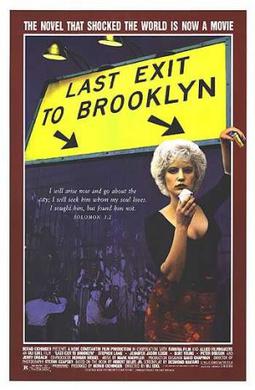
First released in 1989 and directed by Uli Edel (who directed another film about desperation, Christiane F.), Last Exit To Brooklyn is based on a controversial novel by Hubert Selby, Jr.  In fact, it was so controversial that the novel was banned in several countries and, for a while, was listed as being obscene by the U.S. Post Office.  I read the novel in the college and it is indeed a dark and depressing piece of work, one that offers up very little hope for the future.  It’s also brilliantly written, one that sucks you into its hopeless world and holds your interest no matter how bleak the stories may be.  Due to its reputation, it took over 20 years for Last Exit to Brooklyn to be adapted into a film.

The film is actually a bit more positive than the book.  One character who appears to die in the book manages to survive in the film.  The wedding subplot was a minor moment in the book but, in the film, it’s made into a major event and provides some mild comedic relief.  That said, the film is definitely dark.  Almost every character is greedy and angry and those who aren’t are victimized by everyone else.  Unfortunately, the film lacks the power of Selby’s pungent prose.  As a writer, Selby held your attention even when you want to put the book away.  When it comes to the film, the lack of Selby’s voice makes it very easy to stop caring about the characters or their stories.  Even with the attempts to lighten up the story, the film is still so dark that it’s easy to stop caring.  The non-stop bleakness starts to feel like a bit of an affectation.

And that’s a shame because there are some brilliant moments and some brilliant performances to be found in Last Exit To Brooklyn.  An extended sequence where the police fight the striking workers is wonderfully directed, with the police becoming an invading army and the men on strike being transformed from just factory workers to rebels.  The scene where Boyce informs Harry that he’s not as important as he thinks is wonderfully acted by both Jerry Orbach and Stephen Lang.  As Tralala, Jennifer Jason Leigh gives a raw and powerful performance, whether she’s shyly accepting Steve’s kindness or drunkenly exposing herself to a bar full of lowlifes.  In many ways, Tralala is the most tragic of all the characters to be found in Last Exit to Brooklyn.  She’s tough.  She’s angry.  But, in the end, she’s ultimately the victim of men who are too stupid to understand anything other than aggression.  The neighborhood applauds her when she confidently walks past a line of cops and strikebreakers but the same people who cheered for her later try to destroy her.

The film ends on an ambiguous note, with a peace that feels very temporary.  The message seems to be that men are at their worst when they’re bored so perhaps it’s best to keep them busy, whether with a job or perhaps a wedding.  It’s a flawed film but it sticks with you.

Previous Icarus Files:

  1. Cloud Atlas
  2. Maximum Overdrive
  3. Glass
  4. Captive State
  5. Mother!
  6. The Man Who Killed Don Quixote
  7. Last Days
  8. Plan 9 From Outer Space
  9. The Last Movie
  10. 88
  11. The Bonfire of the Vanities
  12. Birdemic
  13. Birdemic 2: The Resurrection 

Horror On TV: The Hitchhiker 4.13 “Cabin Fever” (dir by Clyde Monroe)


On tonight’s episode of The Hitchhiker, Michael Woods plays a cocky gigolo who spends the weekend at a cabin with an alcoholic director (Jerry Orbach) and his sultry wife (Season Hubley).  When Hubley suggests that Woods murder her husband, it seems like a standard noir-situation but it become obvious that Orbach is not quite as clueless as Woods assumed.  Who is playing which game?

This is an enjoyable episode, largely due to the performance of the wonderful Jerry Orbach.  This episode originally aired on May 12th, 1987.

Quiet Killer (1992, directed by Sheldon Larry)


When wealthy teenager Sarah Dobbs (Kathleen Robertson) vomits up blood and then drops dead in the middle of New York City, the coroner’s office is baffled as to what killed her.  As far as anyone knows, Sarah has just been suffering from the flu, which she apparently contracted when she was recently overseas.  However, there is one doctor in New York who thinks that she knows what’s happening.  Dr. Nora Hart (Kate Jackson) takes one look at Sarah’s case and decides that the Black Death — the same plague that wiped out half of the world’s population in 54 AD — has come to New York!

Nora wants to shut down the city immediately but Mayor Carmichael (Al Waxman) says that would not only lead to mass panic but it would also an economic disaster.  Working with a team of other doctors (including Jerry Orbach, who is always a welcome presence in New York films), Dr. Hart tries to track down everyone who Sarah came into contact with and quarantine them before both a panic and a pandemic breaks out.  Unfortunately, one congressman (Howard Hesseman!) doesn’t want to go into quarantine because that would mean admitting that he was in Manhattan to visit his mistress.  Despite everyone’s best efforts, mass panic follows.

Quiet Killer (which is also known as Black Death) is a made-for-TV movie that used to show up on late night television throughout the 90s.  It’s a typically overwrought disaster film and it’s easy to laugh at some of the dialogue and some of the acting.  (Kate Jackson is particularly wooden in the lead role.)  The first time I saw it, I thought the most interesting thing about it was that it featured Howard Hesseman as a congressman.  For those who know Hesseman best for playing characters like Dr. Johnny Fever on WKRP, it’s strange to see him playing a member of the establishment.  Hesseman isn’t bad in the role but it never makes sense that he wouldn’t be able to think of a way to explain away his presence in Manhattan.  You would think a politician would be better at coming up with an alibi or that he could have pulled some strings to keep it from being revealed that he had been quarantined.  Instead, he decides to just run off and potentially infect the entire nation.  That’s not what I pay my tax dollars for.

Quiet Killer is a good example of how real-life events can shape how we view a film.  Up until just a few months ago, this would have seemed like just another cheesy disaster movie.  Watch it today and it feels prophetic.  Hopefully, by this time next year, it will be back to just being cheesy.

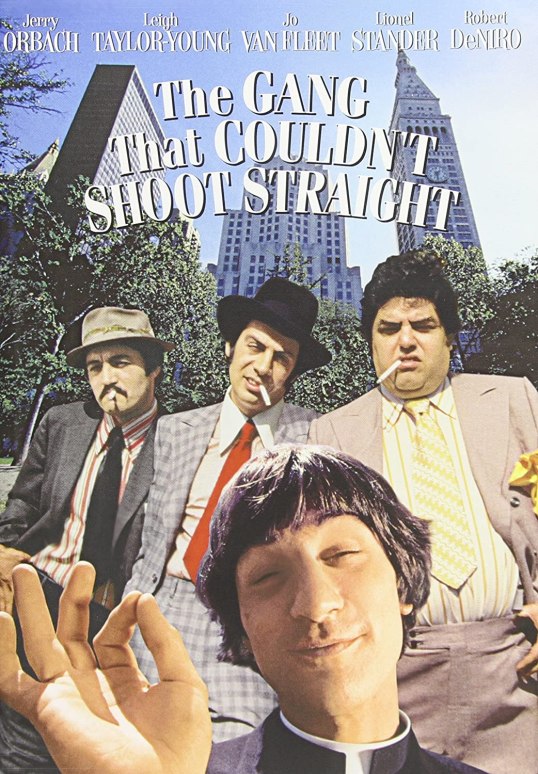
An Offer You Can Refuse #4: The Gang That Couldn’t Shoot Straight (dir by James Goldstone)


“Oh, fuck you.”

That was my reaction, last night, as I watched the 1971 film, The Gang That Couldn’t Shoot Straight.  I was talking to my DVR and yes, I was cursing quite a bit.  You know that a film has to be bad when it actually drives me to start cursing at an inanimate object.  The Gang That Couldn’t Shoot Straight was so bad that I actually got pissed off at my DVR for recording it.  It’s true that I am the one who scheduled the recording but still …. my DVR should have known better than to listen to me!

What is The Gang That Couldn’t Shoot Straight about?  I have no idea.  I watched the damn movie and I have no idea what the point of it was.  The film stars Jerry Orbach as a low-level gangster named Kid Sally.  Kid Sally’s crew — the Gang That Couldn’t Shoot Straight — is made up of a collection of malcontents, morons, and other stereotypes.  One member of the crew is a little person.  That’s the joke.  He’s a tough gangster who is wiling to put a bullet between your legs but that’s just because he’s crotch-height.  Ha ha.

Anyway, the big boss is a guy named Baccala (Lionel Stander).  Every morning, Baccala’s wife starts the car to check for bombs.  Whenever she goes outside, Baccala crawls underneath the kitchen table and waits.  Like a lot of the stuff in this movie, that’s one of those things that would be funny if it hadn’t been taken too such a cartoonish extreme.  Anyway, Baccala has zero respect for Kid Sally and Kid Sally wants to take over Baccala’s rackets.  Is it time for a mob war!?

Maybe.  A lot of people die in various “amusing” ways over the course of the film but I was never quite sure whether or not the killings were part of a mob war or if they were just the type of random mishaps that occur when a bunch of dumbasses get their hands on a cache of weapons.  Trying to follow the plot of The Gang Who Couldn’t Shoot Straight is next to impossible.  The editing of the film is so ragged that you’re rarely aware of how one scene relates to another.  If The Godfather showed how a gangster story could be a historical epic and if Goodfellas showed how an editor could recreate the kinetic experience of being a gangster, The Gang Who Couldn’t Shoot Straight shows how a mafia movie can just be a collection of random vignettes that may or may not be connected.  It’s impossible to care about the potential war between Kid Sally and Baccala because neither Kid Sally nor Baccala exist as characters beyond their silly names.

A young Robert De Niro is in this film.  He plays Mario, an Italian thief who comes to New York for a bicycle race and joins Kid Sally’s crew.  Or at least, I think he joins the crew.  It’s hard to tell.  Mario often dresses like a priest, for some reason.  He’s also fallen in love with Angela (Leigh Taylor-Young), who is Kid Sally’s sister though she could just as easily be his cousin or maybe his daughter-in-law from Tuscon.  I wouldn’t necessarily say that De Niro gives a good performance here as much as it’s just impossible not to pay attention to him because he’s a young Robert De Niro.  He and Leigh Taylor-Young do have a very sincere and touching chemistry but it’s out-of-place in a film that’s dominated by slapstick and scenes of Kid Sally using a lion to intimidate shop owners.  (Yes, that happens.)  De Niro certainly seems to be trying hard to give a good performance but he’s not a natural comedian.  Of course, you don’t need me to tell you that.  FOR THE LOVE OF GOD, WE’VE ALL SEEN DIRTY GRANDPA!

Anyway, the main problem with this film is that it’s a comedy that was apparently put together by people who think that comedy involves a lot of screaming and silly music.  I’ve actually seen a handful of other films that were directed by James Goldstone — Brother John, Rollercoaster, When Time Ran Out.  Significantly, none of those other films were comedies and there’s nothing about any of Goldstone’s other films that suggest that he was anything more than a director-for-hire.  The film itself was written by Waldo Salt, who also worked on the scripts for Midnight Cowboy, Coming Home, and Serpico.  Again, none of those films are particularly funny.  70s era Mel Brooks probably could have made this into a funny film but James Goldstone and Waldo Salt could not.

As bad as The Gang Who Couldn’t Shoot Straight is, it is also the answer to a very interesting trivia question.  This is the film that Al Pacino dropped out of when he was cast as Michael Corleone in The Godfather.  The actor who replaced Pacino was Robert De Niro.

Anyway, The Gang That Couldn’t Shoot Straight is an offer you can refuse.

Previous Offers You Can’t (or Can) Refuse:

  1. The Public Enemy
  2. Scarface
  3. The Purple Gang

Horror Film Review: The Sentinel (dir by Michael Winner)


Here’s the main lesson that I’ve learned from watching the 1977 horror film, The Sentinel:

Even in the 1970s, the life of a model was not an easy one.

Take Alison Parker (Cristina Raines) for instance.  She should have everything but instead, she’s a neurotic mess.  Haunted by a traumatic childhood, she has attempted to commit suicide twice and everyone is always worried that she’s on the verge of having a breakdown.  As a model, she’s forced to deal with a bunch of phonies.  One of the phonies is played by Jeff Goldblum.  Because he’s Goldblum, you suspect that he has to have something up his sleeve but then it turns out that he doesn’t.  I get that Jeff Goldblum probably wasn’t a well-known actor when he appeared in The Sentinel but still, it’s incredibly distracting when he suddenly shows up and then doesn’t really do anything.

Alison has a fiancée.  His name is Michael Lerman (Chris Sarandon) and I figured out that he had to be up to no good as soon as he appeared.  For one thing, he has a pornstache.  For another thing, he’s played by Chris Sarandon, an actor who is best known for playing the vampire in the original Fright Night and Prince Humperdink in The Princess Bride.  Not surprisingly, it turns out that Michael’s previous wife died under mysterious circumstances.  NYPD Detective Rizzo (Christopher Walken) suspects that Michael may have killed her.

(That’s right.  Christopher Walken is in this movie but, much like Jeff Goldblum, he doesn’t get to do anything interesting.  How can a movie feature two of the quirkiest actors ever and then refuse to give them a chance to act quirky?)

Maybe Alison’s life will improve now that she has a new apartment.  It’s a really nice place and her real estate agent is played by Ava Gardner.  Alison wants to live on her own for a while.  She loves Michael but she needs to find herself.  Plus, it doesn’t help that Michael has a pornstache and may have killed his wife…

Unfortunately, as soon as Alison moves in, she starts having weird dreams and visions and all the usual stuff that always happens in movies like this.  She also discovers that she has a lot of eccentric neighbors, all of whom are played by semi-familiar character actors.  For instance, eccentric old Charles (Burgess Meredith) is always inviting her to wild parties.  Her other two neighbors (played by Sylvia Miles and Beverly D’Angelo) are lesbians, which the film presents as being the height of shocking decadence.  At first, Alison likes her neighbors but they make so much noise!  Eventually, she complains to Ava Gardner.  Ava replies that Alison only has one neighbor and that neighbor is neither Burgess Meredith nor a lesbian.

Instead, he’s a blind priest who spends all day sitting at a window.  He’s played by John Carradine, who apparently had a few hours to kill in 1977.

But it doesn’t stop there!  This movie is full of actors who will be familiar to anyone who enjoys watching TCM.  Along with those already mentioned, we also get cameos from Martin Balsam, Jose Ferrer, Arthur Kennedy, Eli Wallach, Richard Dreyfuss, and Tom Berenger.  There are 11 Oscar nominees wasted in this stupid film.  (Though, in all fairness, Christopher Walken’s nomination came after The Sentinel.)

Personally, The Sentinel bugged me because it’s yet another horror movie that exploits Catholic iconography while totally misstating church dogma.  However, the main problem with The Sentinel is that it’s just so incredibly boring.  I own it on DVD because I went through a period where I basically bought every horror film that could I find.  I’ve watched The Sentinel a handful of times and somehow, I always manage to forget just how mind-numbingly dull this movie really is.  There’s a few scary images but mostly, it’s just Burgess Meredith acting eccentric and Chris Sarandon looking mildly annoyed.  If you’ve ever seen Rosemary’s Baby, The Exorcist, or The Omen, you’ll figure out immediately what’s going on but The Sentinel still insists on dragging it all out.  Watching this movie is about as exciting as watching an Amish blacksmith shoe a horse.

There’s a lot of good actors in the film but it’s obvious that most of them just needed to pick up a paycheck.  I’ve read a lot of criticism of Cristina Raines’s lead performance but I actually think she does a pretty good job.  It’s not her acting that’s at fault.  It’s the film’s stupid script and lackluster direction.

A Movie A Day #72: Delusion (1991, directed by Carl Colpaert)


George O’Brien (Jim Metzler) is a former executive at a San Diego computer company who is driving across Nevada.  He is heading to Reno, where he plans to set up a company with the embezzled millions that he has hidden in his trunk.  When he spots former Vegas showgirl Patti (Jennifer Rubin) standing on the side of the road, he stops to pick her up.  She explains that her car broke down and she needs a lift.  George is happy to give her a ride.  The only problem is that Patti is traveling with her boyfriend, Chevy (Kyle Secor).  At first, Chevy just seems to be a goofy guy who talks too much.  However, Chevy is actually a hitman, traveling to Vegas to kill a gangster (Jerry Orbach).  After the hit, Chevy abandons George in the desert and steals his car.  Determined to get his money, George pursues Chevy and Patty across the desert.

Starting like a caper film and ending like a spaghetti western, Delusion was one of the best (and most overlooked) of the many low-budget neo-noirs that came out during the first half of the 1990s.  While the underrated Metzler and Secor both give good performances, Delusion is stolen by Jennifer Rubin, who is sexy, funny, and unpredictable as Patti.  The scene where she performs These Boots Are For Walking is one of the best of the 90s.  Whatever happened to her?

And why hasn’t this excellent retro thriller been given a proper release on DVD or Blu-ray?  If any movie is deserves to be rediscovered via a special edition, it’s Delusion.

A Movie A Day #30: Prince of the City (1981, directed by Sidney Lumet)


220px-prince_of_the_city_foldedIn 1970s New York City, Danny Ciello (Treat Williams) is a self-described “prince of the city.”  A narcotics detective, Ciello is the youngest member of the Special Investigations Unit.  Because of their constant success, the SIU is given wide latitude by their superiors at the police department.  The SIU puts mobsters and drug dealers behind bars.  They get results.  If they sometimes cut corners or skim a little money for themselves, who cares?

It turns out that a lot of people care.  When a federal prosecutor, Rick Cappalino (Norman Parker), first approaches Ciello and asks him if he knows anything about police corruption, Ciello refuses to speak to him.  As Ciello puts it, “I sleep with my wife but I live with my partners.”  But Ciello already has doubts.  His drug addict brother calls him out on his hypocrisy. Ciello spends one harrowing night with one of his informants, a pathetic addict who Ciello keeps supplied with heroin in return for information.  Ciello finally agrees to help the investigation but with one condition: he will not testify against anyone in the SIU.  Before accepting Ciello’s help, Cappalino asks him one question.  Has Ciello ever done anything illegal while a cop?  Ciello says that he has only broken the law three times and each time, it was a minor infraction.

For the next two years, Ciello wears a wire nearly every day and helps to build cases against other cops, some of which are more corrupt than others.  It turns out that being an informant is not as easy as it looks.  Along with getting burned by malfunctioning wires and having to deal with incompetent backup, Ciello struggles with his own guilt.  When Cappalino is assigned to another case, Ciello finds himself working with two prosecutors (Bob Balaban and James Tolkan) who are less sympathetic to him and his desire to protect the SIU.  When evidence comes to light that Ciello may have lied about the extent of his own corruption, Ciello may become the investigation’s newest target.

prince-of-the-city

Prince of the City is one of the best of Sidney Lumet’s many films but it is not as well-known as 12 Angry Men, Dog Day Afternoon, Network, Serpico, The Verdict, or even The Wiz.  Why is it such an underrated film?  As good as it is, Prince of the City is not always an easy movie to watch.  It’s nearly three hours long and almost every minute is spent with Danny Ciello, who is not always likable and often seems to be on the verge of having a nervous breakdown.  Treat Williams gives an intense and powerful performance but he is such a raw nerve that sometimes it is a relief when Lumet cuts away to Jerry Orbach (as one of Ciello’s partners) telling off a district attorney or to a meeting where a group of prosecutors debate where a group of prosecutors debate whether or not to charge Ciello with perjury.

Prince of the City may be about the police but there’s very little of the typical cop movie clichés.  The most exciting scenes in the movie are the ones, like that scene with all the prosecutors arguing, where the characters debate what “corruption” actually means.  Throughout Prince of the City, Lumet contrasts the moral ambiguity of otherwise effective cops with the self-righteous certitude of the federal prosecutors.  Unlike Lumet’s other films about police corruption (Serpico, Q&A), Prince of the City doesn’t come down firmly on either side.

(Though the names have been changed, Prince of the City was based on a true story.  Ciello’s biggest ally among the investigators, Rick Cappalino, was based on a young federal prosecutor named Rudy Giuliani.)

Prince of the City is dominated by Treat Williams but the entire cast is full of great New York character actors.  It would not surprise me if Jerry Orbach’s performance here was in the back of someone’s mind when he was cast as Law & Order‘s Lenny Briscoe.  Keep an eye out for familiar actors like Lance Henriksen, Lane Smith, Lee Richardson, Carmine Caridi, and Cynthia Nixon, all appearing in small roles.

Prince of the City is a very long movie but it needs to be.  Much as David Simon would later do with The Wire, Lumet uses this police story as a way to present a sprawling portrait of New York City.  In fact, if Prince of the City were made today, it probably would be a David Simon-penned miniseries for HBO.

image-w1280