Trailer: Les Misérables (International)


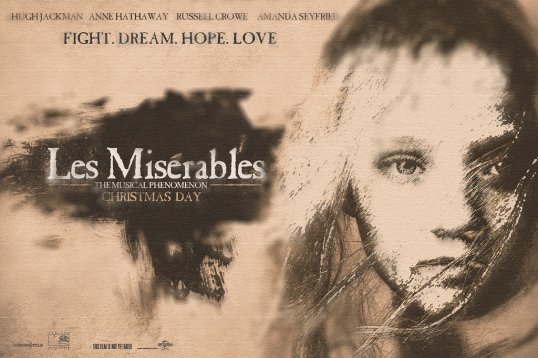
With all my attention on horror-theme last October I had forgotten that the latest trailer for this holiday season’ upcoming feature-length film adaptation of the musical Les Misérables has already come out.

The film will be directed by Academy Award-winning director Tom Hooper (fresh off his win for The King’s Speech) he leads a star-studded ensemble cast in putting on the big screen the much-beloved musical that dominated the 80’s and most of the 90’s. I don’t know any kid growing up during that decade who didn’t get dragged to see the musical in the big cities it entrenched itself in. Instead of hating the experience most kids ended up loving the musical. I know that I was one such highschooler who ended up loving it and musicals in general.

This international trailer shows more of the story compared to the teaser which arrived 5 months earlier. We get to see snippets of Crowe singing as Javert and Seyfried as Cosette. Whilethe West End and Broadway productions have come to an end or at the very least not as popular as they used to be) hopefully this film adaptation will introduce this classic to a new generation of kids. Show them that there’s more to music than the pop hits that dominates the radio waves and internet radio sites.

Les Misérables is set for a December 25, 2012 release date.

Image Source: JWoodhams Deviantart

Trailer: Les Misérables (Teaser)


The moment I saw the news feed that one of my most anticipated films of 2012 finally has an official teaser trailer out I knew that my expectations would only grow with each viewing.

Tom Hooper doesn’t go for small in following up his Academy Award-winning directing work in The King’s Speech by adapting the hugely popular and beloved stage musical Les Misérables which in itself was adapted from the classic Victor Hugo novel of the same name. The cast stars Hugh Jackman and Russell Crowe in the roles of Jean Valjean and Inspector Javert. Anne Hathaway comes away with the role of the tragic Fantine with Amanda Seyfried taking on the role of Fantine’s grown-up daughter Cosette. In what could be a star-making turn, Samantha Barks gets the coveted role of Eponine which was the same role she played as part of the musical’s 25th Anniversary Concert.

Details about this film musical has been scarce, but it’s already been reported that every actor in the cast does their own singing and done so live in front of the camera. This stylistic choice may keep some of the songs from reaching epic levels, but should do well in better conveying the emotional impact for some of the more personal character songs in the musical. In fact, the song that Anne Hathaway sings in the trailer, “I Dreamed A Dream”, is one of those character songs that seem to sound much better with it being less is more style.

Les Misérables is set for a December 14, 2012 release date.

15 Upcoming Films That Are Going To Suck


In just another few days, the summer movie season will end and we’ll enter the fall.  The fall movie season is when all of the prestigious, massively hyped “quality” films are released.  These are the films that everyone is expecting to see remembered at Oscar time.  We expect more out of films released in the Fall and therefore, when a film fails to live up to the expectation of perfection, we are far more quicker to simply damn the whole enterprise by exclaiming, “That sucked!”

Below are 15 upcoming fall films which I think are going to “suck.”  Quite a few of them are “prestige” films though a few of them most definitely are not.  However, they are all films that I fully expect to be disappointed with.

Quick disclaimer: This list is based on only two things, my gut instinct and the advice of my Parker Brothers Ouija Board.  These are my opinions and solely my opinions and they should not be taken as a reflection of the opinions of anyone else involved with this web site.  Got it?  Good, let’s move on to the fun part:

  1. Anonymous (10/28) — Roland Emmerich takes on the burning issue of whether or not Shakespeare actually wrote his plays.  Who cares?  I’m sure this will spark a lot of discussion among people who found The Da Vinci Code to be mind-blowing.
  2. The Girl With The Dragon Tattoo (12/21) — Deal with it, fanboys.
  3. The Ides of March (10/7) — It’s a political film directed by and starring George Clooney!  Watch out for the smug storm that will surely follow.
  4. Immortals (11/11) — Yes, it will suck but it will still probably be better than Clash of the Titans.
  5. The Iron Lady (12/16) — Bleh. This is one of those movies that they make solely because Meryl Streep needs another Oscar nomination.  Nobody will see the film but everyone will talk about how brilliant Meryl was in it.
  6. J. Edgar (TBA) — So, when was the last time that Clint Eastwood actually directed a movie that you didn’t have to make excuses for?
  7. Mission Impossible — Ghost Protocol (12/21) — Honestly, has there ever been a Mission Impossible film that didn’t suck in one way or another?
  8. Real Steel (10/7) — How do I know this film is going to suck?  Go look up the trailer on YouTube and you can see that little kid go, “You know everything about this fight game!” for yourself. 
  9. Red State (9/23) — A satirical horror film with a political subtext?  Well, let’s just hope they’ve got a great director…
  10. Sherlock Holmes: A Game of Shadows (12/16)It’s the law of diminished returns.  The better the original, the worse the sequel.  That said, I really hope I’m wrong on this one.  I loved Sherlock Holmes.
  11. Straw Dogs (9/16) — It’s a remake of the old Peckinpah classic except now, it’s a Yankee Blue Stater getting attacked by a bunch of Redneck Red Staters.  Yankee paranoia is so freaking tedious.  Add to that, Straw Dogs has been remade a few million times and never as well as the original.  At least those remakes had the decency to come up with their own name instead of just trying to coast on the credibility of a better film.  This travesty was written, directed, and produced by Rod Lurie.  Shame on you, Rod Lurie.  (Of course, the toadsuckers over at AwardsDaily.com are madly enthused about this film.)
  12. The Three Musketeers (10/21) — Is anybody expecting otherwise?
  13. Tower Heist (11/4)Brett Ratner continues to encourage us to lower our standards with this action-comedy.  The film’s villain is played by Alan Alda and is supposed to be a Bernie Madoff-type so expect a lot of tedious pontificating from rich actors playing poor people.
  14. War Horse (12/28) — This might actually be a good film but, as a result of all of the hype, it’s going to have to be perfect or else it’s going to suck.
  15. W.E. (12/9)Madonna makes her directorial debut with … well, do I really need to go on?

Review: X-Men: First Class (dir. by Matthew Vaughn)


The name Matthew Vaughn should be familiar with comic book fans everywhere. In 2005, Vaughn was introduced as the director to replace Bryan SInger for the third film in the X-Men franchise. The news was met with some cautious optimism. This was a filmmaker who had quite the loyal and growing following for his work on Stardust and Layer Cake. Months after he was picked my 20th Century Fox news came down that he was backing out of the project due to personal reasons and the film scrambled for a replacement which ended up being Brett Ratner. History was made that day as the beginning of the franchise’s decline began and steep plummet which recently reached it’s nadir with 2009’s Wolverine: Origins.

It’s has now been five years since X-Men: The Last Stand made it to the big-screen and now we have a new film in the franchise. X-Men: First Class has a familiar name behind the director’s seat and it looks like Matthew Vaughn stayed this time around (after directing a smaller superhero film in Kick-Ass for 2010) to craft what could become the best film in the X-Men/Wolverine film franchise. This film is a prequel/reboot of sorts (more on that later) and brings a fresh set of eyes and take on the origin story of this franchise.

X-Men: Last Stand actually begins the film exactly how the first X-Men film began with the 1944 World War II concentration camp setting where a young Erik Lensherr (later to become Magneto) finally manifests his power over magnetic fields as he watches his parents torn from his side. The first film ended that sequence once Erik was knocked out, but this time around it continues with a mysterious man named Schmidt (aka Sebastian Shaw and played with James Bond villainous-flair by Kevin Bacon) taking great interest in Erik and his ability which Erik could only use during bouts of pain and anger. The film continues this slight change in the series’ origins by switching over to Westchester County and into the expansive home of a young Charles Xavier who finds a certain young, blue-skinned shapeshifter named Raven who he invites to stay and become his friend once he realized he wasn’t the only one who was different and with abilities.

These two sequences continue to move the film forward as the we see these two “leaders in the making” adults and trying to find their place in the world of the free-swinging lifestyle and the Cold War culture of the 1960’s. Charles Xavier (played like a well-meaning cad and good-natured naivete about the world by James McAvoy) is a student working on his doctorate in Oxford on genetic theories while his “sister” Raven (Jennifer Lawrence) accompanies him. This is a Xavier who still hasn’t found the patient benevelonce of Patrick Stewart’s Professor X and uses his considerable telepathic abilities to help him pick up on beautiful coeds instead. It’s during such a scene where we see Raven show just a hint of jealousy as Xavier tries his lines and moves on a beautiful British lass. It would seem Raven’s feelings for her ‘brother” may go beyond sibling affection though Xavier doesn’t see her as anything other than a sister for him to protect.

Erik Lensherr’s time as an adult was shown as having become a life of obsession over his treatment at the hands of the Nazi’s and those of Schmidt’s as he travels the world in search of escaped Nazi war criminals. Erik takes him throughout South America as he finds the trail of Nazis hiding out in that region since the end of the war. We see this adult Erik hardened by his anger and single-minded need for revenge on Schmidt and those he worked for. He’s not above using his abilities to kill in order to get the information he requires and there’s a hint of satisfaction when he does kill those he sees as responsible for his tragic upbringing with his magnetic abilities. These two adult sequences continues the film’s theme of the ideological difference between Xavier and Erik being formed through nature and nurture as their lives moved down diverging paths from an early beginning until it convergence for a small, brief period around the time of the Cuban Missile Crisis.

The film’s second act begins with Moira McTaggart (Rose Byrne), now a covert CIA Agent, investigating a certain Col. Hendry who she suspects as having betrayed the nation to the Soviets, but instead finds out that the true nature of Hendry’s associations were much more insidious and dangerous. The iconic Hellfire Club of the comics finally make their appearance with Schmidt who actually happens to be Sebastian Shaw (whose powers grant him the ability to absorb all kinetic energy which he uses to keep himself young and can release with explosive results), Emma Frost (January Jones) who’s a telepath with the ability to turn body in a sort of diamond-form, Riptide who can create tornado-like abilities and finally the demonic-looking Azazel whose ability to teleport might give people not well-versed in the “X-Men Universe” a clue as to one-half of parents who may be responsible for Nightcrawler in the second film.

X-Men: First Class spends much of this second act like it was Ocean’s 11 as Xavier and Erik get recruited by the CIA to find other mutants and create their own mutant team to counter Sebastian Shaw’s Hellfire Club and his goal of initiating World War III between the US and the USSR and thus destroy all of humanity and leave the planet for the mutants to rule over. Yeah, it is this part of the film’s plot which may strain the suspension of disbelief for some audiences who never grew up reading the comics, but it shouldn’t. Ian Fleming’s James Bond series used scenarios just as ludicrous with villains just as Machiavellian in the form of SPECTRE so X-Men: First Class and it’s world domination plans shouldn’t be too farfetched to fans of that British superspy and his adventures.

This middle section of the film is where X-Men: First Class actually begins to lag after a strong first act. I don’t know if the sequences of the new recruits training, bonding and learning how to use their powers could’ve been written to move much faster without losing some of the character building scenes. From how this second act played it seemed to look like scenes were actually cut out to try and keep the film from being too long (it’s final cut being just a tad over two hours already upon release), but I wouldn’t be surprised if the DVD/Blu-Ray release actually has a director’s or uncut version that actually expands this middle section to really give life to it instead of having it play out like a perfunctory training montage with a dash of character beats.

The film hits it’s action-film stride with the third and final act as Xavier and Erik’s team of young mutants must now use their abilities to stop Shaw and his Hellfire Club and at the same time prevent World War III from beginning and not freaking out the humans who are still unaware of their existence as a whole. It’s this third section which we see too much of it in the trailers and tv spots that one might say we’ve seen it all before we even see the film as a whole, but it still kept back a lot from those ads to make the whole final twenty minutes of the film thrilling and action-packed.

All of this could just mean that X-Men: First Class was just your run-of-the-mill superhero action film that we get on a yearly basis come summertime, but it’s a testament to Matthew Vaughn’s direction and the strength of the script by Vaughn, longtime collaborator Jane Goldman and Thor scribes Ashley Edward Miller and Zack Stentz that the film goes beyond being just an action film with all it’s sturm und drang coupled with fancy special effects. The previous films in the series always explored important cultural and moral themes that’s always been the bread-and-butter of the X-Men stories in the comic books. We just don’t see the film explore the ideological difference between Xavier’s peaceful co-existence between humans and mutants alike, but also we get more detail on why Magneto finally comes to the conclusion that war between humans and mutants was an inevitability and why his stance doesn’t fall under the aegis of being evil, but something that anyone could understand and even support whether one was human or mutant.

The story also doesn’t just pay lip-service to the idea of how mutants view themselves and how even within the mutant community there’s a visible rift between those whose abilities are invisible to the general population and those whose abilities and genetic mutation physically manifest themselves in such ways that to many might not look to appealing. This idea really gets a major exploration in the subplot involving Raven (soon to be Mystique), Hank McCoy and, to a certain degree, Xavier and Erik. We see how those like Xavier whose abilities don’t show in a physical manner have a sort of “don’t ask, don’t show” about those like Raven when it comes to their power when in public.

Raven (played beautifully by Jennifer Lawrence) is caught between Xavier who wants her to remain incognito so as not to shock the world too soon in realizing that mutants exists and that of Erik who sees Raven’s original blue-skinned form as beauty and perfection and how she should never hide who she truly is. This tug and pull between her two mentors makes for a convincing subplot in how Raven comes to the conclusion which would take her to the side of Magneto in later films, but also highlight how the two sides in later films have so much intertwining bonds of friendship and relationship that seeing them against each other becomes a tragedy on its own. Civil wars are not just a thing of humans but those who sees themselves apart from them.

The great performances by most of the leads add to the film’s strength. McAvoy and Fassbender, at first, look to be unconvincing in terms of their appearance as the younger versions of Patrick Stewart and Ian McKellen, respectively. This becomes a non-issue once they’ve established themselves through their performances which gives new layers to the personalities of Professor X and Magneto. Many people always saw these two as the comic book version of Martin Luther King, Jr and Malcolm X, but that’s an oversimplification. The film and the performances by McAvoy and Fassbender digs deeper into both their characters’ motivations and ideologies and how their past experiences and upbringing couple with their time together as brothers-in-arms and friends show more about these two than just being mutant-proxies of MLK and Malcolm X. The other young mutants do an adequate enough job that they don’t seem lost in the film. Nicholas Hoult as the young Hank McCoy and how he plays off Lawrence’s Raven during their little subplot in the film is one stand-out that I hope gets explore even more in any follow-up sequel.

There’s a nice burgeoning young love chemistry between him and Lawrence as Beast and Raven that doesn’t seem too tacked on to create a the prerequisite love couple in any film. Their common trait of having physical mutations and how they seem to both feel apart even from their fellow mutants develop their characters in ways the previous films in the series never did. They never want to rid themselves of their mutant powers. They just want to look normal and still keep their abilities. It’s a having your cake and eat it too mentality that has some surprising results for both Raven and Hank.

X-Men: First Class has had some fans of the series put in a very difficult situation. The film definitely is a prequel to the previous films, but it also does a major time in rewriting continuity in the series. I was one of those fans and thought it would ruin the film in the context of the franchise. I’m surprised that in the end I didn’t really care and actually hope that this film actually is a reboot of the franchise. I see this film and forget the previous three as being part of it. This film was just too good and fun in it the end for continuity issues to become the major flaw that sinks it. I liken this film as similar to Christopher Nolan rebooting the Batman film franchise. That film honored the contributions to the character, but went on it’s own way to tell that character’s tale. I see Vaughn doing the same with this film. He has done something which many thought was a near-impossible task and that’s make the X-Men franchise relevant once more in a pop-culture landscape that seems to have left the franchise behind after the disastrous Wolverine: Origins of 2009.

This film delivered on the ideas that made the comic books so beloved by millions of fans for almost a half-century. It made great use of the 1960’s time and setting to tell a story of these characters beginnings as heroes and villains (though the latter shouldn’t be seen as them being truly just evil bad guys). Even the inclusion of real-world historical event like the Cuban Missile Crisis was a nice touch which gave the film a foundation in realism. Again, this film played off like a superhero, Marvel version of an Iam Fleming James Bond story. For those who are huge fans of the previous films there’s even two brief cameos of those films two favorite characters that appear in this film. They don’t come off as cheesy and unnecessary and actually come off as great additions. I won’t mention who these cameos were but the audience’s reaction to them was very vocal and very positive. I say the same should be said for X-Men: First Class as a film that resuscitates the franchise.

Trailer: Real Steel


I’ve been hearing about this film called Real Steel for some time now and a trailer had even come out a couple months earlier, but it’s only with today’s release of the latest trailer that I’ve stopped to actually check it out.

From what I can see in the trailer this looks like a live-action, big-budget adaptation of that classic toy called “Rock’em, Sock’em Robots”. This being Dreamworks who have already turned one classic toy franchise into a major blockbuster film franchise then why not another toy. It stars Hugh Jackman who looks much slimmer and not as bulky as his former Wolverine self. Real Steel looks to be a father-son story that has been done so many times before, but this time with big giant boxing robots.

Further research on this film had me discovering that it’s actually based on a Richard Matheson short story called “Steel”. That story was actually a much darker, colder dystopia tale. Script changes since the screenplay and project was bought by Dreamworks in 2003 has toned down the dystopia and instead the project going more for a form of Americana nostalgia. I’m not sure if those changes were necessary. In fact, I wouldn’t have minded seeing this film go the original Matheson route.

I have feeling that despite my doubts about this film it will do quite well in the box-office. It’s a heartwarming tale with fighting robots and fathers will be taking their young sons to see this in droves. Well, except those fathers who happen to also be on-line film bloggers who may think this film not the kind of drivel and tripe to be showing to their young boys.

Real Steel is set for an October 7, 2011 release date.

What Lisa Watched Last Night: The 83rd Annual Academy Awards


Last night, I watched the 83rd Annual Academy Awards.
Why Was I Watching It?

Why was I watching it?  I was watching it because I love awards shows.  I love them in all of their tacky, silly glory.  I was watching for the clothes, the celebrity meltdowns, and the infamous acceptance speeches.  I was watching because James Franco is hot and Anne Hathaway is adorable.  I was watching because I loved Black Swan and I was only mildly impressed with the Social Network.  I was watching because, as a film lover, my year starts and ends with the Oscar ceremony.  You boys have got your super bowl.  I’ve got my Academy Awards.

What Was It About

This year, the big question was would best picture be taken by the Social Network or by the King’s SpeechI predicted that the Social Network would win and I was wrong.  The Academy gave best picture to The King’s Speech which, unlike Black Swan (my personal choice for best picture), is a film that is very easy to love.  Don’t get me wrong.  I loved The King’s Speech and, seeing as how I wasn’t exactly a huge fan of The Social Network, I can’t complain about the Academy’s decision (though apparently almost everyone else can).

By the way, as far as my Oscar predictions went, I ended up going 15 for 22.  I correctly predicted all of the categories except for Best Picture, Best Director, Best Original Screenplay, Best Foreign Language Film, Best Editing, Best Costume Design, and Best Cinematography.  So, in other words, I correctly predicted all of the awards except for the ones that actually mattered.  However, I am proud to say that, as the broadcast started, I predicted that it would last for 3 hours and 15 minutes and by God, I was right.

So there.

What Worked

Roger Ebert called last night’s ceremony the worst he had ever seen so I guess it’s no surprise that I actually enjoyed it.  I certainly felt it was an improvement over last year’s ceremony which was pretty boring except for when Kathryn Bigelow won best director.  There weren’t any endless tributes, self-congratulatory speeches about how important the film industry is for the survival of the world, and we didn’t have to sit through any pre-scripted, awkward banter between poorly matched presenters. 

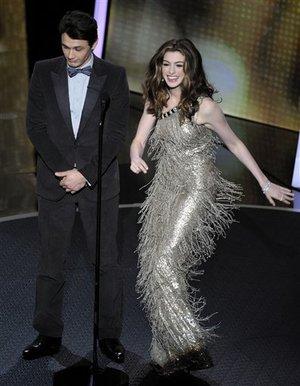
As for the hosts, James Franco appeared to have mentally checked out before the show actually started but he was nice to look at.  Anne Hathaway, meanwhile, was a bundle of nervous energy and you know what?  I would have been too.  For the first time in my history of watching the Oscars, I could actually relate on a personal level to what was happening on the stage.  I’ll take the charming awkwardness of Franco and Hathaway over Hugh Jackman any day.  Ebert disagrees.  He apparently tweeted that Kevin Spacey should host.  And, if I ever felt like spending three and a half hours watching some smug jackass singing Under the Sea, I’d agree with him.

I liked the opening film montage, which featured Hathaway and Franco going into Alec Baldwin’s dreams in order to learn how to host the show.  If nothing else, it paid tribute to just how much of a cultural phenomenon Inception actually was last year.  (At the same time, it also pointed out just how ludicrous it is that Christopher Nolan — who is hot along with being a genius, by the way — was not nominated for best director.)

Probably my favorite presenters were Mila Kunis and Justin Timberlake.  Kunis looked great and Timberlake won my heart all over again by announcing that he was actually Banksy.

The In Memoriam Tribute was actually pretty touching this year and I think a lot of that has to do with the fact that the audience has finally figured out how inappropriate it is to break out into applause in the middle of it.  A lot of viewers were apparently angered that Corey Haim wasn’t included.  Personally, I was disappointed (but not surprised) to see that Jean Rollin was left out.

For me, the best acceptance speech came from David Seidler as he accepted his Oscar for writing The King’s Speech.  His speech touched me as a former stutterer but on top of that, he delivered it with just the right amount of humility and humor.  Aaron Sorkin could learn a thing or two from Mr. Seidler.

Finally, I said earlier that I was hoping for just one upset win to keep things interesting and, to my surprise, the show provided me one when Tom Hooper beat David Fincher for best director.  Even among those who expected the King’s Speech to take best picture, the general assumption seemed to be that Fincher would win best director.  Personally, I think Fincher would have won best director except for the fact that people tended to think of The Social Network as being an Aaron Sorkin film as opposed to a David Fincher film.  In all of the preliminaries leading up the Oscars (the Golden Globes, the critics awards), the emphasis was always put on Sorkin’s screenplay as opposed to Fincher’s direction.  David Fincher was almost treated as an after thought and, as a result, Tom Hooper won best director.

(Of course, personally, I was rooting for Darren Aronofsky.)

Of the nominated films, Black Swan was my favorite, followed by 127 Hours, Inception, Winter’s Bone, and the King’s Speech.  I thought The Social Network was a good film but certainly not a great film and, to be honest, I’ve come to resent being told again and again by various online, self-appointed film gurus that my refusal to unconditionally love The Social Network is somehow an indication of a character defect on my part.  Seriously, some of these Social Network partisans make the Avatar people look tolerant by comparison.  I’m sure these people have spent last night and today ranting their little hearts out about how the Academy sucks and how The Social Network is clearly the greatest film ever made.  And to them, all I can say is get over it.  If you were watching the Academy Awards because you seriously felt that the awards actually mean anything, then you’ve obviously still got a lot of growing up to do.

That said, I make no apologies for being ticked off over the award for Best Feature Documentary but more about that below.

What Didn’t Work

Well, I’ll get the big one out of the way first.  This was the only time I actually got angry while watching last night’s show.  I’m talking, of course, about Inside Job winning best documentary.  This upset me even though I had actually predicted that Inside Job would defeat Exit Through The Gift Shop.  My objection comes down to this — Inside Job was the Capt. Hindsight of documentaries this year.  Inside Job was basically a documentary that told us what we already know and then encouraged us to pat ourselves on the back for agreeing.  In a year that was actually a pretty good one for documentaries, Inside Job was the least challenging of all of the nominees and therefore, I guess it’s not a shock that it won.  Meanwhile, Exit Through The Gift Shop — a film which should have been nominated for best picture — was ignored.

Add to that, I was really hoping for a chance to see how Banksy would accept the award or if he would even show up at all (or if he would turn out to be Justin Timberlake).  Instead, I got the director of Inside Job going, “You know, nobody’s been arrested for the bad economy yet.”  Well, if that’s what you think should happen then go to talk to the people who make and enforce laws.  But you’re on an awards show, buddy.  And if you think anyone watching an awards show is going to take action just because of some comment you weakly muttered during your acceptance speech, then you really are out of touch with reality.

We were reminded one too many times that we were watching “the young and hip Oscars.”  The young and hip Oscars would not have featured Celine Dion singing.

I really wish the Oscars would stop trying to force some artificial “theme” on each year’s ceremony.  This year, they took time to celebrate “the greatest films” of Oscar Past.  The problem, of course, is that most of the greatest films of Oscar past didn’t win best picture.  Usually, they ended up losing to movies like How Green Was My Valley, The Greatest Show on Earth, and Crash.

Aaron Sorkin won best adapted screenplay as we all knew he would and, as usual, he came across as smug and condescending during his acceptance speech.  The whole, “Daddy’s an Oscar winner now…” thing would have been touching if not for the fact that it’s been used at least once at every single Oscar ceremony in history.

Trent Reznor did not say, “I want to fuck you like an animal” while accepting his award for scoring The Social Network.  However, I must say, Trent cleans up well.

Technically, yes, James Franco was not real impressive as co-host.  The general consensus on twitter was that he was stoned but I can’t say too much against him because he’s James Franco.  Even when he showed up in drag, he was still James Franco.  I know some people looked at Franco last night and thought, He’s not even trying.  I looked at Franco and thought, yum…..

“Oh my God!  Just Like Me!” Moments

There were a few and most of them had to do with Anne Hathaway.  Most of the comments on twitter concerning Hathaway’s performance as host were not kind but I don’t care.  I love her and I think her lack of polish was actually rather adorable.  If I was hosting the Oscars, I would probably take a few moments to brag about my dress as well.  I know I’d certainly probably start giggling at random moments.  I also know that I’d probably get a little bit annoyed with James Franco’s lack of commitment to the show as well but you know what?  I’d still get all sorts of naked with him after the show because he’s James Franco and he just does things to me.

(If anything, last night’s show proved that the difference between a hot guy and all other guys is that a hot guy can get away with it.)

My other big “Oh my God!  Just like me!” moment came when Melissa Leo won for best supporting actress for the Fighter and dropped the F-bomb on national TV.  I would so do that too.  I mean, it’s an Oscar!  God knows what I’d end up saying if I ever got one.

Lessons Learned:

I’ve seriously got a thing for James Franco.
2010 Oscars: The Search For A Host Or Two


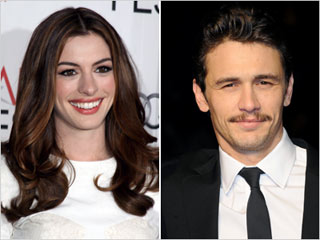
So, I guess this the type of silly, gossipy stuff that I — and I alone — am a sucker for but anyway … the hosts of the next Academy Awards ceremony have been announced and the winners are Anne Hathaway and James Franco!

Huh?

Don’t get me wrong, I love them both.  James Franco was great in 127 Hours and Anne Hathaway starred in the story of my life, Rachel Getting Married.  But what exactly about either one of them screams “Oscar host?”

To be honest, Oscar Host has always seemed like a thankless job.  Jon Stewart did a pretty good job a few years ago (and it was really cool how he brought Marketa Irglova back out on stage so she could give her speech after winning the award for best original song) but otherwise, is it really a job that anyone wants? 

(And, even if Stewart was a great Oscar host, he’s been getting progressively more and more smug, annoying, and self-important ever since.)

Remember when Hugh Jackman hosted and he sang that song that just went on and on and then we all realized that we didn’t really like Hugh Jackman that much in the first place?

And I guess last year it was Steve Martin and Alec Baldwin and … yeah, that was really memorable.

Ellen DeGeneres hosted the Oscars and suddenly, she was a judge on American Idol and did that do anyone any good?

Actually, I think the ideal host would be someone like Jeff Probst, someone who would just smirk after the winner’s announced and ask the other nominees what it felt like to be losers.

Seriously, I’m worried for Franco and Hathaway.  I think that perhaps in the future, the role of Oscar host should be reserved for people who are already generally acknowledged as being annoying.  That way, at least, nobody will shed any tears when the Oscar Host Curse kicks in. 

Kara DioGuardi needs the work.

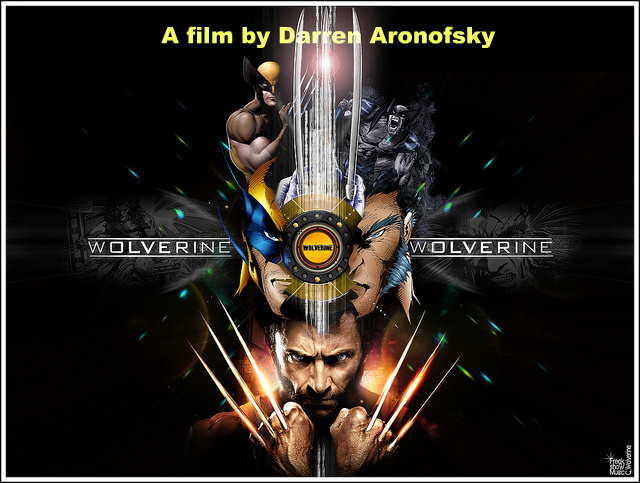
Darren Aronofsky to take on Wolverine


A little over five years ago Warner Brothers made the decision to reboot the Batman film franchise. Several names of filmmakers were mentioned as candidates to helm this reboot. One of them was director Darren Aronofsky. He has made a name for himself helming very dark (and for some very depressing) films about very damaged personalities and their struggles. The Batman/Bruce Wayne duality was perfect for Aronofsky and he had begun to do early treatments to adapt Frank Miller’s classic Batman origin tale, Batman: Year One. In the end, this Aronofsky project fell through and the reboot ended up being handled by Christopher Nolan (not a slouch of a filmmaker himself).

Aronofsky has made a couple of original and very personal films since then (The Fountain, The Wrestler, Black Swan), but with 20th Century Fox scrambling to put another one of their Marvel-licensed properties into production in order to keep the rights to them, they’ve decided to give the reins of the next Wolverine film to Aronofsky. Rumors of Aronofsky close to signing the deal to helm this Logan sequel was finally confirmed by none other than Hugh Jackman himself aka Wolverine in an interview for Vulture.

The first film in this character’s franchise was lackluster at best and horrible to most. The fact that a sequel has been greenlit even after the less-than-stellar box office returns of the first film was headscratching to many. Will Aronofsky’s involvement in this sequel actually erase the bad taste that Wolverine: Origins left in fans’ mouths. If there was anyone who can actually get a handle in the troubled and damaged psyche of one of Marvel’s most iconic characters it would be Darren Aronofsky.

There’s still little details as to what sort of storyline this Aronofsky sequel will take or will he just decide to reboot the franchise and start fresh. The reaction I’ve been reading has been mostly tepid with some guarded excitement from those who thinks Aronofsky will end up working his dark magic on this character on the big-screen. We’ll learn more once filming starts in early 2011.

Here’s to hoping that Aronofsky can do for Wolverine what Nolan was able to do for Batman.

Source: Vulture

Past Review: The Prestige (dir. by Christopher Nolan)


2006 has been a quiet year for event films. The predicted blockbusters this past summer pretty much underperformed despite some being exactly as good as I thought they’d be. Other than Johnny Depp and the gang’s Pirates of the Caribbean: Dead Man’s Chest, every blockbuster didn’t blow the industry out of the water. It’s a very good thing that I had smaller films to tide me over. This year has been a very good ones for some independent-minded and smaller films which came out during the slow first couple months of the year and during the graveyard release months between the end of summer and the start of the late year holidays. I’ve already had the chance to see such very good films like Running Scared from Wayne Kramer and Hard Candy from David Slade to The Proposition from John Hillcoat. I am glad to say that Christopher Nolan’s film adaptation of Christopher Priest’s novel, The Prestige is another non-blockbuster that excites, entertains and, in the end, keeps the audience mystified but not confused.

I’ve read Christopher Priest’s novel about dueling late 19th-century London magicians. It’s a novel written in epistolary format with each chapter and section written as entries into the journal of one of the main characters in the story. The novel itself is pretty straightforward as it tells the story in near chronological order. I was hesistant to embrace this film adaptation when I first heard about it since alot of the mystery of of the story wouldn’t translate so well in film if they followed the strict order of how the story was told in the novel. For Christopher Nolan and his brother, Jonathan, to just adapt the novel straight-out would’ve made for a dull and boring mystery-thriller. I was glad that the Nolan brothers were inventive enough to borrow abit from Christopher Nolan’s first feature film, Memento. Their film adaptation of The Prestige doesn’t go backwards in its narrative, but it does mixes up the chronological order of the story somewhat, but not to the point that Tarantino does in Pulp Fiction and Kill Bill. The two Nolans fudges abit with the timeline to add some backstory filler to help give the characters that Christian Bale and Hugh Jackman portrays with the reason for their pathological obsession with each other.

Christopher and Jonathan Nolan’s screenplay for The Prestige was able to keep the mystery of the story intact, but it also keeps the amount of red herrings in such films to a minimum. Michael Caine’s character, Harry Cutter, opens up the film explaining just exactly what constitutes a magic trick on stage. How it’s divided into three parts. First, there’s “The Pledge” wherein the magician shows the audience something ordinary he or she will use in the trick. Soon, the magician will follow this up with “The Turn” where the abovementioned ordinary object does something extraordinary in front of the audience. The pay-off of the magician’s trick is “The Prestige” where the audience’s astonishment occurs as they fail to deconstruct and figure out the means of the trick. That’s pretty much the film in a nutshell. It’s one big magic trick. The clues are there for the audience to see, gather and extrapolate their answer to the mystery that is the story. The screenplay doesn’t treat the audience as if they need to be hand-held throughout the film. In fact, anyone who pays attention will be able to solve one-half of the mystery by the first hour. I won’t say exactly whose half of the mystery it will be but people will be kicking themselves afterwards if they don’t figure it out right away.

This magic trick of a film does have its many underlying layers of themes to add some complexity, drama and tension to the characters of Alfred Borden (Christian Bale) and Rupert Angier (Hugh Jackman). I’ve already mentioned that throughout the film their mutual obsession about each other is due to a backstory detailing their past. A past where they were initially friends — rivals even — and apprentices to the magician Milton (played by Ricky Jay) and Harry Cutter (excellently played by Michael Caine as the only voice of reason throughout the film) who creates and maintains the devices used in all the stage tricks. Borden and Angier’s obsession is not just in ruining and sabotaging each other’s magic tricks and lives, but also trying to find out each other’s secrets as they both learn magic tricks which amaze and thrill the gentry of London’s stage. From the beginning of the film these two characters begin a journey towards a path of destructive behavior which puts not just each other’s lives at risk, but those who they care about. All of it in the name of humiliating and upstaging the other due to a tragic incident early in their mutual careers. These two individuals were not sympathetic characters and I applaud Christopher Nolan and his brother for not softening up their hard edges.

Most adaptors will try to make a story’s characters more sympathetic and likable. They went the opposite in The Prestige. But even these two dark characters continue to exude the charisma and strong personalities that the audience will root for one or the other. Should they root for the charismatic and born shownman that Hugh Jackman’s Angier character plays or go for the perfectionist Borden character Christian Bale plays. A perfectionist whose technical skills surpasses that of Angier’s but whose introverted and brooding personality makes him little or no stage presence.

Both Jackman and Bale play their characters well. The film wouldn’t be so good if it wasn’t for the work of these two actors. It helps that they’re surrounded by quality supporting character like Michael Caine as the seasoned, veteran mentor to the dueling magicians. Even Scarlett Johansson does very well with the part she’s given. It’s a part that many sees as more of a throwaway character. A piece of very good-looking distraction for both the story and the audience. But she gamely plays the role of pawn for both Angier and Borden. Unlike Michael Caine’s character who remains the singular voice of sanity in the film, even Johansson’s character of Olivia gets pulled into the obsessions and betrayals that’s plagued both Angier and Borden. But in the end, she’s just part of the process of “The Turn” and if people have been watching the film closely right from the beginning then she’s also a clue as to the secret of one of the amazing magic tricks shown by the two magicians.

The Prestige also has a distinct look about it. The 19th-century London just before the start of the new millenium gives it a certain sense of Victorian-era familiarity. Production designer Nathan Crowley shows a London at the height of its Gilded Age, but soon gives way to a certain steampunk look as inventor Nikola Tesla makes an appearance during an integral part of the story. David Bowie portrays Tesla as an eccentric genius whose search for the secrets of the universe will lead to the discovery of what many of that era would consider magic. It’s the ingenius looking technology created for the Tesla sequence which finally gives The Prestige it’s root in fantasy and science-fiction. The film doesn’t dwell on this new development but from that part of the story and until the end, the film takes on a look and feel of a steampunk mystery-thriller. There’s not enough films that tries to mine this new subgenre and I, for one, am glad that Christopher Nolan added this new dimension to the film’s overall look.

In the end, The Prestige really needs to be seen to be appreciated and for people to make up their minds about the film. Some will see it as a thriller with twists and turns that doesn’t insult the intelligence of its audience. Some may see the film as just one large gimmick from start to end. Those people will probably be correct as well. The film at its most basic level is one long magic trick with all three acts. It has “The Pledge” which is then followed up by “The Turn” and then ends with “The Prestige”. It will be up to each individual who sees the film to make the final decision as to whether they’ve bought into all three acts of the magic trick that is The Prestige, or come away having felt like they’ve wasted their time. I’ve not come across many who felt like the latter, even those whose own feelings about the film don’t reach the same level of praise as I have for Christopher Nolan’s latest offering. All I know is that this is a film that delivers on its premise to confound and amaze. It also continues to validate my views that Bruce Wayne and Batman are in very good hands with Christopher Nolan at the wheel. The Prestige was easily one of the best film of 2006.