Excalibur (1981, directed by John Boorman)


During the Dark Ages, Britain is at war.  King Uther Pendragon (Gabriel Byrne) leads his men against The Duke of Cornwall (Corin Redgrave).  Uther and his men swear their allegiance to God and St. George but they trust in the magic of the mysterious Merlin (Nicol Williamson).

Merlin negotiates peace between Uther and Cornwall but Uther throws that peace away when he becomes obsessed with Cornwall’s beautiful wife, Igrayne (Katrine Boorman).  Merlin uses his magic to disguise Uther as Cornwall so that Uther can spend one night with Igrayne.  When Cornwall is killed in battle, Uther marries Igrayne and realizes it was never necesarry to use Merlin’s magic and that Merlin, who has the power to see the future, knew that.  Merlin takes Uther and Igrayne’s infant son from them and then disappears.  Later, Uther is killed by by three of Cornwall’s men.  Before dying, Uther drives his magic sword, Excalibur, into a stone.  On the true king of England will be able to remove it.

Uther’s son, Arthur (Nigel Terry), grows up with no knowledge about his parentage.  When he accidentally draws Excalibur out of the rock, Merlin returns to counsel the new king.  And the new king has much to learn, as not all of the nobleman are willing to accept him as their ruler.  Arthur proves himself worthy to be king while his half-sister, Morgan (Helen Mirren), waits for her chance to get revenge.

Excalibur is one of the most ambitious films made about King Arthur.  John Boorman fits the entire legend of Arthur, Lancelot (Nicholas Clay), Percevel (Paul Geoffrey), Guinevere (Cherie Lunghi), and the search for the Holy Grail into one movie and, as a result, there’s not a dull moment.  Boorman presents the reign of King Arthur as a conflict between England’s pagan past and the new era of man.  Merlin and Morgan’s magic is powerful but, in the end, power is determined by bloody battles fought by men encased in clunky armor.  Arthur, Lancelot, and the other knights claim to live by the honorable, chivalric code but only one of them is able to live up to the ideal.  The others become consumed by lust, jealousy, and a thirst for power.

In my opinion, Excalibur is the best movie made about King Arthur, mostly because John Boorman takes the story seriously and makes us feel like we are watching people who truly are living in different world and a different time.  The chivalric code is necessary to keep the peace in a time when there are multiple pretenders-to-throne.  Mordred (Robert Addie) is not just a villain because he seeks to overthrow his father but also because he is the one person to have no respect for the code or the mystic power of the Holy Grail.

Excalibur has a large cast with many familiar faces.  Keep an eye out for Patrick Stewart as one of Arthur’s earliest supporters and also Liam Neeson as a surly Sir Gawain.  Of all the Lancelots who have appeared in the movies, Nicolas Clay is the best and Helen Mirren is the perfect Morgan.  Nicol Williamson steals the movie as the mysterious Merlin.  And while Nigel Terry was too old for the scenes where Arthur is supposed to be a callow teenager, he grows into the role just as Arthur grew into being king of the Britons.

Monty Python and The Holy Grail will always make me laugh but John Boorman’s big, beautiful, and bloody Excalibur is the best film about Camelot.
The TSL Grindhouse: Caligula: The Ultimate Cut (dir by Tinto Brass)


How many cuts do we need of a bad movie?

Caligula is a film with a long and storied history.  In the mid-1970s, Penthouse publisher Bob Guccione wanted to follow the lead of his rival, Hugh Hefner, and get into the movie business.  His plan was to make an explicit adult film with high production values, one that could be sold as a mainstream feature film.  He decided that the infamously decadent Roman Emperor Caligula would be the subject of his film.  In order to give the project some gravitas, he accepted scripts from both Lina Wertmuller and Gore Vidal.  Ultimately, he chose to go with Vidal’s script because Vidal’s name had more cultural cachet than Wertmuller’s.  It certainly wasn’t because he liked Vidal’s script, which Vidal later said featured a lot of gay sex but only one scene of heterosexual coupling.

With the promise that Caligula would be a classy production that would push the boundaries of cinematic sex without actually being pornographic, Guccione was able to bring together a truly impressive cast of actors.  Malcolm McDowell agreed to play Caligula.  Helen Mirren was cast as Caligula’s wife, Caesonia.  John Gielgud took on the role of Nerva the philosopher while Peter O’Toole was cast as the diseased Emperor Tiberius.  Guccione offered directing duties to John Huston and Lina Wertmuller.  In the end, no matter how much money he was willing to spend or how distinguished a cast he had assembled, Guccione could not find a prominent, mainstream director who was willing to work with him.  Guccione ended up hiring a director he knew little about, an Italian arthouse filmmaker named Tinto Brass.

Brass proceeded to rewrite Vidal’s script.  Brass’s version of the film featured more sex and less politics.  Guccione was happy about that until he discovered that Brass’s plan was to direct the sex scenes to be grotesque and disturbing.  To his horror, Guccione discovered that Brass was essentially parodying the type of film that Guccione wanted him to direct.  Even when Guccione insisted that the latest “Penthouse pets” be cast in the film, Brass tried to keep them in the background.  As Guccione’s demands grew, Brass responded by refusing to emphasize the ornate and very expensive sets that Guccione had paid to have created.  A working ship was built but Brass reportedly chose to put it in a small warehouse so that there would never be room to get a full shot of it.  Guccione responded by taking the film away in post-production and inserting several hardcore sex scenes, which upset the members of the cast who did not sign on to appear in a pornographic film.

As for the film itself, it must be said that Caligula is probably one of the most historically accurate portrayals of ancient Rome.  The city was said to be a mix of dirty streets and ornate palaces and Caligula certainly captured the mix of beauty and sordid decadence that was the Roman Empire.  The film’s plot actually sticks very closely to what was written about Caligula by Roman historians like Suetonius.  Helen Mirren and Malcolm McDowell both give strong performances, even if McDowell later claimed the film ruined his career by typecasting him as a perverse villain.  Peter O’Toole is memorably grotesque as Tiberius.  Exploitation vets John Steiner and Teresa Ann Savoy also make an impression in their roles and one gets the feeling that they both understood what type of film they were appearing in, even if the bigger names in the cast did not.  There are moments of shocking grandeur and visual beauty to be found in Caligula and also moments of such total ugliness that they are difficult to watch.  In many ways, Caligula is what Guccione wanted.  It’s a big, expensive film that tests boundaries and features explicit sex.

But, Good God, is it ever boring!  Seriously, the scene where Caligula visits Tiberius in Capri goes on forever.  Despite McDowell’s strong performance, Caligula is not a particularly compelling character.  He becomes emperor and then he goes mad.  For over two hours, Caligula does one terrible thing after another and there’s only so long that you can watch it before you just want someone to hurry up and kill him.  The film suggests that Caligula was rebelling against the Roman establishment but, in the end, who cares?  He kills his friends.  He has sex with his sister.  In the film’s most disturbing scene, he rapes a bride and then fists the groom.  It just goes on and on and it gets old pretty quickly.

Still, there’s always been a lot of debate over whether or not it would be possible to make Caligula into a good film.  Bob Guccione claimed that he saved the film.  Tinto Brass disagreed and his director’s cut, which takes out Guccione’s hardcore inserts, is considerably better-paced than the Guccione version but the nonstop ugliness still gets rather boring.

That brings us to the latest version of Caligula, the Ultimate Cut.  Assembled without the input of Tinto Brass or the deceased Bob Guccione, Caligula: The Ultimate Cut played at Cannes in 2023 and was given a limited release by Drafthouse Films in 2024.  It was largely assembled out of unused footage and alternate takes.  I’ve read that not a single fame from the original version of Caligula is in The Ultimate Cut but I don’t think that’s quite true.  (The scene with the giant beheading machine appears to be the same footage that appeared in the original version.)  Caligula: The Ultimate Cut removes all of Guccione’s hardcore footage but it also downplays a lot of Brass’s directorial flourishes as well.  Instead, The Ultimate Cut is said to much more closely follow Gore Vidal’s vision of the film.

Is the Ultimate Cut any good?  It definitely looks better than the previous version of Caligula.  The restoration makes Rome into a very colorful city.  There’s a bit more humor to McDowell’s performance in the Ultimate Cut.  While his version of Caligula still becomes a monster (and the wedding rape is still included in the film), he starts out as a clown whose mission is to humiliate the Roman establishment in much the same way that Tiberius used to humiliate him.  In The Ultimate Cut, Caligula is much more of an anarchist.  At the same time, the Ultimate Cut features a bit less of John Steiner as the duplicitous Longinus and that’s a shame because Steiner’s performance was one of the best in the original version.  As well, Helen Mirren’s performance is stronger in the original version than in The Ultimate Cut.  The alternate takes that were used in The Ultimate Cut often seem to favor McDowell over Mirren.

That said, The Ultimate Cut is still a bit of an endurance test.  Caligula’s meeting with Tiberius still goes on forever and the nonstop evil of his reign still gets a bit dull after a while.  It turns out that Caligula the Anarchist is no more compelling than Caligula the Madman.  Brass and even Guccione may have had a point with the original version of CaligulaCaligula is a film that requires a truly sordid and shameless sensibility to be interesting.

In the end, it’s hard not to feel that all of this could have been avoided if Gemellus had been named emperor.

Catching Up With The Films of 2023: Golda (dir by Guy Nattiv)


In Golda, Helen Mirren stars as Golda Meir, the 4th Prime Minister of Israel and the first woman to lead a government in the Middle East.

The film opens in 1974, with a visibly unwell Golda Meir braving a line of protestors as she testified before a commission that is investigating the events that led to the 19-day Yom Kippur War.  Sitting before the members of the commission, Meir lights a cigarette and, as the smoke forms around her, she speaks with a confidence that belies her physical frailness.  It’s the first of many cigarettes that we will see Golda Meir smoke throughout this film.  While Golda Meir was known for being a chain-smoker in real life, her smoking also plays an important thematic role in the film.  Golda Meir is terminally ill throughout the film, secretly undergoing chemotherapy and continually being told that her high-stress job, her cigarettes, and her coffee are not helping her health.  Golda, however, knows what she has to do to keep herself focuses and to handle the stress of being the leader of a small country that is surrounded by enemies and for her, that means drinking a lot of coffee and smoking a lot of cigarettes.  Much like Israel, she is not going to be told what to do by people who do not understand what she has to deal with on a daily basis.  Throughout the film, Golda willingly sacrifices her physical health for Israel, telling her more trusted aide (Camille Cattin) that the only thing that worries her is developing dementia in her old age.  A leader who cannot think cannot lead.

The majority of the film takes place in 1973, during the 19-day Yom Kippur War.  Israel is caught off-guard by a surprise attack led by Egypt and Syria.  Vastly outnumbered, the IDF struggles to repel the invaders.  While dealing with not only her own bad health but also the personal and ideological conflicts within her government, Meir also reaches out to the U.S. Secretary of State, Henry Kissinger (Liev Schreiber) for help.   Unfortunately, Washington D.C. is more concerned with Watergate than with the latest war in the Middle East and, as Meir quickly deduces, there is also worry that Saudi Arabia will cut off its supply of oil to any country that supports Israel.  Though Meir uses a combination of charm and shrewd political gamesmanship to convince Kissinger to put pressure on the Nixon administration, Meir still finds herself being pressured to accept an internationally-brokered ceasefire rather than pursue a strategy of forcing Egypt into negotiations….

Does this sound familiar?  A vicious surprise attack is launched on Israel during a holy day.  The Israeli Prime Minister, who is loved by some and vilified by others, is accused of not being sufficiently prepared for the attack.  Israel is initially isolated from the world, just to be pressured to accept a ceasefire as soon as it starts to prove its resiliency and humiliate its enemies.  Golda completed production before the October 7th attacks but the film feels like a direct response to them, a reminder that Israel has always had to fight for its existence and that it has always proven itself to be stronger than its enemies realize.

Much like Darkest Hour, another film about a leader who was underestimated, Golda plays out like a dream of history, with the emphasis being on Golda Meir moving from one meeting to another, somehow managing to hold everything together while the world sometimes seem to be falling apart around her.  A good deal of the film’s tension comes from the moments when Golda and her advisors wait to hear whether or not their latest move has been a success.  One of the film’s most harrowing scenes features Golda listening over a radio as a group of Israeli volunteers are wiped out by the invading Egyptians.  It’s a scene that reiterates the human cost of war, regardless of which side wins.  (The film makes good use of historical footage of the war, mixing it with scenes of Golda and her cabinet planning their strategy.  Again, it serves to remind the audience that there are real consequences to every decision.)  Held together by Mirren’s intelligent and authoritative performance, Golda is a film full of details that stick with you.  I’ll always remember the scenes of Golda being led through an underground morgue so that she can secretly be treated for the cancer that is slowly killing her.  With each trip, the morgue become more and more filled with bodies.

Though Mirren’s performance was acclaimed, Golda itself opened to mixed reviews.  I suppose in today’s political atmosphere, that’s to be expected.  After all, Golda is not only a pro-Israel film but it’s also a film that portrays Henry Kissinger as being something other than a one-dimensional Bond villain.  For many of today’s very online film reviewers, all of that is heresy.  At a time when some so-called educated people are driven to a rage at just the sight of posters of abducted Israeli children, Golda‘s reception is not a surprise.  At a time when people are making excuses for terrorists who would attack farmers and concert-goers, a films as otherwise different as You Are So Not Invited To My Bat Mitzvah and Golda can feel like acts of beautiful cultural defiance.

History repeats itself, Golda tells us.  Golda may largely take place in 1973 but, ultimately, it’s a film about 2023 and 2024.

Lisa Marie’s Oscar Predictions For August


Well, it’s that time of the month again!  Here are my Oscar predictions for August!

This month, the biggest development in the Oscar race was Dune Part Two being moved to a 2024 release.  With no end in sight for the SAG/AFTRA strike, it wouldn’t surprise me if more big productions — like The Color Purple — ended up following Dune to 2024.  (One film that will not be moving back is Killers of the Flower Moon, as everyone knows that Martin Scorsese is the true star of that film.)  With so many films potentially moving back, this Oscar race could end up paralleling the 2020 race, in which a lot of movie that might otherwise not be nominated moved into the slots that would have otherwise been reserved for the big studio productions.  (Regardless of their individual strengths, both Nomadland and CODA owed a bit of their victory to the way COVID disrupted their Oscar races.)

Below are my predictions for August.  Be sure to also check out my predictions for March and April and May and June and July!!

Best Picture 

Air

Barbie

The Color Purple

Ferrari

The Holdovers

The Killer

Killers of the Flower Moon

Maestro

Oppenheimer

The Zone of Interest

Best Director

Greta Gerwig for Barbie

Jonathan Glazer for The Zone of Interest

Christopher Nolan for Oppenheimer

Alexander Payne for The Holdovers

Martin Scorsese for Killers of the Flower Moon

Best Actor

Bradley Cooper in Maestro

Leonardo DiCaprio in Killers of the Flower Moon

Colman Domingo in Rustin

Paul Giamatti in The Holdovers

Cillian Murphy in Oppenheimer

Best Actress

Helen Mirren in Golda

Carey Mulligan in Maestro

Natalie Portman in May December

Margot Robbie in Barbie

Kate Winslet in Lee

Best Supporting Actor

Matt Damon in Oppenheimer

Robert De Niro in Killers of the Flower Moon

Robert Downey, Jr. in Oppenheimer

Ryan Gosling in Barbie

Jesse Plemons in Killers of the Flower Moon

Best Supporting Actress

Emily Blunt in Oppenheimer

Lily Gladstone in Killers of the Flower Moon

Taraji P. Henson in The Color Purple

Julianne Moore in May December

Da’Vine Joy Randolph in The Holdovers

Lisa Marie’s Oscar Predictions For July


Well, it’s that time of the month again!  Here are my Oscar predictions for July!

Probably the biggest development in the race is that both Barbie and Oppenheimer opened with a bang and established themselves as bona fide contenders, along with Scorsese’s Killers of the Flower Moon.  I think people were expecting that as far as Oppenheimer was concerned whereas the critical acclaim (and criticism) received by Barbie was a bit more of a surprise.  At this point, the debate over whether or not Barbie has a message can only work to the film’s advantage.  Working against it is the same thing that kept the Lego movies from showing up in the Best Animated Feature category.  For all the discussion about what Barbie means, there’s still the risk of certain members of the Academy viewing it as being an extended commercial.  Still, for now, I think both films have to be considered strong contenders.

(What about Sound of Freedom? some may be asking.  Regardless of the film’s box office success and what other qualities the film may or may nor have, there’s no way the Academy is going to consider a film about and starring an outspoken Trump supporter.)

If there’s anything that could truly upend the Oscar race, it’s how the studios are going to deal with the SAG/AFTRA strike.  For instance, there’s been speculation that some contenders — like The Color Purple — will be pushed back until the strike is settled so that their casts will be able to do publicity for them.  It’s totally possible that some of the big contenders that we’re expecting to see in November and December could instead be pushed back to 2024.  We’ll see what happens.

Below are my predictions for July.  Be sure to also check out my predictions for March and April and May and June!!

Best Picture 

Air

Barbie

The Color Purple

Dune: Part Two

The Holdovers

Killers of the Flower Moon

Maestro

Oppenheimer

Past Lives

The Zone of Interest

Best Director

Greta Gerwig for Barbie

Jonathan Glazer for The Zone of Interest

Christopher Nolan for Oppenheimer

Alexander Payne for The Holdovers

Martin Scorsese for Killers of the Flower Moon

Best Actor

Bradley Cooper in Maestro

Leonardo DiCaprio in Killers of the Flower Moon

Colman Domingo in Rustin

Paul Giamatti in The Holdovers

Cillian Murphy in Oppenheimer

Best Actress

Greta Lee in Past Lives

Helen Mirren in Golda

Natalie Portman in May December

Margot Robbie in Barbie

Emma Stone in Poor Things

Best Supporting Actor

Willem DaFoe in Poor Things

Matt Damon in Oppenheimer

Robert De Niro in Killers of the Flower Moon

Robert Downey, Jr. in Oppenheimer

Ryan Gosling in Barbie

Best Supporting Actress

Emily Blunt in Oppenheimer

Lily Gladstone in Killers of the Flower Moon

Taraji P. Henson in The Color Purple

Julianne Moore in May December

Da’Vine Joy Randolph in The Holdovers

Here’s The Trailer for Golda!


Here’s the trailer for Golda, a film about Israeli Prime Minster Golda Mier and her leadership during The Yom Kippur War of 1973.  Much as with Michael Caine’s The Great Escaper, this film looks like it could, among other things, allow a veteran performer to enter this year’s Oscar race.  Golda is scheduled to be released nationwide on August 25th.

Here’s The Trailer for Fast & Furious 9!


Earlier today, a lot of people on twitter got insanely excited when Helen Mirren showed up for a few seconds in the trailer for Fast & Furious 9. There’s nothing wrong with that, of course. Even before her casting was announced, Helen Mirren seemed like someone who belonged in a Fast & Furious film.

Personally, I’ve always been a fan of the Fast & Furious films. They’re just so wonderfully over the top while at the same time, in their own strange way, being almost achingly sincere. When Dom starts talking about family, you believe that he means everything that he’s saying. I’m happy that, after being delayed by COVID and to make room for the original release dates for Hobbes & Shaw and No Time To Die, F9 is finally going to be released. While Dwayne Johnson and Jason Statham apparently will not be appearing in this film, Vin Diesel and Michelle Rodriguez are back! And it also appears that Lucas Black will also appear in this film. A lesser franchise would have just pretended like Tokyo Drift never happened but the Fast & Furious films have always been surprisingly good when it comes to maintaining continuity from film to film. There’s none of this “Let’s just do a reboot and pretend like 75% of the franchise never happened” attitude. This isn’t Halloween. This is Fast and this is Furious!

Anyway, F9 will finally be released on June 25th and I’m sure that Leonard is already making plans to see it on opening night. I can’t wait to see it myself. Check out the trailer below:

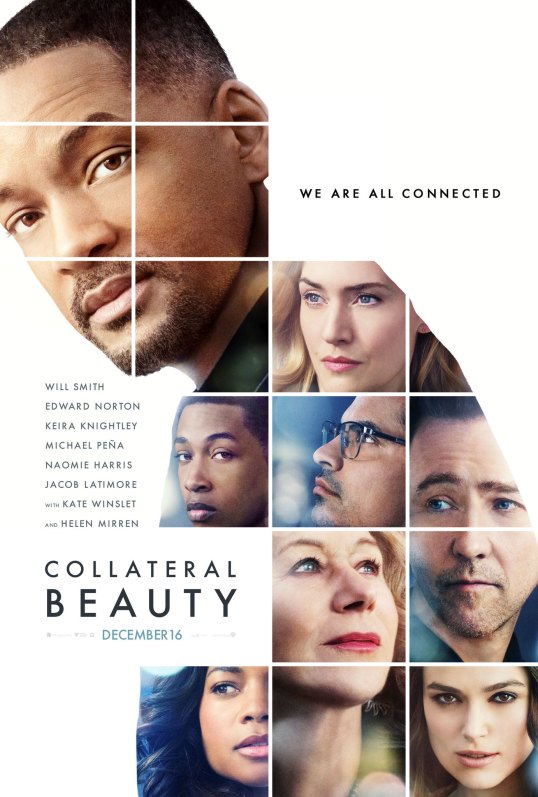
Holiday Film Review: Collateral Beauty (dir by David Frankel)


Occasionally, you see a film that is so misjudged and so poorly executed that it leaves you wondering whether or not the entire production was meant to be some sort of elaborate practical joke.  Perhaps not surprisingly, these films are usually a mix of comedy and drama and they tend to try to deal with the big issues — life, death, love, and all the rest.  These films are fueled by a mix of ambition, sincerity, and a total inability to understand how people actually think and live.  Invevitably, these films come out at Oscar time and they tend to have surprising twists that are designed to tug at the heart strings but to also make you think.  They’re usually have titles that sound good but don’t make much sense and they often feature the type of talented actors who really should know better.  Audiences should also know better but all of these films have devoted fans who insist that the rest of us are just too cynical or jaded to really appreciate a good story.

2016’s Collateral Beauty is one such film.

Set during the Christmas season, Collateral Beauty tells the story of Howard Inlet (Will Smith).  Howard was an advertising genius but then his daughter died and he sunk into a deep depression.  In this film, being clinically depressed means that you ride your bicycle a lot.  It also means that you spend a lot of time building domino chains.  Because Howard is too depressed to do anything, his advertising firm is on the verge of going bankrupt.  His partners — Whit (Edward Norton), Claire (Kate Winslet), and Simon (Michael Pena) — all want to sell the firm but they have to get Howard to sign off on it and Howard refuses to talk to anyone.

However, his three business partners come across letters that Howard wrote to the abstract concepts of Death, Time, and Love.  And, realizing that Howard had some issues with those concepts, they decided to hire three actors to pretend to be those concepts so that they can film Howard talking to them.  The plan is to film Howard talking to the actors and then use digital technology to erase the actors from the footage so that Howard will look like he’s talking to himself, which will make it easier to prove that Howard is not mentally stable enough to run the company and….

What?  Yes, that’s the plot.  Undoubtedly, it seems like there should be an easier way to prove that Howard is not mentally fit to run his company but the three business partners decided to go with the plan that makes absolutely no sense and the film applauds them for doing so.  It does seem like, if they really cared about Howard, they would have instructed the actors to provide some sort of comfort to Howard but apparently, no one in this movie has seen It’s A Wonderful Life or read A Christmas Carol.  The film assures us that making a suicidal man think that he’s gone legitimately insane is definitely the humane way to deal with this situation.

Anyway, the three actors are played by Helen Mirren, Jacob Latimore, and Keira Knightley.  And, in order to study Howard, each spends time with his business partners and we learn about everyone’s life.  For instance, Whit has a daughter that he needs to connect with.  Claire is depressed because she wants a child.  Simon is dying, which means that he spends the entire movie vomiting.  Amazingly, no one but Helen Mirren notices.  Not only does the actors help Howard but they help his partners as well.  Awwwww!

After the actors all visit him, Howard is so upset by the encounters that he goes to a support group that’s run by Madeline (Naomie Harris), who lost a daughter (just like Howard!) and who is divorced (just like Howard!) and who has a note from her ex-husband in which he says that he wishes they could act like strangers again and hey, guess who her ex-husband is!?  (Yes, it’s Howard.)  Anyway, some mysterious woman once told Madeline that, even as her daughter was dying, she should always celebrate the “collateral beauty of it all” and I have no idea what that was supposed to mean but Madeline sure does talk about it a lot.

I like to think that Collateral Beauty shares the same cinematic universe as The Book of Henry and Life Itself.  It’s a universe where simplistic thoughts are held up as being extremely profound and where no one actually does anything that makes sense.  Just as The Book of Henry asks us to be touched by an annoying little brat insisting (from beyond the grave, no less) that his mother to assassinate their neighbor, Collateral Beauty asks us to appreciate all the effort that goes into tormenting an already seriously depressed human being.  Just as Life Itself insists that life being an unreliable narrator is somehow a mind-blowing concept, Collateral Beauty insists that everything will be okay as long as we appreciate the “collateral beauty of it all.”  It may feel like a parody but Collateral Beauty not only takes itself seriously but it also seems to be convinced that you’ll take it seriously as well.  There’s something rather presumptuous about the film’s insistence that it actually has something unique or interesting to say.

Amazingly enough, a truly great cast signed up to appear in this film.  Most of them turn in performances that are either forgettable or regrettable.  Edward Norton gives a performance that is so annoyingly mannered that it’s hard not to be reminded of the rumors that he was basically playing himself in Birdman.  Considering that she’s one of the greatest actresses around, Kate Winslet is shockingly bad.  Helen Mirren appears to be having a laugh.  Will Smith actually gives a good performance but it’s a waste to cast such a great talker as someone who barely speaks.

Collateral Beauty came out in December of 2016.  Before it was released, it had Oscar buzz.  After it was released …. well, let’s just say that it didn’t.  Critics hated the film but it did well at the box office and it has its fans.  I’m not one of them but perhaps someday, I’ll appreciate the collateral beauty of it all.

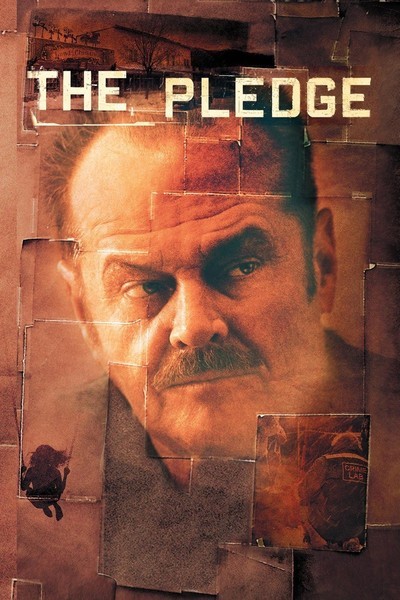
The Pledge (2001, directed by Sean Penn)


Jerry Black (Jack Nicholson) is a detective who, on the verge of retirement, goes to one final crime scene.  The victim is a child named Ginny Larsen and when Ginny’s mother (Patricia Clarkson) demands that Jerry not only promise to find the murderer but that he pledge of his immortal soul that he’ll do it, it’s a pledge that Jerry takes seriously.  Jerry’s partner, Stan (Aaron Eckhart), manages to get a confession from a developmentally disabled man named Jay Wadenah (Benicio del Toro) but Jerry doesn’t believe that the confession is authentic.  When Wadenah commits suicide in his cell, the police are ready to close the case but Jerry remembers his pledge.  He remains determined to find the real killer.

Even though he’s retired, the case continues to obsess Jerry.  He becomes convinced that Ginny was the latest victim of a serial killer and he even buys a gas station because it’s located in the center of where most of the murders were committed.  Jerry befriend a local waitress named Lori (Robin Wright) and, when Lori tells him about her abusive ex, he invites Lori and her daughter to stay with him.  Lori’s daughter, Chrissy (Pauline Roberts), is around Ginny’s age and when she tells Jerry about a “wizard” who gives her toys, Jerry becomes convinced that she’s being targeted by the same man who killed Ginny.  Even as Jerry and Lori fall in love, the increasingly unhinged Jerry makes plans to use Chrissy as bait to bring the killer out of hiding.

The Pledge was Sean Penn’s third film as a director.  As with all of Penn’s directorial efforts, with the notable exception of Into The Wild, The Pledge is relentlessly grim.  Freed, by virtue of his celebrity, from worrying about whether or not anyone would actually want to sit through a depressing two-hour film about murdered children, Penn tells a story with no definite resolution and no real hope for the future.  The Pledge is a cop film without action and a mystery without a real solution and a character study of a man whose mind you don’t want to enter.  It’s well-made and it will keep you guess but it’s also slow-paced and not for the easily depressed.

The cast is made up of familiar character actors, most of whom probably took their roles as a favor to Penn.  Harry Dean Stanton, Tom Noonan, Patricia Clarkson, Sam Shephard, Vanessa Redgrave, Helen Mirren, and Mickey Rourke have all got small roles and they all give good performances, even if it’s sometimes distracting to have even the smallest, most inconsequential of roles played by someone familiar.  Most importantly, The Pledge actually gives Jack Nicholson a real role to play.  Jerry Black is actually an interesting and complex human being and Nicholson dials back his usual shtick and instead actually makes the effort to explore what makes Jerry tick and what lays at the root of his obsession.

Though definitely not for everyone, The Pledge sticks with you and shows what Jack Nicholson, who now appears to be retired from acting, was capable of when given the right role.

The Satellites Really Like Ford V Ferrari


The Satellite Nominations were announced earlier today and they appear to really, really like Ford v. Ferrari.

Now, you may be asking yourself, “Who gives out the Satellites?”  They are awarded by the International Press Academy.  They should not be mistaken for the Golden Globes, which are given out the Hollywood Foreign Press Association.  Instead, the Satellites should probably be considered the Golden Globes’s less popular cousins.  Unlike the Globes, they haven’t really proven themselves to be reliable as a precursor.

Anyway, here are the Satellite Film Nominations.  If you want to see their television nominations, click here!

ACTRESS IN A MOTION PICTURE DRAMA

  • Alfre Woodard, “Clemency”
  • Charlize Theron, “Bombshell”
  • Cynthia Erivo, “Harriet”
  • Helen Mirren, “The Good Liar”
  • Renee Zellweger, “Judy”
  • Scarlett Johansson, “Marriage Story”

ACTOR IN A MOTION PICTURE DRAMA

  • Adam Driver, “Marriage Story”
  • Antonio Banderas, “Pain and Glory”
  • Christian Bale, “Ford v Ferrari”
  • George MacKay, “1917″
  • Joaquin Phoenix, “Joker”
  • Mark Ruffalo, “Dark Waters” 

ACTRESS IN A MOTION PICTURE, COMEDY OR MUSICAL

  • Awkwafina, “The Farewell”
  • Ana De Armas, “Knives Out”
  • Constance Wu, “Hustlers”
  • Julianne Moore, “Gloria Bell”

ACTOR IN A MOTION PICTURE, COMEDY OR MUSICAL

  • Adam Sandler, “Uncut Gems”
  • Daniel Craig, “Knives Out”
  • Eddie Murphy, “Dolemite Is My Name”
  • Leonardo DiCaprio, “Once Upon a Time in Hollywood”
  • Taron Egerton, “Rocketman”
  • Taika Waititi, “Jojo Rabbit”

ACTRESS IN A SUPPORTING ROLE

  • Jennifer Lopez, “Hustlers”
  • Laura Dern, “Marriage Story”
  • Margot Robbie, “Bomshell”
  • Penelope Cruz, “Pain and Glory”
  • Nicole Kidman, “Bombshell”
  • Zhao Shuzhen, “The Farewell”

ACTOR IN A SUPPORTING ROLE

  • Anthony Hopkins, “The Two Popes”
  • Brad Pitt, “Once Upon a Time in Hollywood”
  • Joe Pesci, “The Irishman”
  • Tom Hanks, “A Beautiful Day in The Neighborhood”
  • Willem Dafoe, “The Lighthouse”
  • Wendell Pierce, “Burning Cane”

MOTION PICTURE, DRAMA

  • 1917 Universal Pictures
  • Bombshell Lionsgate
  • Burning Cane Array Releasing
  • Ford v Ferrari Twentieth Century Fox
  • Joker Warner Bros.
  • The Lighthouse A24
  • Marriage Story Netflix
  • Two Popes Netflix

MOTION PICTURE, COMEDY OR MUSICAL

  • Hustlers STX Entertainment
  • Knives Out Lionsgate
  • Once Upon a Time in Hollywood Columbia Pictures
  • Rocketman Paramount
  • The Farewell A24
  • Uncut Gems A24

MOTION PICTURE, INTERNATIONAL

  • Atlantics, Senegal
  • Beanpole, Russia
  • Les Miserables, France
  • Pain and Glory, Spain
  • Parasite, Korea
  • Truth and Justice, Estonia
  • Portrait of a Lady on Fire, France
  • The Painted Bird, Czech Republic

MOTION PICTURE, ANIMATED OR MIXED MEDIA

  • A Shaun the Sheep Movie: Farmageddon Netflix
  • Alita: Battle Angel Twentieth Century Fox
  • Buñuel in the Labyrinth of the Turtles GKIDS
  • How to Train Your Dragon 2: The Hidden World Universal Pictures
  • The Lion King Walt Disney Studios Motion Pictures
  • Toy Story 4 Walt Disney Studios Motion Pictures
  • Weathering With You GKIDS

MOTION PICTURE, DOCUMENTARY

  • 63 Up BritBox
  • Apollo 11 Neon
  • Citizen K Greenwich Entertainment
  • Honeyland KJ Films
  • One Child Nation Amazon Studios
  • The Apollo HBO Documentary
  • The Cave National Geographic Documentary Films
  • FOR SAMA PBS

DIRECTOR

  • Bong Joon Ho, “Parasite”
  • James Mangold, “Ford v Ferrari”
  • Noah Baumbach, “Marriage Story”
  • Pedro Almodóvar, “Pain and Glory”
  • Sam Mendes, “1917″
  • Quentin Tarantino, “Once Upon a Time… in Hollywood”

SCREENPLAY, ORIGINAL

  • Bong Joon Ho, “Parasite”
  • Jez Butterworth, John-Henry Butterworth, and Jason Keller, “Ford v Ferrari”
  • Lulu Wang, “The Farewell”
  • Noah Baumbach, “Marriage Story”
  • Pedro Almodóvar, “Pain and Glory”
  • Quentin Tarantino, “Once Upon a Time… in Hollywood”

SCREENPLAY, ADAPTED

  • Anthony McCarten, “The Two Popes”
  • Edward Norton, “Motherless Brooklyn”
  • Matthew Michael Carnahan, Mario Correa, Nathaniel Rich, “Dark Waters”
  • Steven Zaillian, “The Irishman”
  • Taika Waititi, “Jojo Rabbit”
  • Todd Phillips & Scott Silver, “Joker”

ORIGINAL SCORE

  • Thomas Newman, “1917″
  • Marco Beltrami & Buck Sanders, “Ford v Ferrari”
  • Randy Newman, “Marriage Story”
  • Robbie Robertson, “The Irishman”
  • Terence Blanchard, “Harriet”
  • Hildur Guonadottir, “Joker”

ORIGINAL SONG

  • Don’t Call Me (Angel), “Charlie’s Angels”
  • Into the Unknown, “Frozen II”
  • (I’m Gonna) Love Me Again, “Rocketman”
  • Spirit, “Lion King”
  • The Ballade of the Lonesome Cowboy, “Toy Story 4”
  • Swan Song, “Alita: Battle Angel”

CINEMATOGRAPHY

  • Dick Pope, “Motherless Brooklyn”
  • George Richmond, “Rocketman”
  • Lawrence Sher, “Joker”
  • Phedon Papamichael, ASC, GSC, “Ford v Ferrari”
  • Rodrigo Prieto, “The Irishman”
  • Roger Deakins, “1917”

FILM EDITING

  • 1917
    Lee Smith, ACE
  • Ford v Ferrari
    Michael McCusker, ACE
    Andrew Buckland
  • Joker
    Jeff Groth
  • Marriage Story
    Jennifer Lame, ACE
  • Rocketman
    Chris Dickens
  • The Irishman
    Thelma Schoonmaker

SOUND (EDITING AND MIXING)

  • 1917
    Oliver Tarney
    Stuart Wilson
    Scott Millan
    Mark Taylor
  • Avengers: Endgame
    Shannon Mills
    Daniel Laurie
    Tom Johnson
    Juan Peralta
    John Pritchett, CAS
  • Ford v Ferrari
    Donald Sylvester
    Paul Massey
    David Giammarco
    Steven A. Morrow, CAS
  • Joker
    Alan Robert Murray
    Tom Ozanich
    Dean Zupancic
  • Once Upon a Time in Hollywood
    Wylie Stateman
    Mark Ulano, CAS
    Michael Minkler, CAS
    Christian P. Minkler, CAS
  • Rocketman
    Matthew Collinge
    John Hayes

VISUAL EFFECTS

  • Alita: Battle Angel
    Joe Letteri
    Eric Saindon
  • Avengers: Endgame
    Dan DeLeeuw
    Matt Aitken
    Russell Earl
    Dan Sudick
  • The Lion King
    Robert Legato, ASC; Andrew R. Jones
    Adam Valdez; Elliot Newman
  • Ford v Ferrari
    Olivier Dumont
    Mark Byers
    Kathy Segal
  • Joker
    Edwin Rivera
    Mathew Giampa
    Bryan Godwin
  • The Irishman
    Pablo Helman

ART DIRECTION & PRODUCTION DESIGN

  • 1917
    Dennis Gassner
    Lee Sandales
  • Ford v Ferrari
    François Audouy
    Peter Lando
  • Joker
    Mark Friedberg
    Laura Ballinger
  • Motherless Brooklyn
    Beth Mickle
    Michael Ahern
  • Once Upon a Time in Hollywood
    Barbara Ling
    Nancy Haigh
  • The Two Popes
    Mark Tildesley
    Saverio Sammali

COSTUME DESIGN 

  • Dolemite Is My Name
    Ruth E. Carter
  • Joker
    Mark Bridges
  • Judy
    Jeny Temime
  • Rocketman
    Julian Day
  • The Two Popes
    Luka Canfora
  • Downton Abbey
    Caroline McCall
    Anna Robbins
    Susannah Buxton
    Rosalind Ebbutt